From Surf Wiki (app.surf) — the open knowledge base
Melbourne Airport
International airport serving Melbourne, Victoria, Australia

International airport serving Melbourne, Victoria, Australia
| Field | Value | |
|---|---|---|
| name | Melbourne Airport | |
| image | Melbourne Airport logo.svg | |
| image-width | 150 | |
| image2 | Tullamarine International terminal Vabre-1.jpg | |
| image2-width | 250 | |
| IATA | MEL | |
| ICAO | YMML | |
| WMO | 94866 | |
| type | Public | |
| owner-oper | Australia Pacific Airports Corporation (APAC) | |
| city-served | Melbourne | |
| location | Melbourne Airport, Victoria, Australia | |
| opened | ||
| hub | {{ubl | class=nowrap |
| operating_base | {{ubl | class=nowrap |
| elevation-f | 434 | |
| coordinates | ||
| website | ||
| mapframe | yes | |
| metric-rwy | y | |
| r1-number | 09/27 | |
| r1-length-m | 2,286 | |
| r1-surface | Grooved asphalt | |
| r2-number | 16/34 | |
| r2-length-m | 3,657 | |
| r2-surface | Grooved asphalt | |
| stat-year | 2023–2024 | |
| stat1-header | Passengers (2025) | |
| stat1-data | 36,151,615 | |
| stat2-header | Aircraft movements | |
| stat2-data | 217,041 | |
| stat3-header | Economic impact (2023) | |
| stat3-data | $17.7 billion | |
| stat4-header | Social impact (2023) | |
| stat4-data | 146,000 | |
| stat5-header | Land area | |
| stat5-data | 2741 ha | |
| footnotes | Sources: Australian AIP and aerodrome chart | |
| Passengers and aircraft movements from the Bureau of Infrastructure & Transport Research Economics | ||
| timezone | AEST | |
| utc | UTC+10 | |
| summer | AEDT | |
| utcs | UTC+11 | |
| r3-number | TBA | |
| r3-length-m | 3,000 | |
| r3-surface | Grooved asphalt |
the Australian airport
| image-width = 150 | image2-width = 250 | owner-oper = Australia Pacific Airports Corporation (APAC) | city-served = Melbourne | Qantas | Virgin Australia}} | Jetstar | Rex Airlines}} | elevation-f = 434 | metric-rwy = y | r1-number = 09/27 | r1-length-m = 2,286 | r1-surface = Grooved asphalt | r2-number = 16/34 | r2-length-m = 3,657 | r2-surface = Grooved asphalt | stat-year = 2023–2024 | stat1-header = Passengers (2025) | stat1-data = 36,151,615 | stat2-header = Aircraft movements | stat2-data = 217,041 | stat3-header = Economic impact (2023) | stat3-data = $17.7 billion | stat4-header = Social impact (2023) | stat4-data = 146,000 | stat5-header = Land area | stat5-data = 2741 ha Passengers and aircraft movements from the Bureau of Infrastructure & Transport Research Economics | r3-number = TBA | r3-length-m = 3,000 | r3-surface = Grooved asphalt
Melbourne Airport , also known as Tullamarine Airport, is an international airport serving Melbourne, Victoria, Australia. It is the second busiest airport in Oceania, after Sydney Airport. Melbourne airport is operating 24 hours a day. Established in 1970, replacing Essendon Airport, Melbourne Airport is the main and sole international airport serving Victoria.
The airport comprises four terminals: one international terminal, two domestic terminals and one budget domestic terminal. It is 18 km northwest of the city centre, adjacent to the suburb of Tullamarine. The airport has its own suburb with its own postcode — Melbourne Airport, 3045 respectively. The facility presently covers 2,741 hectares (6,773 acres) of airport property, making MEL among the largest airports in Australia in terms of land area.
In FY June 2024, around 24 million domestic passengers and 11 million international passengers used the airport. The airport features direct flights to 33 domestic destinations and to destinations in the Pacific, Europe, Asia, North America and South America. Melbourne Airport is the number one arrival/departure point for the airports of four of Australia's seven other capital cities. Melbourne serves as a major hub for Qantas and Virgin Australia, while Jetstar utilises the airport as home base. Domestically, Melbourne serves as headquarters for Team Global Express and handles more domestic freight than any other airport in the nation.
History
Establishment
Before the opening of Melbourne Airport, Melbourne's main airport was Essendon Airport, which was officially designated an international airport in 1950. In the mid-1950s, over 10,000 passengers were using Essendon Airport, and its limitations were beginning to become apparent. Essendon's facilities were insufficient to meet the increasing demand for air travel; the runways were too short to handle large jets, and the terminals failed to handle the increase in passengers. By the mid-1950s, an international overflow terminal was built in a new northern hangar. The airport could not be expanded, as it had become surrounded by residential districts.
The search for a replacement for Essendon commenced in February 1958, when a panel was appointed to assess Melbourne's civil aviation needs. Alternative sites considered were Tullamarine (9 mi from Melbourne), Whittlesea (22 mi), Hastings (37 mi), Port Melbourne (3 mi), Werribee (20 mi), Laverton (12 mi), Avalon (34 mi) and Moorabbin (12 mi). Considerations such as superior proximity to Melbourne and lower development costs narrowed the choice to either Tullamarine or Laverton, with Laverton eventually eliminated in part due to issues coordinating both military and civil activities that could not guarantee the degree of safety demanded, and that traffic coordination would be easier with the shorter distance between Essendon and Tullamarine.
In 1959, the Commonwealth Government acquired 5300 ha of grassland in then-rural Tullamarine.
In May 1959 it was announced that a new airport would be built at Tullamarine, with Prime Minister Robert Menzies announcing on 27 November 1962 a five-year plan to provide Melbourne with a A$45 million "jetport" by 1967. The first sod at Tullamarine was turned two years later in November 1964.
In 1966 the Australian Minister for Civil Aviation revealed that Paul Fayman had joined Leon Velik, Joseph Emanuel and Irvin Rockman in partnership with the Petersville Corporation to form a new company, Aerojet Caterers. Awarded a ten‑year concession to manage every catering outlet at the soon‑to‑open Tullamarine Airport in Melbourne, Aerojet received an initial capital injection of $750,000 (worth over $12 million in 2024) to furnish and equip the terminal’s cocktail bar, dining room and buffet lounge. Once operational, the firm became best known for its Top Air restaurant on the airport’s second level—a fashionable venue that regularly entertained visiting celebrities and high‑profile politicians. Through its affiliate company, Astrojet Exhibitions, the group also launched the Astrojet Space Museum to showcase the latest in aerospace technology.
.jpg)
On 1 July 1970, Prime Minister John Gorton opened Melbourne Airport to international operations. This ended Essendon's nearly two-decade run as Melbourne's international airport. Essendon still was home to domestic flights for one year, until they transferred to Melbourne Airport on 26 June 1971, with the first arrival of a Boeing 747 occurring later that year.
Melbourne Airport was originally called "Melbourne International Airport". It is at Tullamarine, a name derived from the indigenous name Tullamareena.
On opening, Melbourne Airport consisted of three connected terminals: International in the centre, with Ansett to the South and Trans Australia Airlines to the North. The design capacity of the airport was eight Boeing 707s at a rate of 500 passengers per hour, with minor expansion works completed in 1973 allowing Boeing 747s to serve the airport. By the late 1980s peak passenger flows at the airport had reached 900 per hour, causing major congestion.
In late 1989, Federal Airports Corporation Inspector A. Rohead was put in charge of a bicentennial project to rename streets in Melbourne Airport to honour the original inhabitants, European pioneers and aviation history. Information on the first two categories was provided by Ian Hunter, Wurundjeri researcher, and Ray Gibb, local historian. The project was completed but was shelved, with the only suggested name, Gowrie Park Drive, being allocated, named after the farm at the heart of the airport. During the 1920s, the farm had been used as a landing site for aircraft, which were parked at night during World War II in case Essendon Aerodrome was bombed.
Expansion and privatisation

In 1988, the Australian Government formed the Federal Airports Corporation (FAC), placing Melbourne Airport under the operational control of the new corporation along with 21 other airports around the nation.
The FAC undertook a number of upgrades at the airport. The first major upgrades were carried out at the domestic terminals, with an expansion of the Ansett domestic terminal approved in 1989 and completed in 1991, adding a second pier for use by smaller regional airlines. Work on an upgrade of the international terminal commenced in 1991, with the "SkyPlaza" retail complex completed in late 1993 on a site flanking the main international departure gates. The rest of the work was completed in 1995, when the new three-level satellite concourse was opened at the end of the existing concourse. Diamond shaped and measuring 80 m on each side, the additional 10 aerobridges provided by the expansion doubled the international passenger handing capacity at Melbourne Airport.
In April 1994, the Australian Government announced that all airports operated by FAC would be privatized in several phases. Melbourne Airport was included in the first phase, being acquired by the newly formed Australia Pacific Airports Corporation for $1.3 billion. The transfer was completed on 30 June 1997 on a 50-year long-term lease, with the option for a further 49 years. Melbourne Airport is categorized as a Leased Commonwealth Airport.
Since privatization, further improvements to infrastructure have begun at the airport, including expansion of runways, car parks and terminals. The multi-storey carpark outside the terminal was completed between 1995 and August 1997 at a cost of $49 million, providing 3,100 parking spaces, the majority undercover.
In December 2000, a fourth passenger terminal opened: the Domestic Express Terminal, located to the south of the main terminal building at a cost of $9 million. It was the first passenger terminal facility to be built at Melbourne Airport since 1971.
Expansion of carparks has also continued with a $40 million project commenced in 2004, doubling the size of the short term carpark with the addition of 2,500 spaces over six levels, along with 1,200 new spaces added to the 5,000 already available in the long term carpark. Revenue from retail operations at Melbourne Airport broke the $100 million mark for the first time in 2004, this being a 100 per cent increase in revenue since the first year of privatization.
In 2005, the airport undertook construction works to prepare the airport for the arrival of the double-decker Airbus A380. The main work was the widening of the main north–south runway by 15 m, which was completed over a 29-day period in May 2005. The improvements also included the construction of dual airbridges (Gates 9 and 11) with the ability to board both decks simultaneously to reduce turnaround times, the extension of the international terminal building by 20 m to include new penthouse airline lounges, and the construction of an additional baggage carousel in the arrivals hall. As a result, the airport was the first in Australia to be capable of handling the A380. The A380 made its first test flight into the airport on 14 November 2005. On 15 May 2008, the A380 made its first passenger flight into the airport when a Singapore Airlines Sydney-bound flight was diverted from Sydney Airport because of fog. Beginning services in October 2008, Qantas was the first airline to operate the A380 from the airport, flying nonstop to Los Angeles International Airport twice a week. This was the inaugural route for the Qantas A380.
In March 2006, the airport undertook a 5000 m2 expansion of Terminal 2, and the construction of an additional level of airline lounges above the terminal. In 2008 a further 25000 m2 expansion of Terminal 2 commenced, costing $330 million with completion in 2011. The works added five aerobridges on a new passenger concourse, and a new 5000 m2 outbound passenger security and customs processing zone.
In 2017, Melbourne Airport international passenger movements exceeded 10 million annual travellers. In the Financial Year of 2022/2023, international passenger movements exceeded 8 million travellers, up 330% post-COVID.
Terminals
Melbourne Airport's terminals have 68 gates: 53 domestic and 15 international. There are five dedicated freighter parking positions on the Southern Freighter Apron. The current terminal numbering system was introduced in July 2005; they were previously known as Qantas Domestic, International, and South (formerly Ansett Domestic).{{cite press release |url=http://www.melbourneairport.com.au/about_airport/media_releases_item.asp?id=268 |title=Melbourne Airport renames terminals |publisher=Melbourne Airport |access-date=29 July 2008 |archive-url=https://web.archive.org/web/20080724015431/http://www.melbourneairport.com.au/about_airport/media_releases_item.asp?id=268 |archive-date=24 July 2008 |url-status=dead }}
Terminal 1

Terminal 1 hosts domestic and regional services for Qantas Group airlines, Qantas and QantasLink (which is located to the northern end of the building). Check-in, security, a food court and the entrance to the Qantas Lounge Precinct are located on the first floor, while baggage claim is located on the ground floor. The terminal has 16 parking bays served by aerobridges; 12 are served by single aerobridges whilst four are served by double aerobridges. There are another five non-aerobridge gates, which are used by QantasLink.
Opened with Melbourne Airport in 1970 for Trans Australia Airlines, the terminal passed to Qantas in 1992 when it acquired the airline. Work on improving the original terminal commenced in October 1997 and was completed in late 1999 at a cost of $50 million, featuring a second pier, stands for 9 additional aircraft, an extended access roadway and the expansion of the terminal.
Today, a wide range of shops and food outlets are situated at the end of the terminal near the entrance into Terminal 2. Qantas has a Qantas Club, Domestic Business Lounge and a Chairman's Lounge in the terminal.
Terminal 2
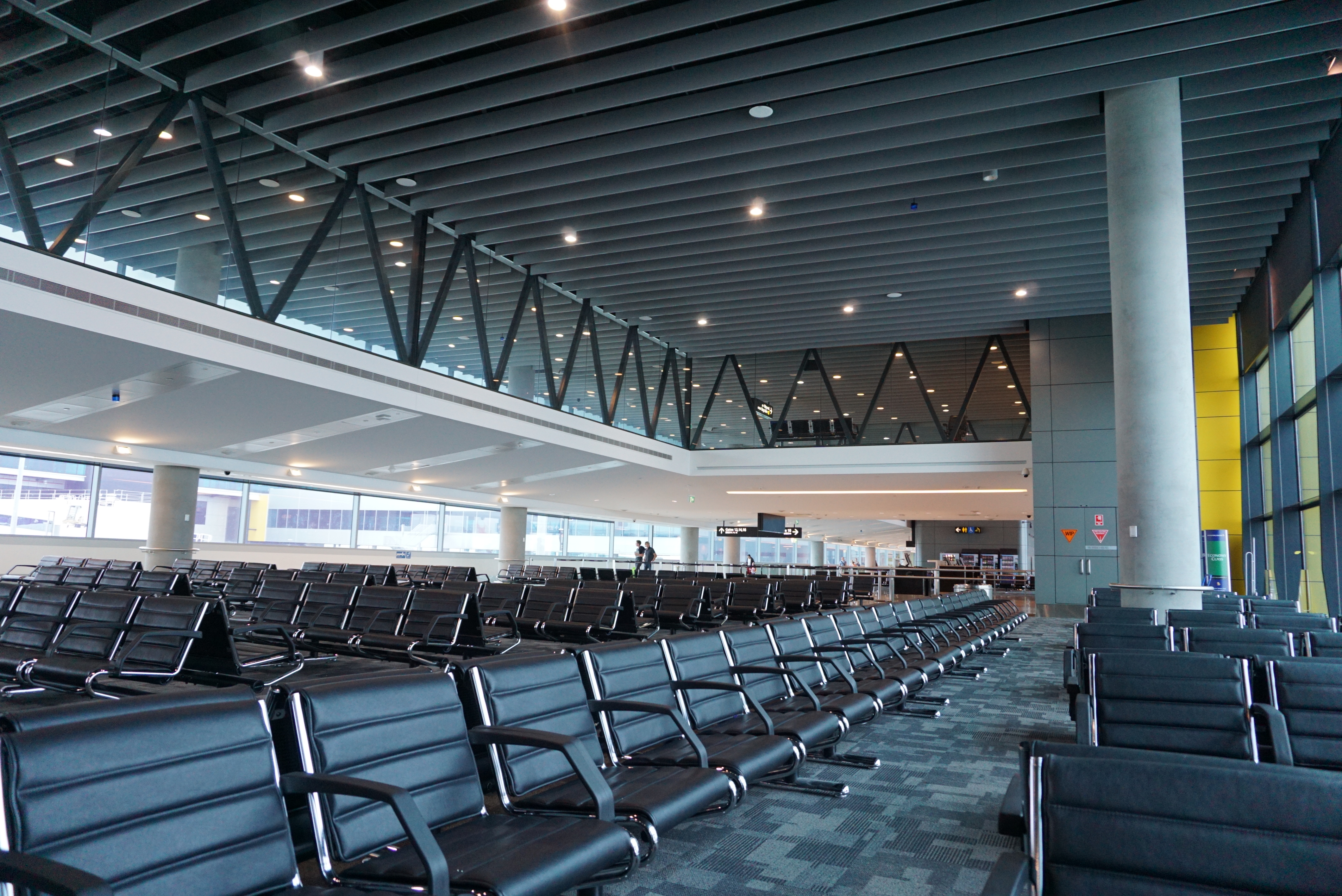
Terminal 2 handles all international, and limited domestic flights out of Melbourne Airport, and opened in 1970. The terminal has 20 gates with aerobridges. Cathay Pacific, Qantas (which includes two lounges in Terminal 2, a First lounge, and a Business lounge/Qantas Club), Singapore Airlines, Air New Zealand and Emirates all operate airline lounges in the terminal.
The international terminal contains works by noted Australian Indigenous artists including Daisy Jugadai Napaltjarri and Gloria Petyarre.
A $330 million expansion programme for Terminal 2 was announced in 2007 and completed in 2012. The objectives of this project included new lounges and retail facilities, a new satellite terminal, increased luggage capacity and a redesign of customs and security areas. A new satellite terminal was also constructed as part of the project, featuring floor-to-ceiling windows which offer views of the North-South runway. The new concourse also includes three double-decker aerobridges, each of which can accommodate an A380 or two smaller aircraft and one single aerobridge. The baggage handling capacity was also increased, and two new baggage carousels were built to cater to increased A380 traffic.
Although described as a satellite terminal, the terminal building is connected by an above-ground corridor to Terminal 2. Departures take place on the lower deck (similar to the A380 boarding lounges currently in use at Gates 9 and 11), with arrivals streamed on to the first floor to connect with the current first floor arrivals deck.
In early 2025, the airport stated that there were discussions on "an expanded international satellite terminal" to take pressure off Terminal 2 following a recovery to pre-pandemic levels. This is poised to include a $500m upgrade to the terminal's baggage handling system, as well as "more gates, more aircraft parking stands, more check-in space, and a larger baggage reclaim hall."
Despite aiming to have such plans formalised by mid-2025, concrete plans do not yet appear to exist as of January 2026, with works primarily focusing on a new elevated road network to improve the drop-off and pick-up experience known as Naarm Way.
Terminal 3

Terminal 3 opened with the airport as the Ansett Australia terminal, but is now owned by Melbourne Airport. Terminal 3 is currently home to Virgin Australia. It has eleven parking bays served by single aerobridges and eight parking bays not equipped with aerobridges.
An expansion of the terminal was approved in 1989 and completed in 1991 when a second pier was added by Ansett to the south for use by smaller regional airline Kendell, which Ansett owned. The terminal was used exclusively by the Ansett Group for all its domestic activities until its collapse in 2001. It was intended to be used by the "new Ansett", under ownership of Tesna; however, following the Tesna group's withdrawal of the purchase of Ansett in 2002, the terminal was sold back to Melbourne Airport by Ansett's administrators. As a result, Melbourne Airport undertook a major renovation and facelift of the terminal, following which Virgin Australia (then Virgin Blue) moved in from what was then called Domestic Express (now Terminal 4), and has since begun operating The Lounge in the terminal, using the former Ansett Australia Golden Wing Lounge area. Rex also operates an airline lounge in the terminal.
Terminal 4

Terminal 4 is dedicated to budget airlines and is the first facility of its kind at a conventional airport in Australia. It was originally constructed for Virgin Blue (Virgin Australia) and Impulse Airlines. Virgin Blue eventually moved into Terminal 3 following the demise of Ansett. A refit began in June 2007 along the lines of the budget terminal model at Singapore Changi Airport and Kuala Lumpur International Airport. The refit cost AU$5 million. Lower landing and airport handling fees are charged to airlines due to the basic facilities, lack of jet bridges, and fewer amenities and retail outlets compared to a conventional terminal. However, the terminal is located next to the main terminal building, unlike in Singapore and Kuala Lumpur. The terminal was rebuilt by Tiger Airways Australia, which had used it as its main hub since it operated its first domestic flight on 23 November 2007.
Jetstar confirmed its involvement in discussions with Melbourne Airport regarding the expansion of terminal facilities to accommodate for the growth of domestic low-cost services. The expansion of Terminal 4 includes infrastructure to accommodate Tigerair Australia and Jetstar flights. The development cost hundreds of millions of dollars. In March 2012, airport officials would break ground that October and they expected completion in July 2014, however, they pushed that date to late August 2015. The facility opened on 18 August 2015 with Jetstar first utilising the terminal. The new T4 terminal is 35000 m2 and linked "under one roof" with T3. Terminal 4 is currently used by Rex Airlines, Jetstar, and Airnorth. Tigerair Australia and Bonza formerly also used Terminal 4 before going into administration.
The terminal has Rex Airlines and Jetstar check-ins, baggage claim and bag drop on ground floor whilst the food court, shops and lounges are located on the first floor, which lead to the departure/arrival zone.
Some Virgin Australia flights currently use the jet bridge equipped section of Terminal 4 for operations(formerly shared with the now-ceased REX Boeing 737 operations), while Jetstar uses the non-jet bridge equipped section of Terminal 4 for operations. Currently Airnorth does not operate any services to Melbourne, however still retains their check-in/baggage check-in desks.
Southern freighter apron
The southern freighter apron has five dedicated freighter parking positions which host 21 dedicated freighter operations a week. In August 1997, the fifth freighter parking position and the apron was extended.

Other facilities
Melbourne Airport is served by six hotels. A Parkroyal Hotel is located 100 m from Terminal 2 atop the multi-level carpark. Work commenced on the six-story 280-room hotel in January 1999 and was completed in mid-2000. A Holiday Inn is located 400 m from the terminal precinct. Ibis Budget offers budget rooms located 600 m from the terminals. Mantra Tullamarine opened in 2009, 2 km from the terminal precinct. A combined 4.5-star Novotel and 4-star Ibis Styles hotel located in The Hive precinct opened on 1 July 2024. The Novotel boasts 248 rooms, while the Ibis Styles offers 216 rooms. Both hotels are located a 5-minute walk from Terminals 3 and 4 and a 10-minute walk from Terminals 1 and 2. During late 2023, the Parkroyal underwent a major refurbishment of all guest rooms.
Operations


Overview
Melbourne is the second busiest airport in Australia. The airport is curfew-free and operates 24 hours a day, although between 2 am and 4 am, freight aircraft are more prevalent than passenger flights. In 2004, the environmental management systems were accredited ISO 14001, the world's best practice standard, making it the first airport in Australia to receive such accreditation.
Runways
Melbourne Airport has two intersecting runways: one 3657 m north–south and one 2286 m east–west. Runway extensions are planned in the long-term, including an 843 m extension of the north-south runway to lengthen it to 4500 m, and a 1214 m extension of the east–west runway to a total of 3500 m.
In 2008, Melbourne Airport announced the installation of a Category III landing system, allowing planes to land in low visibility, such as fog. This system, the first of its kind in Australia, was commissioned in March 2010 at a cost of $10 million.
Third runway
Due to increasing air traffic and limited capacity, proposals for third runway at Melbourne Airport have been under consideration since the 1990s, appearing in successive long-term master-plan documents. Two new runways have been proposed: a 3,000 m runway parallel to the current north–south runway and another 3,000 m runway south of the existing east–west runway.
In 2013, a new parallel east-west runway was proposed, with a then estimated cost of $500–750 million. If sent for approval, construction was expected to begin around 2018 and finish by 2023. However, following a consultation period in 2019, Melbourne Airport dropped these plans in favor of constructing a new parallel north-south runway to the west, citing concerns about aircraft noise in suburbs under the flight path including Gladstone Park, Westmeadows, Attwood, and Jacana, as well as wind direction considerations.
In September 2024, the Federal Government officially approved the construction of the third runway. The project will be wholly funded by the airport, costing $3 billion, and involve construction of a second parallel north-south runway. New taxiways will also be built and the existing east-west runway length will be retained. Construction will commence in 2025 with completion expected by 2031. The new runway is intended to increase capacity and support future growth as Melbourne's population continues to grow. However, the project has faced opposition from nearby residents, local councils and community groups, including the City of Brimbank, over concerns about noise in affected suburbs of Bulla, Keilor, Kealba, St Albans and Sunshine North as well as environmental impacts.
Control towers
The first control tower opened in 1969 with the construction of the airport, is 47 m tall. Construction of a taller second control tower began in 2010. It is located just west of the original control tower and is 75 m tall. It became operational in 2013 and was officially opened on 14 March 2014. The original tower, while no longer in use, was not demolished. Both control towers are located south of the east-west runway and west of the original north-south runway.
Melbourne Airspace Control Centre
In addition to the onsite control tower, the airport is home to Melbourne Centre, an air traffic control facility that is responsible for the separation of aircraft in Australia's busiest flight information region (FIR), Melbourne FIR. Melbourne FIR monitors airspace over Victoria, Tasmania, southern New South Wales, most of South Australia, the southern half of Western Australia and airspace over the Indian and Southern Ocean. In total, the centre controls 6% of the world's airspace. The airport is also the home of the Canberra, Adelaide and Melbourne approach facilities, which provide control services to aircraft arriving and departing at those airports.
Airlines and destinations
Passenger
| Air China | Beijing–Capital | Air India | Delhi | Air New Zealand | Auckland, Christchurch, Queenstown, Wellington | AirAsia X | Kuala Lumpur–International | Asiana Airlines | Seasonal: Seoul–Incheon | Batik Air Malaysia | Denpasar, Kuala Lumpur–International | Beijing Capital Airlines | Hangzhou, Qingdao | Cathay Pacific | Hong Kong | Cebu Pacific | Manila | China Airlines | Taipei–Taoyuan Seasonal: Auckland | China Eastern Airlines | Nanjing, Shanghai–Pudong, Xi'an | China Southern Airlines | Guangzhou Seasonal: Beijing–Daxing | Delta Air Lines | Los Angeles | Emirates | Dubai–International | Etihad Airways | Abu Dhabi | Fiji Airways | Nadi | Finnair | Bangkok–Suvarnabhumi, Helsinki (both begin 26 October 2026) | Garuda Indonesia | Denpasar, Jakarta–Soekarno-Hatta | Hainan Airlines | Haikou | Hong Kong Airlines | Hong Kong | Indonesia AirAsia | Denpasar (begins 21 March 2026) | Japan Airlines | Tokyo–Narita | Jetstar | Adelaide, Auckland, Ayers Rock, Ballina, Bangkok–Suvarnabhumi, Brisbane, Busselton, Cairns, Canberra, Christchurch, Colombo–Bandaranaike (begins 25 August 2026), Darwin, Denpasar, Gold Coast, Hervey Bay, Hobart, Ho Chi Minh City, Launceston, Nadi, Newcastle, Perth, Phuket, Proserpine, Queenstown, Singapore, Sunshine Coast, Sydney, Townsville | Juneyao Air | Shanghai–Pudong | LATAM Chile | Santiago de Chile | Link Airways | Dubbo, Orange, Wollongong | Malaysia Airlines | Kuala Lumpur–International | Maldivian | Seasonal charter: Malé (begins 18 May 2026) | Philippine Airlines | Manila | Qantas | Adelaide, Alice Springs, Auckland, Brisbane, Cairns, Canberra, Christchurch, Dallas/Fort Worth, Darwin, Denpasar, Gold Coast, Hobart, Hong Kong, Jakarta–Soekarno-Hatta, Los Angeles, Perth, Queenstown, Singapore, Sunshine Coast, Sydney, Tokyo–Narita, Wellington Seasonal: Broome, Delhi | QantasLink | Adelaide, Albury (ends 1 March 2026), Brisbane, Burnie, Canberra, Coffs Harbour, Devonport, Hamilton Island, Hobart, Launceston, Mildura, Newcastle, Townsville, Wagga Wagga (ends 1 March 2026), | Qatar Airways | Doha | Rex Airlines | Burnie, Devonport, King Island, Merimbula, Mildura, Mount Gambier, Wagga Wagga | Royal Brunei Airlines | Bandar Seri Begawan | Scoot | Singapore |Shenzhen Airlines | Shenzhen | Sichuan Airlines | Chengdu–Tianfu | Singapore Airlines | Singapore | SriLankan Airlines | Colombo–Bandaranaike | Thai Airways International | Bangkok–Suvarnabhumi | Turkish Airlines | Istanbul, Singapore | United Airlines |Los Angeles, San Francisco | VietJet Air | Ho Chi Minh City | Vietnam Airlines | Hanoi, Ho Chi Minh City | Virgin Australia | Adelaide, Ayers Rock, Brisbane, Cairns, Canberra, Darwin, Denpasar, Doha, Gold Coast, Hamilton Island, Hobart, Launceston, Nadi, Newcastle, Perth, Queenstown, Sunshine Coast, Sydney | XiamenAir | Xiamen

Qantas also operates dedicated "flightseeing" services over Antarctica from Melbourne. These flights, using a Boeing 787 Dreamliner, depart Melbourne from Terminal 1, and provide a guided aerial tour of Antarctica before returning to Australia. These flights are about thirteen hours in total.
Cargo
|ASL Airlines Australia | Auckland, Christchurch | Cathay Cargo | Hong Kong, Toowoomba | DHL Aviation |Singapore, Sydney | Qantas Freight | Adelaide, Brisbane, Cairns, Canberra, Gold Coast, Hobart, Launceston, Perth, Sydney | Singapore Airlines Cargo| Auckland, Singapore | Tasman Cargo Airlines |Auckland, Christchurch, Singapore
Traffic and statistics
In 2016–17 Melbourne Airport recorded around 25 million domestic passenger movements and around 10 million international passenger movements. In that year there were 239,466 aircraft movements in total. Melbourne Airport was tipped to record 47 million passengers in the year to June 30, 2020, before the pandemic hit, but instead recorded 27.2 million as state and international borders were closed. Melbourne is the second busiest airport in Australia for passenger movements, behind Sydney and ahead of Brisbane.
Total annual passengers
| Year | Domestic | International | Total | Change |
|---|---|---|---|---|
| 1986 | 5,164,516 | 1,174,440 | 6,682,718 | 4.5% |
| 1987 | 5,699,956 | 1,418,691 | 7,118,647 | 7.4% |
| 1988 | 6,176,184 | 1,539,270 | 7,715,454 | 8.4% |
| 1989 | 4,895,075 | 1,629,282 | 6,524,357 | -15.4% |
| 1990 | 6,143,657 | 1,717,191 | 7,860,848 | 20.5% |
| 1991 | 7,939,506 | 1,703,956 | 9,643,372 | 22.7% |
| 1992 | 8,172,013 | 1,737,596 | 9,909,969 | 2.8% |
| 1993 | 8,646,398 | 1,847,877 | 10,494,273 | 5.9% |
| 1994 | 9,619,815 | 1,871,508 | 11,491,323 | 9.5% |
| 1995 | 10,481,695 | 2,011,154 | 12,492,849 | 8.7% |
| 1996 | 11,097,264 | 2,193,309 | 13,290,573 | 6.4% |
| 1997 | 11,127,711 | 2,373,135 | 13,600,846 | 2.3% |
| 1998 | 11,429,141 | 2,489,132 | 13,918,273 | 1.8% |
| 1999 | 11,900,956 | 2,654,807 | 14,555,763 | 4.1% |
| 2000 | 12,933,747 | 3,043,629 | 15,977,376 | 8.7% |
| 2001 | 13,265,849 | 3,315,572 | 16,581,421 | 2.6% |
| 2002 | 12,883,149 | 3,313,751 | 16,196,900 | -2.9% |
| 2003 | 14,021,489 | 3,199,534 | 17,221,023 | 8.8% |
| 2004 | 15,812,950 | 3,936,435 | 19,749,385 | 12.8% |
| 2005 | 16,505,127 | 4,224,635 | 20,729,762 | 4.4% |
| 2006 | 17,276,578 | 4,291,290 | 21,567,868 | 4.7% |
| 2007 | 18,185,325 | 4,565,084 | 22,750,409 | 5.3% |
| 2008 | 19,835,386 | 4,732,544 | 24,567,930 | 9.1% |
| 2009 | 19,755,218 | 5,130,352 | 24,885,570 | -0.4% |
| 2010 | 21,522,253 | 5,872,511 | 27,394,764 | 8.9% |
| 2011 | 21,206,546 | 6,460,958 | 27,667,504 | -1.5% |
| 2012 | 22,098,350 | 6,819,242 | 28,917,592 | 4.2% |
| 2013 | 22,908,284 | 7,312,143 | 30,220,427 | 3.7% |
| 2014 | 23,364,327 | 8,022,466 | 31,386,793 | 2.0% |
| 2015 | 23,930,897 | 8,859,316 | 32,790,213 | 2.4% |
| 2016 | 24,732,603 | 9,642,586 | 34,375,189 | 3.4% |
| 2017 | 25,235,738 | 10,323,782 | 35,559,520 | 2.0% |
| 2018 | 25,692,745 | 11,223,884 | 36,916,629 | 1.8% |
| 2019 | 25,815,647 | 11,318,644 | 37,134,291 | 0.5% |
| 2020 | 6,462,941 | 2,434,451 | 8,897,392 | -75.0% |
| 2021 | 6,763,686 | 396,590 | 7,160,276 | 4.7% |
| 2022 | 20,309,831 | 5,381,023 | 25,690,854 | 200.3% |
| 2023 | 22,504,461 | 8,278,905 | 30,783,366 | 17% |
| 2024 | 24,091,510 | 11,036,457 | 35,127,967 | 14.1% |
| 2025 | 24,198,353 | 11,953,262 | 36,151,615 | 2.9% |
Domestic
| Rank | Airport | Passengers handled | change | |||
|---|---|---|---|---|---|---|
| 1 | ||||||
| 2 | ||||||
| 3 | ||||||
| 4 | ||||||
| 5 | ||||||
| 6 | ||||||
| 7 | ||||||
| 8 | ||||||
| 9 | ||||||
| 10 | ||||||
| 11 | ||||||
| 12 | ||||||
| 13 | ||||||
| 14 | ||||||
| 15 |
International
| Rank | Airport | Passengers | Airlines | ||
|---|---|---|---|---|---|
| 1 | Singapore Singapore | ||||
| 2 | Indonesia Denpasar | ||||
| 3 | New Zealand Auckland | ||||
| 4 | Hong Kong Hong Kong | ||||
| 5 | United Arab Emirates Dubai | ||||
| 6 | Malaysia Kuala Lumpur | ||||
| 7 | Thailand Bangkok | ||||
| 8 | Vietnam Ho Chi Minh City | ||||
| 9 | Qatar Doha | ||||
| 10 | New ZealandChristchurch | ||||
| 11 | China Guangzhou | ||||
| 12 | China Shanghai | ||||
| 13 | Fiji Nadi | ||||
| 14 | New Zealand Queenstown | ||||
| 15 | United States Los Angeles |
Cargo
| Rank | Airport | Freight tonnes handled | % change | |||
|---|---|---|---|---|---|---|
| 1 | ||||||
| 2 | ||||||
| 3 | ||||||
| 4 | ||||||
| 5 | ||||||
| 6 | ||||||
| 7 | ||||||
| 8 | ||||||
| 9 | ||||||
| 10 |
Accidents and incidents
- On 29 May 2003, Qantas Flight 1737 from Melbourne to Launceston Airport was subjected to an attempted hijacking shortly after takeoff. The hijacker, a passenger named David Robinson, intended to fly the aircraft into the Walls of Jerusalem National Park, located in central Tasmania. The flight attendants and passengers successfully subdued and restrained the hijacker, and the aircraft returned to Melbourne.{{cite news | access-date = 1 October 2008 | archive-date = 13 April 2017 | archive-url = https://web.archive.org/web/20170413045932/http://www.smh.com.au/articles/2003/05/29/1054177663122.html | url-status = live | access-date = 22 November 2008 | archive-date = 2 November 2012 | archive-url = https://web.archive.org/web/20121102204247/http://www.theage.com.au/articles/2004/07/14/1089694406844.html?from=storylhs | url-status = live
- On 20 March 2009, Emirates Flight 407, an Airbus A340-500, was taking off from Melbourne Airport on Runway 16 for a flight to Dubai International Airport and failed to become airborne in the normal distance. When the aircraft was nearing the end of the runway, the crew commanded nose-up sharply, causing its tail to scrape along the runway as it became airborne, during which smoke was observed in the cabin. The crew dumped fuel over Port Phillip Bay and successfully returned to Melbourne. The damage caused to the airport was considered substantial, with a damaged strobe light at the end of the runway as well as an antenna on the localiser, which led to the ILS being out of service for some time causing some disruptions to the airport's operation.
- On 11 October 2022, a security breach occurred at the airport, with a Qantas spokesperson saying that "A passenger appears to have inadvertently passed from an unscreened area to a screened area of the airport in Melbourne". Australian Federal Police shut down a section of the airport, and ordered all passengers in the terminal be rescreened, including those already on planes waiting to take off.
- In December 2023, it was confirmed that two planes had near misses at Melbourne Airport back in September the same year. There was construction work on one of the runways, leading to closure of a section of runway. In one case, a Malaysia Airlines Airbus A330-300 took off about two hundred metres before construction workers and equipment. In the other case, a Bamboo Airways Boeing 787-9 took off narrowly missing (by 3 metres) construction workers and equipment.
Awards and accolades
Melbourne Airport has received numerous awards. The International Air Transport Association ranked Melbourne among the top five airports in the world in 1997 and 1998.{{cite web |access-date=30 June 2008 |archive-url=https://web.archive.org/web/20080413134921/http://www.melbourneairport.com.au/about_airport/awards.asp |archive-date=13 April 2008 |url-status=dead
The airport has received recognition in other areas. It has won national and state tourism awards, and Singapore Airlines presented the airport with the Service Partner Award and Premier Business Partner Award in 2002 and 2004, respectively. In 2006, the airport won the Australian Construction Achievement Award for the runway widening project, dubbed "the most outstanding example of construction excellence for 2006". In 2012, Parkroyal Melbourne Airport was awarded for the best airport hotel in Australia/the Pacific by Skytrax. According to Skytrax World's Top 100 Airports List, Melbourne Airport improved from being ranked 43rd in 2012 to 27th in 2018.
Ground transport
Road
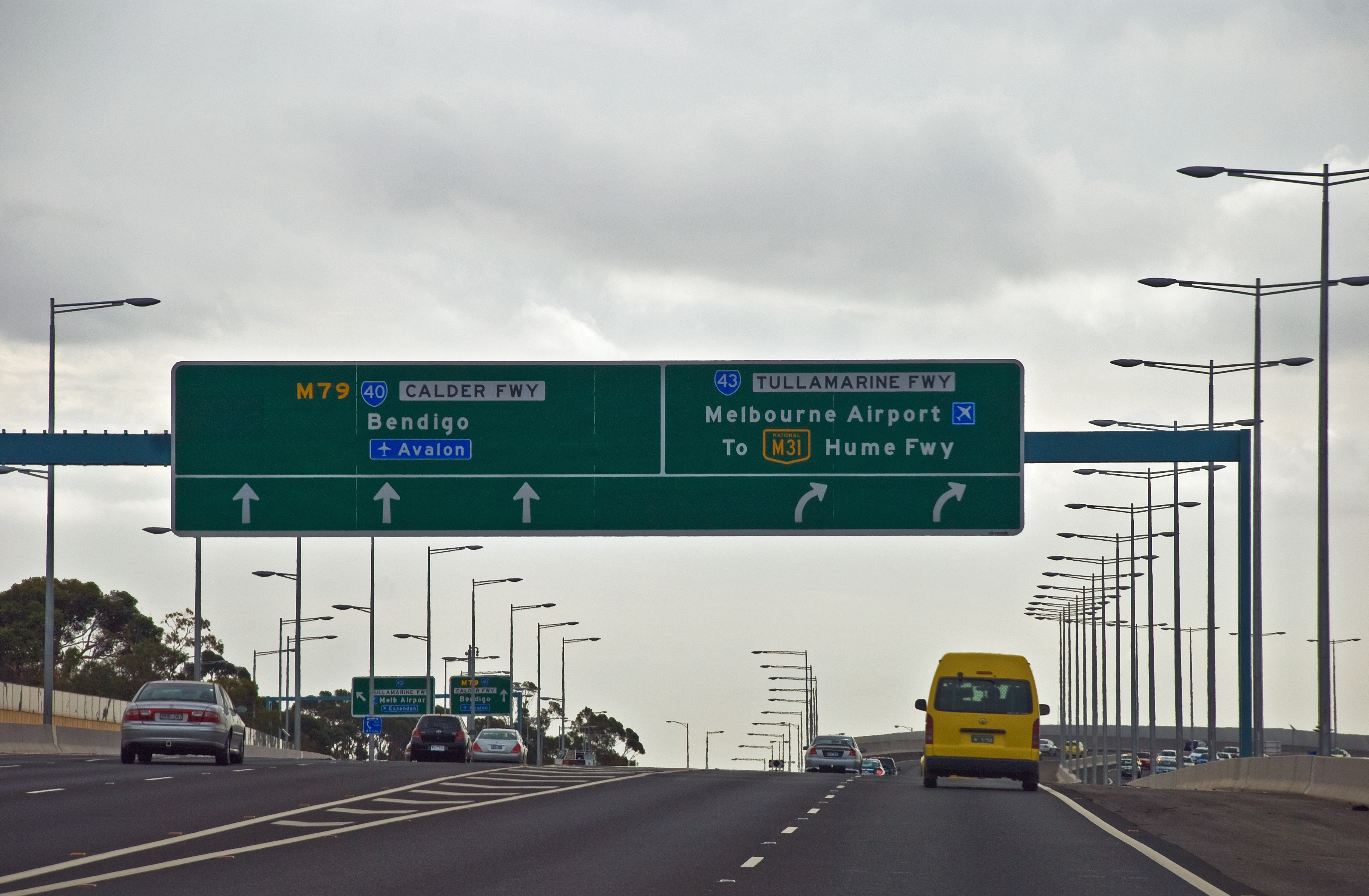
Melbourne Airport is 23 km from the city centre and is accessible via the Tullamarine Freeway. One freeway offramp runs directly into the airport grounds, and a second to the south serves freight transport, taxis, buses and airport staff. In June 2015, the Airport Drive extension was completed, creating a second major link to the airport. The link starts at the M80 Ring Road and provides direct access to Melrose Drive 1.5 kilometres from the terminal area. As of late 2018 the Tullamarine Freeway was widened. In mid-2023, a new exit was constructed specifically for Terminal 4, omitting the other exits in favour of an elevated off-ramp.
Melbourne Airport has five car parks, all of which operate 24 hours a day, 7 days a week. The short-term, multi-level long-term, business and express carparks are covered, while the long-term parking is not.{{cite web |access-date=30 June 2008 |archive-url=https://web.archive.org/web/20080512054552/http://www.melbourneairport.com.au/to_from_airport/parking/ |archive-date=12 May 2008 |url-status=dead
Melbourne Airport recorded more than 2.2 million taxi movements in the year to 30 June 2017.
Public transport
Bus and shuttle services
_Scania_in_Wurundjeri_Way,_2013.JPG)
The SkyBus operates express bus services from the airport to Southern Cross railway station (on the western boundary of the Melbourne central business district) and St Kilda. Shuttle services also operate between the airport and the Mornington Peninsula, making stops in St Kilda, Elsternwick, Brighton and Frankston. SkyBus current transports around 3.4 million passengers between the airport and Melbourne's CBD.
Metropolitan and regional public buses also operate to or via the airport. Routes 478, 479 & 482 operate to Airport West, via the route 59 tram terminus. Route 479 also operates to Sunbury railway station, connecting with Sunbury and Bendigo line trains. Route 901 was introduced in September 2010 as a frequent bus service. Route 901 connects to trains at Broadmeadows (Craigieburn, Seymour, Shepparton and Albury lines), Epping (Mernda line), Greensborough (Hurstbridge line) and Blackburn (Belgrave and Lilydale lines). V/Line operates timetabled regional coach services to Barham and Deniliquin which stop at the airport.
There are nine other bus companies serving the airport, with services to Ballarat, Bendigo, Dandenong, Frankston, Mornington Peninsula, Geelong, Melbourne's suburbs, Shepparton and the Riverina, which provide alternatives to transfer onto other V/Line services.
Future rail connection
Main article: Melbourne Airport rail link

Melbourne Airport does not have a passenger rail connection to and from the city. Constructing a rail link has been discussed in Victorian politics before and since Melbourne Airport opened in 1970.
In 2022, the Andrews state government commenced early construction on Melbourne Airport Rail (SRL Airport), which was first expected to be complete by 2029. However in 2023-24, due to a lack of agreement in negotiations between the state government and the airport operator over the design of the Airport station, major construction has been delayed, with completion now expected by 2033. The 27 km link will run via Sunshine station in Melbourne's west into the central city via the under-construction Metro Tunnel. The link will connect to western regional rail services at Sunshine and to other services on the Metropolitan rail network at Sunshine, Footscray, State Library and Town Hall in the CBD, and Caulfield. The link will be the first direct rail connection to the Airport.
The business case was released in 2022 and was revealed that the Airport station would be elevated at a height of around 6 storeys, minimising construction costs and time. The airport operator, Australia Pacific Airports Corporation (APAC), has initially objected to the elevated station, arguing for it to be built underground in order to safeguard future terminal expansion and improve connectivity to the proposed Suburban Rail Loop. In July 2024, Melbourne Airport agreed to the state government’s preference for an elevated airport station, allowing detailed planning works to resume.
Notes
References
References
- "Hong Kong Airlines set to land as the international market takes off".
- "Airport traffic data". [[Bureau of Infrastructure & Transport Research Economics]].
- "Airport Economic & Social Impact Report 2023". Melbourne Airport.
- {{AIP AU. YMML. link. (10 April 2012)
- "Suburbs in postcode 3045 – Australia Post Codes". Auspostcode.com.
- "Melbourne Int'l Airport 2022 Master Plan (pgs.17,64,73,74)".
- (September 2018). "Australian Domestic Aviation Activity 2017–18". [[Bureau of Infrastructure & Transport Research Economics]].
- (2003). "2003 Annual Report". Melbourne Airport.
- (2010). "2010 Annual Report". Melbourne Airport.
- (22 August 1963). "Report relating to the proposed construction of the Airfield Pavements for the Tullamarine Airport, Victoria". The Parliamentary Standing Committee on Public Works.
- Lucas, Clay. (26 June 2010). "Melbourne Airport train link derailed by buck-passing". The Age.
- (27 November 1962). "Melbourne to Get Jetport in 5-Year Development Plan". [[The New York Times]].
- (29 June 1970). "12,000-Car Melbourne Jam". The New York Times.
- (18 March 1960). "Approval Given For New Melbourne Airport". [[The Canberra Times]].
- (2 April 1965). "Spending on two airports will be increased to £32m.". [[The Canberra Times]].
-
- Essendon Airport, Tullamarine Fwy, Strathmore, VIC, Australia
- (30 June 1970). "Melbourne Airport Feature". The Age.
- Harris, Steve. (30 August 1977). "Lord mayor with a low profile". The Age.
- (3 September 1966). "$750000 new airport restaurant". The Age.
- Alan, Nicholls. (12 August 1968). "Airport planning raises problems". The Age.
- (2 July 1970). "Tullamarine—a city's pride". [[The Canberra Times]].
- "Essendon Airport History". [[City of Moonee Valley]].
- (1998). "1997–1998 Annual Report". Melbourne Airport.
- Moynihan, Stephen. (13 July 2007). "Tiger bites into fares, but Tulla bleeds". The Age.
- Eames, Jim. (1 January 1998). "Reshaping Australia's Aviation Landscape: The Federal Airports Corporation 1986–1998". Focus Publishing.
- Federal Airports Corporation documents, "Bulla Bulla" I.W. Symonds, the late Harry Heaps and Wally Mansfield
- (15 April 2000). "Anderson approves new Melbourne Airport terminal". minister.infrastructure.gov.au.
- (26 August 2002). "Domestic Multi-User Terminal For Melbourne Great For Competition". Melbourne Airport.
- Frost & Sullivan. (25 April 2006). "Airport Privatisation". MarketResearch.com.
- Jim Eames. (1998). "Reshaping Australia's Aviation Landscape: The Federal Airports Corporation 1986–1998". Focus Publishing.
- [http://www.infrastructure.gov.au/aviation/airport/index.aspx Leased Federal Airports, Australian Government Department of Infrastructure and Regional Development] {{Webarchive. link. (6 October 2014 (accessed 4 September 2014))
- (5 December 2000). "New Domestic Express Terminal Opens at Melbourne Airport". Australian Infrastructure Fund.
- "2004 Annual Report". Australia Pacific Airports.
- "2005 Annual Report". Australia Pacific Airports.
- (10 November 2005). "Melbourne – Australia's first fully A380-ready city". Melbourne Airport.
- Barnes, Renee. (14 November 2005). "The Airbus has landed". The Age.
- "[[Seven News".
- (16 June 2008). "The Qantas A380 – Now on sale". Qantas.
- "2006 Annual Report". Australia Pacific Airports.
- "2008 Annual Report". Australia Pacific Airports.
- "APAC Annual report 2017/18".
- "Melbourne Airport passenger performance June 2023 and FY23".
- "Melbourne Airport – Technical". Melbourne Airport.
- "Melbourne Airport – the hub for freight in Australasia". Melbourne Airport.
- "Qantas Club Locations". Qantas.
- "Melbourne Airport – Airline Lounges". Melbourne Airport.
- (9 May 2016). "Etihad Airways' new premium lounge opens at Melbourne airport". Etihad Airways.
- Battersby, Jean. (1996). "Art and Airports 2". Craft Arts International.
- Masanauskas, John. (27 August 2007). "More space promised in Melbourne airport facelift". [[Herald Sun]].
- (25 August 2007). "$330m Expansions to Melbourne's International Terminal". Melbourne Airport.
- Swire, Saffron. "It's official: Melbourne Airport is getting a major international terminal expansion". Time Out Melbourne.
- "Melbourne Airport exploring international terminal expansion".
- (2025-01-14). "The massive changes coming to Melbourne Airport - Executive Traveller".
- May, Tiana. (2025-01-29). "Melbourne Airport Plans International Terminal Expansion".
- "Naarm Way".
- (23 July 2002). "Virgin Blue and Melbourne Airport Reach Terminal Deal". Melbourne Airport.
- "Rex Lounge". Regional Express.
- (26 August 2002). "Domestic Multi-User Terminal For Melbourne Great For Competition". Melbourne Airport Media Releases.
- Platt, Craig. (8 October 2007). "Tiger offers more discount fares". [[Sydney Morning Herald]].
- Murphy, Mathew. (3 May 2007). "Fares to fall as city sinks its claws into Tiger". The Age.
- Murphy, Mathew. (19 May 2008). "Jetstar bid for Tulla expansion". The Age.
- (4 April 2011). "Parkroyal returns to Melbourne with new GM". Hospitality.
- "Accommodation - Melbourne Airport". Melbourne Airport.
- "Melbourne Flight summary". Melbourne Airport.
- "Melbourne Airport – Environment". Melbourne Airport.
- Murphy, Mathew. (5 June 2008). "Plan to fog-proof Melbourne Airport". The Age.
- (28 April 2008). "2008 Draft Master Plan". Melbourne Airport.
- (20 November 2012). "Melbourne Airport plans $500m third runway for 2018–2022".
- (27 June 2019). "Melbourne Airport's long-awaited third runway could change direction". The Age.
- (19 July 2019). "Residents fear 'deafening' noise from third Melbourne Airport runway". The Age.
- (12 September 2024). "Federal government approves third runway for Melbourne airport". The Guardian.
- (13 September 2024). "Melbourne Airport's runway to secure 51,000 jobs for Victoria". Melbourne Airport.
- (13 September 2024). "Residents sound alarm, call for curfew after third Melbourne Airport runway approved". The Age.
- "Air traffic control towers in Australia". Lovell Chen Architects and Heritage Consultants.
- (17 March 2014). "New Melbourne ATC tower officially opened".
- "Melbourne Towers - 2013".
- "Melbourne Centre". [[Airservices Australia]].
- (20 January 2023). "China's "big three" airlines boost flights to Australia - Executive Traveller".
- "Air India Flight from Melbourne Airport to Indira Gandhi International Airport".
- "Auckland, New Zealand AKL".
- "Christchurch, New Zealand CHC".
- "Air New Zealand Flight from Melbourne Airport to Queenstown Airport".
- "Wellington, New Zealand WLG".
- (18 July 2022). "AIRASIA X RESUMES AUCKLAND / MELBOURNE SERVICE IN NOV 2022". Aeroroutes.
- Ashton, Chris. (15 November 2023). "Asiana Airlines launches Melbourne-Seoul flights".
- Liu, Jim. (29 March 2018). "Malindo Air files Melbourne June 2018 launch". Routes Online.
- "Beijing Capital Airlines Adds Hangzhou – Melbourne From June 2024".
- (23 December 2025). "Beijing Capital Resumes Qingdao – Melbourne in late-Jan 2026".
- "Hong Kong (SAR) China HKG".
- (14 December 2022). "CEBU PACIFIC REOPENS MELBOURNE BOOKINGS IN MAR/APR 2023".
- "Taipei, Chinese Taipei TPE".
- (23 June 2015). "China Airlines to Start Melbourne Service from late-Oct 2015". Routes Online.
- Liu, Jim. "China Airlines Files Melbourne – Auckland Schedule in NW24". AeroRoutes.
- Liu, Jim. "China Eastern Adds Nanjing – Melbourne in late-2Q24". AeroRoutes.
- "China Eastern / China Southern Resumes Melbourne Service in late-Jan 2023".
- (5 June 2025). "直飞"超级枢纽"土耳其,西安国际航线密集上新". SOHU.com.
- "China Southern Schedules Beijing – Australia Seasonal Service in NW24".
- (3 February 2025). "Delta announces nonstop flights from Los Angeles to Melbourne". Business Traveller USA.
- "Dubai, United Arab Emirates DXB".
- Flynn, David. (9 December 2024). "Emirates to axe Melbourne-Singapore flights on March 30". Executive Traveller.
- "Abu Dhabi, United Arab Emirates AUH".
- "Fiji Airways Flight from Melbourne Airport to Nadi International Airport".
- (18 December 2025). "Finnair Adding Daily A350-900 Service to Melbourne".
- Harada, Mark. (2 November 2022). "Garuda Indonesia resumes nonstop Melbourne-Bali flights". Karryon.
- Ashton, Chris. (12 October 2022). "Garuda Indonesia restarts Melbourne-Jakarta flights". Business Travel Media Pty Ltd.
- "Hainan Airlines Resumes Haikou – Melbourne From late-June 2023".
- "Hong Kong Airlines Schedules Melbourne Dec 2025 Launch".
- (12 December 2025). "Indonesia AirAsia to launch Denpasar-Melbourne route".
- Liu, Jim. (26 May 2017). "JAL proposes Melbourne launch in Sep 2017". Routes Online.
- "Jetstar Airways Flight from Melbourne Airport to Adelaide Airport".
- "Jetstar Airways Flight from Melbourne Airport to Auckland Airport".
- (11 March 2014). "Jetstar to launch Melbourne-Uluru service". Travel Weekly.
- "Jetstar Airways Flight from Melbourne Airport to Ballina Byron Gateway Airport".
- "Jetstar Airways Flight from Melbourne Airport to Suvarnabhumi Airport".
- "Jetstar Airways Flight from Melbourne Airport to Brisbane Airport".
- (6 April 2022). "Direct flights launched between Melbourne and WA's Margaret River tourism and wine region". [[ABC News (Australia).
- "Jetstar Airways Flight from Melbourne Airport to Cairns Airport".
- (9 May 2022). "Jetstar to fly directly from Canberra to Melbourne, Gold Coast". ABC News.
- "Jetstar Airways Flight from Melbourne Airport to Christchurch International Airport".
- https://newsroom.jetstar.com/jetstar-to-launch-australias-only-low-cost-direct-flights-to-sri-lanka-with-fares-from-just-315/
- "Jetstar Airways Flight from Melbourne Airport to Darwin International Airport".
- "Jetstar Airways Flight from Melbourne Airport to Ngurah Rai International Airport".
- "Jetstar Airways Flight from Melbourne Airport to Gold Coast Airport".
- Nelson, Jake. (14 November 2023). "Jetstar to fly direct between Melbourne and Hervey Bay". [[Australian Aviation]].
- "Jetstar Airways Flight from Melbourne Airport to Hobart Airport".
- (19 January 2017). "Vietnam Just a bargain away with Jetstar to offer direct flights". Herald Sun.
- "Jetstar Airways Flight from Melbourne Airport to Launceston Airport".
- "Jetstar Schedules Melbourne – Nadi Dec 2023 Launch".
- "Jetstar Airways Flight from Melbourne Airport to Newcastle Airport".
- "Jetstar Airways Flight from Melbourne Airport to Perth Airport".
- "Jetstar Airways Flight from Melbourne Airport to Phuket International Airport".
- (11 February 2015). "Qantas and Jetstar Boost Queensland Flying". Qantas.
- "Jetstar Airways Flight from Melbourne Airport to Queenstown Airport".
- (22 October 2021). "Qantas-and-jetstar-gear-up-for-accelerated-border-opening". Qantas.
- "Jetstar Airways Flight from Melbourne Airport to Sunshine Coast Airport".
- "Jetstar Airways Flight from Melbourne Airport to Sydney Kingsford Smith Airport".
- "Jetstar Airways Flight from Melbourne Airport to Townsville Airport".
- "JUNEYAO AIRLINES PLANS MELBOURNE / SYDNEY LATE-DEC 2024 LAUNCH".
- "LATAM Chile Moves Melbourne Service Resumption To Sep 2023".
- "Direct (non-stop) flights from Melbourne to Dubbo".
- "Direct (non-stop) flights from Melbourne to Orange".
- "For all Melbourne flights from 7 January 2024 onwards".
- "Malaysia Airlines Flight from Melbourne Airport to Kuala Lumpur International Airport".
- (19 December 2025). "Luxury Escapes to launch first-ever direct flights from Australia to the Maldives".
- (24 October 2025). "PAL boosting flights to Japan, Australia, other destinations".
- "Qantas Airways Flight from Melbourne Airport to Adelaide Airport".
- "Qantas Airways Flight from Melbourne Airport to Alice Springs Airport".
- "Qantas Airways Flight from Melbourne Airport to Auckland Airport".
- "Qantas Airways Flight from Melbourne Airport to Brisbane Airport".
- "Qantas Airways Flight from Melbourne Airport to Cairns Airport".
- "Qantas Airways Flight from Melbourne Airport to Canberra Airport".
- "Qantas Airways Flight from Melbourne Airport to Christchurch International Airport".
- (26 March 2022). "DFW Airport Offering Non-Stop Qantas Service to Melbourne".
- "Qantas Airways Flight from Melbourne Airport to Darwin International Airport".
- (7 February 2018). "Qantas Announces Daily Melbourne-Bali Service Launch". Qantas.
- Chamberlain, Chris. (22 July 2015). "Qantas to start Melbourne-Gold Coast flights from October". Australian Business Traveller.
- "Qantas Airways Flight from Melbourne Airport to Hobart Airport".
- "Qantas resumes Hong Kong in June". Executive traveller.
- Flynn, David. (17 November 2022). "Qantas will restart Hong Kong flights in January 2023". Executive Traveller.
- (2 February 2023). "QANTAS RESUMES MELBOURNE – JAKARTA SERVICE FROM APRIL 2023".
- "Qantas Airways Flight from Melbourne Airport to Los Angeles International Airport".
- "Qantas Airways Flight from Melbourne Airport to Perth Airport".
- (26 February 2019). "Get Your Skis On: Qantas Launches Direct Flights From Melbourne to Queenstown". Qantas.
- "Qantas Airways Flight from Melbourne Airport to Singapore Changi Airport".
- "Qantas Airways Flight from Melbourne Airport to Sunshine Coast Airport".
- "Qantas Airways Flight from Melbourne Airport to Sydney Kingsford Smith Airport".
- (19 May 2023). "Qantas boosts international network: restoring capacity, adding more aircraft, launching new routes".
- "Qantas Airways Flight from Melbourne Airport to Wellington International Airport".
- "Direct (non-stop) flights from Broome to Melbourne".
- (6 February 2025). "Air India cuts Melbourne flights - Executive Traveller".
- "Flight Results: (MEL) Melbourne Tullamarine - (ADL) Adelaide Int'l".
- "Qantas to scrap Wagga and Albury flights to Melbourne".
- "Australian domestic flight network {{pipe}} Qantas".
- (7 May 2021). "QANTAS Heads Back to Burnie". QANTAS.
- "Flight Results: (MEL) Melbourne Tullamarine - (CBR) Canberra Int'l".
- "Qantas adds new routes to north coast for holidays by the sea".
- "Flight Results: (MEL) Melbourne Tullamarine - (DPO) Devonport".
- "Qantas / Jetstar Adjusts Hamilton Island / Proserpine Service in 4Q25".
- "Flight Results: (MEL) Melbourne Tullamarine - (HBA) Hobart Int'l".
- "Flight Results: (MEL) Melbourne Tullamarine - (LST) Launceston".
- "Flight Results: (MEL) Melbourne Tullamarine - (MQL) Mildura".
- (25 May 2021). "Qantas adds seven routes, increases widebody flying". RoutesOnline.
- (3 December 2025). "Qatar Airways Resumes 777 Flights to Best City in the World for Quality of Life".
- "Direct (non-stop) flights from Melbourne to Burnie".
- "Direct (non-stop) flights from Melbourne to Devonport".
- "Direct (non-stop) flights from Melbourne to King Island".
- "Direct (non-stop) flights from Melbourne to Merimbula".
- "Direct (non-stop) flights from Melbourne to Mildura".
- "Direct (non-stop) flights from Melbourne to Mount Gambier".
- "Direct (non-stop) flights from Melbourne to Wagga Wagga".
- "Royal Brunei Airlines (RBA) Flight from Melbourne to Bandar Seri Begawan".
- "Singapore, Singapore SIN".
- "Shenzhen Airlines Schedules Melbourne late-Dec 2025 Launch".
- "Sichuan Airlines NS23 International / Regional Service Changes".
- "Victoria Lands More Non-Stop Flights From China".
- "Singapore, Singapore SIN".
- Liu, Jim. (29 May 2017). "SriLankan Airlines resumes Melbourne service from Oct 2017". Routes Online.
- "Bangkok, Thailand BKK".
- "Turkish Airlines Moves Melbourne Launch to early-March 2024".
- "Turkish Airlines Moves Melbourne Launch to early-March 2024".
- "United Airlines Flight from Melbourne Airport to Los Angeles International Airport".
- "United Airlines Flight from Melbourne Airport to San Francisco International Airport".
- "Ho Chi Minh City, Viet Nam SGN".
- Ashton, Chris. (11 January 2023). "Vietjet locks in flights to Brisbane, Sydney and Melbourne".
- "Hanoi, Viet Nam HAN".
- "Vietnam Airlines Adds Hanoi – Melbourne Route From June 2023".
- "Ho Chi Minh City, Viet Nam SGN".
- "Virgin Australia Flight from Melbourne Airport to Adelaide Airport".
- (21 November 2023). "Virgin Australia to fly to Uluru from Melbourne and Brisbane". news.com.au.
- "Virgin Australia Flight from Melbourne Airport to Brisbane Airport".
- "Virgin Australia Flight from Melbourne Airport to Cairns Airport".
- "Virgin Australia Flight from Melbourne Airport to Canberra Airport".
- "Virgin Australia Flight from Melbourne Airport to Darwin International Airport".
- "Virgin Australia retires three planes and routes after business review".
- "Virgin Australia Adds Melbourne – Doha Service in NW25".
- "Virgin Australia Flight from Melbourne Airport to Gold Coast Airport".
- "Virgin Australia Flight from Melbourne Airport to Hamilton Island".
- "Virgin Australia Flight from Melbourne Airport to Hobart Airport".
- "Virgin Australia Flight from Melbourne Airport to Launceston Airport".
- "Virgin Australia Flight from Melbourne Airport to Nadi International Airport".
- "Virgin Australia Flight from Melbourne Airport to Newcastle Airport".
- "Virgin Australia Flight from Melbourne Airport to Perth Airport".
- (16 April 2018). "Virgin Australia launches Queenstown, Wellington flights". Australian Business Traveller.
- "Virgin Australia Flight from Melbourne Airport to Sunshine Coast Airport".
- "Virgin Australia Flight from Melbourne Airport to Sydney Kingsford Smith Airport".
- "Xiamen Air Flight from Melbourne Airport to Xiamen Gaoqi International Airport".
- "Qantas Antarctic Sightseeing Flights".
- https://www.ch-aviation.com/news/159040-asl-airlines-australia-launches-trans-tasman-ops
- [https://www.cathaypacificcargo.com/en-us/manageyourshipment/checkflightschedule.aspx cathaypacificcargo.com - Check Flight Schedule] retrieved 17 December 2022
- [https://freight.qantas.com/freight-planning/flight-schedule.html freight.qantas.com - Freighter schedule] retrieved 17 December 2022
- [https://www.siacargo.com/network.asp siacargo.com - Network] retrieved 17 December 2022
- "DHL ADDS MELBOURNE-NEW ZEALAND FREIGHTER SERVICE". Australian Aviation.
- "Changi Airport Freight Arrivals".
- "Airport traffic data: 1985–86 to 2021-22".
- "Movements at Australian airports: Financial Year 2017".
- "Heraldsun.com.au {{!}} Subscribe to the Herald Sun for exclusive stories".
- "Airport Traffic Data 1985 to 2022".
- (2 October 2025). "Domestic Aviation Activity 2024-25".
- "International Airline Activity— Monthly Publications".
- (2020). "Australian International Airline Activity 2019". Bureau of Transport and Regional Economics.
- (20 March 2009). "AO-2009-012: Tail strike, Airbus Industrie, A340-541, A6-ERG, Melbourne Airport, Vic, 20 March 2009". [[Australian Transport Safety Bureau]].
- (2022-10-10). "Skipped security sends Melbourne Airport passengers back through screening". ABC News.
- (2022-10-10). "Melbourne airport terminal partly shut down and flights delayed after 'inadvertent' security breach".
- "Security breach sparks chaos at Melbourne Airport".
- (2023-09-18). "Runway excursions on take-off involving Airbus A330-323, 9M-MTL and Boeing 787-9, VN-A819, at Melbourne Airport, Victoria, on 7 and 18 September 2023".
- (30 November 2023). "Two passenger jets metres from disaster in near misses at Melbourne Airport | 7 News Australia".
- (20 April 1998). "Melbourne Airport Voted in Top 5 World Airports". Melbourne Airport Media Releases.
- (3 June 2003). "Melbourne's Airport – A World Class Operator". Melbourne Airport Media Releases.
- (16 October 1998). "Melbourne Airport Wins Australian Tourism Award". Melbourne Airport Media Releases.
- (1 December 2000). "Second Major Australian Tourism Award for Melbourne Airport". Melbourne Airport Media Releases.
- (25 June 2004). "Melbourne Airport awarded by Singapore Airlines". Melbourne Airport Media Releases.
- (20 June 2006). "Runway widening project wins major Aust. construction award". Melbourne Airport Media Releases.
- "PARKROYAL Melbourne Airport is voted the Best Airport Hotel in Australia/Pacific region by customers".
- "The World's Top Airports".
- (28 February 2018). "World's Top 100 Airports 2018".
- "Second Airport entry road opens". Melbourne Airport.
- "Airport Drive Extension & Steele Creek North Project". Melbourne Airport.
- "CityLink Tulla Widening".
- (15 August 2017). "UberX at Melbourne Airport".
- "Melbourne City Express".
- "St Kilda Express".
- "Frankston & Peninsula Airport Shuttle".
- "Locations – Frankston and Peninsula Airport Shuttle".
- "About SkyBus".
- "SmartBus Route 901". transport.vic.gov.au.
- Metro Trains Melbourne. (21 September 2010). "New SmartBus direct to Melbourne Airport". metrotrains.com.au.
- "Airport buses".
- "Other Bus Services – To and From the Airport". Melbourne Airport.
- "SRL Airport Takes Flight As Works Begin".
- Nelson, Jake. (7 May 2024). "Victorian Government Confirms Four-Year Delay for Airport Rail".
- (2022-09-21). "Plans released for Keilor East train station and above-ground Melbourne Airport station". ABC News.
- (8 July 2024). "Melbourne Airport agrees to have overground train station, clearing path for rail link". The Age.
This article was imported from Wikipedia and is available under the Creative Commons Attribution-ShareAlike 4.0 License. Content has been adapted to SurfDoc format. Original contributors can be found on the article history page.
Ask Mako anything about Melbourne Airport — get instant answers, deeper analysis, and related topics.
Research with MakoFree with your Surf account
Create a free account to save articles, ask Mako questions, and organize your research.
Sign up freeThis content may have been generated or modified by AI. CloudSurf Software LLC is not responsible for the accuracy, completeness, or reliability of AI-generated content. Always verify important information from primary sources.
Report