From Surf Wiki (app.surf) — the open knowledge base
Meizhou

| Field | Value | |
|---|---|---|
| name | Meizhou | |
| official_name | ||
| native_name | 梅州市 | |
| native_name_lang | zh | |
| other_name | Mòichû | |
| motto | Capital of Hakkas in the World | |
| nickname | Kezhou (客州) | |
| settlement_type | Prefecture-level city | |
| <!-- images and maps -----------> | image_skyline | {{multiple image |
| border | infobox | |
| total_width | 300 | |
| perrow | 2/2/1 | |
| image1 | Meizhou Xuegong 2013.10.02 12-06-13.jpg | |
| image2 | 梅州千佛塔寺牌坊.jpg | |
| image3 | XingNing.JPG | |
| alt3 | Xing Ning Street | |
| image_caption | From top, left to right: , , , Paifang in Dabu County, Xing Ning Street. | |
| mapframe | yes | |
| mapframe-zoom | 7 | |
| coor_pinpoint | Meizhou municipal government | |
| coordinates | ||
| pushpin_map | China | |
| pushpin_map_caption | Location in China | |
| --> | subdivision_type | Country |
| subdivision_name | People's Republic of China | |
| subdivision_type1 | Province | |
| subdivision_name1 | Guangdong | |
| seat_type | Municipal seat | |
| seat | Meijiang District | |
| parts_style | ||
| parts | ||
| p2 | ||
| leader_title | CPC Committee Secretary | |
| leader_title1 | Mayor | |
| established_title | ||
| established_title1 | ||
| established_title2 | ||
| named_for | ||
| area_magnitude | ||
| unit_pref | ||
| area_total_km2 | 15864.51 | |
| area_land_km2 | ||
| area_urban_km2 | 3047.5 | |
| area_metro_km2 | 3047.5 | |
| area_blank1_km2 | ||
| elevation_footnotes | ||
| elevation_m | 96 | |
| elevation_min_ft | ||
| population_as_of | 2020 census | |
| population_total | 3873239 | |
| population_density_km2 | auto | |
| population_metro | 992351 | |
| population_density_metro_km2 | auto | |
| population_urban | 992351 | |
| population_density_urban_km2 | auto | |
| population_blank1_title | Major Nationalities | |
| population_blank1 | Han | |
| demographics_type2 | GDP | |
| demographics2_title1 | Prefecture-level city | |
| demographics2_info1 | CN¥ 130.8 billion | |
| US$ 20.3 billion | ||
| demographics2_title2 | Per capita | |
| demographics2_info2 | CN¥ 33,764 | |
| US$ 5,234 | ||
| <!-- General information ---------------> | blank7_name | Languages |
| blank7_info | Standard Chinese (official); Hakka (regional) | |
| timezone | China Standard | |
| utc_offset | +8 | |
| <!-- Area/postal codes & others --------> | postal_code_type | Postal Code |
| postal_code | 514000 | |
| area_code | 753 | |
| iso_code | CN-GD-14 | |
| blank_name | License Plate Prefix | |
| blank_info | 粤M | |
| website |
| mapframe-zoom = 7 --| subdivision_type = Country Default is list if up to 5 items, coll if more than 5-- US$ 20.3 billion US$ 5,234 Meihsien (former) Kaying (former; pre-1912) Meizhou (, Hakka Chinese: Mòichû) is a prefecture-level city in eastern Guangdong province, China. It has an area of 15864.51 km², and a population of 3,873,239 as of the 2020 census. It comprises Meijiang District, Meixian District, Xingning City and five counties. Its built-up or metro area made up of two urban districts was home to 992,351 inhabitants.
History
Neolithic age stone tools and pottery have been discovered in dozens of places in the Meixian district of Meizhou. Ancient kiln sites from the Western Zhou dynasty and bells from the Warring States period were also found. Before the Qin dynasty, Meizhou was under Nanyue rule. After Qin unified the Nanyue, Meizhou was belonged to Nanhai Commandery.
The original name of Meizhou was Chengxiang (程乡), established under the prefecture of Jingzhou during the Southern Han (917–971). The name was changed to Meizhou at the 10th century and Jiaying Prefecture at the 15th century. After 1912, it was changed back to Meizhou, the name comes from the Mei River and the Chinese name for the plum blossom (). After several subsequent shifts of jurisdiction, it became Meizhou City in 1988. Meizhou is now a noted historical and cultural city.{{cite web |access-date = 2006-12-27 |url-status = dead |archive-url = https://web.archive.org/web/20061212110609/http://www.chinaculture.org/gb/en_travel/2003-09/24/content_35994.htm |archive-date = 2006-12-12
Geography and climate
Meizhou is located in the northeast of Guangdong Province, bordering Fujian Province in the northeast and Jiangxi Province in the northwest. The complex geological structure was formed mainly from granite, spouting rocks, metamorphic rock, shale, sandstone, red rock and limestone.Its administrative area ranges in latitude from 23° 23' to 24° 56' N and in longitude from 115° 18' to 116° 56' E, covering an area of 15836 km2.{{cite web
Meizhou has a humid subtropical climate (Köppen Cfa), with short, mild, overcast winters and long, very hot, humid summers. The monthly daily average temperature in January is 12.6 °C, and in July is 28.9 °C. From April to June, rainfall is the heaviest and most frequent. Though striking typhoons do not affect the area as much as the coast, the mountainous topography means that flooding is a serious concern. Record temperatures in the city have raged from -7.3 °C on January 12, 1955 (lowest reliably temperature ever recorded in Guangdong Province) to 39.5 °C in July 25, 1971.
| Jan record high C = 29.5 | Jan record low C = -7.3 | Feb record high C = 33.0 | Feb record low C = -1.4 | Mar record high C = 33.4 | Mar record low C = 0.3 | Apr record high C = 36.0 | Apr record low C = 7.6 | May record high C = 37.4 | May record low C = 13.4 | Jun record high C = 38.4 | Jun record low C = 17.6 | Jul record high C = 39.5 | Jul record low C = 20.5 | Aug record high C = 38.6 | Aug record low C = 19.9 | Sep record high C = 38.0 | Sep record low C = 15.1 | Oct record high C = 36.3 | Oct record low C = 5.0 | Nov record high C = 34.8 | Nov record low C = 0.4 | Dec record high C = 30.2 | Dec record low C = -3.3 | script-title=zh:梅州 – 气象数据 -中国天气网 | access-date = 27 November 2022}}
Administration
The municipal government, Intermediate Court, CPC office and Public Security Bureau are located in the Jiangnan Subdistrict of the Meijiang District, on the right bank of Mei River.
- A second district of Meizhou is Jiangbei (江北), on the left bank. The two urban areas are joined by many road and foot bridges. Both of these are subdistricts of Meijiang District.
| Map | Name | Simplified Chinese | Hanyu Pinyin | Population | ||
|---|---|---|---|---|---|---|
| (2010 census) | Area | |||||
| (km2) | Density | |||||
| (/km2) | ||||||
| Meijiang District | 梅江区 | Méijiāng Qū | 380,771 | 570.62 | 667 | |
| Meixian District | 梅县区 | Méixiàn Qū | 554,745 | 2,476.87 | 224 | |
| Dabu County | 大埔县 | Dàbù Xiàn | 374,666 | 2,461.82 | 152 | |
| Fengshun County | 丰顺县 | Fēngshùn Xiàn | 478,974 | 2,706.34 | 177 | |
| Wuhua County | 五华县 | Wǔhuá Xiàn | 1,050,528 | 3,237.83 | 324 | |
| Pingyuan County | 平远县 | Píngyuǎn Xiàn | 230,045 | 1,373.98 | 167 | |
| Jiaoling County | 蕉岭县 | Jiāolǐng Xiàn | 205,849 | 961.64 | 214 | |
| Xingning | 兴宁市 | Xīngníng Shì | 962,883 | 2,075.39 | 464 |
Economy
Meizhou is rich in mineral and tourism resources. It has 48 kinds of minerals including coal, iron, limestone, rare clay and porcelain clay amongst others. Of these reserves manganese is ranked first in Guangdong Province. Meizhou has plenty of water resources, hot springs and certified mineral waters. There are tourism resources such as cultural historic sites constructed during the Tang dynasty, former residences of notable figures, natural scenery of all kinds, and unique Hakka cultural sights.{{cite web |access-date=2006-12-27 |archive-url=https://web.archive.org/web/20061014114829/http://www.gddoftec.gov.cn/sq/en/tz_mz.html |archive-date=2006-10-14 |url-status=dead
Transport
Meizhou is a communication hub for the three provinces of Guangdong, Fujian, and Jiangxi and the bridge connecting the coastal and the inland areas. State Highways 205 and 206 run across the city. Expressways, state, provincial county and village highways extend to all parts.
In 2019 the city became the terminus for the Meizhou–Chaoshan high-speed railway which opened a new station at providing high-speed rail links to Guangzhou, Zhuhai, Shenzhen, Shantou, Chaoshan, Yichang and Xiamen. The Guangzhou–Meizhou–Shantou railway and Meizhou-Kanshi Railway use Meizhou railway station in the city providing regular rail connections to Guangzhou, Xiamen, Shantou, Shenzhen, Dapu, Wuchang and Kunming.
The city is served by the regional Meizhou Meixian Airport, with regular air routes to Guangzhou and Hong Kong. By water, the Mei River and Han River reach Chaozhou and Shantou.
Culture
The Meixian dialect is considered the standard Hakka dialect, along with the neighboring Mei County and Dabu County.
Hakka people are a unique ethnic group of Han Chinese originally from around the Yellow River area, who later migrated south to avoid the chaos of war centuries ago. Due to hostility towards the new immigrants, many were forced into the mountainous regions of Guangdong Province. This migratory tradition has continued with the redistribution of Hakka people to the most remote parts of the world. Many people in Meizhou emigrated during the last century to earn money for their families, with some returning to build in their hometowns.
Many buildings are named after famous people in Meizhou, built by returning Hakkas and overseas diaspora Hakkas.
Because of its mountainous location, Meizhou has numerous natural scenic areas and good air quality. Many visitors come to the Yannanfei Tea Garden to climb the mountain.
Education
Education in Meizhou has been highly valued since ancient times. The city is home to Jiaying University, a local university which also attracts Hakka students from other provinces. The university is also known for its research into Hakka culture.
Food
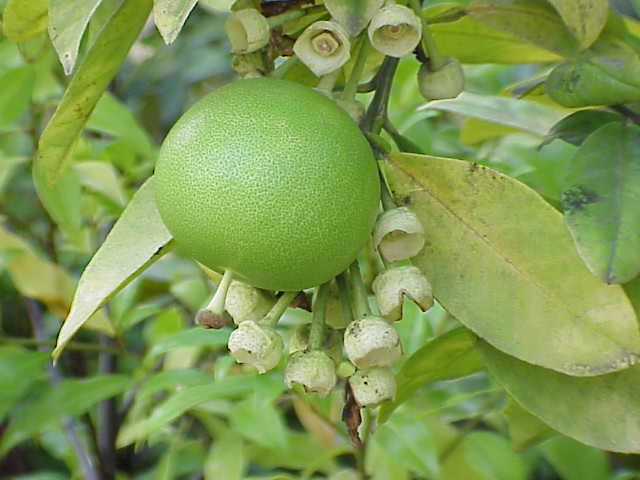
During the period after August or September, a sea of pomelos can be seen, especially in village orchards.
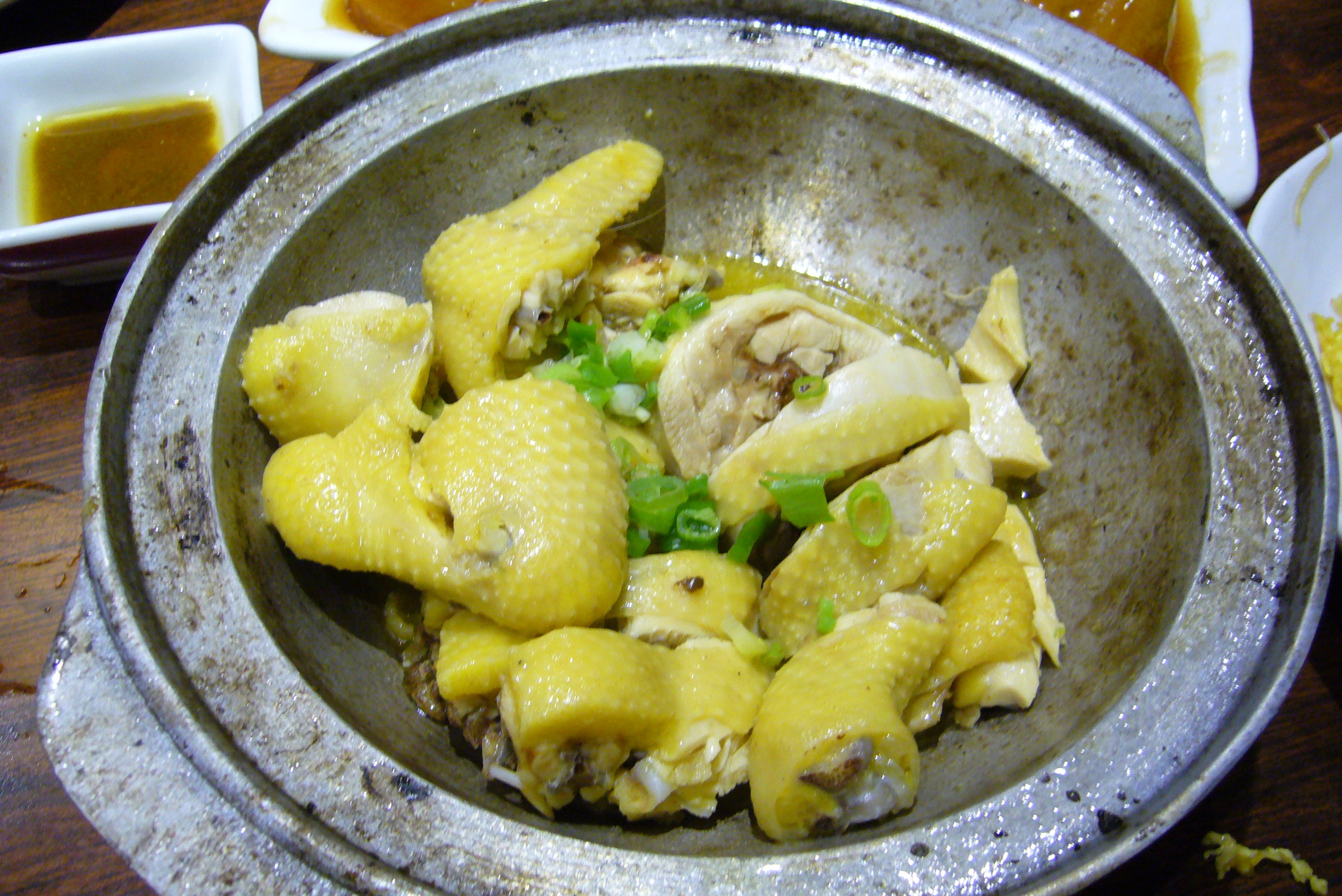
Salt baked chicken is among the most well-known Hakka dishes, found also in many other cities. Another local dish is Yong tau foo (stuffed tofu). It is said that when Hakka people first came south, there was no wheat flour for dumplings. So they substituted tofu. Meat based fillings give a special taste that became a feature of Hakka cuisine. Preserved beef and ginger candies are also locally popular.
Notable people

- Low Lan Pak, founder of the Lanfang Republic and first Chinese person to be titled as 'President'.
- Tjong Yong Hian (1850–1911), Chinese Hakka kapitan governor of Medan.
- Tjong A Fie (18601921), Hakka Chinese businessman, banker and kapitan (Chinese major) who built a large plantation business in Sumatra, Indonesia.
- Huang Zunxian (18481905), diplomat and reformer
- Francis Xavier Ford (18921952), first Catholic bishop of Meizhou (Kaying)
- Xie Jinyuan (19051941), Chinese Nationalist military officer famous for commanding the Defense of Sihang Warehouse during the Battle of Shanghai in the Second World War.
- Seng Saekhu (unknown), Thai Chinese tax farmer, the patriarch of the Shinawatra clan and the great-grandfather of Thaksin Shinawatra (Thai businessman, politician, visiting professor and former Prime Minister of Thailand) and Yingluck Shinawatra (Thai businesswoman, politician, member of the Pheu Thai Party and Thailand's first female prime minister).
- Ye Jianying (18971986), Chinese military general
- Lin Fengmian (19001991), painter
- Lee Wai Tong (19051979), Chinese footballer
- Arthur Chung (19182008), 1st President of Guyana
- Liu Fuzhi (19172013), Chinese politician
- Bolo Yeung (1946), Hong Kong bodybuilder, martial artist and actor
- Leslie Cheung (19562003), Hong Kong Cantopop singer
- Zhu Fenglian (1977), spokesperson of the Taiwan Affairs Office
- Chen Qiqiu (1978), former badminton player and currently a coach
- Liu Xijun (1988), singer
- Jana Chen (1989), singer
- Nathan Tjoe-A-On (2001), Indonesian footballer of Hakka ancestry
Gallery
File:Meizhou New Century Square.jpg|Jiaying University, Meizhou - New Century Square (located in the center of the main campus) File:Youluo Street, Meizhou (20200929092821).jpg|Youluo Street, Meizhou File:Mei Zhou.jpg|Meizhou street corner.
Demographics
According to the Seventh National Census in 2020, the city's Permanent Population (hukou) was 3,873,239. Compared with 4240,139 in the Sixth National census in 2010, this represents a decrease of 366,900 people or 8.65 percent over the decade.Among the permanent residents of the city, the male population is 1952489, accounting for 50.41%; The female population was 1,920,750, or 49.59%. The sex ratio of the total population (100 females, male to female ratio) increased from 100.44 in the sixth National census in 2010 to 101.65.
References
References
- "China: Guăngdōng (Prefectures, Cities, Districts and Counties) – Population Statistics, Charts and Map".
- 广东省统计局、国家统计局广东调查总队. (August 2016). "《广东统计年鉴-2016》". [[China Statistics Press]].
- "China: Guăngdōng (Prefectures, Cities, Districts and Counties) – Population Statistics, Charts and Map".
- [http://www.gznet.edu.cn/WWW/scn/guangdong/e_mz.html Origin of the name Meizhou] {{webarchive. link. (2013-11-04)
- (January 2024). "梅州市梅江区水土保持规划(2022-2035年)".
- link. [[China Meteorological Administration]]
- "Meizhou West Station Departure Info".
- "Meizhou Station Departure Info".
- "Meizhou City – Transport".
- Far East Society
- "梅州市人民政府门户网站 统计公报 梅州市第七次全国人口普查公报(第一号至第六号)".
This article was imported from Wikipedia and is available under the Creative Commons Attribution-ShareAlike 4.0 License. Content has been adapted to SurfDoc format. Original contributors can be found on the article history page.
Ask Mako anything about Meizhou — get instant answers, deeper analysis, and related topics.
Research with MakoFree with your Surf account
Create a free account to save articles, ask Mako questions, and organize your research.
Sign up freeThis content may have been generated or modified by AI. CloudSurf Software LLC is not responsible for the accuracy, completeness, or reliability of AI-generated content. Always verify important information from primary sources.
Report