From Surf Wiki (app.surf) — the open knowledge base
Mehdi Bazargan
Iranian politician and activist (1907–1995)
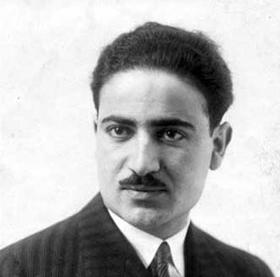
Iranian politician and activist (1907–1995)
| Field | Value | |||||||||
|---|---|---|---|---|---|---|---|---|---|---|
| name | Mehdi Bazargan | |||||||||
| image | Portrait of Mehdi Bazargan - 70s.jpg | |||||||||
| caption | Bazargan in 1979 | |||||||||
| order | 41st | |||||||||
| office | Prime Minister of Iran | |||||||||
| term_start | 4 February 1979The office was disputed between him and Shapour Bakhtiar from 4 to 11 February 1979. | |||||||||
| term_end | 6 November 1979 | |||||||||
| appointer | Ruhollah Khomeini | |||||||||
| predecessor | Shapour Bakhtiar | |||||||||
| successor | Mohammad-Ali Rajai (1980) | |||||||||
| office2 | Minister of Foreign Affairs | |||||||||
| Acting | ||||||||||
| primeminister2 | Himself | |||||||||
| term_start2 | 1 April 1979 | |||||||||
| term_end2 | 12 April 1979 | |||||||||
| predecessor2 | Karim Sanjabi | |||||||||
| successor2 | Ebrahim Yazdi | |||||||||
| office3 | Member of the Parliament of Iran | |||||||||
| constituency3 | Tehran, Rey and Shemiranat | |||||||||
| term_start3 | 28 May 1980 | |||||||||
| term_end3 | 28 May 1984 | |||||||||
| majority3 | 1,447,316 (68%) | |||||||||
| birth_name | Mehdi Bazargan | |||||||||
| birth_date | 1 September 1907 | |||||||||
| birth_place | Tehran, Sublime State of Iran | |||||||||
| nationality | Iranian | |||||||||
| death_date | ||||||||||
| death_place | Zürich, Switzerland | |||||||||
| resting_place | Fatima Masumeh Shrine, Qom, Islamic Republic of Iran | |||||||||
| alma_mater | {{plainlist | |||||||||
| party | {{plainlist | |||||||||
| *Iran Party <ref>{{cite book | last | Abrahamian | first=Ervand | year=1982 | title=Iran Between Two Revolutions | isbn=0-691-10134-5 | publisher=Princeton University Press | pages=190–191 | url-access=registration | url=https://archive.org/details/iranbetweentwore00abra_0/page/190}} |
| otherparty | {{plainlist | |||||||||
| *ADFSIN <ref>{{cite book | title | Human Rights in Iran: The Abuse of Cultural Relativism | last=Afshari | first=Reza | date=2011 | publisher=University of Pennsylvania Press | page=358 | isbn=9780812201055}} | ||
| *Eponym Group <ref>{{cite book | author | Bahman Bakhtiari | title=Parliamentary Politics in Revolutionary Iran: The Institutionalization of Factional Politics | publisher=University Press of Florida | pages=69 | date=1996 | isbn=0813014611}} | |||
| *ICDFHR <ref>{{cite book | first1 | Houchang | last1=Chehabi | title=Between States: Interim Governments in Democratic Transitions | chapter=A Knife Without a Blade | date=1995 | publisher=Cambridge University Press | isbn=978-0-521-48498-5 | pages=132}} | |
| spouse | Malak Tabatabai | |||||||||
| children | 5, including Abdolali | |||||||||
| signature | Mehdi Bazargan signature.svg | |||||||||
| footnotes | ||||||||||
| allegiance | Imperial State of Iran | |||||||||
| serviceyears | 1935–1937 | |||||||||
| native_name_lang | fa | |||||||||
| native_name |
Acting
- École Centrale Paris
- Lycée Clemenceau}}
- Freedom Movement of Iran (1961–1995)
- National Front (1949–1961)
- Iran Party (1941–1946)
- ADFSIN (1986–1990)
- Eponym Group (1980)
- ICDFHR (1977–1979) Mehdi Bazargan (; 1 September 1907 – 20 January 1995) was an Iranian scholar, academic, long-time pro-democracy activist and head of Iran's interim government.
One of the leading figures of Iranian Revolution of 1979, he was appointed prime minister in February 1979 by Ayatollah Khomeini, making him Iran's first prime minister after the revolution. He resigned his position in November of the same year, in protest at the takeover of the U.S. Embassy in Iran and as an acknowledgement of his government's failure in preventing it.
He was the head of the first engineering department of University of Tehran.
Early life and education
Bazargan was born into an Azerbaijani family His father, Hajj Abbasqoli Tabrizi (died 1954) was a self-made merchant and a religious activist in bazaar guilds.
Bazargan went to France to receive university education through an Iranian government scholarship during the reign of Reza Shah. He attended Lycée Georges Clemenceau in Nantes and was a classmate of Abdollah Riazi. Bazargan then studied thermodynamics and engineering at the École Centrale des Arts et Manufactures (École Centrale Paris).
Following his return to Iran, Bazargan was called up for conscription, and served from 1935 to 1937. According to Houchang Chehabi, Bazargan was first assigned menial tasks but then translated technical articles from French.
Career
After his graduation, Bazargan became the head of the first engineering department at Tehran University in the late 1940s. He was a deputy minister under Premier Mohammad Mosaddegh in the 1950s. Bazargan served as the first Iranian head of the National Iranian Oil Company under the administration of Prime Minister Mosaddegh.
Bazargan co-founded the Liberation Movement of Iran in 1961,
Iranian Revolution
On 4 February 1979, Bazargan was appointed prime minister of Iran by Ayatollah Ruhollah Khomeini. He was seen as one of the democratic and liberal figureheads of the revolution who came into conflict with the more radical religious leaders – including Khomeini himself – as the revolution progressed. Although pious, Bazargan initially disputed the name Islamic Republic, wanting an Islamic Democratic Republic. He had also been a supporter of the original (non-theocratic) revolutionary draft constitution, and opposed the Assembly of Experts for Constitution and the constitution they wrote that was eventually adopted as Iran's constitution. Seeing his government's lack of power, in March 1979, he submitted his resignation to Khomeini. Khomeini did not accept his resignation,
Bazargan resigned, along with his cabinet, on 4 November 1979, following the taking of hostages at the U.S. Embassy. His resignation was considered a protest against the hostage-taking and a recognition of his government's inability to free the hostages, but it was also clear that his hopes for liberal democracy and an accommodation with the West would not prevail.
Bazargan continued in Iranian politics as a member of the first Parliament (Majles) of the newly formed Islamic Republic. He openly opposed the Cultural Revolution and continued to advocate civil rule and democracy. In November 1982, he expressed his frustration with the direction the Islamic Revolution had taken in an open letter to the then speaker of parliament Akbar Hashemi Rafsanjani.
The government has created an atmosphere of terror, fear, revenge and national disintegration. ... What has the ruling elite done in nearly four years, besides bringing death and destruction, packing the prisons and the cemeteries in every city, creating long queues, shortages, high prices, unemployment, poverty, homeless people, repetitious slogans and a dark future?

His term as a member of parliament lasted until 1984. During his term, he served as a lawmaker of the Freedom Movement of Iran, which he had founded in 1961, and which was abolished in 1990. In 1985, the Council of Guardians denied Bazargan's petition to run for president.
Views
Bazargan was a respected figure within the ranks of modern Muslim thinkers, known as a representative of liberal-democratic Islamic thought and a thinker who emphasized the necessity of constitutional and democratic policies. In the immediate aftermath of the revolution Bazargan led a faction that opposed the Revolutionary Council dominated by the Islamic Republican Party and personalities such as Ayatollah Mohammad Hosseini Beheshti. He opposed the continuation of the Iran–Iraq War and the involvement of Islamists in all aspects of politics, economy and society. Consequently, he faced harassment from militants and young revolutionaries within Iran.
Attacks
On 8 April 1978, Bazargan's house in Tehran was bombed. The underground committee for revenge, a reputed state-financed organization, proclaimed the responsibility of the bombing.
Laws of social evolution
Bazargan is known for some of the earliest work in human thermodynamics, as found in his 1946 chapter "A Physiological Analysis of Human Thermodynamics" and his 1956 book Love and Worship: Human Thermodynamics, the latter of which being written while in prison, in which he attempted to show that religion and worship are a byproduct of evolution, as explained in English naturalist Charles Darwin's On the Origin of Species (1859), and that the true laws of society are based on the laws of thermodynamics.
Death
Bazargan died of a heart attack on 20 January 1995 at a hospital in Zurich, Switzerland after collapsing at Zurich Airport. He was travelling to the United States for heart surgery.
Personal life
Bazargan married Malak Tabatabai in 1939. They had five children, two sons and three daughters.
References
References
- Abrahamian, Ervand. (1982). "Iran Between Two Revolutions". Princeton University Press.
- Afshari, Reza. (2011). "Human Rights in Iran: The Abuse of Cultural Relativism". University of Pennsylvania Press.
- Bahman Bakhtiari. (1996). "Parliamentary Politics in Revolutionary Iran: The Institutionalization of Factional Politics". University Press of Florida.
- (1995). "Between States: Interim Governments in Democratic Transitions". Cambridge University Press.
- ''The Rising Tide of Cultural Pluralism: The Nation-State at Bay?'', Crawford Young, p. 127, 1993
- in [[Tehran]] on 1 September 1907.[https://www.bbc.com/persian/iran/2009/01/090130_ir_bazargan Biography: Mehdi Bazargan] ''BBC Persian'' 2009
- Vakili Zad, Cyrus. (Spring 1990). "Organization, Leadership and Revolution: Religiously-Oriented Opposition in the Iranian Revolution of 1978–1979". Conflict Quarterly.
- Sahimi, Muhammad. (6 August 2009). "If I Confess...". Tehran Bureau via PBS.
- Boroujerdi, Mehrzad. (1996). "Iranian Intellectuals and the West: The Tormented Triumph of Nativism". Syracuse University Press.
- "Mehdi Bazargan".
- Dabashi, Hamid. (2006). "Theology of Discontent: The Ideological Foundation of the Islamic Revolution in Iran". Transaction Publishers.
- Chehabi, Houchang Esfandiar. (1986). "Modernist Shi'ism and Politics: The Liberation Movement of Iran". Yale University.
- (11 October 2010). "Iran's Political Elite". United States Institute of Peace.
- (2003). "All the Shah's men: an American coup and the roots of Middle East terror". John Wiley & Sons.
- "Reframing the Implications of Knowledge of History, Philosophy and Socio-political Science in the Prospect of Democratisation in Iran". Griffith University.
- Dabashi, H.. (2012). "Shi'ism: A Religion of Protest". Harvard University Press.
- (2003). "Encyclopedia of Islam and the Muslim World". Macmillan Reference USA.
- Nikou, Semira N.. "Timeline of Iran's Political Events". United States Institute of Peace.
- Abrahamian, Ervand. (2008). "History of Modern Iran". Cambridge University Press.
- (10 March 1979). "Bazargan talked out of resigning". The Palm Beach Post.
- Branigin, William. (25 April 1979). "Reports of Attack on Prime Minister Set Tehran on Edge". The Washington Post.
- Godsel, Geoffrey. (9 November 1979). "Bazargan resignation increases Iran risks to American hostages". The Deseret News.
- Rakel, Eva Patricia. (2008). "The Iranian Political elite, state and society relations, and foreign relations since the Islamic revolution". University of Amsterdam.
- (21 November 1982). "Khomenin's grip appears at its tightest". The New York Times.
- Mahdavi, Mojtaba. (2004). "Islamic Forces of the Iranian Revolution: A Critique of Cultural Essentialism". Iran Analysis Quarterly.
- Barzin, Saeed. (1994). "Constitutionalism and Democracy in the Religious Ideology of Mehdi Bazargan". British Journal of Middle Eastern Studies.
- Behrooz, Maziar. (October 1994). "Factionalism in Iran under Khomeini". Middle Eastern Studies.
- Leicht, Justus. (20 November 2001). "Mass trial of opposition group in Iran". World Socialist Website.
- Nikazmerad, Nicholas M.. (1980). "A Chronological Survey of the Iranian Revolution". Iranian Studies.
- (21 January 1995). "Mehdi Bazargan, Former Iran Premier, Dies". The New York Times.
- Barzin, Saeed. (21 January 1995). "Mehdi Bazargan". The Guardian.
This article was imported from Wikipedia and is available under the Creative Commons Attribution-ShareAlike 4.0 License. Content has been adapted to SurfDoc format. Original contributors can be found on the article history page.
Ask Mako anything about Mehdi Bazargan — get instant answers, deeper analysis, and related topics.
Research with MakoFree with your Surf account
Create a free account to save articles, ask Mako questions, and organize your research.
Sign up freeThis content may have been generated or modified by AI. CloudSurf Software LLC is not responsible for the accuracy, completeness, or reliability of AI-generated content. Always verify important information from primary sources.
Report