From Surf Wiki (app.surf) — the open knowledge base
Maxima Caesariensis
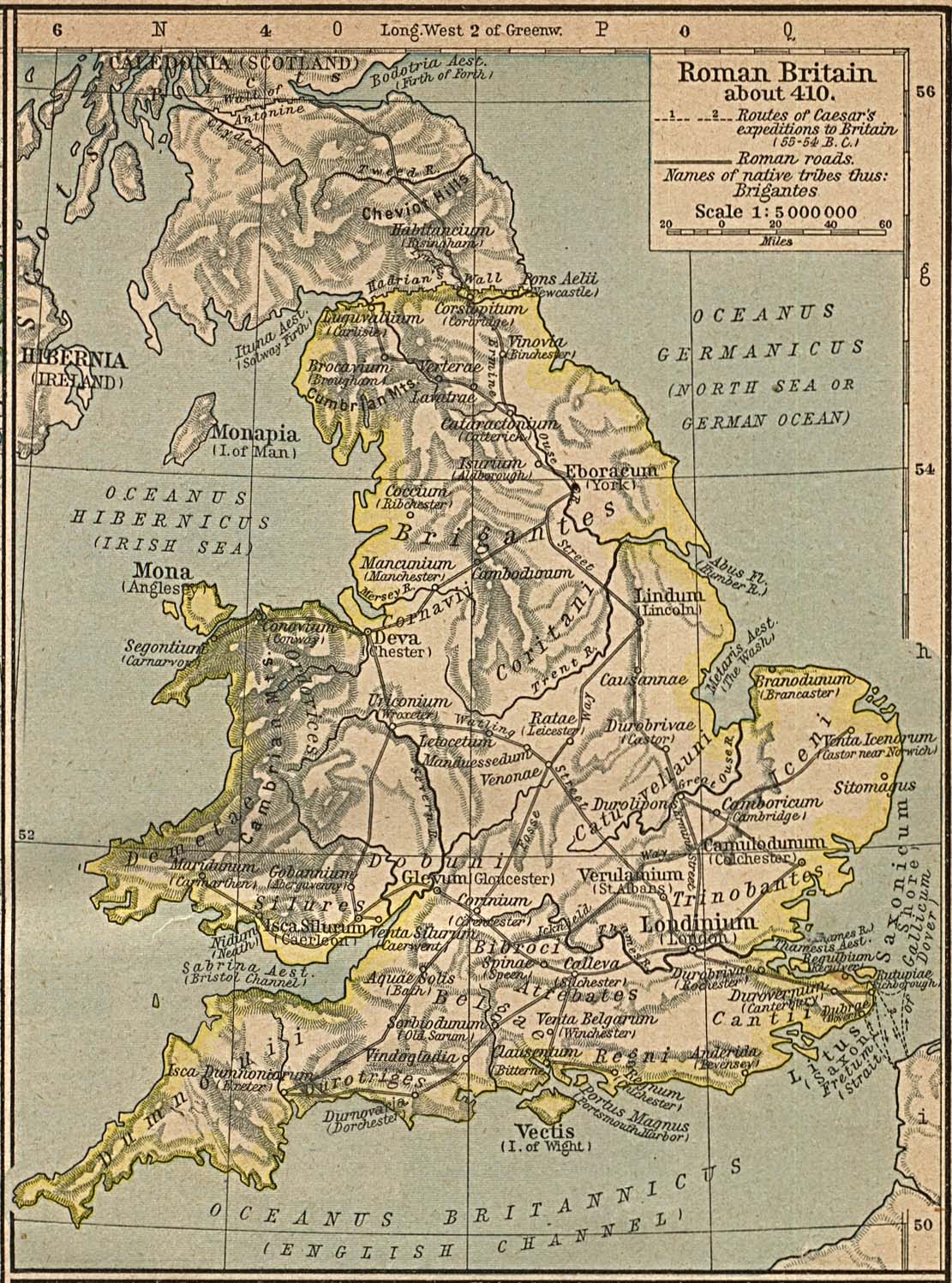
Maxima Caesariensis (Latin for "The Caesarian province of Maximus"), also known as Britannia Maxima, was one of the provinces of the Diocese of "the Britains" created during the Diocletian Reforms at the end of the 3rd century. It was probably created after the defeat of the usurper Allectus by Constantius Chlorus in AD 296 and was mentioned in the Verona List of the Roman provinces. Its position and capital remain uncertain, although it was probably adjacent to Flavia Caesariensis. On the basis of its governor's eventual consular rank, it is now usually considered to have consisted of Augusta or Londinium (London) and southeastern England. NOTOC


History
Following the Roman conquest of Britain, Britain was administered as a single province from Camulodunum (Colchester) and then Londinium (London) until the Severan Reforms following the revolt of its governor Clodius Albinus. These divided the territory into Upper and Lower Britain (Britannia Superior and Inferior), whose respective capitals were at Londinium and Eboracum (York). During the first phases of the Diocletian Reforms, Britain was under the control of the Allectus's Britannic Empire as part of the Carausian Revolt. At some point after the territory was retaken by Constantius Chlorus in AD 296, the Diocese of the Britains (with its vicar at Londinium) was formed and made a part of Prefecture of Gaul. The Britains were divided among three, four, or five provinces,
The placement and capitals of these late British provinces are uncertain, although the Notitia Dignitatum lists the governor of Maxima (originally an equestrian praeses) as having been elevated to consular rank. Scholars usually associate this with the administration at Londinium, which was also the capital of the diocesan vicar.
Describing the metropolitan sees of the early British church established by SS Fagan and "Duvian", Gerald of Wales placed "Maximia" in Eboracum (York) and Londinium in Flavia, saying the former was named for the emperor Maximus. this work was debunked over the course of the mid-19th century.
Modern scholars are uncertain whether the province was named for the western senior emperor Valerius Maximian or the eastern junior emperor Galerius Maximian. Birley has argued that Maxima and Flavia originally consisted of a single province, which received the name Britannia Caesariensis as a mark of favour for support against the rebel Allectus in 296. Although Flavia is usually thought to have been formed from the old province of Lower Britain, Birley proposes that Upper Britain was divided in two (between Prima and Caesariensis) and then three (Prima, Maxima, and Flavia). This repeats Camden's earlier theory (relying on Sextus Rufus) that Maxima was formed first and Flavia followed sometime after.
References
References
- Frere, Sheppard. (1967). "Britannia: a history of Roman Britain". Harvard University Press.
- Camden, William. (1610). "Britain, or, a Chorographicall Description of the most flourishing Kingdomes, England, Scotland, and Ireland".
- Dornier, Ann. (1982). "The Province of Valentia". Britannia.
- ''[[Notitia Dignitatum]]''.
- [[Verona List]].
- Giraldus Cambriensis [Gerald of Wales]. [https://archive.org/stream/ycymmrodor30cymmuoft#page/130/mode/2up ''De Inuectionibus'' [On Invectives], Vol. II, Ch. I, in ''Y Cymmrodor: The Magazine of the Honourable Society of Cymmrodorion'', Vol. XXX, pp. 130–1.] George Simpson & Co. (Devizes), 1920. {{in lang. la
- [[Gerald of Wales]]. Translated by [[W.S. Davies]] as [https://archive.org/stream/ycymmrodor30cymmuoft#page/16/mode/2up ''The Book of Invectives of Giraldus Cambrensis'' in ''Y Cymmrodor: The Magazine of the Honourable Society of Cymmrodorion'', Vol. XXX, p. 16.] George Simpson & Co. (Devizes), 1920.
- forgery]] ''[[The Description of Britain]]'', which gave Maxima borders from the [[Humber]] and [[River Mersey
This article was imported from Wikipedia and is available under the Creative Commons Attribution-ShareAlike 4.0 License. Content has been adapted to SurfDoc format. Original contributors can be found on the article history page.
Ask Mako anything about Maxima Caesariensis — get instant answers, deeper analysis, and related topics.
Research with MakoFree with your Surf account
Create a free account to save articles, ask Mako questions, and organize your research.
Sign up freeThis content may have been generated or modified by AI. CloudSurf Software LLC is not responsible for the accuracy, completeness, or reliability of AI-generated content. Always verify important information from primary sources.
Report