From Surf Wiki (app.surf) — the open knowledge base
Masked villain
Character type

Character type
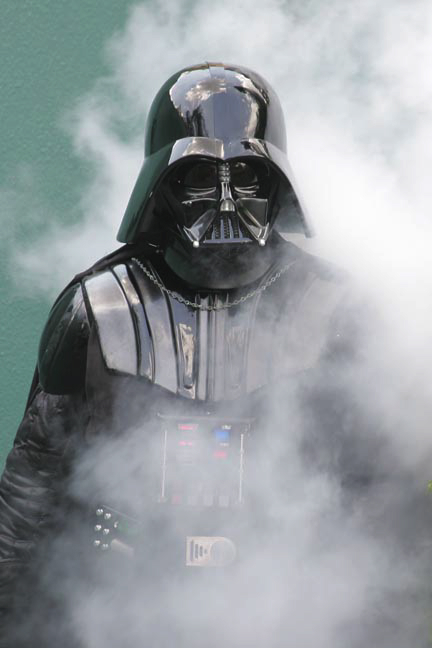
A masked villain, also seen as masked mystery villain, is a stock character in genre fiction. It was developed and popularized in movie serials, beginning with The Hooded Terror in The House of Hate, (1918) the first fully-costumed mystery villain of the movies, and frequently used in the adventure stories of pulp magazines and sound-era movie serials in the early twentieth century, as well as postmodern horror films where the character "hides in order to claim unsuspecting victims". They can also appear in crime fiction to add to the atmosphere of suspense and suspicion. It is used to engage the readers or viewers by keeping them guessing just as the characters are, and suspension by drawing on the fear of the unknown. The "Mask" need not be literal (although it often is), referring more to the subterfuge involved.
The masked villain originated in early 20th-century French literature and cinema. Key early examples include Zigomar, created by Léon Sazie in 1909, a masked criminal who led the "Gang of Z" and inspired three films directed by Victorin Jasset: Zigomar, roi des voleurs, Zigomar contre Nick Carter and Zigomar, peau d'anguille. Another major figure is Fantômas, created by Marcel Allain and Pierre Souvestre in 1911, a master of disguise who became a cultural icon through five silent serials directed by Louis Feuillade: Fantômas (1913), Juve contre Fantômas (1913), Le Mort Qui Tue (1913), Fantômas contre Fantômas (1914), and Le Faux Magistrat (1914).
They are the often main antagonist of the story, often acting behind the scenes with henchmen confronting the protagonists directly. Usually, the protagonists must discover the villain's true identity before they can be defeated. Often, the villain will turn out to be either one of the protagonists themselves, or a significant supporting character. The author may give the viewer or reader clues, with many red herrings, as to the villain's identity - sometime as the characters find them and sometimes for the audience alone. However, the identity is not usually revealed to the audience before it is revealed to the characters of the story.
The concept was reversed in the serials "The Lone Ranger" and "The Masked Marvel", where the true identity of the hero is unknown and a number of characters remain possible candidates until the end.
The archetype tends to be a popular one to be parodied, often using a literal mask and breaking into a stereotypical evil laugh. --
Examples
Serials
- "The Clutching Hand" in The Exploits of Elaine
- "The Hooded Terror" in The House of Hate
- Fur-coated Mystery Man in The Phantom Foe
- "Monsieur X" in The Trail of the Octopus
- "The Frog" in The Mark of the Frog
- "The Wolf Devil" in Queen of the Northwoods
- "The Hidden Hand" in The Hidden Hand
- "The Iron Claw" in The Iron Claw
- "The Faceless Terror" in The Fatal Fortune
- "The Purple Shadow" in The Purple Riders
- "The Claw" in The Mystery Rider
- "The Iron Hand" in The Invisible Hand
- "Phantom Face" in The Mystery Mind
- "The Black Hawk" in The Air Mail Mystery
- "The Scorpion" in Blake of Scotland Yard
- "The Tiger Shark" in The Fighting Marines.
- "The Ghost" in Dick Tracy vs. Crime, Inc. - "One of the most memorable of all the masked villains of serials" according to William C. Cline.
- "The Dragon" in Ace Drummond.
- "The Lightning" in The Fighting Devil Dogs.
- "The Skull" in Deadwood Dick
- "Don Del Oro" in Zorro's Fighting Legion
- "The Wasp" in Mandrake the Magician.
- "The Scorpion" in Adventures of Captain Marvel.
- "The Octopus" in The Spider's Web
- "The Gargoyle" in The Spider Returns.
- "The Crimson Ghost" in The Crimson Ghost
- "The Wasp" in Mandrake the Magician
- "Captain Mephisto" in Manhunt of Mystery Island.
- "The Rattler" in Mystery Mountain
- "The Wizard" in Batman and Robin.
- "The Master Key" in The Master Key.
The following villains were not actually "masked" but remained hidden from view:
- "The Voice" in The Vanishing Legion
- "The Black Ace" in The Mystery Squadron.
- "The Lame One" in Dick Tracy.
- "The Black Tiger" in The Shadow.
- "Mr. M" in The Mysterious Mr. M.
- "Dr. Vulcan" in King of the Rocket Men.
Literature
- The Colonel from The Man in the Brown Suit.
- A from Pretty Little Liars
Anime and comics
- Anokata from Detective Conan.
- *The Octopus from *The Spirit''.
- Tobi from Naruto.
- Gideon G. Graves from Scott Pilgrim.
- "All For One" from Boku no Hero Academia
- The Masked Osodashi from Jankenman. --
Television
- "The Hooded Claw" from The Perils of Penelope Pitstop.
- The Carver from Nip/Tuck.
- Amon from The Legend of Korra.
- Red Devil and Green Meanie from Scream Queens.
- A from Pretty Little Liars.
- Lakewood Slasher from Scream.
- Doctor Claw from Inspector Gadget. --
Films
- Michael Myers from Halloween
- Ghostface from Scream
- Darth Vader from Star Wars
- Yokai (Robert Callaghan) from Big Hero 6
- Keyser Söze from The Usual Suspects
- The Blank from Dick Tracy - (1990 film)
- Darth Sidious from the Star Wars prequel trilogy (Star Wars: Episode I – The Phantom Menace, Star Wars: Episode II – Attack of the Clones)
- Evil Masked Figure from Scooby-Doo 2: Monsters Unleashed.
- Jigsaw from the horror movie saga Saw.
- Yokai from Big Hero 6.
Computer and video games
- Murai from Ninja Gaiden.
- The Masked Man from Mother 3.
- Jack of Blades from Fable.
- Jean Descole from Professor Layton. --
References
| chapter-url = https://www.degruyter.com/document/doi/10.1515/9789048537808-005/html
References
- Van Hise, James. (1990). "Serial Adventures". [[Pioneer Books]].
- (1970). "All in color for a dime". [[Arlington House Publishers.
- Brasch, I., & Mayer, R. (2016). Modernity management: 1920s cinema, mass culture and the film serial. Screen, 57(3), 302-315.
- Heller-Nicholas, Alexandra. (2019). "Masks in Horror Cinema: Eyes Without Faces". [[University of Wales Press]].
- Jess-Cooke, Carolyn. (2009). "Film Sequels: Theory and Practice from Hollywood to Bollywood". [[Edinburgh University Press]].
- Gaycken, Oliver. (2015-05-01). "Devices of Curiosity: Early Cinema and Popular Science". Oxford University Press.
- Gaycken, Oliver. (2015-05-01). "Devices of Curiosity: Early Cinema and Popular Science". Oxford University Press.
- Kehr, Dave. (2010-09-17). "When Fantômas Held All of Paris in His Criminal Thrall". The New York Times.
- Bah, Aisha. (2018). "Cultural Transgression and Subversion: The Abject Slasher Subgenre". The Mall.
- Cline, William C.. (2000). "Serials-ly Speaking: Essays on Cliffhangers". [[McFarland & Company.
- Benson, Michael. (2000). "Vintage Science Fiction Films, 1896-1949". [[McFarland & Company.
- Milligan, Cindy Ann. (2015). "Sonic Vocality: A Theory on the Use of Voice in Character Portrayal". Georgia State University.
- Rutherford, Paul. (1994). "The New Icons? - The Art of Television Advertising". [[University of Toronto Press]].
This article was imported from Wikipedia and is available under the Creative Commons Attribution-ShareAlike 4.0 License. Content has been adapted to SurfDoc format. Original contributors can be found on the article history page.
Ask Mako anything about Masked villain — get instant answers, deeper analysis, and related topics.
Research with MakoFree with your Surf account
Create a free account to save articles, ask Mako questions, and organize your research.
Sign up freeThis content may have been generated or modified by AI. CloudSurf Software LLC is not responsible for the accuracy, completeness, or reliability of AI-generated content. Always verify important information from primary sources.
Report