From Surf Wiki (app.surf) — the open knowledge base
Maryland Transportation Authority
Maryland state government agency

Maryland state government agency
| Field | Value |
|---|---|
| agency_name | Maryland Transportation Authority |
| seal_width | 125px |
| formed | |
| jurisdiction | Maryland |
| headquarters | 2310 Broening Highway, Baltimore, Maryland, U.S. 21224 |
| employees | 1,700 |
| chief1_name | Paul Wiedefeld |
| chief1_position | Board Chairman |
| chief2_name | Bruce W. Gartner |
| chief2_position | Executive Director |
| parent_agency | Maryland Department of Transportation |
| website |
The Maryland Transportation Authority (MDTA) is an independent state agency responsible for financing, constructing, operating, and maintaining eight transportation facilities, currently consisting of two toll roads, two tunnels, and four bridges in Maryland.{{cite web|url= http://www.mdta.maryland.gov/About/about.html|title=About the Maryland Transportation Authority (MDTA)|publisher=Maryland Transportation Authority|access-date=June 7, 2011}} It also provides the Maryland Department of Transportation with financing for other revenue producing transportation projects.
Agency structure
The MDTA was established in 1971 to take over functions previously performed by the former State Roads Commission. Financially independent from Maryland's general fund and transportation trust fund, the Authority operates as a purely enterprise agency, providing services on a user charge basis similar to the operation of a commercial enterprise. Its capital projects and operations are funded by tolls, concessions, investment income, and revenue bonds.
In addition to its own toll facilities, the Authority finances construction of other revenue-producing transportation facilities for the Maryland Department of Transportation (MDOT). These projects have included improvements at the Port of Baltimore and the Baltimore-Washington International Airport. To provide construction funding, the Authority issues revenue bonds, which will be paid off over a period of years by tolls and other user fees generated by the facilities.
The MDTA can issue either taxable or exempt bonds to finance large scale projects. As of June 30, 2010, the Authority had outstanding revenue bonds totaling $2.7 billion. Most of this debt was in the form of transportation facility revenue bonds valued at $1.6 billion, for MDTA toll facilities. Grant and Revenue Anticipation (GARVEE) bonds, secured by federal grants and revenue pledged from individual projects, comprised $651 million of the debt. Conduit revenue bonds, for the construction of transportation parking and airport passenger facilities, also secured by federal grants and the future revenue of specific facilities, comprised the rest of the debt. Unlike the transportation facility bonds, the conduit and GARVEE bonds are pledged to revenue sources managed by other agencies, external to the MDTA.
Governing board
![Gov. Harry W. Nice Memorial Bridge]]The Maryland Secretary of Transportation serves as chairperson of the Authority's governing board. Eight other board members are appointed to four year terms by the Governor, with confirmation by the Maryland Senate. Term expirations are staggered. Board members can be reappointed to additional terms, but a limit of three consecutive terms was established in 2007.<ref name="Maryland Manual" /><ref name="Strategic Plan" /><ref name="Board">{{cite web](https://upload.wikimedia.org/wikipedia/commons/8/88/Gov._Harry_W._Nice_Memorial_Bridge.jpg)
Daily operations of the Authority are overseen by the Executive Director who serves as the chief executive officer for the agency and is hired by the MDTA Board.
Members of the board are:
- Paul Wiedefeld, Maryland Transportation Secretary, Chairman
- Dontae Carroll
- William H. Cox Jr.
- William C. Ensor III
- W. Lee Gaines, Jr.
- Mario J. Gangemi, P.E.
- John F. von Paris
- Cynthia D. Penny-Ardinger
- Jeffrey S. Rosen

The Capital Committee members include Ensor III, Cox, Jr., Gangemi and Gaines, Jr. The Finance Committee members are Penny-Ardinger, Carroll, Rosen and Von Paris. There are other standing committees which do not hold public meetings: Human Resources and Audit. Their status as "public bodies" under state law is uncertain.[[File:Thomas J. Hatem Memorial Bridge.jpg|alt=Thomas J. Hatem Memorial Bridge|thumb|Thomas J. Hatem Memorial Bridge]]
The MDTA Board and its two active standing committees (Capital Committee and Finance Committee) have been found in violation of the Maryland Open Meetings Act a number of times between 2009 and 2012. In response to one of the complaints, the MDTA began notifying the public of Finance and Capital committee meetings; allowing the public to attend them; and began putting meeting schedules and minutes of the two committees and the Board online. The MDTA maintains tape recordings of meetings at its offices on Broening Highway, Baltimore. Meeting audio or video is not available through their website.
MDTA Police
Main article: Maryland Transportation Authority Police
The Maryland Transportation Authority Police were established in 1971 as part of the MDTA. Their mission is protection of the Authority's facilities as well as several other transportation facilities including the Port of Baltimore and BWI Airport.
Facilities

Toll facilities
The MDTA operates eight toll facilities:
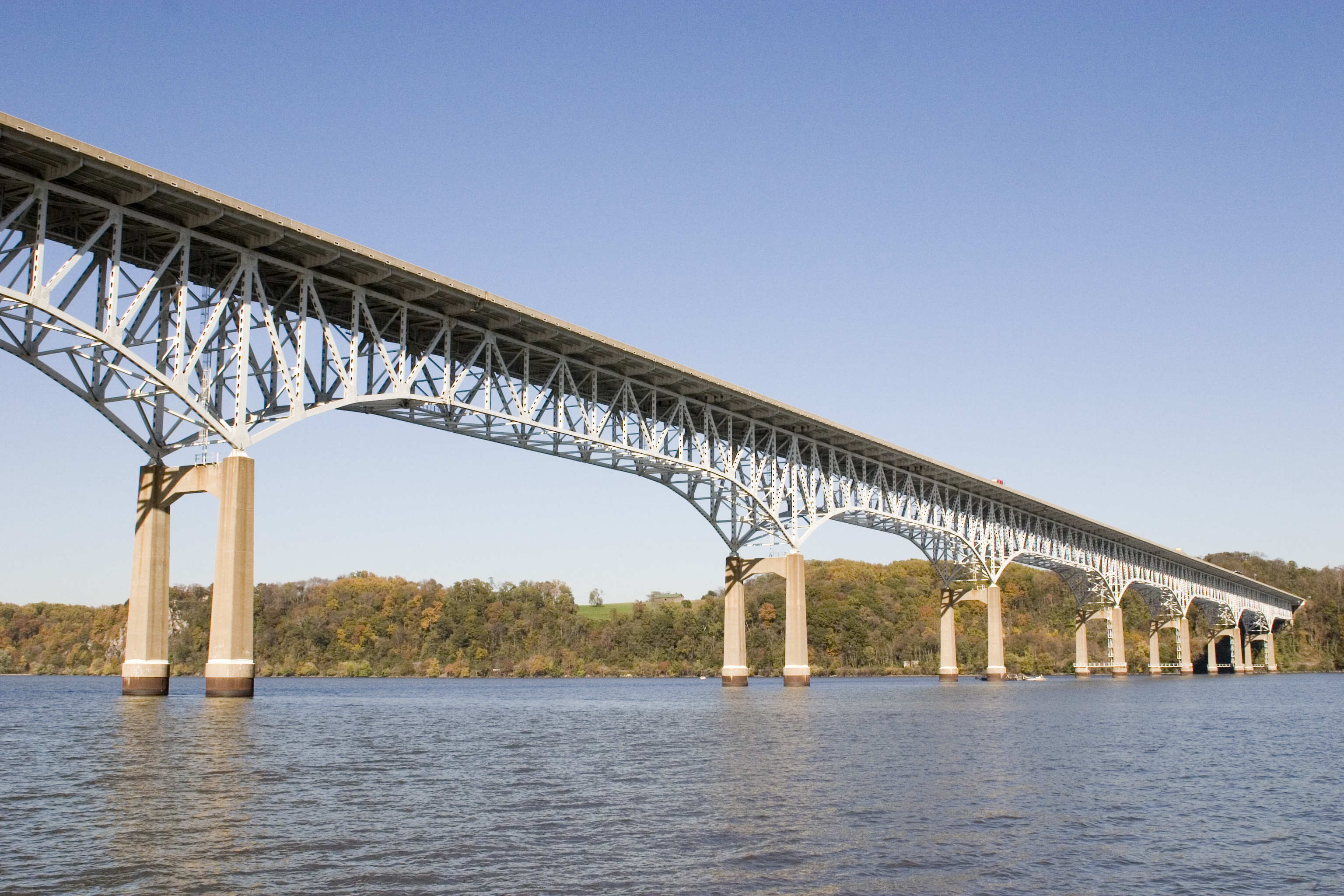
- Thomas J. Hatem Memorial Bridge, which carries U.S. Route 40 (US 40) across the Susquehanna River between Harford and Cecil counties
- William Preston Lane Jr. Memorial Bridge (Chesapeake Bay Bridge), which carries US 50/US 301 across the Chesapeake Bay between Anne Arundel and Queen Anne's counties
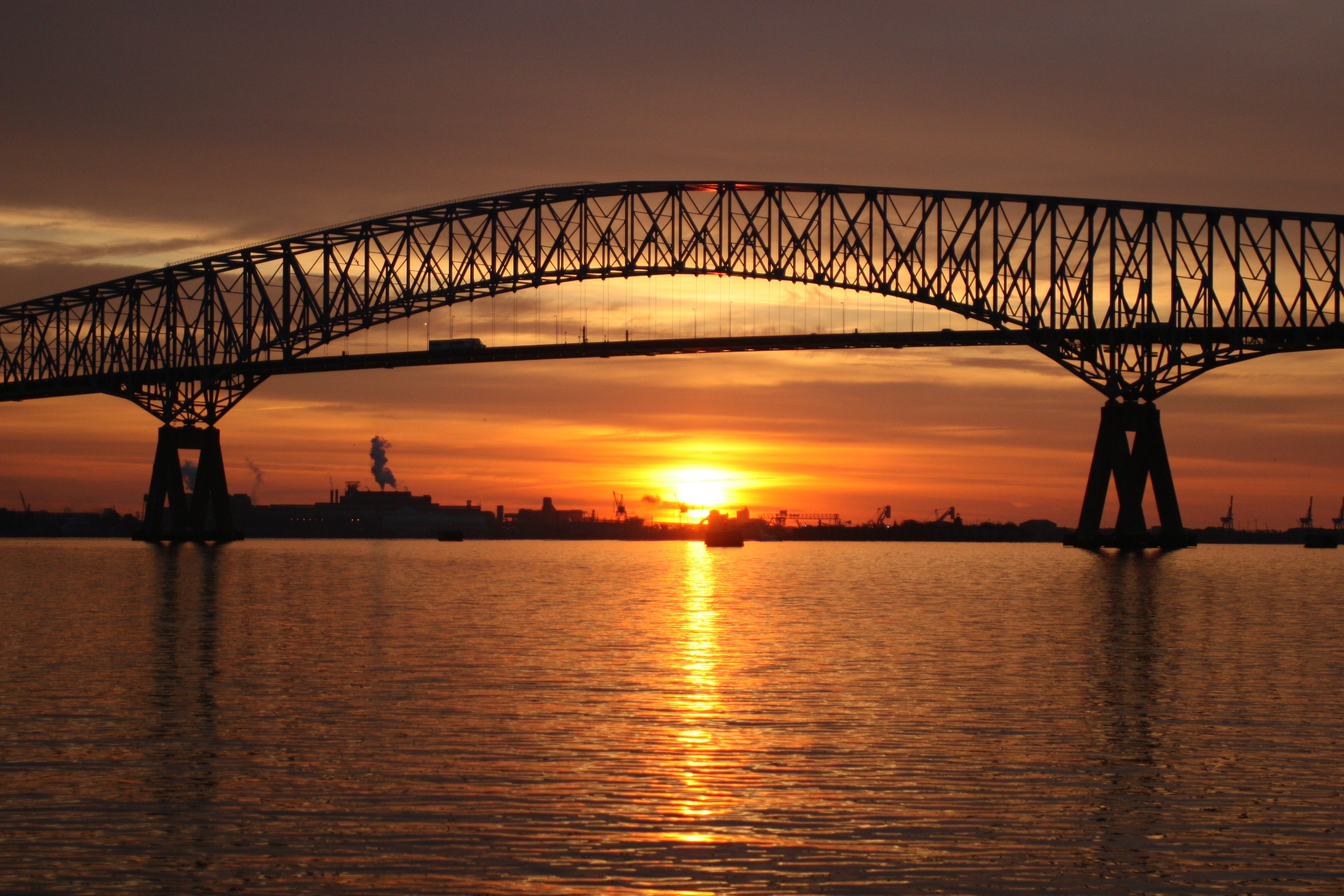
- Francis Scott Key Bridge, which carried I-695, the Baltimore Beltway, over the outer portions of the Baltimore Harbor. The bridge was partially destroyed on March 26, 2024.
- Governor Harry W. Nice Memorial Bridge, which carries US 301 across the Potomac River between Charles County, Maryland, and King George County, Virginia
- John F. Kennedy Memorial Highway, the 50 mi section of I-95 that traverses northeastern Maryland from the Baltimore city line to the Delaware state line
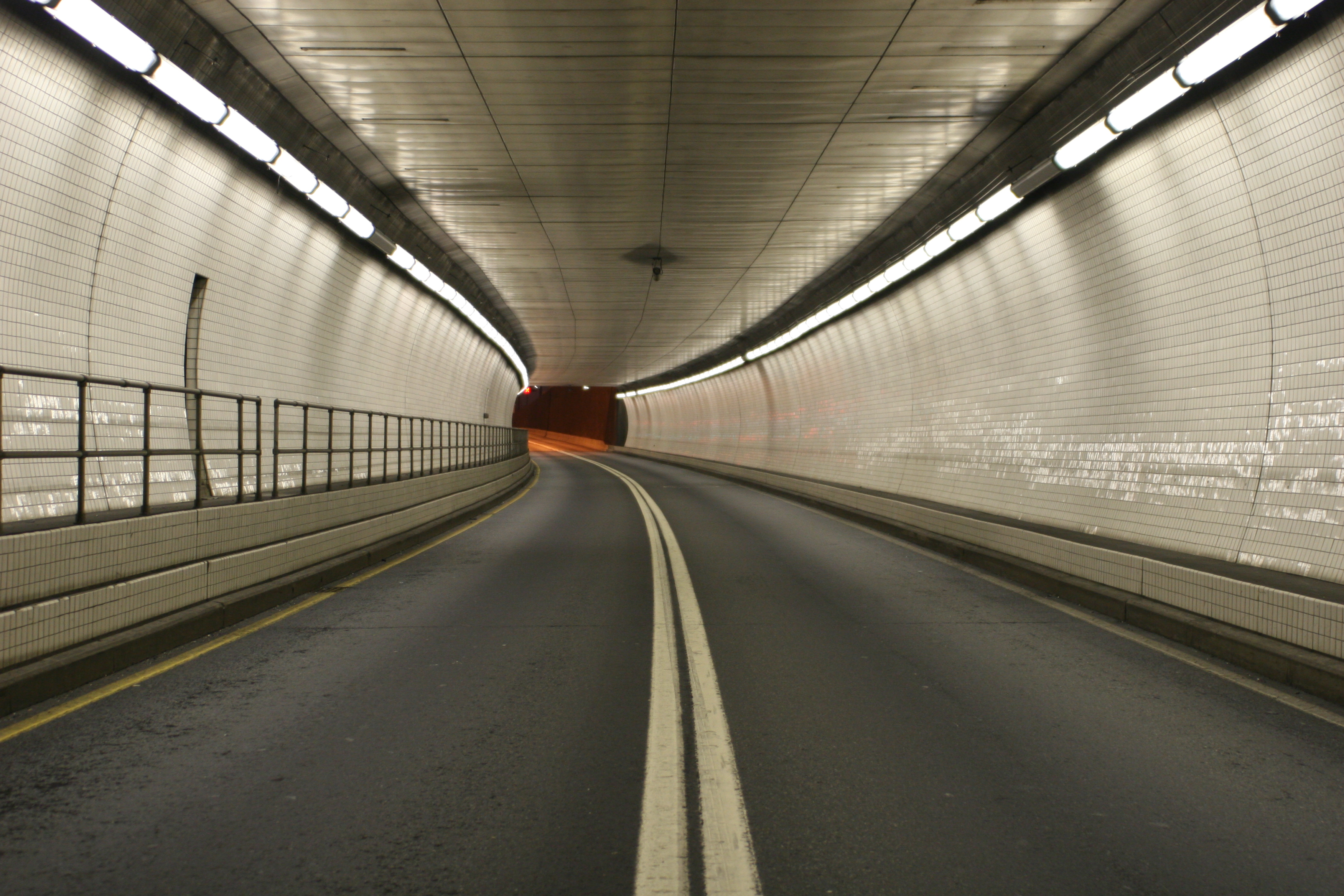
- Fort McHenry Tunnel, which carries I-95 under the Baltimore Harbor
- Baltimore Harbor Tunnel, which carries I-895 under the Baltimore Harbor
- Maryland Route 200, the Intercounty Connector
Although the John F. Kennedy Memorial Highway is referred to as a toll road, tolls are only collected at a gantry located a mile north of the Millard E. Tydings Memorial Bridge over the Susquehanna River, for northbound traffic only. Vehicles that do not traverse this section, and all southbound vehicles, do not pay a toll.
In September 2017, Governor Larry Hogan announced a plan to widen the Baltimore-Washington Parkway by four lanes, adding express toll lanes to the median, as part of a $9 billion proposal to widen roads in Maryland. The project would be a public-private partnership with private companies responsible for constructing, operating, and maintaining the lanes. As part of the proposal, the portion of the parkway owned by the National Park Service would be transferred to the Maryland Transportation Authority.
Intercounty Connector
Main article: Maryland Route 200
Maryland Route 200, the Intercounty Connector (ICC), links existing and proposed development areas of Montgomery County and Prince George's County between Interstate 370 at Shady Grove and Interstate 95 in Laurel with an 18 mi east–west limited-access highway. The $2.4 billion project is being financed by MDTA, with the Maryland State Highway Administration serving as the project manager for engineering and construction.
When the first segment of the ICC opened on February 23, 2011, it became the first toll facility in Maryland with fully automated toll collection. Connecting Interstate 370 with Maryland Route 97, the first segment is 5.65 mi long.
Express toll lanes
The MDTA began construction of the I-95 express toll lanes on a congested portion of Interstate 95, north of Downtown Baltimore, in May 2005. Now completed, the new toll system extends for 8 mi, from the east side of Baltimore City, at the I-895 split, into Baltimore County, north of Maryland Route 43 in White Marsh. This segment of the John F. Kennedy Memorial Highway (Interstate 95) has two Express Toll and four general purpose lanes in each direction. Tolls for using the Express Toll lanes vary, depending on traffic conditions, to reduce congestion. The general purpose lanes continue to operate toll-free.
Other facilities
The MDTA has owned the Canton Railroad, which operates as a for-profit enterprise, since 1987.
M-Tag
M-TAG refers to the first generation of Electronic Toll Collection (ETC) system used in the state of Maryland by MDTA from 1999 to 2001. The request for proposal for the system was issued by the authority in 1995. The contractor awarded the contract for the state of Maryland that developed the M-TAG software was Lockheed Martin IMS Division.
M-TAG / E-ZPass is an electronic toll-collection system available at all MDTA Toll facilities: the Baltimore Harbor Tunnel, the Fort McHenry Tunnel, and the Francis Scott Key Bridge. When it came on line in 1999, the system was known as M-TAG. As of October 2001 the system became reciprocal with the other E-ZPass Toll agencies and Maryland then renamed its system to E-ZPass. At that time the JFK Memorial Highway joined, followed by the William Preston Lane Memorial (Bay) Bridge and the Harry W. Nice Bridge, and the Thomas J. Hatem Bridge was the last to come up in April 2002. E-ZPass allows a customer to drive from North Carolina to Maine and Illinois without stopping to pay tolls. A driver receives a small radio frequency transponder to place on the inside of a vehicle's windshield. Equipment in the toll lanes records the transactions, and trips are automatically deducted from the customer's account.
Toll increases
A two-part toll increase became effective at all Maryland toll facilities on October 1, 2011, and July 1, 2013. The toll increase was proposed by the Authority's board on June 2, 2011. The changes were expected to raise an additional $77 million during the first fiscal year after their implementation. Additional revenue was considered necessary by the board to expand highway capacity and rehabilitate aging infrastructure.
The previous toll increase was in 2009, but only affected vehicles with three or more axles. The previous increase for passenger vehicles was in 2003.
References
References
- "2010 Strategic Plan". Maryland Transportation Authority.
- "Maryland Transportation Authority". Maryland State Archives.
- 2010 Strategic Plan, p. 5
- Annual Report 2010, pp 6-7.
- "Our Governing Body". Maryland Transportation Authority.
- "Acting Executive Secretary Randy Brown". Maryland Transportation Authority.
- "Maryland Transportation Authority Police". Maryland Transportation Authority.
- "John F. Kennedy Memorial Highway (I-95)". Maryland Transportation Authority.
- "Intercounty Connector". Maryland State Archives.
- "Project Overview". Maryland Transportation Authority.
- "Other Transportation Ventures". Maryland Transportation Authority.
- MDTA press release. (June 2, 2011). "Increases formally proposed for maryland toll facilities". Maryland Transportation Authority.
This article was imported from Wikipedia and is available under the Creative Commons Attribution-ShareAlike 4.0 License. Content has been adapted to SurfDoc format. Original contributors can be found on the article history page.
Ask Mako anything about Maryland Transportation Authority — get instant answers, deeper analysis, and related topics.
Research with MakoFree with your Surf account
Create a free account to save articles, ask Mako questions, and organize your research.
Sign up freeThis content may have been generated or modified by AI. CloudSurf Software LLC is not responsible for the accuracy, completeness, or reliability of AI-generated content. Always verify important information from primary sources.
Report