From Surf Wiki (app.surf) — the open knowledge base
Marschalk reaction
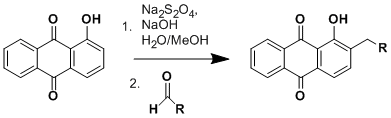
The Marschalk reaction in chemistry is the sodium dithionite promoted reaction of a phenolic anthraquinone with an aldehyde to yield a substituted phenolic anthraquinone after the addition of acid.
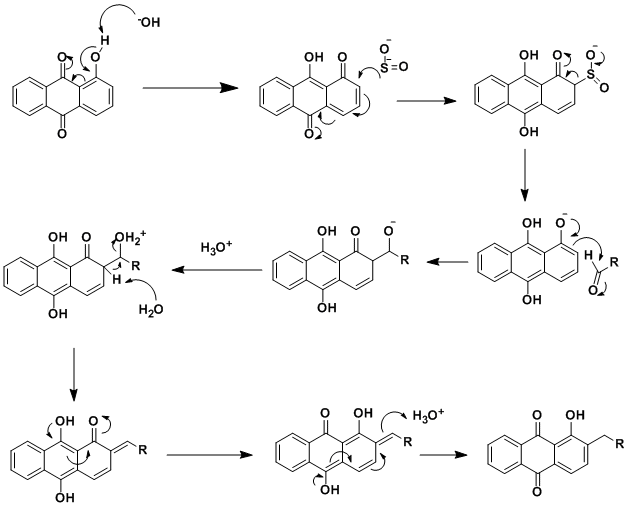
The mechanism can be found in the book Named Reactions in Organic Chemistry, and its more intuitive version is provided below:
One of the first applications of this reaction was reported in 1985.
References
References
- (2005). "Name Reactions and Reagents in Organic Synthesis". John Wiley & Sons.
- (1985). "Reaction of Anthrahydroquinones with α,β-Unsaturated Carbonyl Compounds". Liebigs Annalen der Chemie.
This article was imported from Wikipedia and is available under the Creative Commons Attribution-ShareAlike 4.0 License. Content has been adapted to SurfDoc format. Original contributors can be found on the article history page.
Ask Mako anything about Marschalk reaction — get instant answers, deeper analysis, and related topics.
Research with MakoFree with your Surf account
Create a free account to save articles, ask Mako questions, and organize your research.
Sign up freeThis content may have been generated or modified by AI. CloudSurf Software LLC is not responsible for the accuracy, completeness, or reliability of AI-generated content. Always verify important information from primary sources.
Report