From Surf Wiki (app.surf) — the open knowledge base
Marquess of Pembroke
Title in the Peerage of England
Title in the Peerage of England
| Field | Value |
|---|---|
| name | Marquess of Pembroke |
| image | File:Letters-Patent-Marquess-of-Pembroke-British-Library.jpg |
| caption | Letters patent, 1532 |
| creation_date | 1 September 1532 |
| monarch | Henry VIII of England |
| peerage | Peerage of England |
| first_holder | Anne Boleyn |
| last_holder | Anne Boleyn |
| remainder_to | the 1st Marquess' heirs male of the body (whether legitimate or illegitimate) |
| extinction_date | disputed between 28 May 1533, 15 May 1536 and 19 May 1536 (see the text) |
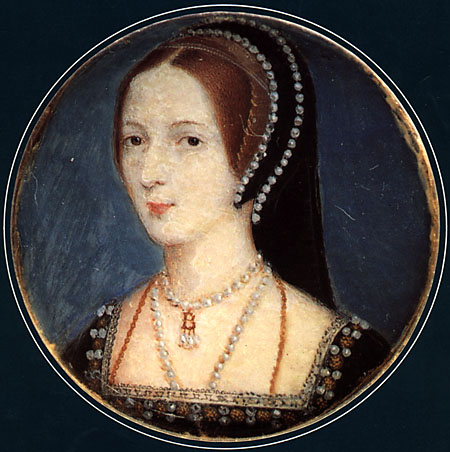
Marquess of Pembroke was a title in the Peerage of England created by King Henry VIII for his future spouse Anne Boleyn.
Background
The then extinct title of Earl of Pembroke had been very significant for the House of Tudor. It was held by Henry VIII's grand-uncle, Jasper Tudor, and it referred to the birthplace of King Henry VII. Henry VIII decided to raise his lover to the dignity of a marquess prior to finally marrying her. He chose to grant her the Marquessate of Pembroke.{{cite book
Creation
On Sunday, 1 September 1532, Anne Boleyn was granted the Marquessate of Pembroke and land, mostly in Wales, worth over £1,000. The investiture ceremony was performed by Henry VIII himself in Windsor Castle. The ceremony was an elaborate affair, witnessed by the highest ranking peers and clergy in the kingdom, including Thomas Boleyn, 1st Earl of Wiltshire and Thomas Howard, 3rd Duke of Norfolk, Anne's father and uncle respectively; Charles Brandon, 1st Duke of Suffolk (Henry's brother-in-law); Edward Lee, Archbishop of York; John Stokesley, Bishop of London; and Stephen Gardiner, Bishop of Winchester. The French ambassador was also present. The Bishop of Winchester read the patent of creation while Anne knelt before the King who then invested her with the coronet, the robe of estate and the charters of creation and of the lands.{{cite book
The 16th-century spelling of her title was often marquesse or marquess, sometimes lady marquesse; a feminine, like duchess, of the relatively rare title marquys.
Succession
The marquessate was granted to Anne and her heirs male, but the patent did not include the usual provision that the said heirs male had to be of legitimate birth, thus enabling the title to pass to any illegitimate son Anne might have had. The attending peers did not fail to notice this unusual omission.{{cite book
End of the Marquessate
It is not clear how the Marquessate of Pembroke ceased to exist. The latest it could have become extinct is upon Anne's death, without male heirs, on 19 May 1536. However, it could have become extinct earlier, either:
- by merging with the Crown (i.e. became indistinct from other property of the Crown) on Anne's marriage to the King being declared valid on 28 May 1533 (similar to the way titles held by the heir to the throne merge into the crown upon accession); or
- by forfeiture of the title upon Anne's 15 May 1536 conviction for high treason.
The effect of the marriage of a peer to a reigning monarch is unclear. Likewise, although forfeiture of titles was a common form of punishment for peers at this time, the historical record is unclear.
References
References
- Sylvia Barbara Soberton, "Marquis or Marchioness? Analysing British Library Harley MS 303 and Other Previously Unpublished Sources about Anne Boleyn's Elevation to the Marquisate of Pembroke", ''The Court Historian'', 29:3 (November 2024), pp. 219–228. {{doi. 10.1080/14629712.2024.2419791
- ''OED'' "Marquis" sense 3.; compare the quotation under "Marchioness": ''Cum‥Domina Anna, tunc Marchionissa Penbrochiæ, nunc vero Regina.'' See also [[Complete Peerage]] Vol. V, App. H
- {{Cite EB1911
This article was imported from Wikipedia and is available under the Creative Commons Attribution-ShareAlike 4.0 License. Content has been adapted to SurfDoc format. Original contributors can be found on the article history page.
Ask Mako anything about Marquess of Pembroke — get instant answers, deeper analysis, and related topics.
Research with MakoFree with your Surf account
Create a free account to save articles, ask Mako questions, and organize your research.
Sign up freeThis content may have been generated or modified by AI. CloudSurf Software LLC is not responsible for the accuracy, completeness, or reliability of AI-generated content. Always verify important information from primary sources.
Report