From Surf Wiki (app.surf) — the open knowledge base
Marinoan glaciation
Period of worldwide glaciation during the Cryogenian period
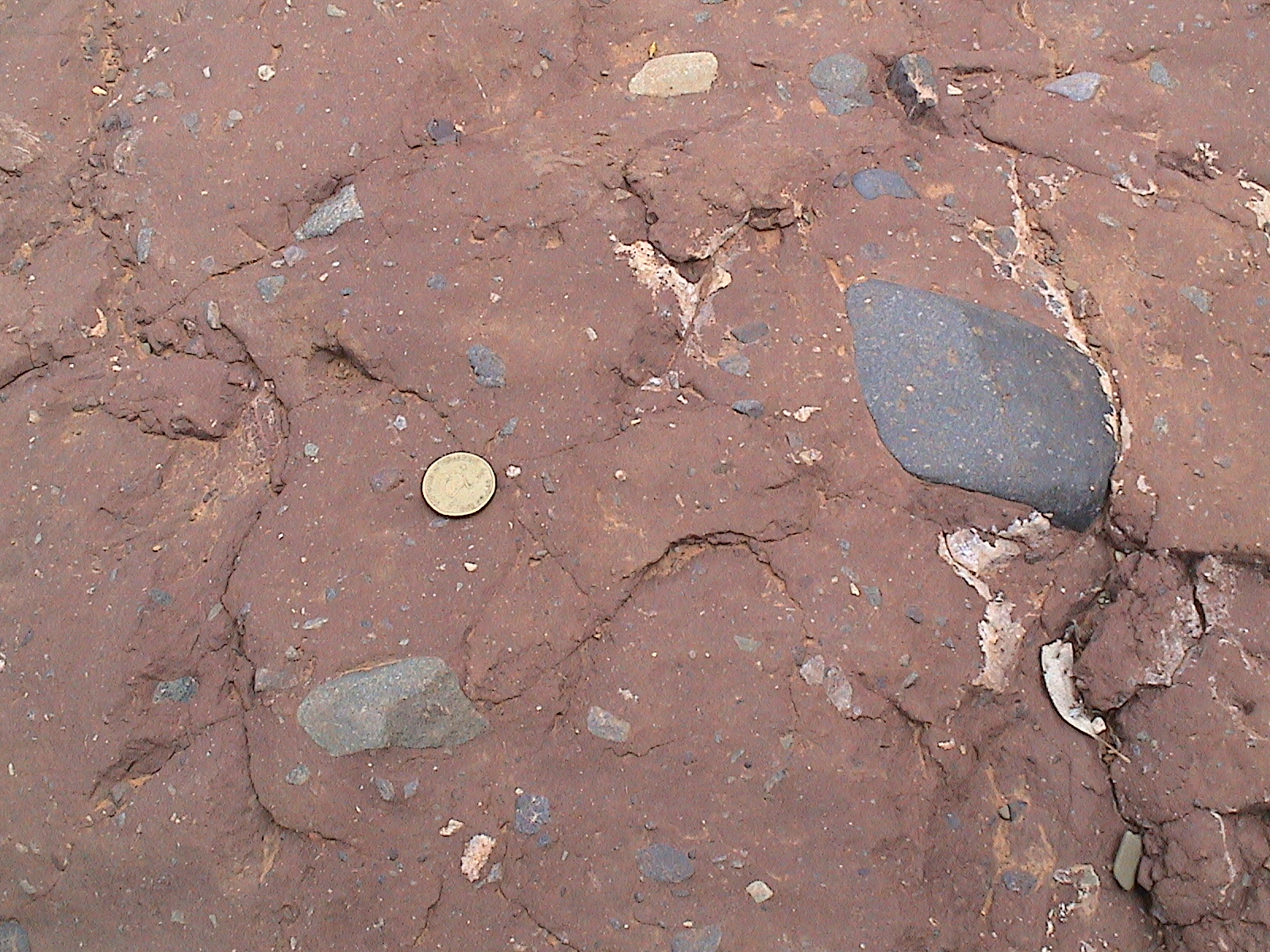
Period of worldwide glaciation during the Cryogenian period
The Marinoan glaciation, sometimes also known as the Varanger glaciation, was a period of worldwide glaciation. A glacial episode within the Marinoan Epoch is known as the Elatina glaciation. The beginning of the Marinoan glaciation (named for the Adelaide suburb of Marino by Douglas Mawson and Reg Sprigg in 1950 It ended approximately 632.3 ± 5.9 Ma during the Cryogenian period. This glaciation possibly covered the entire planet, in an event called the Snowball Earth. The end of the glaciation was caused by volcanic release of carbon dioxide and dissolution of clathrate hydrates and may have been hastened by the release of methane from equatorial permafrost.
Origin of name and history of terminology
The name is derived from the stratigraphic terminology of the Adelaide Superbasin (Adelaide Rift Complex) in South Australia and is taken from the Adelaide suburb of Marino. The term Marinoan Series was first used in a 1950 paper by Douglas Mawson and Reg Sprigg to subdivide the Neoproterozoic rocks of the Adelaide area, and encompassed all strata from the top of the Brighton Limestone to the base of the Cambrian.{{cite journal| author = Mawson, D.|author2=Sprigg, R.C.| year = 1950| title = Subdivision of the Adelaide System| journal = Australian Journal of Science| volume = 13| pages = 69–72
The term Marinoan glaciation was later applied globally to any glaciogenic formations assumed (directly or indirectly) to correlate with Mawson's original Elatina glaciation in South Australia. Recently, there has been a move to return to the term Elatina glaciation in South Australia because of uncertainties regarding global correlation and because an Ediacaran glacial episode (Gaskiers) also occurs within the wide-ranging Marinoan Epoch.{{cite journal
Cryogenian Snowball Earth
Emerging evidence suggests that the Earth underwent a number of glaciations during the Neoproterozoic era.{{cite journal
During the Marinoan glaciation, characteristic glacial deposits indicate that Earth suffered one of the most severe ice ages in its history. Glaciers extended and contracted in a series of rhythmic pulses, possibly reaching as far as the equator.
The Earth may not have been fully covered in ice, as some computer simulations show an extreme slowdown of the hydrological cycle that inhibited new glacial formation before the Earth was fully ice-covered.
The melting of the Snowball Earth is associated with greenhouse warming due to the accumulation of high levels of carbon dioxide in the atmosphere.{{cite journal
Evidence
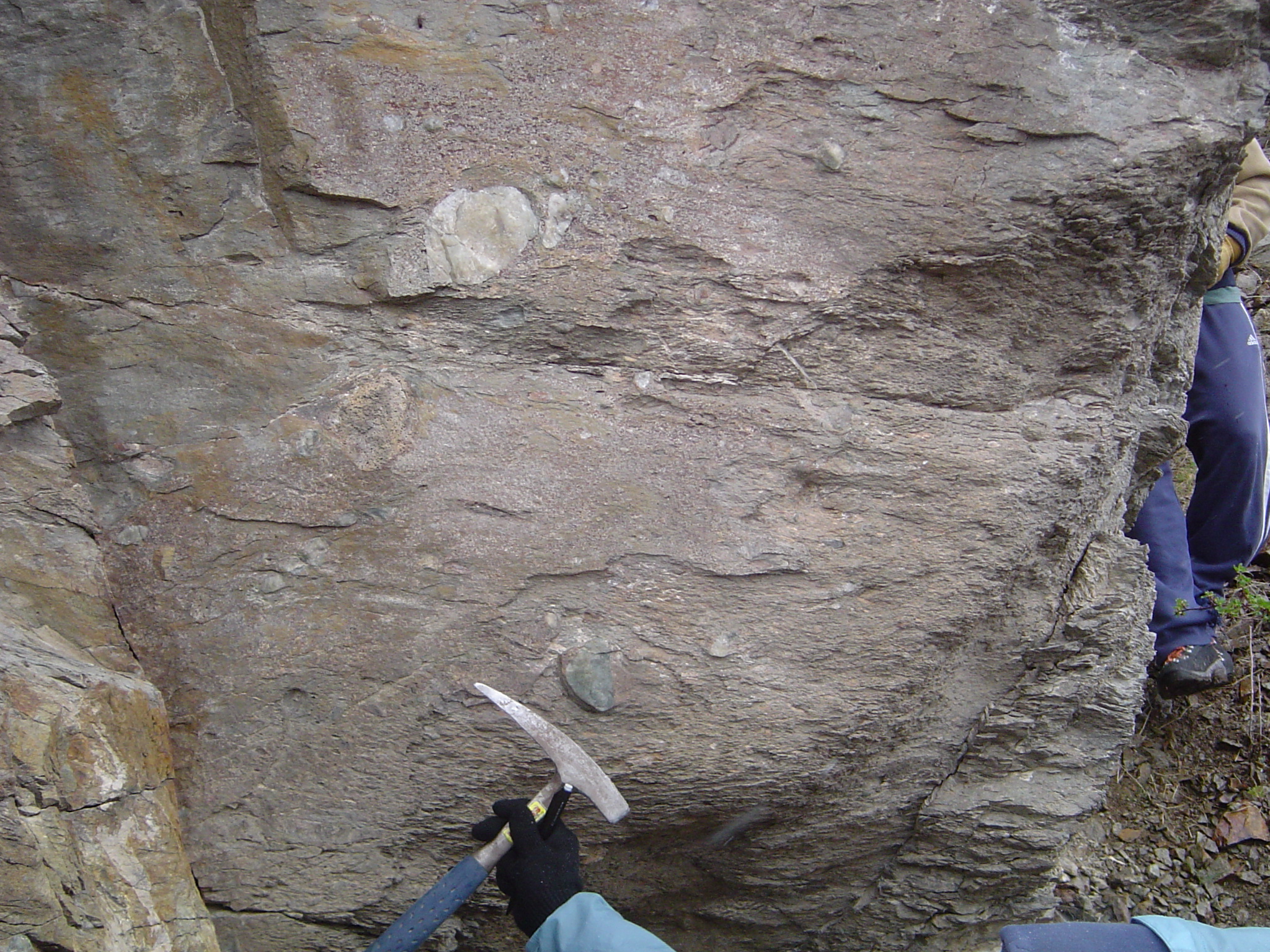
Even though much evidence has been lost through geological changes, field investigations show evidence of the Marinoan glaciation in China, Svalbard archipelago and South Australia. In Guizhou Province, China, glacial rocks were found to be underlying and overlying a layer of volcanic ashes which contained zircon minerals, which could be dated through radioisotopes. Glacial deposits in South Australia are approximately the same age (about 630 Ma), confirmed by similar stable carbon isotopes, mineral deposits (including sedimentary baryte), and other unusual sedimentary structures. Two diamictite-rich layers in the top 1 km of the 7 km Neoproterozoic strata of the northeastern Svalbard archipelago represent the first and final phases of the Marinoan glaciation. In Uruguay, evidence of the Marinoan glaciation is known from dropstones, diamictites, rhythmites, clast layers, and varve-like deposits.
According to Eyles and Young, the Marinoan is a second episode of Neoproterozoic glaciation (680–690 Ma) occurring in the Adelaide Geosyncline. According to them, "It is separated from the Sturtian by a thick succession of sedimentary rocks containing no evidence of glaciation. This glacial phase could correspond to the recently described Ice Brooke formation in the northern Cordillera."
Effects on life
The survival of benthic macroalgae indicates that there remained areas of suitable habitat for them in the photic zone along the coasts of mid-latitude continents during the Marinoan glaciation.
Notes
References
References
- (January 2003). "The Record of the Varanger Glaciation at the Río De La Plata Craton, Vendian-Cambrian of Uruguay". [[Gondwana Research]].
- "Flinders Ranges". UNESCO.
- (March 2023). "Geochronological constraints on Cryogenian ice ages: Zircon Usingle bondPb ages from a shelf section in South China". [[Global and Planetary Change]].
- (2015). "A Cryogenian chronology: Two long-lasting synchronous Neoproterozoic glaciations". [[Geology (journal).
- (December 2022). "CO2 buildup drove global warming, the Marinoan deglaciation, and the genesis of the Ediacaran cap carbonates". [[Precambrian Research]].
- (2008). "Palaeoclimate: Marinoan meltdown". Nature Geoscience.
- (2008). "Snowball Earth termination by destabilization of equatorial permafrost methane clathrate". [[Nature (journal).
- (2015-12-01). "Newly discovered Neoproterozoic diamictite and cap carbonate (DCC) couplet in Tarim Craton, NW China: Stratigraphy, geochemistry, and paleoenvironment". [[Precambrian Research]].
- (2004-04-22). "New Evidence Supports Three Major Glaciation Events In The Distant Past". ScienceDaily.
- Dave Lawrence. (2003). "Microfossil lineages support sloshy snowball Earth". Geotimes.
- (2010-05-02). "Global Glaciation Snowballed Into Giant Change in Carbon Cycle". ScienceDaily.
- (1 August 2000). "Climate forcings and the initiation of low-latitude ice sheets during the Neoproterozoic Varanger glacial interval". [[Journal of Geophysical Research]].
- (14 May 2021). "Snowfall-albedo feedbacks could have led to deglaciation of snowball Earth starting from mid-latitudes". [[Communications Earth & Environment]].
- (2004). "The Marinoan glaciation (Neoproterozoic) in northeast Svalbard". Basin Research.
- (1994). "Geodynamic controls on glaciation in Earth history, in Earth's Glacial Record". Cambridge University Press.
- (1 June 2015). "The survival of benthic macroscopic phototrophs on a Neoproterozoic snowball Earth". [[Geology (journal).
This article was imported from Wikipedia and is available under the Creative Commons Attribution-ShareAlike 4.0 License. Content has been adapted to SurfDoc format. Original contributors can be found on the article history page.
Ask Mako anything about Marinoan glaciation — get instant answers, deeper analysis, and related topics.
Research with MakoFree with your Surf account
Create a free account to save articles, ask Mako questions, and organize your research.
Sign up freeThis content may have been generated or modified by AI. CloudSurf Software LLC is not responsible for the accuracy, completeness, or reliability of AI-generated content. Always verify important information from primary sources.
Report