From Surf Wiki (app.surf) — the open knowledge base
Maribor
City in Styria, Slovenia

City in Styria, Slovenia
| Field | Value |
|---|---|
| official_name | Maribor |
| native_name | |
| settlement_type | |
| motto | |
| image_skyline | {{multiple image |
| border | infobox |
| perrow | 1/2/2/1 |
| total_width | 260 |
| align | center |
| caption_align | center |
| image1 | Mariborski Glavni trg.jpg |
| caption1 | Main Square with Town Hall |
| image2 | FranciscanChurch Maribor.jpg |
| caption2 | Basilica of Our Mother of Mercy |
| image3 | UniverzaMaribor.jpg |
| caption3 | University of Maribor |
| image4 | Maribor, Slovenia (52221164315).jpg |
| caption4 | Maribor Cathedral |
| image5 | Grajski trg - panoramio.jpg |
| caption5 | Maribor Castle |
| image6 | Drava river and Lent in Maribor Slovenia (50547812083).jpg |
| caption6 | Drava river and the Lent |
| image_flag | Flag of Maribor (2020).svg |
| image_shield | Coat of arms of Maribor (2020).svg |
| pushpin_map | Slovenia#Europe |
| pushpin_label_position | bottom |
| pushpin_map_caption | Location in Slovenia |
| subdivision_type | Country |
| subdivision_name | Flag of Slovenia.svg Slovenia |
| subdivision_type1 | Traditional region |
| subdivision_name1 | Styria |
| subdivision_type2 | Statistical region |
| subdivision_name2 | Drava |
| subdivision_type3 | Municipality |
| subdivision_name3 | Maribor |
| leader_title1 | Mayor |
| leader_name1 | Saša Arsenovič |
| established_title | First mention |
| established_date | 1164 |
| established_title1 | Town privileges |
| established_date1 | 1254 |
| area_total_km2 | 40.98 |
| population_as_of | 2025 |
| population_footnotes | |
| population_urban | 97522 |
| population_blank1_title | City Municipality |
| population_blank1 | 114301 |
| population_blank2_title | Religions |
| population_demonym | Mariborčan (male), Mariborčanka (female) |
| timezone | CET |
| utc_offset | +01 |
| timezone_DST | CEST |
| utc_offset_DST | +02 |
| coordinates | |
| elevation_m | 274.7 |
| postal_code_type | Postal code |
| postal_code | 2000 |
| area_code | 02 (+386 2 if calling from abroad) |
| registration_plate | MB |
| blank_name | Climate |
| blank_info | Cfb |
| website |
the city in Slovenia
Maribor ( , , ; also known by other historical names) is the second-largest city in Slovenia and the largest city of the traditional region of Lower Styria. It is the seat of the Urban Municipality of Maribor and the Drava Statistical Region. Maribor is also the economic, administrative, educational, and cultural centre of eastern Slovenia.
Maribor was first mentioned as a castle in 1164, as a settlement in 1209, and as a city in 1254. Like most Slovene ethnic territory, Maribor was under Habsburg rule until 1918, when Rudolf Maister and his men secured the city for the State of Slovenes, Croats and Serbs, which then joined the Kingdom of Serbia to form the Kingdom of Yugoslavia. In 1991 Maribor became part of independent Slovenia.
Maribor, along with the Portuguese city of Guimarães, was selected as the European Capital of Culture for 2012.
Name
Maribor was attested in historical sources as Marpurch (and later as Marchburch, Marburc, and Marchpurch), and is a compound of Middle High German march 'march (borderland)' + burc 'fortress'. In modern times, the town's German name is Marburg an der Drau (; literally, 'Marburg on the Drava').
The Slovene name Maribor is an artificial Slovenized creation, coined by Stanko Vraz in 1836. Vraz created the name in the spirit of Illyrianism by analogy with the name Brandenburg (cf. Lower Sorbian Bramborska). Locally, the town was known in Slovene as Marprk or Marprog. The name Maribor was accepted among Slovenes in 1861, when Lovro Toman published a song named Mar i bor, giving the name a Slovene compound Mar ('to care') + i ('and') + bor ('to fight for'). In addition to its Slovene and German names, the city is also known as Marburgum in Latin and Marburgo in Italian.
History
Wappen Erzbistum Salzburg.png Archbishop of Salzburg (1164–1555)
Habsburg Monarchy (1555–1804)
Austrian Empire (1804–1867)
Austria-Hungary (1867–1918)
State of Slovenes, Croats and Serbs (1918)
Kingdom of Yugoslavia (1918–1941)
Flag of Germany (1935–1945).svg Nazi Germany (1941–1945; annexed)
SFR Yugoslavia (1945–1991)
Slovenia 1991–Present
Prehistory
The oldest known remnants of settlement in the Maribor area date back to the 5th millennium BC, at the time of the Chalcolithic. With the construction of Maribor's western bypass, larger settlements were discovered dating from the 44th to 42nd century BC. Another settlement from around the same period was also discovered in Spodnje Hoče, a town right next to Maribor and another below Melje Hill near Malečnik. Another settlement below Melje Hill was also found dating to the 4th millennium BC.
A more intense period of settlement of the Maribor area occurred in the 3rd millennium BC with the advent of the Bronze Age. In the 13th to 12th century BC, in the age of the Urnfield culture, new settlements were found in Pekel. Around 1000 BC, new settlers moved to the Maribor area. An urnfield cemetery was found from that period in today's Mladinska ulica and another necropolis was also found in Pobrežje.
Antiquity
With the Iron Age and the Hallstatt Culture, new settlements began to appear on hills. One of them was Poštela in the Pohorje Mountains. Poštela was an old town that was abandoned in the 6th century BC and inhabited again in the 2nd century BC.
During Roman times, the area where Maribor later developed was part of the province of Noricum, right on the border with Pannonia. During that period, Roman agricultural estates known as villae rusticae filled the area around Radvanje, Betnava, Bohova, and Hoče. The best-known of them was in today's Borova Vas neighborhood of Maribor. An important trade route was also established in the area, connecting Celeia and Flavia Solva in one direction with Poetovio and central Noricum on the other.
Medieval history
After the fall of the Roman Empire, the Maribor area was settled by the Slavs. A Slavic cemetery was found in Radvanje dating to the 10th century AD. The area of what later became Maribor was first part of Samo's Empire and later the area stood on the border between Carantania and Lower Pannonia. In 843 the area was absorbed into the Frankish Empire.
In the Frankish Empire, the area again stood on the border, this time between the Frankish Empire and the Principality of Hungary. To protect the Frankish Empire from Hungarian raids, a castle was built on Pyramid Hill. The castle was mentioned for the first time on 20 October 1164 as Castrum Marchburch. A settlement soon began to grow below the castle. Maribor was first mentioned as a market near the castle in 1204, and it received town privileges in 1254. It is likely that the castle stood before 1164 because Bernard of Trixien, the count of the region, already used the title Bernhard von Marchpurg 'Bernard of Maribor' in 1124.
The town began to grow rapidly after the victory of Rudolf I of the Habsburg dynasty over King Otakar II of Bohemia in 1278. The town built fortifications, and trade, viticulture, and crafts started to grow. The town had a monopoly over the entire region and also controlled the viticulture trade with Carinthia. The first churches were built, and also around this time the first Jews arrived. The Jews built their own ghetto in the southeastern part of town, where they also built the Maribor Synagogue. Most Slovenians lived in the northwestern part of town on what is now Slovenian Street (Slovenska ulica).
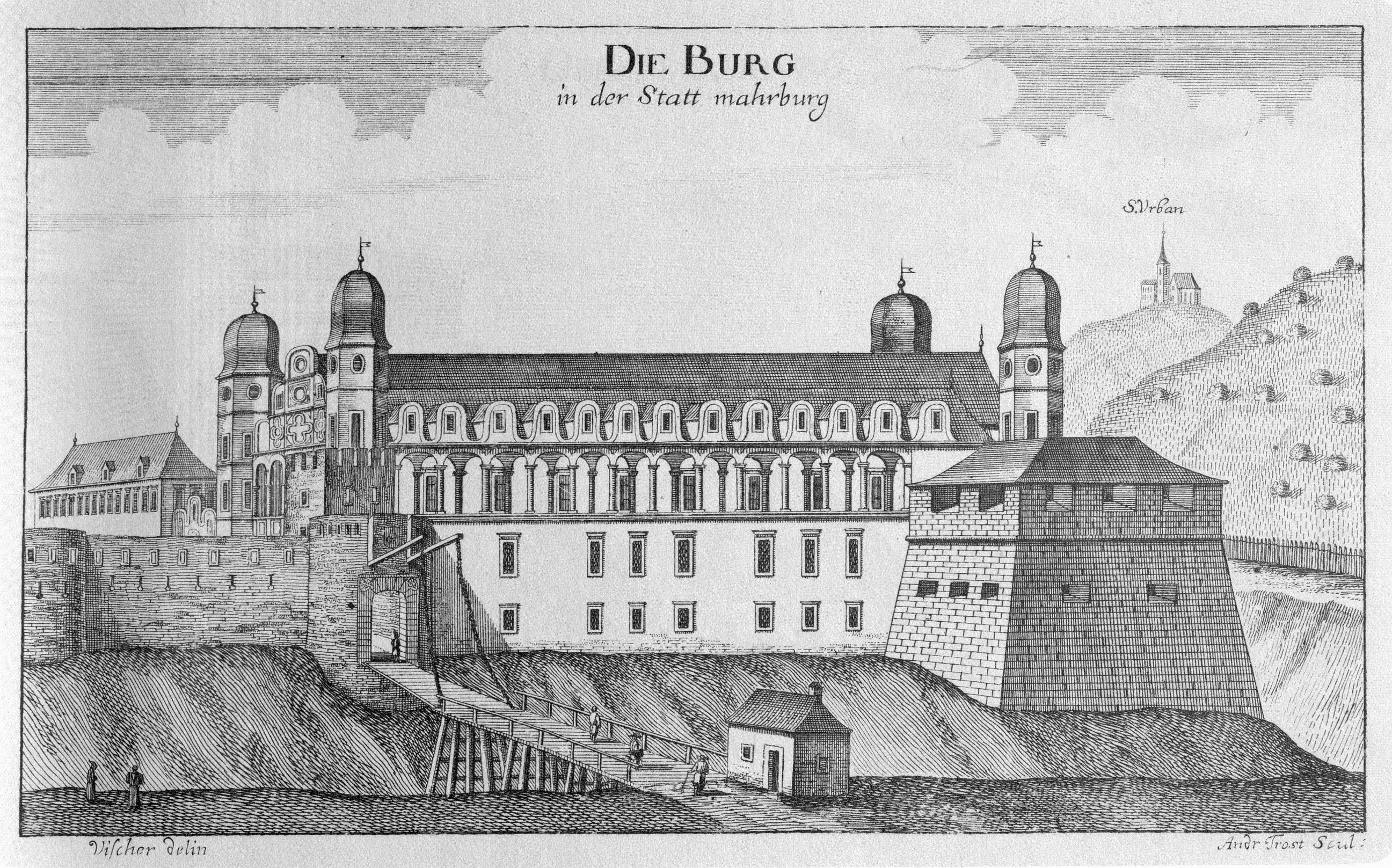
In 1478, a second castle was built on the northeastern side of the town, today known as Maribor Castle. In 1480 and in 1481, Matthias Corvinus besieged the town but failed to conquer it on both occasions. In 1496, Maximilian I issued a decree to expel all Jews from Maribor and Styria. In 1515, the Maribor Town Hall was built and a few years later, in 1532, Maribor again came under siege, this time by the Ottoman Empire. In the battle that became known as the Siege of Maribor, a 100,000-strong Ottoman army under the leadership of Suleiman the Magnificent attacked the town, which was defended only by the local garrison and its citizens. Despite all the odds, Maribor was defended and the legend of the Maribor shoemaker who raised the sluice gates and flooded the Ottoman army is still popular today.
Modern period
In the 17th century, numerous fires razed the town. The biggest ones occurred in 1601, 1645, 1648, and 1700. As a consequence, the town was rebuilt numerous times. In addition to fires, the plague decimated the town's population. The largest plague epidemics occurred in 1646, 1664, and 1680. Due to the plague, the town lost 35 percent of its population. In gratitude for the end of the plague, a plague column was built in 1681, with the original being replaced in 1743. In 1846, the Southern Railway was built through the town, which resulted in great economic growth and territorial expansion. In 1859, Anton Martin Slomšek, a bishop of the Diocese of Lavant, transferred the seat of the diocese to Maribor, and he further encouraged the use of Slovene. With the transfer, Maribor also received its first higher school. Four years later, Maribor was connected with Carinthia with the construction of the railway from Maribor to Prevalje. The first daily Slovenian newspaper, called Slovenski narod, was established in 1868 on today's Slomšek Square (Slomškov trg). On 4 April 1883, the first electric light in Slovene ethnic territory was installed on Castle Square (Grajski trg). The renowned electrical engineer Nikola Tesla lived in Maribor from 1878 to 1879, where he received his first job. Maribor National Hall was built in 1899, and it became a political, cultural, and economic centre for all Styrian Slovenes.

In 1900, the city itself had a population that was 82.3% Austrian German (19,298 people) and 17.3% Slovene (4,062 people; based on the language spoken at home); most of the city's capital and public life was in Austrian German hands. However, the county excluding the city had only 10,199 Austrian Germans and 78,888 Slovene inhabitants, meaning the city was completely surrounded by majority-Slovene ethnic territory. In World War I, the 47th Infantry Regiment of the Austro-Hungarian Army was based in the city and also fought on the Isonzo front. During the First World War many Slovenes in Carinthia and Styria were detained on suspicion of being enemies of the Austrian Empire. This led to distrust between Austrian Germans and Slovenes.

After the collapse of the Austrian-Hungarian Empire in 1918, Maribor was claimed by both the State of Slovenes, Croats and Serbs and German Austria. On 1 November 1918, a meeting was held by Colonel Anton Holik in the Melje barracks, where it was decided that the city would be part of German Austria. Ethnic Slovene Major Rudolf Maister, who was present at the meeting, denounced the decision and organised Slovenian military units that were able to seize control of the city. All Austrian officers and soldiers were disarmed and demobilised to the new state of German Austria. The German city council then held a secret meeting, where it was decided to do whatever possible to regain Maribor for German Austria. They organised a military unit called the Green Guard (Schutzwehr), and approximately 400 well-armed soldiers of this unit opposed the pro-Slovenian and pro-Yugoslav Major Maister. Slovenian troops surprised and disarmed the Green Guard early on the morning of 23 November. Thereafter, the city remained in Slovenian hands.
On 27 January 1919, Austrian Germans gathered to await the United States peace delegation at the city's marketplace were fired upon by Slovenian troops. Nine citizens were killed and eighteen were seriously wounded; who had actually ordered the shooting has never been unequivocally established. German sources accused Maister's troops of shooting without cause. In turn Slovene witnesses such as Maks Pohar claimed that the Austrian Germans attacked the Slovenian soldiers guarding the town hall, one even discharging a revolver and hitting one Slovenian soldier in the bayonet.
After 1918, most of Maribor's Austrian Germans left the Kingdom of Serbs, Croats and Slovenes for Austria. A policy of cultural assimilation was pursued in Yugoslavia against the Austrian German minority similar to the Germanization policy followed by Austria against its Slovene minority in Carinthia. From 1922 to 1929, Maribor was the seat of the Maribor Oblast, a subdivision within Yugoslavia and was later part of the Drava Banovina. Up until World War II, Maribor was considered the fastest-developing city in the country.
World War II and aftermath

In 1941 Lower Styria, the predominantly Slovene part of Styria, was annexed by Nazi Germany. German troops marched into the town at 9 pm on 8 April 1941. On 26 April Adolf Hitler, who encouraged his followers to "make this land German again", visited Maribor and a grand reception was organised in the city castle by the local Germans. Immediately after the occupation, Nazi Germany began mass expulsions of Slovenes to the Independent State of Croatia, Serbia, and later to the concentration and work camps in Germany. The Nazi goal was to Germanize the population of Lower Styria after the war. Slovene patriots were taken hostage and many were later shot in the prisons of Maribor and Graz. This led to organised resistance by Slovene partisans. The first act of resistance in Maribor and occupied Slovenia occurred only three days after Hitler's visit, when Slovene communists and SKOJ members burned two German cars.

Maribor was the site of a German prisoner-of-war camp from 1941 to 1945 for many British, Australian, and New Zealand troops who had been captured in Crete in 1941. In 1944, the largest mass rescue of POWs of the war in Europe took place when 105 Allied prisoners from the camp were freed by Slovene partisans in the Raid at Ožbalt. The city, a major industrial centre with an extensive armament industry, was systematically bombed by the Allies in the closing years of World War II. A total of 29 bombing raids devastated some 47% of the city area, killing 483 civilians and leaving over 4,200 people homeless. Over 2,600 people died in Maribor during the war. By the end of the war, Maribor was the most war-damaged major town of Yugoslavia. The remaining German-speaking population, except those who had actively supported the resistance during the war, was summarily expelled at the end of the war in May 1945. At the same time Croatian Home Guard members and their relatives who tried to escape from Yugoslavia were executed by the Yugoslav Army. The existence of nine mass graves in and near Maribor was revealed after Slovenia's independence.
Contemporary history
After the Second World War, Maribor became part of SR Slovenia, within SFR Yugoslavia. A major process of renewal and reconstruction began in the city. Maribor soon after became the industrial centre of Slovenia and the whole of Yugoslavia, hosting many known companies such as the Maribor Automobile Factory among others. The first clash between the Yugoslav People's Army and the Slovenian Territorial Defence in Slovenia's war of independence happened in nearby Pekre and on the streets of Maribor, resulting in the conflict's first casualty. After Slovenia seceded from Yugoslavia in 1991, the loss of the Yugoslav market severely strained the city's economy, which was based on heavy industry. The city saw a record unemployment rate of nearly 25%.{{cite book |last1=Bieber |first1=Florian |last2=Brentin |first2=Dario
The economic situation of Maribor after the mid-1990s crisis worsened again with the onset of global economic crisis combined with the European sovereign-debt crisis, which was one of the causes for the beginning of 2012–13 Maribor protests which spread into 2012–2013 Slovenian protests. In 2012, Maribor was one of the two European Capitals of Culture, and the following year, Maribor was the European Youth Capital.
Geography
Topography
On the Drava River lies Maribor Island (Mariborski otok). The oldest public bath, still an important and often visited place in Maribor, is located on the island.
There are two hills in Maribor: Calvary Hill and Pyramid Hill, both surrounded by vineyards. The latter dominates the northern border of the city. Ruins of the first Maribor castle from the 11th century and a chapel from the 19th century also stand there. The hill offers an easily accessible scenic overlook of Maribor and the countryside to the south over the Drava River.
City districts
The city of Maribor is divided into 11 districts () of the City Municipality of Maribor. The Drava River separates the districts of Center, Koroška Vrata, and Ivan Cankar to the north from other districts south of it. The various city districts are connected by four road bridges, a rail bridge, and a pedestrian bridge.
- Brezje–Dogoše–Zrkovci
- Center
- Ivan Cankar
- Koroška Vrata
- Magdalena
- Nova Vas
- Pobrežje
- Radvanje
- Studenci
- Tabor
- Tezno
Climate
Maribor has a humid continental climate (Köppen climate classification: Dfb), bordering on oceanic climate (Köppen: Cfb). Average temperatures hover around zero degrees Celsius during the winter. Summers are generally warm. Average temperatures during the city's warmest month (July) exceed 20 degrees Celsius, which is one of the main reasons for the Maribor wine tradition. The city sees on average roughly 900 mm of precipitation annually and it's one of the sunniest Slovene cities, with an average of 266 sunny days throughout the course of the year. The most recent temperature heatwave record for August is 40.6 °C, measured at the Maribor–Tabor weather station by the Slovenian Environment Agency (ARSO) on 8 August 2013.
| Jan record high C = 17.8 | Feb record high C = 21.4 | Mar record high C = 25.5 | Apr record high C = 28.9 | May record high C = 32.1 | Jun record high C = 36.2 | Jul record high C = 37.7 | Aug record high C = 39.7 | Sep record high C = 32.7 | Oct record high C = 27.0 | Nov record high C = 25.7 | Dec record high C = 19.5 | year record high C = 39.7 | Jan record low C = -26.3 | Feb record low C = -26.1 | Mar record low C = -23.9 | Apr record low C = -9.5 | May record low C = -4.5 | Jun record low C = 0.5 | Jul record low C = 3.5 | Aug record low C = 4.5 | Sep record low C = -1.7 | Oct record low C = -6.6 | Nov record low C = -17.4 | Dec record low C = -24.1 | year record low C = -26.3 | Jan snow depth cm = 5 | Feb snow depth cm = 6 | Mar snow depth cm = 2 | Apr snow depth cm = 0 | May snow depth cm = 0 | Jun snow depth cm = 0 | Jul snow depth cm = 0 | Aug snow depth cm = 0 | Sep snow depth cm = 0 | Oct snow depth cm = 0 | Nov snow depth cm = 1 | Dec snow depth cm = 3 | year snow depth cm = 1.4 | archive-url = https://web.archive.org/web/20230825233408/https://meteo.arso.gov.si/met/sl/climate/tables/statistike_1950_2020/letalisce_maribor/ | archive-date = 25 August 2023 | access-date = 25 August 2023}}{{Cite web | archive-url = https://web.archive.org/web/20230825233751/https://meteo.arso.gov.si/uploads/probase/www/climate/table/en/by_location/letalisce-maribor/climate-normals_81-10_Maribor-ER-Airport_eng.pdf | archive-date = 25 August 2023 | access-date = 25 August 2023}} | archive-url = https://web.archive.org/web/20230825234019/https://www.nodc.noaa.gov/archive/arc0216/0253808/1.1/data/0-data/Region-6-WMO-Normals-9120/Slovenia/CSV/MariborSlivnica_14026.csv | archive-date = 25 August 2023 | access-date = 25 August 2023}} Ogimet | Jan record high C = 17.3 | Feb record high C = 23.0 | Mar record high C = 25.4 | Apr record high C = 28.7 | May record high C = 33.0 | Jun record high C = 35.6 | Jul record high C = 37.8 | Aug record high C = 39.8 | Sep record high C = 32.9 | Oct record high C = 27.3 | Nov record high C = 23.6 | Dec record high C = 20.1 | year record high C = 39.8 | Jan record low C = -23.0 | Feb record low C = -22.6 | Mar record low C = -20.5 | Apr record low C = -6.6 | May record low C = -5.5 | Jun record low C = 1.1 | Jul record low C = 4.1 | Aug record low C = 3.9 | Sep record low C = -2.4 | Oct record low C = -6.9 | Nov record low C = -14.3 | Dec record low C = -21.8 | year record low C = -23.0 | archive-url = https://web.archive.org/web/20230825232203/https://meteo.arso.gov.si/met/sl/climate/tables/statistike_1950_2020/maribor_vrbanski_plato/ | archive-date = 25 August 2023 | access-date = 25 August 2023}}
Architecture
.jpg)
Many historical structures stand in Maribor. Of the remains of city walls surrounding the old downtown, the most prominent are the Judgement Tower, the Water Tower, and the Jewish Tower. Maribor Cathedral was built in the Gothic style in the 13th century. Maribor Synagogue was built in the 14th century, and is the second oldest synagogue of Europe. Today it serves as a centre for cultural activities. Other prominent Medieval buildings are Maribor Castle, Betnava Castle, and the ruins of Upper Maribor Castle on Pyramid Hill. Town Hall was constructed in the Renaissance style, and the Plague Column in the Baroque style.
At the start of the 21st century, plans were made for a new modern business, residential and entertainment district, called the Drava Gate (Dravska vrata) and nicknamed the Maribor Manhattan. The project includes many new exclusive residential apartments, offices and conference halls, a green and recreational space, and other structures. It also includes a 111 m tall skyscraper that would be the tallest building in Slovenia. Due to lack of finances, the project has been postponed.
In 2008, the Studenci Footbridge (Studenška brv) was renovated according to the design of the Ponting company. The design was awarded that year at the 3rd International Footbridge Conference in Porto.
In 2010, Maribor organised an international architectural competition ECC Maribor 2012 – Drava 2012 to gather proposals for the design and reconstruction of the Drava banks, the construction of a new art gallery, and for a new footbridge. Its jury received about 400 proposals for the three different projects. The footbridge and the river embankments will be built in the near future, but the art gallery was replaced with a cultural center MAKS, which is currently under construction.
The construction of a new modern Faculty of Medicine started in 2011 near the Drava River. It was designed by architect Boris Podrecca and was completed in 2013.
There are plans to renovate the Maribor Public Library and Town Hall Square (Rotovški trg). In addition, the renovation of Maribor Island (Mariborski otok) in the Drava River has been planned.
Parks and other green spaces

The main park in the city is , with the , and a wide promenade leading to the , containing over 100 local and foreign species of deciduous and coniferous trees.
Demographics
Catholic Church
Maribor, previously in the Catholic Diocese of Graz-Seckau, became part of the Diocese of Lavant on 1 June 1859, and the seat of its Prince-Bishop. The name of the diocese (after a river in Carinthia) was later changed to the Diocese of Maribor on 5 March 1962. It was elevated to an archdiocese by Pope Benedict XVI on 7 April 2006.
Jewish community
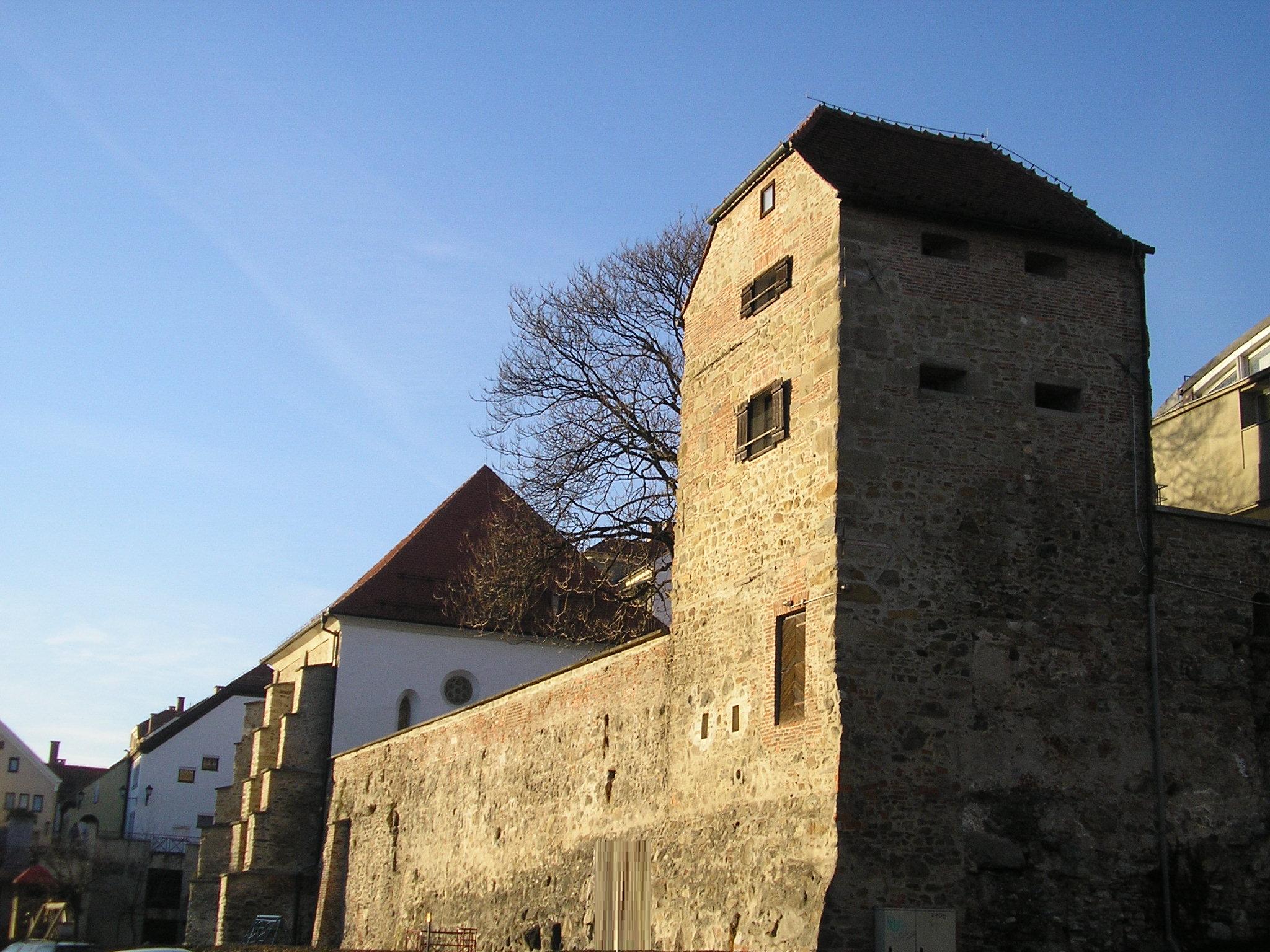
Jewish people living in Maribor were first mentioned in 1277. It is suggested that at that time there was already a Jewish quarter in the city. The Jewish ghetto was located in the southeastern part of the city and it comprised, at its peak, several main streets in the city centre including part of the main city square. The ghetto had a synagogue, a Jewish cemetery and also a Talmud school. The Jewish community of Maribor was numerically at its apex around 1410. After 1450 the circumstances changed dramatically: increasing competition that coincided with an economic crisis dealt a severe blow to the economic activities that were crucial to their economic success. According to a decree issued by Emperor Maximilian I in 1496, Jews were forced to leave the city of Maribor. Restrictions on settlement and business for Jews remained in place until 1861. From late spring 1941, after Lower Styria was annexed by the Third Reich, the Jews of Maribor were deported to concentration camps.
Culture
.jpg)
The city is the location of the University of Maribor, established in 1975, Alma Mater Europaea, and several other higher education institutions. High schools include Maribor High School No. 1 (Prva gimnazija Maribor) and Maribor High School No. 2 (II. gimnazija Maribor).
Every June, the two-week Lent Festival (named after the waterfront district called Lent) is held, with hundreds of musical, theatrical and other events. Every year the festival attracts theatre, opera, ballet performers, classical, modern, and jazz musicians and dancers from all over the world.
Maribor is known for wine and culinary specialities of international and Slovene cuisine (mushroom soup with buckwheat mush, tripe, sour soup, sausages with Sauerkraut, cheese dumplings, apple strudel, special cheese cake called gibanica). There are also many popular restaurants with Serbian cuisine. The Vinag Wine Cellar (Vinagova vinska klet), with an area of 20,000 m2 and a length of 2 km, has a capacity of 5.5 e6l of wine. The house of the oldest grapevine in the world (Hiša stare trte) at Lent grows the world's oldest grapevine, which was in 2004 recorded in Guinness World Records. The grapevine of Žametovka is over 400 years old.
The most listened radio station transmitting from Maribor is the commercial radio station Radio City. Other radio stations broadcasting from Maribor include Radio NET FM, Radio Maribor, Rock Maribor, Radio Brezje, and Maribor Študent Radio (MARŠ).
The alternative scene of Maribor is situated in the Pekarna Cultural Centre, located in a former military bakery area in the Magdalena District.
Sports
Team sports
Maribor is the hometown of the football club NK Maribor, playing in the Slovenian top division. NK Maribor has won the domestic title a record 16 times and has participated in the UEFA Champions League group stage on three occasions, in 1999, 2014, and 2017. The club's home ground is Ljudski vrt, located in the Koroška Vrata district.
| Club | Sport | League | Venue |
|---|---|---|---|
| NK Maribor | Football | Slovenian PrvaLiga | Ljudski vrt |
| AKK Branik Maribor | Basketball | Slovenian Third Basketball League | Lukna Sports Hall |
| ŽKD Maribor | Basketball | Slovenian Women's Basketball League | Lukna Sports Hall |
| RK Maribor Branik | Handball | Slovenian Second Handball League | Lukna Sports Hall |
| OK Maribor | Volleyball | Slovenian Volleyball League | Tabor Hall |
| OK OTP Banka Branik | Volleyball | Slovenian Women's Volleyball League | Tabor Hall |
| HDK Maribor | Ice hockey | Ö Eishockey Liga, Slovenian National Championship | Tabor Ice Hall |
Winter sports
The Maribor Pohorje Ski Resort, situated on the outskirts of the city on the slopes of the Pohorje mountain range, hosted the women's slalom and giant slalom races for the Alpine Skiing World Cup. The competition, known as the Golden Fox (), was held for the first time in 1964, and was last held in Maribor in 2019. Since then, due to the lack of snow in the city, the event has been relocated to Kranjska Gora.
Event hosting

In November 2012, Maribor hosted the World Youth Chess Championship with Garry Kasparov as the guest of honour. It was presumed that Maribor would also host the 2013 Winter Universiade, but the Government of Slovenia refused any financial support for the project. As a result, in March 2012, the International University Sports Federation decided that it would organise the Universiade elsewhere. In the same year, Maribor also withdrew as one of the host cities of the EuroBasket 2013 due to lack of finances.
Maribor's Ljudski vrt stadium was one of the venues for the 2012 UEFA European Under-17 Championship and the 2021 UEFA European Under-21 Championship. In July 2023, Maribor hosted the 17th edition of the European Youth Olympic Festival.
Sports parks
Maribor's sports parks include the Pohorje Adrenaline Park (Adrenalinski park Pohorje), the Pohorje Bike Park, and the Betnava Adventure Park (Pustolovski park Betnava) with ropes courses, zip-lines, and poles.
Transport
- List of bridges in Maribor
- Maribor railway station
- Tauern Railway
- Maribor Edvard Rusjan Airport
International relations
Twin towns and sister cities
Maribor is twinned with:
- UK Royal Borough of Greenwich, London, United Kingdom, since 1967
- SRB Kraljevo, Serbia, since 1970
- GER Marburg, Germany, since 1979
- ITA Udine, Italy, since 1985
- HUN Szombathely, Hungary, since 1985
- AUT Graz, Austria, since 1987
- LUX Pétange, Luxembourg, since 1992
- CRO Osijek, Croatia, since 1995
- FRA Tours, France, since 1997
- RUS Saint Petersburg, Russia, since 2001
- USA Pueblo, Colorado, United States, since 2006
- UKR Kharkiv, Ukraine, since 2012
- CHN Hangzhou, China, since 2017
- CHN Chongqing, China, since 2017
Partner cities
Maribor has signed partnerships with:
- NMK Kumanovo, North Macedonia, since 2014
- CHN Ningbo, China, since 2014
- CHN Nanjing, China, since 2015
- CHN Nanchang, China, since 2015
- SRB Novi Sad, Serbia, since 2015
- CHN Huai'an, China, since 2015
- CRO Makarska, Croatia, since 2015
- CHN Yancheng, China, since 2015
- CHN Wuxi, China, since 2015
- RUS Vologda, Vologda Oblast, Russia, since 2016
- MNE Bar, Montenegro, since 2016
- GEO Kutaisi, Georgia, since 2016
- BLR Maladzyechna, Belarus, since 2016
- CHN Wuhan, China, since 2016
- IRN Mahallat, Iran, since 2016
- IRN Sari, Iran, since 2016
- BUL Veliko Tarnovo, Bulgaria, since 2016
- SRB Smederevo, Serbia, since 2017
- RUS Oryol, Oryol Oblast, Russia, since 2017
- CHN Xi'an, China, since 2017
- CHN Jinan, China, since 2018
Gallery
File:Maribor, Glavni trg, stara mestna hiša.jpg|Maribor Town Hall File:Maribor, Slovenia (52219569827).jpg|National Hall File:Kužno znamenje Maribor.jpg|Plague Column File:Maribor, Stari most (2).jpg|Old Bridge File:Maribor (100) (5496690819).jpg|World's oldest vine File:Maribor City Municipality - Judgement Tower - 20220522131702.jpg|Judgement Tower File:Maribor, Glavni trg - sjever.jpg|Main Square houses File:Vodni stolp.jpg|Maribor Water Tower File:DvorecBetnava1.JPG|Betnava Mansion File:SNG Maribor - Slovene National Theatre Maribor.jpg|National Theatre File:Pravna fakulteta Univerze v Mariboru.jpg|Faculty of Law Maribor File:Salzburski dvorec.jpg|Salzburg Mansion File:Maribor, sinagoga.jpg|Maribor Synagogue File:Maribor train station2.jpg|Railway station File:Maribor.jpg|Pohorje
References
References
- "Naselje Maribor". [[Statistical Office of the Republic of Slovenia]].
- (6 December 2018). "Zgodovina na dlani".
- (2009). "Etimološki slovar slovenskih zemljepisnih imen". Modrijan.
- (10 November 2018). "Predstavitev mesta Maribor".
- (15 November 2016). "Maribor obeležuje 180. obletnico svojega imena".
- (2001). "O tujejezičnih ustreznicah za slovenska zemljepisna imena". Geografski Vestnik.
- (1977). "Il siglario mondiale di enti e imprese economiche". Banca commerciale italiana.
- (April 27, 1968). "Vojna in Osvobodilna fronta". Delo: Sobotna priloga.
- (2012). "Arheološka pot po Mariboru z okolico. Odsek I: Zgornje Radvanje – Spodnje Hoče / Archaeological Trail of Maribor and its Surroundings. Section I: Zgornje Radvanje – Spodnje Hoče". Zavodza varstvo kulturne dediščine Slovenije.
- "Kratka zgodovina mesta Maribor". TIC Maribor.
- "Slovenska zgodovina". Peter Štih.
- "Zgodovina Maribora".
- "Maribor 850 let".
- (1966). "Maribor". Časopis Za Zgodovino in Narodopisje.
- (14 October 2014). "Castrum Marchburch, 850 let od prve omembe Maribora". MMC RTV Slovenija.
- Dean Phillip Bell. (2001). "Sacred Communities: Jewish and Christian Identities in Fifteenth-Century Germany". BRILL.
- "Cevljarcek Maribor".
- . "Enciklopedija Slovenije".
- . "Slovenci skozi čas".
- . "Maribor-mesto ob Dravi".
- . "750 let Maribora".
- "Slovenski narod".
- "Prva žarnica na Slovenskem".
- "Nikola Tesla in Maribor".
- [http://www.ff.uni-lj.si/oddelki/zgodovin/Repertoriji/STAJERSKA%201900.pdf ''Leksikon občin kraljestev in dežel zastopanih v državnem zboru,'' vol. 4: ''Štajersko''. 1904. Vienna: C. Kr. Dvorna in Državna Tiskarna] {{Webarchive. link. (6 August 2011 {{in lang). sl
- "Stari most". Maribor Art.
- "Slovenci na vzhodnem bojiscu".
- Vladimir Gradnik. (1981). "Primorski prostovoljci v boju za severno mejo 1918–1919". Založba Lipa.
- Bruno Hartman. (2002). "Prevrat v Mariboru".
- Lojze Penič. (1988). "Boj za slovensko severno mejo 1918–1920". Muzej narodne osvoboditve Maribor.
- "Rudolf Maister".
- sl
- "Poslanica".
- "Rudolf Maister – od mitizacije do zgodovinskega spomina".
- "Nemci v Sloveniji 1918–1941".
- "Pomembna vloga pravnikov v ljubljanski in mariborski oblastni skupščini (1927–1929) ter banskem svetu Dravske banovine (1930–1941)".
- "Kibla".
- . (2011). ["Vojaškošolski zbornik"](http://www.slovenskavojska.si/fileadmin/slovenska_vojska/pdf/publikacije/VSZ_julij_2011A.pdf). *Poveljstvo za doktrino, razvoj, izobraževanje in usposabljanje*.
- Jozo Tomasevich. (31 January 2001). "War and Revolution in Yugoslavia, 1941–1945: Occupation and Collaboration". Stanford University Press.
- "Hitler v Mariboru".
- "Društvo izgnancev Slovenije".
- "Pokrajinski arhiv Maribor".
- "Svobodna beseda".
- "Nova razstava Muzeja narodne osvoboditve Maribor".
- "Bojan Ilich (1922–1941) eden prvih upornikov proti nacizmu v Mariboru".
- "Spominski dan MO Maribor in Dan upora proti okupatorju - Volkmerjev prehod".
- "Stammlager".
- "II: The Crete Campaign—Prisoners in Greece and Germany | NZETC".
- "Maribor 2012: Smrt je kosila tudi iz zraka".
- (8 May 2015). "Kako so proslavili osvoboditev Maribora in ga znova postavili na noge". [[RTV Slovenija]].
- "Zveza mariborskih športnih društev Branik".
- Preece, Jennifer Jackson. (1998). "Ethnic Cleansing as an Instrument of Nation-State Creation: Changing State Practices and Evolving Legal Norms". Human Rights Quarterly.
- Troha, Nevenka. (2014). "Nasilje vojnih in povojnih dni". Inštitut za novejšo zgodovino.
- Tomasevich, Jozo. (2001). "War and Revolution in Yugoslavia: 1941–1945".
- "Maribor industrijske poti".
- (2015). "Maribor in Mariborčani". Raziskovalna postaja ZRC SAZU Maribor in Inštitut za slovensko narodopisje ZRC SAZU.
- "Pekrski dogodki".
- "Gospodarska tranzicija v Sloveniji (1990–2004)".
- "Godina: Kangler povod za proteste, vzrok zanje dolgoletno nezadovoljstvo".
- (23 January 2013). "Dediščine EPK-ja po zaprtju zavoda ne bi smeli zavreči". [[RTV Slovenija]].
- (30 January 2013). "Vrata sta zaprli točki, ki sta bili prvi stik obiskovalcev z EPK-jem". [[RTV Slovenija]].
- (2006). "World Map of the Köppen-Geiger climate classification updated". Meteorol. Z..
- (8 August 2013). "Padel vročinski rekord: V Cerklju ob Krki bilo kar 40, 8 stopinj Celzija! {{!}} Politikis".
- . (27 June 2025). ["14026: Maribor Slovenia (Slovenia)"](https://www.ogimet.com/cgi-bin/gsynres?lang=en&ind=14026&ano=2025&mes=6&day=27&hora=8&min=0&ndays=30). *OGIMET*.
- "Slovenia-Maribor: Defence Towers".
- (12 July 2008). "Studenška brv prejela nagrado na konferenci Footbridge". [[Slovenian Press Agency]].
- "Censuses 1948–1991". [[Statistical Office of the Republic of Slovenia]].
- "Population census 1991 and 2002". [[Statistical Office of the Republic of Slovenia]].
- "Population by sex and by age, municipalities and settlements, Slovenia, annually". [[Statistical Office of the Republic of Slovenia]].
- [http://www.jewishcommunity.si/jss/ENG-zgodovina.asp Jewish community of Slovenia] {{webarchive. link. (January 28, 2010)
- (18 September 2019). "Na Univerzi v Mariboru obeležili Dan univerze".
- (3 June 2020). "Prva gimnazija Maribor: Za 170 let 170 zgodb".
- (28 January 2017). "Ivan Lorenčič, ravnatelj II. gimnazije Maribor: Če hočemo vrhunske rezultate, brez stresa in napora ne gre".
- (29 June 2019). "Konec z ognjemetom in upi na svetlejšo prihodnost". [[RTV Slovenija]].
- (20 September 2020). "Na Lentu obrali najstarejšo trto na svetu, prvi grozd je odrezal Tone Partljič". [[RTV Slovenija]].
- (16 March 2018). "Menjava na prvem mestu najbolj poslušanega radia v Sloveniji". [[Siol]].
- "Pekarna Cultural Centre".
- (22 May 2022). "Prepričljiv šprint Mariborčanov za 16. naslov prvaka".
- (22 August 2017). "Čaroben večer v Ljudskem vrtu: Maribor šampion v Ligi prvakov!". [[RTV Slovenija]].
- (18 January 2014). "50 let Zlate lisice".
- (31 December 2021). "Zlata lisica znova v Kranjski Gori".
- (5 January 2024). "Pohorcev protestno ne bo v Kranjsko Goro". [[Siol]].
- (19 November 2012). "Kasparov v Mariboru: Če se oziramo nazaj, se nam bo začelo vrteti". [[RTV Slovenija]].
- (19 February 2012). "Kresanje mnenj o univerzijadi". [[Delo (newspaper).
- (6 March 2012). "Mariboru odvzeli univerzijado". [[Slovenske novice]].
- (17 October 2010). ""Avtocesta" do Eurobasketa odprta, zdaj je na vrsti država". [[RTV Slovenija]].
- (25 December 2012). "Primorac: Maribor ostal brez EP zaradi župana". [[Siol]].
- (8 January 2021). "Olimpijski festival mladine v Mariboru: Župan Arsenovič ne želi, da bi se ponovil fiasko z univerzijado".
- "Prijateljska in partnerska mesta".
- "Jinan, a City of Springs Sister Cities Maribor, Slovenia".
This article was imported from Wikipedia and is available under the Creative Commons Attribution-ShareAlike 4.0 License. Content has been adapted to SurfDoc format. Original contributors can be found on the article history page.
Ask Mako anything about Maribor — get instant answers, deeper analysis, and related topics.
Research with MakoFree with your Surf account
Create a free account to save articles, ask Mako questions, and organize your research.
Sign up freeThis content may have been generated or modified by AI. CloudSurf Software LLC is not responsible for the accuracy, completeness, or reliability of AI-generated content. Always verify important information from primary sources.
Report