From Surf Wiki (app.surf) — the open knowledge base
Maria Zuber
American geophysicist (born 1958)
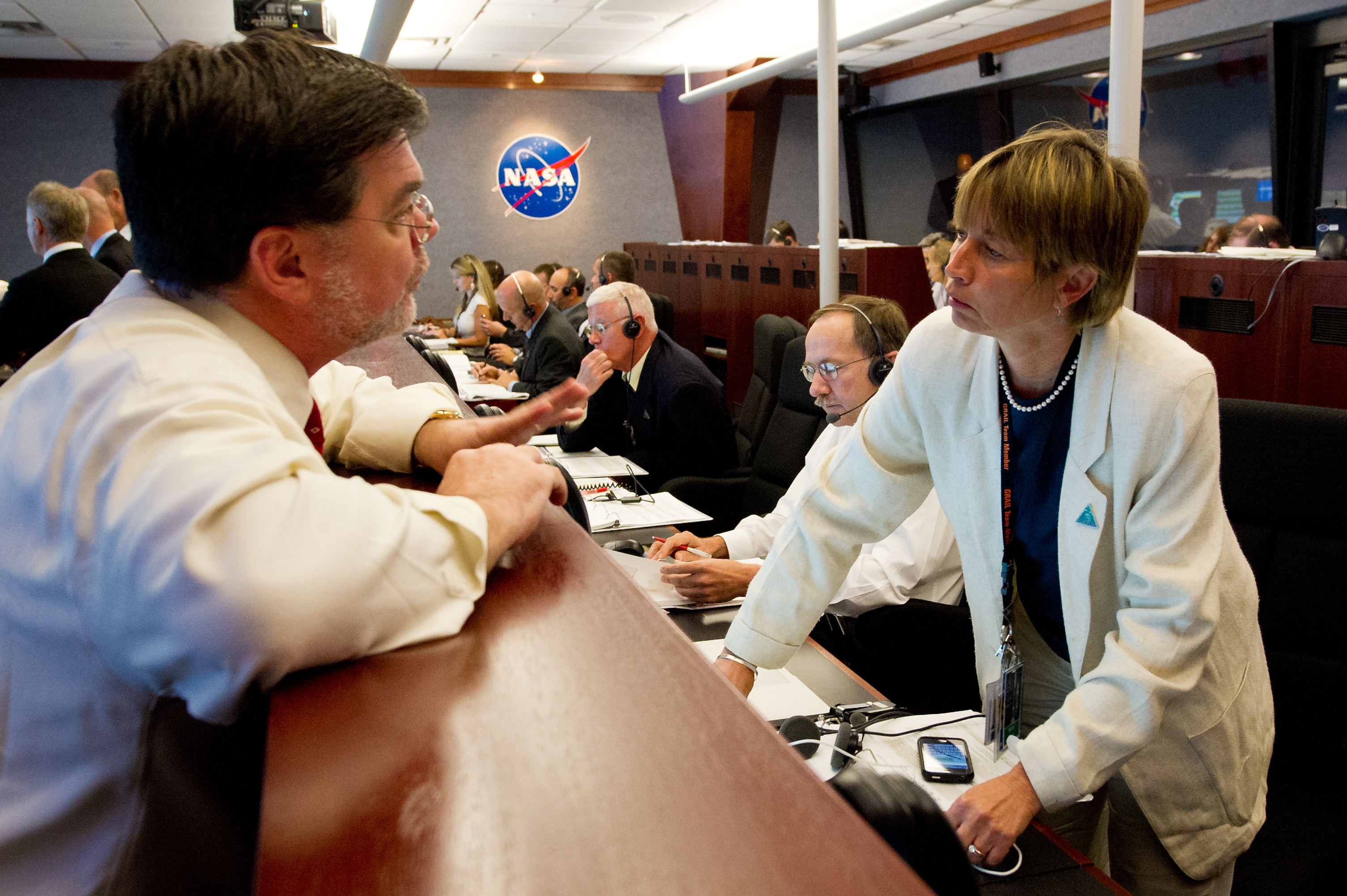
American geophysicist (born 1958)
| Field | Value |
|---|---|
| name | Maria Zuber |
| image | Maria_T._Zuber,_PCAST_Co-Chair_(cropped).jpg |
| office | Former Co-chair of the President's Council of Advisors on Science and Technology |
| alongside | Frances Arnold and Francis Collins |
| predecessor | Position established |
| birth_date | |
| birth_place | Norristown, Pennsylvania, U.S. |
| education | University of Pennsylvania (BS) |
| Brown University (MS, PhD) | |
| awards | NASA Distinguished Public Service Medal |
| module | {{Infobox scientist |
| field | Planetary science |
| child | yes |
| workplaces | Massachusetts Institute of Technology |
| doctoral_advisor | E. M. Parmentier |
| thesis_title | Unstable Deformation in Layered Media: Application to Planetary Lithospheres |
| thesis_year | 1986}} |
Brown University (MS, PhD) Maria T. Zuber (born June 27, 1958) is the E. A. Griswold Professor of Geophysics and Presidential Advisor for Science and Technology Policy at the Massachusetts Institute of Technology. Zuber also serves as a trustee of Brown University. Zuber has been involved in more than half a dozen NASA planetary missions aimed at mapping the Moon, Mars, Mercury, and several asteroids. She was the principal investigator for the Gravity Recovery and Interior Laboratory (GRAIL) Mission, which was managed by NASA's Jet Propulsion Laboratory.
From 2021-2024, Zuber served as co-chair of President Joe Biden's Council of Advisors on Science and Technology (PCAST). She served on the National Science Board during the first Administration of President Donald Trump (2018-2021), and was the Board's chair during the Obama Administration (2016-2018).
Early life and education
Maria T. Zuber was born on June 27, 1958, in Norristown, Pennsylvania. She grew up in Summit Hill, Pennsylvania, in Pennsylvania's Coal Region, one of five children of Joseph and Dolores (Stoffa) Zuber. She has three brothers, Joseph Jr., Stephen, and Andrew (1966–2018), and a sister, Joanne. Both her grandfathers were coal miners who contracted black lung disease.
Zuber was the first person in her family to attend college. She received her B.A. in astronomy and geology from the University of Pennsylvania in 1980. She earned Sc.M. and Ph.D. degrees in geophysics from Brown University, in 1983 and 1986 respectively, with advisor Marc Parmentier. Reflecting on her decision to apply to Ivy League graduate schools and not MIT, Zuber joked "I remember saying, I don't want to go to any nerd school... and of course, I'm the biggest nerd there is."
Career
Zuber was a research scientist at the NASA Goddard Space Flight Center in Maryland, then became a professor of geophysics at Johns Hopkins University in 1991. She joined the faculty of Massachusetts Institute of Technology (MIT) in 1995 and was the head of the Department of Earth, Atmospheric and Planetary Sciences from 2003 to 2012. where she also held the position of the E. A. Griswold Professor of Geophysics in the Department of Earth, Atmospheric and Planetary Sciences. She was the first woman to lead a science department at MIT and, as principal investigator of GRAIL, the first woman to lead a robotic planetary mission for NASA.
Zuber has made numerous theoretical and experimental contributions toward understanding the structure and tectonics of solid Solar System objects, including the Moon, Mars, and asteroids. In particular, she has pioneereed the use of gravity and laser altimetry in the measurement of the surface shapes of the inner planets, and the interpretation of these measurements in terms of internal structure and dynamics, thermal history, and surface-atmosphere interactions. Her theoretical work has included modeling lithospheric deformations and instabilities. She revised models of lunar structure and thermal history with data from Clementine, and made precise measurements of the Moon's crust with GRAIL. She made measurements of the crust of Mars with the Mars Global Surveyor, producing a theory of the planet's geodynamics. She contributed to the three-dimensional model of 433 Eros reconstructed from NEAR Shoemaker observations. Zuber has also been involved with the Mars Orbiter Laser Altimeter, MESSENGER, Mars Reconnaissance Orbiter, Dawn (spacecraft), the Lunar Reconnaissance Orbiter, and Psyche (spacecraft).
Zuber worked with Sally Ride to include in the GRAIL mission components that would capture the imagination of young students, inspired in part by a desire to spread her own childhood enthusiasm. A student contest provided the names for the mission's two spacecraft, Ebb and Flow, and students can sign up to use GRAIL's Moon Knowledge Acquired (MoonKAM) by Middle school students.
Honors and awards
- [[File:Secretary_Kerry_Speaks_With_MIT_President_and_Vice_President_Drs._Reif_and_Zuber_Before_Discussing_Climate_Change_at_the_University_in_Cambridge,Massachusetts(32212106825).jpg|thumb|Zuber with [[Leo Rafael Reif]] and [[John Kerry]] in 2017]]2002: 50 Most Important Women in Science (Discover Magazine).
- 2004: NASA Distinguished Public Service Medal.
- 2004: Elected to the National Academy of Sciences
- 2005: Elected to the American Philosophical Society
- 2007: American Astronautical Society/Planetary Society Carl Sagan Memorial Award.
- 2007: Geological Society of America G.K. Gilbert Award
- 2008: Honorary Doctor of Science degree from Brown University.
- 2008: Named as one of America's Best Leaders by U.S. News & World Report, with Fiona A. Harrison. Zuber and Harrison were the first two women to be selected as scientific leaders of NASA robotic missions.
- 2009: NASA Group Achievement Award for the Lunar Reconnaissance Orbiter Laser Ranging Team.
- 2010: NASA Group Achievement Award for the Lunar Reconnaissance Orbiter Team.
- 2012: Massachusetts Institute of Technology James R. Killian Jr. Faculty Achievement Award.
- 2012: NASA Group Achievement Awards for (1) the GRAIL Science Team; (2) the GRAIL Project Office Team; and (3) the GRAIL Mission Formulation Team.
- 2012: NASA Outstanding Public Leadership Medal
- 2012: Harry Hess Medal, American Geophysical Union.
- 2012: International Academy of Astronautics Laurel for Team Achievement to MESSENGER Team.
- 2013: National Space Society, Space Pioneer Award in Science and Engineering, GRAIL Team.
- 2013: NASA Exceptional Achievement for Science, Lunar Reconnaissance Orbiter Science Team.
- 2013: NASA Group Achievement Award for the Lunar Reconnaissance Orbiter - Laser Ranger Optical Communication Experiment.
- 2013: NASA Group Achievement Award for the Dawn Science Team.
- 2014: Buzz Aldrin Space Exploration Award, The Explorer's Club.
- 2015: Member, Johns Hopkins University Society of Scholars.
- 2015: MIT Freshman Advising Student Champion Award.
- 2015: Best Referee Award, Nature Publishing
- 2017: Eugene Shoemaker Distinguished Scientist Medal, NASA Solar System Exploration Virtual Science Institute
- 2019: Gerard P. Kuiper Prize in Planetary Sciences
- 2022: Golden Plate Award of the American Academy of Achievement presented by Awards Council member Dr. Francis Collins
Zuber is a fellow of the following professional societies:
- American Geophysical Union
- American Association for the Advancement of Science
- American Astronomical Society, Division for Planetary Sciences
- American Astronautical Society
- Geological Society of America
The asteroid 6635 Zuber, which orbits the sun between Mars and Jupiter, is named for Zuber.
References
References
- "Maria T. Zuber | Corporation | Brown University".
- "Gravity Recovery and Interior Laboratory: Biography -- Maria Zuber". [[NASA]].
- "National Science Board".
- "InfiniteMIT {{!}} Maria T. Zuber".
- (January 5, 2018). "Andrew Zuber Obituary (2018)". Times News.
- (February 27, 2017). "3Q: Maria Zuber, daughter of coal country". MIT News.
- "Maria Zuber Vitae".
- (November 27, 2012). "Maria Zuber appointed vice president for research".
- "Maria Zuber Vitae". [[MIT]].
- (1986). "Extension of continental lithosphere: A model for two scales of basin and range deformation". Journal of Geophysical Research.
- (2003). "Spacing of faults at the scale of the lithosphere and localization instability: 1. Theory". Journal of Geophysical Research.
- (1994). "The Shape and Internal Structure of the Moon from the Clementine Mission". Science.
- (2013). "The Crust of the Moon as Seen by GRAIL". Science.
- Zuber, Maria T.. (2000). "Internal Structure and Early Thermal Evolution of Mars from Mars Global Surveyor Topography and Gravity". Science.
- (2001). "Ancient Geodynamics and Global-Scale Hydrology on Mars". Science.
- Zuber, Maria T.. (2000). "The Shape of 433 Eros from the NEAR-Shoemaker Laser Rangefinder". Science.
- (October 16, 2012). "The World We Dream - Maria Zuber Zeitgeist Americas 2012".
- "The 50 Most Important Women in Science".
- "Maria T. Zuber".
- "APS Member History".
- "2007 GK Gilbert Award - Maria T. Zuber". Geological Society of America.
- Ewers, Justin. "America's Best Leaders: Fiona Harrison & Maria Zuber, NASA scientists". [[U.S. News & World Report]].
- "Lunar Reconnaissance Orbiter". Goddard Space Flight Center.
- "MIT Killian Lectures". MIT Killian Lectures.
- "In Depth {{!}} GRAIL".
- "Harry H. Hess Medal". American Geophysical Union.
- "MESSENGER". Applied Physics Laboratory.
- "Working to Create a Spacefaring Civilization". National Space Society.
- "Lunar Reconnaissance Orbiter". Goddard Space Flight Center.
- "LRO-LR Home Page". Goddard Space Flight Center.
- Greicius, Tony. (February 11, 2015). "Dawn". NASA.
- "The Buzz Aldrin Space Exploration Award". The Explorers Club.
- (April 9, 2015). "Johns Hopkins Society of Scholars to induct 15 new members".
- "SSERVI Announces 2017 Award Winners".
- "2019 Prize Recipients". American Astronomical Society.
- "Maria Zuber Awarded the 2019 Gerard P. Kuiper Prize in Planetary Sciences". MIT Department of Earth, Atmospheric and Planetary Sciences.
- "Golden Plate Awardees of the American Academy of Achievement". [[American Academy of Achievement]].
- (March 27, 2019). "(6635) Zuber Asteroid".
- "MIT Scientist to Discuss "Expedition to an Asteroid" at Williams, Sept. 26". Williams College.
This article was imported from Wikipedia and is available under the Creative Commons Attribution-ShareAlike 4.0 License. Content has been adapted to SurfDoc format. Original contributors can be found on the article history page.
Ask Mako anything about Maria Zuber — get instant answers, deeper analysis, and related topics.
Research with MakoFree with your Surf account
Create a free account to save articles, ask Mako questions, and organize your research.
Sign up freeThis content may have been generated or modified by AI. CloudSurf Software LLC is not responsible for the accuracy, completeness, or reliability of AI-generated content. Always verify important information from primary sources.
Report