From Surf Wiki (app.surf) — the open knowledge base
Marginalia
Marks made in margins of book pages

Marks made in margins of book pages

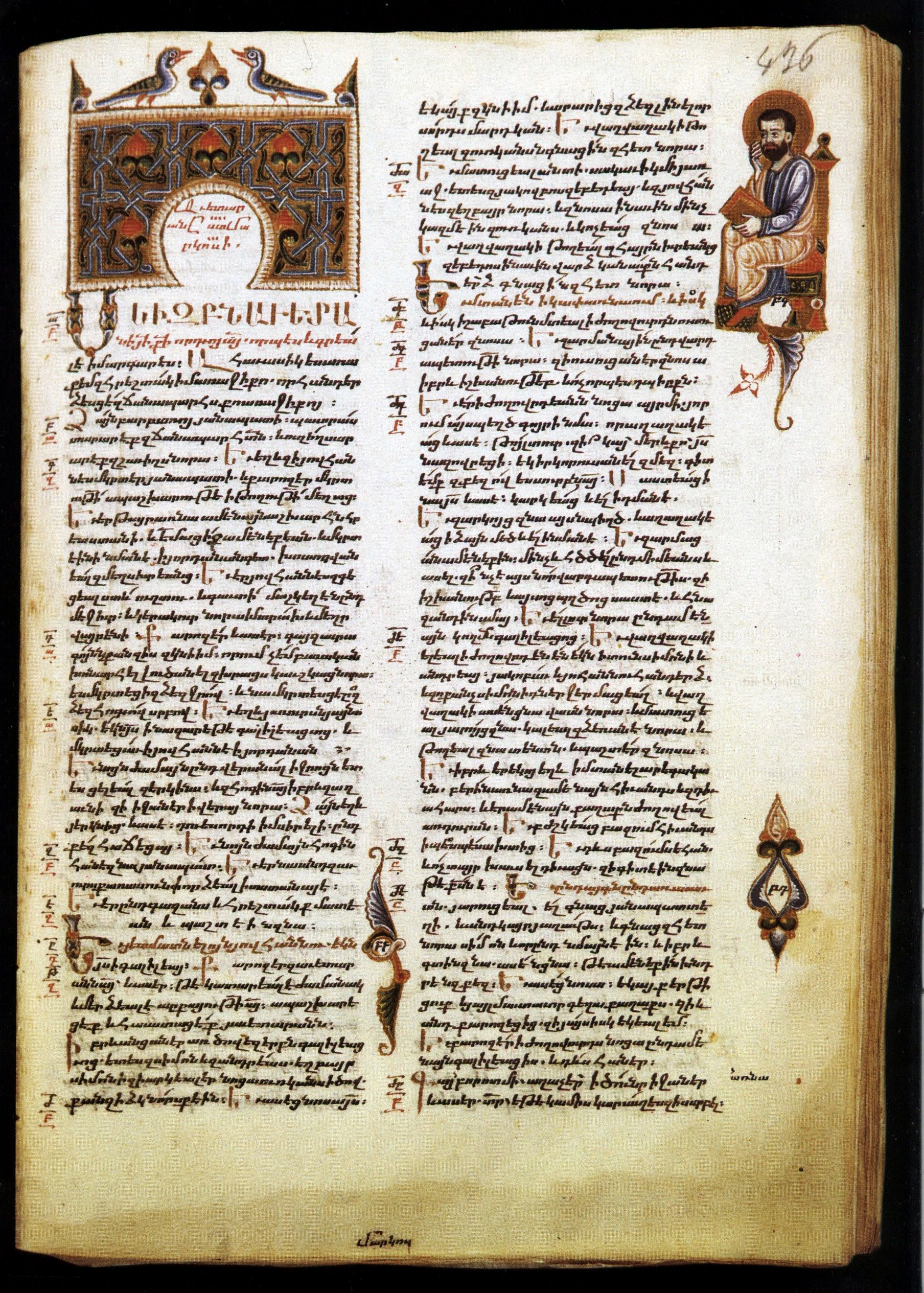
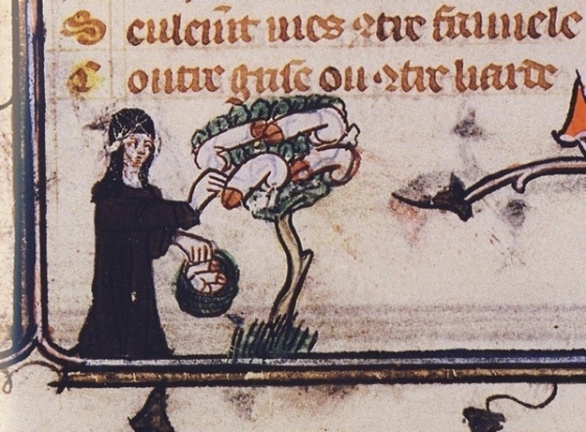
Marginalia (or apostils) are marks made in the margins of a book or other document. They may be scribbles, comments, glosses (annotations), critiques, doodles, drolleries, or illuminations.
Biblical manuscripts
Biblical manuscripts have notes in the margin, for liturgical use. Numbers of texts' divisions are given at the margin (κεφάλαια, Ammonian Sections, Eusebian Canons). There are some scholia, corrections and other notes usually made later by hand in the margin. Marginalia may also be of relevance because many ancient or medieval writers of marginalia may have had access to other relevant texts that, although they may have been widely copied at the time, have since then been lost due to wars, prosecution, or censorship. As such, they might give clues to an earlier, more widely known context of the extant form of the underlying text than is currently appreciated. For this reason, scholars of ancient texts usually try to find as many surviving manuscripts of the texts they are researching as possible, because the notes scribbled in the margins might contain additional clues to the interpretation of these texts.
History
One of the earliest forms of marginal commentary were scholia, or written notes in the margins of text, typically provided by the scribe who created the handwritten manuscript copy. Three ancient Greek Homeric scholarsZenodotus of Ephesus, Aristophanes of Byzantium, and Aristarchus of Samothracewho were all librarians at the Library of Alexandria, successively developed a system of symbols to be used in the margins of Homer's poetry. Named after the obelus, which evolved into the modern dagger , this system of marking up a text with a set of symbols for scholarly commentary became known as obelism. Among these Aristarchian symbols, the ancora, an anchor-shaped pointer or , was used to draw attention to a passage.
In Europe, before the invention of the printing press, books were copied by hand, originally onto vellum and later onto paper. Paper was expensive and vellum was much more expensive. A single book cost as much as a house. Books, therefore, were long-term investments expected to be handed down to succeeding generations. Readers commonly wrote notes in the margins of books in order to enhance the understanding of later readers. Of the 52 extant manuscript copies of Lucretius' "De rerum natura" (On the Nature of Things) available to scholars, all but three contain marginal notes.
The practice of writing in the margins of books gradually declined over several centuries after the invention of the printing press. Printed books gradually became much less expensive, so they were no longer regarded as long-term assets to be improved for succeeding generations. The first Gutenberg Bible was printed in the 1450s. Hand annotations occur in most surviving books through the end of the 1500s. Marginalia did not become unusual until sometime in the 1800s.
Fermat's claim, written around 1637, of a proof of Fermat's last theorem too big to fit in the margin is the most famous mathematical marginal note. Voltaire, in the 1700s, annotated books in his library so extensively that his annotations have been collected and published. From 1845 to 1849 Edgar Allan Poe titled some of his reflections and fragmentary material "Marginalia". Five volumes of Samuel T. Coleridge's marginalia have been published. Beginning in the 1990s, attempts have been made to design and market e-book devices permitting a limited form of marginalia.
Some famous marginalia were serious works, or drafts thereof, written in margins due to scarcity of paper. Voltaire composed in book margins while in prison, and Sir Walter Raleigh wrote a personal statement in margins just before his execution.

Recent studies
Marginalia can add to or detract from the value of an association copy of a book, depending on the author of the marginalia and on the book.
Catherine C. Marshall, doing research on the future of user interface design, has studied the phenomenon of user annotation of texts. She discovered that in several university departments, students would scour the piles of textbooks at used book dealers for consistently annotated copies. The students had a good appreciation for their predecessors' distillation of knowledge. In recent years, the marginalia left behind by university students as they engage with library textbooks has also been a topic of interest to sociologists looking to understand the experience of being a university student.
The former Moscow correspondent of The Financial Times, John Lloyd, has stated that he was shown Stalin's copy of Machiavelli's The Prince, with marginal comments.
American poet Billy Collins has explored the phenomenon of annotation within his poem titled "Marginalia".
In the last thirty years or so, many efforts have been made to analyze and understand marginalia found within Illuminated manuscripts. However, multiple theories exist as to its function and meaning within context. One study on medieval and Renaissance manuscripts where snails are depicted on marginalia shows that these illustrations are a comic relief due to the similarity between the armor of knights and the shell of snails. Other studies of marginalia indicate it was used to provide additional commentary and support for surrounding text. Some types of marginalia may have also been a scribe’s form of artistic expression and skill while others were deliberate exaggerations to humor and entertain the reader. In addition, other marginalia may have existed as moral guides, providing bad examples of what behaviors should not be imitated. Lastly, some manuscript scholars believe medieval illuminators utilized marginalia due to fear of empty space left on pages or simply to supply a form of ornate meaningless distraction for the reader. Other examples of marginalia found within medieval manuscripts include drawings of centaurs, warrior women, battles between cats and mice, parables from biblical texts, personified foxes, rabbits, and monkeys, and hidden words and messages buried within border decorations.
Writers known for their marginalia
- David Foster Wallace
- Edgar Allan Poe
- Herman Melville
- Isaac Newton
- John Adams
- Joseph Conrad
- Machiavelli
- Mark Twain
- Michel de Montaigne
- Oscar Wilde
- Pierre de Fermat
- Samuel T. Coleridge
- Sylvia Plath
- Hester Thrale Piozzi
- Voltaire
References
Sources
- Alston, R. C. Books with Manuscript: A short title catalog of Books with Manuscript Notes in the British Library. London: British Library, 1994.
- Camille, M. (1992). Image on the edge: the margins of medieval art. Harvard University Press.
- Coleridge, S. T. Marginalia, Ed. George Walley and H. J. Jackson. The Collected works of Samuel Taylor Coleridge 12. Bolligen Series 75. 5 vols. Princeton University Press, 1980-.
- Jackson, H. J. Marginalia: Readers writing in Books, New Haven: Yale University Press, 2001. N.B: one of the first books on this subject
- Screti, Z. (2024). Finding the Marginal in Marginalia: The Importance of Including Marginalia Descriptions in Catalog Entries. Collections, 20(1), 122-141.
- Spedding, P., & Tankard, P. (2021). Marginal notes: social reading and the literal margins. Palgrave Macmillan.
References
- Jackson, H. J.. (2001). "Marginalia: Readers Writing in Books". New Haven ; London : Yale University Press.
- Houston, Keith. (2013). "Shady Characters: The Secret Life of Punctuation, Symbols, and Other Typographical Marks". W. W. Norton & Company.
- (2015). "Brill's companion to ancient Greek scholarship". Brill.
- Singh, Simon. (1997). "[[Fermat's Enigma: The Epic Quest to Solve the World's Greatest Mathematical Problem]]". Fourth Estate Ltd.
- The first recorded use of the word ''marginalia'' is in 1819 in ''[[Blackwood's Magazine]]''.{{OED. marginalia
- "Edgar Allan Poe Society of Baltimore - Works - Misc - Marginalia".
- (July 1846). "Poe, Edgar Allan. "Marginalia"". Thomas Prentice Kettell.
- "Seeing the picture - Crowdsourcing annotations for books (and eBooks)". University of Iowa Libraries.
- Marshall, Cathy. "From Personal to Shared Annotations". Texas A&M University.
- (24 March 1998). "Social Annotations in Digital Library Collections". D-Lib Magazine.
- Attenborough, F.. (2011). "'I don't f***ing care': marginalia and the (textual) negotiation of an academic identity by university students". Discourse & Communication.
- (2012). "Student Life; Student Identity; Student Experience: Ethnomethodological Methods for Pedagogical Matters". Psychology, Learning & Teaching.
- Flintoff, John-Paul. (2021). "[[A Modest Book About How To Make An Adequate Speech]]". Short Books.
- (5 December 2017). "Marginalia by Billy Collins".
- Monge-Nájera, J. (2019). Pulmonate snails as marginalia in medieval and Renaissance manuscripts: a review of hypotheses. Darwin In Memoriam: History of Science. BLOG RPT. https://revistas.ucr.ac.cr/index.php/rbt/article/view/38872
- Pyrdum, C. (2009). What’s So Funny about Knights and Snails? Retrieved from https://bit.ly/2ZyqcV3
- Biggs, S. J. (2013). Knight v. snail. Medieval manuscripts blog. Retrieved from http://bit.ly/1anPrw0
- "More Gorleston Psalter 'Virility': Profane Images in a Sacred Space".
- Burgess, Anika. (2017-05-09). "The Strange and Grotesque Doodles in the Margins of Medieval Books".
- "Ludicrous figures in the margin".
- "Harry Ransom Center". University of Texas.
- "Melville Marginalia Online". MelvillesMarginalia.org.
- Joalland, Michael. (2019). "Isaac Newton Reads the King James Version: The Marginal Notes and Reading Marks of a Natural Philosopher". The Papers of the Bibliographical Society of America.
- Jackson, H. J.. "John Adams's Marginalia, Then and Now".
- Warodell, J. A.. (2014-12-01). "Conrad the Doodler". The Cambridge Quarterly.
- "The rediscovery of this writer in the Renaissance opened the way to the modern world (and, more important, the invention of political science)". Washington Post.
- Palmer, Ada. (13 October 2014). "Reading Lucretius in the Renaissance". Harvard University Press.
- Palmer, Ada. (23 July 2012). "Reading Lucretius in the Renaissance".
- (8 January 2010). "Mark Twain's Marginalia". blogspot.com.
- Palmer, Ada. (23 July 2012). "Reading Lucretius in the Renaissance".
- (29 June 2011). "A Book I Value: Selected Marginalia — Samuel Taylor Coleridge". Princeton University.
- Bucker, Park. (11 December 2003). "Princess Daisy: A Description of Sylvia Plath's Copy of The Great Gatsby". University of South Carolina.
- "Corpus des notes marginales de Voltaire 1-9, et Notes et écrits marginaux conservés hors de la Bibliothèque nationale de Russie". Voltaire Foundation.
This article was imported from Wikipedia and is available under the Creative Commons Attribution-ShareAlike 4.0 License. Content has been adapted to SurfDoc format. Original contributors can be found on the article history page.
Ask Mako anything about Marginalia — get instant answers, deeper analysis, and related topics.
Research with MakoFree with your Surf account
Create a free account to save articles, ask Mako questions, and organize your research.
Sign up freeThis content may have been generated or modified by AI. CloudSurf Software LLC is not responsible for the accuracy, completeness, or reliability of AI-generated content. Always verify important information from primary sources.
Report