From Surf Wiki (app.surf) — the open knowledge base
Marcellin Berthelot
French chemist and politician (1827–1907)
French chemist and politician (1827–1907)
| Field | Value |
|---|---|
| name | Marcellin Berthelot |
| image | Marcellin Berthelot.jpg |
| birth_name | Pierre Eugène Marcellin Berthelot |
| birth_date | |
| birth_place | Paris, France |
| death_date | |
| death_place | Paris, France |
| field | Chemistry (thermochemistry) |
| known_for | Thomsen–Berthelot principle |
| Berthelot's reagent | |
| Principle of maximum work | |
| spouse | Sophie Berthelot |
| children | |
| awards |
Berthelot's reagent Principle of maximum work
Pierre Eugène Marcellin Berthelot (; 25 October 1827 – 18 March 1907) was a French chemist and Republican politician noted for the ThomsenBerthelot principle of thermochemistry. He synthesized many organic compounds from inorganic substances, providing a large amount of counter-evidence to the theory of Jöns Jakob Berzelius that organic compounds required organisms in their synthesis. Berthelot was convinced that chemical synthesis would revolutionize the food industry by the year 2000, and that synthesized foods would replace farms and pastures. "Why not", he asked, "if it proved cheaper and better to make the same materials than to grow them?"
He was considered "one of the most famous chemists in the world." Upon being appointed to the post of Minister of Foreign Affairs for the French government in 1895, he was considered "the most eminent living chemist" in France. In 1901, he was elected as one of the "Forty Immortals" of the Académie française. He gave all his discoveries not only to the French government but to humanity.
Personal life
Berthelot was born in Rue du Mouton, Paris, France, on 25 October 1827, the son of a doctor. He decided with his friend, the great historian Ernest Renan, not to attend a grande école where the vast majority of intellectuals were being educated. After doing well at school in history and philosophy, he became a scientist.
He was an atheist but was very influenced by his wife, who was a Calvinist (his wife came from Louis Breguet's family).
Discoveries
The fundamental conception that underlay all Berthelot's chemical work was that all chemical phenomena depend on the action of physical forces which can be determined and measured. When he began his active career it was generally believed that, although some instances of the synthetic production of organic substances had been observed, on the whole organic chemistry remained an analytical science and could not become a constructive one, because the formation of the substances with which it deals required the intervention of vital activity in some shape. He engaged in a long argument with Louis Pasteur on the subject of vitalism, in which Pasteur took the vitalist position on the basis of his work on alcoholic fermentation.{{cite book | editor-last = Cornish-Bowden | editor-first = A
To this attitude he offered uncompromising opposition, and by the synthetic production of numerous hydrocarbons, natural fats, sugars and other bodies he proved that organic compounds can be formed by ordinary methods of chemical manipulation and obey the same principles as inorganic substances, thus exhibiting the "creative character in virtue of which chemistry actually realizes the abstract conceptions of its theories and classifications—a prerogative so far possessed neither by the natural nor by the historical sciences."
Recognition
In 1863 he became a member of the Académie Nationale de Médecine; he was also awarded the Grand Cross of the Legion of Honour. He was elected a Foreign Honorary Member of the American Academy of Arts and Sciences in 1880. In 1881 he became a foreign member of the Royal Netherlands Academy of Arts and Sciences. He was elected an International Member of the United States National Academy of Sciences in 1833. He was awarded honorary membership of the Manchester Literary and Philosophical Society in 1886. In 1895, he was elected an International Member of the American Philosophical Society.
Avenue Berthelot in Lyon was named after him on 25 March 1907.
Publications

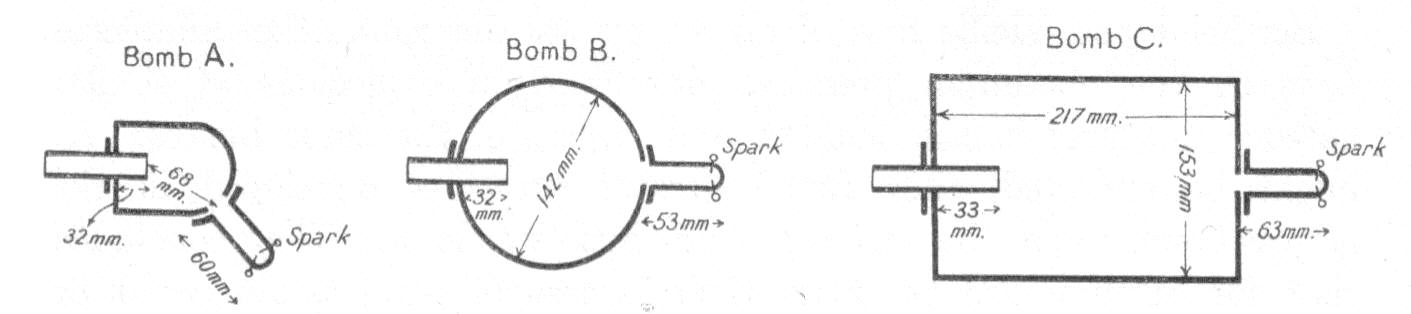
His investigations on the synthesis of organic compounds were published in numerous papers and books, including Chimie organique fondée sur la synthèse (1860) and Les Carbures d'hydrogène (1901). He stated that chemical phenomena are not governed by any peculiar laws special to themselves, but are explicable in terms of the general laws of mechanics that are in operation throughout the universe; and this view he developed, with the aid of thousands of experiments, in his Mécanique chimique (1878) and his Thermochimie (1897). This branch of study naturally conducted him to the investigation of explosives, and on the theoretical side led to the results published in his work Sur la force de la poudre et des matières explosives (1872), while in practical terms it enabled him to render important services to his country as president of the scientific defence committee during the siege of Paris (1870–1871) and subsequently as chief of the French explosives committee. He performed experiments to determine gas pressures during hydrogen explosions using a special chamber fitted with a piston, and was able to distinguish burning of mixtures of hydrogen and oxygen from true explosions.
Historical and philosophical work
During later life he researched and wrote books on the early history of chemistry such as Les Origines de l'alchimie (1885) and Introduction à l'étude de la chimie des anciens et du moyen âge (1889), He also translated various old Greek, Syriac and Arabic treatises on alchemy and chemistry: Collection des anciens alchimistes grecs (1887–1888) and La Chimie au moyen âge (1893). He was the author of Science et philosophie (1886), which contains a well-known letter to Renan on "La Science idéale et la science positive," of La Révolution chimique, Lavoisier (1890), of Science et morale (1897), and of numerous articles in La Grande Encyclopédie, which he helped to establish.
- Untersuchungen über die Affinitäten, über Bildung und Zersetzung der Äther. Ostwalds Klassiker der exakten Wissenschaften; 173 Leipzig: Engelmann, 1910 Digital edition by the University and State Library Düsseldorf
Editions
Family
.jpg)
Berthelot died suddenly on 18 March 1907, immediately after the death of his wife Sophie Niaudet (1837–1907), in Paris. His professorship was filled by Emil Jungfleisch.
He was buried with his wife in the Panthéon. He had six children: Marcel André (1862–1939), Marie-Hélène (1863–1895), Camille (1864–1928), Daniel (1865–1927), Philippe (1866–1934), and René (1872–1960).
In art
Auguste Rodin created a bust of Berthelot.
Notes
References
- {{cite journal
References
- Jungfleisch, Émile. (1913). "Notice sur la vie et les travaux de Marcellin Berthelot". Bulletin de la Société Chimique de France.
- (2015). "Brave New Butter". Distillations.
- (August 7, 2013). "A Century Before the Lab-Grown Burger, This Chemist Imagined "Toothsome" Manufactured Food". Slate/Future Tense.
- (1895). "Biographies". Bulletin of Pharmacy.
- (1903). "The American Almanac, Year-book, Cyclopaedia and Atlas". New York American and Journal, Hearst's Chicago American and San Francisco Examiner.
- (1902). "Contemporary celebrities". Current Literature.
- (1995). "Les éléments chimiques et les hommes". SIRPE.
- "Former Fellows of The Royal Society of Edinburgh 1783 – 2002".
- M. Berthelot, Sciences et Morales, On education, Paris, Impr. Nouvelle,
- Abraham Louis Breguet on www.hautehorlogerie.com
- Robert K. Wilcox. (2010). "The Truth About the Shroud of Turin: Solving the Mystery". Regnery Gateway.
- Thomas de Wesselow. (2012). "The Sign: The Shroud of Turin and the Secret of the Resurrection". Penguin.
- {{EB1911
- "Book of Members, 1780–2010: Chapter B". American Academy of Arts and Sciences.
- "M. Berthelot (1827 - 1907)". Royal Netherlands Academy of Arts and Sciences.
- "M. P. E. Berthelot".
- Memoirs and proceedings of the Manchester Literary & Philosophical Society FOURTH SERIES Eighth VOLUME 1894
- "APS Member History".
- [https://archive.org/details/lesoriginesdelal00bert Les origines de l'alchemie] (Paris, G. Steinheil, 1885).
- [https://archive.org/details/introductionl00bert Introduction à l'étude de la chimie, des anciens et du moyen âge] (Paris, G. Steinheil, 1889).
- ''Collection des anciens alchimistes Grec''. [https://archive.org/details/collectiondesanc01bert Volume 1], [https://archive.org/details/collectiondesanc23bert Volume 2–3] (Paris : G. Steinheil, 1887).
- [https://archive.org/details/histoiredesscie00duvagoog Histoire des sciences: La chimie au moyen âge] (Imprimerie nationale, 1893).
- [https://archive.org/details/scienceetphilos00bertgoog Science et philosophie] (Levy, 1886).
- [https://archive.org/details/larvolutionchi00bertuoft La révolution chimique: Lavoisier] (Paris Germer-Baillière, 1890)
- [https://archive.org/details/scienceetmorale00bertgoog Science Et Morale] (Levy, 1897).
- [http://mapage.noos.fr/genealogie-monod/www/mono0391.html#I2352 Individus] at mapage.noos.fr
This article was imported from Wikipedia and is available under the Creative Commons Attribution-ShareAlike 4.0 License. Content has been adapted to SurfDoc format. Original contributors can be found on the article history page.
Ask Mako anything about Marcellin Berthelot — get instant answers, deeper analysis, and related topics.
Research with MakoFree with your Surf account
Create a free account to save articles, ask Mako questions, and organize your research.
Sign up freeThis content may have been generated or modified by AI. CloudSurf Software LLC is not responsible for the accuracy, completeness, or reliability of AI-generated content. Always verify important information from primary sources.
Report