From Surf Wiki (app.surf) — the open knowledge base
Manuel Rosales
Venezuelan educator and politician

Venezuelan educator and politician
| Field | Value |
|---|---|
| image | File:Manuel Rosales (cropped).jpg |
| name | Manuel Rosales |
| order3 | 55th |
| office3 | Mayor of Maracaibo |
| term_start3 | 1 December 2008 |
| term_end3 | 24 April 2009 |
| predecessor3 | Gian Carlo Di Martino |
| successor3 | Daniel Ponne |
| (interim) | |
| order | 34th |
| office | Governor of Zulia |
| term_start | 10 December 2021 |
| term_end | 11 June 2025 |
| predecessor | Omar Prieto |
| successor | Luis Caldera |
| term_start2 | 2 February 2000 |
| term_end2 | 23 November 2008 |
| predecessor2 | Germán Valero |
| successor2 | Pablo Pérez Álvarez |
| order4 | 53rd |
| office4 | Mayor of Maracaibo |
| term_start4 | 1996 |
| term_end4 | 2000 |
| predecessor4 | Fernando Chumaceiro |
| successor4 | Gian Carlo Di Martino |
| birth_date | |
| birth_place | Santa Bárbara del Zulia, Zulia State, Venezuela |
| spouse | Eveling Trejo de Rosales |
| profession | Politician/Teacher |
| party | Un Nuevo Tiempo |
||caption= (interim)
Manuel Antonio Rosales Guerrero (born 12 December 1952, in Santa Bárbara del Zulia) losing to incumbent Hugo Chávez. He served as a congressman, mayor, and governor, but in April 2009, stepped down as Mayor of Maracaibo when he was charged with corruption in Venezuela and fled to Peru. Rosales denies the charges, and was granted political asylum in Peru. He was briefly the presidential candidate for Un Nuevo Tiempo in the 2024 Venezuelan presidential election, but he ended up suspending his candidacy.
Early political career
Rosales began his political career as a youth leader of the political party, Acción Democrática (AD), described by the BBC as "one of the two parties that dominated Venezuelan politics for most of the second half of the 20th Century". he founded "his own centre-left party which he called Un Nuevo Tiempo" (A New Era); he describes "himself as a social democrat".
Rosales served as a congressman in the Zulia Legislative Assembly (1983–1994), Mayor of Maracaibo (1996–2000)—Venezuela's second-largest city, in Zulia, Venezuela's wealthiest state—and Governor of Zulia for two terms (2000–2004 and 2004–2008).
Rosales was accused of participating in the 2002 "attempt to oust the president";—a document drawn up on the day following the Venezuelan coup attempt of 2002, which saw the temporary removal of President Chávez. He declared that he signed during a "moment of confusion" after "Chavez's resignation, although [Chavez] later denied [the resignation]", and that he signed his attendance at a meeting he was urgently requested to attend.
2006 presidential bid
Rosales was defeated by Chavez in the December 2006 Venezuelan election to choose a president for the six-year term beginning in January 2007. A primary election organized by Sumate had been scheduled for August 2006, but was cancelled when other presidential opposition candidates agreed to withdraw from the race and support Rosales. As "one of only two governors" opposed to Chavez, Rosales united the opposition, According to the BBC, "critics ... describe him as uncharismatic".
Rosales' platform was based on what he called "democracy and social justice" and crime; according to the BBC, "He has accused Mr Chavez of wasting the country's oil wealth on friendly governments abroad and of trying to introduce Cuban-style communism." He stated that Chávez was vulnerable on his "massive foreign aid programs, government-approved takeovers of land and buildings, and the perception that crime is increasing". Rosales said, "We will distribute land to the peasants, but we will buy it in such a way as to respect the principle of private property, just as we will respect those of human rights and social justice." His platform would halt oil giveaways, "including sales of discounted oil to Cuba, until Venezuela reduced its high poverty rate."
Rosales accused Chávez of "overspending on a military buildup" and pledged "to use Venezuela's oil wealth to help the poor and improve education and health care", ridiculing Chávez's "claims of a possible war with the U.S." and saying, "Venezuela's real war should be against rampant street crime." The New York Times said, "Rosales has focused on other themes, including fierce criticism of the alliances Mr. Chávez has made with countries on the fringes of American influence, like Iran and Cuba. But his campaign's predominant message is that Mr. Chávez, despite his socialist talk, has failed to deliver oil wealth to the poor." The New York Times also said Rosales "has been pounding the crime issue, questioning why murders have surged since Mr. Chávez entered office", and saying Chavez's "confrontational style" was "feeding the crime epidemic".
Incumbent president Hugo Chávez was re-elected with 62.87% of the vote.
Indictments

Rosales was re-elected Mayor of Maracaibo in the 2008 Venezuelan regional elections; according to the BBC, in "the campaign, Mr Chavez railed against him, threatening him with prison and accusing him of corruption and plotting to assassinate him". According to USA Today, Rosales characterized the allegations as an "electoral ploy to distract Venezuelans from pressing problems such as double-digit inflation and rampant crime".
Rosales was charged by the Venezuelan Attorney General with corruption in late 2008, accused of "misusing public funds" during his term as Governor of Zulia—charges which he denies. Prosecutors say he obtained $60,000 illicitly while he was governor. According to Rosales, a 2002–2004 investigation that "was closed for lack of evidence" was "'suddenly reopened by orders from above,' alluding to Chavez".
Rosales went into hiding in March 2009 when charges were filed, and failed to appear in court in April. On 22 April it was reported that he had sought political asylum in Peru. Interpol issued a "red notice" (requesting international cooperation in the apprehension of a suspect, with a view to enabling extradition proceedings) at Venezuela's request.
According to CNN, "[o]ne of Rosales' lawyers noted that Chavez said publicly in October 2008, before Rosales was charged, that he wanted the mayor in prison." Rosales' supporters characterized the charges as a "political witch hunt". According to the BBC, "His decision to leave Venezuela is the latest development in a long-running feud with Mr Chavez." Venezuelan authorities deny that the charges are politically motivated.
On 28 April 2009, Venezuela withdrew its ambassador to Lima in response to Peru's decision to grant Rosales political asylum. Peruvian officials said the decision was part of their "long-standing commitment to international law"; Venezuelan officials called it a "mockery of international law, a strong blow to the fight against corruption and an offence to the people of Venezuela", saying that Rosales should have been detained and extradited.
The newspaper El Nuevo Herald reported in 2009 about allegations by Geovanny Velásquez Zambrano, a member of the Colombian paramilitary group Autodefensas Unidas de Colombia serving a 40-year prison term for paramilitary massacres, that Rosales met with Colombian paramilitaries in 1999 to plot the assassination of Chávez. Zambrano claims that he attended two meetings with Rosales, in which Rosales offered him and his subordinates US$25 million to kill Chávez. Rosales denies these allegations, saying they are a lie and that his passport documents that he was in Aruba during the time of the alleged meetings, saying "The only plan in which I have been involved to 'do away with' Chavez has been the electoral plan". Venezuela's Attorney General announced an investigation of these allegations in October 2009.
The 2009 Human Rights Watch report mentions Rosales as an example of political persecution, questioning the judicial procedures against him.
In October 2015, Rosales announced that he would be returning to Venezuela. Attorney General Luisa Ortega Diaz reported that a warrant had been issued for Rosales' arrest, upon his arriving in the country.
On 15 October 2015, Rosales was arrested in Maracaibo after arriving from Aruba and was sentenced to 13 years and 9 months in prison soon after.
In October 2016, Rosales' sentence was commuted to house arrest and he was released 2 months later on 31 December.
2024 presidential bid
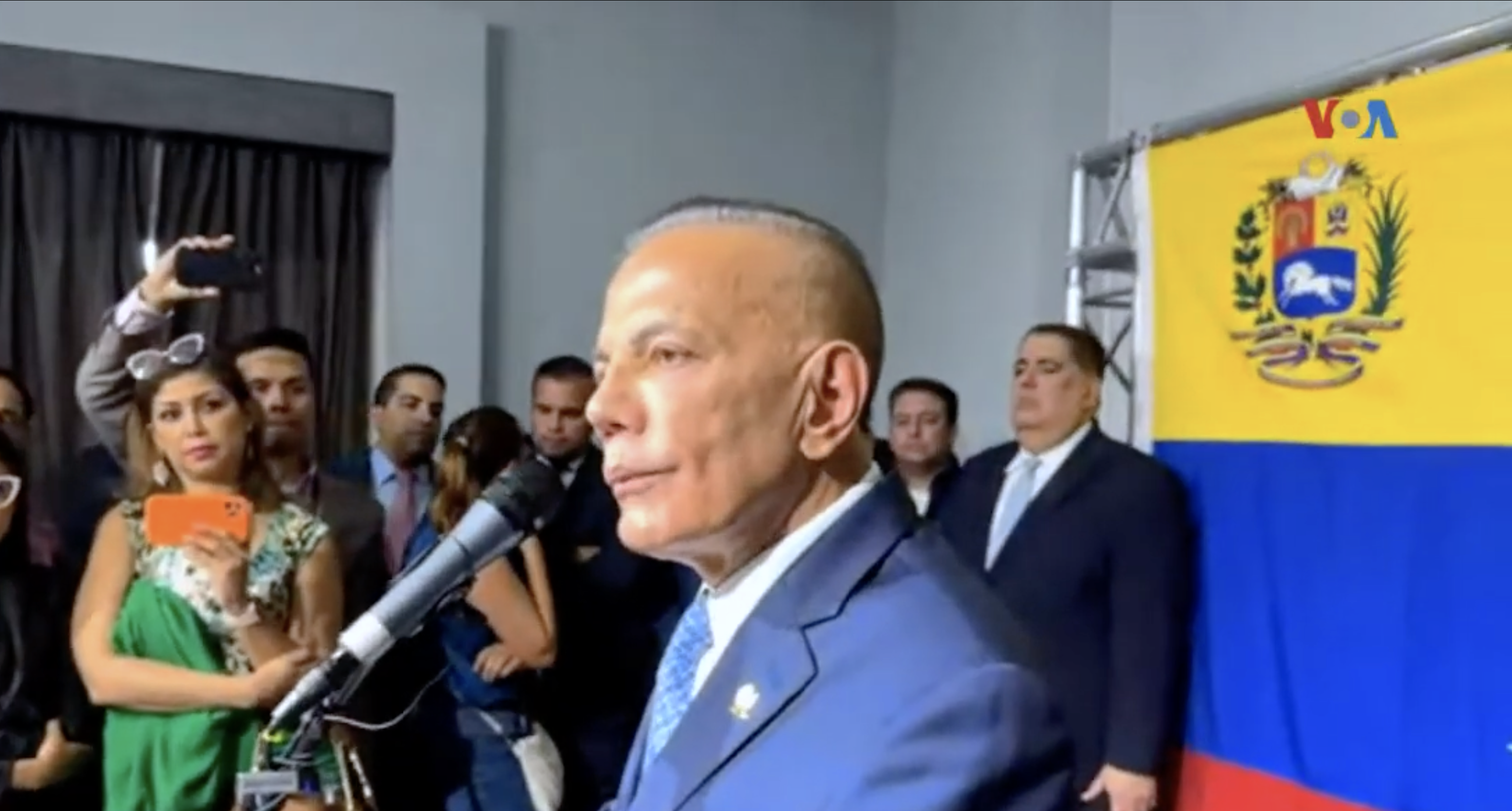
Rosales launched a surprise bid for president in 2024, though he indicated he would willingly cede his position to a unity opposition candidate. He has been recognized as a more moderate opposition candidate and has been negotiable with the Nicolás Maduro government; he recognized Maduro's contested 2018 election and condemned sanctions on Venezuela enacted by the United States. Professor David Smilde of Tulane University said that the Maduro government believes that if Rosales were to win the election, he would be more amicable, with Smilde stating "They see him with good reason as more moderate and less vendetta-driven." Corina Yoris, who was María Corina Machado's alternative candidate for the 2024 election, criticized Rosales' candidacy as "a betrayal" and argued that elections did not exist "if the regime chooses the candidates."
On 20 April, Rosales suspended his candidacy and endorsed Edmundo González Urrutia.
Personal life
Rosales was a teacher before moving into public service. He was a co-founder of Universidad Nacional Experimental Sur del Lago, and received numerous distinctions and honors for his public service.
He is married to Eveling Trejo de Rosales; they have ten children (Hender Manuel, Jenny, Manuel Alejandro, Marenel, Marebeth, Carlos Manuel, Manuel Andrés, Alejandra, and Aleida).
References
References
- (22 April 2009). "Profile: Manuel Rosales". BBC.
- (1 August 2006). "Contest for Venezuelan Presidency begins". [[El Universal (Caracas).
- (30 August 2006). "A juicio de Manuel Rosales, la democracia venezolana 'está enferma'". [[Globovisión]].
- (9 August 2006). "Súmate: there will be no primary elections". El Universal.
- Kraul, Chris. (9 August 2006). "Chavez's Foes Cancel Primary, Line Up Behind One Candidate". [[Los Angeles Times]].
- Sanchez, Fabiola. (9 August 2006). "Rosales opposition choice to face Chavez". The Washington Post.
- Romero, Simon. (12 November 2006). "Venezuelans Square Off Over Race, Oil and a Populist Political Slogan". The New York Times.
- Romero, Simon. (1 December 2006). "As Crime Soars for Venezuela, Chávez Coasts". The New York Times.
- (4 December 2006). "Resultados Electorales". Consejo Nacional Electoral.
- (2 December 2008). "Anti-Chavez mayor faces corruption charges". [[The Boston Globe]].
- (12 December 2008). "Venezuelan opposition leader indicted for corruption". LexisNexis.
- (21 April 2009). "Venezuelan mayor 'seeking asylum' in Peru". CNN.
- Jones, Rachel. (26 October 2008). "Chavez threatens to imprison opposition governor". USA Today.
- (22 April 2009). "El líder opositor venezolano pide asilo político en Perú". NY1 Noticias.
- (24 April 2009). "Interpol seeks Chavez foe arrest". BBC.
- (28 April 2009). "Venezuela recalls envoy in Peru". BBC News.
- Guillen, Gonzalo. (24 September 2009). "Vinculan a Rosales con plan para asesinar a Chávez". El Nuevo Herald.
- Benel, Omar. (10 March 2009). "Objetivo: matar a Chávez". El Mundo.
- "Venezuela: Events of 2009". Human Rights Watch.
- Brice, Arthur. (8 December 2009). "Venezuelan protesters end hunger strike over prisoners". CNN.
- (21 January 2010). "Human Rights acusa a Chávez de neutralizar al Poder Judicial". El Universal.
- "Manuel Rosales aseguró que regresará a Venezuela el 15 de octubre". El Universal.
- "Manuel Rosales será aprehendido al momento que llegue al país, dijo Ortega Díaz". Noticias24.
- "Venezuelan opposition politician Manuel Rosales arrested". BBC News.
- (16 October 2015). "Venezuela politician Rosales arrested". BBC News.
- (31 December 2016). "Venezuela frees opposition's Rosales". BBC News.
- Vanessa Buschschlüter. (27 March 2024). "Venezuela opposition overcomes hurdles to register candidate".
- (26 March 2024). "Venezuela's Strongman Decides Who Will Run Against Him in Presidential Election". [[The Wall Street Journal]].
- (20 April 2024). "La CARTA de renuncia de Manuel Rosales como candidato para las presidenciales (Documento)".
- (2007). "Curriculum del gobernador". Zulia State Government.
- "Manuel Antonio Rosales Guerrero". Atrevete con Manuel Rosales.
This article was imported from Wikipedia and is available under the Creative Commons Attribution-ShareAlike 4.0 License. Content has been adapted to SurfDoc format. Original contributors can be found on the article history page.
Ask Mako anything about Manuel Rosales — get instant answers, deeper analysis, and related topics.
Research with MakoFree with your Surf account
Create a free account to save articles, ask Mako questions, and organize your research.
Sign up freeThis content may have been generated or modified by AI. CloudSurf Software LLC is not responsible for the accuracy, completeness, or reliability of AI-generated content. Always verify important information from primary sources.
Report