From Surf Wiki (app.surf) — the open knowledge base
Mani Madhava Chakyar
Indian actor (1899–1990)

Indian actor (1899–1990)
| Field | Value |
|---|---|
| honorific_prefix | Nāṭyācārya Padma Śrī |
| name | Mani Madhava Chakyar |
| honorific_suffix | Vidūṣakaratnaṁ |
| image | Mani Madhava Chakyar.jpg |
| caption | Mani Madhava Chakyar |
| birth_date | |
| birth_place | Karayad,Perambra Kozhikode, British India (present-day Kerala, India) |
| death_date | |
| death_place | Ottappalam, Kerala, India |
| yearsactive | 1910–1990 |
| spouse | P. K. Kunjimalu Nangiaramma |
| awards | 1964: Sangeet Natak Akademi Award |
| 1964: Paderewski Foundation (New York) Certificate of Merit | |
| 1974: Padma Shri | |
| 1975: Kerala Sahitya Akademi Award | |
| 1976: Kerala Sangeetha Nataka Akademi Fellowship | |
| 1982: Sangeet Natak Akademi Fellowship | |
| 1982: Govt. of India Emeritus Fellowship | |
| 1982: Kalidasa Academy Fellowship | |
| 1983: Kerala Kalamandalam Fellowship | |
| 1987: Tulsi Samman | |
| 1991: Guruvayoorappan Sammanam |
1964: Paderewski Foundation (New York) Certificate of Merit 1974: Padma Shri 1975: Kerala Sahitya Akademi Award 1976: Kerala Sangeetha Nataka Akademi Fellowship 1982: Sangeet Natak Akademi Fellowship 1982: Govt. of India Emeritus Fellowship 1982: Kalidasa Academy Fellowship 1983: Kerala Kalamandalam Fellowship 1987: Tulsi Samman 1991: Guruvayoorappan Sammanam Guru Mani Madhava Chakyar (IAST: Māṇi Mādhava Cākyār) (15 February 1899 – 14 January 1990) was a celebrated master performance artist{{Citation | editor-link=Radha Vallabh Tripathi | editor-last=Tripathi | editor-first=Radha Vallabh from Kerala, India, considered to be the greatest Chakyar Koothu and Koodiyattam (ancient Sanskrit drama theatre tradition) artist and authority of modern times.{{Citation | editor-link=Ananda Lal | editor-last=Lal | editor-first=Ananda
Known as "the Emperor of Rasa-Abhinaya", he had an exceptional ability to perform Rasa-Abhinaya. His Netrābhinaya was world-famous and he had the ability to act only with eyes. He was well versed in all the traditional Koodiyattams and all the prabandhas used in Chakyar Koothu. He was able to explain the concepts, methods and practices of Koodiyattam and Chakyar Koothu in a clear and authentic way. He had an in depth study of Nātyaśāstra of Bharata Muni, as well as ways of acting which were popular in Kerala. His knowledge and mastery over both theory and practice of Koodiyattam were superb. He was a veteran teacher and practitioner of these art forms and Sanskrit.
He was the first one to take Koodiyattam and Chakyar Koothu outside the precincts of the temples of Kerala to all over India and to impart training in Kudiyattam to non-Chakyar disciples including foreigners. He had produced many disciples in Kutiyattam and other classical arts like Kathakali. He was a Sanskrit scholar and was used to give lectures and talks in Sanskrit.
He is the author of Nātyakalpadrumam – an encyclopaedic treatise on all aspects of Koodiyattam. He was a Fellow of national art academies including Sangeet Natak Akademi and recipient of coveted titles like "Nātyāchārya", "Vidūshakaratnam" and awards including Padma Shri and Sangeet Natak Akademi Award.
Early life and education
Mani Madhava Chakyar was born on 15 February 1899, in his ancestral home at Thiruvangayoor near Karayad,near Perambra of Kozhikode district of Kerala. His father was Vishnu Sarma and mother was Savithri Illotamma. He belonged to the Mani family of Chakyars of North Kerala, who for centuries have been the custodians of Koodiyattam – the traditional Sanskrit theatre - and Chakyar Koothu, another classical art form based on Sanskrit Champu Kavyas.
He trained in Chakyar Koothu and Koodiyattam in traditional way, under the direct guidance of his uncles who were great scholars and masters of these art forms. They were Guru Māni Parameswara Chakyar, Guru Māni Neelakandha Chakyar and Guru Māni Narayana Chakyar. He belonged to the "Mani" tradition of Koodiyattam and Chakyar Koothu which gives importance to both Rasa-abhinaya and Vachika-abhinaya.
Chakyar was a Sanskrit scholar and gave lectures in Sanskrit. He studied Alankarashastra, Nātyaśāstra, Vyakarana, Nyaya, Jyotisha, etc. in the traditional way, under scholars such as Panditaratnam Pazhedathu Sankaran Nampoothiripad. He was the student of Darsanakalanidhi Rama Varma Parikshith Thampuran (the Maharaja of Cochin). He had his higher studies in Nyayashastra and Natya Shastra under him. Chakyar taught Sanskrit at Balakollasini Sanskrita Pathasala of Killikkurussimangalam.
His first performance (Arangettam) of Koodiyattam was at the age of 14 at Trikkaikkunnu Temple of North Kottayam of Malabar. He performed the huge number of Atiyantara koothus of Mani family (the koothus which are assigned to the family from ancient times) in large number of temples stretching from Malabar to Thrissur. It consist of all devotional ritualistic Koothus and Kudiyattams including Anguliyanka, Mattavilasa Prahasana, Mantranka, Ezhamanka (seventh act of Ascharyachoodamani) about eight decades continuously in temples of Kerala. It includes ancient Kerala temples such as Matayikkavu Bhagavathi Temple of Kannoor, Taliparamba Rajarajeshwara Temple, Kottiyoor Perumal Temple, Lokanarkavu Temple of Vatakara, Thali (Tali) Siva Temple of Kozhikode, Thirunavaya Navamukunda temple, Thiruvegappura Sree Mahadeva Temple, Pandamangalam Krishna temple of Kottakkal, Kotakkal Vishwambhara (Shiva) temple, Kallekkulagara Emoor Siva temple, Triprayar Sri Rama temple, Peruvanam Shiva temple of Cherpu, Avittathur Shiva Temple etc. Chakyar won high renown for the artistry of his performance in these temples, as well as in many others.
He married P. K. Kunjimalu Nangiaramma, the daughter of his uncle, Mani Parameshwara Chakyar. She was an exponent in female characters of Kudiyattams and Nangiǎr Kūthu and various Ragas and Shlokas used for the art form. She used to accompany him in the performances.{{Citation | author-link=Bharati Shivaji | access-date=10 October 2007 | archive-date=24 May 2011 | archive-url=https://web.archive.org/web/20110524124800/http://www.google.co.in/books?id=_g87AAAAMAAJ&q=mani+madhava&dq=mani+madhava&pgis=1 | url-status=live
Master of Rasa-Abhinaya
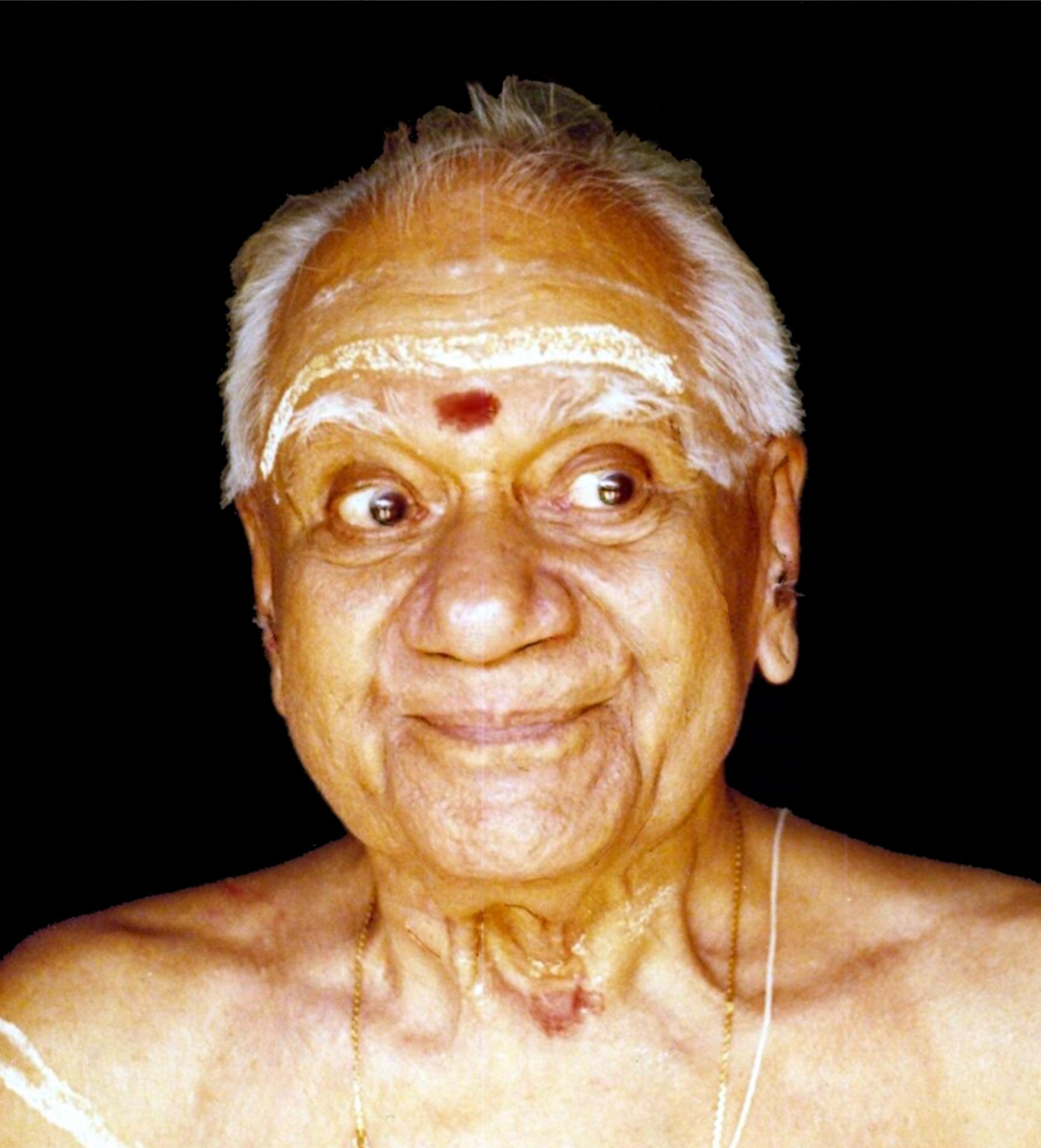
He is considered as the all-time great master of Rasa-abhinaya (enacting sentiments in their perfection) with special reference to Netrābhinaya (enacting sentiments, etc. through the beautiful and masterly movements of eyes only). He was exceptionally well in the field of Satwika-Abhinaya. He is considered as "one of the most wonderful theatre actors of the last century".
He was known for his roles (which has importance of Satvika-Abhinaya in Koodiyattams) like Ravana (Katti vesha), Arjuna (Pacha vesha), Udayana (Pacha vesha), Jeemootavahana (Pazhukka vesha) etc.
His abhinaya of Kailasoddhārana (lifting of Kailasa) and Pārvatī Viraha (separation of Pārvatī),{{Citation | access-date=3 February 2008 | archive-date=11 October 2020 | archive-url=https://web.archive.org/web/20201011164713/https://books.google.co.in/books?id=-UAbAAAAMAAJ&dq=mani+madhava+chakyar&lr=&hl=en | url-status=live
He was known for the abhinaya of the slokas like "sikhinishalabham.." of the play Subhadradhananjayam by playing it with mere eyes. He was able to act in detail the Moths falling in and out of the lamp fire by evoking his Netrabhinaya, with assigning different rasa's for female moth, male moth and the fire. Guru's Abhinaya of the shloka smaramyavandhyadhipateh sutayah (स्मराम्यवन्त्यािधपतेः सुतायाः) from Bhasa's Swapnavasawadattam is also widely acclaimed one.
Reforming the art form
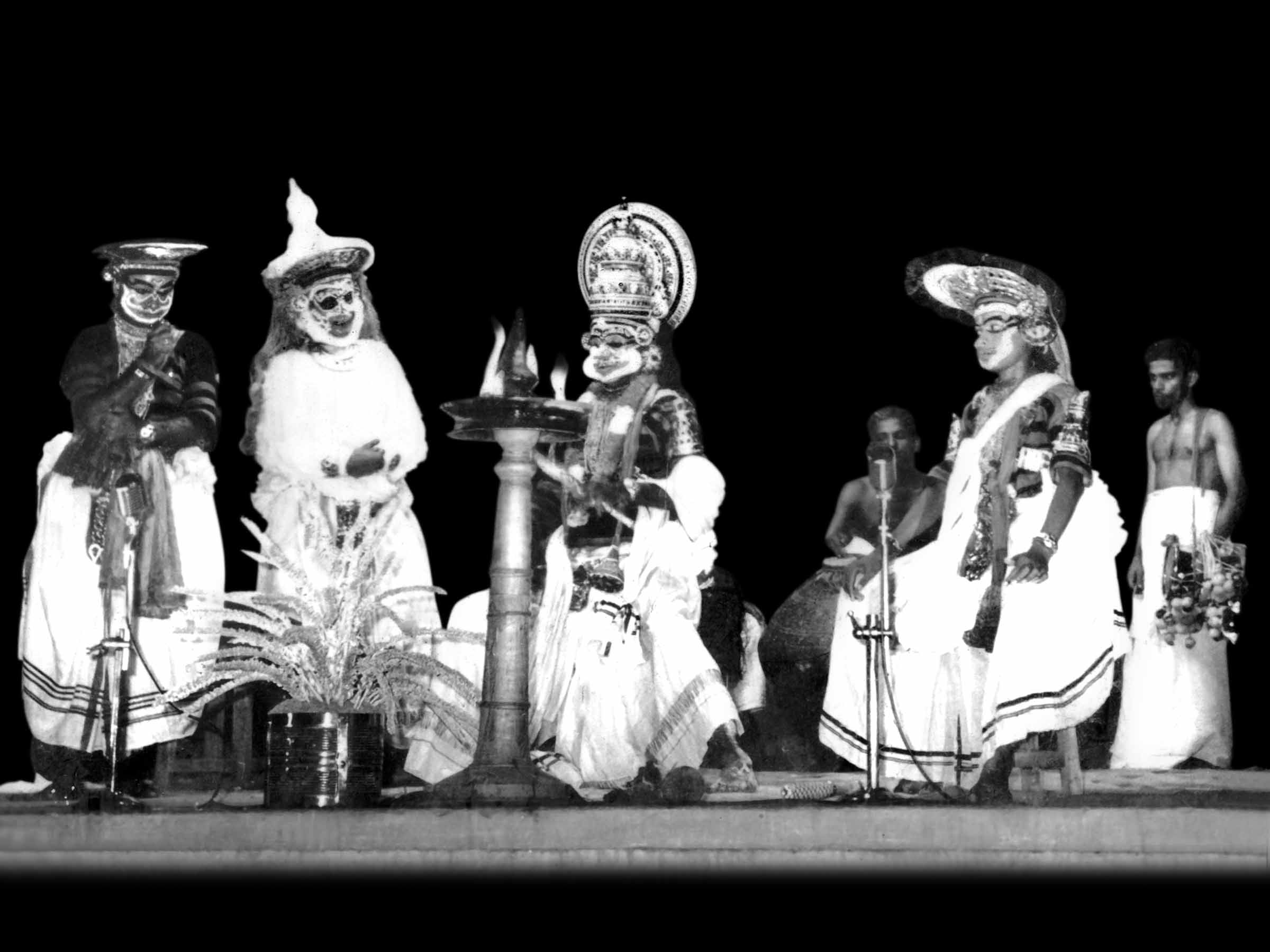
In 1949 he performed Chakyar Koothu for All India Radio, which was the first time the art was performed outside Koothambalam. In 1955, under his leadership, Kutiyattam was performed outside the temple for the first time in his village at Killikkurussimangalam. For performing the art forms outside the temples he faced lot of objections from the Chakyar community. In an interview, he remembered
In 1962, under the leadership of V. Raghavan- an art and Sanskrit scholar - Sanskrit Ranga of Madras invited Chakyar to perform Kutiyattam there. This was the first time Kutiyattam was performed outside Kerala by his troupe.{{Citation | access-date=2 January 2008 | archive-date=24 May 2011 | archive-url=https://web.archive.org/web/20110524125231/http://www.google.co.in/books?id=a_MvAAAAIAAJ&q=mani+madhava+cakyar&dq=mani+madhava+cakyar&pgis=1 | url-status=live | access-date=2 January 2008 | archive-date=24 May 2011 | archive-url=https://web.archive.org/web/20110524125238/http://www.google.co.in/books?id=7t8ZAAAAMAAJ&dq=mani+madhava&lr= | url-status=live They performed at Madras on three nights, showing Kutiyattam scenes from three plays: Abhiṣeka, Subhadrādhanañjaya and Nāgānanda.{{Citation | access-date=3 February 2008 | archive-date=11 October 2020 | archive-url=https://web.archive.org/web/20201011164715/https://books.google.co.in/books?id=vW2O6954zhsC&q=mani+madhava+chakyar&dq=mani+madhava+chakyar&lr=&pgis=1&hl=en | url-status=live Chakyar's performance made great impact on the people and art critics so that the artform and Chakyar himself became known outside Kerala. He was then invited to perform Kutiyattam at various places in North India during 1964, such as New Delhi and Banaras. | author-link=Akavoor Narayanan
After Chakyar's first tour to New Delhi, he was awarded the Sangeet Natak Akademi Award in 1964 for his contributions to Chakyar Koothu and Kutiyattam. This was his first national recognition.
He performed Kudiyattam all over India and popularised the same. He along with his troop did Koodiyattam performance in places like Madras (1962, 1973 & 1977), Madhura (1962), New Delhi (1964, 1966, 1974, 1979 & 1983), Varanasi (1964 & 1979), Bombay (1973 & 1977), Ujjain (1982), Bhopal (1987) etc.
The President of India, Sarvepalli Radhakrishnan, invited him to perform Kutiyattam at Rashtrapati Bhavan in 1964 and was impressed by his exceptional acting skill. His Kutiyattam performances, lectures and demonstrations at well-known centres such as the Madras Music Academy, the International Centre for Kathakali in New Delhi, the Experimental Theatre in New Delhi and Bombay and the National Centre for the Performing Arts in Bombay brought him wide popularity and recognition.
He choreographed and directed acts of the plays like Kalidasa's Abhijñānaśākuntala, Vikramorvaśīya and Mālavikāgnimitra; Bhasa's Swapnavāsavadatta{{Citation | access-date=6 March 2019 | archive-date=11 October 2020 | archive-url=https://web.archive.org/web/20201011164716/https://books.google.com/books?id=YfQvAAAAIAAJ&q=madhava+chakyar&dq=madhava+chakyar&hl=en | url-status=live
When his guru, Rama Varma Parikshith Thampuran, wrote a new Sanskrit champu prabandha called Prahlādacharita and requested senior artists to study and perform the same on the Chakyar Koothu stage, they said it was impossible for them to stage such a new prabandha. Then Thampuran asked Chakyar, who was then a comparatively young artist, to try. He agreed and studied a part of the prabandha within one night and performed the same on the next day at Tripunithura – the then capital of Cochin state (1962). The incident made the scholars to accept his mastery over both Sanskrit and the classical art form. After some months, he performed entire *Prahlādacharita * at the same stage.
He performed Chakyar Koothu and Koodiyattam for All India Radio and Doordarshan for the first time, which helped to attract thousands of listeners to these traditional art forms. It was he who started demonstrations in Kudiyattam to popularise the same.
Teaching

He is considered the greatest guru of Kutiyattam of the modern times, producing many accomplished disciples. He taught Koodiyattam for the first time to a non-Chakyar – Nambiar caste member. He was a Polish student named Maria Christopher Byrski (currently at Department of Indology, Warsaw University), who was then a research student at Banaras Hindu University, came to study the only surviving ancient Sanskrit drama Koodiyattam, from Guru around the early 1960s. He stayed at Guru Mani Madhava Chakyar's home and studied Koodiyattam in its traditional Gurukula way. Lot of research scholars came to study the Sanskrit drama from the ultimate exponent of Kutiyattam and Abhinaya Mani Madhava Cakyar. Dr. Farley Richmond (University of Georgia, USA), noted Sanskrit drama scholar also studied about the ancient Sanskrit art form under Mani Madhava Chakyar by staying at his home at Killikkurussimangalam. He had filmed Rasa Abhinaya and Kutiyattam of the maestro. Kamaladevi Chattopadhyay of All-India Handicrafts Board came to Guru Maani Madhava Cakyar's home to do research about the costumes used in Kutiyattam (Ahāryābhinaya) (1967). Indian theatre scholar Goverdhan Panjal (National School of Drama) studied about Koothambalams and Kutiyattam under the Guru (1975).
When Kerala Kalamandalam (a school for the performing arts) was founded by Vallathol Narayana Menon, he invited authority of Rasa-abhinaya, Mani Madhava Chakyar as the master trainer for Rasa-abhinaya to the Kathakali students. Later Kathakali Yogam- Katathandu, Kerala Kalamandalam, PSV Natyasangham- Kottakkal and Gandhi Seva Sadanam Kathakali Academy- Perur used his services as visiting professor of Rasa-abhinaya and taught advanced students in Kathakali and Kutiyattam.
He is known as "the master who gave eyes to Kathakali". His influence on the classical performing arts of Kerala is famous. Many Koodiyattam, Kathakali, Bharatanatyam and Mohiniyattam artists were trained by this great master.{{cite book Kathakali artists including legendary Kalamandalam Krishnan Nair, Guru Kelu Nair, Guru Anand Shivram, Guru Kalamandalam Madhavan, Guru Gopinath, Sadanam Krishnankutty are his disciples.{{cite book
Guru, who was an eminent teacher and performer opened a Gurukulam (training centre) in 1982 for teaching Kutiyattam, Chakyar Koothu, Nangyar Koothu and related art forms at Killikkurussimangalam (Lakkidi). After Guru's death it was named as Padmasree Mani Madhava Chakyar Smaraka Gurukulam in memory of the Guru. This institution still keeps its tradition and plays a major role in Kutiyattam teaching, revival and performance.
Guru, who had dedicated his life to Kutiyattam was concerned about the fate of this classical art form. Māni Mādhava Chākyār's conversation with famous Bharatanatyam dancer Rukmini Devi Arundale, when she visited Guru at his residence a year before his death, reflects his anxiety
Awards and honours
Mani Madhava Chakyar received many titles, awards and degrees. He is one of the most felicitated artist from Kerala. His first major recognition came from HH Bhattan Thampuran (Bhatta Raja) of Kodungallur Kovilakam himself at the age of 22. Bhattan Thampuran awarded him with a Mudramothiram (signed ring) (1921). Mani Madhava Chakyar considered this Mudramothiram as the prestigious award that he ever got.
He received the most prestigious sacred Vīrasringhala or Veerashringhala (It's a kind of Golden Bracelet, given to the greatest artist/scholar of that era) from Taliparamba Rajarajeshwara Temple (1923). He is the youngest one to receive this award, which is being given to the scholars of the supreme rank, only by the unanimous approval of a special body of temple consisting of eminent scholars. Till date no one else has received a Veerashringhala from there after Mani Madhava Chakyar. Another major Vīrasringhalas that he received are; from Valiya Thampuran of Kottakkal Kovilakam (1952), from Urpassikkavu of Thalassery, from Jagadguru Shri Shankaracharya of Kanchi Kamakoti Peetham (1961), from Samoothiri Raja of Kozhikode, given at the eve of Koodiyattam performance at Guruvayur Sree Krishna Temple (1964) and from Tripunithura Kovilakam (1989).
He was honoured with ponnada (a kind of silk cloth given as a gesture of honour and respect) from Maharani (Queen) Of Travancore, presented through Mahakavi Ulloor S. Parameswara Iyer at Vaikom Mahadeva Temple. He was honoured by HH. Rajah of Palakkad with a Keshabharam Kireetam at Hemambika Temple of Kallekkulangara (1962). He has received Gold Medals from Valiya Raja of Katathanadu, Pallikkunnu Bhagavathy Temple of Kannoor, Avittathur (1962), Delhi Experimental theatre (1964) etc.
In 1930, he was awarded the title Nātyāchārya (Guru of Natya) by Kadathanadu Valiya Thampuran (Raja of Kadathanadu). He received the title Vidūshakaratna, again from the Taliparamba Rajarajeshwara Temple (1954) for his excellence in performing "vidūshaka" in Koodiyattams. He was honoured by Fine Arts Society of Kochi by giving the title Anushtanakalapravina.
Government of India conferred Padma Shri (1974) and Emeritus Fellowship (1982) on him. He was conferred by an honorary degree from Banaras Hindu University in 1964.
He has received major National and International Awards and Fellowships such as
- 1964 – Sangeet Natak Akademi Award (New Delhi) - first national recognition for a Koodiyattam/Chakyar Koothu artist.
- 1964 – Paderewski Foundation (New York) Certificate of Merit – first international recognition for Koodiyattam.
- 1974 – Padma Shri
- 1975 – Kerala Sahitya Akademi Award – for the book Nātyakalpadrumam
- 1975 – Kerala Sangeetha Nataka Akademi Fellowship
- 1982 – Sangeet Natak Akademi Fellowship (New Delhi)
- 1982 – Government of India Emeritus Fellowship
- 1982 – Kalidasa Academy Fellowship (Ratna Sadasyata) (1982)
- 1983 – Kerala Kalamandalam Fellowship
- 1987 – Tulsi Samman of Govt. of Madhya Pradesh
- 1991 – Guruvayoor Devaswam Award etc.
He was the first Chakyar Koothu and Koodiyattam artist to receive these.
He has received numerous Honours and Certificates from distinguished institutions and individuals such as Akhila Bharata Sanskrit Sammelan (World Sanskrit Conference) – New Delhi, Samskrita Ranga – Chennai, Fifth World Sanskrit Conference – Banaras, Dr.S. Radhakrishnan, Dr. Vibhuti Narayan Singh (Maharaja of Kasi), Satyanarayana Sinha, Bishnu Ram Medhi (Chief Minister of Assam), Sir C.P. Ramaswami Iyer, Maharaja of Kollengode, Vallathol Narayana Menon, Dr. V. Raghavan, Rukmini Devi Arundale, Dr. V.K Narayana Menon, Dr.Kapila Vatsyayan etc. etc.
Even though Guru Mani Madhava Chakkiyar received lot of national recognitions art critics widely believe that he truly deserved a lot more and recognitions came very late.{{Citation | author-link=M. Prabha RKG (Editor, The Illustrated Weekly, Columnist for Times of India) observes, | author-link=R.K. Gupta
Publications
Main article: Nātyakalpadruma
He has written an authoritative, award-winning book (in Malayalam) on Koodiyattam called Nātyakalpadrumam (1975). This work is being used as a reference by scholars and students. Natyakalpadrumam deals with all aspects of Koodiyattam in a scientific and critical manner. This book is considered the encyclopaedia of Koodiyattam. It won the prestigious Kerala Sahitya Akademi Award (1976). This book is translated into Hindi by Sangeet Natak Akademi of New Delhi.{{cite web
One of his other book is Matha Vilasam (Mattavilasam 1968), the choreography and play part (actor's manual – Attaprakara) used in Mattavilasaprahasana Kudiyattam. He wrote the Attaprakaras of Abhijñānaśākuntala, Swapnavāsavadatta, Vikramorvaśīya, Mālavikāgnimitra, Pancharātra and Nagananda (Not published).
His biography (in Malayalam), Mani Madhaveeyam (1999) was published by Department of Cultural Affairs Publications of the Government of Kerala. The book gives the picture of astonishing accomplishing and momentous life of the Guru. It gives an excellent account of his struggles and his lifelong devotion towards the art form. The book includes Guru's memoirs of his illustrious stage life spanning about 80 golden years. Book contains a lot of rare photos giving us an insight to maestro's both personal and theatre life.
Guru has written articles in various journals and presented number of papers in conferences on various aspects of Koodiyattam, Abhinaya, Raagas, Natyasastra, Chakyar Koothu, Rasābhinaya in Kathakali etc.
Films and documentaries
There are several films and documentaries featuring Chakyar's Rasa-Abhinaya, Koodiyattam performances and life.
- Mani Madhava Chakyar: The Master at Work (1994, English, Kavalam Narayana Panikar, Central Sangeet Natak Academy, New Delhi) is a biographical film on the life and work of Chakyar. The film contains an interview with Chakyar where he explains the difficulty he had to face from hardliners when he took the traditional art forms outside temple for the first time in 1949. The film contains a session focussed on Rasa abhinaya by Chakyar, where he enacts various Rasas.
- Parvati Viraham: Mani Madhava Chakyar as Ravana (1993, English, Central Sangeet Natak Academy, New Delhi) features Chakyar as Ravana in the Pārvatī Viraham (separation of Pārvatī) in Koodiyattam form. It shows the Pārvatī Viraham part of the Ascharyachodamani Kutiyattam and includes the Pakarnnattam abhinaya.
- Manifestations of Shiva (1980, English, Malcolm Leigh & Stella Kramrisch, Philadelphia Museum of Art, Asia Society, USA) is a critically acclaimed documentary film; wherein Chakyar has performed as Lord Siva in Classical Indian dance form.
- Kutiyattam - Sanskrit Theater of India (2002, English, Multimedia CD, Farley Richmond (University of Georgia), The University of Michigan Press, USA) contains rare videos of Chakyar's Rasa Abhinaya including glimpses of his Netrabhinaya. The CD also contains the audios of recital of Shlokas and play parts by him.
- Kudiattam (1986, Hindi, Prakash Jha, India) features Chakyar's abhinaya and shows him explaining the concepts of Kutiyattam and its abhinaya techniques. It also features him teaching etc. This film has won Indian government's National Film Award for Best Arts/Cultural Film (1987).
- Mani Madhava Chakkiar (1977, English, Classic Films) is a documentary film about Chakyar. It shows his Abhinaya in different Kutiyattams, his Chakyar Koothu performance etc. It also gives a picture of his personal life.
- Guru Mani Madhava Chakyar (2009, Malayalam, Krishnan Unni, Govt. of Kerala) is a documentary about the guru. This project is by Information and Public Relations Dept. of Govt. of Kerala as part of capturing the eminent personalities in Kerala and to highlight their contribution to the State.
- Prahladacharitham Chakyar Koothu (1986, audio, Harisree Audios, Kerala) features Chakyar Koothu performance of the prabandha Prahlādacharita, giving a glimpse into Chakyar's ability in narration and recital. It is unique because he did not perform Prahlādacharita after the death of his guru, Thampuran, in 1964, except for this recording.
Many of his Koodiyattam, Chakyar Koothu performances, demonstrations, interviews etc. were documented by Doordarshan centres of New Delhi, Bombay, Bhopal, Madras, Thiruvananthapuram etc. and All India Radio and is still being broadcast all over India. Documentation of Guru's Kutiyattam performance by Doordarshan Centre Bombai with English commentary of art critic and scholar V. K Narayana Menon is widely acclaimed.
Death and legacy

Chakyar died at the age of 90 on 14 January 1990 in a private hospital at Ottappalam due to natural causes. His body was cremated with full honours at his Killikkurussimangalam residence. There is a memorial at the spot of his cremation.
His birth and death anniversaries are celebrated by various cultural programmes, commemorative sessions and Kutiyattam festivals by various cultural organisations and institutes.
He is one of the most felicitated artist from Kerala and was the first recipient of all major awards for Chakyar Koothu and Koodiyattam. Kerala Sangeetha Nataka Akademi's annual Koodiyattam Award is known as Maani Madhava Puraskaram as a tribute to him.
Many of Chakyar's films are still screened regularly at art theatres across and outside India. His Kutiyattam and Chakyar Koothu performances and other documentaries are broadcast from major Doordarshan and All India Radio stations regularly (Guru himself had initiated performance of these art forms for these media for the first time).
Art and cultural festivals are organised by various associations as a dedication to Chakyar regularly.
Notes
References
- "Spectrum". The Sunday Tribune, 16 April 2006.
- [[Akavur Narayanan]], ''Shatam Jiva Sharadah'', [[Mathrubhumi. Mathrubhumi weekly]], March (15–21) 1987, p. 20.
- enacting different sentiments in their perfection
- enacting different sentiments, etc. through the beautiful and masterly movements of eyes only
- (17 June 2005). "On a mission of a cultural sort". [[The Hindu]].
- supreme state art academy of [[Govt. of India]]
- "Sruti:Magazine - March 2008 Issue".
- link. (24 May 2011 ''Natya'', Bharatiya Natya Sangh, 1962.)
- "Films of Sangeet Natak Akademi, New Delhi".
- (2007-07-31). "Indigenous Sanskrit theatre form". The Hindu.
- A part of [[Bhasa]]'s play ''Abhiṣeka Nataka'' based on the epic [[Ramayana]].
- "Akavoor Narayanan". Nri.mathrubhumi.com.
- ''Mani Madhava Chakkyar: The Master at Work'', K.N. Panikar, Sangeet Natak Akademi New Delhi, 1994
- [[Ananda K. Coomaraswamy. Ananda Kentish Coomaraswamy]] and Venkateswarier Subramaniam, "The Sacred and the Secular in India's Performing Arts: [[Ananda K. Coomaraswamy]] Centenary Essays"(1980), Ashish Publishers, p. 150.
- (25 March 2005). "New life for Koodiyattom act". The Hindu.
- He later became Polish Government Ambassador to India. Now at Warsaw University. He has written numerous articles about Sanskrit drama traditions, and Kutiyattam
- "Bowled over by Koodiyattam". The Hindu, 16 December 2006.
- "Searching the soul of Indian theatre". New Indian Express, 4 August 2006.
- {{usurped
- "Gandhi Seva Sadan, Kerala tourism board". Keralatourism.org.
- "''The Statesman'', 24 July 2006".
- {{usurped
- CIL. "Events". Ignca.nic.in.
- (2004-01-23). "Interview – Smitha Rajan – A Journey in Mohiniyattam.... by Anu Chellappa". Narthaki.com.
- (4 March 2011). "Torchbearer of tradition". [[The Hindu]].
- (14 August 2009). "Kathakali must get new-generation viewers". [[The Hindu]].
- (14 June 2010). "Age cannot wither this maestro". [[The Hindu]].
- (22 January 2006). "Making a habit of winning". [[The Hindu]].
- (15 August 2008). "Unmatched thespian". [[The Hindu]].
- [http://kerala4u.in/171/the_galaxy_of_gurus Great Gurus] {{webarchive. link. (7 June 2007)
- [https://web.archive.org/web/20070630103447/http://www.sruti.com/Assets/Sruti_box_Feb07/obituary_guru_govindan_kutty.pdf Obituary, Guru Govindan Kutty], [[Sruti magazine]], February 2007{{dead link. (January 2018)
- (16 February 2007). "Abhinaya, his forte". [[The Hindu]].
- "Training centres of Kerala, Kerala Govt.".
- "Folk Dances of India- Kerala". Indiaheritage.org.
- P.T. Narendra Menon, ''Kulapati of Koodiyattam'', Sruti- India's premier Music and Dance magazine, August 1990 issue (71), p.27.
- greatest Sanskrit scholar of Kerala in this century
- K. A. Chandrahasan, ''In pursuit of excellence '' (Performing Arts), "The Hindu", Sunday 26 March 1989
- [https://archive.today/20091025211149/http://www.geocities.com/chavanapuzha/cmp-scholars.htm Scholars Honored] Best Namboodiri Site
- Kind of [[Crown (headgear). Crown]] used in Kutiyattam. See the crown in [[:Image:Mani Madhava Chakyar as Ravana.jpg]]
- [http://www.sangeetnatak.com/sna/awardeeslist.htm Sangeet Natak Akademi official list of awardees] {{webarchive. link. (16 February 2012)
- Govt. of India, Padma Shree Awardees http://www.india.gov.in/myindia/images/ps_awards.pdf {{Webarchive. link. (22 May 2011 .)
- [http://www.keralasangeethanatakaakademi.com/pdf/fellowship-list/koothu-koodiyattam.pdf Kerala Sangeetha Nataka Akademi official list] {{webarchive. link. (7 October 2011)
- [http://www.sangeetnatak.com/sna/fellowslist.htm official list from Sangeet Natak Akademi] {{webarchive. link. (29 October 2010)
- (1984). "p.156 Malayalam Literary Survey, published by Kēraḷa Sāhitya Akkādami, 1984".
- "Welcome to Holy City Ujjain - Kalidasa Samoroh".
- Sunil Kothari, M.P. Government's cultural awards, [[Sruti magazine. Sruti]]. Issue 31, Apr 1987, p. 4-5 {{OCLC. 79366285
- (2 February 2011). "M.P. Government's cultural awards: Kathak, Koodiyattam & Veena maestros receive Sammans. (Article, 1987)". [WorldCat.org].
- (1988). "Manorama Year Book 1988".
- (1982-02-13). "Department of Culture, Govt. Of M.P". Mpculture.in.
- [http://www.guruvayurdevaswom.org/cawards.shtml about Guruvayurappan Samman] {{webarchive. link. (21 December 2007)
- "Archived copy".
- "Nāṭyakalpadrumam".
- "Kerala Sahithya Academy Awards".
- "Books and films". [[Sangeet Natak Akademi]], New Delhi.
- "Nāṭyakalpadruma : Kerala kī Kūṭiyāṭṭam nāṭyakalā kī rūparekhā(Hindi) in WorldCat".
- (1995). "Mani Madhava Chakyar 1968". Nag Publishers.
- "Archived copy".
- First published as a series in the Malayalam weekly – ''[[Kalakaumudi]]'' in 1991
- Mani Madhava Chakyar, "The Training Methods of ''Kudiyattam''", ''Sangeet Natak'', (special issue), no. 111-114
- link. (11 October 2020)
- (2004-10-31). "renowned play writer, director, poet and fellow of Sangeet Natak Akademi and former secretary of Kerala Sangeet Natak Akademy". [[The Hindu]].
- "Asia-Pacific Database on Intangible Cultural Heritage".
- Joan L. Erdman. (Sep 1983). "Manifestations of Shiva by Malcolm Leigh". Ethnomusicology.
- "Mani Madhava Chakkiar". [[British Film Institute]].
- Fraser, C. Gerald. (2012). "Manifestations of Shiva (1980)". [[The New York Times]].
- "Manifestations of Shiva".
- Farley Richmond. "Kutiyattam Sanskrit Theater of India". [[University of Michigan Press]].
- "Reviews from".
- "Kudiattam (1986)". Prakashjhaproductions.com.
- "Mani Madhava Chakkiar", Classic Films, CS Krishnakumar, IA Iqbal
- [http://www.keralafilm.com/pdf/idsfk09_list.pdf ] {{webarchive. link. (17 July 2011)
- (31 March 2008). "State's stalwarts captured on screen". [[The Hindu]].
- "Nangiarkoothu alive and kicking". The New Indian Express, Kochi, 20 January 2007.
- "Honouring ritual arts". The Hindu, 11 March 2002.
- (2009-11-29). "ദുബായില് പാരമ്പര്യകലകള് നിറഞ്ഞാടി - Gulf - Mathrubhumi NRI". Mathrubhumi.com.
- Razi Rahman. "The recognition of Kutiyattam, the Sanskrit theatre form of Kerala, as a remarkable example of the oral less-known art under the spotlight of global attention, and made the world citizen responsible for the protection and promotion of this art". Kalakeralam.com.
- (19 August 2005). "Gems from the dust". [[The Hindu]].
- (31 January 2009). "Films on luminaries". [[The Hindu]].
- (11 September 2008). "Culture on show". [[The Hindu]].
- (10 August 1998). "SPIC-MACAY festival". The Indian Express.
This article was imported from Wikipedia and is available under the Creative Commons Attribution-ShareAlike 4.0 License. Content has been adapted to SurfDoc format. Original contributors can be found on the article history page.
Ask Mako anything about Mani Madhava Chakyar — get instant answers, deeper analysis, and related topics.
Research with MakoFree with your Surf account
Create a free account to save articles, ask Mako questions, and organize your research.
Sign up freeThis content may have been generated or modified by AI. CloudSurf Software LLC is not responsible for the accuracy, completeness, or reliability of AI-generated content. Always verify important information from primary sources.
Report