From Surf Wiki (app.surf) — the open knowledge base
Mangalorean Catholics
Latin Christian ethno-religious community in India
Latin Christian ethno-religious community in India
| Field | Value |
|---|---|
| group | Mangalorean Catholics |
| Kōdiyālcheñ Kathōlikā | |
| image | Monti_Fest_Pune.jpg |
| image_caption | Mangaloreans partaking in the occasion of Monti Fest at Poona (Pune). |
| region1 | India |
| region2 | Diocese of Mangalore |
| pop2 | 360,000 |
| region3 | Diocese of Udupi |
| pop3 | 106,000 (approx) |
| langs | Konkani, Tulu, Kanarese, Hindi-Urdu, Indian English & Bombay Mahratti. Previously: Goan Portuguese. |
| rels | Latin Church in India |
| related | Kudali Catholics, Goan Catholics, Karwari Catholics, Bombay East Indian Catholics, Damanese Catholics, Mangalorean Protestants, Latin Catholics of Malabar, Koli Christians, Kunbis, Gaodi Christians, Christian Brahmins, Christian Cxatrias, Daivadnyas, Vaishya Vanis, Anglo-Indians & Luso-Indians |
Kōdiyālcheñ Kathōlikā Mangalorean Catholics () are an ethno-religious community of Latin Christians from the Diocese of Mangalore and the erstwhile South Canara area; by the southern coast of present-day Karnataka, India.
Contemporary Mangalorean Catholics descend mainly from the New Christians of Portuguese Goa, who migrated to the Keladi Kingdom 1560-1763, throughout the courses of the Goan Inquisition, the Portuguese–Adil Shahi Wars & the Mahratta Invasions of Goa and Bombay. They learned Tulu and Kanarese whilst in Canara, but retained the Konkani language and preserved much of their Konkani way of life, which had undergone Christianisation in Goa. The "Canara Christians" suffered a 15-year-long captivity at Seringapatam, that was imposed by Tippu Sultan. Following Tippu's defeat and death at the Siege of Seringapatam (1799) by the English East India Company, the Nizam of Hyderabad & other allies; most of them resettled in and around South Canara; also in areas such as Chikmagalur (Chickmangalore) & Coorg (Kodagu) during the Company rule in India. A lesser number was shipped to the Seven Islands of Bombay & the Bombay metropolitan area in the northern Konkan region.
Historically, an agrarian community, there were migrations of the working and educated class in the early 20th century, to bigger cities such as the Bombay (Mumbai), Poona (Pune) & Bangalore (Bengaluru). Later, more migrations led to the formation of a Mangalorean diaspora in the Persian Gulf countries and the Anglosphere; thus the younger generation outside of historical locales of South Canara, is mostly an English-speaking Anglo-Americanised sub-culture. Also, intermarriages with non-Mangaloreans has caused a decline in "Mangalore stores" and the culture of Mangalorean Catholic cuisine.
Ethnic identity
The community gets its name from the Mamgalore diocesan adherents of the Latin Church in India, located by the southwestern coast of India. Most of their hometowns lie in present day civil districts of Dakshina Kannada and Udupi districts in Karnataka state and Kassergode in the present-day Kerala state. This area was collectively referred to as South Canara in British India, and then from the partition until the reorganisation (1956) of the states and territories of India.
In 1526, Portuguese in Goa and Bombay arrived in Mangalore, and the number of local converts to Christianity slowly increased. However, a sizeable Christian population did not exist there until the second half of the 16th century, when there was a large-scale immigration of Christians from Goa to South Canara. They were reluctant to learn the local languages of South Canara and continued to speak Konkani, so that local Christians (Padvals) had to learn Konkani to converse with them. After this migration, these skilled agriculturists were offered various land grants by the native Bednore rulers of South Canara. They observed their Eastern cultural Hindu customs in conjunction with the newfound Western Catholic faith, and preserved their much of their Konkani lifestyle.
Most migrants were people from the lower economic strata who had been left out of government and economic jobs; their lands had been confiscated due to heavy taxation under the Portuguese in Goa. As a consequence of the wealth and privileges which these migrants enjoyed in Mangalore, they began feeling superior to their landless kindred in Goa. Their captivity at Seringapatam (1784–1799), where many died, were killed, or were converted to Sunni Islam, led to the formation of a separate and common cultural identity among members of the group, who had previously considered themselves an extension of Goans. They no longer self-identified as Goan Catholics after the captivity. Alan Machado Prabhu estimates that almost 95 per cent of Mangalorean Catholics have origins in Goa.
History
Main article: History of Mangalorean Catholics
Pre-migration era
All records of an early existence of Christians in South Canara were lost at the time of their deportation by Tipu Sultan in 1784. Hence, it is not known exactly when Christianity was introduced in South Canara, although it is possible that Syrian Christians settled in South Canara, just as they did in Kerala, a state just south of Canara. The Italian traveller Marco Polo recorded that there were considerable trading activities between the Red Sea and the Canara coast in the 13th century. It can be surmised that foreign Christian merchants were visiting the coastal towns of South Canara during that period for commerce; it is possible some Christian priests might have accompanied them for evangelistic work.
In April 1321 the French Dominican friar Jordanus Catalani of Severac (in south-western France) landed at Thana with four other friars. He then travelled to Bhatkal in North Canara, a port town on the coastal route from Thana to Quilon. Being the first bishop of India and the Quilon Diocese, he was entrusted the spiritual nourishment of Christian community in Mangalore and other parts of India by Pope John XXII. According to historian Severine Silva, no concrete evidence has yet been found that there were any permanent settlements of Christians in South Canara before the 16th century. It was only after the advent of the Portuguese in the region that Christianity began to spread.
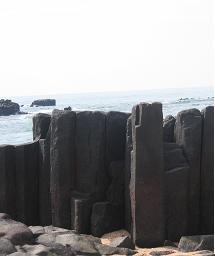
In 1498 the Portuguese explorer Vasco da Gama landed on a group of islands in South Canara on his voyage from Portugal to India. He named the islands El Padron de Santa Maria; they later came to be known as St Mary's Islands.{{cite news |access-date = 8 July 2008 |url-status = dead |archive-url = https://web.archive.org/web/20130922134826/http://www.thehindubusinessline.in/life/2002/09/16/stories/2002091600170300.htm |archive-date = 22 September 2013
The Portuguese Franciscans slowly started propagating Christianity in Mangalore. The most prominent local convert was the Brahmin mahant Shankarayya, who in 1751 travelled with his wife from Kallianpur to Goa and was baptised, with the Portuguese viceroy assuming the role of his godfather. The honoured mahant took the name of Francisco de Távora, after the Viceroy Marques de Távora. Their properties were subsequently taken over by their Hindu relatives, but the viceroy instructed his factor of Mangalore to get their property restored. In 1534, Canara was placed under the ecclesiastic jurisdiction of the Bishop of Goa, where the Portuguese had a strong presence. Missionaries soon arrived and gained converts. The number of local converts in South Canara continually increased until 1546. During the mid-16th century, the Portuguese faced resistance from Abbakka Rani of Ullal, the Queen of the Bednore dynasty. This put a halt to conversions. The first battle between Abbakka Rani and the Portuguese was fought in 1546; she emerged victorious and drove the Portuguese out of South Canara.
Migration era
_-_José_Avelar_Rebelo.png)
In 1510, a Portuguese fleet under Afonso de Albuquerque, sent by King Manuel I of Portugal, wrested the region of Goa from Sultan Yusuf Adil Shah of Bijapur. In 1534, the Diocese of Goa was established. Soon missionaries were sent to Goa, which led to conversion of a sizeable population to Roman Catholicism. The bulk of Christian settlers came in three major migration waves towards South Canara. These migrations occurred in periods of great unrest: the Goa Inquisition occurred from 1560 onwards; the Portuguese–Adil Shahi wars were between 1570 and 1579; and the Portuguese–Maratha wars occurred between 1667–83 and 1737–40. Other factors that led to mass migrations were disease epidemics, famines, natural calamities, overpopulation, poor living conditions, heavy tax burdens, and social discrimination by the Portuguese.
In 1542, the Navarrese Jesuit Francis Xavier, co-founder of the Society of Jesus; arrived in Goa. He discovered that the newly converted Christians were practising their old Hindu customs and traditions. He requested the Portuguese king João III to install an Inquisition in Goa in 1545. Many of the Goan ancestors of the present Mangalorean Catholics fled Goa after the Inquisition began in 1560. King Sebastião I decreed that every trace of Hindu customs should be eradicated through the Inquisition. Many Goan Christians of upper-caste Hindu origins were attached to their caste practices, and did not want to abandon them.{{Cite journal |editor1-last=Myaboo |editor1-first=Philip
The Christians who left Goa were for the most part skilled agriculturists who abandoned their irrigated fields in Goa to achieve freedom. The remainder were skilled carpenters, goldsmiths, artisans, and merchants. At the time of migration, Canara was ruled by the Keladi king Shivappa Nayaka (1540–60). He evinced great interest in the development of agriculture in his empire and welcomed these agriculturists to his kingdom, giving them fertile lands to cultivate. They were recruited into the armies of the Bednore dynasty. This was confirmed by Francis Buchanan, a Scottish physician, when he visited Canara in 1801. In his book A Journey from Madras through the Countries of Mysore, Canara and Malabar (1807), he stated that "The princes of the house of Ikkeri had given great encouragement to the Christians, and had induced 80,000 of them to settle in Tuluva." Later, this was identified as a probable mistake and should have read "8,000". This figure included the second emigration of Christians from Goa. The taxation policies of the Keladi Nayakas during 1598–1763 enabled the Goan Catholic migrants to emerge as prominent landowning gentry in South Canara. These migrants usually brought their own capital from Goa, which they invested in their new lands, thereby indirectly contributing to the prosperity of the Keladi kingdom.
Under the provisional treaties between the Portuguese and the Bednore rulers, and the Padroado, the Christians were allowed to build churches and help foster the growth of Christianity in South Canara. The arrival of the British and the Dutch halted the activity of the Portuguese, and they were gradually unable to send the required number of missionaries to Mangalore. Shivappa Nayaka had previously expelled the Portuguese from their forts a little before 1660, which brought about considerable changes in the ecclesiastical situation. The appointment of the Vicar Apostolic of Mangalore was felt by the Holy See to be of critical importance. Nayaka pressured the church authorities to appoint a native priest as the Vicar Apostolic, which resulted in the appointment of Fr. Andrew Gomez to the post; however, he died before the nomination papers could reach Mangalore.

At the recommendation of the Vicar General of Verapoly, Mons. Joseph Sebastiani, Pope Clement X appointed Bishop Thomas de Castro, a Goan Theatine and Bishop of Fulsivelem, as the Vicar Apostolic of Propaganda Fide in the Vicariate of Canara on 30 August 1675, for the purpose of providing spiritual leadership to the Canara Christians. After his consecration, he first went to Calicut and then moved to Mangalore, where he served from 1677 to 1684. In 1677, Bishop de Castro entered into a conflict with the Archbishop of Goa, Dom Frei for disregarding the Padroado. Consequently, they did not cede the jurisdiction to him despite the Pope's letter of appointment. The Padroado–Propaganda conflict which ensued divided the Catholics of Canara into two sides—those who recognised the authority of the Padroado Archbishop in Goa versus those who supported de Castro.
The Portuguese refused to recognise Bishop de Castro's appointment and vigorously opposed his activities. Archbishop Brandão's sudden death on 6 July 1678 further complicated matters, and the Cathedral chapter administering the Archdiocese of Goa following the vacancy created by his death, forbade the Canara Catholics from receiving the sacraments from the bishop or from priests appointed by him. In his turn, Bishop de Castro excommunicated those Catholics who were obedient to the Padroado authorities in Goa and their priests. In 1681, the Holy See appointed another Goan priest Fr. Joseph Vaz, as the Vicar Forane of Canara; he was asked not to submit to Bishop de Castro unless he showed the letter of appointment. However, after being convinced of its legitimacy, Fr. Vaz submitted to Bishop de Castro and brought about a truce. He further managed to persuade the bishop to delegate his jurisdiction to him while retaining the post. In 1700, the Catholics of Canara were again brought under the jurisdiction of the Padroado Archbishop of Goa.
The Milagres Church, one of the oldest churches in South Canara, was built in 1680 by Bishop Thomas de Castro.{{cite news |access-date = 1 March 2009 |url-status = dead |archive-url = https://web.archive.org/web/20121103222636/http://www.hindu.com/2005/11/30/stories/2005113018370300.htm |archive-date = 3 November 2012 |access-date = 23 August 2008 |url-status = dead |archive-url = https://web.archive.org/web/20121103043155/http://www.hindu.com/mp/2004/11/27/stories/2004112702480100.htm |archive-date = 3 November 2012
In 1570, the Sultan of Bijapur, Ali Adil Shah I, entered into an alliance with the Sultan of Ahmadnagar, Murtaza Nizam Shah, and the Zamorin of Calicut for a simultaneous attack on the Portuguese territories of Goa, Chaul, and Mangalore. He attacked Goa in 1571 and ended Portuguese influence in the region. The Bijapur Sultans were especially renowned for their loathing of Christianity. Fearing persecution, many Goan Catholics fled to South Canara during this second wave of migrations, and settled in Barcoor, Kallianpur, Cundapore, and Basroor. For the next century, there was continual migration of Goan Catholics southwards, so that by 1650, a considerable number of Catholics were settled around Mangalore, Moolki, Shirva, Pezar, Bantval, Cundapore, Kallianpur, and Kirem. The Christian Goud Saraswat Brahmins who came during this wave belonged mostly to the Shenvi subcaste.

The attacks of the Maratha Empire on Goa during the mid-17th century precipitated the third major wave of migrations. In 1664 Shivaji, the founder of the Maratha empire, attacked Kudal, a town north of Goa, and began his campaign for Goa. After Shivaji's death on 3 April 1680, his son Sambhaji ascended to the throne. The onslaught of Sambhaji along the northern territories of Goa drove nearly all the Christians from their homelands, and most of them migrated to South Canara. Migration increased with the fall of the Portuguese "Province of the North" (which included Bassein, Chaul and Salsette) and a direct threat to the very existence of Goa in 1738–40.
According to one estimate, emigrations from the Salcete district of Goa were around the rate of 2,000 annually. Jesuit priests estimated that 12,000 Christians emigrated from the Bardez district of Goa between 1710 and 1712, most of them going southward. A Goa government report of 1747 presently in the Panjim archives records that around 5,000 Christians fled from the Bardez and Tiswadi districts of Goa during the Maratha invasion. During the Maratha raids on Goa, about 60,000 Christians migrated to South Canara. These new migrants were given lands at Shirva, Kirem, Mundkur, Pezar, and Hosabettu by the Chowta kings of Moodbidri and at Milagres, Bondel, and Cordel by the Banghel kings of Mangalore. During later years, migration slowed because of the Maratha–Mughal wars, and some 10,000 Christians returned to Goa.{{cite book
Subsequent to this steady rise in South Canara's Catholic population, the Portuguese took advantage of every opportunity to extend their control over the Mangalorean Catholics, who came to be identified with Portuguese interests. The Portuguese sought to expand the power of the priests, as from the beginning of their empire, priests had accompanied Portuguese delegations on diplomatic missions and on occasion were the principal negotiators. Treaties they signed with the Keladi Nayakas progressively incorporated clauses which increased the authority of the priests over the local Catholic population, making them obedient to the priests in matters of Christian laws as well as granting priests the authority to punish violations. The Portuguese promised to refrain from slaughtering cows and to halt forcible conversions in their factories. The terms of these treaties were not always honoured by the Portuguese, with the result that whenever hostilities broke out between the Keladis and the Portuguese, the Catholic settlers were often harassed or arrested by the Nayakas.
Post-migration era and captivity
Main article: Captivity of Mangalorean Catholics at Seringapatam
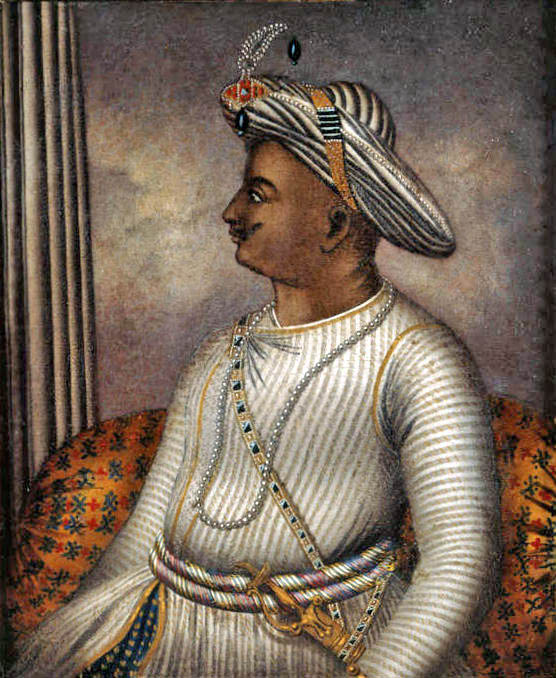
In 1686, Seringapatam, the capital of the Kingdom of Mysore, had a community of more than 400 Catholics. The community was severely harassed in the following two decades, with the churches destroyed and the priest's house confiscated. The destruction was undertaken under the name of the Wodeyar king, Kanthirava Narasaraja I, by his finance minister. The priest's house was returned to the church in 1709. Relations between the Wodeyars and the Mangalorean Catholics improved until 1717, when there was an anti-Christian outburst. The resident priest was expelled and forbidden to preach. Several more anti-Christian outbursts followed. By 1736, there were better relations between the two groups.
From 1761 onwards, Hyder Ali, a distinguished soldier in the Mysore army, took de facto control of the throne of the Kingdom of Mysore through the Wodeyar dynasty. Hyder occupied Mangalore in 1763. The Mangalorean Catholics numbered 80,000 in 1767. In February 1768 the British captured Mangalore from Hyder. Toward the end of 1768, Hyder and his son Tipu Sultan defeated the British and recaptured Mangalore fort. After the conquest, Hyder was informed that the Mangalorean Catholics had helped the British in their conquest of Mangalore. Hyder believed that this behaviour of the Christians amounted to treachery against the sovereign.
The Christians were alleged to have helped General Mathews with a sum of Rs. 3,30,000/-. Hyder summoned a Portuguese officer and several Christian priests from Mangalore to suggest the punishment for the Mangalorean Catholics for treachery. The Portuguese officer suggested the death penalty for those Catholics who helped the British, because it was a fitting punishment for people who betrayed the sovereign. But Hyder exhibited a diplomatic stance and imprisoned the Christians, rather than killing them.
Later, he opened negotiations with the Portuguese. As a result of the agreement, the suspicion against the clergy and the Christians was removed. During Hyder's regime, the Mangalorean Catholic community continued to flourish. After Hyder's death in the Second Anglo-Mysore War on 7 December 1782, the British captured the fort again. Hyder was succeeded by his son Tipu Sultan. Tipu laid several assaults on the Mangalore fort until January 1784, all of which resulted in failure. The fort was finally delivered to Tipu when the British capitulated on 30 January 1784.
Tipu received highly exaggerated reports about the role of the Mangalorean Catholics and their help to the British in the Second Anglo-Mysore War. To minimise the British threat to his kingdom and in the Sultan-ul-Tawarikh, due to "the rage of Islam that began to boil in his breast", Tipu banished the Mangalorean Catholic community from their lands, and imprisoned them at Seringapatam, the capital of his empire. The captivity of Mangalorean Catholics at Seringapatam, which began on 24 February 1784 and ended on 4 May 1799, remains the most disconsolate memory in their history.{{cite web |access-date=29 February 2008 |url-status=dead |archive-url=https://web.archive.org/web/20080129233351/http://www.daijiworld.com/chan/achievers_view.asp?a_id=28 |archive-date=29 January 2008
Soon after the Treaty of Mangalore in 1784, Tipu gained control of Canara. He issued orders to seize the Christians in Canara, confiscate their estates, and deport them to Seringapatam, through the Jamalabad fort route. All this was accomplished in a secret and well-planned move on Ash Wednesday (24 February 1784). Accounts of the number of captives differ, ranging from 30,000 to 80,000. The generally accepted figure is 60,000, as per Tipu's own records. They were forced to climb nearly 4000 ft through the dense jungles and gorges of the Western Ghat mountain ranges along two routes; one group travelled along the Bantwal-Belthangadi-Kulshekar-Virajpet-Coorg-Mysore route, and the other along the Gersoppa falls (Shimoga) route. It was 200 mi from Mangalore to Seringapatam, and the journey took six weeks.

According to the Barcoor Manuscript, written in Kannada by a Mangalorean Catholic from Barcoor after his return from Seringapatam, 20,000 of them (one-third) died on the march to Seringapatam due to hunger, disease, and ill treatment by the soldiers. At the camp at Jamalabad fort, Mangalorean Catholic leaders were thrown down from the fort. All Christian churches in South Canara, except the Hospet Church at Hospet and the Monte Mariano Church at Farangipet, were razed to the ground and all land owned by the captured Christians was taken over by Tipu and distributed among his favourites. After they were freed, all their belongings had disappeared and their deserted lands were being cultivated by the Bunts.
After arriving at Seringapatam, the Christian captives were made to forcibly embrace Islam, were tortured, or sentenced to death. The young men who refused to embrace Islam were disfigured by cutting their noses, upper lips, and ears. They were seated on asses, paraded through the city, and thrown into the dungeons of Seringapatam. Historian Praxy Fernandes, author of Storm over Seringapatam: The Incredible Story of Hyder Ali & Tippu Sultan, states that contrary to popular belief, 40,000 Christians were not kept manacled in the dungeons of Seringapatam.
Ludwig von Pastor, a German historian, claimed "countless" Mangalorean Catholics were hanged, including women with their children clinging around their necks. Others were trampled or dragged by elephants. The able-bodied young men were drafted into the army after being circumcised and converted to Islam. The young women and girls were distributed as wives to Muslim officers and favourites living in Seringapatam. According to Mr. Silva of Gangollim, a survivor of the captivity, if a person who had escaped from Seringapatam was found, Tipu had ordered the cutting off of the ears, nose, the feet, and one hand as punishment. The persecutions continued until 1792. This was followed by a brief relaxation period from 1792 to 1797, during which a few Catholic families managed to escape to Coorg, Cannanore, and Tellicherry. The persecutions resumed in 1797.
British and modern eras

In the Battle of Seringapatam on 4 May 1799, the British army, under officers George Harris, David Baird, and Arthur Wellesley, stormed the fortress and breached the town of Seringapatam, with Tipu being killed in action. After his death in the Fourth Anglo-Mysore War, the Mangalorean Catholics were freed from his captivity. Of the 60,000–80,000 Mangalorean Catholics taken captive, only 15,000–20,000 made it out as Christians.
Historian Alan Machado Prabhu mentions that only 11,000 survived the captivity as Christians. British general Arthur Wellesley helped 10,000 of them return to South Canara and resettle on their lands. Of the remaining Christians freed, about a thousand went to Malabar, and some hundreds settled in Coorg. According to Francis Buchanan, 15,000 of them returned to Mangalore and its vicinity, while 10,000 of them migrated to Malabar. The Gazetteer of the Bombay Presidency (1883) mentions that 15,000 persons returned, of which 12,000 were from South Canara and 3,000 from North Canara. According to genealogist Michael Lobo, the present Mangalorean Catholic community is descended almost entirely from this small group of survivors.
Later, the British took over South Canara. In 1800, they took a census of the region. Of the people living in South Canara, 10,877 were Christians. Thomas Munro was appointed the first collector of Canara in June 1799. He passed three orders in respect of the estates of the Christians, which were taken over by non-Christians during the captivity. Through the assistance of the church and with the support of Munro, the Christians were able to recover their lands and estates. Fr. José Miguel Luis de Mendes, a Goan Catholic priest, was appointed Vicar of Our Lady of Rosary of Mangalore on 7 December 1799. He took interest in the re-establishment of the community from 1799 to 1808. Later, British general John Goldsborough Ravenshaw was appointed collector of South Canara. He took an active part in the restoration of the Catholic community's former possessions and the recovery of its estates. He constructed a church for them, which was completed in 1806.

In 1800, there were 2,545 Catholic households with a population of 10,877. Their population almost doubled by 1818. According to various parish books, Mangalorean Catholics numbered 19,068 in South Canara (12,877 in Mangalore and Bantval, 3,918 in Moolki, 2,273 in Cundapore and Barcoor). Most of the churches which were earlier destroyed by Tipu were rebuilt by 1815. The community prospered under the British, and the jurisdiction of the Archbishop of Goa recommenced.
The opening of the Protestant German Basel Mission of 1834 in Mangalore brought many handicraft industries, such as cotton weaving and tile-manufacturing, to the region and led to a large-scale rise in employment.{{cite web |access-date=28 November 2009 |url-status=dead |archive-url=https://web.archive.org/web/20110928062532/http://www.daijiworld.com/chan/exclusive_arch.asp?ex_id=400 |archive-date=28 September 2011
Under the leadership of Joachim Pius Noronha, a Mangalorean Catholic priest, and John Joseph Saldanha, a Mangalorean Catholic judge, the Mangalorean Catholics sent a petition to the Holy See in 1840 to establish Mangalore as a separate Vicariate. Conceding to their request, Pope Gregory XVI established Mangalore as a separate Vicariate on 17 February 1845 under the Verapoly Carmelites. The Mangalore Mission was transferred to the French Carmelites by a bull dated 3 January 1870. During the regime of Carmelites, the Mangalorean Catholics constantly sent memorandums to the Holy See to send Jesuits to Mangalore to start institutions for higher education, since students frequently had to go to Bombay and Madras for educational purposes. Pope Leo XIII, by the Brief of 27 September 1878, handed over the Mangalore mission to the Italian Jesuits of Naples, who reached Mangalore on 31 December 1878.
The Italian Jesuits played an important role in education, health, and social welfare of the community.{{cite news |access-date = 30 October 2008 |url-status = dead |archive-url = https://web.archive.org/web/20121007090741/http://hindu.com/2004/01/08/stories/2004010810180300.htm |archive-date = 7 October 2012 and many other institutions and churches. On 25 January 1887, Pope Leo XIII established the Diocese of Mangalore, which is considered to be an important landmark in the community's history. By the later half of the 19th century, many Mangalorean Catholics were involved in the Mangalore tile industry, coffee plantations, and trade in plantation products. They prospered under the British and competed with the local Brahmins for offices in the service of the British. The overwhelming majority of Mangalorean Catholics continued to remain agriculturists.

During the later 19th century, they started migrating to other urban areas, especially Bombay, Bangalore, Calcutta, Karachi, Madras, Mysore and Poona. The Mangalorean Catholics came to Bombay out of economic necessity. The first permanent settlement of Mangalorean Catholics in Bombay was recorded in the 1890s. The first Mangalorean Catholic settlement in Madras was recorded in the 1940s. Joachim Alva, a Mangalorean Catholic politician, actively participated in uniting the Mangalorean Catholic community against the British during the Indian Independence Movement.

In 1901, Mangalorean Catholics accounted for 76,000 of the total 84,103 Christians in South Canara., while in 1962, they numbered . During the mid-20th century, Victor Fernandes, Bishop of Mangalore from 1931 to 1955, erected a large cross at Nanthoor, near Padav hills, on the former outskirts of Mangalore, in honour of the memory of Mangalorean Catholic martyrs who died on the march and during their 15-year captivity at Seringapatam.{{cite news |archive-url=https://archive.today/20130629130029/http://expressindia.indianexpress.com/news/ie/daily/19990503/iex03030.html |url-status=dead |archive-date=29 June 2013 |access-date=25 May 2013
Geographical distribution
The Roman Catholic Diocese of Mangalore estimates the population of Mangalorean Catholics in the areas that comprise historical South Canara to be out of a total population of , or approximately 9.5 per cent of the population.{{cite web |access-date = 12 January 2011 |url-status = usurped |archive-url = https://web.archive.org/web/20110725235407/http://www.dioceseofmangalore.org/ |archive-date = 25 July 2011 |access-date = 30 October 2008 |url-status = live |archive-url = https://web.archive.org/web/20080925083944/http://www.daijiworld.com/chan/exclusive_arch.asp?ex_id=955 |archive-date = 25 September 2008
Culture
Main article: Culture of Mangalorean Catholics
Architecture
Main article: Architecture of Mangalorean Catholics

The German missionary Georg Plebst set up the first tile factory at Mangalore in 1860. It was called the Basel Mission tile factory. Mangalorean Catholics learnt the technique of preparing Mangalore tiles. The Albuquerque tile factory, the first Indian Mangalore tile factory, was started in South Canara by Pascal Albuquerque at Panemangalore in 1868. Since then, Mangalorean Catholics have been actively involved in manufacturing the tiles. The Alvares tile factory was established in Mangalore by Simon Alvares, a Mangalorean Catholic from Bombay, in 1878. In 1991–1992, out of twelve Mangalore tile manufacturing factories in Mangalore, six were owned by Christians. These tiles, prepared from hard clay, were in great demand throughout India, Myanmar, and Sri Lanka, and were even shipped to East Africa, the Middle East, Europe, and Australia. These were the only tiles to be recommended for Government buildings in India, and still define Mangalore's skyline and characterise its urban setting.{{cite news |access-date = 4 April 2008 |url-status = dead |archive-url = https://web.archive.org/web/20110212135016/http://www.hindu.com/mp/2007/02/17/stories/2007021701030100.htm |archive-date = 12 February 2011
Cuisine
Main article: Mangalorean Catholic cuisine
.jpg)
Coconut and curry leaves are common ingredients to most curries. |url-status = dead |archive-url = https://web.archive.org/web/20121103043142/http://www.hindu.com/mp/2007/08/11/stories/2007081150880400.htm |archive-date = 3 November 2012 |access-date = 16 August 2017 Sanna-Dukra Maas (Sanna is idli fluffed with toddy or yeast; Dukra Maas is pork) is one of the most popular dishes of the Mangalorean Catholic community. |url-status = dead |archive-url = https://web.archive.org/web/20120208022637/http://www.daijiworld.com/chan/exclusive_arch.asp?ex_id=726 |archive-date = 8 February 2012 |access-date = 16 August 2017 Rosachi Kadi (Ros Curry), a fish curry made with coconut milk (ros), is a traditional curry served during the Ros ceremony. |access-date = 18 August 2017 |url-status = dead |archive-url = https://web.archive.org/web/20041125171400/http://www.thehindu.com/thehindu/mp/2002/06/17/stories/2002061701160400.htm |archive-date = 25 November 2004 Patrode, a dish of colocasia leaves stuffed with rice, dal, jaggery, coconut, and spices is popular.{{Harvnb | Sen | 2004 Kuswar are sweet delicacies prepared during Christmas and include around 22 varieties of sweets. |access-date = 29 August 2008 |url-status = dead |archive-url = https://archive.today/20240525193701/https://www.webcitation.org/66KX9CPBY?url=http://www.hindu.com/mp/2006/11/25/stories/2006112500760100.htm |archive-date = 25 May 2024 |access-date = 3 November 2008 |url-status = dead |archive-url = https://web.archive.org/web/20120105012222/http://www.hindu.com/thehindu/mp/2002/06/17/stories/2002061700920300.htm |archive-date = 5 January 2012
Names and surnames
Main article: Mangalorean Catholic names and surnames

Bilingual names, having variants in both Konkani and English, like Zuãuñ (from Portuguese João, meaning John) and Mornel (Magdalene) are common among Mangalorean Catholics who still use Konkani as the first language. Most Mangalorean Catholic names for males follow the second declension. Among women, the names follow the first declension, while among young girls, the names follow the second declension. Portuguese surnames like D'Souza, Coelho, and Pinto are common among Mangalorean Catholics, and generally follow the second declension. Rarely, other European surnames are found as well. Mangalorean Catholics also use Konkanised forms of their surnames in Konkani conversations, such as Soza, Kueli, Piint & so on; instead of the Portuguese forms of De Souza, Coelho, Pinto etc. Some families of Christian Cxatria and Christian Brahmin origin use surnames such as Porbu, Kamath, Naik, Shenoy & Shett. These original surnames are actually the names of five classes of persons: lord, cultivator, merchant, warrior, and writer. At least one of these are Saraswat Brahmin surnames, with the exception of Padival and Shett; Shett is used by those who trace their origins to Daivadnyas. These ancestral pre-Christian surnames are called paik in Konkani. A few have reverted to their paik surnames. While a few others use both, they use Konkani surnames which are hyphenated with the Portuguese ones. Mudartha is a rare and unique Konkani and Gaud Saraswat Brahmin surname found among a few Catholics who hail from Udupi.
| Mangalorean Catholic variant | English variant | Portuguese variant | Meaning | Sex |
|---|---|---|---|---|
| Mâri | Mary | Maria | Beloved | Female |
| Monku | Monica | Mónica | To advise | Female |
| Motes | Matthew | Mateus | Gift from God | Male |
| Nâtu | Natalia | Natália | Birthday | Female |
| Pedru | Peter | Pedro | Stone | Male |
| Šila | Sylvester | Silva | Wooded | Male |
| Zâbel | Elizabeth | Isabel | My God is my oath | Female |
| Zoze | Joseph | José | The Lord will add | Male |
| Source: An English–Konkani Dictionary (1882) and A Konkani Grammar (1882) |
Language and literature

Main article: Konkani Language, Literature of Mangalorean Catholics
Mangalorean Catholics speak the Konkani language, which they have retained as their mother tongue despite the migration; the language is central to the community's identity. They speak a dialect known as Mangalorean Catholic Konkani, which the Ethnologue broadly identifies as the Mangalore dialect.{{cite web |access-date=25 September 2008 |url-status=dead |archive-url=https://web.archive.org/web/20081009164936/http://www.ethnologue.com/show_language.asp?code=gom |archive-date=9 October 2008
The Mangalorean Catholic dialect has Sanskrit influences, and preserves many features of the Maharashtri, Shauraseni, and Magadhi dialects of Prakrit. It also has loanwords from the Tulu and Kannada languages. It is written in the Kanarese script. The dialect does not distinguish between the nouns of Kannada and Konkani and has developed into a language that is very practical for business. Some Kannada root words which have disappeared from the Goan dialects due to the influence of Portuguese have re-entered the Mangalorean lexicon. 350–400 Portuguese lexical items are found in the Mangalorean Catholic dialect, of which more than half are related to religious terminology. The influence of Portuguese syntax is only found in some sets of phrases and prayers which have come down from the pre-migration era.
The Mangalorean Catholic dialect is largely derived from the Bardeskaar (North Goan) dialect and bears a good degree of intelligibility with the modern Bardeskaar dialect (spoken by North Goan Christians) and to a slightly lesser extent with the standard Konkani dialect. It consequently differs from the dialect spoken by the Goud Saraswat Brahmins in South Canara, which is copiously derived and bears a good degree of intelligibility with the modern Sashtikaar (South Goan) dialect spoken by South Goan Christians and North Canara Konkani Hindus. It is much closer to the dialects of the Goan Hindus than to that of the Goan Catholics.
The Italian Jesuits who arrived in Mangalore in 1878, devoted themselves to the study and development of Konkani, and were thus responsible for the revival of the Konkani language in Mangalore. The origin of their literature dates to 1883, when Angelus Francis Xavier Maffei, an Italian Jesuit, published the first An English–Konkani Dictionary in Mangalore. He published a book on Konkani grammar in 1882, with a revised version in 1893. In 1912 the first Konkani periodical, Konknni Dirvem (Konkani Treasure), was published in Mangalore by Louis Mascarenhas. Popular Konkani periodicals published in Mangalore include Raknno (Guardian) (1938) by Mons. Sylvester Menezes, Konkan Daiz (Heritage of Konkani) (1958), and Kannik (Donation) (1965) by Raymond Miranda. The twentieth-century literature focused on themes like the suffering of the Mangalorean Catholics during their 15-year captivity at Seringapatam and the oppression of Goan Catholics during the Goa Inquisition. The first Konkani novel in Karnataka Aangel (1915), was written in the Kannada script by Joachim Santan Alvares. In Bombay—which had a small Mangalorean Catholic community—periodicals like Sukh-Dukh (Ups and Downs) (1948) by G.M.B. Rodrigues, Konknni Yuvak (Konkani Youth) (1949) by George Fernandes, Poinnari (Traveller) (1950) by V.J.P. Saldanha, and Divo (Lamp) (1995) by J.B. Moraes were published.{{cite web |access-date=14 September 2008 |url-status=dead |archive-url=https://web.archive.org/web/20080828171254/http://www.goakonkaniakademi.org/konkaniweb/language-literature.htm |archive-date=28 August 2008

Modern literature is diverse and includes themes such as Indian politics in books like What Ails the Socialists by George Fernandes, |access-date = 14 September 2008 |url-status = dead |archive-url = https://web.archive.org/web/20060505050044/http://parliamentofindia.nic.in/ls/lok12/biodata/12bi34.htm |archive-date = 5 May 2006 historical awakening, in books such as Sarasvati's Children: A History of the Mangalorean Christians by Alan Machado Prabhu, and sexual desires, in The Revised Kama Sutra: A Novel of Colonialism and Desire by Richard Crasta.{{cite news |access-date = 14 September 2008 |url-status = live |archive-url = https://web.archive.org/web/20120930125317/http://www.dnaindia.com/lifestyle/report_17-years-later-this-kama-sutra-gets-a-fresh-launch_1435581 |archive-date = 30 September 2012 |access-date = 20 October 2008 |url-status = live |archive-url = https://web.archive.org/web/20120303180800/http://www.daijiworld.com/chan/achievers_view.asp?a_id=10 |archive-date = 3 March 2012
Customs and festivals
Mangalorean Catholics have retained many Indian customs and traditions; these are especially visible during the celebration of a marriage. Their culture is more traditional and Indian. Though the Portuguese traded quite frequently in Mangalore, and most of the priests arriving in the area were Portuguese, there did not develop a community identified with Portugal and Portuguese culture. Their marriage rites have similarities with the Shenvi sub-caste of the Saraswat Brahmins. It was mainly these pre-Christian marriage rites that the Portuguese found objectionable and prohibited during the Goan Inquisition.
The roce (ritual bathing) ceremony, conducted one or two days before a wedding, celebrates the last day of virginity of the bride and the groom; it involves the parents' blessing the bride and groom, who are bathed in roce (coconut milk), while a cross is inscribed on the bride's forehead. The ethnic Konkani marriage rituals include soirik (betrothal), exchange of paan pod (betel leaves) during the marriage ceremony, which known as badalchen (changing hands; formal acceptance of the promise made by the bride's father to the bridegroom's father that he will give his daughter in marriage). The bride is adorned with the sado (wedding sari) and pirduk (wedding necklace). Other rites include the onpnni or kok (giving away the bride formally by the father or the guardian of the bride), porthoponn (re-invitation to the bride's house), and singing of honvious (hymns). Some other customs include novemjeevon (partaking of the food prepared from new corn) and novem (blessing of new harvests).

In addition to common Christian festivals like Christmas, Great Friday, and Easter, the community celebrates many other festivals of religious and historical significance. Monti Fest is one of the major festivals, celebrated on 8 September. It combines the Nativity of the Blessed Virgin Mary and blessing of novem (new crops). The festival derives its name from the Monte Mariano Church at Farangipet, and was initiated by Fr Joachim Miranda, a Goan priest at Farangipet, in 1763. Although Tipu Sultan destroyed the churches of Canara, he spared Monte Mariano Church in deference to the friendship of his father Hyder Ali with Fr Miranda.{{cite web |access-date=15 January 2008 |url-status=dead |archive-url=https://web.archive.org/web/20080125132305/http://www.daijiworld.com/chan/exclusive_arch.asp?ex_id=129 |archive-date=25 January 2008
Costumes and ornaments
Main article: Attire of Mangalorean Catholics
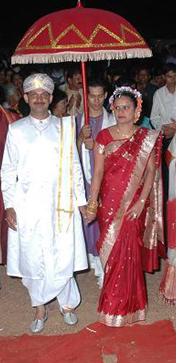
Mangalorean Catholic men traditionally white or black coats known as kutanv (similar to the bandhgalas), while the pudvem (dhoti), a piece of unstitched cloth, usually around 7 yd long, was wrapped around the waist and the legs and knotted at the waist. The turban called mundaas or urmal, were usually flattened like the Coorgi turbans. It was a long white piece of cloth with a todop (golden hem) tied around the head like a turban in a particular manner by which they could be easily identified as Catholic Christians. In modern times however, this mode has changed. Only a few older men can be seen wearing this traditional dress on church-going occasions.
Before marriage, women used to wear a kirgi (half sari) and baju (kurti). The kirgi is a piece of cloth not longer than four feet, and about three feet wide. It was wrapped around the body from the waist down. A jacket with long sleeves called a baju, was used to cover the upper part of the body. This dress was a sign of the bride's virginity and was worn during the roce or ros ceremony. The kirgi was wrapped around the waist, but the end of the sari is not thrown over the shoulder. To wear the full sari with its end thrown over the shoulder, known as worl, it was the exclusive right of a married woman. Married women used to wear sarees the general way. The salwar kameez and the lungi are forms of popular clothing among present-day Mangaloreans. The Mangalorean Catholic bride's wedding sari is known as a sado. It is usually a red-coloured Benaresi sari which is made of finely woven silk and is decorated with elaborate engravings. In olden days, the bride wore on her head a red cloth, three feet square. Gold ornaments were absent in those days: the bride went to the church dressed as a virgin girl. In modern times, the bride wears (in place of the kirgi) a red sari, but the end of the sari is not thrown over the shoulder; it is wrapped around the waist. The bride wears a few gold ornaments, some rings on the fingers, earrings, and at least two of the dantoni (golden combs). Other ornaments worn by the bride in the olden days included kanti, chakrasar, kap, karap, mugud, kanto, and dantoni.

Dantoni consist of two ordinary combs with the upper part of each one plated with gold; they are worn in the hair on both sides of the head over the ears. On the way to church the bride wears some white and red flowers stuck in the hair. In the centre of the forehead, a bang (gold chain) was placed with a pendant. The pirduk (mangalsutra) is a necklace made of black beads strung on gold wire as either as a single chain or double chain, with a connecting pendant. This necklace is worn as long as the husband is alive; a widow is expected to take it off. It is highly prized by women as the symbol of their married state. A widow is expected to wear a black sari for the remainder of her life, and is not allowed to wear ornaments. The bridegroom's dress in early times consisted of a breechcloth (dhoti), with a red and gold hem (todop), a coat (kutanv) & a towel (urmal) on the head. The bridegroom wore a chakrasar (neck chain) around his neck. He wore a pair of sandals or at least a pair of socks. Presently, most Mangalorean Catholic couples opt for a white wedding, where the groom wears a black suit, while the bride wears a white dress. The traditional style of wedding is becoming exceedingly rare.
Historical society
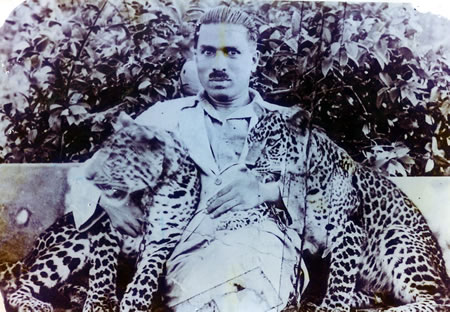
Catholics were divided into three broad divisions: the higher classes of Catholics were landlords, merchants and public servants. The middle classes were traders, cultivators; the lower classes were agricultural laborers, tailors and domestic servants. Mangalorean Catholics retained the same caste system as their Konkani ancestors in Goa. They were mainly divided into four castes: Bamonns, Charodis, Sudirs, and Gaudis. There were also local converts from Bunt, Beary, Koragas, Holeya, Mogaveera, Billavas, Mansa and other communities due to the social reform and missionary activities of the Jesuits and Capuchins in the 19th and early 20th centuries.
Converts from Brahmin sub-castes such as the Saraswat Brahmins, Padyes, Daivadnya goldsmiths/ merchants etc; were merged into the Christian caste of Bamonn. The Bamonns were further divided into other subcastes or classes according to rank. In Mangalore, they were sub-divided into Sirudhegars (the highest class), Alhdhengars, Cutdhnangars, Dhivodegars, Nathnolegars, Sashragars, Puruvargars, and Maidhegars. These names are taken from the villages to which they once belonged. According to John B. Kutinha of the Karnataka Second Backward Classes Commission, the Bamon Christians and Sarodi Christians were akin to Vaishyas and Shudras, and the Gaudi Christians were akin to untouchables.
The Charodis were converts from the Kshatriya (warrior class) and Vaishya (merchant class) castes. They were generally engaged in farming, trade, and commercial vocations. The artisan converts formed the third group who were known as Sudirs (the Konkani word for Shudras who were the labour class). They were workers and agricultural labourers engaged in service professions. The converts from the fisher caste residing around Ullal, Kuloor, and other places around the seacoast were called Gaudis, and formed the fourth group. They cultivated the lands of the Bamonns and the high-caste Hindus. Other minor castes included the Padvals, whom historian Severine Silva found to be native Tulu Jain Bunt converts.

The Mangalorean Catholics constituted a small community widely scattered across the South Canara district. Rather than being a closely knit and united group, the Goan Catholic immigrants and their progeny did not associate with the native Catholics on account of caste, origin, and language, and even among themselves were strongly divided by caste. The Hindu uppercastes, including the indigenous Brahmins (mostly belonging to the Shivalli, Havyaka, and Kota sub-groups) and Bunts did not associate with the Catholic Christians and would not admit them into their houses on account of their religion. However, a close contact was kept by the Catholic Christians with the Hindus of the same caste who were migrants from Goa. Catholic Christians would invite their Hindu cousins to festivities such as birth celebrations, weddings, and funeral feasts. The Hindus accepted such invitations. Unlike the Hindu counterpart, a high-caste Mangalorean Catholic did not consider himself polluted upon physical contact with a member of the lower castes, but members of different castes did not fraternise or invite each other home for dinner. According to sociologist Vinay Rajath D, the relationship between caste and occupation was very tenuous among Catholic Christians, as Bamons as well as Sudirs consisted of cultivators, agricultural labourers, traders, masons, and cooks.
Marriage between members of the various castes was not permitted, and such matches were strictly discouraged by the elders. For instance, a Bamonn boy would only marry a Bamonn girl and a Charodi boy would only marry a Charodi girl. The Bamonns and Charodis would invite neighbours and friends belonging to the Sudir and Gaudi castes to special occasions such as weddings and baptisms, although the latter would have to observe certain restrictions with regards to sitting and eating. The lower castes felt honoured if they were invited and usually accepted such invitations. The upper castes usually did not attend the ceremonies of the lower castes, even if expressly invited.

It was difficult for the few priests who had accompanied the Christian emigrants to South Canara to look after them properly. Thus, the gurkar system came into existence. Gurkars were Mangalorean Catholic men of good moral character who were selected as headmen in Christian settlements. They were entrusted with the social and religious supervision of the community. After migration, the only possible occupation of a Mangalorean Catholic was agriculture, since they were skilled farmers. Every farmer practised carpentry, but it was quite primitive and unskilled, and other crafts and industries were non-existent. The mass was celebrated in Latin; but the sermon, the catechism, and the explication of the mysteries were delivered to the congregation in Konkani.
The parishes were grouped into deaneries called varados. Every parish was divided into wards, while parish councils were present in most parishes. About 15 percent of the households in the parishes were literate. A widow had to remain indoors, practically for the rest of her life. Since high-caste Hindu widows cannot remarry after the death of their husbands, the high-caste Christians too considered the remarriage of a widow as something unnatural. Canon law did allow remarriage for widows and therefore there was no direct prohibition for widows to remarry in the society of the Christians of South Canara. Few women had the courage to go against the strict conventions of their community. A widow who remarried was looked down upon, pitied, and shunned as unlucky. But she was not ill-treated or made an outcast, and no stigma was attached to her husband. Succession to property was practised as per the Hindu laws.
By the end of the 20th century however, social categorization and differentiation became manifested not on various factors apart from caste. Catholic Christians who belonged to the lower economic classes and were tenants in former times now have become land owners, due to the land reforms. Mangalorean Catholic society had become very mobile owing to factors such as education, job affiliation, non-agricultural jobs, acquisition of wealth, cultivation of cash crops, inter-caste marriages, inter-religious marriages, and migration to metropolitan cities.
Songs and music

On 26 and 27 January 2008, a Konkani cultural event, Konkani Nirantari, held in Mangalore by the Mangalorean Catholic organisation Mandd Sobhann; entered the Guinness Book of World Records for non-stop singing of Konkani hymns. Mandd Sobhann members sang for 40 hours, surpassing the old record of 36 hours held by a Brazilian musical troupe, Communidade Evangelica Luterana São Paulo (Lutheran Evangelical Community of São Paulo) of Universidade Luterana do Brasil (Lutheran University of Brazil).{{cite news |access-date=1 February 2008 |url-status=live |archive-url=https://archive.today/20120728235422/http://www.daijiworld.com/news/news_disp.asp?n_id=42855&n_tit=Mangalore:+Guinness+Adjudicator+Hopeful+of+Certifying+Konkani+Nirantari |archive-date=28 July 2012 |access-date = 14 September 2008 |url-status = dead |archive-url = https://archive.today/20240525184045/https://www.webcitation.org/65qYMOpQ9?url=http://www.hindu.com/mp/2005/12/10/stories/2005121001110100.htm |archive-date = 25 May 2024 Mons. Minguel Placid Colaco wrote the devotional hymn Jezucho Mog (Jesus' Love) in 1905, and translated the Latin hymn Stabat Mater into Konkani under the title Khursa Mullim (Bottom of the Holy Cross). Joseph Saldanha's Shembor Cantigo (100 Hymns) and Raimundo Mascarenhas' Deva Daia Kakultichea (O Compassionate Master) were popular. Other popular Konkani hymns composed by Mangalorean Catholics are Aika Cristanv Jana (Listen, O' Christian People), Utha Utha Praniya (Wake up, Creatures), and Sorgim Thaun (From Heaven).
Konkani pop music became popular after Indian Independence in 1947. Henry D'Souza and Helen D'Cruz are known for the Konkani love duet Kathrina in 1971 and the love Ballad Garacho Divo (Lamp of the House) in the 1970s, while Wilfy Rebimbus' sonnet Mog Tuzo Kithlo Axelom (How I Have Loved Thee) from 1977 is popular. Konkani plays, especially religious ones, were written and staged in Mangalore in the 20th century by prominent playwrights such as Pedru John D'Souza, Pascal Sequeira and Bonaventure Tauro. The Ghumat was a popular musical instrument played especially during weddings. The instrument has the form of an earthen pot but is open at both sides. One end is covered with the skin of some wild animal, and the other is left open. The traditional theatre form is called Gumat, and is performed on the eve of the marriage or in connection with the marriage celebrations in the decorated pandal (stage). The play is conducted by males belonging to both the brides' and bridegrooms' parties, and usually takes place for two or three nights. The plays performed are usually those of Biblical stories, and their morals are presented with the purpose of educating the bride and bridegroom. This tradition has almost completely died out among the present generation.
The tradition of Voviyo (wedding songs), sung by women during a Ros, is important to this community. The procedure is that an elderly lady, usually the kok (wife of the master of ceremonies, who is known as kok) who knows the kok, leads the song while the rest of the women sing along. Only women whose husbands are still living may sing. In ancient times, the wedding songs expressed very lofty sentiments and gave vent to the feelings of the people about the marriage partners and their families, invoking the blessing of God on them.
Dimbi ami galeam, santa kuru kadeam, kurpa ami magieam amchea Jezulagim. Let us kneel, make sign of the cross, and pray for God's grace.
Akashim mod, narl kubear telacho kuris hokleachea kopalar. Clouds in the sky, coconut on the tree, oily sign of cross on the forehead of the bride. |access-date = 12 March 2008 |url-status = dead |archive-url = https://web.archive.org/web/20110713164325/http://www.konkanifoundation.com/ancy/vovio.doc |archive-date = 13 July 2011
Castes
Konkani Christians of the erstwhile South Kanara area belong to multiple castes, that correspond to the Hindu castes they converted from. These include: Gowdis, Charodis, Bahmons, Sudirs, Kharvi, Dalits, Madivals, Renders, Kumbars, Koragas, etc. Other communities in the region treated the Catholic Christians of Dakshina Kannada as a single jati or caste group but the Catholics were not a monolithic block. Historically, they had internal divisions and inter-marriages between these castes were not forbidden, but rarely took place. Caste differences among Mangalore catholics have reduced because of advancing education, inter-caste marriages, inter-religious marriages, migration to the gulf, and land reforms in the 1970s. As Christians in Karnataka, they are classified under Category III(B) of other backward classes in Karnataka and are eligible for reservations in education and government employment for non creamy-layer sections, while scheduled caste converts to Christianity are classified under Category I.
Organisations
Many organisations cater to the community in South Kanara. The most notable are Mandd Sobhann, which broke the Guinness record for non-stop singing, and the Catholic Association of South Kanara (CASK).{{cite news |access-date=20 October 2008 |url-status=live |archive-url=https://web.archive.org/web/20110928063049/http://www.daijiworld.com/news/news_disp.asp?n_id=51519&n_tit=M%5C |archive-date=28 September 2011 |access-date = 5 December 2008 |url-status = dead |archive-url = https://web.archive.org/web/20121103141439/http://www.hindu.com/2004/02/29/stories/2004022909620300.htm |archive-date = 3 November 2012 |access-date = 5 December 2008 |url-status = dead |archive-url = https://web.archive.org/web/20090820081523/http://www.hinduonnet.com/2005/01/19/stories/2005011912670300.htm |archive-date = 20 August 2009
In India, the Kanara Catholic Association, Mumbai, (KCA Mumbai, established in 1901), the Kanara Catholic Association, (KCA Bangalore, established in 1955){{cite web |access-date=23 August 2008 |url-status=dead |archive-url=https://web.archive.org/web/20110723130045/http://kcab.fkca.net/ |archive-date=23 July 2011
In the United Kingdom, Mangalorean United Konkani Association (MUKA) in Nottingham is popular.{{cite news |access-date=5 December 2008 |url-status=live |archive-url=https://web.archive.org/web/20120323061322/http://www.daijiworld.com/news/news_disp.asp?n_id=37814&n_tit=News+headlines |archive-date=23 March 2012
In Australia, The Mangalorean Catholic Association of Victoria (MCAV) established in Melbourne was the first organisation for the community in Australia. In 2006 the Mangalorean Catholic Association of Sydney (MCAS) was established in Australia.
In Singapore, the Singapore Mangalorean and Goan Association (SingManGo) group caters to the needs of those who have migrated there.
In North America, the Mangalorean Association of Canada{{cite news |access-date=5 September 2008 |url-status=live |archive-url=https://web.archive.org/web/20120323061213/http://www.daijiworld.com/news/news_disp.asp?n_id=37829&n_tit=Canada:+MAC+Celebrates+Nativity+Feast+-+Photo+Album |archive-date=23 March 2012 |access-date=5 September 2008 |url-status=live |archive-url=https://web.archive.org/web/20120323061220/http://www.daijiworld.com/news/news_disp.asp?n_id=37940&n_tit=USA:+MKCA+Celebrates+Nativity+Feast+-+Pictures |archive-date=23 March 2012
In the Middle East, the Mangalore Cultural Association (MCA) in Doha, Qatar; was established in March 2008.{{cite web |archive-url=https://archive.today/20130415075117/http://www.mcaqatar.org/mcaqatar/subpage.html |url-status=dead |archive-date=15 April 2013 |access-date=20 September 2008
Notable people
- Joachim Alva, member of the Rajya Sabha, the upper house of the Indian Parliament, from 1968 to 1974
- Margaret Alva, member of Rajya Sabha from 1972 to 1998; appointed Governor of Uttarakhand in 2009{{cite news |access-date=18 December 2010 |url-status=live |archive-url=https://web.archive.org/web/20110714030039/http://www.mangaloretoday.com/mt/index.php?action=mn&type=2202 |archive-date=14 July 2011
- Adline Castelino, winner of Miss Diva Universe 2020
- Janalynn Castelino, Indian-Italian pop singer, songwriter and doctor
- Blasius D'Souza, Politician in the Indian National Congress and first Roman Catholic minister in the Karnataka state government{{cite news |access-date = 14 September 2008 |url-status = dead |archive-url = https://web.archive.org/web/20121026075111/http://www.hindu.com/2008/01/27/stories/2008012756640400.htm |archive-date = 26 October 2012
- Faye D'Souza, Indian journalist and television news anchor
- Jerome D'Souza, Jesuit priest, educationist, writer, and member of the Indian Constituent assembly from 1946 to 1950*
- Tony D'Souza, American novelist{{cite news |access-date = 2 November 2008 |url-status = live |archive-url = https://web.archive.org/web/20081020033604/http://www.khaasbaat.com/nov2007/books.htm |archive-date = 20 October 2008
- Dr. Edmond Fernandes, Physician & Founder of CHD Group.
- Erica Fernandes, television actress
- George Fernandes, former Defence Minister of India from 1998 to 2004
- Oscar Fernandes, member of Lok Sabha, the lower house of the Indian Parliament, from 1980 to 1998{{cite web |access-date=23 August 2008 |archive-url = https://web.archive.org/web/20080611193706/http://rajyasabha.nic.in/kiosk/whoswho/alpha_f2.htm |archive-date = 11 June 2008}}
- Terence Lewis (choreographer), Indian dancer, singer and choreographer
- John Richard Lobo, former MLA of Mangalore South constituency{{cite web |url-status = live |archive-url = https://web.archive.org/web/20160821002930/http://www.daijiworld.com/news/news_disp.asp?n_id=173014 |archive-date = 21 August 2016
- Michael Lobo, Indian writer, scientist and genealogist
- Rita Lobo, Indian former actress and singer
- Malishka Mendonsa, Indian radio personality and actress
- Sonal Monteiro, Indian actress - Tulu, Kannada, Konkani language
- Betty Naz, Indian former actress and singer
- Ester Noronha, Indian actress and singer - Telugu, Kannada, Konkani language
- Brian J. G. Pereira, veteran biopharmaceutical and healthcare leader
- , IPS officer{{cite web |access-date=2 October 2009 |url-status=dead |archive-url=https://web.archive.org/web/20090628215917/http://www.daijiworld.com/chan/achievers_view.asp?a_id=34 |archive-date=28 June 2009
- Freida Pinto, Hollywood actress known for her role in Slumdog Millionaire{{cite news |access-date=25 November 2008 |url-status=dead |archive-url=https://web.archive.org/web/20090221091957/http://www.daijiworld.com/news/news_disp.asp?n_id=53994 |archive-date=21 February 2009
- Pius Fidelis Pinto, Indian historian, researcher and scholar on Christianity{{cite web |access-date=2 October 2009 |url-status=live |archive-url=https://web.archive.org/web/20120405121103/http://www.daijiworld.com/news/news_disp.asp?n_id=50819&n_tit=London:+Nativity+Feast+Celebrations+-+Report+&+Pictures |archive-date=5 April 2012
- Viren Rasquinha, captain of India's national field hockey team{{cite web |access-date=5 December 2008 |url-status=dead |archive-url=https://web.archive.org/web/20090628215609/http://www.daijiworld.com/chan/achievers_view.asp?a_id=31 |archive-date=28 June 2009
- Mabel Rebello, member of Parliament Bhopal
- Wilfy Rebimbus, Konkani singer and lyricist{{cite web |access-date=5 December 2008 |url-status=live |archive-url=https://web.archive.org/web/20120325092040/http://www.mangalorean.com/news.php?newstype=broadcast&broadcastid=172260 |archive-date=25 March 2012
- Jemimah Rodrigues, Indian professional cricketer - India women's national cricket team
- , Sahitya Akademi award (2011) winning Konkani poet{{cite web |url-status = live |archive-url = https://web.archive.org/web/20151123054508/http://www.daijiworld.com/news/news_disp.asp?n_id=125368 |archive-date = 23 November 2015
- Victor Rodrigues, Konkani novelist and short story writer{{cite web |access-date=5 December 2008 |url-status=live |archive-url=https://web.archive.org/web/20121012034741/http://www.daijiworld.com/news/news_disp.asp?n_id=80767&n_tit=Mangalore:+Thousands+Bid+Adieu+to+Konkani+Litterateur+Victor+Rodrigues+ |archive-date=12 October 2012
- Lawrence Saldanha, archbishop of Lahore Archdiocese from 2001 to 2011{{cite web |access-date=22 February 2007 |url-status=dead |archive-url=https://web.archive.org/web/20061101160413/http://www.daijiworld.com/chan/exclusive_arch.asp?ex_id=418 |archive-date=1 November 2006
- V.J.P. Saldanha, Konkani litterateur, dramatist, musician, and poet
- Aarti Sequeira, Indian American cook and television personality
Notes
: a Most of the Christian soldiers in the Keladi Nayaka army belonged to the Charodi caste. : b The Ros is a ceremony similar to the Tel ceremony performed by the Goan Hindus. The Tel is an auspicious ceremony during which the Hindu bride wears a yellow sari, while ladies from the family would rub the body with turmeric and oil. They would apply it with the help of two leaves of a mango tree over the forehead, neck, chest, shoulder arms and legs of the bride. A similar pattern was followed wherein the Christian bride was smeared with turmeric paste, coconut milk, rice flour with the leaves of ambolim to make the skin smooth, fair and prepare the bride for marriage. In 1736, this practice was banned by the Holy Inquisition in Goa. : c Bido is the small packet of pieces of areca nut wrapped into a betel leaf with the addition of several spices. Pan-pod is the same, but loosely placed on a plate, so that each guest can prepare his own pan. The areca nut, uncut, is called popal, cut into small pieces it is pod. : d In the past, Canara was famous for its spices. And so, paan (betel leaf) and pod (areca nut cut into small pieces), the seed of the tropical palm Areca catechu were generously supplied on all festive occasions. The spices were not mixed with chuno (Quick lime). In fact, in every house a copper or brass plate was always kept ready for a pan-pod party. Whenever a guest arrived at the house, it was customary to offer him this plate with a fresh betel leaf just picked from the vine. A betel nut known as tobak or dumti (Tobacco) was prepared and placed on the brass plate. : e After the wedding was over, the sado was well preserved and worn only on high feast-days or for weddings. Sometimes, a particularly precious sado was handed down from mother to daughter and considered a valuable heirloom. The cost of a sado was reckoned in varahas. Saris are known for their variety by special names, such as Katari, Shilari, Gulabi, etc. Both the Sado and Dharma sado were costly saris, while the Sado was the most expensive, the Dharma Sado was the second most expensive. : f The Hindus call it mangalsutra or mangala sutra (the auspicious necklace). It is the symbol of the married state. In the olden days, the Mangalsutra was made of black glass beads strung on a thread made of the fibres of dried pineapple leaves. The ordinary crude pattern of the kok was improved in the course of time. Later longish beads of gold were inserted between the black glass beads and a pendant was added. The earliest pendant was a round disk of silver. It was called thali. Later it was changed into a golden pendant.
References
Bibliography
References
- {{Cite book |orig-year=1997 |access-date=30 October 2011
- {{cite book |access-date=30 October 2011 |author1-link=Asiatic Society of Bombay
- {{Cite book |access-date=30 October 2011
- {{Cite book
- {{Cite book |author-link=Francis Buchanan-Hamilton |orig-year=1807 |access-date=30 October 2011
- {{Cite book |access-date=30 October 2011
- {{Cite book
- {{Cite book
- {{Cite book |url-access = registration |access-date = 30 October 2011
- {{Cite journal |access-date=5 June 2009 |archive-date=20 March 2012 |archive-url=https://web.archive.org/web/20120320031418/http://nirc.nanzan-u.ac.jp/publications/afs/pdf/a253.pdf |url-status=dead
- {{Cite book |access-date=30 October 2011
- {{Cite book
- {{Cite book
- {{Cite book |author-link=George William Forrest |access-date=30 October 2011
- {{Cite book
- {{Cite book |access-date=30 October 2011
- {{Cite book |access-date=3 March 2014
- {{Cite book
- {{Cite book
- {{cite book
- {{cite book
- {{Cite book
- {{cite book |access-date=7 January 2009
- {{cite book |archive-url=https://archive.today/20140303212542/http://libcatmysore-koha.informindia.co.in/cgi-bin/koha/opac-detail.pl?biblionumber=300483 |url-status=dead |archive-date=3 March 2014 |access-date=3 March 2014
- {{Cite book |author-link=Jordan Catala |access-date=8 July 2008
- {{Cite book
- {{Cite book |access-date=30 October 2011
- {{Cite book
- {{Cite book |access-date=5 December 2008
- {{Cite book |author-link=Michael Lobo
- {{Cite book |author-link=Michael Lobo
- {{Cite book |access-date=30 April 2009
- {{Cite book
|access-date=30 October 2011
- {{Cite book |access-date=30 October 2011
- {{Cite book |access-date=30 October 2011
- {{Cite journal
- {{Cite journal |doi-broken-date = 12 July 2025
- {{Cite book |access-date=3 March 2014
- {{Cite book |access-date=15 September 2008
- {{Cite book |access-date=3 March 2014
- {{cite book |access-date=25 May 2009
- {{Cite book |access-date=30 October 2011
- {{cite book
- {{Cite book
- {{Cite book |access-date=31 January 2009
- {{Cite book |author-link=Pius Fidelis Pinto
- {{Cite book
- {{Cite book |access-date=27 August 2008
- {{cite book
- {{Cite book |access-date=30 October 2011
- {{cite book |author-link=Royal Geographical Society |access-date=30 October 2011
- {{Citation
- {{Cite book |author-link=Manohar Rai Sardesai |access-date=30 October 2011
- {{Cite book |author-link1=James Scurry |access-date=18 January 2009
- {{Cite book |access-date=30 October 2011
- {{Cite book
- {{Cite book |access-date=16 November 2011
- {{Cite journal |access-date = 8 July 2008 |url-status = dead |archive-url = https://web.archive.org/web/20120320030443/http://nirc.nanzan-u.ac.jp/publications/afs/pdf/a173.pdf |archive-date = 20 March 2012
- {{Cite book
- {{Cite book
- {{Cite book |access-date=30 October 2011
- {{cite book |chapter-url=http://gazetteer.kar.nic.in/data/gazetteer/postind/11_1973_2.pdf
- {{cite book |chapter-url = http://gazetteer.kar.nic.in/data/gazetteer/postind/11_1973_3.pdf |archive-url = https://web.archive.org/web/20090325022809/http://gazetteer.kar.nic.in/data/gazetteer/postind/11_1973_3.pdf |archive-date = 2009-03-25 |url-status = dead
- {{Cite book |access-date=30 October 2011
- {{Cite book |author-link1= Arthur Wellesley, 1st Duke of Wellington |access-date= 30 October 2011
- {{cite book |access-date=15 October 2008
- {{cite book |access-date=15 October 2008
References
- {{harvnb. Pai. Supriya. 1981
- {{harvnb. Farias. 1999
- "125 years and still growing".
- "Full History - Milagres Church".
- "Original settlements ('roots') of mangalore catholic families in kanara/Mangalore and the community's socio-economic evolution and transition in recent times. – Catholic Association of South Kanara".
- (2024-09-26). "Monti Fest: Feast of the Nativity of Blessed Virgin Mary: The Cultural Identity of Konknni Catholics - Daijiworld.com".
- (22 February 2020). "Did Shivaji think of conquering 'Portuguese' Goa?".
- (1933). "The Captivity of Canara Christians Under Tippu in 1784, Etc".
- (2 October 2016). "Mumbai's Mangalore stores are slowly dying".
- {{harvnb. Silva. Fuchs. 1965
- {{harvnb. Silva. Fuchs. 1965
- {{harvnb. Prabhu. 1999
- {{harvnb. Silva. Fuchs. 1965
- {{harvnb. South Kanara District Gazetteer. 1973
- {{harvnb. Prabhu. 1999
- {{harvnb. Catalani. Yule. 2001
- "The great prelates who shaped the history of Diocese of Quilon". [[Roman Catholic Diocese of Quilon.
- {{harvnb. Prabhu. 1999
- {{harvnb. South Kanara District Gazetteer. 1973
- {{harvnb. Prabhu. 1999
- {{harvnb. Shastry. Borges. 2000
- {{harvnb. Pinto. 1999
- Raghuram, M. (23 October 2007). "Abbakka's legacy being revived". [[The Hindu]].
- Mathew, K. M.. (1988). "History of the Portuguese Navigation in India, 1497–1600". Mittal Publication.
- {{harvnb. Shastry. Borges. 2000
- {{harvnb. Pinto. 1999
- Schurhammern, Georg. (1982). "Francis Xavier; His Life, His Times: India, 1541–1545". Jesuit Historical Institute.
- Baring-Gould S (Sabine). (2009). "The Lives of the Saints, Volume XIV". BiblioBazaar, LLC.
- (1997). "Paths of Mission in India Today". St Pauls.
- {{harvnb. Pinto. 1999
- {{harvnb. South Kanara District Gazetteer. 1973
- {{harvnb. Buchanan. 1988
- {{harvnb. Buchanan. 1988
- {{harvnb. Silva. Fuchs. 1965
- {{harvnb. George. 2010
- "Brief history of the Archdiocese of Verapoly". [[Roman Catholic Archdiocese of Verapoly.
- {{harvnb. Pinto. 1999
- {{harvnb. Pinto. 1999
- {{harvnb. Prabhu. 1999
- {{harvnb. Pinto. 1999
- {{harvnb. Silva. Fuchs. 1965
- {{harvnb. Prabhu. 1999
- {{harvnb. Prabhu. 1999
- {{harvnb. Kurzon. 2004
- {{harvnb. Prabhu. 1999
- {{harvnb. Prabhu. 1999
- {{harvnb. Prabhu. 1999
- {{harvnb. George. 2010
- {{harvnb. George. 2010
- {{harvnb. Rural Industrialization in Backward Areas. 2006
- {{harvnb. South Kanara District Gazetteer. 1973
- {{harvnb. Silva. 1957
- {{harvnb. Jayadev. 1996
- {{harvnb. Tour. 1855
- {{harvnb. Silva. 1957
- {{harvnb. Silva. 1957
- {{harvnb. South Kanara District Gazetteer. 1973
- {{harvnb. South Kanara District Gazetteer. 1973
- {{harvnb. Silva. 1957
- "In Tipu's own writings, he justified his action as arising from "the rage of Islam that began to boil in his breast" for something that the Portuguese had done centuries before."{{harvnb. Prabhu. 1999
- {{harvnb. Silva. 1957
- {{harvnb. Forrest. 1887
- {{harvnb. The Gentleman's Magazine. 1833
- "Christianity in Mangalore". [[Roman Catholic Diocese of Mangalore.
- {{harvnb. Prabhu. 1999
- {{harvnb. Prabhu. 1999
- {{harvnb. Farias. 1999
- {{harvnb. Prasad. 1980
- {{harvnb. D'Souza. 2004
- {{harvnb. Farias. 1999
- {{harvnb. Silva. 1957
- {{harvnb. Farias. 1999
- {{harvnb. Silva. Fuchs. 1965
- {{harvnb. Chetti. 1897
- {{harvnb. D'Souza. 2004
- {{harvnb. Fernandes. 1969
- {{harvnb. Prabhu. 1999
- [https://web.archive.org/web/20090201151859/http://geocities.com/prakashjm45/seringapatnam2.html Account of a Surviving Captive, A Mr. Silva of Gangollim] (Letter of a Mr. L.R. Silva to his sister, copy of which was given by an advocate, M.M. Shanbhag, to the author, Severine Silva, and reproduced as Appendix No. 74: ''History of Christianity in Canara'' (1965))
- {{harvnb. Pastor. 1978
- {{harvnb. Prabhu. 1999
- {{harvnb. Prabhu. 1999
- {{harvnb. Wellington. Gurwood. 1837
- John B Monteiro. (15 August 2006). "Canara Catholics in Freedom Quest". [[Daiji World.
- {{harvnb. Prabhu. 1999
- {{harvnb. Farias. 1999
- {{harvnb. Saldanha. 1938
- {{harvnb. Gazetteer of the Bombay Presidency. 1883
- {{harvnb. A Gazetteer of the World. 1856
- {{harvnb. Pai. Supriya. 1981
- {{harvnb. South Kanara District Gazetteer. 1973
- {{harvnb. Farias. 1999
- {{harvnb. Indica. 1997
- {{harvnb. The Gentleman's Magazine. 1833
- {{harvnb. Paths of mission in India today. 1997
- {{harvnb. The Oriental Herald. 1824
- {{harvnb. The Oriental Herald. 1824
- {{harvnb. The Oriental Herald. 1824
- {{harvnb. Prabhu. 1999
- {{harvnb. Silva. 1961
- {{harvnb. South Kanara District Gazetteer. 1973
- {{harvnb. Farias. 1999
- {{harvnb. Farias. 1999
- {{harvnb. Farias. 1999
- {{harvnb. Indica. 1988
- {{harvnb. The Imperial Gazetteer of India, v. 14
- {{harvnb. Farias. 1999
- "About St. Aloysius College". [[St. Aloysius College (Mangalore)]].
- "About Chapel". [[St. Aloysius' College (Mangalore).
- "About St. Joseph's Seminary (Mangalore)". [[St. Joseph's Seminary (Mangalore).
- {{harvnb. Sardesai. 2000
- {{harvnb. Lobo. 2000
- {{harvnb. Research in sociology. 1989
- {{harvnb. Farias. 1999
- {{harvnb. Farias. 1999
- (23 January 2008). "Minister recalls contribution of Joachim Alva". [[The Hindu]].
- {{harvnb. The Imperial Gazetteer of India, v. 14
- {{harvnb. Oddie. 1991
- {{harvnb. D'Sa. 1972
- {{harvnb. Indica. 1983
- {{harvnb. Paths of mission in India today. 1997
- {{harvnb. Oddie. 1991
- {{harvnb. Nair. 2004
- {{harvnb. Prabhu. 1999
- {{harvnb. Lobo. 1999
- "The Birth of the Mangalorean Catholic Association of Sydney Inc. (MCAS)". Mangalorean Catholic Association of Sydney (MCAS).
- {{harvnb. Lobo. 1999
- {{harvnb. Somerset. Bond. Wright. 2004
- {{harvnb. Giriappa. 1994
- {{harvnb. Somerset. Bond. Wright. 2004
- {{harvnb. South Kanara District Gazetteer. 1973
- {{harvnb. Panikkar. 1929
- {{harvnb. South Kanara District Gazetteer. 1973
- {{harvnb. Maffei. 1882
- {{harvnb. Maffei. 1882
- {{harvnb. Pinto. 1999
- {{harvnb. Maffei. 1882
- {{harvnb. Prabhu. 1999
- {{harvnb. Sharma. 1996
- D'Souza, Dr. Eugene. (5 September 2009). "Prof Wilfred D'Souza – Third Generation Teacher Who Achieved Greater Heights". [[Daiji World.
- {{harvnb. Maffei. 1882b
- {{harvnb. Maffei. 1882
- {{harvnb. Miranda. 1977
- {{harvnb. Cardona. 2003
- {{harvnb. Abbi. Gupta. Kidwai. 2001
- {{harvnb. Miranda. 1978
- {{harvnb. Asiatic Society of Bombay. Royal Asiatic Society of Great Britain. Ireland Bombay Branch. 1853
- {{harvnb. Kelley. Dimock. Kachru. 1992
- {{harvnb. George. 1992
- Nagesh Prabhu. (2 February 2007). "New English-Konkani dictionary ready". [[The Hindu]].
- {{harvnb. D'Souza. 2004
- Melka Miyar. "Rich Tributes Paid to Pioneer Konkani Poet Louis Mascarenhas". Daijiworld Media Pvt Ltd Mangalore.
- {{harvnb. George. 1992
- {{harvnb. Sardesai. 2000
- {{harvnb. Sardesai. 2000
- {{harvnb. D'Souza. 2004
- {{harvnb. Sardesai. 2000
- {{harvnb. George. 1992
- {{harvnb. D'Souza. 2004
- "Migration, Myths And Mangalore: A Writer Pieces Together The Story", [[Frederick Noronha]], ''South Asia Religious News''
- (5 December 2011). ""SHADES within SHADOWS" – Delving into the History of Mangalore". Mangalore Today.
- (5 June 2006). "Bible and Konknni". Mangalorean.com.
- [https://archive.today/20121209094156/http://webcache.googleusercontent.com/search?q=cache:http://www.konkanicatholics.com/press-release.htm Entire Konkani Bible is available online] – Indian Catholic. Retrieved 30 October 2011
- {{harvnb. Silva. Fuchs. 1965
- {{harvnb. Silva. Fuchs. 1965
- {{harvnb. Silva. Fuchs. 1965
- D'Souza, Anil. "Catholic Roce –- Is it an Extinct Ceremony ?". [[Daiji World.
- {{harvnb. D'Sa. 1972
- {{harvnb. Silva. Fuchs. 1965
- {{harvnb. D'Sa. 1972
- {{harvnb. Silva. Fuchs. 1965
- {{harvnb. D'Sa. 1972
- {{harvnb. Sardesai. 2000
- {{harvnb. D'Souza. 2004
- {{harvnb. South Kanara District Gazetteer. 1973
- {{harvnb. Silva. Fuchs. 1965
- {{harvnb. D'Sa. 1972
- {{harvnb. Silva. Fuchs. 1965
- {{harvnb. South Kanara District Gazetteer. 1973
- {{harvnb. Silva. Fuchs. 1965
- {{harvnb. Silva. Fuchs. 1965
- {{harvnb. Silva. Fuchs. 1965
- {{harvnb. Silva. Fuchs. 1965
- {{harvnb. D'Sa. 1972
- D'Souza, Anil. (27 January 2009). "Weddings then, now and in Future...". [[Daiji World.
- Veigas, Praveen. (27 January 2009). "Hassan: CSI Grounds hosts First-ever Traditional Konkani Marriage". [[Daiji World.
- Pinto, Vishanz. (2009-12-31). "Migration of the catholics of South Canara and its socio-economic dimensions 1900 to 1980". Mangalore University.
- {{harvnb. Silva. Fuchs. 1965
- Fernandes, Royston. (2014-05-01). "The Indefatigable Crusader". Notion Press.
- {{harvnb. Gomes. 1987
- {{harvnb. Maffei. 1885
- (1975). "Report of the Karnataka Backward Classes Commission". Bangalore, Government Press.
- {{harvnb. Pinto. 1999
- {{harvnb. Pinto. 1999
- {{harvnb. Silva. Fuchs. 1965
- {{harvnb. Silva. Fuchs. 1965
- {{harvnb. Silva. Fuchs. 1965
- {{harvnb. Silva. Fuchs. 1965
- {{harvnb. The Oriental Herald. 1824
- {{harvnb. Paths of mission in India today. 1997
- {{harvnb. Pinto. 1999
- D, Vinay Rajath. (2000). "Social structure and stratification among the catholics of Dakshina Kannada". Mangalore University.
- {{harvnb. Ayyappapanicker. 1997
- {{harvnb. Sardesai. 2000
- {{harvnb. Sardesai. 2000
- {{harvnb. George. 1992
- {{harvnb. Sardesai. 2000
- {{Harvnb. Rodrigues. 2009
- {{Harvnb. Rodrigues. 2009
- {{Harvnb. Rodrigues. 2009
- {{harvnb. Silva. Fuchs. 1965
- {{harvnb. Naimpalli. 2005
- {{harvnb. Choondal. 1984
- {{harvnb. Silva. Fuchs. 1965
- DHNS. "A priest who reached out to the underserved".
- "MLA Lobo sees amicable outcome to Jeppu Compound residents-Bishop dispute".
- Pinto, Elroy. (2021-07-29). "Bombay Catholics and the question of caste".
- "Caste List of Other Backward Classes- Karnataka State List".
- "Government Order No SWD 225 BCA 2000 Dated 30th March 2002".
- Hegde, M. Dinesh. (2002-12-31). "Making of the backward class constituency in Karnataka". University.
- "KCA Mumbai".
- S Raye. (20 September 1999). "Little Mangalore in Pune". Indian Express Newspapers (Bombay) Ltd..
- link. (3 March 2018)
- (3 September 2006). "Mangalorean Catholic Association of Victoria (MCAV)". Daijiworld Media Pvt Ltd Mangalore.
- {{harvnb. Kamath. 2002
- (25 February 2020). "Stakes are high but passion is stronger - Adline Castelino on Miss Universe". The Week.
- {{harvnb. Hoehn. 1952
- "Dr. Edmond Fernandes, MBBS, MD - India's Public Health Leader".
- (April 2018). "About CHD Group India".
- Kavya Christopher. (18 October 2013). "Puneeth is very down to earth: Erica Fernandes". [[The Times of India]].
- {{harvnb. D'Souza. 2004
- {{harvnb. Pinto. 1999
- {{harvnb. da Silva Gracias. 1996
- {{harvnb. da Silva Gracias. 1996
This article was imported from Wikipedia and is available under the Creative Commons Attribution-ShareAlike 4.0 License. Content has been adapted to SurfDoc format. Original contributors can be found on the article history page.
Ask Mako anything about Mangalorean Catholics — get instant answers, deeper analysis, and related topics.
Research with MakoFree with your Surf account
Create a free account to save articles, ask Mako questions, and organize your research.
Sign up freeThis content may have been generated or modified by AI. CloudSurf Software LLC is not responsible for the accuracy, completeness, or reliability of AI-generated content. Always verify important information from primary sources.
Report