From Surf Wiki (app.surf) — the open knowledge base
Mallorca
Island in the Mediterranean Sea
Island in the Mediterranean Sea
| Field | Value |
|---|---|
| name | Mallorca |
| image_name | Flag of Mallorca.svg |
| image_caption | Flag of Mallorca |
| image_size | 180px |
| image_map | Mallorca, Spain - 23 December 2022 (52589667794).jpg |
| map_caption | Sentinel-2 image of Mallorca and Cabrera with enhanced natural colours |
| map | Spain Balearic Islands#Spain |
| location | Mediterranean |
| coordinates | |
| archipelago | Balearic Islands |
| total_islands | 5 |
| major_islands | Balearic Islands |
| area_km2 | 3640.11 |
| highest_mount | Puig Major |
| elevation_m | 1436 |
| country | Spain |
| country_admin_divisions_title | Autonomous Community |
| country_admin_divisions | Balearic Islands |
| country_admin_divisions_title_1 | Province |
| country_admin_divisions_1 | Balearic Islands |
| country1_leader_title | Government |
| country1_leader_name | Council of Mallorca |
| country2_leader_title | President |
| country2_leader_name | Llorenç Galmés Verger (PP) |
| country_capital_and_largest_city | Palma |
| country_largest_city_population | 430,640 |
| population | 940,332 |
| population_as_of | 2023 Official estimate |
| density_km2 | 258.33 |
| demonym | Mallorcan |
| additional_info | Anthem: La Balanguera |
| mapframe | yes |
| mapframe-zoom | 8 |
| mapframe-zoom = 8
- Carthage 4th century BC – 201 BC
- Roman Republic 123–27 BC
- Roman Empire 27 BC – 455 AD
- Vandal Kingdom 455–534
- Byzantine Empire 534–903
- Umayyad state of Córdoba 903–1015
- Taifa of Dénia 1015–1076
- Taifa of Majorca 1076–1115
- Almoravid dynasty 1115–1158
- Taifa of Majorca 1158–1203
- Almohad Caliphate 1203–1229
- Crown of Aragon 1229–1276
- Kingdom of Mallorca 1276–1343
- Crown of Aragon 1343–1715
- Kingdom of Spain 1715–1808
- Kingdom of Spain 1813–1931
- Second Spanish Republic 1931–1936
- Spanish State 1936–1978
- Spain 1978–present
- Spain Balearic Islands 1983–present }}
Mallorca, also spelled Majorca in English, is the largest of Spain's Balearic Islands, and the seventh largest island in the Mediterranean Sea.
Its capital, Palma, is also the capital of the autonomous community of the Balearic Islands. The Balearic Islands have been an autonomous region of Spain since 1983. Two smaller islands lie just off the coast of Mallorca: Cabrera (southeast of Palma) and Dragonera (west of Palma). The island's anthem is "La Balanguera".
Along with other Balearic Islands, Menorca, Ibiza, and Formentera, Mallorca is a highly popular holiday destination, particularly for tourists from the Netherlands, Ireland, Germany, and the United Kingdom. The international airport, Palma de Mallorca Airport, is one of the busiest in Spain; it was used by 28 million passengers in 2017, with use increasing every year between 2012 and 2017.
Etymology
The name originates from Classical Latin insula maior, meaning "larger island". In Medieval Latin, this evolved into Maiorca, referring to "the larger one" in contrast with Menorca, "the smaller one". The term Maiorca was later modified by central Catalan scribes through a process of hypercorrection, resulting in the form Mallorca, which eventually became the standard spelling.
History
Prehistoric settlements

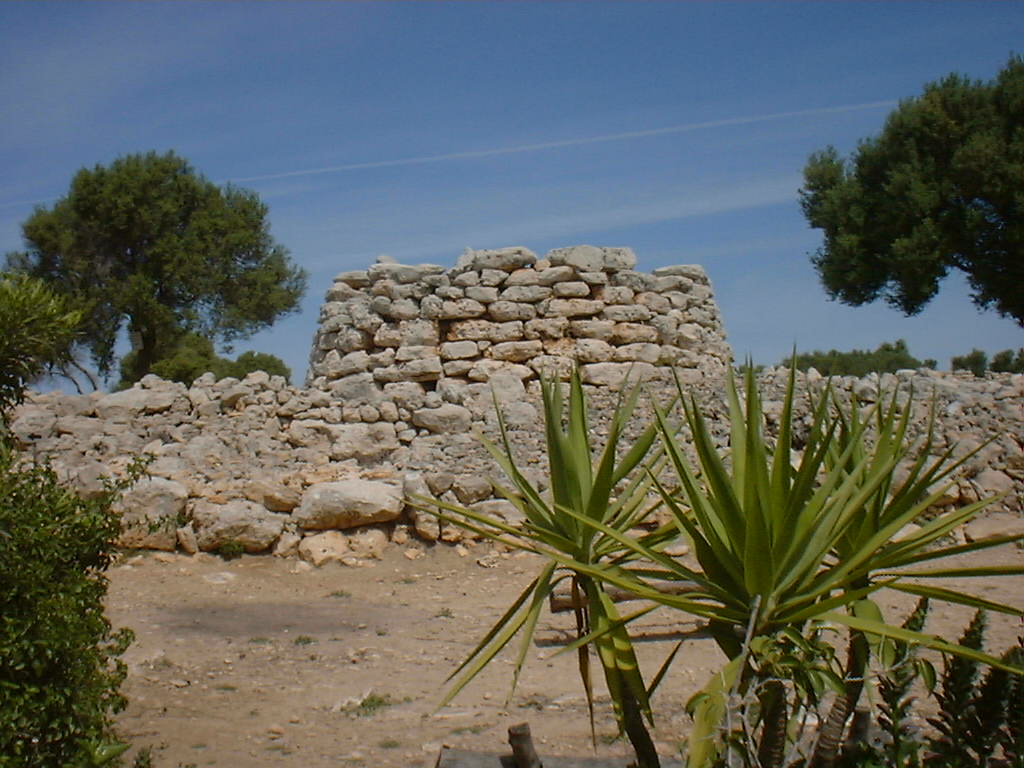
The Balearic Islands were first colonised by humans during the 3rd millennium BC, around 2500–2300 BC from the Iberian Peninsula or southern France, by people associated with the Bell Beaker culture. The arrival of humans resulted in the rapid extinction of the three species of terrestrial mammals native to Mallorca, the dwarf goat-antelope Myotragus balearicus, the giant dormouse Hypnomys morpheus, and the shrew Nesiotites hidalgo, all three of which had been continuously present on Mallorca for over 5 million years. The island's prehistoric settlements are called talaiots or talayots. The people of the islands raised Bronze Age megaliths as part of their Talaiotic culture. A non-exhaustive list of settlements is the following:
- Capocorb Vell (Llucmajor municipality)
- Necròpoli de Son Real (east of Can Picafort, Santa Margalida municipality)
- Novetiforme Alemany (Magaluffa, Calvià, Miconio)
- Poblat Talaiòtic de S'Illot (S'Illot, Sant Llorenç des Cardassar municipality)
- Poblat Talaiòtic de Son Fornés (Montuïri municipality)
- Sa Canova de Morell (road to Colònia de Sant Pere, Artà municipality)
- Ses Païsses (Artà municipality)
- Ses Talaies de Can Jordi (Santanyí municipality)
- S'Hospitalet Vell (road to Cales de Mallorca, Manacor municipality)
Phoenicians, Romans, and Late Antiquity

The Phoenicians, a seafaring people from the Levant, arrived around the eighth century BC and established numerous colonies. The island eventually came under the control of Carthage in North Africa, which had become the principal Phoenician city. After the Second Punic War, Carthage lost all of its overseas possessions and the Romans took over.
The island was occupied by the Romans in 123 BC under Quintus Caecilius Metellus Balearicus. It flourished under Roman rule, during which time the towns of Pollentia (Alcúdia), and Palmaria (Palma) were founded. In addition, the northern town of Bocchoris, dating back to pre-Roman times, was a federated city to Rome. The local economy was largely driven by olive cultivation, viticulture, and salt mining. Mallorcan soldiers were valued within the Roman legions for their skill with the sling (Balearic slingers).
In 427, Gunderic and the Vandals captured the island. Geiseric, son of Godigisel, governed Mallorca and used it as his base to loot and plunder settlements around the Mediterranean until Roman rule was restored in 465.
Middle Ages
Late Antiquity and Early Middle Ages
In 534, Mallorca was recaptured from the Vandals by the Eastern Roman Empire, led by Apollinarius. Under Roman rule, Christianity thrived and numerous churches were built.
From 707, the island was increasingly attacked by Muslim raiders from North Africa. Recurrent invasions led the islanders to ask Charlemagne for help.
Islamic Mallorca

In 902, Issam al-Khawlani(es)(ca) () conquered the Balearic Islands, and they became part of the Emirate of Córdoba. The town of Palma was reshaped and expanded, and became known as Medina Mayurqa. Later on, with the Caliphate of Córdoba at its height, the Muslims improved agriculture with irrigation and developed local industries.
The caliphate was dismembered in 1015. Mallorca came under rule by the Taifa of Dénia, and from 1087 to 1114, was an independent Taifa. During that period, the island was visited by Ibn Hazm. However, an expedition of Pisans and Catalans in 1114–15, led by Ramon Berenguer III, Count of Barcelona, overran the island, laying siege to Palma for eight months. After the city fell, the invaders retreated due to problems in their own lands. They were replaced by the Almoravides from North Africa, who ruled until 1176. The Almoravides were replaced by the Almohad dynasty until 1229. Abu Yahya was the last Moorish leader of Mallorca.
Medieval Mallorca
Main article: Conquest of Majorca
In the ensuing confusion and unrest, King James I of Aragon, also known as James the Conqueror, launched an invasion which landed at Santa Ponça, Mallorca, on 8–9 September 1229 with Catalan forces consisting of 15,000 men and 1,500 horses. His forces entered the city of Medina Mayurqa on 31 December 1229. In 1230, he annexed the island to his Crown of Aragon under the name Regnum Maioricae.
Modern era

From 1479, the Crown of Aragon was in dynastic union with that of Castile. The Barbary corsairs of North Africa often attacked the Balearic Islands, and in response, the people built coastal watchtowers and fortified churches. In 1570, King Philip II of Spain and his advisors were considering complete evacuation of the Balearic islands.
In the early 18th century, the War of the Spanish Succession resulted in the replacement of that dynastic union with a unified Spanish monarchy under the rule of the new Bourbon Dynasty. The last episode of the War of Spanish Succession was the conquest of the island of Mallorca. It took place on 2 July 1715 when the island capitulated to the arrival of a Bourbon fleet. In 1716, the Nueva Planta decrees made Mallorca part of the Spanish province of Baleares, roughly the same to present-day Illes Balears province and autonomous community.
20th century and today
A Nationalist stronghold at the start of the Spanish Civil War, Mallorca was subjected to an amphibious landing, on 16 August 1936, aimed at driving the Nationalists from Mallorca and reclaiming the island for the Republic. Although the Republicans heavily outnumbered their opponents and managed to push 12 km inland, superior Nationalist air power, provided mainly by Fascist Italy as part of the Italian occupation of Majorca, forced the Republicans to retreat and to leave the island completely by 12 September. Those events became known as the Battle of Majorca.
Since the 1950s, the advent of mass tourism has transformed the island into a destination for foreign visitors and attracted many service workers from mainland Spain. The boom in tourism caused Palma to grow significantly.
In the 21st century, urban redevelopment, under the so‑called Pla Mirall (English "Mirror Plan"), attracted groups of immigrant workers from outside the European Union, especially from Africa and South America.
Archaeology
In September 2019, A 3,200-year-old well-preserved Bronze Age sword was discovered by archaeologists under the leadership of Jaume Deya and Pablo Galera on the Mallorca Island in the Puigpunyent from the stone megaliths site called Talaiot. Specialists assumed that the weapon was made when the Talaiotic culture was in critical decline. The sword will be on display at the nearby Majorca Museum.
Palma
Main article: Palma de Mallorca
The capital of Mallorca, Palma, was founded as a Roman camp called Palmaria upon the remains of a Talaiotic settlement. The turbulent history of the city had it subject to several Vandal sackings during the fall of the Western Roman Empire. It was later reconquered by the Byzantines, established by the Moors (who called it Medina Mayurqa), and finally occupied by James I of Aragon. In 1983, Palma became the capital of the autonomous region of the Balearic Islands. Palma has a famous tourist attraction, the cathedral, Catedral-Basílica de Santa María de Mallorca, standing in the heart of the City looking out over the sea.
Climate
Mallorca has a Mediterranean climate (Köppen: Csa), with mild and relatively wet winters and hot, bright, dry summers. Precipitation in the Serra de Tramuntana is markedly higher. Summers are hot in the plains, and winters are mild, getting colder and wetter in the Tramuntana range, where brief episodes of snow during the winter are not unusual, especially in the Puig Major. The two wettest months in Mallorca are October and November. Storms and heavy rain are not uncommon during the autumn.
| Jan record high C = 24.2 | Feb record high C = 24.4 | Mar record high C = 26.6 | Apr record high C = 28.0 | May record high C = 32.0 | Jun record high C = 36.5 | Jul record high C = 38.0 | Aug record high C = 37.8 | Sep record high C = 35.5 | Oct record high C = 31.2 | Nov record high C = 27.6 | Dec record high C = 23.4 | year record high C = 38.0 | Jan record low C = 0.0 | Feb record low C = -0.1 | Mar record low C = 1.6 | Apr record low C = 4.4 | May record low C = 8.0 | Jun record low C = 11.0 | Jul record low C = 16.4 | Aug record low C = 15.8 | Sep record low C = 10.0 | Oct record low C = 8.4 | Nov record low C = 3.8 | Dec record low C = 2.5 | year record low C = -0.1 |access-date=7 October 2023 |archive-date=16 October 2023 |archive-url=https://web.archive.org/web/20231016115347/https://www.nodc.noaa.gov/archive/arc0216/0253808/1.1/data/0-data/Region-6-WMO-Normals-9120/Spain/CSV/PALMAPUERTO_8301.csv |url-status=live
| Jan record high C = 22.5 | Feb record high C = 24.0 | Mar record high C = 28.6 | Apr record high C = 30.1 | May record high C = 35.0 | Jun record high C = 41.4 | Jul record high C = 40.6 | Aug record high C = 40.2 | Sep record high C = 38.2 | Oct record high C = 33.6 | Nov record high C = 27.2 | Dec record high C = 23.8 | year record high C = |Jan record low C = -6.0 |Feb record low C = -10.0 |Mar record low C = -4.2 |Apr record low C = -2.0 |May record low C = 1.6 |Jun record low C = 6.0 |Jul record low C = 11.0 |Aug record low C = 10.8 |Sep record low C = 5.6 |Oct record low C = 0.0 |Nov record low C = -3.0 |Dec record low C = -3.1 |year record low C = |access-date=7 October 2023 |archive-date=16 October 2023 |archive-url=https://web.archive.org/web/20231016115352/https://www.nodc.noaa.gov/archive/arc0216/0253808/1.1/data/0-data/Region-6-WMO-Normals-9120/Spain/CSV/PALMADEMALLORCASONSANJUAN_8306.csv |url-status=live |access-date=7 October 2023 |archive-date=16 October 2023 |archive-url=https://web.archive.org/web/20231016115348/https://www.aemet.es/en/serviciosclimaticos/datosclimatologicos/efemerides_extremos?w=0&k=bal&l=B278&datos=det |url-status=live
| Palma de Mallorca sea temperature | Month | Jan | Feb | Mar | Apr | May | Jun | Jul | Aug | Sep | Oct | Nov | Dec | Year | Average sea temperature °C (°F) | Mean daily daylight hours | Average Ultraviolet index | Source: seatemperature.org | Source: Weather Atlas |
|---|---|---|---|---|---|---|---|---|---|---|---|---|---|---|---|---|---|---|---|
| 14.4 | |||||||||||||||||||
| (57.9) | 13.9 | ||||||||||||||||||
| (57.0) | 14.1 | ||||||||||||||||||
| (57.4) | 15.9 | ||||||||||||||||||
| (60.7) | 18.9 | ||||||||||||||||||
| (66.1) | 22.5 | ||||||||||||||||||
| (72.5) | 24.9 | ||||||||||||||||||
| (76.7) | 26.0 | ||||||||||||||||||
| (78.8) | 25.0 | ||||||||||||||||||
| (77.1) | 22.7 | ||||||||||||||||||
| (72.9) | 19.7 | ||||||||||||||||||
| (67.4) | 16.3 | ||||||||||||||||||
| (61.4) | 19.5 | ||||||||||||||||||
| (67.2) | |||||||||||||||||||
| 10.0 | 11.0 | 12.0 | 13.0 | 14.0 | 15.0 | 15.0 | 14.0 | 12.0 | 11.0 | 10.0 | 9.0 | 12.2 | |||||||
| 2 | 3 | 5 | 6 | 8 | 9 | 9 | 8 | 6 | 4 | 2 | 2 | 5.3 |
Geography

Geology
Mallorca and the other Balearic Islands are geologically an extension of the fold mountains of the Betic Cordillera of Andalusia. They consist primarily of sediments deposited in the Tethys Sea during the Mesozoic era. These marine deposits have given rise to calcareous rocks which are often fossiliferous. The folding of the Betic Cordillera and Mallorcan ranges resulted from subduction of the African Plate beneath the Eurasian Plate with eventual collision. Tectonic movements led to different elevation and lowering zones in the late Tertiary, which is why the connection to the mainland has been severed at the current sea level.
The limestones, which predominate throughout Mallorca, are readily water-soluble, and have given rise to extensive areas of karst. In addition to limestone, dolomitic rocks are mainly present in the mountainous regions of Mallorca; the Serra de Tramuntana and the Serres de Llevant. The Serres de Llevant also contain marl, the more rapid erosion of which has resulted in the lower elevations of the island's southeastern mountains. Marl is limestone with a high proportion of clay minerals. The eroded material was washed into the sea or deposited in the interior of the island of the Pla de Mallorca, bright marls in the north-east of the island and ferrous clays in the middle of Mallorca, which gives the soil its characteristic reddish colour.
Mountains of Mallorca
Mallorca features a landscape characterised by a series of mountain ranges. The highest peak, Puig Major, stands at approximately 1,445 meters (4,741 feet) above sea level. Other notable peaks include Puig de Massanella, Puig Tomir, Puig de l'Ofre, and Puig des Teix, all exceeding 1,000 meters (3,280 feet) in elevation. These mountains are part of the Serra de Tramuntana range with numerous peaks over 1,000 meters, offering opportunities for hiking and exploration with views of the Mediterranean. While not towering in comparison to some mountain ranges globally, the Mallorcan mountains provide visitors with diverse outdoor experiences and panoramic views of the island's rugged terrain and coastline.
Ten tallest mountains of Mallorca
| Mountain Name | Meters | Feet |
|---|---|---|
| Puig Major | 1,445 | 4,741 |
| Puig de Massanella | 1,364 | 4,475 |
| Puig Tomir | 1,103 | 3,619 |
| Puig de l'Ofre | 1,091 | 3,579 |
| Puig des Teix | 1,064 | 3,491 |
| Serra de Tramuntana (Various Peaks) | Over 1,000 | Over 3,280 |
| Puig de Galatzó | 1,027 | 3,369 |
| Puig de sa Rateta | 1,117 | 3,301 |
| Puig de sa Font | 1045 | 3,264 |
| Puig d'en Galileu | 1115 | 3,100 |
Regions

Mallorca is the largest island of Spain by area and second most populated (after Tenerife in the Canary Islands). Mallorca has two mountainous regions, the Serra de Tramuntana and Serres de Llevant. Both are about 70 km in length and occupy the northwestern and eastern parts of the island respectively.
The highest peak in Mallorca is Puig Major, at 1445 m, in the Serra de Tramuntana. As this is a military zone, the neighbouring peak at Puig de Massanella is the highest accessible peak at 1364 m. The northeast coast comprises two bays: the Badia de Pollença and the larger Badia d'Alcúdia.
The northern coast is rugged and has many cliffs. The central zone, extending from Palma, is a generally flat, fertile plain known as Es Pla. The island has a variety of caves both above and below the sea – two of the caves, the above sea level Coves dels Hams and the Coves del Drach, also contain underground lakes and are open to tours. Both are located near the eastern coastal town of Porto Cristo. Small uninhabited islands lie off the southern and western coasts; the Cabrera Archipelago is administratively grouped with Mallorca (in the municipality of Palma), while Dragonara is administratively included in the municipality of Andratx. Other notable areas include the Alfabia Mountains, Es Cornadors and Cap de Formentor. The Cap de Formentor is one of the places where the tourists can enjoy the pleasure of its beach which is golden and very thin.
World Heritage Site
The Cultural Landscape of the Serra de Tramuntana was registered as a UNESCO World Heritage Site in 2011.
Municipalities


The island (including the small offshore islands of Cabrera and Dragonera) is administratively divided into 53 municipalities. The areas and populations of the municipalities (according to the Instituto Nacional de Estadística, Spain) are:
| Municipality | Area | ||||
|---|---|---|---|---|---|
| (km2) | Census Population | ||||
| 1 November 2001 | Census Population | ||||
| 1 November 2011 | Census Population | ||||
| 1 January 2021 | Estimated Population | ||||
| 1 January 2023 | |||||
| Alaró | 45.7 | 4,050 | 5,273 | 5,800 | 5,948 |
| Alcúdia | 60.0 | 12,500 | 18,914 | 20,694 | 21,725 |
| Algaida | 89.8 | 3,749 | 5,272 | 6,013 | 6,230 |
| Andratx | 81.5 | 7,753 | 11,234 | 11,780 | 12,096 |
| Ariany | 23.1 | 766 | 892 | 906 | 976 |
| Artà | 139.8 | 6,176 | 7,562 | 8,180 | 8,324 |
| Banyalbufar | 18.1 | 517 | 559 | 541 | 578 |
| Binissalem | 29.8 | 5,166 | 7,640 | 8,931 | 9,225 |
| Búger | 8.29 | 950 | 1,014 | 1,089 | 1,152 |
| Bunyola | 84.7 | 5,029 | 6,270 | 7,115 | 7,343 |
| Calvià | 145.0 | 35,977 | 49,807 | 51,831 | 53,496 |
| Campanet | 34.6 | 2,309 | 2,536 | 2,654 | 2,785 |
| Campos | 149.7 | 6,360 | 9,712 | 11,471 | 11,817 |
| Capdepera | 54.9 | 8,239 | 11,281 | 12,212 | 12,585 |
| Consell | 13.7 | 2,407 | 3,778 | 4,240 | 4,291 |
| Costitx | 15.4 | 924 | 1,113 | 1,398 | 1,520 |
| Deià | 15.2 | 654 | 684 | 686 | 688 |
| Escorca | 139.4 | 257 | 258 | 183 | 195 |
| Esporles | 35.3 | 4,066 | 4,845 | 5,153 | 5,283 |
| Estellencs | 13.4 | 347 | 363 | 326 | 361 |
| Felanitx | 169.8 | 14,882 | 18,045 | 18,211 | 18,636 |
| Fornalutx | 19.5 | 618 | 695 | 681 | 715 |
| Inca | 58.3 | 23,029 | 30,359 | 33,719 | 34,459 |
| Lloret de Vistalegre | 17.4 | 981 | 1,308 | 1,469 | 1,591 |
| Lloseta | 12.1 | 4,760 | 5,690 | 6,318 | 6,453 |
| Llubí | 34.9 | 1,806 | 2,235 | 2,405 | 2,462 |
| Llucmajor | 327.3 | 24,277 | 35,995 | 38,475 | 39,156 |
| Manacor | 260.3 | 31,255 | 40,348 | 44,878 | 46,614 |
| Mancor de la Vall | 19.9 | 892 | 1,321 | 1,570 | 1,643 |
| Maria de la Salut | 30.5 | 1,972 | 2,122 | 2,235 | 2,333 |
| Marratxí | 54.2 | 23,410 | 34,538 | 38,351 | 39,455 |
| Montuïri | 41.1 | 2,344 | 2,856 | 3,061 | 3,142 |
| Muro | 58.6 | 6,107 | 7,010 | 7,547 | 7,842 |
| Palma | 208.7 | 333,801 | 402,044 | 424,837 | 430,640 |
| Petra | 70.0 | 1,911 | 2,876 | 3,051 | 3,151 |
| Pollença | 151.7 | 13,808 | 16,057 | 16,903 | 17,260 |
| Porreres | 86.9 | 4,069 | 5,459 | 5,630 | 5,749 |
| Puigpunyent | 42.3 | 1,250 | 1,878 | 2,073 | 2,090 |
| Santa Eugènia | 20.3 | 1,224 | 1,686 | 1,774 | 1,870 |
| Santa Margalida | 86.5 | 7,800 | 11,725 | 12,830 | 13,231 |
| Santa Maria del Camí | 37.6 | 4,959 | 6,443 | 7,526 | 7,579 |
| Santanyí | 124.9 | 8,875 | 12,427 | 12,364 | 12,561 |
| Sant Joan | 38.5 | 1,634 | 2,029 | 2,173 | 2,204 |
| Sant Llorenç des Cardassar | 82.1 | 6,503 | 8,490 | 9,058 | 9,378 |
| Sa Pobla | 48.6 | 10,388 | 12,999 | 14,064 | 14,296 |
| Selva | 48.8 | 2,927 | 3,699 | 4,113 | 4,289 |
| Sencelles | 52.9 | 2,146 | 3,113 | 3,616 | 3,876 |
| Ses Salines | 39.1 | 3,389 | 5,007 | 5,021 | 5,032 |
| Sineu | 47.7 | 2,736 | 3,696 | 4,156 | 4,387 |
| Sóller | 42.8 | 10,961 | 13,882 | 13,621 | 13,747 |
| Son Servera | 42.6 | 9,432 | 11,915 | 12,072 | 12,129 |
| Valldemossa | 42.9 | 1,708 | 1,990 | 2,047 | 2,053 |
| Vilafranca de Bonany | 24.0 | 2,466 | 2,984 | 3,553 | 3,691 |
Comarques
File:Karte Serra de Tramuntana 2022.png|Serra de Tramuntana File:Karte Raiguer 2022.png|Raiguer File:Karte Pla de Mallorca 2022.png|Pla de Mallorca File:Karte Llevant 2022.png|Llevant File:Karte Migjorn 2022.png|Migjorn File:Karte Palma 2022.png|Palma
Population
Mallorca is the most populous island in the Balearic Islands and the second most populous island in Spain, after Tenerife, in the Canary Islands, being also the fourth most populous island in the Mediterranean after Sicily, Sardinia and Cyprus. It had a Census population of 920,605 inhabitants at the start of 2021, and an official estimate of 940,332 at the start of 2023.
Economy

.jpg)
Since the 1950s, Mallorca has become a major tourist destination, and the tourism business has become the main source of revenue for the island.
The island's popularity as a tourist destination has steadily grown since the 1950s, with many artists and academics choosing to visit and live on the island. The number of visitors to Mallorca continued to increase with holiday makers in the 1970s approaching 3 million a year. In 2010 over 6 million visitors came to Mallorca. In 2013, Mallorca was visited by nearly 9.5 million tourists, and the Balearic Islands as a whole reached 13 million tourists. In 2017, ten million tourists visited the island. The rapid growth of the tourism industry has led to some locals protesting the effects of mass tourism on the island.
Mallorca has been jokingly referred to as the 17th Federal State of Germany, due to the high number of German tourists, although people from the island reject this label and deem it "an insult".
Due to a high number of expats choosing to settle down in the area, Mallorca has recently also become a business hub economy of its own, due to a high number of particularly foreign enterprises choosing to either relocate, or expand, to the island.
Attempts to build illegally caused a scandal in 2006 in Port Andratx that the newspaper El País named "caso Andratx". A main reason for illegal building permits, corruption and black market construction is that communities have few ways to finance themselves other than through permits. The former mayor was incarcerated in 2009 after being prosecuted for taking bribes to permit illegal house building.
Top 10 arrivals by nationality
Data from Institute of Statistics of Balearic Islands
| Rank | Country, region, or territory | 2015 | 2014 | 2013 | 2012 | 2011 | 2010 | |||||||
|---|---|---|---|---|---|---|---|---|---|---|---|---|---|---|
| 1 | ||||||||||||||
| 2 | ||||||||||||||
| 3 | ||||||||||||||
| 4 | ||||||||||||||
| 5 | ||||||||||||||
| 6 | ||||||||||||||
| 7 | ||||||||||||||
| 8 | ||||||||||||||
| 9 | ||||||||||||||
| 10 |
Politics and government

Regional government
The Balearic Islands, of which Mallorca forms part, are one of the autonomous communities of Spain. As a whole, they are currently governed by the People's Party of the Balearic Islands (PP), with Marga Prohens as their President.
Insular government
The specific government institution for the island is the commonly known as Council of Mallorca, created in 1978.
It is responsible for culture, roads, railways (see Serveis Ferroviaris de Mallorca) and municipal administration. As of September 2023, (PP) serves as president of the Insular Council.
Results of the elections to the Council of Mallorca
Elections are held every four years concurrently with local elections. From 1983 to 2007, councilors were indirectly elected from the results of the election to Parliament of the Balearic Islands for the constituency of Mallorca. Since 2007, however, separate direct elections are held to elect the Council.
| Communist Party of Spain}}; width:1em; color:white;" | 1 | Socialist Party of Majorca}}; width:2em; color:white;" | 2 | Socialist Party of the Balearic Islands}}; width:6em; color:white;" | 6 | Union of the Democratic Centre (Spain)}}; width:15em; color:white;" | 15 |
|---|
| Jeroni Albertí (UCD) (1979-1982) |
|---|
| (UCD) (1982-1983) |
| - |
|
| Socialist Party of Majorca}}; width:2em; color:white;" | 2 | Socialist Party of the Balearic Islands}}; width:11em; color:white;" | 11 | Majorcan Union}}; width:6em; color:white;" | 6 | People's Coalition (Spain)}}; width:11em; color:white;" | 11 |
|---|
| Jeroni Albertí (UM) | |- |
| Socialist Party of Majorca}}; width:2em; color:white;" | 2 | Socialist Party of the Balearic Islands}}; width:11em; color:white;" | 11 | Democratic and Social Centre (Spain)}}; width:3em; color:white;" | 3 | Majorcan Union}}; width:4em; color:white;" | 4 | People's Alliance (Spain)}}; width:13em; color:white;" | 13 |
|---|
|- |
| Socialist Party of Majorca}}; width:3em; color:white;" | 3 | Socialist Party of the Balearic Islands}}; width:11em; color:white;" | 11 | 1 | People's Party of the Balearic Islands}}; width:18em; color:white;" | 18 |
|---|
|- |
| Communist Party of Spain}}; width:2em; color:white;" | 2 | Socialist Party of Majorca}}; width:5em; color:white;" | 5 | Socialist Party of the Balearic Islands}}; width:8em; color:white;" | 8 | Majorcan Union}}; width:2em; color:white;" | 2 | People's Party of the Balearic Islands}}; width:16em; color:white;" | 16 |
|---|
|- |
| United Left of the Balearic Islands}}; width:2em; color:white;" | 2 | Socialist Party of Majorca}}; width:4em; color:white;" | 4 | Socialist Party of the Balearic Islands}}; width:8em; color:white;" | 8 | Majorcan Union}}; width:3em; color:white;" | 3 | People's Party of the Balearic Islands}}; width:16em; color:white;" | 16 |
|---|
|- |
| United Left of the Balearic Islands}}; width:2em; color:white;" | 2 | Socialist Party of Majorca}}; width:3em; color:white;" | 3 | Socialist Party of the Balearic Islands}}; width:9em; color:white;" | 9 | Majorcan Union}}; width:3em; color:white;" | 3 | People's Party of the Balearic Islands}}; width:16em; color:white;" | 16 |
|---|
|- |
| Bloc for Mallorca}}; width:3em; color:white;" | 3 | Socialist Party of the Balearic Islands}}; width:11em; color:white;" | 11 | Majorcan Union}}; width:3em; color:white;" | 3 | People's Party of the Balearic Islands}}; width:16em; color:white;" | 16 |
|---|
| Francina Armengol (PSIB–PSOE) | |- |
| Més per Mallorca}}; width:4em; color:white;" | 4 | Socialist Party of the Balearic Islands}}; width:10em; color:white;" | 10 | People's Party of the Balearic Islands}}; width:19em; color:white;" | 19 |
|---|
| (PP) | |- |
| Podemos (Spanish political party)}}; width:5em; color:white;" | 5 | Més per Mallorca}}; width:6em; color:white;" | 6 | Socialist Party of the Balearic Islands}}; width:7em; color:white;" | 7 | Proposta per les Illes}}; width:3em; color:white;" | 3 | Citizens (Spanish political party)}}; width:2em; color:white;" | 2 | People's Party of the Balearic Islands}}; width:10em; color:white;" | 10 |
|---|
| Miquel Ensenyat (MÉS) | |- |
| Unidas Podemos}}; width:3em; color:white;" | 3 | Més per Mallorca}}; width:4em; color:white;" | 4 | Socialist Party of the Balearic Islands}}; width:10em; color:white;" | 10 | Proposta per les Illes}}; width:3em; color:white;" | 3 | Citizens (Spanish political party)}}; width:3em; color:white;" | 3 | People's Party of the Balearic Islands}}; width:7em; color:white;" | 7 | Vox (political party)}}; width:3em; color:white;" | 3 |
|---|
| (PSIB–PSOE) | |- |
| Més per Mallorca}}; width:4em; color:white;" | 4 | Socialist Party of the Balearic Islands}}; width:9em; color:white;" | 9 | Proposta per les Illes (2021)}}; width:2em; color:white;" | 2 | People's Party of the Balearic Islands}}; width:13em; color:white;" | 13 | Vox (political party)}}; width:5em; color:white;" | 5 |
|---|
| (PP) | |}
Culture
Archduke Ludwig Salvator of Austria
.jpg)
Archduke Ludwig Salvator of Austria () was a pioneer of tourism in the Balearic Islands. He first arrived on the island in 1867, travelling under his title "Count of Neuendorf". He later settled in Mallorca, buying up wild areas of land in order to preserve and enjoy them. Nowadays, a number of hiking routes are named after him.
Ludwig Salvator loved the island of Mallorca. He became fluent in Catalan, carried out research into the island's flora and fauna, history, and culture to produce his main work, Die Balearen, a comprehensive collection of books about the Balearic Islands, consisting of 7 volumes. It took him 22 years to complete.
Nowadays, several streets or buildings on the island are named after him (i.e., Arxiduc Lluís Salvador).
Chopin in Mallorca

The Polish composer and pianist Frédéric Chopin, together with French writer Amantine Lucile Aurore Dupin (pseudonym: George Sand), resided in Valldemossa in the winter of 1838–39. Apparently, Chopin's health had already deteriorated and his doctor recommended that he go to the Balearic Islands to recuperate, where he still spent a rather miserable winter.
Nonetheless, his time in Mallorca was a productive period for Chopin. He managed to finish the Preludes, Op. 28, that he started writing in 1835. He was also able to undertake work on his Ballade No. 2, Op. 38; two Polonaises, Op. 40; and the Scherzo No. 3, Op. 39.
Literature
French writer Amantine Lucile Aurore Dupin (pseudonym: George Sand), at that time in a relationship with Chopin, described her stay in Mallorca in A Winter in Majorca, published in 1855. Other famous writers used Mallorca as the setting for their works. While on the island, the Nicaraguan poet Rubén Darío started writing the novel El oro de Mallorca, and wrote several poems, such as La isla de oro.
The poet Miquel Costa i Llobera wrote in 1875 his famous ode, the Pine of Formentor, as well as other poems concerning old Mallorcan traditions and fantasies. Many of the works of Baltasar Porcel take place in Mallorca.

Agatha Christie visited the island in the early 20th century and stayed in Palma and Port de Pollença. She would later write the book Problem at Pollensa Bay and Other Stories, a collection of short stories, of which the first one takes place in Port de Pollença, starring Parker Pyne.
Jorge Luis Borges visited Mallorca twice, accompanied by his family. He published his poems La estrella (1920) and Catedral (1921) in the regional magazine Baleares. The latter poem shows his admiration for the monumental Cathedral of Palma.
Nobel Prize winner Camilo José Cela came to Mallorca in 1954, visiting Pollença, and then moving to Palma, where he settled permanently. In 1956, Cela founded the magazine Papeles de Son Armadans. He is also credited as founder of Alfaguara.

The English writer and poet Robert Graves moved to Mallorca with his family in 1946. The house is now a museum. He died in 1985 and was buried in the small churchyard on a hill at Deià. Ira Levin set part of his dystopian novel This Perfect Day in Mallorca, making the island a centre of resistance in a world otherwise dominated by a computer.
Music and dance
The Ball dels Cossiers is the island's traditional dance. It is believed to have been imported from Catalonia in the 13th or 14th century, after the Aragonese conquest of the island under King Jaime I. In the dance, three pairs of dancers, who are typically male, defend a "Lady," who is played by a man or a woman, from a demon or devil. Another Mallorcan dance is Correfoc, an elaborate festival of dance and pyrotechnics that is also of Catalan origin. The island's folk music strongly resembles that of Catalonia, and is centered around traditional instruments like the xeremies (bagpipe) and guitarra de canya (a reed or bone xylophone-like instrument suspended from the neck). While folk music is still played and enjoyed by many on the island, a number of other musical traditions have become popular in Mallorca in the 21st century, including electronic dance music, classical music, and jazz, all of which have annual festivals on the island.
Art
Joan Miró, a Spanish painter, sculptor, and ceramicist, had close ties to the island throughout his life. He married Pilar Juncosa in Palma in 1929 and settled permanently in Mallorca in 1954. The Fundació Pilar i Joan Miró in Mallorca has a collection of his works. Es Baluard in Palma is a museum of modern and contemporary art which exhibits the work of Balearic artists and artists related to the Balearic Islands.
Film
The Evolution Mallorca International Film Festival is the fastest growing Mediterranean film festival and has taken place annually every November since 2011, attracting filmmakers, producers, and directors globally. It is hosted at the Teatro Principal in Palma de Mallorca.
Mallorcan cartographic school
Main article: Majorcan cartographic school

Mallorca has a long history of seafaring. The Majorcan cartographic school or the "Catalan school" refers to a collection of cartographers, cosmographers, and navigational instrument makers who flourished in Mallorca and partly in mainland Catalonia in the 13th, 14th, and 15th centuries. Mallorcan cosmographers and cartographers developed breakthroughs in cartographic techniques, namely the "normal portolan chart", which was fine-tuned for navigational use and the plotting by compass of navigational routes, prerequisites for the discovery of the New World.
Cuisine
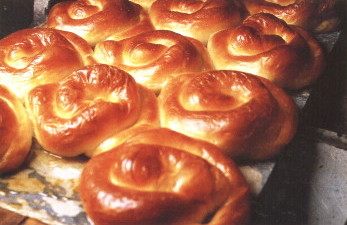
In 2005, there were over 2,400 restaurants on the island of Mallorca according to the Mallorcan Tourist Board, ranging from small bars to full restaurants. Olives and almonds are typical of the Mallorcan diet. Among the foods that are typical from Mallorca are sobrassada, arròs brut (saffron rice cooked with chicken, pork and vegetables), and the sweet pastry ensaïmada. Also Pa amb oli is a popular dish.
Herbs de Majorca is a herbal liqueur.
Language
The two official languages of Mallorca are Catalan and Spanish, a dialect of the former being the indigenous language of Mallorca. The local dialect of Catalan spoken in the island is Mallorquí, with slightly different variants in most villages. Education is bilingual in Catalan and Spanish, with some teaching of English.
In 2012, the then-governing People's Party announced its intention to end preferential treatment for Catalan in the island's schools to bring parity to the two languages of the island. It was said that this could lead Mallorcan Catalan to become extinct in the fairly near future, as it was being used in a situation of diglossia in favour of the Spanish language. However, following a May 2015 election that swept a pro-Catalan party into power, this policy was dropped.
Transportation


- Mallorca rail network
- Palma de Mallorca Metro
- Ferrocarril de Sóller
- Mallorca bus system (TIB) A trackless train is in operation in several tourist areas.
Air transport
Air travel to and from the island is served by Palma de Mallorca Airport. In 2024, the airport handled 33.3 million passengers, making it the third busiest airport in Spain, after Madrid–Barajas and Barcelona–El Prat; and the fourteenth in Europe.
Water transport
There are approximately 79 ferries between Mallorca and other destinations every week, most of them to mainland Spain.
- Baleària
- to the Balearic Islands from Dénia, Valencia and Barcelona
- Trasmediterránea
- Mainland-Baleares: regular lines, in both directions, from:
- Barcelona to Palma de Mallorca, Ibiza and Mahón.
- Valencia to Palma de Mallorca, Ibiza and Mahón.
- Gandia to Palma de Mallorca and Ibiza.
- Mainland-Baleares: regular lines, in both directions, from:
Cycling
One of Europe's most popular cycling destinations, Mallorca cycling routes such as the popular 24 km cycle track (segregated cycle lane) which runs between Porto Cristo and Cala Bona via Sa Coma and Cala Millor are must rides.
Renowned Mallorcans

Some of the earliest famous Mallorcans lived on the island before its reconquest from the Moors. Famous Mallorcans include:
- Ramon Llull, a medieval friar, writer and philosopher, who wrote the first major work of Catalan Literature;
- Al-Humaydī, Moorish historian, born on the island in 1029.
- Abraham Cresques, a 14th-century Jewish cartographer of the Majorcan cartographic school from Palma, believed to be the author of the Catalan Atlas;
- Catalina Tomas, 16th-century canoness and mystic, one of the patron saints of the island
- Junípero Serra, the Franciscan friar who founded the mission chain in Alta California in 1769.
- Miquel Costa i Llobera, a famous Mallorcan poet, who wrote The Pine of Formentor.
- Joaquín Jovellar y Soler, 19th century military commander.
- Antonio Maura, two-time Spanish Prime Minister during the reign of King Alfonso XIII.
- Robert Graves, English writer and poet who lived for many years in Mallorca, buried in a small churchyard on a hill at Deià
- Joan Daurer, painter active between 1358-1374.
Notable residents, alive in modern times
- Eaktay Ahn (1906–1965), founder of the Balearic Symphony Orchestra and composer of the Korean national anthem, lived in Mallorca from 1946 until his death in 1965.
- Jeffrey Archer, English novelist, owns a villa in Mallorca
- Marco Asensio, Spanish footballer, former Real Madrid player and currently at Paris Saint-Germain, was born in Palma, Mallorca.
- Miquel Barceló, contemporary painter, created sculptures in Palma Cathedral.
- Concha Buika, contemporary flamenco singer. Concha Buika was born on 11 May 1972, in Palma de Mallorca.
- Jean Batten, the New Zealand aviator, died in Mallorca in 1982.
- Conor Benn, British professional boxer, spent twelve years of his childhood living in Mallorca.
- Nigel Benn, former British professional boxer who moved with his family to Mallorca following the conclusion of his boxing career.
- Maria del Mar Bonet, musician, member of the Catalan language group Els Setze Jutges in the 1960s with brother Joan Ramon Bonet.
- Samuel Bouriah, better known as DJ Sammy, dance artist and producer.
- Faye Emerson and Anne Lindsay Clark, divorcees of Elliott Roosevelt and John Aspinwall Roosevelt (US Officials and sons of Franklin Delano Roosevelt) respectively, retired to Mallorca in 1965. Emerson died in Deià in 1983.
- Sheila Ferguson, resident, a former member of the Three Degrees.
- Rudy Fernández basketball player.
- Curt Flood, baseball player, purchased a bar in Palma, Majorca after leaving the Washington Senators in 1971.
- Antònia Font, contemporary pop band in the Mallorcan dialect of Catalan.
- Toni Kroos, footballer for Real Madrid and Germany national football team.
- Cynthia Lennon (1939–2015), former wife of John Lennon, lived and died in Mallorca.
- Jorge Lorenzo professional motorcycle road racer, won the world 250cc Grand Prix motorcycle title in 2006 and 2007, and the 2010, 2012 & 2015 MotoGP World Championships.
- Colm Meaney, Irish actor, resides in the town of Sóller.
- Mads Mikkelsen, Danish actor, purchased a vacation home in Mallorca, where he spends most of his time.
- Joan Mir, professional motorcycle road racer and 2020 MotoGP World Champion.
- Carlos Moyá, former world No.1 tennis player and coach of Rafael Nadal.
- Xisco Muñoz, former footballer and coach (FC Dinamo Tbilisi, Watford F.C), was born in Manacor.
- Rafael Nadal, 22-time major champion and former world No. 1 tennis player, lives in Manacor.
- Toni Nadal, Rafael Nadal's uncle and his former coach.
- Miguel Ángel Nadal, Rafael Nadal's uncle, former FC Barcelona and Spanish international footballer.
- John Noakes, former British TV presenter, lived in Andratx.
- Jean Emile Oosterlynck, the Flemish painter, lived in Mallorca from 1979 until his death in 1996.
- Hana Soukupova, supermodel, owns a villa in Mallorca.
- José María Sicilia, painter, resides in the town of Sóller.
- Jørn Utzon, an architect best known for designing the Sydney Opera House, designed and built two houses in Mallorca, Can Lis and Can Feliz.
- Agustí Villaronga (born 1953), filmmaker, born in Palma.
Gallery
File:Cathedral palma mallorca spain 2007 08 15.jpg|La Seu, Palma Cathedral File:Castillo de Bellver.jpg|Bellver Castle File:PuigMajor5.jpg|Lakes Cúber and Gorg Blau, Serra de Tramuntana File:Puig Major 21.jpg|Puig Major, highest peak in Mallorca File:Valldemossa 2003.jpg|Valldemossa File:Torrente de Pareis from boat 02.jpg|Sa Calobra, Escorca File:Cap Formentor.jpg|Cap de Formentor File:Porta Pollença Sunrise Bird.jpg|Sunrise across Pollensa Bay, Port de Pollença File:Cap de ses Salines.jpg|Cap de Ses Salines File:Spain mallorca cala agulla a.jpg|Cala Agulla, Capdepera File:Mallorca schönste Strände Cala Amarador (30182046834).jpg|Aerial of Cala Amarador beach File:Mallorca schönste Strände Westküste Bucht (30697030362).jpg|Aerial of Cala Llombards beach File:Mallorca Palma Strand (30725674811).jpg|Platja de Palma beach File:Mallorca Platja de Palma Strand (30178917243).jpg|Aerial of Platja de Palma beach File:Vista parcial de Deià (3).jpg|Deià File:Sa Foradada (Na Foradada).jpg|Sa Foradada File:1. Port de Sóller (Mallorca).jpg|Port de Sóller File:Platja de Muro Beach, Mallorca.jpg|Platja de Muro File:Port Adriano, Mallorca.jpg|Port Adriano
Notes
References
References
- Instituto Nacional de Estadística, Madrid, 2023.
- (n.d.). "Mallorca: definition". Collins Dictionary.
- Keenan, Steve. (6 July 2009). "Mallorca v Majorca: which is correct?". The Times.
- Tisdall, Nigel. (2003). "Mallorca". Thomas Cook Publishing.
- "Presentación".
- "Diccionari català-valencià-balear".
- [http://om.ciheam.org/om/pdf/a78/00800273.pdf "The Mallorca Black pig: Production system, conservation and breeding strategies"] {{Webarchive. link. (24 February 2017 , J. Jaume, M. Gispert, M.A. Oliver, E. Fàbrega, N. Trilla, and J. Tibau. Institut Balear de Biologia Animal. 2008. Retrieved 24 February 2017)
- (1 March 2020). "The spread of steppe and Iranian-related ancestry in the islands of the western Mediterranean". Nature Ecology & Evolution.
- Alcover, Josep Antoni. (1 March 2008). "The First Mallorcans: Prehistoric Colonization in the Western Mediterranean". Journal of World Prehistory.
- (29 November 2021). "Asynchronous ecological upheavals on the Western Mediterranean islands: New insights on the extinction of their autochthonous small mammals". The Holocene.
- Tisdall, Nigel. (2003). "Mallorca". Thomas Cook Publishing.
- López Castro, José Luis. (2019-10-31). "The Iberian Peninsula". Oxford University Press.
- Lazenby, John Francis. (1996). "The First Punic War: A Military History". Stanford University Press.
- link. (16 August 2021 . The Princeton Encyclopedia of Classical Sites .)
- {{usurped
- [http://mallorcaincognita.com/historydarkages_english.html The Dark Ages in Mallorca] {{Webarchive. link. (7 February 2012 mallorcaincognita.com, not dated)
- [http://mallorcaincognita.com/historymoorish_english.html Moorish Mallorca] {{Webarchive. link. (7 February 2012 mallorcaincognita.com, not dated.)
- {{usurped
- ''The Spanish Civil War'', Hugh Thomas (2001)
- [http://themallorca.net/2009/01/15/large-rise-in-number-of-foreign-nationals/ "Large rise in number of foreign nationals"] {{Webarchive. link. (26 July 2009 . ''The Mallorca''. 15 January 2009.)
- Emblematic objects for societies in transition. An archaeological and archaeometric study of the sword of Serral de ses Abelles (Puigpunyent, Mallorca). Journal of Archaeological Science: Reports Volume 40, Part A, December 2021, 103201
- Margaritoff, Marco. (20 September 2019). "3,200-Year-Old Bronze Age Sword Unearthed On Spanish Island Of Mallorca".
- (3 May 2019). "Fantastic views from the top of Palma Cathedral".
- "Weather Mallorca - All about Mallorca".
- "Palma de Mallorca Sea Temperature".
- "Palma, Spain - Climate data".
- "Entstehung Mallorcas [German]".
- "Ein Felsen, der aus dem Meer gewachsen ist" [German], interview with geologist Rosa Mateos in ''Mallorca Magazin'' 13/2009, pp. 62-63.
- "Puig de Massanella : Climbing, Hiking & Mountaineering : SummitPost".
- "Climb to the highest mountains of Mallorca (Mallorca)".
- Cifra de población referida al 1 January 2009 según el [[Instituto Nacional de Estadística de España. Instituto Nacional de Estadística]]
- "The Largest Islands Of Spain By Size".
- Tisdall, Nigel. (2003). "Mallorca". Thomas Cook Publishing.
- (3 December 2020). "Las playas menos famosas de la isla de Mallorca".
- (27 June 2011). "Cultural Landscape of the Serra de Tramuntana – UNESCO World Heritage Centre".
- (2018). "Real Decreto 1458/2018, de 14 de diciembre, por el que se declaran oficiales las cifras de población resultantes de la revisión del Padrón municipal referidas al 1 de enero de 2018". Ministerio de Economía y Empresa.
- [https://es.ripleybelieves.com/most-populated-islands-in-mediterranean-sea-9649 Mallorca, cuarta isla más poblada del Mediterráneo] {{Webarchive. link. (1 September 2019 , ver 1 January 2016)
- Instituto Nacional de Estadística, Madrid, 2021.
- (2013). "Landslide Science and Practice". Springer Science & Business Media.
- (2014). "Flujo de turistas (FRONTUR)".
- Balearic Islands Tourism Board. (24 July 2017). "BALEARIC ISLANDS REGIONAL CONTEXT SURVEY".
- Florio, Erin. (19 July 2018). "Spanish Island Tells Tourists to Stay Home".
- Yoeli-Rimmer, Orr. (31 October 2017). "Mass tourism in Mallorca: Trouble in paradise".
- "Mallorca aims for refined cocktails, not party tourism {{!}} DW {{!}} 18 April 2019".
- (29 June 2005). "100 Jahre Mallorca-Tourismus: Das 17. deutsche Bundesland". Spiegel Online.
- Emilio Rappold. (29 July 2014). "Mallorca ist das 17. Bundesland".
- Martín, Mercedes Rodríguez. (2024-07-26). "Los lemas antituristas en el "paraíso" de Mallorca resuenan en Alemania: "Vuelos asesinos"".
- (30 November 2006). "La investigación del 'caso Andratx' descubre un 'pelotazo' de 10 millones en suelo rústico". El País.
- (2010). "Bedrohte Paradiese (2/3): Mallorca und die Balearen – Ferienparadies am Abgrund". WDR.
- Andreu Manresa. (29 December 2009). "El ex alcalde de Andratx y un ex director general entran en prisión". El País.
- (21 February 2009). "Scott gives evidence in holiday homes affair". Telegraph.
- "Turistas con destino principal las Illes Balears por periodo, isla y país de residencia". Institut d'Estadistica de les Illes Balears.
- (7 July 2023). "Real Decreto 603/2023, de 6 de julio, por el que se nombra Presidenta de las Illes Balears a doña Margarita Prohens Rigo". Agencia Estatal Boletín Oficial del Estado.
- Blasco Esteve, Avelino. (2016). "Consejos insulares y diputaciones provinciales". [[Instituto Nacional de Administración Pública]].
- (8 July 2023). "Llorenç Galmés (PP), nuevo presidente del Consell de Mallorca en coalición con Vox".
- "1979 Preautonomous elections in the Balearic Islands".
- "Camí de l'Arxiduc".
- "Die Balearen in Wort und Bild".
- Nigel Tisdall. (29 December 2009). "Majorca: sun, sand and Chopin".
- Mary Ann Sieghart. (5 February 2011). "George Sand's Mallorca".
- Zamoyski (2010), p. 168 (loc. 2646).
- "Rubén Darío en Mallorca".
- "Agatha Christie: inspired by Mallorca – Illes Balears". Govern de les Illes Balears.
- "Jorge Luis Borges and Mallorca".
- "Jorge Luis Borges — Revistas y Diarios". Argentine Cultural Ephemerides.
- Carlos Meneses. "Borges y España — Mallorca en Borges".
- José Carlos Llop. (17 January 2002). "Cautivos en la isla: En la muerte de Camilo José Cela".
- "El nacimiento de ''Papeles de Son Armadans''".
- Barkham, Patrick. (27 October 2012). "'I didn't just bury the past, I buried it alive'". The Guardian.
- "Ritual made dance: the Ball dels Cossiers".
- (9 September 2016). "Traditional music and dance in Mallorca".
- "Music Scene in Mallorca".
- "Joan Miró en Mallorca".
- "Evolution Mallorca International Film Festival".
- "Restaurants". Consell de Mallorca.
- (2007). "Estatut d'autonomia de les Illes Balears".
- (19 September 2015). "Minority languages in the linguistic landscape of tourism: the case of Catalan in Mallorca". Journal of Multilingual and Multicultural Development.
- "History of Majorca".
- Andreu Manresa. (17 July 2012). "El PP recorta el peso oficial del catalán en Baleares". El País.
- Andreu Manresa. (3 July 2015). "La izquierda de Baleares "entierra" el trilingüismo y potencia el catalán". El País.
- "Rent a boat mallorca guide".
- Aena. (2025). "Informe anual 2024".
- "Mallorca".
- Emma Wells. (31 October 2010). "It's Archer's best plot yet". The Sunday Times.
- (9 April 2021). "Watch as Conor Benn speaks fluent Spanish to trash talk opponent in face-off".
- Machell, Ben. "Boxer Conor Benn: why I've followed my father, Nigel, into the ring". [[The Times]].
- (12 December 2018). "Mads Mikkelsen: A Great Dane".
This article was imported from Wikipedia and is available under the Creative Commons Attribution-ShareAlike 4.0 License. Content has been adapted to SurfDoc format. Original contributors can be found on the article history page.
Ask Mako anything about Mallorca — get instant answers, deeper analysis, and related topics.
Research with MakoFree with your Surf account
Create a free account to save articles, ask Mako questions, and organize your research.
Sign up freeThis content may have been generated or modified by AI. CloudSurf Software LLC is not responsible for the accuracy, completeness, or reliability of AI-generated content. Always verify important information from primary sources.
Report