From Surf Wiki (app.surf) — the open knowledge base
Malibu, California
City in California, United States
City in California, United States
| Field | Value |
|---|---|
| name | Malibu, California |
| settlement_type | City |
| image_skyline | MalibuAir.jpg |
| image_caption | Aerial view of Downtown Malibu and surrounding neighborhoods |
| image_flag | Flag of Malibu, California.gif |
| flag_size | 110px |
| image_seal | Seal of Malibu, California.png |
| seal_size | 90px |
| nickname | The 'Bu |
| image_map | LA County Incorporated Areas Malibu highlighted.svg |
| mapsize | 250x200px |
| map_caption | Location of Malibu in Los Angeles County, California |
| pushpin_map | Los Angeles##USA California#USA#North America |
| pushpin_map_caption | Location in the Los Angeles Metropolitan Area##Location in California##Location in the United States##Location in North America |
| pushpin_relief | yes |
| pushpin_label | Malibu |
| coordinates | |
| subdivision_type | Country |
| subdivision_name | United States |
| subdivision_type1 | State |
| subdivision_name1 | California |
| subdivision_type2 | County |
| subdivision_name2 | Los Angeles |
| established_title3 | Incorporated (city) |
| established_date3 | |
| named_for | Chumash: Humaliwo, "The Surf Sounds Loudly" |
| government_type | Council–manager |
| leader_title | Mayor |
| leader_name | Marianne Riggins |
| leader_title1 | Mayor pro tem |
| leader_name1 | Bruce Silverstein |
| leader_title2 | City council |
| leader_name2 | Haylynn Conrad |
| Doug Stewart | |
| Steve Uhring | |
| unit_pref | Imperial |
| area_footnotes | |
| area_total_km2 | 51.54 |
| area_total_sq_mi | 19.90 |
| area_land_km2 | 51.45 |
| area_land_sq_mi | 19.86 |
| area_water_km2 | 0.09 |
| area_water_sq_mi | 0.03 |
| area_water_percent | 0.22 |
| elevation_footnotes | |
| elevation_m | 32 |
| elevation_ft | 105 |
| population_total | 10654 |
| population_as_of | 2020 |
| population_footnotes | |
| population_density_sq_mi | auto |
| postal_code_type | ZIP Codes |
| postal_code | 90263–90265 |
| area_codes | 310/424 |
| website | |
| timezone | Pacific |
| utc_offset | −8 |
| timezone_DST | PDT |
| utc_offset_DST | −7 |
| blank_name | FIPS code |
| blank_info | |
| blank1_name | GNIS feature IDs |
| blank1_info | , |
| population_density_km2 | auto |
| native_name_lang | veo |
Doug Stewart Steve Uhring
Malibu ( ; ; ) is a beach city in the Santa Monica Mountains region of Los Angeles County, California, about 30 mi west of Los Angeles. It is known for its Mediterranean climate, its strip of beaches stretching 21 mi along the Pacific coast, and for its longtime status as the home of numerous Hollywood celebrities and executives with a high proportion of its residents in the entertainment industry. The Pacific Coast Highway (State Route 1) traverses the city, following along the South Coast of California. As of the 2020 census, the city's population was 10,654. The 2025 Palisades Fire devastated Malibu, with almost all of the beachfront homes near its center destroyed.
Nicknamed "The 'Bu" by surfers and locals, Malibu is noted for its beaches. The many parks within the Santa Monica Mountains National Recreation Area lie along the ridges above the city.
The city is bounded by the Santa Monica Mountains to the north, Topanga to the east, Solromar to the west, and the ocean to the south. The Malibu ZIP Code includes residents of the unincorporated canyon areas as it was assigned before the city incorporated.
History

The area is within the Ventureño Chumash territory, which extended from the San Joaquin Valley to San Luis Obispo to Malibu, as well as several islands off the southern coast of California. The Chumash called the settlement Humaliwo or "the surf sounds loudly". The city's name derives from this, as the "Hu" syllable is not stressed.
Humaliwo was an important regional center in prehistoric times. The village, which is identified as CA-LAN-264, was occupied from approximately 2500 BCE. It was the second-largest Chumash coastal settlement by the Santa Monica Mountains, after Muwu (Point Mugu). This pre-colonial village was next to Malibu Lagoon and is now part of the State Park.
Humaliwo was considered an important political center, but there were additional minor settlements in the area. One village, Ta'lopop, was a few miles up Malibu Canyon from Malibu Lagoon. Research shows that Humaliwo had ties to other pre-colonial villages, including Hipuk (in Westlake Village), Lalimanux (by Conejo Grade) and Huwam (in Bell Canyon).
Conquistador Juan Rodríguez Cabrillo is believed to have moored at Malibu Lagoon, at the mouth of Malibu Creek, to obtain fresh water in 1542. The Spanish presence returned with the California mission system, and the area was part of Rancho Topanga Malibu Sequit—a 13000 acre land grant—in 1802. Baptismal records list 118 individuals from Humaliwo. That ranch passed intact to Frederick Hastings Rindge in 1891. He and his wife, Rhoda May Knight Rindge, staunchly protected their land. After his death, May guarded their property zealously by hiring guards to evict all trespassers and fighting a lengthy court battle to prevent the building of a Southern Pacific railroad line through the ranch. Interstate Commerce Commission regulations would not support a railroad condemning property in order to build tracks that paralleled an existing line, so Frederick Rindge built his own railroad through his property first. He died, and May followed through with the plans, building the Hueneme, Malibu and Port Los Angeles Railway. The line started at Carbon Canyon, just inside the ranch property's eastern boundary, and ran 15 miles westward, past Pt. Dume.
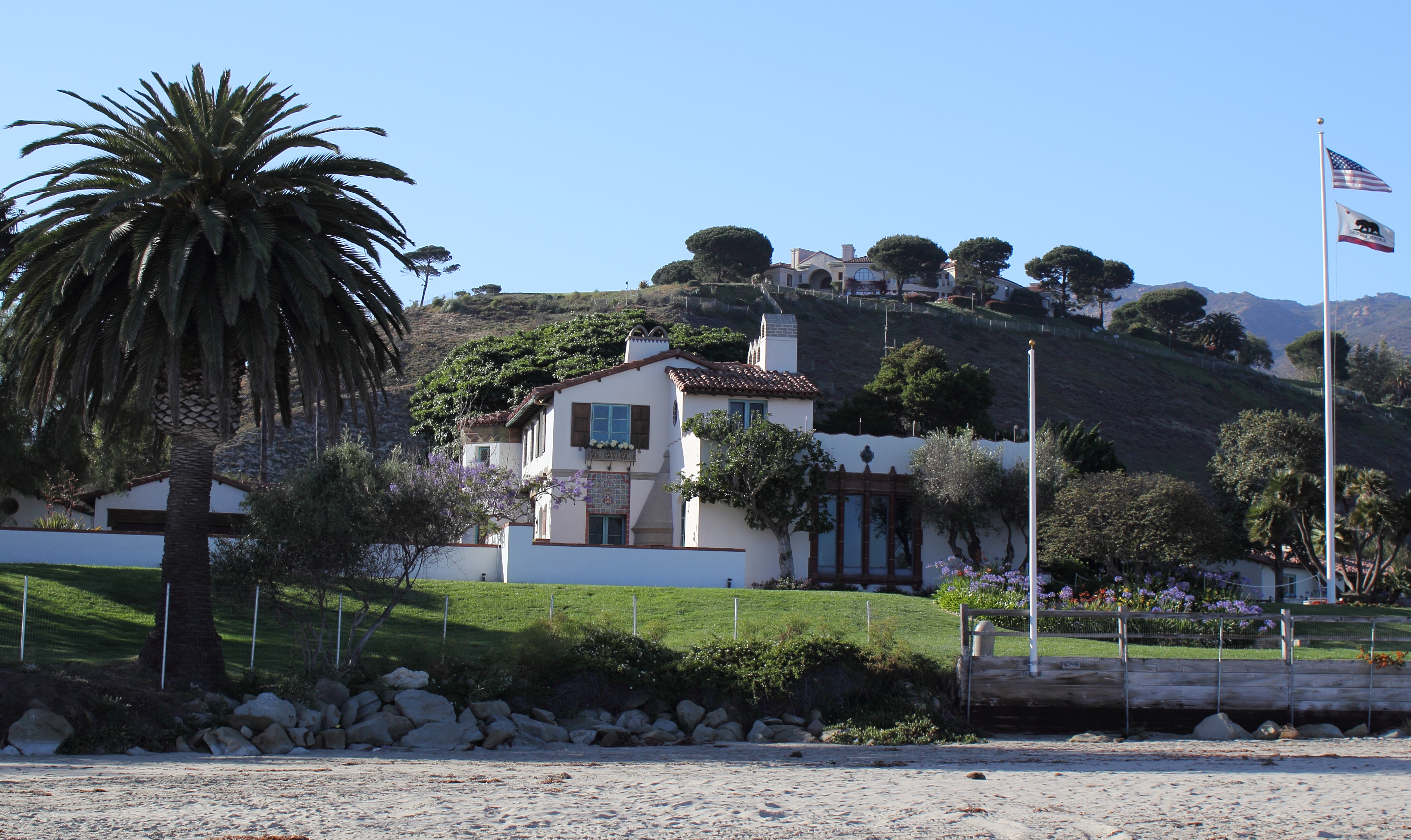
Few roads even entered the area before 1929, when the state won another court case and built what is now known as the Pacific Coast Highway. By then May Rindge was forced to divide her property and begin selling and leasing lots. The Rindge house, known as the Adamson House (a National Register of Historic Places site and California Historical Landmark), is now part of Malibu Creek State Park, between Malibu Lagoon State Beach and Surfrider Beach, beside the Malibu Pier that was used to provide transportation to/from the ranch, including construction materials for the Rindge railroad, and to tie up the family's yacht.
In 1926, in an effort to avoid selling land to stave off insolvency, May Rindge created a small ceramic tile factory. At its height, Malibu Potteries employed over 100 workers, and produced decorative tiles that furnish many Los Angeles-area public buildings and Beverly Hills residences. The factory, half a mile east of the pier, was ravaged by a fire in 1931. It partially reopened in 1932, but could not recover from the effects of the Great Depression and a steep downturn in Southern California construction projects. A distinct hybrid of Moorish and Arts and crafts designs, Malibu tile is considered highly collectible. Fine examples of the tiles may be seen at the Adamson House and Serra Retreat, a 50-room mansion that was started in the 1920s as the main Rindge home on a hill overlooking the lagoon. The unfinished building was sold to the Franciscan Order in 1942 and is operated as a retreat facility, Serra Retreat. It burned in the 1970 fire and was rebuilt using many of the original tiles.
Most of the Big Rock Drive area was bought in 1936 by William Randolph Hearst, who considered building an estate on the property. In 1944, he sold the lower half of his holdings there to Art Jones, one of Malibu's prominent early realtors, starting with the initial leases of Rindge land in Malibu Colony. He also owned or partly owned the Malibu Inn, Malibu Trading Post, and the Big Rock Beach Cafe (now Moonshadows restaurant). Philiip McAnany owned 80 acres in the upper Big Rock area, which he purchased in 1919, and had two cabins there, one of which burned in a brush fire that swept through the area in 1959, and the other in the 1993 Malibu fire. McAnany Way is named after him. On January 7, 2025, the city was struck by a massive 17000 acres wildfire. With a lack of water, equipment and workers, the Los Angeles Fire Department was forced to start evacuating more than 30,000 citizens from the metropolitan area. Many homes were destroyed in Malibu, including most of the beach homes in the central part of the city. A few homes of well-known celebrities, including Paris Hilton's, were also affected by the fire.
Malibu Colony
Malibu Colony was one of the first areas with private homes after May Rindge opened Malibu to development in 1926. Frederick Rindge paid $10 an acre in 1890. One of Malibu's most famous districts, it is south of Malibu Road and the Pacific Coast Highway, west of Malibu Lagoon State Beach, east of Malibu Bluffs Park (formerly a state park), and across from the Malibu Civic Center. May Rindge allowed Hollywood movie stars to build vacation homes in the Colony as a defensive public relations wedge against the Southern Pacific from taking her property under eminent domain for a coastal train route. The action forced the Southern Pacific to route its northbound line inland then return to the coast in Ventura. But her long legal battle to protect the Malibu coast was costly, and she died penniless. Long a popular private enclave for wealthy celebrities, the Malibu Colony is a gated community with multi-million-dollar homes on small lots. It has views of the Pacific, with coastline views stretching from Santa Monica and Rancho Palos Verdes on the south (known locally as the Queen's Necklace) to the bluffs of Point Dume on the north.
High technology in Malibu
The first working model of a laser was demonstrated by Theodore Maiman in 1960 in Malibu at the Hughes Research Laboratory (now known as HRL Laboratories LLC). In the 1990s HRL Laboratories developed the FastScat computer code. TRW built a laboratory in Solstice Canyon without any structural steel to test magnetic detectors for satellites and medical devices.
Incorporation
In 1991, most of the Malibu land grant was incorporated as a city to allow local control of the area (as cities under California law, they are not subject to the same level of county government oversight). Prior to achieving municipal status, the local residents had fought several county-proposed developments, including an offshore freeway, a nuclear power plant, and several plans to replace septic tanks with sewer lines to protect the ocean from seepage that pollutes the marine environment. The incorporation drive gained impetus in 1986, when the Los Angeles County Board of Supervisors approved plans for a regional sewer that would have been large enough to serve 400,000 people in the western Santa Monica Mountains. Residents were incensed that they would be assessed taxes and fees to pay for the sewer project, and feared that the Pacific Coast Highway would need to be widened into a freeway to accommodate growth that they did not want. The supervisors fought the incorporation drive and prevented the residents from voting, a decision that was overturned in the courts.
The city councils in the 1990s were unable to write a Local Coastal Plan (LCP) that preserved enough public access to satisfy the California Coastal Commission, as required by the California Coastal Act. The state Legislature eventually passed a Malibu-specific law that allowed the Coastal Commission to write an LCP for Malibu, thus limiting the city's ability to control many aspects of land use. Because of the failure to adequately address sewage disposal problems in the heart of the city, the local water board ordered Malibu in November 2009 to build a sewage plant for the Civic Center area. The city council has objected to that solution. On February 2, 2007, Civic Center Stormwater Treatment Facility opened. On June 29, 2016, City of Malibu Civic Center Wastewater Treatment Facility, Phase 1, broke ground.
Geography

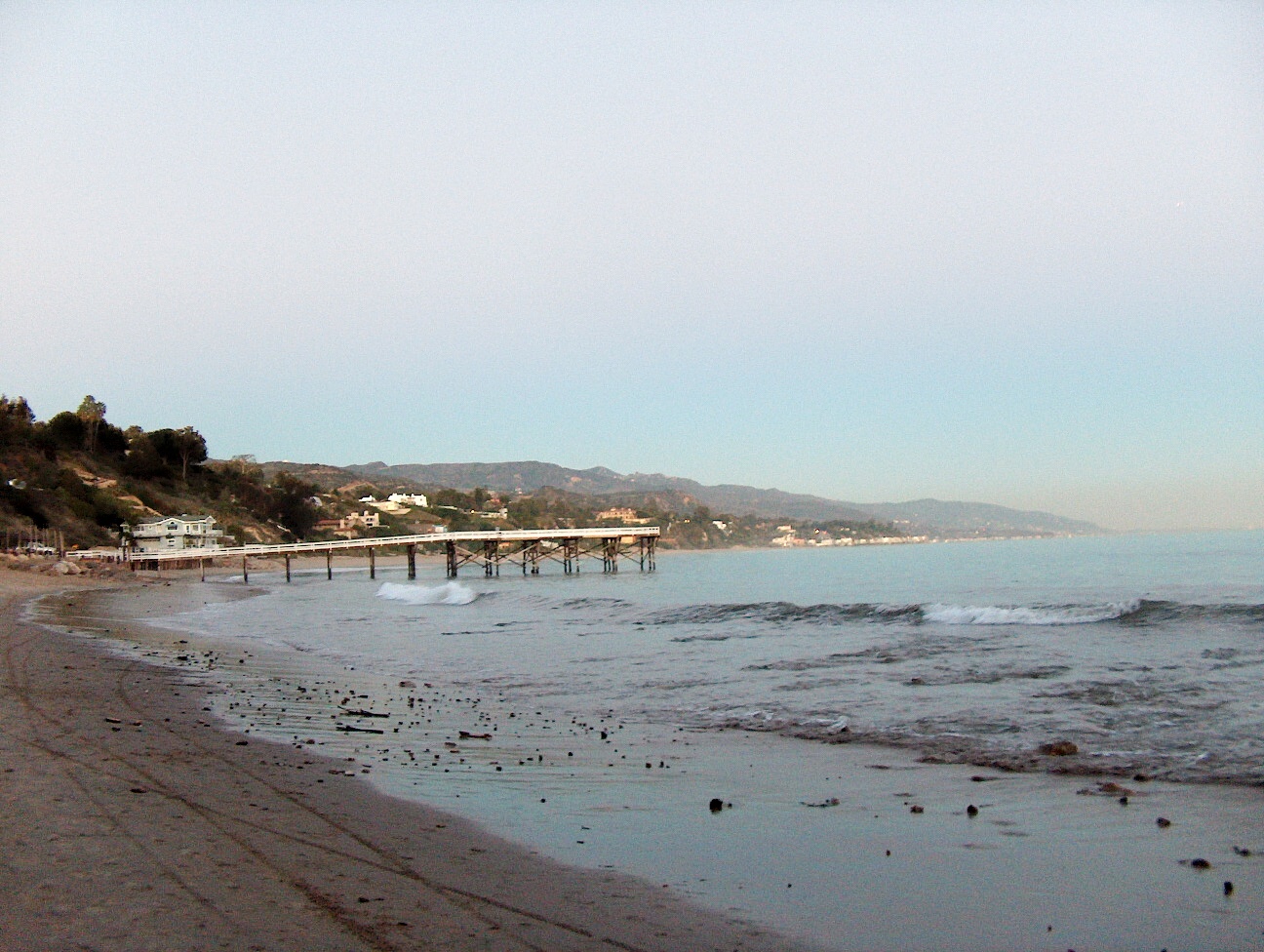

Malibu's eastern end borders the community of Topanga, which separates it from the city of Los Angeles. According to the United States Census Bureau, the city has an area of 19.8 sqmi, over 99% of it is land.
Malibu's dry brush chaparral and steep clay slopes make it prone to fires, floods, and mudslides.
Beaches on the Malibu coast include Big Rock Beach, Broad Beach, County Line Beach, Dan Blocker Beach, La Costa Beach, Las Flores Beach, Malibu Beach, Point Dume Beach, Surfrider Beach, Topanga Beach, and Zuma Beach. State parks and beaches on the Malibu coast include Leo Carrillo State Beach and Park, Malibu Creek State Park, Point Mugu State Park, and Robert H. Meyer Memorial State Beach, along with individual beaches such as El Matador Beach, El Pescador Beach, La Piedra Beach, Carbon Beach, Surfrider Beach, Westward Beach, and Escondido Beach. Paradise Cove, Pirates Cove, Trancas, and Encinal Bluffs are along the coast in Malibu. Point Dume forms the northern end of the Santa Monica Bay, and Point Dume Headlands Park affords a vista stretching to the Palos Verdes Peninsula and Santa Catalina Island.
Like all California beaches, Malibu beaches are public below the mean high tide line. Many large public beaches are easily accessible, but such access is sometimes limited for some of the smaller and more remote beaches.
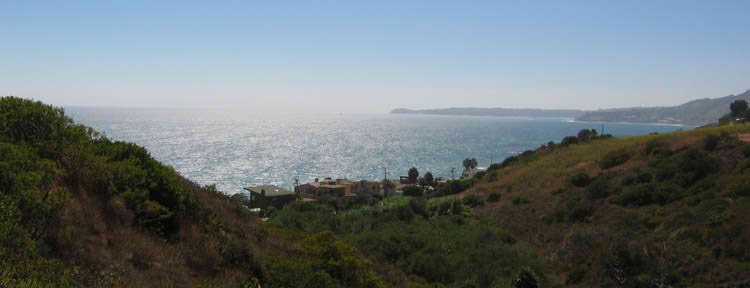
The Malibu Coast lies on the fringe of an extensive chaparral and woodland wilderness area, the Santa Monica Mountains National Recreation Area. Various environmental elements collectively create a recipe for natural disasters: the mountainous and geologically unstable terrain; seasonal rainstorms that result in dense vegetation growth; seasonal dry Santa Ana winds; and a naturally dry topography and climate.
Wildfires


The Malibu coast has seen dozens of wildfires:
- October 26, 1929 – Malibu Colony, 13 homes burned.
- 1930 – "Potrero," Decker Canyon Road Corridor, 15000 acre, accidental blaze caused by walnut pickers in Thousand Oaks area.
- October 23, 1935 – "Malibu" or "Latigo/Sherwood," Kanan/Decker Corridor, 30000 acre.
- November 23, 1938 – "Topanga," Topanga Canyon, 14500 acre.
- October 20, 1943 – "Las Flores," Malibu Canyon, 5800 acre.
- November 6, 1943 – "Woodland Hills (Las Virgenes)," Kanan/Decker Corridor, 15000 acre.
- December 26, 1956 – "Newton," Kanan/Decker Corridor, 26000 acre, 100 homes, one death, Frank Dickover.
- December 2, 1958 – "Liberty," Malibu Canyon, 18000 acre, eight firefighters injured, 74 homes destroyed (17 in Corral Canyon).
- November 6, 1961 – "Topanga," Topanga Canyon, 8000 acre.
- September 25, 1970 – "Wright," Malibu Canyon, 28000 acre, 10 deaths, 403 homes destroyed.
- October 30, 1973 – "Topanga," Topanga Canyon, 2800 acre.
- October 23, 1978 – "Kanan," Kanan/Decker Corridor, 25000 acre, 2 deaths, 230 homes.
- October 9, 1982 – "Dayton," Malibu Canyon Corridor, 44000 acre, 15 homes in Paradise Cove destroyed.
- October 14, 1985 – "Piuma," Las Flores area, Topanga Canyon, 4700 acre.
- October 14, 1985 – "Decker," Kanan/Decker Corridor, 6600 acre. Both arson-caused; six homes destroyed; $1 million damage.
- November 2, 1993 – "Old Topanga/North Malibu." One of the largest fires in Malibu history, which burned 16,516 acres from November 2 to 11. The 1993 firestorm was composed of two separate fires, one ravaging most of central Malibu/Old Topanga, and another, larger fire affecting areas north of Encinal Canyon. Three people died and 739 homes destroyed in the central Malibu/Old Topanga blaze. 18949 acre were torched in the north Malibu fire, with no deaths and few homes destroyed in the less densely populated region. Los Angeles County Fire Department officials announced suspicions that the fire was started by arson. The fire and widespread damage to properties and infrastructure resulted in the City of Malibu adopting the strictest fire codes in the country.
- October 21, 1996 – "Calabasas," Malibu Canyon Corridor, Brush fire ignited by arcing power line, 13000 acre.
- January 6, 2003 – "Trancas", Trancas Canyon, 759 acre.
- January 8, 2007 – At about 5:00 pm a fire started in the vicinity of Bluffs Park, south of Pacific Coast Highway in Malibu. The fire hit near the Colony area, burning down four houses on Malibu Road, including the oceanfront home of Step By Step star Suzanne Somers. The Los Angeles County Fire Department announced that a discarded cigarette stub started the blaze.
- October 21, 2007 – At about 5:00 am a fire started off of Malibu Canyon Road. As of 1:00 pm there were 500+ personnel on scene. 1200 acre burned with no containment. 200+ homes were evacuated. Five homes were confirmed to have been destroyed, with at least nine others damaged. Two commercial structures were completely destroyed. Castle Kashan and the Malibu Presbyterian Church were both destroyed.
- November 24, 2007 – The "Corral Fire" destroyed 53 homes, damaged 35, and burned over 4720 acre, forcing as many as 14,000 people to evacuate. Damages from the fire were expected to reach more than $100 million. The blaze originated at the top of Corral Canyon, where a group of young people who were in closed parkland after dusk had started a bonfire despite the presence of high Santa Ana winds. The individuals responsible for starting the fire were later identified, and are the subject of ongoing civil and criminal litigation.
- November 8, 2018 – The Woolsey Fire, a wildfire that burned from November 8–21 that burned 96,949 acres and destroyed 1,500 structures and left 341 buildings damaged. The fire also resulted in 3 firefighter injuries and 3 civilian fatalities. In 2020, authorities blamed faulty Southern California Edison equipment for the blaze.
- December 9, 2024 – The "Franklin Fire" began shortly before 11:00 pm on December 9 near Malibu Canyon Road. The fire spread quickly under strong Santa Ana winds, burning a total of 4,037 acres over the next few days. The fire prompted mandatory evacuations for much of Malibu and destroyed a total of 19 structures.
- January 7, 2025 – The January 2025 Southern California wildfires caused deaths, evacuations, and heavy damage to homes and property, including in Malibu. The Palisades Fire began around 10:30 a.m. on January 7 and initially burnt nearly 3,000 acres between Santa Monica and Malibu. The uncontrollable blaze, which continued to consume buildings, has wound up burning more than 11,000 acres between the two beach towns.
Mudslides
One of the most problematic side effects of the fires that periodically rage through Malibu is the destruction of vegetation, which normally provides some degree of topographical stability to the loosely packed shale and sandstone hills during periods of heavy precipitation. Rainstorms following large wildfires can thus cause mudslides, in which water-saturated earth and rock moves quickly down mountainsides, or entire slices of mountainside abruptly detach and fall downward.
After the 1993 wildfire stripped the surrounding mountains of their earth-hugging chaparral, torrential rainstorms in early 1994 caused a massive mudslide near Las Flores Canyon that closed down the Pacific Coast Highway for months. Thousands of tons of mud, rocks, and water rained down on the highway. The destruction to property and infrastructure was exacerbated by the road's narrowness at that point, with beachside houses abutting the highway with little or no frontage land as a buffer to the mudslide. Another large mudslide occurred on Malibu Canyon Road, between the Pepperdine University campus and HRL Laboratories LLC, closing down Malibu Canyon for two months. Yet another behemoth slide occurred on Kanan Dume Road, about 1 mi up the canyon from the Pacific Coast Highway. This closure lasted many months, with Kanan finally fixed by the California Department of Transportation (Cal-Trans) over a year after the road collapsed.
Mudslides can occur at any time in Malibu, whether a recent fire or rainstorm has occurred or not. Pacific Coast Highway, Kanan Dume Road, and Malibu Canyon Road, as well as many other local roads, have been prone to many subsequent mudslide-related closures. During any period of prolonged or intense rain, Caltrans snowplows patrol most canyon roads in the area, clearing mud, rocks, and other debris from the roads. Such efforts keep most roads passable, but it is typical for one or more of the major roads leading into and out of Malibu to be temporarily closed during the rainy season.
Storms
Malibu is periodically subject to intense coastal storms. Occasionally, these unearth remnants of the Rindge railroad that was built through Malibu in the early 20th century.
On January 25, 2008, during an unusually large storm for Southern California, a tornado came ashore and struck a naval base's hangar, ripping off the roof. It was the first tornado to strike Malibu's shoreline in recorded history.
Earthquakes
Malibu is within 50 mi of the San Andreas Fault, a fault over 800 mi long that can produce an earthquake over magnitude 8. Several faults are in the region, making the area prone to earthquakes.
The 1971 Sylmar earthquake and the 1994 Northridge earthquake (magnitudes 6.6 and 6.7, respectively) shook the area. Smaller earthquakes happen more often.
Climate
This region experiences warm and dry summers, with no average monthly temperatures above 71.6 °F. According to the Köppen Climate Classification system, Malibu has a warm-summer Mediterranean climate, abbreviated "Csb" on climate maps. The city's climate is influenced by the Pacific Ocean, resulting in far more moderate temperatures than locations further inland experience. Snow in Malibu is extremely rare, but flurries with higher accumulations in the nearby mountains occurred on January 17, 2007. More recently, snow fell in the city on January 25, 2021. The record high temperature of 104 °F was observed on September 27, 2010, while the record low temperature of 26 °F was observed on January 14, 2007.
| Jan record high F = 88 | Feb record high F = 91 | Mar record high F = 94 | Apr record high F = 100 | May record high F = 98 | Jun record high F = 102 | Jul record high F = 101 | Aug record high F = 98 | Sep record high F = 104 | Oct record high F = 103 | Nov record high F = 98 | Dec record high F = 96 | year record high F = 104 | Jan record low F = 26 | Feb record low F = 28 | Mar record low F = 31 | Apr record low F = 31 | May record low F = 34 | Jun record low F = 37 | Jul record low F = 42 | Aug record low F = 43 | Sep record low F = 40 | Oct record low F = 35 | Nov record low F = 28 | Dec record low F = 28 | year record low F = 26
Demographics
|align-fn=center 1860–1870 1880-1890 1900 1910 1920 1930 1940 1950 1960 1970 1980 1990 2000 2010 2020 1980 and 1990 as Point Dume CDP
The area that was to become Malibu city first appeared as a census-designated place under the name Point Dume in the 1980 United States census as part of the Calabasas census county division; and after incorporation appeared under its current name in the 2000 U.S. census.
| Race / Ethnicity (NH = Non-Hispanic) | title=P004: Hispanic or Latino, and Not Hispanic or Latino by Race – 2000: DEC Summary File 1 – Malibu city, California | url=https://data.census.gov/table?g=160XX00US0645246&tid=DECENNIALSF12000.P004 | website=United States Census Bureau | access-date= }} | title=P2: Hispanic or Latino, and Not Hispanic or Latino by Race – 2010: DEC Redistricting Data (PL 94-171) – Malibu city, California | url=https://data.census.gov/cedsci/table?q=p2&g=160XX00US0645246&tid=DECENNIALPL2010.P2 | website=United States Census Bureau | access-date= }} | % 2000 | % 2010 |
|---|---|---|---|---|---|---|---|---|---|---|
| White alone (NH) | 11,134 | 11,046 | 8,724 | 88.54% | ||||||
| Black or African American alone (NH) | 109 | 137 | 137 | 0.87% | ||||||
| Native American or Alaska Native alone (NH) | 20 | 17 | 12 | 0.16% | ||||||
| Asian alone (NH) | 310 | 323 | 339 | 2.47% | ||||||
| Native Hawaiian or Pacific Islander alone (NH) | 11 | 15 | 5 | 0.09% | ||||||
| Other race alone (NH) | 30 | 18 | 79 | 0.24% | ||||||
| Mixed race or Multiracial (NH) | 272 | 320 | 525 | 2.16% | ||||||
| Hispanic or Latino (any race) | 689 | 769 | 833 | 5.48% | ||||||
| Total | 12,575 | 12,645 | 10,654 | 100.00% |
2020
The 2020 United States census reported that Malibu had a population of 10,654. The population density was 536.8 PD/sqmi. The racial makeup of Malibu was 84.2% White, 1.4% African American, 0.2% Native American, 3.2% Asian, 0.1% Pacific Islander, 2.2% from other races, and 8.6% from two or more races. Hispanic or Latino of any race were 7.8% of the population.
The census reported that 99.3% of the population lived in households, 0.7% lived in non-institutionalized group quarters, and no one was institutionalized. There were 6,624 housing units at an average density of 333.8 /mi2, of which 4,558 (68.8%) were occupied. Of these, 69.9% were owner-occupied, and 30.1% were occupied by renters.
There were 4,558 households, out of which 22.6% included children under the age of 18, 45.9% were married-couple households, 5.4% were cohabiting couple households, 27.0% had a female householder with no partner present, and 21.7% had a male householder with no partner present. 30.6% of households were one person, and 13.0% were one person aged 65 or older. The average household size was 2.32. The age distribution was 15.1% under the age of 18, 8.7% aged 18 to 24, 17.1% aged 25 to 44, 32.3% aged 45 to 64, and 26.7% who were 65years of age or older. The median age was 52.2years. For every 100 females, there were 96.9 males.
In 2023, the US Census Bureau estimated that the median household income was $192,159, and the per capita income was $127,233. About 8.3% of families and 12.5% of the population were below the poverty line.
2010
The 2010 United States census reported that Malibu had a population of 12,645. The population density was 637.7 PD/sqmi. The racial makeup of Malibu was 11,565 (91.5%) White (87.4% Non-Hispanic White), 148 (1.2%) African American, 20 (0.2%) Native American, 328 (2.6%) Asian, 15 (0.1%) Pacific Islander, 182 (1.4%) from other races, and 387 (3.1%) from two or more races. There were 769 people of Hispanic or Latino origin, of any race (6.1%).
The Census reported that 12,504 people (98.9% of the population) lived in households, 126 (1.0%) lived in non-institutionalized group quarters, and 15 (0.1%) were institutionalized.
There were 5,267 households, out of which 1,379 (26.2%) had children under the age of 18 living in them, 2,571 (48.8%) were opposite-sex married couples living together, 403 (7.7%) had a female householder with no husband present, 222 (4.2%) had a male householder with no wife present. There were 269 (5.1%) unmarried opposite-sex partnerships, and 49 (0.9%) same-sex married couples or partnerships. 1,498 households (28.4%) were made up of individuals, and 501 (9.5%) had someone living alone who was 65 years of age or older. The average household size was 2.37. There were 3,196 families (60.7% of all households); the average family size was 2.87.
There were 2,366 people (18.7%) under the age of 18, 1,060 people (8.4%) aged 18 to 24, 2,291 people (18.1%) aged 25 to 44, 4,606 people (36.4%) aged 45 to 64, and 2,322 people (18.4%) who were 65 years of age or older. The median age was 47.8 years. For every 100 females, there were 100.6 males. For every 100 females age 18 and over, there were 97.0 males.
There were 6,864 housing units at an average density of 346.2 /mi2, of which 3,716 (70.6%) were owner-occupied, and 1,551 (29.4%) were occupied by renters. The homeowner vacancy rate was 2.8%; the rental vacancy rate was 11.9%. 9,141 people (72.3% of the population) lived in owner-occupied housing units and 3,363 people (26.6%) lived in rental housing units.
According to the 2010 United States Census, Malibu had a median household income of $133,869, with 10.6% of the population living below the federal poverty line.
Ancestry
Mapping L.A. reported that in 2000, German and English were the most common ancestries. Canada and the United Kingdom were the most common foreign places of birth.
Economy

The Malibu Chamber of Commerce was formed in 1949 to provide support to local Malibu business, and has over 500 members.
Historically, there have been a number of firms across industries located in the city. HRL Laboratories, the research arm of the former Hughes Aircraft Company, was established in 1960 in Malibu. Among its research accomplishments was the first working laser. Despite the aerospace industry's downsizing in the 1990s, HRL is the largest employer in Malibu. Jakks Pacific, a toy company, is based in Malibu.
There are several shopping centers in the Malibu Civic Center area including the Malibu Country Mart. The Malibu Civic Center is known for being frequented by paparazzi and tourists looking to catch a glimpse of local celebrities.
Non-profit organizations
The Surfrider Foundation was formed in 1984 by a group of surfers gathered to protect 31 mi of coastal waters from Marina Del Rey through Malibu to Ventura County, and represent the surfing community. Heal the Bay, a nonprofit organization for environmental advocacy, was formed in 1985 to protect Santa Monica Bay, which extends from Malibu's Point Dume along the entire coastline of Malibu past Santa Monica to the Palos Verdes Peninsula.
Institutions
Following the opening of Passages Malibu in 2001, the city has become home to numerous residential drug-abuse treatment centers. As of 2013, there are 35 state-licensed drug and alcohol rehabilitation facilities in Malibu, in addition to a multiplying number of unlicensed sober-living homes.
Arts and culture
Getty Villa, an art museum that is part of the J. Paul Getty Museum, is just outside the city limits in the Pacific Palisades neighborhood of Los Angeles. It is owned and operated by the J. Paul Getty Trust, which also oversees the Getty Center in West Los Angeles. The Museum at the Getty Villa houses Getty's collections of antiquities, sculptures, art pieces and cultural artifacts of ancient Greece, Rome, and Etruria.
Adamson House, the historic house and gardens of the 19th-century original owners of Malibu, the Rindge Family, is a state museum. The Malibu Art Association, a nonprofit organization to foster the arts in Malibu, produces shows, demonstrations and workshops for its members, and offers art for public display throughout the community. The Malibu Garden Club holds an annual garden tour of private, residential gardens.
Malibu High School offers musicals every spring and instrumental and vocal musical concerts every winter and spring. Smothers Theatre of Pepperdine University's Theatrical Drama Department offers concerts, plays, musicals, opera, and dance.
Annual events
The Malibu Arts Festival is held annually on the last weekend in July by the Malibu Chamber of Commerce. The Malibu International Film Festival is held every year showcasing new films and filmmakers from around the world. The Malibu Chili Cookoff, held every Labor Day weekend, is sponsored by the Kiwanis Club of Malibu. Proceeds benefit children and youth organizations. The Malibu Nautica Triathlon is held every September. In 2007, it raised $718,000 to benefit Children's Hospital Los Angeles.
The Polar Plunge (Los Angeles) is held each year in February at Zuma Beach to help raise funds for the Special Olympics in Southern California.
Parks and recreation
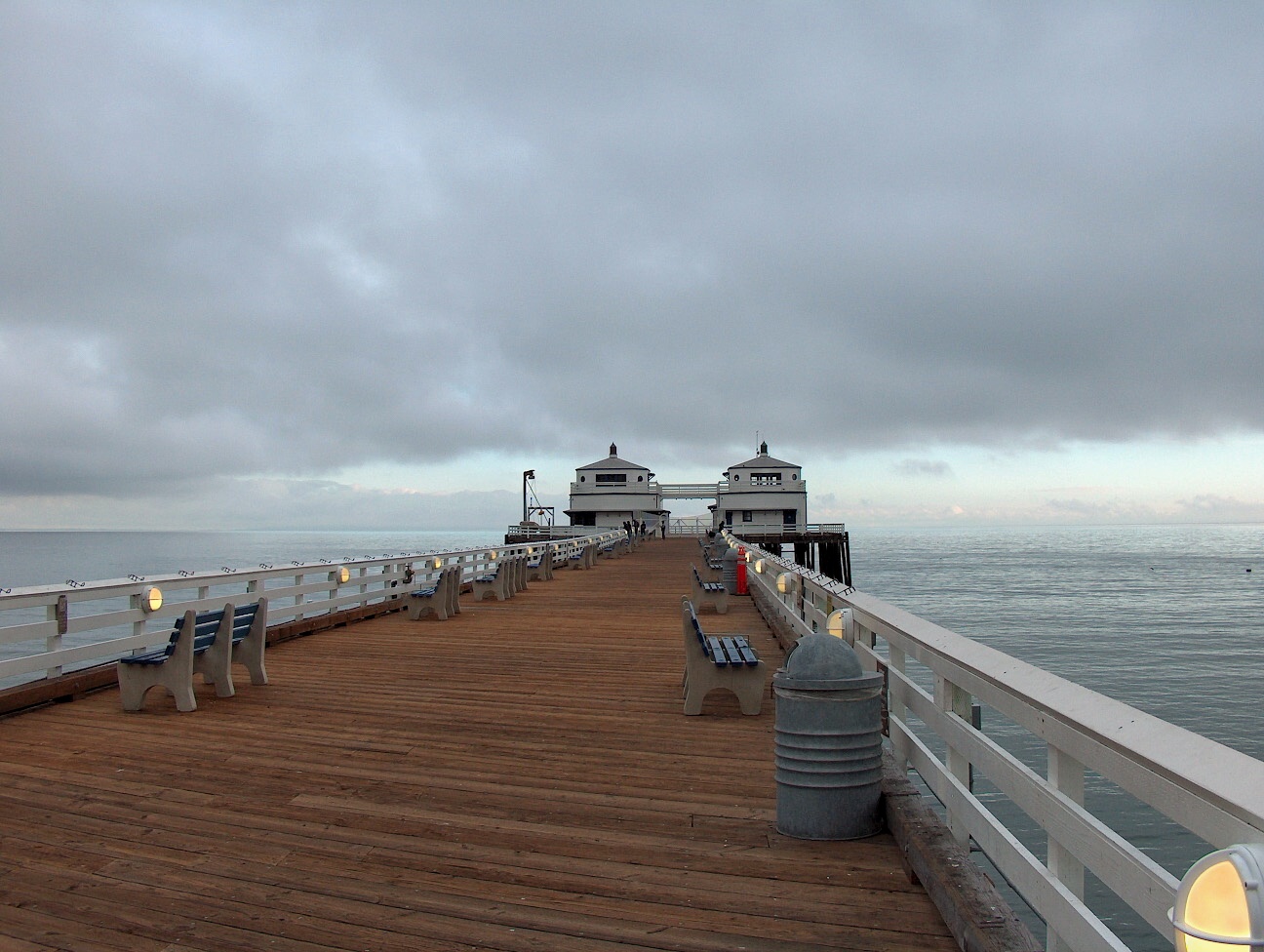
California State Parkland in the hills behind Malibu provides extensive horseback-riding, hiking, running, and mountain-biking options, affording many different views of the Santa Monica Mountains, the curve of the Santa Monica Bay, Santa Catalina Island, and the San Fernando Valley. There are many points of access to the Backbone Trail System throughout the local canyons, as well as a variety of smaller, local trailheads.
Pacific Coast Highway is popular with road cycling enthusiasts for its vistas. The route also has a reputation for being quite dangerous for cyclists, which inspired the creation of the Dolphin Run, an annual community event commemorating local victims of reckless driving. The Dolphin Run was held each Autumn from 1990 to 2004.
In late June 2008, the Malibu Pier reopened after $10 million in renovations.
Malibu Bluffs Community Park and Malibu Bluffs Recreation Area
The former Malibu Bluffs State Park ownership changed hands in 2006 after the California Department of Parks and Recreation transferred the park's 93 acre control to the Santa Monica Mountains Conservancy, They established the Malibu Bluffs Recreation Area, an Open Space Preserve of 90 acre on the bluffs between the Pacific Coast Highway and Malibu Road, directly opposite Pepperdine University and Malibu Canyon Road. The 100 ft bluffs rise above Amarillo Beach and Puerco Beach across Malibu Road. Five public stairways (which adjoin private property) lead down to the shoreline from the base of the bluffs. The trails begin from the spacious lawns in Malibu Bluffs Community Park
The Malibu Bluffs Recreation Area surrounds the 6 acre Malibu Bluffs Community Park, whose 10 acre parcel the Santa Monica Mountains Conservancy sold to the city. It consists of the Michael Landon Community Center, baseball diamonds, and soccer fields. Home of the Malibu Little League (MLL), Malibu AYSO, are youth soccer organizations that share practice fields. For over 20 years, the State Parks planned to return the land to its native wetlands and vegetation. A rider to a California state law was written specifically in the 1950s to allow baseball, with its attendant field accoutrements, to continue being played in the state park. Other city parks include Las Flores Creek Park, Malibu Bluffs Park, and Trancas Canyon Park.
Malibu Legacy Park Project
Malibu Legacy Park is a restoration project undertaken by the city with broad community support. A vacant, 20 acre plot of land owned by Jerry Perenchio was sold to the City of Malibu in 2005 with strict deed restrictions prohibiting any further commercial use. It had agricultural land with geraniums, other flowers and vegetables planted by the Takahashi family since 1924. The state-of-the-art water treatment plant takes stormwater runoff that accumulates in the park to mitigate the stormwater pollution in Malibu Creek, Malibu Lagoon, and Surfrider Beach. The Malibu Legacy Park Project responds to critical issues, including bacteria reduction by stormwater treatment; nutrient reduction in wastewater management; restoration and development of riparian habitats; and the development of an open space area for passive recreation and environmental education. In addition, the project will be linked by a "linear park" to neighboring Surfrider Beach, Malibu Pier, Malibu Lagoon, and Malibu Bluffs Park.
Ball sports are prohibited in the park along with running/jogging and other sports. The park includes many educational features, an outdoor classroom, and other informative features which explain the different habitats.
Surfrider Beach
On October 9, 2010, Surfrider Beach was dedicated as the first World Surfing Reserve.
Across the street from the civic center of Malibu, Surfrider Beach is adjacent to the Malibu Colony and Malibu Pier. This surfing beach was featured in 1960s surf movies like Beach Party. The Surfrider point break stems from the Malibu Colony into Santa Monica Bay and carries the nickname "Third Point". Surfing at this spot is popular during the winter.
Government
Municipal government
Malibu is a general law city governed with a five-member City Council including the mayor and mayor pro tem. The City Council hires a city manager to carry out policies and serve as executive officer. Every even-numbered year either two or three members are elected by the people to serve a four-year term. Usually, the City Council meets in April and chooses one of its members as mayor and one as mayor-pro-tem. In 2006, this pattern was deviated from when the council decided to have a cycle of three mayors and mayors pro-tem in the coming two years. Malibu does not have a police force. The Los Angeles County Sheriff's Department provides law enforcement services to Malibu.
County, state, and federal representation
In the state legislature, Malibu is in , but prior to redistricting was in . It is in .
In the United States House of Representatives, Malibu is in California's 32nd congressional district, which is represented by Brad Sherman.
Education
Schools
The Santa Monica-Malibu Unified School District serves Malibu with two elementary schools: John L. Webster Elementary School (grades K-5, in central Malibu) and Malibu Elementary School (grades K-5, in northwestern Malibu's Pt. Dume district). Malibu High School (MHS) provides secondary public education for both middle school (grades 6–8) and high school (grades 9–12). MHS is in northwestern Malibu. Private schools include Calmont,{{cite web |archive-url = https://web.archive.org/web/19991014015838/http://www.calmontschool.org/ |archive-date = October 14, 1999 |access-date = May 7, 2011 |url-status = usurped |access-date=May 7, 2011 |archive-date=April 22, 2001 |archive-url=https://web.archive.org/web/20010422003934/http://www.olmalibu.org/ |url-status=live |access-date=May 7, 2011 |archive-date=April 23, 2011 |archive-url=https://web.archive.org/web/20110423173110/http://newroads.org/ |url-status=live
Higher Education
Established in 1937 in south-central Los Angeles, Pepperdine University moved to its Malibu campus in 1972. But when Malibu incorporated as a city, the boundaries were drawn to exclude Pepperdine, at the college's insistence. The university is a private college affiliated with the Church of Christ, located today in central Malibu, north of the Malibu Colony at the intersection of the Pacific Coast Highway and Malibu Canyon Road. Malibu is also served by Santa Monica College, a community college in the nearby city of Santa Monica to the south.
Library
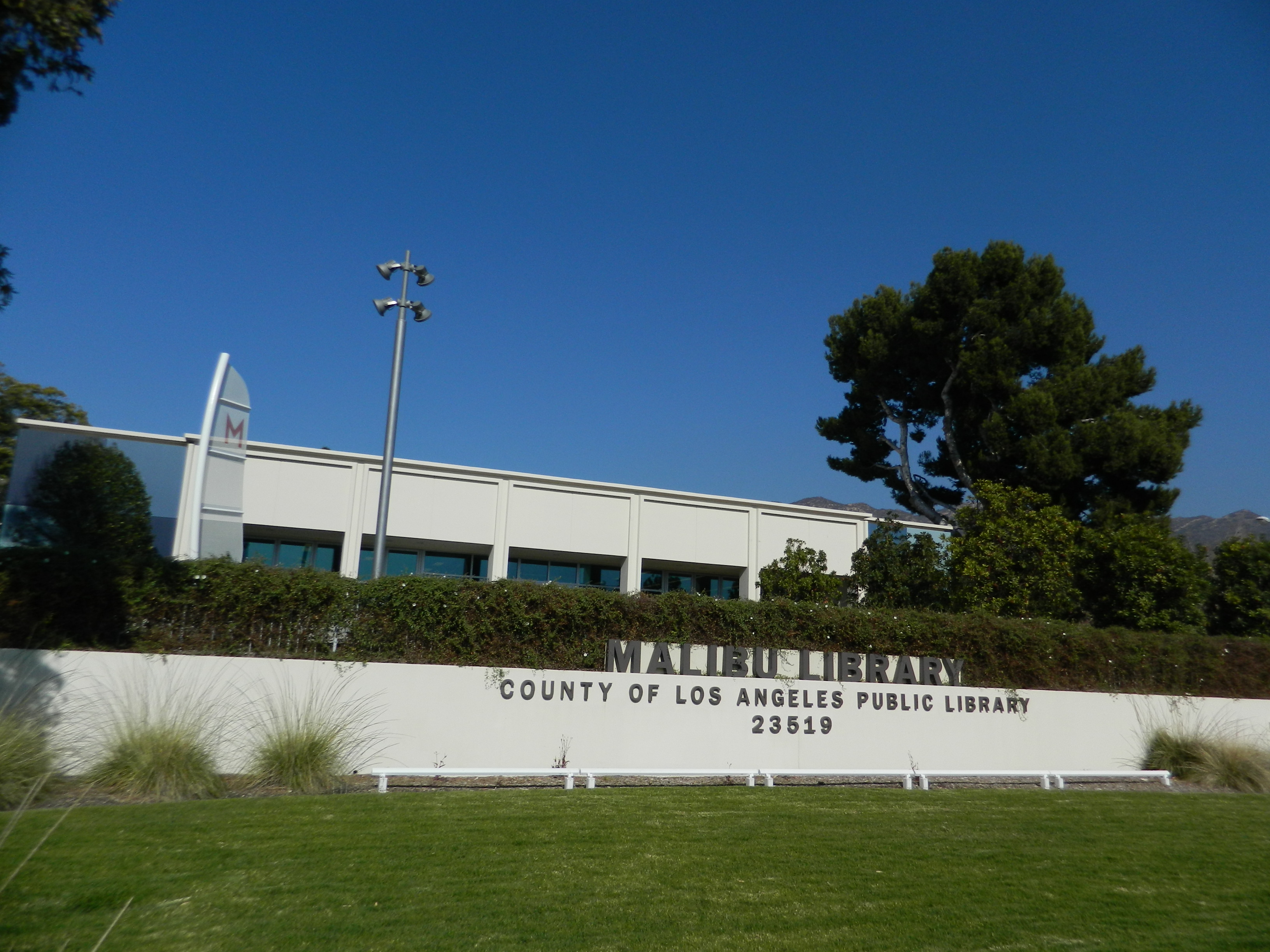
Malibu Public Library, a 16530 sqft branch of the County of Los Angeles Public Library, is in the Malibu Civic Center Complex. The branch has an adult reading area, a children's reading area, a 125-person meeting room, and free parking. The library opened in 1970. Before that, residents were served by a bookmobile.
Media
Pepperdine University's TV-32 is fed on Educational-access television cable TV channel 32, and was previously on channel 26. Broadcast radio stations licensed for Malibu include FM booster station KPFK-FM1 for 90.7 KPFK Los Angeles. 92.7 KYRA, Thousand Oaks, had a booster KYRA-FM1 with a city of license of "Malibu Vista".
Malibu has three local newspapers: The Malibu Times, founded in 1946, the Malibu Surfside News, and Pepperdine University's student newspaper, the Graphic. There are also three magazines in Malibu: Malibu Arts Journal, Malibu Magazine, and Malibu Times Magazine and "Malibu Biz".
Infrastructure
Public services
Fire protection is served by the Los Angeles County Fire Department. The Los Angeles County Sheriff's Department (LASD) operates the Malibu/Lost Hills Station in Calabasas, serving Malibu under contract with the city. The Los Angeles County Department of Health Services SPA 5 West Area Health Office serves Malibu. The department operates the Simms/Mann Health and Wellness Center in Santa Monica, serving Malibu. Water is provided by LA Waterworks District 29.
The U.S. Postal Service operates the Malibu Post Office at 23838 Pacific Coast Highway, the Colony Annex at 23648 Pacific Coast Highway, adjacent to the Malibu Post Office, and the La Costa Malibu Post Office at 21229 Pacific Coast Highway.
Transportation
The Pacific Coast Highway (SR 1) is the central route through the length of the city. PCH handles approximately 40,500 vehicles per day during peak hours in the summer. The LA Metro bus line 134 runs along PCH from Trancas market to Santa Monica.
In popular culture


Malibu has been used as a location or setting for many films, television programs, fashion shoots and music videos.
Surfrider Beach was home to Gidget, and surfing movies of the 1960s. Jill Munroe and her sister Kris Munroe's Charlie's Angels beach house was in Malibu. The residence can also be seen in the first scene after the opening theme song of Beach Blanket Bingo. Important scenes in the Planet of the Apes series were filmed at Point Dume. The hero's trailer in The Rockford Files was parked by the Paradise Cove Pier. Love American Style and The Mod Squad are among many TV series and commercials filmed in Paradise Cove. A 1978 film starring Suzanne Somers was titled Zuma Beach. In the 1990s and 2000s, it was the setting for MTV Beach House, Malibu's Most Wanted, and Nickelodeon's Zoey 101. Point Dume is the location of Tony Stark's mansion in the Marvel Cinematic Universe, first appearing in Iron Man.
Malibu is the setting for the TV series Two and a Half Men. The TV series So Little Time (2001) portrayed two Malibu teens (Mary-Kate and Ashley Olsen) who attend the fictional West Malibu High. Fictional teen star Hannah Montana / Miley Stewart (portrayed by Miley Cyrus) and her father Robby Ray Stewart (portrayed by Billy Ray Cyrus) live in Malibu on the Disney Channel Original Series Hannah Montana. In the Fox TV series The O.C., both the Cohen house and the Cooper home were actually in Malibu. Malibu Shores, a teen drama that aired on NBC, was set in Malibu. Some scenes from The Even Stevens Movie were filmed on Westward Beach in Point Dume. The small hit TV show Summerland was also filmed and set in Malibu. The TV series “Good Trouble,” a spinoff of “The Fosters,” and the latest season of the anthology series “American Horror Story,” titled “Delicate,” also featuring scenes shot in Malibu.
In 2006, Bravo television aired Million Dollar Listing, a real-estate related show based on million-dollar listings in Malibu, as well as Hollywood, including real-life Malibu agents such as Chris Cortazzo, Scotty Brown, Madison Hildebrand, and Lydia Simon.
The MTV reality show Buzzin' starring Shwayze and Cisco Adler is mostly filmed in Malibu, at locations including Westward Beach, Malibu Courthouse, Pacific Coast Highway, Point Dume Trailer Park, Malibu Inn, and the outside of PC Greens.
Gulls Way Estate, Malibu is the setting for the TV series Hardcastle and McCormick.
There are also many music videos filmed on Malibu's beaches. In 1998, the alternative rock band Hole shot the video for the song "Malibu" at the Matador Beach. Mariah Carey's video for her 2009 single H.A.T.E.U. was filmed there. American singer Nick Lachey's video for his 2006 single "I Can't Hate You Anymore" from the What's Left Of Me album, was filmed at the place on June 27, 2006, before Lachey's divorce from the American singer-actress Jessica Simpson became final three days later after its release. Selena Gomez's "Love You Like a Love Song" video was partly filmed in Malibu. Music videos for "Survivor" by Destiny's Child, "If It's Lovin' That You Want" by Rihanna, "Sunshine" by Lil Flip, "Natural" by S Club 7, "Feel It Boy" by Beenie Man featuring Janet Jackson, "You're Still the One" by Shania Twain, and many others were filmed on Westward Beach. Linda Ronstadt, who lived in the Colony, is photographed in front of her home for her 1976 Grammy award-winning album Hasten Down the Wind. Girls Aloud filmed their video "Call the Shots" on the beach at Malibu. In 1999, Britney Spears shot the video for the song "Sometimes" directed by Nigel Dick on the pier at Paradise Cove. Also in late 1998, Madonna shot her video for "The Power of Good-Bye" near Silver Top mansion. The music videos for "Lost" by American band Maroon 5 and "Somebody to You", from British band The Vamps featuring Demi Lovato were both filmed on Malibu Beach. One Direction's video "What Makes You Beautiful" on July 11, 2011, and Watermelon Sugar filmed on January 30, 2020, by Harry Styles.
Notable people
Main article: List of people from Malibu, California
Sister cities
- CHN Lijiang, Yunnan, China
References
|access-date=August 25, 2014 |url-status=dead |archive-url=https://web.archive.org/web/20141103002921/http://www.calafco.org/docs/Cities_by_incorp_date.doc |archive-date=November 3, 2014 }} | url-access = registration
References
- link. (October 9, 2025)
- "2019 U.S. Gazetteer Files". United States Census Bureau.
- {{Cite GNIS. 1668257. Malibu
- "USPS – ZIP Code Lookup – Find a ZIP+ 4 Code By City Results".
- "Santa Monica Mountains".
- (2024-12-13). "Dick Van Dyke and Cher forced to evacuate Franklin fire in Malibu".
- Hayley, Mattson. (January 8, 2025). "Palisades Fire Devastates Malibu". [[Malibu Times]].
- "Humaliwo: An Ethnographic Overview of the Chumash in Malibu". Parks.ca.gov.
- McCall, Lynne & Rosalind, Perry, red. (1991): ''The Chumash People: Materials for Teachers and Students''. Santa Barbara Museum of Natural History. San Luis Obispo, CA: EZ Nature Books. {{ISBN. 0-945092-23-7. Page 29.
- Marcus, Ben and Marc Wanamaker (2011). ''Malibu''. Arcadia Publishing. Page 7. {{ISBN. 9780738576145.
- "Humaliwo: An Ethnographic Overview of the Chumash in Malibu".
- Gamble, Lynn H. (2008). ''The Chumash World at European Contact: Power, Trade, and Feasting Among Complex Hunter-Gatherers''. University of California Press. Page 108. {{ISBN. 9780520942684.
- Doyle, Thomas W. et al. ''The Malibu Story,'' pp. 25–27, Malibu Lagoon Museum, Malibu, CA, 1985.
- Doyle, Thomas W. and Rindge, Ronald L. ''Malibu Rails and Roads,'' pp. 6, 14–15, 17–19, 22–27, 30–45, 52–61, 70, 74–9, 85, Malibu Lagoon Museum, Malibu, CA, 2012.
- Hemenez, Jane Sullivan. ''Malibu: A Good Way of Life,'' p. 37, Ocean Park Press, Santa Monica, CA. {{ISBN. 978-0-9899458-0-6.
- "Adamson House". Parks.ca.gov.
- (January 19, 2005). "Malibu Lagoon State Beach". Parks.ca.gov.
- "Malibu Pier". Parks.ca.gov.
- Doyle, Thomas W. and Rindge, Ronald L. ''Malibu Rails and Roads,'' pp. 74, Malibu Lagoon Museum, Malibu, CA, 2012.
- Doyle, Thomas W and Rindge, Ronald L. ''Malibu Rails and Roads: A Photographic Journey Across Rancho Topanga-Malibu-Sequit,'' pp. 78–9, Malibu Adamson House Foundation, Malibu, CA, 2012.
- [http://www.serraretreat.com/about/index.htm Rindge House sold to Franciscans] {{webarchive. link. (July 1, 2014 from serraretreat.com)
- "Serra Retreat". Serra Retreat.
- Map Books of the Los Angeles County Assessor
- Lummis, Jr., Dayton. ''Captain Midnight and the California Dream: 50 Years Adrift in the Golden State,'' pp. 13–26, iUniverse, Inc., Lincoln, NE, 2005.
- Lummis, Jr., Dayton. ''Dust Devils,'' pp. 15–32, SunstonePress.com, Santa Fe, NM, 2007.
- Larson, Louise. "Colorful Pioneer of Malibu Inured," ''Evening Outlook,'' December 15, 1970, Santa Monica, CA.
- cite web May K. Rindge, a Fighter to the End https://patch.com/california/malibu/may-k-rindge-a-fighter-to-the-end {{Webarchive. link. (June 12, 2023)
- "MalibuCa.org". MalibuCa.org.
- Randall, David K.. (March 13, 2016). "The long and complicated fight to preserve paradise in Malibu". [[Los Angeles Times]].
- [http://www.seeing-stars.com/Live/Malibu.shtml Celebrities living in Malibu Colony] {{Webarchive. link. (March 29, 2006 from seeing-stars.com)
- [http://www.trails.com/rentals/propertyna.asp?vacation=01044_Thousand+Oaks_California Malibu to RPV: Queen's Necklace] from trails.com
- [http://www.seattlepi.com/local/6420AP_WA_Obit_Maiman.html Dr. Maiman's laser, the world's first]{{Dead link. (March 2022)
- [http://hrl.com/media/anlRprts/05_AR.pdf HRL's FastScat] {{webarchive. link. (March 26, 2009 from the HRL Laboratories website)
- SOBLE, ANNE. (November 29, 2007). "Historic Buildings in Solstice Canyon Are Burned: Park Is Closed: Matthew Keller House and TRW Aerospace Research Buildings Destroyed by Corral Fire". Malibu Surfside News.
- (July 31, 2013). "The freeway that never was". Malibu Times.
- Pool, Bob. (June 14, 2005). "Still Generating Controversy". LA Times.
- Augustyn, Arthur. (July 7, 2016). "Construction Begins on Civic Center Sewer". [[Malibu Times]].
- "Civic Center Stormwater Treatment Facility".
- (May 25, 2016). "Malibu's Civic Center Wastewater Treatment Facility Advances with Approvals of Construction Contracts & Land Purchase Agreement". WestsideToday.
- (June 29, 2016). "Civic Center Water Treatment Facility Groundbreaking Ceremony".
- "Malibu, City of- Civic Center Wastewater & Recycling Facility Phase I".
- (June 22, 2016). "Groundbreaking Ceremony for Malibu's Civic Center Wastewater Treatment Facility Set for June 29".
- "Civic Center Water Treatment Facility".
- (May 25, 2016). "Malibu's Civic Center Wastewater Treatment Facility Advances with Approvals of Construction Contracts & Land Purchase Agreement".
- [https://www.californiabeaches.com/beach/la-costa-beach/ La Costa Beach]
- "Las Flores Beach".
- "Leo Carrillo SB". Parks.ca.gov.
- "Pt. Mugu SP". Parks.ca.gov.
- "Robert H. Meyer Memorial SB". Parks.ca.gov.
- Valentino, Silas. (June 12, 2023). "Wealthy homeowners penalized for blocking Calif. beach access".
- Carlson, Cheri. (July 13, 2023). "Malibu city officials remove signs for publicly owned, hard-to-spot beach". Ventura County Star.
- [https://www.nps.gov/samo/index.htm Santa Monica Mountains National Recreation Area] from the [[National Park Service]] website
- (November 21, 2007). "Malibu Times Article". Malibu Times Article.
- Citygate Associates, Inc.. (October 23, 2019). "DRAFT: Woolsey Fire After Action Report". County of Los Angeles.
- "MALIBU HISTORY: 1970 TO CITYHOOD IN 1991". Malibucomplete.com.
- [http://www.lafire.com/famous_fires/931102_OldTopangaFire/110293_official_report_old_topanga_inci.htm 1993 Fire] {{webarchive. link. (November 6, 2010 , LACFD official report)
- [http://www.coastal.ca.gov/fire/firerept.html Malibu: Public Safety] {{Webarchive. link. (October 12, 2007 from coastal.ca.gov)
- "Malibu Lessons".
- (January 10, 2003). "Malibu burns again; fire contained, damage limited". The Malibu Times.
- Goldman, Judy-Anne. (June 4, 2003). "MHS Newspaper Wins National Awards". The Malibu Times.
- [http://news.monstersandcritics.com/usa/news/article_1376494.php/Malibu_Thanksgiving_weekend_blaze_claims_53_homes Malibu gossip] {{webarchive. link. (February 20, 2013 from monstersandcritics.com)
- "Woolsey Fire Incident Update".
- Sharp, Sonja. (August 5, 2019). "Malibu wanted to crack down on huge mansions. But fire losses could bring even bigger homes".
- "In redacted Woolsey Fire report, authorities blame Edison equipment for blaze".
- "Franklin Fire". [[California Department of Forestry and Fire Protection]] (Cal Fire).
- Garcia, Sid. (December 12, 2024). "Franklin Fire in Malibu grows to 4,000+ acres with 30% containment after homes destroyed".
- Limehouse, Jonathan. (January 8, 2025). "Malibu fire damage: Photos capture destruction and firefighters' heroic efforts". USA Today.
- "Mudslides in Malibu, etc". Colorado.edu.
- [http://www.wrh.noaa.gov/sgx/document/weatherhistory.pdf Malibu Mudslides] {{Webarchive. link. (January 20, 2016 from noaa.gov)
- "Cal-Trans official web site". Dot.ca.gov.
- (January 25, 2008). "Small Tornado Strikes Point Mugu". Ventura County Star.
- "Malibu, California Köppen Climate Classification (Weatherbase)".
- (January 25, 2021). "Snow in Malibu? Weather provides surprise in Southern California".
- "NOAA NCEI U.S. Climate Normals Quick Access". [[National Oceanic and Atmospheric Administration]].
- "Records and Averages for Malibu, CA".
- "Decennial Census by Decade".
- "1870 Census of Population - Population of Civil Divisions less than Counties - California - Almeda County to Sutter County".
- "1870 Census of Population - Population of Civil Divisions less than Counties - California - Tehama County to Yuba County".
- "1890 Census of Population - Population of California by Minor Civil Divisions".
- "1900 Census of Population - Population of California by Counties and Minor Civil Divisions".
- "1910 Census of Population - Supplement for California".
- "1920 Census of Population - Number of Inhabitants - California".
- "1930 Census of Population - Number and Distribution of Inhabitants - California".
- "1940 Census of Population - Number of Inhabitants - California".
- "1950 Census of Population - Number of Inhabitants - California".
- "1960 Census of Population - Number of Inhabitants - California".
- "1960 Census of Population - General population Characteristics - California".
- "1970 Census of Population - Number of Inhabitants - California".
- "1980 Census of Population - Number of Inhabitants - California".
- "1990 Census of Population - Population and Housing Unit Counts - California".
- "2000 Census of Population - Population and Housing Unit Counts - California".
- "2010 Census of Population - Population and Housing Unit Counts - California".
- "P004: Hispanic or Latino, and Not Hispanic or Latino by Race – 2000: DEC Summary File 1 – Malibu city, California".
- "P2: Hispanic or Latino, and Not Hispanic or Latino by Race – 2010: DEC Redistricting Data (PL 94-171) – Malibu city, California".
- "P2: Hispanic or Latino, and Not Hispanic or Latino by Race – 2020: DEC Redistricting Data (PL 94-171) – Malibu city, California".
- "Malibu city, California; DP1: Profile of General Population and Housing Characteristics - 2020 Census of Population and Housing".
- "Malibu city, California; P16: Household Type - 2020 Census of Population and Housing".
- "Malibu city, California; DP03: Selected Economic Characteristics - 2023 ACS 5-Year Estimates Comparison Profiles".
- "2010 Census Interactive Population Search: CA – Malibu city". U.S. Census Bureau.
- "Malibu Profile - Mapping L.A. - Los Angeles Times".
- "Malibu Chamber of Commerce". Malibu.org.
- [http://www.surfrider.org/malibu/history.htm History] {{webarchive. link. (September 26, 2012 from the Surfrider Foundation website)
- Peter Haldeman (September 13, 2013), [https://www.nytimes.com/2013/09/15/fashion/an-intervention-for-malibu.html An Intervention for Malibu] {{Webarchive. link. (August 15, 2023 ''[[New York Times]]''.)
- [http://www.getty.edu/visit/events/villa.html Getty Villa.] {{Webarchive. link. (October 11, 2007 Retrieved August 28, 2008.)
- [http://www.getty.edu/museum/about.html About the J. Paul Getty Museum.] {{Webarchive. link. (March 3, 2019 Retrieved August 28, 2008.)
- "Malibu Art Association website". Malibuart.org.
- [http://www.malibugardenclub.com/tour-info.htm Malibu Garden Club, Tour] {{webarchive. link. (October 29, 2009)
- "Arts – Malibu High – Theatre Arts Program".
- "Smothers Theatre, Pepperdine". Pepperdine.edu.
- "Malibu Arts Festival". Malibu Arts Festival.
- "Malibu Film Festival 2011". Malibufilmfestival.com.
- [http://www.malibukiwanis.com/ChiliCookOff.html Malibu Chili Cookoff] {{Webarchive. link. (November 3, 2009 from malibukiwanis.com)
- [http://www.nauticamalibutri.com/ Malibu Nautica Press Release] {{Webarchive. link. (December 13, 2007 from nauticamalibutri.com)
- [https://archive.today/20120727084253/http://sosc.kintera.org/laplunge Polar Plunge (Los Angeles)] from sosc.kintera.org
- Groves, Martha. (June 28, 2008). "Reopening marks new chapter in Malibu Pier's history book". The Los Angeles Times.
- (December 1, 2002). "Santa Monica Mountains Conservancy website". Smmc.ca.gov.
- [https://archive.today/20130128082727/http://www.malibutimes.com/articles/2005/03/04/news/news4.txt MLL's 50th year] from the ''Malibu Times''
- link. (January 11, 2009). City of Malibu
- "Malibu Little League's official website". Malibulittleleague.org.
- "Malibu AYSO official website". Malibuayso.org.
- [https://archive.today/20120905091804/http://www.malibutimes.com/articles/2006/09/21/news/news3.txt Bluffs Park under local control] from the ''Malibu Times''
- [https://archive.today/20130128065120/http://www.malibutimes.com/articles/2005/01/27/news/news2.txt 20-yr conflict over Malibu Bluffs Park] from the ''Malibu Times''
- "Malibu Legacy Park (local)". Malibulegacy.org.
- "Malibu'S Wealthy: A. Jerrold Perenchio". Malibucomplete.com.
- (September 21, 2006). "#85 A Jerrold Perenchio". Forbes.
- Brager, Robert L.. (February 2014). "Malibu's Legacy Park: A Public Works Approach to Sustainability". The League of California Cities.
- (June 13, 2023). "Annenberg Foundation | News | City of Malibu Announces $2 Million Matching Grant from". the Annenberg Foundation.
- "Malibu Surfside News".
- "Malibu Legacy Park Features". Malibulegacy.org.
- (March 10, 2012). "Malibu World Surfing Reserve Dedication". World Surfing Reserves.
- (April 19, 2017). "What is the Best Season to Go Surfing in Southern California?".
- "Law Enforcement – Malibu, CA – Official Website".
- "Statewide Database". UC Regents.
- (August 22, 1988). "Aloof Pepperdine? : Many Dislike Its Decision Not to Join Proposed City of Malibu". Los Angeles Times.
- "[http://www.colapublib.org/libs/malibu/ Maliby Library] {{Webarchive. link. (March 23, 2010 ." [[County of Los Angeles Public Library]]. Retrieved March 17, 2010.)
- (September 23, 2010). "Alumn sports broadcaster heads to Maui". [[Pepperdine University]].
- Sabin, Karin. (March 24, 2005). "TV-26 strolls down the red carpet". [[Pepperdine University]].
- (March 23, 2011). "FM Records With Principal Community of Malibu, CA". Cavell Mertz & Associates, Inc..
- "[http://www.lasd.org/stations/for1/malibu_lhill/index.html Malibu/Lost Hills Station] {{webarchive. link. (September 7, 2015 ." [[Los Angeles County Sheriff's Department]]. Retrieved January 21, 2010.)
- link. (June 6, 2011 ." [[U.S. Census Bureau]]. Retrieved January 21, 2010.)
- link. (May 27, 2010 ." [[Los Angeles County Department of Health Services]]. Retrieved March 18, 2010.)
- "[http://publichealth.lacounty.gov/phn/docs/HealthCenter/santamonica.pdf Simms/Mann Health and Wellness Center] {{Webarchive. link. (December 14, 2010 ." [[Los Angeles County Department of Health Services]]. Retrieved March 17, 2010.)
- link. (July 17, 2012 ." ''[[United States Postal Service]]''. Retrieved on December 6, 2008.)
- link. (July 28, 2012 ." ''[[United States Postal Service]]''. Retrieved on December 6, 2008.)
- "[https://archive.today/20120715230626/http://usps.whitepages.com/service/post_office/67263?p=1&s=CA&service_name=post_office&z=Malibu Post Office Location – LA COSTA MALIBU]." ''[[United States Postal Service]]''. Retrieved on December 6, 2008.
- Sternfield, Marc. (December 4, 2023). "Driving on PCH in Malibu is about to change".
- "Line 134 schedule".
- (June 7, 2024). "Malibu, California: A Star in Its Own Right on the Screen".
- {{URL. http://www.bravotv.com/Million_Dollar_Listing//index.shtml ''bravotv.com''
- [https://malibutimes.com/article_4353eb32-4966-5f09-ac71-906bbdc9eea9 Trying to keep the lid on celebrity real estate sales]
- "Sister City Directory – SOCAL Sister Cities".
- (2010). "Frommer's Los Angeles 2011". Wiley.
- (2008). "Vintage L.A.: Eats, Boutiques, Decor, Landmarks, Markets & More". HarperCollins.
- (2008). "The Concise New Partridge Dictionary of Slang and Unconventional English". Routledge.
- "Malibu (city) QuickFacts". [[United States Census Bureau]].
- Myrick, David F. ''The Determined Mrs. Rindge and her Legendary Railroad: A History of the Hueneme, Malibu and Port Los Angeles Railway,'' pp. 1–53, Ventura County Historical Society, 1996.
- (February 12, 2011). "US Gazetteer files: 2010, 2000, and 1990". [[United States Census Bureau]].
- [http://www.malibucomplete.com/mc_hazards_fires.php Malibu Fires] {{Webarchive. link. (August 20, 2008 , MalibuComplete.com)
- [http://la.indymedia.org/news/20 October 8946.php Let Malibu Burn: A political history of the Fire Coast Mike Davis]{{Dead link. (August 2018)
- "Malibu (city), California". [[United States Census Bureau]].
- "Malibu Chili Cook-Off Land Purchase". Malibucomplete.com.
- [http://www.seeing-stars.com/OC/ByLocation.shtml The O.C. Filming Locations] {{webarchive. link. (June 30, 2012 from seeing-stars.com)
This article was imported from Wikipedia and is available under the Creative Commons Attribution-ShareAlike 4.0 License. Content has been adapted to SurfDoc format. Original contributors can be found on the article history page.
Ask Mako anything about Malibu, California — get instant answers, deeper analysis, and related topics.
Research with MakoFree with your Surf account
Create a free account to save articles, ask Mako questions, and organize your research.
Sign up freeThis content may have been generated or modified by AI. CloudSurf Software LLC is not responsible for the accuracy, completeness, or reliability of AI-generated content. Always verify important information from primary sources.
Report