From Surf Wiki (app.surf) — the open knowledge base
Malagasy language
Austronesian language of Madagascar
Austronesian language of Madagascar
| Field | Value |
|---|---|
| name | Malagasy |
| nativename | malagasy / مَلَغَسِ |
| states | |
| ethnicity | Malagasy |
| nation | |
| speakers | million |
| familycolor | Austronesian |
| fam2 | Malayo-Polynesian |
| fam3 | Western Indonesian |
| fam4 | Barito |
| fam5 | East Barito |
| iso1 | mg |
| iso2 | mlg |
| iso3 | mlg |
| lc1 | xmv |
| ld1 | Antankarana |
| lc2 | bhr |
| ld2 | Bara |
| lc3 | buc |
| ld3 | Bushi |
| lc4 | msh |
| ld4 | Masikoro |
| lc5 | bmm |
| ld5 | Northern Betsimisaraka |
| lc6 | plt |
| ld6 | Plateau Malagasy |
| lc7 | skg |
| ld7 | Sakalava |
| lc8 | bzc |
| ld8 | Southern Betsimisaraka |
| lc9 | tdx |
| ld9 | Tandroy-Mafahaly |
| lc10 | txy |
| ld10 | Tanosy |
| lc11 | tkg |
| ld11 | Tesaka |
| lc12 | xmw |
| ld12 | Tsimihety |
| glotto | mala1537 |
| glottorefname | Malagasic |
| lingua | 31-LDA-a |
| script | {{ubl |
| notice | IPA |
| dia1 | Merina |
| dia2 | Sahavoay |
| dia3 | Sahafatra |
| dia4 | Antaifasy |
| dia5 | Betsileo |
| dia6 | Vakinankaratra |
| dia7 | Masikoro |
| dia8 | Sakalava Anjoaty |
| dia9 | Antemanambondro |
| dia10 | Tanosy |
| dia11 | Bezanozano |
| dia12 | Antambahoaka |
| dia13 | Zafisoro |
| dia14 | Vezo |
| dia15 | Sihanaka |
| dia16 | Tanala |
| dia17 | Antakarana |
| dia18 | Antesaka |
| dia19 | Tsimihety |
| dia20 | Northern Sakalava |
| dia21 | Antaimoro |
| dia22 | Bara |
| dia23 | Southern Betsimisaraka |
| dia24 | Northern Betsimisaraka |
| dia25 | Mikea |
| sign | Malagasy Sign Language |
| dia26 | Bushi |
| dia27 | Karimbola |
| dia28 | Tandroy |
| dia29 | Mahafaly |
| stand1 | Standard Malagasy |
| Latin script (Malagasy alphabet) | Sorabe alphabet (historically) | Malagasy Braille
Malagasy ( ; ; Sorabe: مَلَغَسِ) is an Austronesian language and dialect continuum spoken in Madagascar. The standard variety, called Official Malagasy, is one of the official languages of Madagascar, alongside French.
Malagasy is the westernmost Austronesian language, brought to Madagascar with the settlement of Austronesian speakers from the Sunda Islands (about 7,300 kilometres or 4,500 miles away) around the 5th century AD or perhaps between the 7th and 13th centuries. The Malagasy language is one of the Barito languages and is most closely related to the Maʼanyan language, still spoken on Borneo. Malagasy also includes numerous Malay loanwords, from the time of the early Austronesian settlement and trading between Madagascar and the Sunda Islands. After , Malagasy incorporated numerous Bantu and Arabic loanwords brought over by traders and new settlers.
Malagasy is spoken by around 25 million people in Madagascar and the Comoros. Most people in Madagascar speak it as a first language, as do some people of Malagasy descent elsewhere. Malagasy is divided in dozen dialects between 3 main dialect groups: Northern Malagasic, Central-Eastern Malagasic and Southern Malagasic. The central plateau of the island, where the capital Antananarivo and the old heartland of the Merina Kingdom is located, speaks the Merina dialect. The Merina dialect is the basis of Standard Malagasy, which is used by the government and media in Madagascar. Standard Malagasy is one of two official languages of Madagascar alongside French, in the 2010 constitution of the Fourth Republic of Madagascar.
Malagasy is written in the Latin script introduced by Western missionaries in the early 19th century. Previously, the Sorabe script was used, a local development of the Arabic script.
Classification
The Malagasy language is the westernmost member of the Malayo-Polynesian branch of the Austronesian language family, a grouping that includes languages from Indonesia, Malaysia, the Philippines and the Pacific Islands.[[File:Comparaison malais malagasy 1604.jpg|thumb|The comparison between numbers in Malay and Malagasy by De Vitré during his voyage to the East Indies in 1603]] Similarities between Malagasy and Malay had been established since the 17th century and Malagasy's relation with other Austronesian languages had already been noted by early scholars, such as the Dutch scholar Adriaan Reland in 1708.
Among all Austronesian languages, Dahl (1951) demonstrated that Malagasy and Ma'anyan – an East Barito language spoken in Central Kalimantan, Indonesia, on the island of Borneo – were particularly closely related. The language also has apparent influence from early Old Malay. Furthermore, there appears to be a Bantu influence or substratum in Malagasy phonotactics (Dahl 1988). There are some Sanskrit loanwords in Malagasy, which are said to have been borrowed via Malay and Javanese.
Adelaar (1995) suggested that the vocabulary of Malagasy also contains many words that are of South Sulawesi origin. Further evidence for this suggestion was presented by Blench (2018).
| Decimal numbers | 1 | 2 | 3 | 4 | 5 | 6 | 7 | 8 | 9 | 10 | Malagasy | Ma'anyan | Kadazan | Dusun | Waray-Waray | Tagalog | Hiligaynon | Kinaray-a | Ilocano | Chamorro | Malay | ||||||||
|---|---|---|---|---|---|---|---|---|---|---|---|---|---|---|---|---|---|---|---|---|---|---|---|---|---|---|---|---|---|
| (incl. Indonesian and Malaysian) | Sundanese | Javanese | Tetum | Fijian | Tongan | Samoan | Maori | Hawaiian | |||||||||||||||||||||
| Proto-Austronesian, circa 4000 BC | *isa | *duSa | *telu | *Sepat | *lima | *enem | *pitu | *walu | *Siwa | *puluq | |||||||||||||||||||
| iray/isa | roa | telo | efatra | dimy | enina | fito | valo | sivy | folo | ||||||||||||||||||||
| isa | rueh | telo | epat | dime | enem | pitu | balu | su'ey | sapulu | ||||||||||||||||||||
| iso | duvo | tohu | apat | himo | onom | tu'u | vahu | sizam | hopod | ||||||||||||||||||||
| iso | duo | tolu | apat | limo | onom | turu | walu | siam | hopod | ||||||||||||||||||||
| usá | duhá | tuló | upát | limá | unóm | pitó | waló | siyám | napúlo | ||||||||||||||||||||
| isá | dalawá | tatló | ápat | limá | ánim | pitó | waló | siyám | sampu | ||||||||||||||||||||
| isa | duha | tatlu | apat | lima | anum | pito | walu | siyam | pulo | ||||||||||||||||||||
| sara | darwa | tatlo | apat | lima | anəm | pito | walo | siyam | pulû | ||||||||||||||||||||
| maysá | dua | talló | uppát | limá | inném | pitó | waló | siam | sangapúlo | ||||||||||||||||||||
| maisa/håcha | hugua | tulu | fatfat | lima | gunum | fiti | guålu | sigua | månot/fulu | ||||||||||||||||||||
| satu | dua | tiga | empat | lima | enam | tujuh | (de)lapan | sembilan | sepuluh | ||||||||||||||||||||
| hiji | dua | tilu | opat | lima | genep | tujuh | dalapan | salapan | sapuluh | ||||||||||||||||||||
| siji | loro | telu | papat | limå | nem | pitu | wålu | sångå | sepuluh | ||||||||||||||||||||
| ida | rua | tolu | haat | lima | neen | hitu | ualu | sia | sanulu | ||||||||||||||||||||
| dua | rua | tolu | vā | lima | ono | vitu | walu | ciwa | tini, -sagavulu | ||||||||||||||||||||
| taha | ua | tolu | fā | nima | ono | fitu | valu | hiva | -fulu | ||||||||||||||||||||
| tasi | lua | tolu | fa | lima | ono | fitu | valu | iva | sefulu | ||||||||||||||||||||
| tahi | rua | toru | whā | rima | ono | whitu | waru | iwa | tekau | ||||||||||||||||||||
| kahi | lua | kolu | hā | lima | ono | hiku | walu | iwa | ʻumi |
Etymology
Malagasy is the demonym of Madagascar, from which it is taken to refer to the people of Madagascar in addition to their language.
History

Madagascar was first settled by Austronesian peoples from Maritime Southeast Asia from the Sunda Islands (Malay archipelago). As for their route, one possibility is that the Indonesian Austronesian came directly across the Indian Ocean from Java to Madagascar. It is likely that they went through the Maldives, where evidence of old Indonesian boat design and fishing technology persists until the present. The migrations continued along the first millennium, as confirmed by linguistic researchers who showed the close relationship between the Malagasy language and Old Malay and Old Javanese languages of this period. The Malagasy language originates from the Southeast Barito languages, and the Ma'anyan language is its closest relative, with numerous Malay and Javanese loanwords. It is known that Ma'anyan people were brought as labourers and slaves by Malay and Javanese people in their trading fleets, which reached Madagascar by –500 AD. Later, , the original Austronesian settlers mixed with Bantus and Arabs, amongst others. There is evidence that the predecessors of the Malagasy dialects first arrived in the southern stretch of the east coast of Madagascar. Adelaar (2017) proposes that a distinct Malagasy speech community had already been established in South Borneo before the early Malagasy speakers migrated to East Africa.
Malagasy has a tradition of oratory arts and poetic histories and legends. The most well-known is the national epic, Ibonia, about a Malagasy folk hero of the same name.
Geographic distribution
Malagasy is the principal language spoken on the island of Madagascar. It is also spoken by Malagasy communities on neighboring Indian Ocean islands such as Réunion, Mayotte and Mauritius. Expatriate Malagasy communities speaking the language also exist in Europe and North America.
Legal status
The Merina dialect of Malagasy is considered the national language of Madagascar. It is one of two official languages alongside French in the 2010 constitution put in place the Fourth Republic. Previously, under the 2007 constitution, Malagasy was one of three official languages alongside French and English. Malagasy is the language of instruction in all public schools through grade five for all subjects, and remains the language of instruction through high school for the subjects of history and Malagasy language.
Dialects

In his 1658 work Histoire de la grande isle Madagascar, Étienne de Flacourt provided one of the earliest known attempts to classify the Malagasy language into dialectal regions. He divided Malagasy into two main dialect groups: northern and southern. He noted significant lexical differences between them — for instance, the word ampela was used in the south to mean "woman" or "girl", while vaiavy was used in the north. Similarly, baba was a northern term for "father", whereas ray was used in the south.{{cite book
Flacourt also observed phonological variations. He noted similarities between the Tanosy and Antemoro dialects, especially their shared use of the ts sound in words like fotsy ("white"). In contrast, in the Masikoro and Mahafaly dialects, the ts sound is often replaced by t, producing foty for the same meaning.
Malagasy dialects can be divided between Northern dialects,{{cite book
Tree list of Malagasy dialects
- Proto-Malagasy
- Central-Eastern Malagasic
- Plateaux Malagasy
- Merina-Vakinankaratra
- Merina
- Standard Malagasy
- Inner City Merina
- Vakinankaratra
- Marofotsy
- Merina
- Betsileo
- Bezanozano
- Sihanaka
- Antemoro-Antefasy
- Sahavoay
- Antemoro
- Antefasy
- Zafisoro
- Antambahoaka
- Tanala
- Merina-Vakinankaratra
- Sahafatra-Antesaka
- Antemanambondro
- Sahafatra
- Antesaka
- Southern Betsimisaraka
- Plateaux Malagasy
- Southern Malagasic
- Vezo-Sakalava
- Southern Sakalava
- Vezo
- Masikoro
- Mikea
- Tandroy
- Karimbola
- Mahafaly
- Bara
- Antanosy
- Vezo-Sakalava
- Northern Malagasic
- Northern Sakalava
- Kibushi
- Kibushi Kimaore
- Kibushi Kiantalaotsy{{cite book
- Kibushi
- Sakalava Anjoaty
- Antakarana
- Tsimihety
- Northern Betsimisaraka
- Northern Sakalava
- Central-Eastern Malagasic
| # | Gloss | Northern | Central eastern | Southern |
|---|---|---|---|---|
| 1 | One | Araika / Araiky | Iray / Raika / Raiky | Raiky |
| 2 | Two | Aroa / Aroe | Roa / Roy | Roa |
| 3 | You | Anô | Anao | Iha |
| 4 | He/She / Him/Her | Izy | Izy | Ihy |
| 5 | Only | Fô | Ihany / Avao | Avao |
| 6 | Girl | Manangy / Vaiavy | Vehivavy | Ampela |
| 7 | Fire | Môtro | Afo | Afo |
| 8 | Earth | Donia | Tany | Tany |
| 9 | Little | Hely | Kely | Kely |
| 10 | White | Malandy | Fotsy | Foty |
| 11 | Black | Jôby | Mainty | Mainty |
| 12 | Good | Tsara | Tsara / Soa | Soa |
| 13 | Fish | Lôko | Trondro | Fia |
| 14 | Face | Sôra | Tarehy | Tarehy |
| 15 | Dog | Amboa / Fandroaka | Amboa / Alika | Amboa |
| 16 | Love | Fitia | Fitiavana | Fitiava |
| 17 | Suffering | Jaly | Fijaliana | Fijalia |
| 18 | And | Ndreky | Sy | No |
| 19 | Message | Hafatra | Hafatra | Hafatsy |
| 20 | To go/come back | Mody | Mody | Moly |
| 21 | To sell | Mivarotro | Mivarotra | Mivarotsy |
| 22 | Gone | Lôso | Lasa | Lasa |
Inspired by Gabriel Ferrand's book "Essai de phonétique comparée du malais et des dialectes malgaches", published in 1909, Glottolog divides Malagasy into two principal dialect zones: Eastern (including Merina) and Western (including Sakalava), with an isogloss running roughly down the central spine of the island. In this model, the southern region is classified as western, while the central plateau and much of the north (excluding the far northern tip) are considered eastern.{{cite book
This binary classification is now widely viewed as outdated. It overlooks crucial grammatical, phonological, and lexical distinctions among Malagasy dialects. For example, Northern Betsimisaraka shares features with Northern Sakalava, placing it closer to western varieties, while Southern Betsimisaraka remains a typically eastern dialect. Similarly, dialects such as Tanosy, although traditionally grouped in the east, show structural and etymological affinities with western dialects like Bara and Southern Sakalava.
Ethnologue identifies 12 major varieties of Malagasy and treats them as separate languages. It distinguishes between dialects such as Northern and Southern Betsimisaraka, and between Northern and Southern Sakalava, which is a step toward acknowledging internal diversity. However, it still fails to represent the full diversity of the dialect continuum in Madagascar. In reality, more than more than 20 dialects are spoken, many of which are entirely absent from Glottolog and Ethnologue. Dialects such as Sakalava Anjoaty, Karimbola, and Sahavoay are completely neglected.
The following is the classification of Malagasy dialects according to Ethnologue:
The Eastern dialects are:
- Northern Betsimisaraka Malagasy (1,270,000 speakers) – spoken by the Betsimisaraka on the northeastern coast of the island
- Southern Betsimisaraka Malagasy (2,000,000 speakers) – spoken by the Betsimisaraka in the North of the region Vatovavy Fito Vinany.
- Plateau (Merina) Malagasy (10,893,000 speakers) – spoken in the centre of the island.
- Tanosy Malagasy (639,000 speakers) – spoken by the Antanosy people in the south of the island.
- Tesaka Malagasy (1,130,000 speakers) – spoken by the Antaisaka people in the southeast of the island.
The Western dialects are:
- Antankarana Malagasy (156,000 speakers) – spoken by the Antankarana in the northern tip of the island.
- Bara Malagasy (724,000 speakers) – spoken by the Bara people in the south of the island
- Masikoro Malagasy (550,000 speakers) – spoken by the Masikoro in the southwest of the island.
- Sakalava Malagasy (1,210,000 speakers) – spoken by the Sakalava people on the western coast of the island.
- Tandroy-Mahafaly Malagasy (1,300,000 speakers) – spoken by the Antandroy and the Mahafaly people on the southern tip of the island
- Tsimihety Malagasy (1,615,000 speakers) – spoken by the Tsimihety people. Additionally, the Bushi dialect (41,700 speakers) is spoken on the French overseas territory of Mayotte, which is part of the Comoro island chain situated northwest of Madagascar.
Writing system

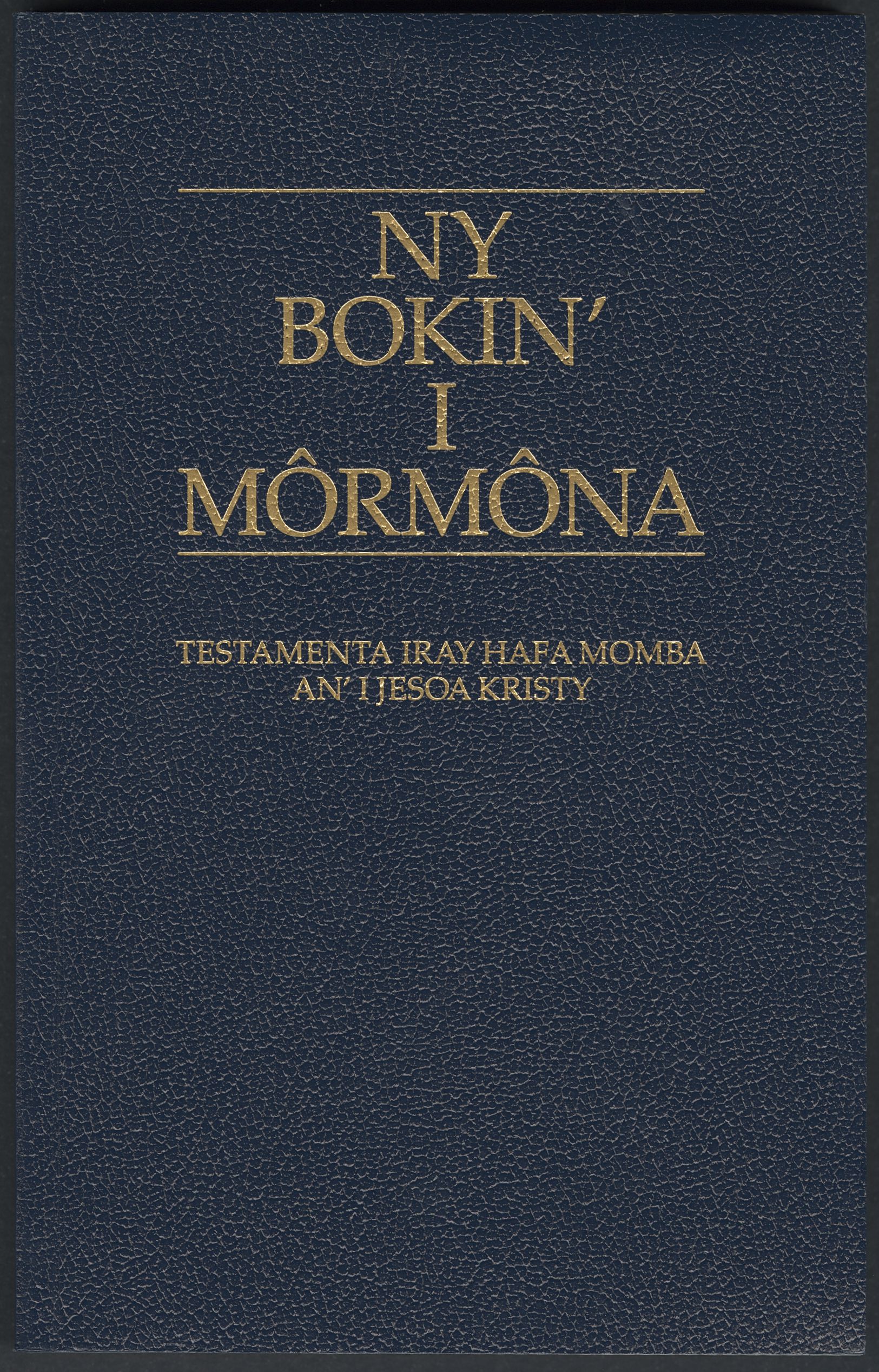
The language has a written literature going back presumably to the 15th century. When the French established Fort-Dauphin in the 17th century, they found an Arabico-Malagasy script in use, known as Sorabe ("large writings"). This Arabic-derived Sorabe alphabet was mainly used for astrological and magical texts. The oldest known manuscript in that script is a short Malagasy-Dutch vocabulary from the early 17th century, which was first published in 1908 by Gabriel Ferrand though the script must have been introduced into the southeast area of Madagascar in the 15th century.
The first bilingual renderings of religious texts are those by Étienne de Flacourt, who also published the first dictionary of the language. Radama I, the first literate representative of the Merina monarchy, though extensively versed in the Arabico-Malagasy tradition, opted in 1823 for a Latin system derived by David Jones and invited the Protestant London Missionary Society to establish schools and churches. The first book to be printed in Malagasy using Latin characters was the Bible, which was translated into Malagasy in 1835 by British Protestant missionaries working in the highlands area of Madagascar.
The current Malagasy alphabet consists of 21 letters: a, b, d, e, f, g, h, i, j, k, l, m, n, o, p, r, s, t, v, y, z. The orthography maps rather straightforwardly to the phonemic inventory. The letters i and y both represent the sound (y is used word-finally, and i elsewhere), while o is pronounced (except in the northern dialects, where it corresponds to ). The affricates and are written tr and dr, respectively, while and are written ts and j. The letter h is often silent. All other letters have essentially their IPA values. The letters c, q, u, w and x are not part of the Malagasy alphabet, but are used in some foreign loanwords.
Mp and occasionally nt may begin a word, but they are pronounced .
@ is used informally as a short form for amin'ny, which is a preposition followed by the definite form, meaning for instance with the.
| Isolated | Final | Medial | Initial | IPA | Modern | ||||
|---|---|---|---|---|---|---|---|---|---|
| Latin | |||||||||
| Arab | ا}} | Arab | ا}} | - | |||||
| Arab | ب}} | Arab | ـب}} | Arab | ـبـ}} | Arab | بـ}} | b / mb | |
| Arab | ت}} | Arab | ـة}} | Arab | ـتـ}} | Arab | تـ}} | ts / nts | |
| Arab | ج}} | Arab | ـج}} | Arab | ـجـ}} | Arab | جـ}} | j / nj | |
| Arab | ڊ}} | Arab | ڊ}} | d | |||||
| Arab | ر}} | Arab | ر}} | r | |||||
| Arab | رّ}} | Arab | رّ}} | dr / ndr / tr / ntr | |||||
| Arab | س}} | Arab | ـس}} | Arab | ـسـ}} | Arab | سـ}} | s | |
| Arab | ࢋ}} | Arab | ـࢋ}} | Arab | ـࢋـ}} | Arab | ࢋـ}} | t / nt | |
| Arab | ع}} | Arab | ـع}} | Arab | ـعـ}} | Arab | عـ}} | n̈ | |
| Arab | غ}} | Arab | ـغ}} | Arab | ـغـ}} | Arab | غـ}} | g / ng | |
| Arab | ٯ}} | Arab | ـٯ}} | Arab | ـڧـ}} | Arab | ڧـ}} | f | |
| Arab | ٯّ}} | Arab | ـٯّ}} | Arab | ـڧّـ}} | Arab | ڧّـ}} | p / mp | |
| Arab | ك}} | Arab | ـك}} | Arab | ـكـ}} | Arab | كـ}} | k / nk | |
| Arab | ل}} | Arab | ـل}} | Arab | ـلـ}} | Arab | لـ}} | l | |
| Arab | م}} | Arab | ـم}} | Arab | ـمـ}} | Arab | مـ}} | m | |
| Arab | ن}} | Arab | ـن}} | Arab | ـنـ}} | Arab | نـ}} | n | |
| Arab | و}} | Arab | و}} | v | |||||
| Arab | ه}} | Arab | ـه}} | Arab | ـهـ}} | Arab | هـ}} | h | |
| Arab | ي}} | Arab | ـي}} | Arab | ـيـ}} | Arab | يـ}} | z |
Diacritics
Diacritics are not obligatory in standard Malagasy, except in the case where its absence leads to an ambiguity: tanàna ("city") must have the diacritic to discriminate itself from tanana ("hand"). They may however be used in the following ways:
- ◌̀ (grave accent) shows the stressed syllable in a word. It is frequently used for disambiguation. For instance in tanàna (town) and tanana (hand), where the word that is an exception to the usual pronunciation rules (tanàna) gets an accent. Using the accent on the word that follows the pronunciation rules (tànana) is less common, mainly in dictionaries. (This is very similar to the usage of the grave accent in Italian.)
- ◌́ (acute accent) may be used in
- very old dictionaries, along with grave accent
- dialects such as Bara
- French (Tuléar) and French-spelled (Antsirabé) names. Malagasy versions are Toliara or Toliary and Antsirabe.
- ◌̂ (circumflex) is used as follows:
- ô shows that the letter is pronounced and not , in Malagasified foreign words (hôpitaly) and dialects (Tôlan̈aro). In standard Malagasy, ao or oa (as in mivoaka) is used instead.
- sometimes the single-letter words a and e are written â and ê but it does not change the pronunciation
- ◌̈ (diaeresis) is used with n̈ in dialects for a velar nasal . Examples are place names such as Tôlan̈aro, Antsiran̈ana, Iharan̈a, Anantson̈o. This can be seen in maps from FTM, the national institute of geodesy and cartography.
- ◌̃ (tilde) is used in ñ sometimes, perhaps when the writer cannot produce an n̈ (although ng is also used in such cases). In Ellis' Bara dialect dictionary, it is used for velar nasal as well as palatal nasal .
Phonology
Vowels
| Front | Central | Back | Close | Mid | Open |
|---|
After a stressed syllable, as at the end of most words and in the final two syllables of some, are reduced to . ( is spelled in such cases, though in monosyllabic words like ny and vy, is pronounced as a full .) Final , and sometimes final syllables, are devoiced at the end of an utterance. and are never reduced or devoiced. The large number of reduced vowels, and their effect on neighbouring consonants, give Malagasy a phonological quality not unlike that of Portuguese.
is marginal in Merina dialect, found in interjections and loan words, though it is also found in place names from other dialectical areas. are diphthongs in careful speech, or in more casual speech. , whichever way it is pronounced, affects following as does.
Consonants
| Labial | Dental | Alveolar | Retroflex | Velar | Glottal | Nasal | Plosive | ||||
|---|---|---|---|---|---|---|---|---|---|---|---|
| and | |||||||||||
| affricate | voiceless | plain | prenasal | voiced | plain | prenasal | Fricative | voiceless | voiced | Lateral | Trill |
The alveolars are slightly palatalized. vary between and , and are especially likely to be the latter when followed by unstressed : Thus French malgache 'Malagasy'. The velars are palatalized after (e.g. alika 'dog'). is frequently elided in casual speech.
The reported postalveolar trilled affricates are sometimes simple stops, , but they often have a rhotic release, . It is not clear if they are actually trilled, or are simply non-sibilant affricates . However, in another Austronesian language with a claimed trilled affricate, Fijian, trilling occurs but is rare, and the primary distinguishing feature is that it is postalveolar. The Malagasy sounds are frequently transcribed [ ], and that is the convention used in this article.
In reduplication, compounding, possessive and verbal constructions, as well as after nasals, fricatives and liquids, 'spirants' become stops, as follows:
| voiced | voiceless | spirant | stop | spirant | stop |
|---|---|---|---|---|---|
| () |
Stress
Here, stressed syllables are indicated by grave diacritics , although these diacritics are normally not used.
Words are generally accented on the penultimate syllable, unless the word ends in ka, tra and often na, in which case they are stressed on the antepenultimate syllable. Secondary stresses exist in even-numbered syllables from the last stressed syllable, when the word has more than four syllables (fàmantàranàndro "watch, clock"). Neither prefixation nor suffixation affect the placement of stress.
In many dialects, unstressed vowels (except ) are devoiced, and in some cases almost completely elided; thus fanòrona is pronounced .
Tonogenesis
According to Penelope Howe in 2019, Central Malagasy is undergoing tonogenesis, with syllables containing voiced consonants are "fully devoiced" and acquire a low tone ( → ), while those containing unvoiced consonants acquire a high tone ( → ). However, this development appears to not occur in posttonic syllables, and she called it "pitch accent" instead.
Grammar ==
Word order
Malagasy has a verb–object–subject (VOS) word order:
|Mamaky boky ny mpianatra |reads book the student |"The student reads the book"}}
|Nividy ronono ho an'ny zaza ny vehivavy |bought milk for the child the woman |"The woman bought milk for the child"}}
Within phrases, Malagasy order is typical of head-initial languages: Malagasy has prepositions rather than postpositions (ho an'ny zaza "for the child"). Determiners precede the noun, while quantifiers, modifying adjective phrases, and relative clauses follow the noun (ny boky "the book(s)", ny boky mena "the red book(s)", ny boky rehetra "all the books", ny boky novakin'ny mpianatra "the book(s) read by the student(s)").
Somewhat unusually, demonstrative determiners are repeated both before and after the noun ity boky ity "this book" (lit. "this book this").
Verbs
Verbs have syntactically three productive "voice" forms according to the thematic role they play in the sentence: the basic "agent focus" forms of the majority of Malagasy verbs, the derived "patient focus" forms used in "passive" constructions, and the derived "goal focus" forms used in constructions with focus on instrumentality. Thus
- (1) Manasa ny tanako amin'ny savony aho. ("I am washing my hands with soap.")
- (2) Sasako amin'ny savony ny tanako. ("My hands are washed with soap by me.")
- (3) Anasako ny tanako ny savony. ("It is with soap that my hands are washed by me.")
all mean "I wash my hands with soap" though focus is determined in each case by the sentence initial verb form and the sentence final (noun) argument: manasa "wash" and aho "I" in (1), sasako "wash" and ny tanako "my hands" in (2), anasako "wash" and ny savony "soap" in (3). There is no equivalent to the English preposition with in (3).
Verbs inflect for past, present, and future tense, where tense is marked by prefixes (e.g. mividy "buy", nividy "bought", hividy "will buy").
Nouns and pronouns
Malagasy has no grammatical gender, and nouns do not inflect for number. However, pronouns and demonstratives have distinct singular and plural forms (cf. io boky io "that book", ireto boky ireto "these books").
There is a complex series of demonstrative pronouns, depending on the speaker's familiarity with the referent.
The following set of pronouns are the pronouns found in Standard Malagasy. Note: the nominative first person singular pronoun is divided between a long and short form; the long form occurs before a verb (focalized or topicalized subjects) and the short form after a verb. The genitive first and second person pronouns are also divided between long and short forms; the long form occurs if the root ends with anything but [na], [ka*] or [tra]; if the stem ends with [na], the long form also occurs but [na] is deleted; and if the stem ends with [ka*] or [tra], the final vowel of the root is deleted and the short form occurs.
| Nominative | Genitive | Accusative | 1st person | singular | plural | exclusive | inclusive | 2nd person | singular | plural | 3rd person | singular | plural |
|---|---|---|---|---|---|---|---|---|---|---|---|---|---|
| izaho/aho | -ko/-o | ahy | |||||||||||
| izahay | -nay/-ay | anay | |||||||||||
| isika | -ntsika/-tsika | antsika | |||||||||||
| ianao | -nao/-ao | anao | |||||||||||
| ianareo | -nareo/-areo | anareo | |||||||||||
| izy | -ny | antsy | |||||||||||
| izy (ireo) | -ny | azy (ireo) |
Deixis
Malagasy has a complex system of deixis (these, those, here, there, etc.), with seven degrees of distance as well as evidentiality across all seven. The evidential dimension is prototypically visible vs. non-visible referents; however, the non-visible forms may be used for visible referents which are only vaguely identified or have unclear boundaries, whereas the visible forms are used for non-visible referents when these are topical to the conversation.
| proximal | medial | distal | Adverbs | ||
|---|---|---|---|---|---|
| (here, there) | Pronouns | ||||
| (this, that) | |||||
| (these, those) | . | ||||
| atỳ | àto | ào | àtsy | àny | aròa* |
| etỳ | èto | èo | ètsy | èny | eròa |
| izatỳ* | izàto* | izào | izàtsy* | izàny | izaròa* |
| itỳ | ìto | ìo | ìtsy | ìny | iròa* |
| irèto | irèo | irètsy | irèny | ireròa* | irerỳ* |
Notes:
- Diacritics in deixis are not mandatory in Malagasy.
- Deixis marked by a * are rarely used.
Vocabulary
Malagasy shares much of its basic vocabulary with the Ma'anyan language, a language from the region of the Barito River in southern Borneo. The Malagasy language also includes some borrowings from Sanskrit, Arabic and Bantu languages (especially the Sabaki branch, from which most notably Swahili derives), and more recently from French and English.
| # | Gloss | Sanskrit | Standard Malagasy |
|---|---|---|---|
| 1 | Debt | दोष (doṣa) | Trosa |
| 2 | Work | आयास (āyāsa) | Asa |
| 3 | Palace / Castle | मण्डप (maṇḍapa) | Lapa |
| 4 | Lover | सखी (sakhī) | Sakaiza |
| 5 | Arm | संधि (saṃdhi) | Sandry |
| 6 | History/Story | तन्त्र (tantra) | Tantara |
| 7 | To check | जागरण (jāgaraṇa) | Mizaha (To watch in Northern dialects) |
| 8 | Good | आचार (ācāra) | Tsara |
| 9 | Month (April-May) | वैशाख (Vaiśākha) | Sakave |
| 10 | To judge | विचार (vicāra) | Mitsara |
| 11 | Ginger | शृङ्गवेर (śṛṅgaver) | Sakaviro |
| 12 | Because | साध्य (sādhya) | Satria |
| 13 | Food | अन्न (anna) | Hanina |
| 14 | That/Which/Who | यत् (yát) | Izay{{cite book |
| 15 | Fence | वलय (Valaya) | Vala |
| 16 | One hundred thousand (100000) | केति (keṭi) | Hetsy |
| 17 | Rest | शेषः (śeṣaḥ) | Sisa |
| 18 | Song | गिरा (girā) | Hira |
| 19 | Knife | असि (Asi) | Antsy |
| 20 | To be scattered | परित (Parita) | Miparitaka |
| 21 | Thunder/lightning | वज्र (Vajra) | Varatra |
| 22 | Crow | काक (Kāka) | Goaika (Koaka in Bezanozano) |
| 23 | Necklace | रवक (Ravaka) | Ravaka |
| 24 | Cloud | राहु (Rahu) | Rahona |
| 25 | Hundred (100) | शत (Śata) | Zato |
| # | Gloss | Swahili | Standard Malagasy |
|---|---|---|---|
| 1 | Ship | Chombo | Sambo |
| 2 | Paper | Karatasi | Taratasy |
| 3 | Speech | Habary | Kabary |
| 4 | Eye | Macho | Maso |
| 5 | Clothes | Kanzu | Akanjo |
| 6 | Onion | Kitunguu | Tongolo |
| 7 | Fable / Story | Ngano | Angano |
| 8 | Bedbug | Kunguni | Kongona |
| 9 | Backpack / Bag | Kitapu | Kitapo |
| 10 | Crocodile | Mamba | Mamba |
| 11 | Donkey | Punda | Ampondra |
| 12 | Cat | Paka | Saka |
| 13 | Cow | Ng’ombe | Omby |
| 14 | Chicken | Kuku | Akoho |
| 15 | Rice | Vali | Vary |
| 16 | White man / European | Wazungu | Vazaha |
| 17 | Witch / Sorcerer | Mchawi | Mpamosavy |
| 18 | Path / Way / Road | Njia | Dia |
| 19 | Indian (South Asian) | Karani | Karana |
| 20 | Guest/Foreigner | Wageni | Vahiny |
| 21 | Wage/Salary | Gharama | Karama |
| 22 | Shiny | ng’ara | Mangirana |
| 23 | Mattress | Godoro | Kidoro |
| 24 | Disability | Kilema | Kilema |
| 25 | Shoe | Kiatu | Kiraro |
| 26 | Floor | Ghorofa | Gorodona |
| 27 | Centipede | tandu | Trambo |
| 28 | Cough | Kukohoa | Koaka |
| Malagasy Word | Dialect | Etymological Source | Original Language | Gloss |
|---|---|---|---|---|
| Amesa | Antaifasy | Mes | Dutch | Knife |
| Meso | Antakarana | |||
| Mesa | Tanosy | |||
| Hariva | All dialects | Ereb (عِرْب) | Arabic | Evening |
| Amely | Antaifasy | Morelle noire | French | Black nightshade |
| Mely | Bara | |||
| Tafasiry | Antaifasy | Tafsīr (تفسير) | Arabic | Tale |
| Lajoly | Bara | La geôle | French | Jail |
| Kazaha | Antaifasy | Cassava | English | Cassava |
| Antemoro | ||||
| Betsileo | ||||
| Sarisoky | Antaifasy | Soursop | English | Soursop |
| Antemoro | ||||
| Kôpy | Antaifasy | Cup | English | Cup |
| Jigny | Antaifasy | Jinn (الجنّ) | Arabic | Jinn |
| Antemoro | ||||
| Tanosy | ||||
| Antambahoaka | ||||
| Tanala | ||||
| Tamatesy | Vezo | Tomatoes | English | Tomatoes |
| Antaifasy | ||||
| Zarikô | Northern Betsimisaraka | Haricot | French | Bean |
| Antakarana | ||||
| Lekôly | Antakarana | École | French | School |
| Northern Betsimisaraka | ||||
| Northern Sakalava | ||||
| Tsimihety | ||||
| Lakilasy | Antemoro | La classe | ||
| Antaifasy | ||||
| Antesaka | ||||
| Sekoly | Betsileo | School | English | |
| Merina | ||||
| Vakinankaratra | ||||
| Ariary | Standard Malagasy | Rial (ريال) | Arabic | Money |
| Kabeso | Southern Sakalava | Cabeça | Portuguese | Head |
| Drala | Vezo | Dollar | English | Money |
| Masikoro | ||||
| Miarahaba | All dialects | Marḥabā (مرحبا) | Arabic | To greet |
| Basy | All dialects | Busse{{cite web | title=Arquebus Definition of Arquebus by Dictionary.com | website=Dictionary.com |
| Mpingaratse | Tandroy | Espingarda | Portuguese | |
| Malemy | All dialects | Layyin (لَيِّن) | Arabic | Soft |
| Mitarika | All dialects | ṭarīq (طريق) | Arabic | To lead |
| Marary | All dialects | maraḍ (مرض) | Arabic | To be ill/sick/To hurt |
| Midoboky | Southeastern dialects | dubur (دبر) | Arabic | To sit |
Malagasy contains many words that derive from Malay which have completely different original definitions unlike those of its close relative Ma'anyan:
| Meaning | Ma'anyan | Malagasy | Malay etymon | Word | direct correspondence | |
|---|---|---|---|---|---|---|
| based on sound change | actual meaning | |||||
| back | wading | lamosina | lembusir, lambung sisir | back of a slaughtered animal i.e. sirloin (lit. 'flank side') | ||
| shoulder | papale | soroka | suduk | spade | ||
| finger | kingking | rantsana | rancang | pole, stake | ||
| foot | pe'e | tomboka | tumbuk | to pound (of earth, rice) | ||
| vulva | tingy | tinggi | high |
In 1603, Frederick de Houtman published in Amsterdam the Spraeck ende Woord-boeck inde Maleysche ende Madagaskarsche Talen, which contains a Dutch–Malagasy vocabulary and dialogues. De Houtman had learned Malagasy (Old Northern Betsimisaraka dialect) during his stay at Sainte-Marie and in Antongil Bay.{{cite book|editor=Galibert, Nivoelisoa
| # | Gloss | Martin de Vitré (Saint-Augustin Bay, 1603) | Frederick de Houtman (Saint-Marie & Antongil Bay, 1603) | Standard Malagasy |
|---|---|---|---|---|
| 1 | one | Issa | Issa / Areick | Isa/Iray |
| 2 | two | Roue | Roo | roa |
| 3 | three | Tello | Tello | telo |
| 4 | four | Effad | Efferts | efatra |
| 5 | five | Lime | Dimi | dimy |
| 6 | six | Enning | Ennin | enina |
| 7 | seven | Fruto | Fitoe | fito |
| 8 | eight | Vvoulo | Wallou | valo |
| 9 | nine | Siday | Sivy | sivy |
| 10 | ten | Faule | Foelou | folo |
| 20 | twenty | Roo poelo | roapolo | |
| 21 | twenty-one | Roo poelo areick | iraika ambin’ny roapolo | |
| 22 | twenty-two | Roo poelo roo | roa ambin’ny roapolo | |
| 23 | twenty-three | Roo poelo tello | telo ambin’ny roapolo | |
| 24 | twenty-four | Roo poelo efferts | efatra ambin’ny roapolo | |
| 25 | twenty-five | Roo poelo dimi | dimy ambin’ny roapolo | |
| 26 | twenty-six | Roo poelo ennin | enina ambin’ny roapolo | |
| 27 | twenty-seven | Roo poelo fitoe | fito ambin’ny roapolo | |
| 28 | twenty-eight | Roo poelo wallou | valo ambin’ny roapolo | |
| 29 | twenty-nine | Roo poelo sivy | sivy ambin’ny roapolo | |
| 30 | thirty | Tello poelo | telopolo | |
| 40 | forty | Effert poelo | efapolo | |
| 50 | fifty | Dimy poelo | dimampolo | |
| 60 | sixty | Ennin poelo | enimpolo | |
| 70 | seventy | Fitou poelo | fitopolo | |
| 80 | eighty | Wallou poelo | valopolo | |
| 90 | ninety | Sivy poelo | sivifolo | |
| 100 | hundred | Siatou | zato | |
| 1000 | thousand | Heetsi | arivo |
| # | Gloss | Old Northern Malagasy (Saint-Marie & Antongil Bay, 17th c.) | Standard Malagasy |
|---|---|---|---|
| 1 | You | Hannau | Anao |
| 2 | Ship | Laccan | Lakana |
| 3 | Here (past) | Tetoeu | Teto |
| 4 | To buy | Mevydy | Mividy |
| 5 | What | Innou | Inona |
| 6 | Water | Rano | Rano |
| 7 | Rice | Varre | Vary |
| 8 | Cow | Agombe | Omby |
| 9 | Honey | Tintelly | Tantely |
| 10 | We | Iahye | Izahay |
| 11 | Where are you from? | Lehataja nou? | Avy aiza anao? |
| 12 | Person | Ouloun | Olona |
| 13 | Far away | Labebey | Lavitra be |
| 14 | What's the name of the country? | Innou angarre tany? | Inona ny anaran'ny tany? |
| 15 | Our country is called Holland | Tany ney magebey Hollant | Holandy no anaran'ny taninay |
| 16 | Copper | Brahing | Varahina |
| 17 | Silver | Pellan | Volafotsy |
| 18 | Knife | Kissou | Antsy |
| 19 | Thief | Ampangalats | Mpangalatra |
| 20 | Merchant | Ampevarots | Mpivarotra |
| 21 | Leave that there | Avyla uw kony | Avelao eo |
| 22 | Night | Alin | Alina |
| 23 | Tomorrow | Hamerein | Rahampitso |
| 24 | God | Iang hary | Zanahary |
| 25 | All | Aby | Rehetra |
| 26 | Us | Atsiken | Isika |
| 27 | White/European | Vajaha | Vazaha |
| 28 | Goat | Osse | Osy |
| 29 | Milk | Rononne | Ronono |
| 30 | How much the oxen? | Firy n'ya agombe? | Ohatrinona ny omby? |
| 31 | Little | Hele | Kely |
| 32 | Cheap | Mora | Mora |
| 33 | Your boat | Ny-laccan hannau | Ny lakanao |
| 34 | Horn | Tandock | Tandroka |
| 35 | Why | Nahoen | Nahoana |
| 36 | To say/tell | Mevoullang | Miteny |
| 37 | Ear | Souffing | Sofina |
| 38 | Nose | Oroen | Orona |
| 39 | Dead | Naty | Maty |
| 40 | High/On top | Angambo | Ambony |
| 41 | Sick | Marare | Marary |
| 42 | Long | Lava | Lava |
| 43 | Short | Fohy | Fohy |
| 44 | Bad | Rratsy | Ratsy |
| 45 | Crazy | Lefack | Marary saina |
| 46 | White | Foetsy | Fotsy |
| 47 | When | Oviene | Oviana |
| 48 | Lemurian | Warck | Varika |
| 49 | Axe | Feck | Famaky |
| 50 | Penis | Latack | Lataka |
| 51 | Blood | Ra | Rà |
| 52 | Breast | Nounou | Nono |
| 53 | Powder | Vanja | Vanja |
| 54 | Dark | Mey sing | Maizina |
| 55 | Angry | Vingirt | Tezitra |
| 56 | To dream | Mang'noffy | Manonofy |
| 57 | King | Ampenjacke | Mpanjaka |
| 58 | Tired | Ballack | Vizana |
| 59 | Good | Tsara | Tsara |
| 60 | Egg | Atoulou / Atoelou | Atody |
| 61 | Island | Nossey | Nosy |
| 62 | Rain | Orang | Orana |
| 63 | Huge | Iackebey | Lehibe |
| 64 | Happy | Ravo | Faly |
| 65 | Neck | Wojong | Tenda |
| 66 | Hand | Tang'an | Tanana |
| 67 | Hair | Wullo | Volo |
| 68 | Bow/Crossbow | Faly | - |
| 69 | South | Antemoo | Atsimo |
| 70 | Chicken | Akoho | Akoho |
| 71 | Shark | Ansansa | Antsantsa |
| 72 | House | Tsangou | Trano |
| 73 | Skin | Hoedits | Hoditra |
| 74 | Yes | Iee | Eny / Ye |
| 75 | Steel | Wy | Vy |
| 76 | Wife | Vady | Vady |
| 77 | Child | Iaja | Zaza |
| 78 | Cheek | Feef | Fify |
| 79 | Year | Tawon | Taona |
| 80 | Spear | Liffong | Lefona |
| 81 | Light | Maivang | Maivana |
| 82 | Sky | Langits | Lanitra |
| 83 | Virgin | Mitouvoo | - |
| 84 | Moon | Voelan | Volana |
| 85 | Man | Lelahy | Lehilahy |
| 86 | Skinny | Mah'ia | Mahia |
| 87 | Mother | Renni | Reny |
| 88 | To watch/look at | Mijaha | Mijery |
| 89 | Nail | Vajangkoho | Hoho |
| 90 | To sell | Mandof | Mivarotra |
| 91 | Saved | Awotto | Avotra |
| 92 | To climb | Makats | Miakatra |
| 93 | Prince | Annack adien | Anakandriana |
| 94 | Pot | Balangi | Vilany |
| 95 | To learn | Mienjatsi | Mianatra |
| 96 | Spider | Fararets | - |
| 97 | Dry | Maeying | Maina |
| 98 | Red | Meynja | Mena |
| 99 | Rat | Vella vou | Voalavo |
| 100 | Fat | Mattavi | Matavy |
| 101 | Sweet | Mamy | Mamy |
| 102 | To count | Mangisa | Manisa |
| 103 | Sun | Masso anro | Masoandro |
| 104 | Afraid | Matahots | Matahotra |
| 105 | Mortar | Leong | Leona |
| 106 | Tooth | Niffy | Nify |
| 107 | Yesterday | Maddy | Omaly |
| 108 | Letter | Soerat | Soratra |
| 109 | To close | Afoedy | Ahidy |
| 110 | To wait | Mandingy | Miandry |
| 111 | Father | Ray | Ray |
Richard Boothby, in his 1646 work A Brief Discovery or Description of the Most Famous Island of Madagascar, or St. Laurence, recorded several words from the inhabitants of Saint Augustine’s Bay (in present-day Toliara). The language spoken in that region is now classified as part of the Vezo dialect, which belongs to the Southern Malagasic dialect cluster—likely representing an early form of Proto-Vezo.
| # | Gloss | St Augustine Bay (Boothby, 17th c.) | Standard Malagasy |
|---|---|---|---|
| 1 | good | Chara | tsara |
| 2 | rope | Talle | tady |
| 3 | cloth | Lomba | lamba |
| 4 | lance | Leffo | lefona |
| 5 | tomorrow | Humeray | ampitso |
| 6 | salt | Syra | sira |
| 7 | palm of hand | Fala tanga | felatanana |
| 8 | tongue | Leela | lela |
| 9 | ear | Saffe | sofina |
| 10 | eye | Maca | maso |
| 11 | hair | Voyla | volo |
| 12 | shoulder | Sowkee | soroka |
| 13 | back (body) | Lemboshe | lamosina |
| 14 | butt | Voylee | vody |
| 15 | breast | Noeno | nono |
| 16 | hand | Tanga | tanana |
| 17 | teeth | Niffa | nify |
| 18 | chin | Soca | saoka |
| 19 | cow | Angomba | omby |
François Cauche travelled mostly in Southern Madagascar in the regions inhabited by the Antanosy, Mahafaly, and Antandroy (Ampatres), but also briefly along the eastern coast among the Antaimoro (Matatane) and around Antongil Bay (Northern Betsimisaraka). He collected mostly vocabulary from the south, where he carried out the majority of his commercial exchanges. He is the first to record conversations in Malagasy, probably from Southern and Eastern Malagasy varieties, necessary for communication and trade. His observations and vocabulary were later published in Relations véritables et curieuses de l'isle de Madagascar par François Cauche, et du Brésil in 1651.
| # | Gloss | Old Southern Malagasy (Cauche, 17th c.) | Standard Malagasy |
|---|---|---|---|
| 1 | one | Is | iray |
| 2 | two | ro | roa |
| 3 | three | tel | telo |
| 4 | four | ef | efatra |
| 5 | five | lime | dimy |
| 6 | six | enne | enina |
| 7 | seven | fuite | fito |
| 8 | eight | vale | valo |
| 9 | nine | cive | sivy |
| 10 | ten | foule | folo |
| 11 | eleven | Iray manifoule | iraika ambin’ny folo |
| 12 | twelve | ro manifoule | roa ambin’ny folo |
| 13 | thirteen | tel manifoule | telo ambin’ny folo |
| 14 | fourteen | ef manifoule | efatra ambin’ny folo |
| 15 | fifteen | lime manifoule | dimy ambin’ny folo |
| 16 | sixteen | enne manifoule | enina ambin’ny folo |
| 17 | seventeen | fuite manifoule | fito ambin’ny folo |
| 18 | eighteen | vale manifoule | valo ambin’ny folo |
| 19 | nineteen | cive manifoule | sivy ambin’ny folo |
| 20 | twenty | ropoule | roapolo |
| 21 | twenty-one | ropoule irai cambiombe | Iraika ambin'ny roapolo |
| 22 | twenty-two | ropoule ro cambiombe | roa ambin'ny roapolo |
| 23 | twenty-three | ropoule tel cambiombe | telo ambin'ny roapolo |
| 30 | thirty | Tel poule | telopolo |
| 40 | forty | ef poule | efapolo |
| 50 | fifty | lia poule or lime poule | dimampolo |
| 60 | sixty | enne poule | enimpolo |
| 70 | seventy | fuite poule | fitopolo |
| 80 | eighty | vale poule | valopolo |
| 90 | ninety | cive poule | sivifolo |
| 100 | one hundred | zat | zato |
| 200 | two hundred | rozat | roanjato |
| 300 | three hundred | telzat | telonjato |
| 400 | four hundred | efsat | efajato |
| 500 | five hundred | lime zat | dimanjato |
| 600 | six hundred | ennezat | eninjato |
| 700 | seven hundred | fuite zat | fitonjato |
| 800 | eight hundred | vale zat | valonjato |
| 900 | nine hundred | cive zat | sivinjato |
| 1000 | one thousand | Arrive or Irecarive | arivo |
| 2000 | two thousand | roarive | roa arivo |
| # | Gloss | Old Southern Malagasy (Cauche, 17th c.) | Standard Malagasy |
|---|---|---|---|
| 1 | Canoe | Lacque | Lakana |
| 2 | Oil | Menach | Menaka |
| 3 | Red | Mene | Mena |
| 4 | Chicken | Acoo/acoho | Akoho |
| 5 | Fish | Fuie | Trondro |
| 6 | Rope | Tali | Tady |
| 7 | We | Zahai | Izahay |
| 8 | You (sing.) | Anno | Ianao |
| 9 | Cat | Pise | Saka |
| 10 | Dog | Ambo | Alika |
| 11 | Crazy | Maulle | Adala |
| 12 | Butter | Menacronon | Dibera |
| 13 | Anymore | Sasse | Intsony |
| 14 | Thin | Mahie | Mahia |
| 15 | Fat | Manesse | Matavy |
| 16 | Smelly | Mahibou | Maimbo |
| 17 | Afraid | Mattao | Matahotra |
| 18 | Person | Oule | Olona |
| 19 | Sun | Massuandre | Masoandro |
| 20 | Evening | Massuandre matte | Hariva |
| 21 | Hungry | Rez | Noana |
| 22 | Hot | Maye | Mafana |
| 23 | Cold | Manarre | Mangatsiaka |
| 24 | Little | Massessaie | Kely |
| 25 | Big | Croute baye | Lehibe |
| 26 | Good / Beautiful | So | Tsara |
| 27 | To cry | Toumangre | Mitomany |
| 28 | To sleep | Mandre | Matory |
| 29 | To drink | Minon | Misotro |
| 30 | To eat | Hyne | Mihinana |
| 31 | Steel | Vie | Vy |
| 32 | Bread | Moufe | Mofo |
| 33 | Silver | Voulafouche | Volafotsy |
| 34 | Gold | Voulameno | Volamena |
| 35 | Stone | Vate | Vato |
| 36 | Wind | Harre | Rivotra |
| 37 | Up / Above | Ambonne | Ambony |
| 38 | Tree | Aze | Hazo |
| 39 | Rum | Cique af | Toaka |
| 40 | Wine | Ciq | Divay |
| 41 | Sky | Arro | Lanitra |
| 42 | Earth | Tanne | Tany |
| 43 | Water | Ranne | Rano |
| 44 | Cold water | Ranne mangasi | Rano mangatsiaka |
| 45 | Fire | Affe | Afo |
| 46 | Spirit | Zin | Fanahy |
| 47 | Heart | Foo | Fo |
| 48 | Foot | Tambou | Tongotra |
| 49 | Tits | Nonne | Nono |
| 50 | Liver | Atte | Aty |
| 51 | Belly | Trou | Kibo |
| 52 | Hands | Tangue | Tanana |
| 53 | Butt/Ass | Fourin | VodY |
| 54 | Neck | Vouze | Tenda |
| 55 | Tooth | Nife | Nify |
| 56 | Tongue | Lelle | Lela |
| 57 | Mouth | Vave | Vava |
| 58 | Nose | Orre | Orona |
| 59 | Eye | Masse | Maso |
| 60 | Ear | Soufe | Sofina |
| 61 | Hair | Voule | Volo |
| 62 | Head | Loha | Loha |
| 63 | I / Me | Zaa | Izaho |
| 64 | He/She/It | Ize | Izy |
| 65 | Him/She/It | Ize | Izy |
| 66 | Meat | Hen | Hena |
| 67 | Too / Also | Coo | Koa |
| 68 | Dead | Matte | Maty |
| 69 | Tomorrow | Amaray | Ampitso |
| 70 | Morning | Empice | Maraina |
| 71 | Egg | Attoule | Atody |
A small Malagasy–French vocabulary compiled by Étienne de Flacourt, former Governor of the French settlement at Fort-Dauphin (Tolagnaro), was published in Paris in 1658. It is the first printed work to include prayers in Malagasy. Flacourt likely contributed to the dictionary and a catechism prepared by the Lazarist Fathers, whom he later presented to the future Saint Vincent de Paul.{{cite web |access-date=2025-11-07
| # | Gloss (English) | Old Southern Malagasy (Anosy,Mid-17th c.) | Standard Malagasy | Arabic / Swahili |
|---|---|---|---|---|
| 1 | Wine | Siche | Divay | Khamr (خمر) |
| 2 | Face | Lahatse / Tarehy | Tarehy | - |
| 3 | Theft | Fangalatse / Halatra | Halatra | - |
| 4 | To live | Mienghe | Miaina | - |
| 5 | Alive | Vellom | Velona | - |
| 6 | City / Village | Tanaha | Tanana | - |
| 7 | Old | Antetse | Antitra | - |
| 8 | Victory | Fanressehan | Fandresena | - |
| 9 | Clothes | Tsichine | Akanjo | - |
| 10 | Green | Mahitsou | Maintso | - |
| 11 | Stick | Anghira | Tsorakazo | - |
| 12 | Belly | Troc | Kibo | - |
| 13 | To sell | Mivarots | Mivarotra | - |
| 14 | Seller | Ompivarots | Mpivarotra | - |
| 15 | Wave | Mouza | Onjana | mawja (موجة) |
| 16 | To kill | Mamounou | Mamono | - |
| 17 | To find | Mahita | Mahita | - |
| 18 | A lot | Lohatse | Loatra | - |
| 19 | Earthquake | Hourouhourounitane | Horohoron-tany | - |
| 20 | Work | Hassa | Asa | - |
| 21 | To cut | Manapa | Manapaka | - |
| 22 | Betrayal | Fitacq | Fitaka | - |
| 23 | All | Abi | Avi | - |
| 24 | Early | Sahali | Sahady | - |
| 25 | Thunder | Varats | Varatra | - |
| 26 | Head | Loha | Loha | - |
| 27 | Tamarind | Montémonte | Voamadilo | - |
| 28 | On | Ambone | Ambony | - |
| 29 | South | Acimou | Atsimo | - |
| 30 | Sugarcane | Fare | Fary | - |
| 31 | Frequently | Matetech | Matetika | - |
| 32 | Suffering | Fiharets | Fijaliana | - |
| 33 | Witch / Sorcerer | Ompamousavé | Mpamosavy | - |
| 34 | To dream | Mahinouf | Manonofy | - |
| 35 | Solitude / Loneliness | Fitocan | Fitoka-monina | - |
| 36 | Sun | Massouandrou | Masoandro | - |
| 37 | Thirsty | Hettehette | Hetaheta | - |
| 38 | Only | Avau | Ihany | - |
| 39 | Alone | Irere / Iraiky | Irery | - |
| 40 | Salt | Sira | Sira | - |
| 41 | Dry | Mahé | Maina | - |
| 42 | Scorpion | Hala | Hala | - |
| 43 | To jump | Mamoca | Mambikina | - |
| 44 | To bleed | Mandevorha | Mandeha ra | - |
| 45 | Sand | Fasso | Fasika | - |
| 46 | Rice | Vare | Vary | - |
| 47 | Laughter | Hehé | Hehy | - |
| 48 | To return | Mipoulé | Miverina | - |
| 49 | Shark | Antsantsa | Antsantsa | - |
| 50 | To meet | Mifahita | Mihaona | - |
| 51 | To refuse | Mandaha | Mandà | - |
| 52 | Root | Foton / Vahan | Faka | - |
| 53 | What's this? | Hinne iou? | Inona io? | - |
| 54 | Who | Izo | Iza | - |
| 55 | Question | Fanghotaneia | Fanontaniana | - |
| 56 | Deep | Lalen | Lalina | - |
| 57 | To pray | Mkabiry | Mivavaka | Kabir (كبير) |
| 58 | To testify | Misahada | Mijoro vavolombelona | Yashhadu(شهد) |
| 59 | Wet | Lay | Lena | - |
| 60 | Dead | Mate | Maty | - |
| 61 | To bite | Manifats | Magnekitry | - |
| 62 | Sir | Roandria / Ranghandria | Andriamatoa | - |
| 63 | To threaten | Michinia | - | - |
| 64 | Bad | Ratsi | Ratsy | - |
| 65 | Medicine | Auli | Fanafody | - |
| 66 | To marry | Manambali | Manambady | - |
| 67 | Marie | Ramariama | Masina Maria | Maryam |
| 68 | Wedding | Fanambalian | Fanambadiana | - |
| 69 | Merchant | Ompivarotse | Mpivarotra | - |
| 70 | Misfortune | Vouhy | Voina | - |
| 71 | But | Fa | Fa | - |
| 72 | Bad | Ratsi | Ratsy | - |
| 73 | Hand | Tang | Tanana | - |
| 74 | Sick | Marre | Marary | - |
| 75 | Skiny | Mahiia | Mahiia | - |
| 76 | To settle | Monengh | Monina | - |
| 77 | Place | Touhere | Toerana | - |
| 78 | Lesson | Anatse | Anatra / Lesona | - |
| 79 | Tongue | Lela | Lela | - |
| 80 | Ugly | Ratsi | Ratsy | - |
| 81 | Milk | Ronono | Ronono | - |
| 82 | Language | Voulanh | Fiteny | - |
| 83 | Make | Tsianach | Farihy | - |
| 84 | There | Irocq | Io / Iroa (rare) | - |
| 85 | Day | Anrou | Andro | - |
| 86 | Happiness | Haravouan | Haravoana | - |
| 87 | Ever / Never | Tsiare / Insatse | Intsony | - |
| 88 | Jesus | Rahissa | Jesosy | Issa |
| 89 | Insult | Ompa | Ompa | - |
| 90 | Island | Nossi | Nosy | - |
| 91 | Here | Atoua | Ato | - |
| 92 | This | Itouy | Ito / Ity | - |
| 93 | Outside | Avella | Ivelany | - |
| 94 | Oil | Menach | Menaka | - |
| 95 | Owl | Vouroundoule | Vorondolo | - |
| 96 | Above / On | Ambone | Ambony | - |
| 97 | Axe | Feche | Famaky | - |
| 98 | Fat | Vonrac | Matavy | - |
| 99 | Gun | Ampigaratsebato | Basy | - |
| 100 | Fruit | Boa | Voankazo | - |
| 101 | River | Onghe | Renirano | Ayn (عين) |
| 102 | Fire | Afou | Afo | - |
| 103 | To flee | Milefa | Mitsoaka | - |
| 104 | Behind | Afara | Aoriana | - |
| 105 | To embark | Manhondra | Mitondrana | - |
| 106 | Equal | Mira | Mira | - |
| 107 | Image | Tsara | Sary | ṣūra(صورة) |
| 108 | Water | Ranou | Rano | - |
| 109 | Sweet | Mami | Mamy | - |
| 110 | To sleep | Mande | Mandry | - |
| 111 | In front of | Aloha | Aloha | - |
| 112 | Debt | Trousse | Trosa | - |
| 113 | Tooth | Nifi | Nify | - |
| 114 | Already | Lahame | Sahady | - |
| 115 | Tomorrow | Amarai | Rahampitso | - |
| 116 | Damned | Kafiry | Voaozona | - |
| 117 | To believe | Meinou | Mino | yu’minu (آمن) |
| 118 | Knife | Mes / Antsi | Antsy | - |
| 119 | Chest | Sandouc | Kesika | - |
| 120 | Key | Fanghalahilli | Fanalahidy | - |
| 121 | Sky | Langhits | Lanitra | - |
| 122 | Dog | Amboua | Alika | - |
| 123 | Horse | Farassa | Soavaly | - |
| 124 | Hot / Warm | Mahe | Mafana | - |
| 125 | Shirt | Camise | Lobaka | Qamis (قميص) |
| 126 | Cat | Pise | Saka | - |
| 127 | Camel | Angammerre | Rameva | Jammal (جمل) |
| 128 | Ring | Ampete | Peratra | Pete |
| 129 | Balance | Midza | Mizana | mīzān (ميزان) |
| 130 | With | Aman | Sy | - |
| 131 | Also | Coua | Koa | - |
| # | Gloss | Old Southern Malagasy (Anosy, Mid-17th c.) | Standard Malagasy |
|---|---|---|---|
| 1 | One | Iraiche / Issa | Iray / Isa |
| 2 | Two | Roué / Rohi | Roa |
| 3 | Three | Tellou | Telo |
| 4 | Four | Efats | Efatra |
| 5 | Five | Limi | Dimy |
| 6 | Six | Enem | Enina |
| 7 | Seven | Fitou | Fito |
| 8 | Eight | Valou | Valo |
| 9 | Nine | Sivi | Sivy |
| 10 | Ten | Foulo | Folo |
| 11 | Eleven | Iranamanifoulo / Iracamanifoulo | Iraika ambin'ny folo |
| 12 | Twelve | Roé amanifoulo | Roa ambin'ny folo |
| 13 | Thirteen | Tellou amanifoulo | Telo ambin'ny folo |
| 14 | Fourteen | Effats amanifoulo | Efatra ambin'ny folo |
| 15 | Fifteen | Limi amanifoulo | Dimy ambin'ny folo |
| 16 | Sixteen | Enem amanifoulo | Enina ambin'ny folo |
| 17 | Seventeen | Fitou amani foulo | Fito ambin'ny folo |
| 18 | Eighteen | Valou amani foulo | Valo ambin'ny folo |
| 19 | Nineteen | Civi amani foulo | Sivy ambin'ny folo |
| 20 | Twenty | Ropoul | Roapolo |
| 25 | Twenty-five | Ropoul limi ambi | Dimy amby roapolo |
| 30 | Thirty | Tellopoul / Teloupoulou | Telopolo |
| 40 | Forty | Efatte poul / Effats poulo | Efapolo |
| 50 | Fifty | Liapoulo | Dimampolo |
| 60 | Sixty | Enempoul | Enimpolo |
| 70 | Seventy | Fitoupoul | Fito-polo |
| 80 | Eighty | Valoupoul | Valopolo |
| 90 | Ninety | Civifoulo | Sivifolo |
| 100 | One hundred | Zatou | Zato |
| 150 | One hundred fifty | Liapoul ambi Zatou | Dimampolo ambin'ny zato |
| 500 | Five hundred | Limizatou | Dimanjato |
| 650 | Six hundred fifty | Enem zatou inra liapoul | Dimampolo sy enin-zato |
| 700 | Seven hundred | Fitou Zatou | Fito zato |
| 1,000 | Thousand | Arrivou | Arivo |
| 10,000 | Ten thousand | Foulo Arrivou | Iray halina |
| 100,000 | One hundred thousand | Zatou Arrivou | Iray hetsy |
| 1,000,000 | Million | Ala | Tapitrisa |
Robert Drury, an English sailor who spent 15 years in southern Madagascar (including Androy, Fierenana, now known as Tulear, and Menabe), collected a vocabulary of southern Malagasy words as spoken in the early 1700s, which he published in his memoirs, Madagascar, or Robert Drury's Journal, in 1729 with the assistance of Daniel Defoe.{{cite book |editor1-last=Stewart |editor1-first=Charles |editor2-last=Shaw |editor2-first=Rosalind
| # | Gloss | Old Southern Malagasy (Androy, Fierenana & Menabe, Early 18th c.) | Standard Malagasy |
|---|---|---|---|
| 1 | one | Eser | Isa / Iray |
| 2 | two | Roaa | Roa |
| 3 | three | folu | telo |
| 4 | four | effuchts | efatra |
| 5 | five | deeme | dimy |
| 6 | six | eanning | enina |
| 7 | seven | feeto | fito |
| 8 | eight | varlo | valo |
| 9 | nine | seve | sivy |
| 10 | ten | folo | folo |
| 13 | thirteen | folotaluambe | telo ambin'ny folo |
| 15 | fifteen | folodeeme amby | dimy ambin'ny folo |
| 17 | seventeen | folofeetoambe | fito ambin'ny folo |
| 20 | twenty | roaafolo | roapolo |
| 25 | twenty-five | rowafolo deeme amby | dimy ambin'ny roapolo |
| 30 | thirty | talofolo | telopolo |
| 35 | thirty-five | Talofulo deeme amby | dimy ambin'ny folo |
| 40 | forty | effuch folo | efapolo |
| 45 | forty-five | effuchfolo deeme amby | dimy amby efapolo |
| 50 | fifty | deemefolo | dimampolo |
| 55 | fifty-five | deemefolo deeme amby | dimy amby dimampolo |
| 60 | sixty | ennig folo | enimpolo |
| 65 | sixty-five | ennig folo deeme amby | dimy amby enin-polo |
| 70 | seventy | feeto folo | fitopolo |
| 75 | seventy-five | fetofolo deeme amby | dimy amby fitopolo |
| 80 | eighty | varlofolo | valopolo |
| 85 | eighty-five | varlofolo deeme amby | dimy amby valopolo |
| 90 | ninety | sevefolo | sivifolo |
| 95 | ninety-five | seveefolo deeme amby | dimy amby sivifolo |
| 100 | hundred | zawto | zato |
| 600 | six hundred | eanning zawto | enin-jato |
| 700 | seven hundred | feeto zawto | fito zato |
| 800 | eight hundred | varlozawto | valo zato |
| 1000 | thousand | arevo | arivo |
| 6000 | six thousand | eanning arevo | enina arivo |
| 7000 | seven thousand | feeto arevo | fito arivo |
| 8000 | eight thousand | varlo arevo | valo arivo |
| # | Gloss | Southern Malagasy (Drury, early 18th c.) | Standard Malagasy |
|---|---|---|---|
| 1 | South | Ateemo | Atsimo |
| 2 | Ship | Sambo | Sambo |
| 3 | Soft | Merlemma | Malemy |
| 4 | Sky | Longitchs | Lanitra |
| 5 | King | Panzaccar | Mpanjaka |
| 6 | Good | Suer | Tsara |
| 7 | Bad | Rawtche | Ratsy |
| 8 | To buy | Mevele | Mividy |
| 9 | Rope | Tolle | Tady |
| 10 | Cold | Merninchy | Mangatsiaka |
| 11 | Child | Annack | Zaza |
| 12 | Cloud | Rawho | Rahona |
| 13 | Cat | Chacker | Saka |
| 14 | Lance | Luffu | Lefona |
| 15 | Tongue | Leller | Lela |
| 16 | Teeth | Neefa | Nify |
| 17 | Sand | Fasse | Fasika |
| 18 | Salt | Serrer | Sira |
| 19 | Sugar | Serermame | Siramamy |
| 20 | Sweet | Marme | Mamy |
| 21 | White man | Verzarhar | Vazaha |
| 22 | Wet | Lay | Lena |
| 23 | Egg | Tule | Atody |
| 24 | Knife | Messu | Antsy |
| 25 | Ant | Vetick | Vitsika |
| 26 | Dark | Myeak | Maizina |
| 27 | Eye | Mossu | Maso |
| 28 | Foot | Feendeer | Tongotra |
| 29 | Fish | Feer | Trondro |
| 30 | Friend | Lonego | Namana |
| 31 | White | Fute | Fotsy |
| 32 | What ? | Eno | Inona? |
| 33 | This | Toe | Ity / Izao |
| 34 | Pistol | Plato | Poleta |
| 35 | People | Olo | Olona |
| 36 | Neck | Voozzo | Vozona |
| 37 | Moon | Vooler | Volana |
| 38 | Milk | Ronoonu | Ronono |
| 39 | Man | Loyhe | Lehilahy |
| 40 | Million | Arrla | Arivo |
| 41 | Tomorrow | Hummerwha | Rahampitso |
| 42 | Mouse | Varlarvo | Voalavo |
| 43 | Night | Aulla | Alina |
| 44 | North | Avarruchs | Avaratra |
| 45 | Net | Arratto | Harato |
| 46 | Little | Kala | Kely |
| 47 | Low | Eever | Ambany |
| 48 | Knife | Messu | Antsy |
| 49 | Horse | Suvaller | Soavaly |
| 50 | How many ? | Fera ? | Firy? |
| 51 | Hatchet | Fermackey | Famaky |
| 52 | To hear | Merray | Mihaino |
| 53 | Run | Lomoy | Mihazakazaka |
| 54 | Spoon | Suto | Sotro |
| 55 | Fat | Vonedruck | Matavy |
| 56 | Full | Fenu | Feno |
| 57 | To speak | Mevolengher | Miteny / Mivolana |
| 58 | Crow | Quark | Goaika |
| 59 | Belly | Troke | Kibo |
| 60 | Bitter | Merfaughts | Mangidy |
| 61 | Bullet | Buller | Bala |
| 62 | Bone | Towler | Taolana |
| 63 | Bread | Moffu | Mofo |
| 64 | Call | Kyhu | Miantso |
| 65 | Ear | Sofee | Sofina |
| 66 | Gun | Ampegaurrutchs | Basy |
| 67 | East | Teenongher | Atsinanana |
| 68 | Garment | Sekey / Lamber | Akanjo / Lamba |
| 69 | Small | Merlinnick | Madinika |
| 70 | Sea | Reac | Ranomasina |
| 71 | Scissors | Hette | Hety |
| 72 | Spider | Morrotongher | Hala |
| 73 | West | Andreffer | Andrefana |
| 74 | Sunday | Alhaida | Alahady |
| 75 | Monday | Alletinine | Alatsinainy |
| 76 | Tuesday | Tallorter | Talata |
| 77 | Wednesday | Alareerbeer | Alarobia |
| 78 | Thursday | Commeeshe | Alakamisy |
| 79 | Friday | Jummor | Zoma |
| 80 | Saturday | Sarbueche | Asabotsy |
During his visit to Madagascar, Le Gentil recorded several Malagasy words, chiefly in use in the northeastern regions — particularly Antongil Bay, Sainte-Marie and Foulpointe — as well as in Fort-Dauphin. He did not provide details regarding the dialect spoken in Fort-Dauphin, mentioning only differences in greetings. His work focused primarily on the northern dialect in his book Voyage dans les mers de l'Inde, published in 1781. Le Gentil resided in Madagascar on three occasions, in 1761, 1762, and 1763.{{cite book
| # | Gloss | Le Gentil (Anosy, 1760s) | Le Gentil (Saint-Marie,Foulpointe & Antongil Bay, 1760s) | Standard Malagasy |
|---|---|---|---|---|
| 1 | Good morning | Salama | Finar tanao | Salama |
| 2 | Good | Soüa | Sara | Tsara |
| 3 | Money | Vola | Vola | |
| 4 | Girl | Cala | Zazavavy | |
| 5 | What’s new? | Acor cabar ? | Inona ny vaovao ? | |
| 6 | Nothing new | sis-cabar / sis | Tsisy vaovao / tsisy | |
| 7 | I am fine | pola-sara | ||
| 8 | Water | ranou | rano | |
| 9 | Sea | ranou-masse | ranomasina | |
| 10 | White | Foutchy | Fotsy | |
| 11 | Silver sand | pacem-bola | fasimbola | |
| 12 | Foot | Oung | Tongotra | |
| 13 | Big / Huge | bé | be | |
| 14 | Many | marou | maro | |
| 15 | Bad | ratchi | ratsy | |
| 16 | A lot | marou-bé | marobe | |
| 17 | Ox | aombé | omby | |
| 18 | White / European | Vasa | Vazaha |
Claude Bernard Challan compiled a vocabulary in the 18th century with the help of two Malagasy slaves, primarily collecting words from central and eastern Madagascar, especially Betsimisaraka and Merina. According to Linah Ravonjiarisoa, this edition is richer and more modern, and it includes, for the first time in translation, a sample of Merina words.
In 1773, the Royal Printing House of Mauritius published his work as Challan, Claude Bernard (Abbot), Vocabulaire malgache distribué en deux parties : La première : françois et malgache – la seconde : malgache et françois, which constitutes the very first Malagasy–French and French–Malagasy dictionary.{{cite web |access-date=2025-11-05
| # | Gloss | 18th Century Malagasy (Challand, Isle de France) | Standard Malagasy |
|---|---|---|---|
| 1 | one | Rec | Iray |
| 2 | two | Roué | Roa |
| 3 | three | Télou | Telo |
| 4 | four | Effat | Efatra |
| 5 | five | Dimi | Dimy |
| 6 | six | Henne | Enina |
| 7 | seven | Fitou | Fito |
| 8 | eight | Valou | Valo |
| 9 | nine | Civi | Sivy |
| 10 | ten | Polou | Folo |
| 11 | eleven | Polou rec ambé | Iraika ambin’ny folo |
| 12 | twelve | Polou roué ambé | Roa ambin’ny folo |
| 13 | thirteen | Polou télou ambé | Telo ambin’ny folo |
| 14 | fourteen | Polou effat ambé | Efatra ambin’ny folo |
| 15 | fifteen | Polou dimi ambé | Dimy ambin’ny folo |
| 16 | sixteen | Polou henne ambé | Enina ambin’ny folo |
| 17 | seventeen | Polou fitou ambé | Fito ambin’ny folo |
| 18 | eighteen | Polou valou ambé | Valo ambin’ny folo |
| 19 | nineteen | Polou civi ambé | Sivy ambin’ny folo |
| 20 | twenty | Roué polou | Roapolo |
| 25 | twenty-five | Roué polou dimi ambé | Dimy amby roapolo |
| 30 | thirty | Télou polou | Telopolo |
| 40 | forty | Effat polou | Efapolo |
| 50 | fifty | Dimi polou | Dimampolo |
| 60 | sixty | Henne polou | Enimpolo |
| 70 | seventy | Fitou polou | Fitopolo |
| 80 | eighty | Valou polou | Valopolo |
| 90 | ninety | Civi polou | Sivifolo |
| 100 | one hundred | Zatou | Zato |
| 101 | one hundred one | Zatou rec ambé | Iray amby zato |
| 115 | one hundred fifteen | Zatou polou dimi ambé | Dimy ambin’ny folo amby zato |
| 200 | two hundred | Roué zatou | Roa zato |
| 300 | three hundred | Télou zatou | Telo zato |
| 400 | four hundred | Effat zatou | Efatra zato |
| 500 | five hundred | Dimi zatou | Diman-jato |
| 600 | six hundred | Henne zatou | Enin-jato |
| 700 | seven hundred | Fitou zatou | Fito zato |
| 800 | eight hundred | Valou zatou | Valo zato |
| 900 | nine hundred | Civi zatou | Sivy zato |
| 1000 | one thousand | Arrive | Arivo |
| 5000 | five thousand | Dimi arrive | Dimy arivo |
| 10000 | ten thousand | Polou arrive | Folo arivo |
| # | Gloss (English) | 18th Century Malagasy (Challand, Isle de France) | Standard Malagasy |
|---|---|---|---|
| 1 | Hot | Mafanne | mafana |
| 2 | Cat | Saca | saka |
| 3 | Goat | Bingue | osy |
| 4 | Sky | Lanhits / Languets | lanitra |
| 5 | Lemon | Vouangue | voasary (voasarimakirana) |
| 6 | Chest / Trunk | Vata | vata |
| 7 | How | Acore | ahoana |
| 8 | Crow | Gouaque | Goaika |
| 9 | Rope | Tade | tady |
| 10 | To run | Mihazacazac | mihazakazaka |
| 11 | Knife | Quiche / Messou | antsy |
| 12 | Toad | Boucaette | sahona |
| 13 | Frog | Sahon | sahona |
| 14 | Spoon | Sourouc / Sorbolla | sotro |
| 15 | To give birth | mamaitte | miteraka |
| 16 | Steel | Sitily | vy |
| 17 | Needle | Filou | fanjaitra |
| 18 | Spider | Farorats | fanala |
| 19 | Plate | Capilla | lovia |
| 20 | Stick | Anguira | Tsorakazo |
| 21 | Low / Bottom | Iva | ambany |
| 22 | Good / Well | Sara | tsara |
| 23 | White | Foutchi | fotsy |
| 24 | White European | Vaza | vazaha |
| 25 | Ox / Beef | Ahombé | omby |
| 26 | Good morning/How are you ? | Finarts | manao ahoana |
| 27 | Belt | Ette | fehikibo |
| 28 | How many | Phiri | firy |
| 29 | God | Zaanhar | Zanahary |
| 30 | Medicine | Fangafoudi | fanafody |
| 31 | Equal | Mieran | mitovy |
| 32 | Devil | Belitch | devoly |
| 33 | Iron | Vi | vy |
| 34 | Woman / Wife | Veavi / Ampela | vehivavy |
| 35 | Axe | Afamaqué | famaky |
| 36 | Yellow | Hazac | mavo |
| 37 | He / She | Isi | izy |
| 38 | Day | Androu | andro |
| 39 | Sick | Mararé / Manguélo | marary |
| 40 | Bad | Ratchi | ratsy |
| 41 | Sea | Ranoumasse | ranomasina |
| 42 | Honey | Tintely | tantely |
| 43 | Noon / Midday | Antou androu | atoandro |
| 44 | Me / I | Zaho | izaho / aho |
| 45 | Month | Volanne | volana |
| 46 | Mountain | Vohitz | vohitra / tendrombohitra |
| 47 | Mister / Sir | Roandrian | Andriamatoa |
| 48 | Dead / Death | Maté | maty |
| 49 | Black | Maenti | mainty |
| 50 | To swim | Milouman / Mandaoun | milomano |
| 51 | We / Us | Zahaye | izahay / isika |
| 52 | Chili / Pepper | Saceye | sakay |
| 53 | Fish | Loc | trondro |
| 54 | Door | Tamianne / Varavanguene | varavarana |
| 55 | When | Ovienne / Ouvienne | oviana |
| 56 | Something | Raha | zavatra |
| 57 | What | Inou | inona |
| 58 | Who | Zové / Zovi | iza |
| 59 | Root | Vahatz | faka |
| 60 | Rice | Var | vary |
| 61 | Sand | Facinne | fasika |
| 62 | Dry | Mayn | maina |
| 63 | Evening | Arive | hariva |
| 64 | Sorcerer / Witch | Ampamousavé | mpamosavy |
| 65 | Sugar | Ciramamé | siramamy |
| 66 | Tobacco | Tanbac / Nicotiana | Paraky |
| 67 | You (singular) | Hano | ianao |
| 68 | Suitcase / Luggage | Vatha | valizy |
| 69 | Belly / Stomach | Votac / Quibou | kibo |
| 70 | You (plural) | Hanareo | ianareo |
| 71 | Mother | Nini | reny / neny |
| 72 | Fool / Mad | Maoli / Addal / Leffac | adala |
| 73 | Angel | Oulis | anjely |
| 74 | Demon | Angatz | Demony |
| 75 | Devil | Belich | Devoly |
| 76 | Wine | Toc | Divay |
| 77 | Vinegar | Matsicou | Vinaigitra |
In 1816, Barthélemy Huet de Froberville compiled several major manuscripts documenting the Malagasy language in Île de France (present-day Mauritius). Although never printed, these works—particularly his French–Malagasy dictionary—were later instrumental in the development of Malagasy linguistic studies. In 1833, J. Dumont d’Urville published an extract from Froberville’s Great Dictionary without acknowledging him as the author. Froberville’s work inspired missionary efforts to update a new dictionary in the dialect spoken mostly in Imerina, which was later published in 1835 as the first English–Malagasy dictionary and is closer to modern-day standard Malagasy.{{cite book
| # | Gloss (English) | Froberville (Isle de France, 1816) | Standard Malagasy |
|---|---|---|---|
| 1 | Man | Lahe | Lehilahy |
| 2 | Human | Hulu / Ouloun | Olona |
| 3 | Woman | Ampelle / Vave | Vehivavy |
| 4 | Father | Rai / Amproi / Baba | Ray |
| 5 | Mother | Nin / Rini / Ampoindr | Reny |
| 6 | Son | Zana Dahe | Zanakalahy |
| 7 | Children | Anak / Zenak | Zanaka |
| 8 | Brothers | Royloyhe / Analahe | Rahalahy / Analahy |
| 9 | Ant | Vitsik | Vitsika |
| 10 | White | Foutsi | Fotsy |
| 11 | Gun | Pingaratch / Ampigaratch / Ampigaratsi | Basy |
| 12 | You (Singular) | Hanau / Hano / Ano | Anao |
| 13 | You (Plural) | Anareo / Hanareo | Anareo |
| 14 | To Buy | Mividi | Mividy |
| 15 | Prophet | Antou Moua | Mpaminany |
| 16 | When | Ouvi | Oviana |
| 17 | Question | Fang Hontania | Fanontaniana |
| 18 | To Refuse | Mandaha | Mandà |
| 19 | Period (Woman) | Aret Andilou | Fadim-bolana |
| 20 | Water | Ranou | Rano |
| 21 | Knife | Kisch / Fandili / Kissou / Antsi / Mes / Messou | Antsy |
| 22 | Chicken | Akoho Vavai | Akoho |
| 23 | Cow | Ahomb / Anghomb | Omby |
| 24 | Cat | Pisl / Saka | Saka |
| 25 | Dog | Amboa / Amboua / Kiva | Alika |
| 26 | To Choose | Mifidi / Mifili | Mifidy |
| 27 | Circumcised | Mifora | Mifora |
| 28 | Sky | Langhits / Langhetch / Lanits | Lanitra |
| 29 | Pig | Lambou | Kisoa |
| 30 | Rope | Tadi / Tali | Tady |
| 31 | Crow | Gouakh | Goaika |
| 32 | To Run | Mihazak Azak / Miloumaï | Mihazakazaka |
| 33 | To Sing | Missa / Mibabou | Mihira |
| 34 | Vagina | Tingui/fouri | Fory |
| 35 | Spider | Farouratch | Fanala |
| 36 | Wood | Hazou / Kakazou | Hazo |
| 37 | Red | Mena | Mena |
| 38 | Pot | Vilagni | Vilany |
| 39 | Prostitute | Ompanheira | Mpivarotena |
| 40 | Easy | Mora | Mora |
| 41 | Leaf | Raven Kazou | Ravin-kazou |
| 42 | Fire | Afo / Mote / Langourou | Afo |
| 43 | Slave | Andevou / Dzama | Andevo |
| 44 | Thorn | Fatsi / Roui | Tsilo |
| 45 | Sword | Antsivir | Sabatra |
| 46 | Erection | Mitanghets | Dangitra |
| 47 | Liquor | Tok / Touokh / Touakh / Tokaraf | Toaka |
| 48 | Behind | Arian / Afara | Aoriana |
| 49 | Axe | Feka / Afa Makhe | Famaky |
| 50 | Siren | Zavav Andranou | Zazavavindrano |
| 51 | Every Day | Andrakala / Isandrou | Isanandro |
| 52 | Demon | Angatz | Demony |
| 53 | Church | Trangho Fissandrian | Fiangonana |
| 54 | Ghost | Sakar / Anghats | Matotoa |
| 55 | Stitch | Taretch | Tarehitra |
| 56 | To Fuck | Milela | Milely |
| 57 | To Flee | Milefa | Mitsoaka |
| 58 | Boy | Kolahe / Lalahe Mitovou | Zazalahy |
| 59 | Spoon | Sotrouk / Amanghab | Sotroka |
| 60 | Stick | Anghira / Kibaï | Kobay |
| 61 | Belt | Hetch | Fehikibo |
| 62 | Equal | Mira | Mira |
| 63 | Black | Mintin | Mainty |
| 64 | Root | Vahatr / Vahats / Fouton | Faka / Fototra |
| 65 | Sugar | Sira Mam | Siramamy |
| 66 | Angel | Malaingka / Koukou Lampou / Oulis / Dzini | Anjely |
| 67 | Wheat | Var Vazaha / Trigo | Varimbazaha |
| 68 | Seashore | Amourou Dranou Massin | Amoron-dranomasina |
| 69 | Bottle | Tawang | Tavohangy |
| 70 | Sheep | Berekh / Ahondre / Angondri Vave | Ondry |
| 71 | To burn | Mang Hourou / Mahi | Mandoro / May |
| # | Gloss (English) | Freeman (Imerina, 1835) | Modern Malagasy |
|---|---|---|---|
| 1 | Man | Lehilahy | Lehilahy |
| 2 | Thorn | Tsilo | Tsilo |
| 3 | Prostitute | Mpiangy / Mpijejojejo | Mpivaro-tena |
| 4 | Alphabet | Abidy | Abidy |
| 5 | Boots | Behoty | Baoty |
| 6 | Bribe | Tambitamby / Kolikoly | Kolikoly |
| 7 | Conversation | Tafasiry | Resaka |
| 8 | Angel | Iraka / Anjely | Anjely |
| 9 | Angry | Tezitra / Vinitra | Tezitra |
| 10 | Apple | Apoly | Paoma |
| 11 | Butter | Rononomandry | Dibera |
| 12 | Carrot | Karoty | Karoty |
| 13 | Christian | Kiristiana | Kristianina |
| 14 | To Climb | Miakatra / Mianikia | Miakatra / Mianika |
| 15 | To Close | Mandrindrina | Manidy |
| 16 | Cold | Mangatsiaka / Manara / Mangitsy | Mangatsiaka |
| 17 | Color | Volony | Loko |
| 18 | Divorce | Fisaoram-bady | Fisaraham-panambadiana |
| 19 | Duck | Vorombazaha / Ganagana | Ganagana |
| 20 | Dwarf | Botry / Zeny | — |
| 21 | Ejaculation | Tora-paza / Vavaka fohifohy | Mandefa tsirinaina |
| 22 | Fork | Fisondrona / Fitrebikia | Forosety |
| 23 | Fornication | Filambehivavy / Fijanganjangana | Fijanganjangana |
| 24 | Fragile | Malia / Malemy | Malemy |
| 25 | Fruit | Voankazo | Voankazo |
| 26 | Gas | Gasy | Entona fandrehitra |
| 27 | Ginger | Sakamalao | Sakamalao / Sakaviro |
| 28 | Gun | Basy | Basy |
| 29 | Horse | Soavaly | Soavaly |
| 30 | How | Manao akory / Akory / Manao ahoana / Ahoana | Ahoana |
| 31 | Dog | Amboa / Alikia | Alika |
| 32 | Medicine | Ody / Fanafody | Fanafody |
| 33 | Middle | Afovoany / Tenatenany | Afovoany |
| 34 | Million | Tapitrisa | Tapitrisa |
| 35 | Needle | Fanjaitra / Filou | Fanjaitra |
| 36 | Oil | Solikia | Menaka |
| 37 | One | Iray / Iraikia | Iray |
| 38 | Owl | Vorondolo | Vorondolo |
| 39 | Ox | Omby | Omby |
| 40 | Paint | Loko | Loko |
| 41 | Polygamy | Famporafesana | Fampirafesana |
| 42 | Potato | Ovim-bazaha | Ovy |
| 43 | Poverty | Alahelo | Fahantrana |
| 44 | Priest | Mpisorona | Pretra |
| 45 | Purple | Manato | Volomparasy |
| 46 | Ragamuffin | Olondratsy | Jiolahy |
| 47 | Rebel | Mpiodina | Mpikomy |
| 48 | Rebellion | Fiodinana | Fikomiana |
| 49 | Here | Etikatra / Etoakatra / Etoana / Eto | Eto / Ety |
| 50 | Judge | Andriambaventy | Mpitsara |
| 51 | English | Angilisy | Anglisy |
| 52 | There | Ary / Arikitra / Erikitra / Ery | Ary |
| 53 | Musket | Bedohaka | — |
| 54 | Bayonet | Benitra | — |
| 55 | Enough | Etsaka | — |
| 56 | Goose | Gisy | Gisa |
| 57 | Razor | Hareza | Hareza |
| 58 | This / These | Ity / Itikitra / Itony | Ity |
| 59 | That / Those | Itsy / Itsiakatra / Itsiana | Itsy |
| 60 | Syphilis | Kibainjatovo | — |
| 61 | Old Man | Rangahy | — |
| 62 | Fat | Sabora | Zabora |
| 63 | Torn | Rota / Rovitra | Rovitra |
| 64 | Soap | Savoha / Savony | Savony |
| 65 | Last Year | Taonitsy | Taon-dasa |
| 66 | Female Servant | Vadifady | — |
| 67 | Smile | Vanikia | — |
| 68 | Seal | Kase fanavandoko | Kase |
| 69 | Soldier | Sorodany / Miaramila | Miaramila |
| 70 | Sweetheart | Sakaiza / Vazo | Sakaiza |
| 71 | Toilet | Fiankajoana | — |
| 72 | Mikiaka | — | |
| 73 | To beat | Mandaboka | Mandaroka |
| 74 | Father | Ray/Iangy | Ray |
| 75 | Vagabond | Olomanga | — |
| 76 | Large | Makadiry | — |
| 77 | Prince/princess | Marolahy | — |
Lexicography

The first dictionary of the language is Étienne de Flacourt's Dictionnaire de la langue de Madagascar published in 1658 though earlier glossaries written in Arabico-Malagasy script exist. A later Vocabulaire Anglais-Malagasy was published in 1729. An 892-page Malagasy–English dictionary was published by James Richardson of the London Missionary Society in 1885, available as a reprint; however, this dictionary includes archaic terminology and definitions. Whereas later works have been of lesser size, several have been updated to reflect the evolution and progress of the language, including a more modern, bilingual frequency dictionary based on a corpus of over 5 million Malagasy words.
- Winterton, M. et al.: Malagasy–English, English–Malagasy Dictionary / Diksionera Malagasy–Anglisy, Anglisy–Malagasy. Raleigh, North Carolina. USA: Lulu Press 2011, 548 p.
- Richardson: A New Malagasy–English Dictionary. Farnborough, England: Gregg Press 1967, 892 p. (Original edition, Antananarivo: The London Missionary Society, 1885).
- Diksionera Malagasy–Englisy. Antananarivo: Trano Printy Loterana 1973, 103 p.
- An Elementary English–Malagasy Dictionary. Antananarivo: Trano Printy Loterana 1969, 118 p.
- English–Malagasy Phrase Book. Antananarivo: Editions Madprint 1973, 199 p. (Les Guides de Poche de Madagasikara.)
- Paginton, K: English–Malagasy Vocabulary. Antananarivo: Trano Printy Loterana 1970, 192 p.
- Bergenholtz, H. et al.: Rakibolana Malagasy–Alemana. Antananarivo: Leximal/Moers: aragon. 1991.
- Bergenholtz, H. et al.: Rakibolana Alemana–Malagasy. Antananarivo: Tsipika/Moers: aragon. 1994.
- Rakibolana Malagasy. Fianarantsoa: Régis RAJEMISOA – RAOLISON 1995, 1061 p.
References
Sources
- Biddulph, Joseph (1997). An Introduction to Malagasy. Pontypridd, Cymru. .
- Houlder, John Alden, Ohabolana, ou proverbes malgaches. Imprimerie Luthérienne, Tananarive 1960.
- Ricaut et al. (2009) "A new deep branch of eurasian mtDNA macrohaplogroup M reveals additional complexity regarding the settlement of Madagascar", BMC Genomics.
References
- (2025-01-13). "Exploring the Rich History and Cultural Significance of the Malagasy Language - Global Diversity Hub".
- "Malagasy – Duke Language Outreach Initiatives".
- Laurie Bauer, 2007, ''The Linguistics Student’s Handbook'', Edinburgh
- Adelaar, K. Alexander. (1995). "Asian Roots of the Malagasy: A Linguistic Perspective". Bijdragen tot de Taal-, Land- en Volkenkunde / Journal of the Humanities and Social Sciences of Southeast Asia.
- Adelaar, K. Alexander. (2006). "The Austronesians: Historical and Comparative Perspectives". ANU E Press.
- Blench, Roger. (2009). ["Remapping the Austronesian expansion"](http://www.rogerblench.info/Language/Austronesian/General/Blench%20Ross%20Festschrift%20paper%20revised.pdf}}. In {{Cite book). Pacific Linguistics.
- [http://www.ethnologue.com/show_family.asp?subid=1767-16 Malagasy's family tree on Ethnologue]
- De Vitré, François Martin. (1604). "Description du premier voyage faict aux Indes Orientales par les François en l'an 1603...".
- Blench, Roger. (2007). "New Palaeozoogeographical Evidence for the Settlement of Madagascar". Azania: Archaeological Research in Africa.
- Relandus, Hadrianus. (1708). "Dissertationum Miscellanearum, Pars Tertia et Ultima". Gulielmi Broedelet.
- Dahl, Otto Christian. (1951). "Malgache et Maanyan: Une comparaison linguistique". Egede Instituttet.
- Adelaar, Alexander. (1995). "Asian Roots of the Malagasy: A Linguistic Perspective". Bijdragen tot de Taal-, Land- en Volkenkunde.
- Blench, Roger. (2018). "Interdisciplinary Approaches to Stratifying the Peopling of Madagascar".
- (2009). "A new deep branch of eurasian mtDNA macrohaplogroup M reveals additional complexity regarding the settlement of Madagascar". BMC Genomics.
- P. Y. Manguin. ''Pre-modern Southeast Asian Shipping in the Indian Ocean: The Maldive Connection''. ‘New Directions in Maritime History Conference’ Fremantle. December 1993.
- (2005). "The Austronesian Languages of Asia and Madagascar". Psychology Press.
- Simon, Pierre R.. (2006). "Fitenin-drazana". L'Harmattan.
- Otto Chr. Dahl, ''Malgache et Maanjan: une comparaison linguistique'', Egede-Instituttet Avhandlinger, no. 3 (Oslo: Egede-Instituttet, 1951), p. 13.
- There are also some Sulawesi loanwords, which Adelaar attributes to contact prior to the migration to Madagascar: See K. Alexander Adelaar, “The Indonesian Migrations to Madagascar: Making Sense of the Multidisciplinary Evidence”, in Truman Simanjuntak, Ingrid Harriet Eileen Pojoh and Muhammad Hisyam (eds.), ''Austronesian Diaspora and the Ethnogeneses of People in Indonesian Archipelago'', (Jakarta: Indonesian Institute of Sciences, 2006), pp. 8–9.
- (1993). "The culture history of Madagascar". Journal of World Prehistory.
- (August 2004). "A chronology for late prehistoric Madagascar". Journal of Human Evolution.
- Ferrand, Gabriel. (1905). "Les migrations musulmanes et juives à Madagascar". Revue de l'histoire des religions.
- (2011). "Malagasy Dialects and the Peopling of Madagascar". Journal of the Royal Society, Interface.
- Adelaar, K. Alexander. (2017). "Spirits and Ships: Cultural Transfers in Early Monsoon Asia". ISEAS-Yusof Ishak Institute.
- (3 May 2007). "La traduction de la Bible malgache encore révisée".
- "Madagascar". Ethnologue.
- "Bushi". Ethnologue.
- Ferrand, Gabriel (1908). "Un vocabulaire malgache-hollandais." ''Bijdragen tot de Taal-, Land- en Volkenkunde van Nederlandsch-Indië'' 61.673-677. The manuscript is now in the Arabico-Malagasy collection of the [[Bibliothèque nationale de France]].
- Flacourt, Étienne de (1657). ''Le Petit Catéchisme madécasse-français''.Paris;(1661). ''Histoire de la grande isle Madagascar''.Paris, pp.197–202.
- Flacourt, Étienne de (1658). ''Dictionnaire de la langue de Madagascar''. Paris.
- Berthier, H.J. (1934). ''De l'usage de l'arabico=malgache en Imérina au début du XIXe siècle: Le cahier d'écriture de Radama Ier''. Tananarive.
- "Haisoratra :: La traduction de la Bible malgache encore révisée".
- Trost, Stefan. "Alphabet and Character Frequency: Malagasy".
- FERRAND, Gabriel. (1906) Un Texte Arabico-Malgache Du XVIe siècle ''Transcrit, Traduit Et annoté D'apres Les MSS. 7 Et 8 De La bibliothèque Nationale Par M.G. Ferrand.''. [http://ia800309.us.archive.org/29/items/untextearabicoma00pariuoft/untextearabicoma00pariuoft.pdf http://ia800309.us.archive.org/29/items/untextearabicoma00pariuoft/untextearabicoma00pariuoft.pdf]
- {{SOWL. 131
- Howe, Penelope. (2019). "Central Malagasy". Journal of the International Phonetic Association.
- "The Austronesian Languages: Malagasy".
- (1999). "Towards a Modular Theory of Linguistic Deficiency: Evidence from Malagasy Personal Pronouns". Natural Language & Linguistic Theory.
- Janie Rasoloson and Carl Rubino, 2005, "Malagasy", in Adelaar & Himmelmann, eds, ''The Austronesian languages of Asia and Madagascar''
- Dahl, Otto Chr. ''Malgache et maanjan: une comparaison linguistique''. Oslo: Universitetsforlaget, 1951. pp. 96–105.
- Adelaar, Alexander K.. (2020). "Malay-Indonesian Studies Issue XXI. Festschrift in Honor of Prof. Alexander K. Ogloblin on the occasion of his 80th birthday". Nusantara Society, IAAS [[Moscow Lomonosov University]].
- Vine, Angus. (2025). "Early Modern Merchants and Their Books". Oxford University Press.
- Chaudenson, Robert. (2001). "Creolization of Language and Culture". Routledge.
- Ferrand, Gabriel. (1908). "Un vocabulaire malgache-hollandais". Bijdragen tot de Taal-, Land- en Volkenkunde van Ned.-Indië.
- Martin de Vitré, François. (1604). "Description du premier voyage faict aux Indes Orientales par les François en l'an 1603". Laurens Sonnius, Paris.
- Boothby, Richard. (1646). "A Briefe Discovery or Description of the Most Famous Island of Madagascar or St. Laurence in Asia neare unto East‑India". Printed by E. Griffin for Iohn Hardesty, London.
- Cauche, François (compiled by Claude‑Barthélemy Morisot). (1651). "Relations véritables et curieuses de l'isle de Madagascar et du Brésil : avec l'histoire de la dernière guerre faite au Brésil entre les Portugais et les Hollandais, trois relations d'Égypte et une du royaume de Perse". A. Courbé, Paris.
- [https://books.google.com/books?id=-H5Yj7Eki3YC] Winterton, Matthew et al. (2011). Malagasy–English, English–Malagasy Dictionary / Diksionera Malagasy–Anglisy, Anglisy–Malagasy. Lulu Press.
This article was imported from Wikipedia and is available under the Creative Commons Attribution-ShareAlike 4.0 License. Content has been adapted to SurfDoc format. Original contributors can be found on the article history page.
Ask Mako anything about Malagasy language — get instant answers, deeper analysis, and related topics.
Research with MakoFree with your Surf account
Create a free account to save articles, ask Mako questions, and organize your research.
Sign up freeThis content may have been generated or modified by AI. CloudSurf Software LLC is not responsible for the accuracy, completeness, or reliability of AI-generated content. Always verify important information from primary sources.
Report