From Surf Wiki (app.surf) — the open knowledge base
Malachi
Traditional writer of the Book of Malachi
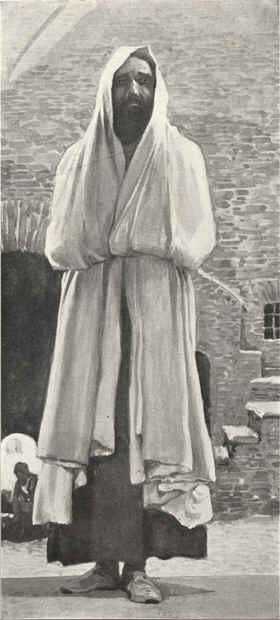
Traditional writer of the Book of Malachi
| Field | Value |
|---|---|
| honorific_prefix | Prophet |
| name | Malachi |
| image | Lorenzo monaco, cappella bartolini salimbeni, profeti nella volta, 1420-24, 03 malachia.JPG |
| image_size | 250px |
| caption | Malachi depicted in the Bartolini Salimbeni Chapel, Florence |
| native_name | מַלְאָכִי |
| resting_place_coordinates | |
| burial_place | Tomb of the Prophets Haggai, Zechariah and Malachi, Jerusalem |
Malachi or Malachias (; ) is the name used by the author of the Book of Malachi, the last book of the Nevi'im (Prophets) section of the Tanakh. It is possible that Malachi is not a proper name, because it means "messenger"; it has been assumed to be a pseudonym. According to Jewish tradition, Malachi's true identity is Ezra the scribe.
Some scholars argue that the Book of Malachi is the result of multiple stages of redaction; most of its text originated in the Persian period, with the oldest stratum from around 500 BCE and redactions into the Hellenistic period.
Identity
The editors of the 1906 Jewish Encyclopedia implied that Malachi, also known as Malachias, prophesied after Haggai and Zechariah and speculated that he delivered his prophecies about 420 BC, after the second return of Nehemiah from Persia, or possibly before his return. The Talmud and the Aramaic Targum of Yonathan ben Uzziel identify Ezra as the same person as Malachi. This is the traditional view held by most Jews and some Christians, including Jerome. This identification is plausible, because "Malachi" reprimands the people for the same things Ezra did, such as marrying foreign pagan women. Malachi also focuses extensively on corrupt priests who Ezra, a priest himself who exhorted the people to follow the law, despised. According to Josephus, Ezra died and was buried "in a magnificent manner in Jerusalem". If the tradition that Ezra wrote under the name "Malachi" is correct, then Josephus meant that he was buried in the Tomb of the Prophets, the traditional resting place of Malachi. This would also explain why Ezra does not refer to a prophet named Malachi, while he did refer to other prophets such as Haggai and Zechariah.
Other potential identities includes Zerubbabel and Nehemiah; others suggest that Malachi was a separate person altogether, possibly a Levite and a member of the Great Assembly.
Name
Because the name Malachi does not occur elsewhere in the Hebrew Bible, some scholars doubt whether it is intended to be the personal name of the prophet. The form mal'akhi (literally "my malakh") signifies "my messenger"; it occurs in Malachi 3:1 (compare to Malachi 2:7, but this form would hardly be appropriate as a proper name without some additional syllable such as Yah, whence mal'akhiah, i.e. "messenger of Yah". In the Book of Haggai, Haggai is designated the "messenger of the ." The non-canonical superscriptions prefixed to the book, in both the Septuagint and the Vulgate, warrant the supposition that Malachi's full name ended with the syllable -yah. The Septuagint translates the last clause of Malachi 1:1, "by the hand of his messenger", and the Targum reads, "by the hand of my angel, whose name is called Ezra the scribe". G.G. Cameron suggests that the termination of the word "Malachi" is adjectival, and equivalent to the Latin angelicus, signifying "one charged with a message or mission" (a missionary).
Date
Opinions vary as to the prophet's exact date, but nearly all scholars agree that Malachi prophesied during the Persian period, and after the reconstruction and dedication of the Second Temple in 516 BC. More specifically, Malachi probably lived and labored during the times of Ezra and Nehemiah. The abuses which Malachi mentions in his writings correspond so exactly with those which Nehemiah found on his second visit to Jerusalem in 432 BC that it seems reasonably certain that he prophesied concurrently with Nehemiah or shortly after. Bergstein suggests that he died in 312 BC.
Message
Main article: Book of Malachi
According to W. Gunther Plaut:
References
Sources
References
- Kessler, Rainer. 2011. Maleachi. p. 59-61. ''Herders theologischer Kommentar zum Alten Testament'', Freiburg, Germany: Herder.
- Schart, Aaron. (2021). "The Oxford Handbook of the Minor Prophets". Oxford University Press.
- {{bibleverse. Nehemiah. 13:6. HE
- "Megillah 15a, the William Davidson Talmud (Koren - Steinsaltz)".
- Introduction to the Aramaic [[Targum]] of [[Jonathan ben Uzziel. Yonathan ben Uzziel]] on the Prophet [[Malachi]] (Minor Prophets); Yehoshua b. Ḳarḥa (''Megillah'' 15a) .
- "Jerome, Prologue to the Twelve Prophets".
- Josephus, [[Antiquities of the Jews]], book XI, chapter 5, paragraph 5
- Bergstein, A., [https://www.chabad.org/library/article_cdo/aid/1678766/jewish/Who-Was-the-Prophet-Malachi.htm Who Was the Prophet Malachi?], {{Webarchive. link. (2023-03-26 , [[Chabad.org]])
- {{bibleverse. Malachi. 3:1. HE
- {{bibleverse. Haggai. 1:13. HE
- "Brenton translation, septagint".
- "malachi-international standard bible".
- G. G. CAMERON, J. HASTINGS' Dictionary of the Bible, New. York, 1902
- "Malachi in the International Standard Bible Encyclopedia.".
- {{bibleverse. Nehemiah. 13:7. HE
- "Plaut, W. Gunther. "Haggai, Zechariah and Malachi: Back in the Land", My Jewish Learning".
This article was imported from Wikipedia and is available under the Creative Commons Attribution-ShareAlike 4.0 License. Content has been adapted to SurfDoc format. Original contributors can be found on the article history page.
Ask Mako anything about Malachi — get instant answers, deeper analysis, and related topics.
Research with MakoFree with your Surf account
Create a free account to save articles, ask Mako questions, and organize your research.
Sign up freeThis content may have been generated or modified by AI. CloudSurf Software LLC is not responsible for the accuracy, completeness, or reliability of AI-generated content. Always verify important information from primary sources.
Report