From Surf Wiki (app.surf) — the open knowledge base
Mahmud al-Kashgari
11th-century Turkic scholar and lexicographer
11th-century Turkic scholar and lexicographer
| Field | Value |
|---|---|
| name | Maḥmūd al-Kashgari |
| native_name | محمود الكاشغري |
| image | 2015-09-11-080312 - Upal, Mausoleum des Uigurischen Philologen Muhamad Al Kashgari.JPG |
| caption | Upal, Mausoleum of Mahmud al-Kashgari |
| birth_date | 1005 |
| birth_place | Kashgar, Kara-Khanid Khanate, now China |
| death_date | 1102 (aged 97) |
| death_place | Upal, Kara-Khanid Khanate |
| resting_place | Upal, China |
| fields | Linguistics, Lexicography, Turkology |
Mahmud ibn Husayn ibn Muhammad al-Kashgari was an 11th-century Kara-Khanid scholar and lexicographer of the Turkic languages from Kashgar.
His father, Husayn, was the mayor of Barsgan, a town in the southeastern part of the lake of Issyk-Kul (nowadays village of Barskoon in Northern Kyrgyzstan's Issyk-Kul Region) and related to the ruling dynasty of Kara-Khanid Khanate. Around 1057 C.E., Mahmud al-Kashgari became a political refugee, before settling down in Baghdad.
Work
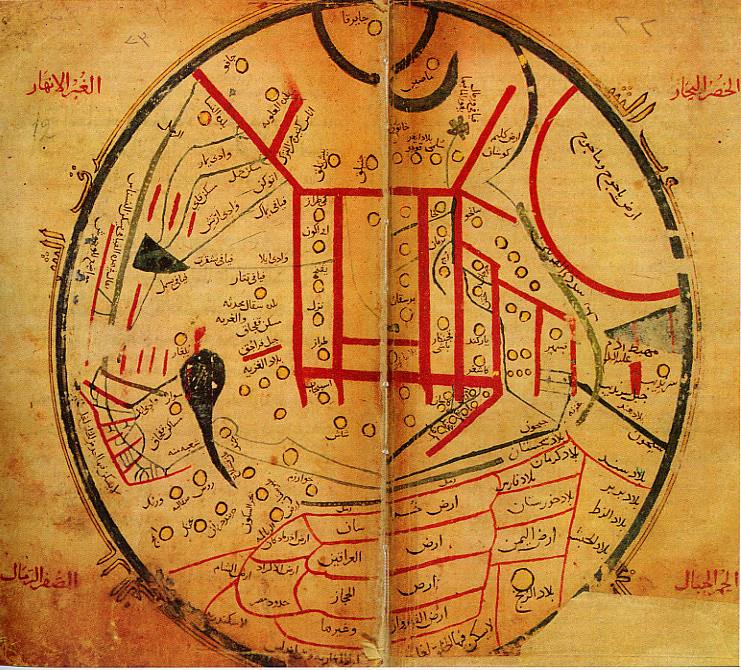
Al-Kashgari studied the Turkic languages of his time and in Baghdad, he compiled the first comprehensive dictionary of Turkic languages, the ar (English: "Compendium of the languages of the Turks") in 1072–74. It was intended for use by the Abbasid Caliphate, the new Arab allies of the Turks. Mahmud Kashgari's comprehensive dictionary, later edited by the Turkish historian, Ali Amiri, contains specimens of old Turkic poetry in the typical form of quatrains (Persio-Arabic رباعیات, rubā'iyāt; ), representing all the principal genres: epic, pastoral, didactic, lyric and elegiac. His book also included the first known map of the areas inhabited by Turkic peoples. This map is housed at the National Library in Istanbul.
Dīwān Lughāt al-Turk also contains linguistic data about multiple Turkic dialects that may have been gathered from merchants and others involved in trade along routes that travelled through Transoxiana. The origin of the compiled information is not known. Scholars believe it is likely that Kashgari would have gathered most of the content about Oguz-Turkmen from Oguz tribes in Khorasan since he himself was a student in Seljuk Baghdad, but it is possible that some of this material could have come from early Turkmen. Other scholars believe that the compendium was based on the Turkiyya language of the Chigil tribe in the Kara-Khanid confederation. However, scholars have not yet come to a settled conclusion.
Al-Kashgari advocated monolingualism and the linguistic purism of the Turkic languages and held a belief in the superiority of nomadic people (the Turkic tribes had traditionally been nomads) over urban populations. Most of his Turkic-speaking contemporaries were bilingual in New Persian, which was then the urban and literary language of Central Asia.
Even so, Kashgari praised the dialect spoken by the bilingual Uyghurs as "pure" and "most correct" on par with those of Turkic monolinguals.
Al-Kashgari cautioned against the assimilation of the nomadic way of life into a sedentary culture. He recorded a Turkic proverb that warned, “Just as the effectiveness of a warrior is diminished when his sword begins to rust, so too does the flesh of a Turk begin to rot when he assumes the lifestyle of an Iranian.”
Death
Some researchers think that Mahmud al-Kashgari died in 1102 at the age of 97 in Upal, a small city southwest of Kashgar and was buried there. There is now a mausoleum erected on his gravesite. But some modern authors reject this assertion, saying that the date of his death is just unknown.
Legacy
He is claimed by Uyghur, Kyrgyz and Uzbek nationalists as part of their respective ethnic groups.But some Uyghur authors consider him a member of their own ethnic group. Makhmud Kashghari himself considered the Uyghurs of his own time as the eastern neighbours of his country (the Qarakhanid khanate). See, for example, : "the Uzbeks, Uyghurs, and Kyrgyz all claim Mahmud al-Kashgari, the well-known 11th century scholar, as their own."
An oriental study university, situated in the capital city of Bishkek in post-Soviet Kyrgyzstan, was named after Makhmud Kashghari, in the 1990s.
UNESCO declared 2008 the Year of Mahmud al-Kashgari.
Notes
References
- Svat Soucek, A History of Inner Asia, Cambridge University Press, 2002.
References
- "Mahmud Al-Kashgari - Document - Gale In Context: World History".
- C. Edmund Bosworth. (26 December 2007). "Historic Cities of the Islamic World". BRILL.
- Kemal H. Karpat, ''Studies on Turkish Politics and Society:Selected Articles and Essays'', (Brill, 2004) 441.
- (14 August 2008). "Chinese Lexicography : A History from 1046 BC to AD 1911: A History from 1046 BC to AD 1911". OUP Oxford.
- Clauson, Gerard. (1961). "The Initial Labial Sounds in the Turkish Languages". Bulletin of the School of Oriental and African Studies, University of London.
- G.E. Tetley. (27 October 2008). "The Ghaznavid and Seljuk Turks: Poetry as a Source for Iranian History". Routledge.
- ''Ali Amiri'', R. Mantran, '''The Encyclopaedia of Islam''', Vol. I, ed. H.A.R. Gibb, J.H. Kramers, E. Levi-Provencal and J. Schacht, (E.J. Brill, 1986) 391.
- Roudik, Peter, ''The History of the Central Asian Republics'', (Greenwood Press, 2007) 175.
- Clark, Larry. (1998). "Turkmen Reference Grammar". Harrassowitz.
- "Mahmud Al- Kashgari - Document - Gale In Context: World History".
- Sengupta, Anita. (2003). "The Formation of the Uzbek Nation-State: A Study in Transition". Lexington Books.
- Maħmūd al-Kašğari. "Dīwān Luğāt al-Turk". Edited & translated by Robert Dankoff in collaboration with James Kelly. In Sources of Oriental Languages and Literature. (1982) Part I. p. 82-84
- Subtelny, Maria. (2007). "Timurids in Transition: Turko-Persian Politics and Acculturation in Medieval Iran". BRILL.
- al-Kashghari, Mahmud. (1982–1985). "Compendium of the Turkic dialects (Dīwān lugāt at-Turk) Vol. 2 (out of 3)". Cambridge (Robert Dankoff, in collaboration with James Kelly).
- link. (13 December 2014)
This article was imported from Wikipedia and is available under the Creative Commons Attribution-ShareAlike 4.0 License. Content has been adapted to SurfDoc format. Original contributors can be found on the article history page.
Ask Mako anything about Mahmud al-Kashgari — get instant answers, deeper analysis, and related topics.
Research with MakoFree with your Surf account
Create a free account to save articles, ask Mako questions, and organize your research.
Sign up freeThis content may have been generated or modified by AI. CloudSurf Software LLC is not responsible for the accuracy, completeness, or reliability of AI-generated content. Always verify important information from primary sources.
Report