From Surf Wiki (app.surf) — the open knowledge base
Magnetic pulse welding
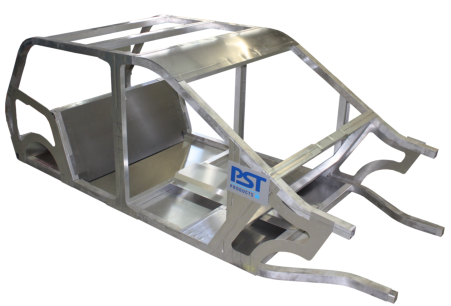
Magnetic pulse welding (MPW) is a solid-state welding process that uses magnetic forces to weld two workpieces together. The welding mechanism is most similar to that of explosion welding. Magnetic pulse welding started in the early 1970s, when the automotive industry began to use solid-state welding.
The primary advantage of using magnetic pulse welding is that the formation of brittle intermetallic phases is avoided, allowing the joining of metals which cannot be effectively joined by fusion welding. Additionally, the process is nearly instantaneous and does not require shielding gas or other welding consumables.
Process
Magnetic pulse welding is based on a very short electromagnetic pulse (
The flying work piece then impacts its target, though different parts will contact at different times. As the line of contact moves, typically a jet of ejected surface material forms ahead of the contact line. This jet is beneficial as it effectively cleans the surfaces by ejecting some surface material (removing oxides or contaminants).
During magnetic pulse welding a high plastic deformation is developed along with high shear strain and oxide disruption due to the jet and high temperatures near the collision zone. This leads to a solid-state weld due to the microstructure refinement (dislocation cells, slip bands, micro twins and local recrystallization).
Principles
In order to achieve a strong weld, several conditions have to be reached:
- Jetting condition: the collision has to be subsonic compared to the local material's speed of sound to generate a jet.
- High pressure regime: the impact velocity has to be sufficient to obtain a hydrodynamic regime, otherwise the parts will only be crimped or formed.
- No fusion during the collision: If the pressure is too high, the materials can locally melt and re-solidify. This can cause a weak weld.
The main difference between magnetic pulse welding and explosive welding is that the collision angle and the velocity are almost constant during the explosive welding process, while in magnetic pulse welding they continuously vary.
Numerical simulations of MPW
Various numerical investigations were carried out to predict the interface behavior of the MPW and the in-flight behavior of the flyer to determine the collision conditions. Generally, the flyer velocity prior to the impact governs the interfacial phenomena. This is the characteristic parameter that should be known based on the process and adjustable process parameters. Although experimental measurements using laser velocimetry methods provide an accurate assessment of the flyer velocity; one example of such measurement is Photon Doppler velocimetry (PDV); numerical computation offers a better description of the flyer velocity in terms of spatial and temporal distribution.
A multi-physics computation of the MPW process can take into account of the electrical current through the coil and compute the physical behavior for an electromagnetic-mechanical coupled problem. These simulations also allow the thermal effect during the process to be included. A 3D example model used for LS-DYNA simulation is also used, and it also provides some details of the physical interactions of the process, the governing equations, the resolution procedure, and both boundary and initial conditions. The model is used to show the capability of 3D computation to predict the process behavior and particularly, the flyer kinematics and macroscopic deformation.
References
References
- Weman, Klas. (2003). "Welding processes handbook". CRC Press.
- (2015). "Magnetic pulse welding: An efficient and environmentally friendly multi-material joining technique". Journal of Cleaner Production.
- A. Stern, V. Shribman, A. Ben-Artzy, and M. Aizenshtein, Interface Phenomena and Bonding Mechanism in Magnetic Pulse Welding, Journal of Materials Engineering and Performance, 2014.{{page needed. (July 2017)
- Magnetic Pulse Welding: J.P. Cuq-Lelandais, S. Ferreira, G. Avrillaud, G. Mazars, B. Rauffet: Welding windows and high velocity impact simulations.{{page needed. (July 2017)
- (2016). "Joining Technologies".
- (2016). "Interfacial kinematics and governing mechanisms under the influence of high strain rate impact conditions: Numerical computations of experimental observations". Journal of the Mechanics and Physics of Solids.
- (May 2009). "Introduction of an Electromagnetism Module in LS-DYNA for Coupled Mechanical-Thermal-Electromagnetic Simulations". Steel Research International.
- I. Çaldichoury and P. L’Eplattenier, EM Theory Manual, Livermore Software Technology Corporation, California, USA, 2012.{{page needed. (July 2017)
This article was imported from Wikipedia and is available under the Creative Commons Attribution-ShareAlike 4.0 License. Content has been adapted to SurfDoc format. Original contributors can be found on the article history page.
Ask Mako anything about Magnetic pulse welding — get instant answers, deeper analysis, and related topics.
Research with MakoFree with your Surf account
Create a free account to save articles, ask Mako questions, and organize your research.
Sign up freeThis content may have been generated or modified by AI. CloudSurf Software LLC is not responsible for the accuracy, completeness, or reliability of AI-generated content. Always verify important information from primary sources.
Report