From Surf Wiki (app.surf) — the open knowledge base
Mad as a March hare
English idiomatic phrase

English idiomatic phrase
To be as "mad as a March hare" is an English idiomatic phrase derived from the observed antics said to occur only in the March breeding season of the European hare (Lepus europaeus). The phrase is an allusion that can be used to refer to any other animal or human who behaves in the excitable and unpredictable manner of a March hare.
Historical development of the idiom
A long-held view is that the hare will behave strangely and excitedly throughout its breeding season, which, in Europe, peaks in the month of March. This odd behaviour includes boxing at other hares, jumping vertically for seemingly no reason and generally displaying abnormal behaviour. An early verbal record of this animal's strange behaviour occurred in about 1500, in the poem Blowbol's Test where the original poet said: :Thanne þey begyn to swere and to stare, And be as braynles as a Marshe hare :(Then they begin to swerve and to stare, And be as brainless as a March hare)
Similar phrases are attested in the sixteenth century in the works of John Skelton (Replycacion, 1528: "Aiii, I saye, thou madde Marche Hare"; Magnyfycence, 1529: "As mery as a marche hare"). A later recorded use of the phrase occurs in the writings of Sir Thomas More (The supplycacyon of soulys made by syr Thomas More knyght councellour to our souerayn lorde the Kynge and chauncellour of hys Duchy of Lancaster. Agaynst the supplycacyon of beggars: "As mad not as a March hare, but as a madde dogge."
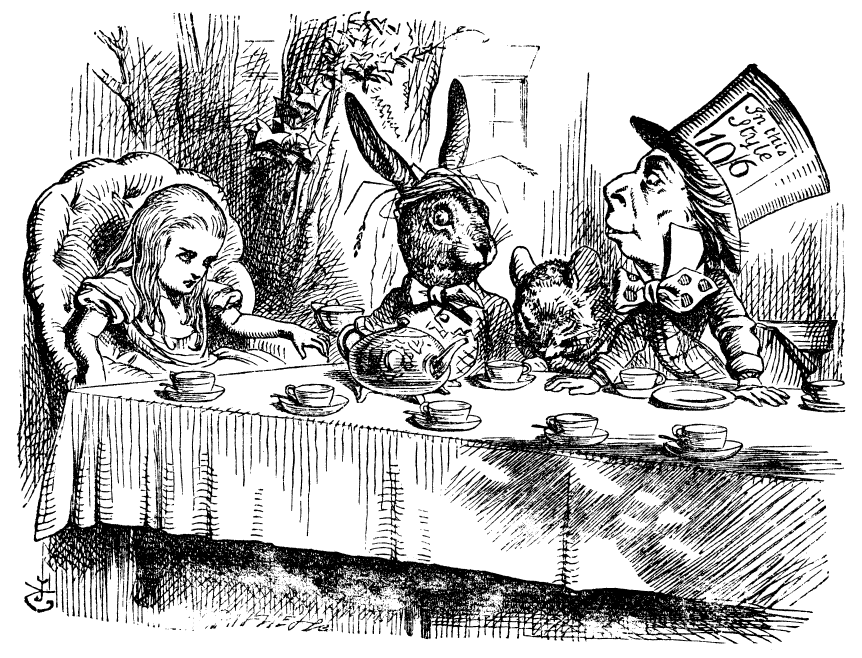
Although the phrase in general has been in continuous use since the 16th century, it was popularised in more recent times by Lewis Carroll in his 1865 children's book Alice's Adventures in Wonderland, in which the March Hare is a character.
Biological basis
During the breeding season of European or brown hares, male hares typically chase female ones. However, if a female hare does not wish to mate with a male hare, she may respond by engaging in a fight with the male hare. Observations of this particular behaviour have likely contributed to the association contained within the phrase "mad as a March hare."
References
References
- "Dylan Winter – Irish Hare". BBC Radio 4.
- "Mad as a March hare". UsingEnglish.com.
- "As mad as a March hare". Phrase Finder.
- First printed by W. C. Hazlitt in 1864, ''Remains of Early Popular Poetry of England''
- "Early English Books Online". Text Creation Partnership.
This article was imported from Wikipedia and is available under the Creative Commons Attribution-ShareAlike 4.0 License. Content has been adapted to SurfDoc format. Original contributors can be found on the article history page.
Ask Mako anything about Mad as a March hare — get instant answers, deeper analysis, and related topics.
Research with MakoFree with your Surf account
Create a free account to save articles, ask Mako questions, and organize your research.
Sign up freeThis content may have been generated or modified by AI. CloudSurf Software LLC is not responsible for the accuracy, completeness, or reliability of AI-generated content. Always verify important information from primary sources.
Report