From Surf Wiki (app.surf) — the open knowledge base
Macroelongatoolithus
Oogenus of dinosaur egg

Oogenus of dinosaur egg
|Boletuoolithus Bray, 1998 |Longiteresoolithus Wang and Zhou, 1995 |Megafusoolithus Wang et al, 2010 |Oolithes carlylensis Jensen, 1970 |Megafusoolithus qiaoxiaensis Wang et al, 2010 |Longiteresoolithus xixiaensis Wang and Zhou, 1995 |Macroelongatoolithus xixiaensis Li et al, 1995 |Macroelongatoolithus zhangi Fang et al, 2000 |Macroelongatoolithus goseongensis Kim et al, 2011
Macroelongatoolithus is an oogenus of large theropod dinosaur eggs, representing the eggs of giant caenagnathid oviraptorosaurs. They are known from Asia and from North America. Historically, several oospecies have been assigned to Macroelongatoolithus, however they are all now considered to be a single oospecies: M. carlylensis.
History of discovery
"Oolithes" carlylensis was described in 1970 by James Jensen. In 1998, O. carlylensis was moved to a new oogenus, Boletuoolithus, which was then classified as a Spheroolithid.Bray, E. S. 1998. Dinosaur eggshell Boletuoolithus carlylensis, oogen. nov. from the Lower Cretaceous Cedar Mountain Formation of Utah; pp. 221–223 in S. G. Lucas, J. I. Kirkland, and J. W. Estep (eds.), Lower and Middle Cretaceous Terrestrial Ecosystems. New Mexico Museum of Natural History and Science Bulletin No. 14. Macroelongatoolithus was first described in 1995 by Li et al., with a single oospecies: M. xixiaensis. It was classified in the oofamily Elongatoolithidae. Later in the same year, Wang and Zhou described Longiteresoolithus xixiaensis, which they placed into a new oofamily, Macroelongatoolithidae. These three oospecies are now considered synonymous, and generally classified in Elongatoolithidae. Since M. carlylensis was named first, it has priority, but the name was corrected to M. carlylei to follow ICZN provisions.
Description
.jpg)
Macroelongatoolithus eggs are most notable for their large size. They are at least 34 cm long, but the largest specimens are over 60 cm long.
Like other elongatoolithids, *Macroelongatoolithus'''s eggshell is divided up into two structural layers, and the outer layer (called the continuous layer) is not divided up into distinct shell units, unlike other oofamilies. In *Macroelongatoolithus'', the boundary between the continuous layer and the mammillary layer (the inner layer of the eggshell, also called the cone layer) is wavy, but clearly defined. The ratio of the thickness of the two layers varies from 2:1 to 8:1.
The surface ornamentation of the eggshells is variable, even on a single egg. It is usually lineartuberculate (nodes forming linear ridges), ramotuberculate (nodes forming irregular, meandering chains), or dispersituberculate (scattered nodes).
Macroelongatoolithus specimens are extremely variable in size, shape, and microstructure, even in eggs laid by a single individual. For example, within a single clutch, the egg lengths can vary by several centimeters. The high amount of variability is probably due to their large size.
Classification
Macroelongatoolithus has a convoluted parataxonomic history. Several oospecies have been described, but currently they are all considered synonyms of M. carlylei. While it is occasionally classified into a separate oofamily, Macroelongatoolithidae, the general consensus is that it is a member of Elongatoolithidae. Two other oospecies have also been described: M. zhangi and M. goseongensis, but both are now considered synonymous with M. carlylensis. The oogenus and oospecies Megafusoolithus qiaoxiaensis is also a junior synonym of Macroelongatoolithus carlylei.
Paleobiology

While they were once considered to be the eggs of large tyrannosaurids (like Tarbosaurus) on the basis of their huge size, egg shape and microstructural evidence suggests they are eggs of gigantic oviraptorosaurs (like Beibeilong or Gigantoraptor).
The gas conductance of the eggshells indicate that Macroelongatoolithus nests were buried in vegetation or sediments. Like other elongatoolithids, Macroelongatoolithus eggs are laid in pairs because the parents had two functional oviducts and thus laid two eggs simultaneously. The nests have unusually large volume of eggs compared to the body size of the parents, which could mean that multiple females would contribute to a single nest. Association of other oviraptorids with their eggs suggests extensive parental care was typical for elongatoolithids.
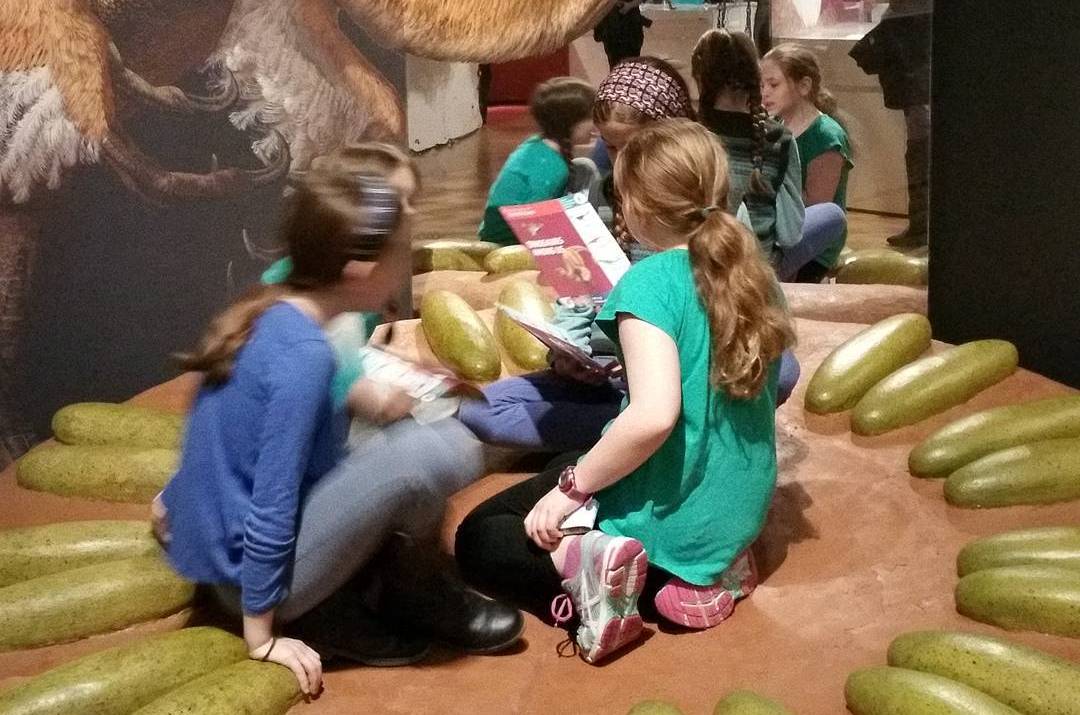
In 2018, Kohei Tanaka and team examined the egg clutches of numerous oviraptorosaur specimens, including egg clutches of Macroelongatoolithus, in order to correlate the nest configuration and body size to incubation behaviour. Their results showed that eggshell porosity indicates that the eggs of almost certainly all oviraptorosaurs were exposed in the nest without an external covering. Though most oviraptorosaur nests have eggs arranged in a circular fashion, the morphology of the nest is different in smaller and larger species in that the center of the nest is highly reduced in the former species, and becomes significantly larger in the latter species. This nest configuration suggest that whereas smallest oviraptorosaurs probably sat directly on the eggs, a large, Gigantoraptor-sized animal likely sat on the area devoid of eggs. Tanaka and colleagues pointed out that this adaption was beneficial to avoid egg-crushing and could have allowed some body-contact during incubation in these giant oviraptorosaurs.
Paleoecology
Distribution

Macroelongatoolithus eggs have been found in the United States, China, and South Korea, ranging in age from Early Cretaceous to Maastrichtian. More specifically, it is known in North America from the Cedar Mountain, Dakota, Kelvin, and Naturita Formations of Utah, the Wayan Formation of Idaho, the Blackleaf Formation of Montana, the Thomas Fork Formation of Wyoming, and the Willow Tank Formation of Nevada. In China, it is known from the Liangtoutang and Chichengshan Formations in Tiantai County, Zhejiang Province, from the Gaogou, Sigou, Majiacun, and Zoumagang Formations in Henan Province, China. It is known in South Korea from the Goseong Formation near Tongyeong and from the Ilseongsan Formation, Sinan, South Korea.
The presence of Macroelongatoolithus in the United States indicates that there was likely a giant oviraptorosaur present during the Late Cretaceous in North America. Also, the fact that they have been found in both Asia and North America is evidence of an Albian-Cenomanian interchange of fauna between the two continents.
References
References
- Jensen J. 1970. Fossil eggs in the lower cretaceous of Utah. ''Brigham Young University research studies. Geology Series. Geology Studies'' 17: 51-65.
- Li Y, Yin Z, Liu Y. (1995) "The discovery of a new genus of dinosaur egg from Xixia, Henan, China." Journal of Wuhan Institute of Chemical Technology 17(1): 38-41. (In Chinese)
- Zelenitsky DK, Carpenter K, Currie PJ. (2000) "First record of Elongatoolithid theropod eggshell from North America: the Asian oogenus Macroelongatoolithus from the lower Cretaceous of Utah." ''[[Journal of Vertebrate Paleontology]]'' 20(1): 130-138.
- Carpenter, K. 1999. Eggs, Nests, and Baby Dinosaurs: A Look at Dinosaur Reproduction (Life of the Past). Indiana University Press, Bloomington, Indiana.
- (2019). "Microstructural overlap of Macroelongatoolithus eggs from Asia and North America expands the occurrence of colossal oviraptorosaurs". Journal of Vertebrate Paleontology.
- Qian, M. P., Jiang, Y., Jiang, Y. G., Zhang, Y. J., Chen, R., Li, L. M., and Xing, G. F. (2008). "New evidence on fossil eggs of Cretaceous Tyrannosaurs in eastern China." ''Jiangsu Geology'', 32: 86-97.
- (2018). "Incubation behaviours of oviraptorosaur dinosaurs in relation to body size". Biology Letters.
- Simon, D. J.. (2014). "Giant Dinosaur (theropod) Eggs of the Oogenus Macroelongatoolithus (Elongatoolithidae) from Southeastern Idaho: Taxonomic, Paleobiogeographic, and Reproductive Implications". Doctoral Dissertation, Montana State University.
- (2025-02-26). "Fossil eggshell diversity of the Mussentuchit Member, Cedar Mountain Formation, Utah". PLOS ONE.
- Bonde, Varricchio and Jackson, Loope, Shirk, Joshua W., Frankie D. and David J., David B., and Aubrey M.. (January 2008). "GSA Field Guide 11: Field Guide to Plutons, Volcanoes, Faults, Reefs, Dinosaurs, and Possible Glaciation in Selected Areas of Arizona, California, and Nevada".
- X. Jin, Y. Azuma, F. D. Jackson and D. J. Varricchio. (2007) "Giant dinosaur eggs from the Tiantai basin, Zhejiang province, China." ''[[Canadian Journal of Earth Sciences]]'' 44:81-88.
- Wang Qiang, Zhao Zikui, Wang Xiaolin, Jiang Yangen, and Zhang Shukang. (2010) "A New Oogenus Of Macroelongatoolithid Eggs From The Upper Cretaceous Chichengshan Formation Of The Tiantai Basin, Zhejiang Province And A Revision Of The Macroelongatoolithids" ''[[Acta Paleontologica Sinica]]'' 49(1):73-86.
- Grellet-Tinner, G., Chiappe, L., Norell, M., and Bottjer, D. (2006). "[https://www.researchgate.net/profile/Mark_Norell/publication/222646157_Dinosaur_eggs_and_nesting_behaviors_A_paleobiological_investigation/links/02bfe511a934b8a9c9000000.pdf Dinosaur eggs and nesting behaviors: a paleobiological investigation.]" ''Palaeogeography, Palaeoclimatology, Palaeoecology,'' 232(2): 294-321.
- Li, G., Chen, P., Wang, D., & Batten, D. J. (2009). "[https://www.researchgate.net/profile/David_Batten/publication/248573303_The_spinicaudatan_Tylestheria_and_biostratigraphic_significance_for_the_age_of_dinosaur_eggs_in_the_Upper_Cretaceous_Majiacun_Formation_Xixia_Basin_Henan_Province_China/links/5435254f0cf2dc341daf8068.pdf The spinicaudatan Tylestheria and biostratigraphic significance for the age of dinosaur eggs in the Upper Cretaceous Majiacun Formation, Xixia Basin, Henan Province, China.]" ''Cretaceous Research'', 30(2): 477-482.
- Kim, J. Y., Yang, S. Y., Choi, H. I., Seo, S. J., & Kim, K. S. (2011). Dinosaur eggs from the Cretaceous Goseong formation of Tongyeong City, southern coast of Korea. ''Journal of the Paleontological Society of Korea'' 27(1): 13-26.
- Huh, M., Kim, B. S., Woo, Y., Simon, D. J., Paik, I. S., & Kim, H. J. (2014). First record of a complete giant theropod egg clutch from Upper Cretaceous deposits, South Korea. Historical Biology, 26(2), 218–228. https://doi.org/10.1080/08912963.2014.894998
- (30 September 2023). "Biostratigraphy and paleoecology of non-marine ostracods from the Cretaceous deposits in southwestern Korean Peninsula: a preliminary report". Journal of the Geological Society of Korea.
This article was imported from Wikipedia and is available under the Creative Commons Attribution-ShareAlike 4.0 License. Content has been adapted to SurfDoc format. Original contributors can be found on the article history page.
Ask Mako anything about Macroelongatoolithus — get instant answers, deeper analysis, and related topics.
Research with MakoFree with your Surf account
Create a free account to save articles, ask Mako questions, and organize your research.
Sign up freeThis content may have been generated or modified by AI. CloudSurf Software LLC is not responsible for the accuracy, completeness, or reliability of AI-generated content. Always verify important information from primary sources.
Report