From Surf Wiki (app.surf) — the open knowledge base
Maccabiah Games
International Jewish multi-sport event
International Jewish multi-sport event
The Maccabiah Games (, or משחקי המכביה העולמית; sometimes referred to as the "Jewish Olympics") is an international multi-sport event with summer and winter sports competitions featuring Jews and Israelis regardless of religion. Held every four years in Israel, the Maccabiah Games is considered the foremost sports competition for global Jewry.
The Maccabiah Games were declared a "Regional Sports Event" by, and under the auspices and supervision of, the International Olympic Committee in 1961.
Organized by the Maccabi World Union, the first games were held in 1932.
The 2022 Maccabiah Games were originally scheduled for 2021, but were postponed and held in 2022 due to the global COVID-19 pandemic, making it the first summer games to be postponed.
The next Maccabiah Games were supposed to be held in Israel between July 1, 2025 and July 22, 2025, but were postponed to the summer of 2026 due to the Iran–Israel war.
Games
Originally, the Maccabiah was held every three years. Since the 1953 Maccabiah Games, the event has generally been held every four years, in the year following the Olympic Games.
The Maccabiah Games are open to Jewish athletes from around the world, as well as to all Israeli athletes regardless of ethnicity or religion.
Competitions at the Maccabiah are organized into four divisions: 1) Open (Seniors); 2) Juniors; 3) Masters; and 4) Disabled. The Games are organized by the Maccabi World Union.
Etymology
The name Maccabiah was chosen after Judah Maccabee, a Jewish leader who defended his country from King Antiochus. Modi'in, Judah's birthplace, is also the starting location of the torch that lights the flames at the opening ceremony, a tradition that started at the 4th Maccabiah.
History
Main article: History of the Maccabiah Games

The Maccabiah Games were the result of a proposal put forward by Yosef Yekutieli in 1929 at the Maccabi World Congress. Yekutieli, who heard about the Stockholm Olympics, wanted to form a representation for Eretz Yisrael. Following the appointment of the new British Palestine High Commissioner, Sir Arthur Grenfell Wauchope, the Maccabiah got the go-ahead.
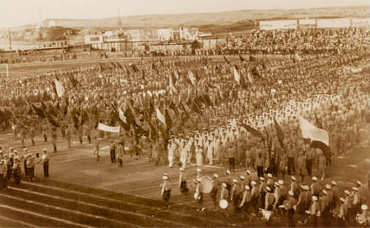
The 1st Maccabiah opened on March 28, 1932. The Maccabiah Stadium in Tel Aviv, which was built with donations, was filled to capacity. Roughly 400 athletes from 18 countries took part in everything from swimming, football, and handball, to various athletics. In the first Games, the Polish delegation took first place.
The Maccabiah Games were intended to take place at an interval of three years. Following the success of the first Games, the 2nd Maccabiah was held from April 2 to 10, 1935, despite official opposition by the British Mandatory government. Over 1,300 athletes from 28 nations participated. The 3rd Maccabiah, which was originally scheduled for spring of 1938, was postponed until 1950 due to British concerns of large-scale illegal immigration, World War II, and the 1948 Arab–Israeli War. It became the first Maccabiah to be held after the establishment of the State of Israel.
Starting from the 4th Maccabiah, the games were changed to take place every four years in the year following the Olympics and since 1953, the Games have taken place every four years, with the exception of the 21st Maccabiah, which was postponed for one year due to the COVID-19 pandemic. The 15th edition was marred by what became known as the Maccabiah bridge disaster, when a temporary bridge built for the march of athletes at the opening ceremony collapsed, plunging about 100 members of the Australian delegation into the waters of the Yarkon River. Four athletes were killed, and 63 injured. More than 5,000 participants from over 50 countries competed in those Games.

Approximately 10,000 athletes, from 80 countries, were expected to compete in 42 sports categories in the 21st Maccabaiah. It was reportedly the world's largest sporting event in 2022. President of the United States Joe Biden attended the opening ceremonies, cheering on the U.S. delegation of 1,400 athletes—larger than the U.S. delegation to the 2021 Tokyo Olympics. This made him the first American president to attend the Maccabiah Games.
Editions of World Maccabiah
The following is an overview of the Games:
Summer Maccabiah
| # | Year | Date | Main Venue | Nations | Athletes | Sports | Ref | 1 | 1932 | 2 | 1935 | 3 | 1950 | 4 | 1953 | 5 | 1957 | 6 | 1961 | 7 | 1965 | 8 | 1969 | 9 | 1973 | 10 | 1977 | 11 | 1981 | 12 | 1985 | 13 | 1989 | 14 | 1993 | 15 | 1997 | 16 | 2001 | 17 | 2005 | 18 | 2009 | 19 | 2013 | 20 | 2017 | 21 | 2021 2022 | 22 | 2025 2026 | |||
|---|---|---|---|---|---|---|---|---|---|---|---|---|---|---|---|---|---|---|---|---|---|---|---|---|---|---|---|---|---|---|---|---|---|---|---|---|---|---|---|---|---|---|---|---|---|---|---|---|---|---|---|---|---|---|
| 28 March–6 April | Maccabiah Stadium | 27 | 390 | 16 | ||||||||||||||||||||||||||||||||||||||||||||||||||
| 2–10 April | 28 | 1,250 | 18 | |||||||||||||||||||||||||||||||||||||||||||||||||||
| 28 September–11 October | Ramat Gan Stadium | 20 | 800 | 17 | ||||||||||||||||||||||||||||||||||||||||||||||||||
| 22–29 September | 22 | 892 | 19 | title=Fourth Maccabiah | website=Maccabiah 21 | date=1953-09-20 | url=https://www.maccabiah.com/en/maccabiah/maccabiah-history/fourth-maccabiah}} | |||||||||||||||||||||||||||||||||||||||||||||||
| 15–24 September | 20 | 980 | 19 | |||||||||||||||||||||||||||||||||||||||||||||||||||
| 29 August–5 September | 27 | 1,000 | 20 | |||||||||||||||||||||||||||||||||||||||||||||||||||
| 23–31 August | 27 | 1,200 | 22 | |||||||||||||||||||||||||||||||||||||||||||||||||||
| 28 July–7 August | 27 | 1,450 | 22 | |||||||||||||||||||||||||||||||||||||||||||||||||||
| 9–19 July | 26 | 1,500 | 23 | |||||||||||||||||||||||||||||||||||||||||||||||||||
| 12–21 July | 34 | 2,700 | 26 | |||||||||||||||||||||||||||||||||||||||||||||||||||
| 6–16 July | 34 | 3,450 | 30 | |||||||||||||||||||||||||||||||||||||||||||||||||||
| 15–25 July | 37 | 3,700 | 28 | |||||||||||||||||||||||||||||||||||||||||||||||||||
| 3–13 July | 45 | 4,400 | 32 | |||||||||||||||||||||||||||||||||||||||||||||||||||
| 5–15 July | 48 | 5,100 | ||||||||||||||||||||||||||||||||||||||||||||||||||||
| 14–24 July | 33 | 5,500 | 34 | |||||||||||||||||||||||||||||||||||||||||||||||||||
| 16–23 July | Teddy Stadium | 49 | 2,200 | |||||||||||||||||||||||||||||||||||||||||||||||||||
| 11–23 July | Ramat Gan Stadium | 55 | 7,300 | |||||||||||||||||||||||||||||||||||||||||||||||||||
| 13–23 July | 55 | 7,510 | 33 | |||||||||||||||||||||||||||||||||||||||||||||||||||
| 18–30 July | Teddy Stadium | 77 | 7,500 | 34 | ||||||||||||||||||||||||||||||||||||||||||||||||||
| 4–17 July | 85 | 10,000 | 45 | |||||||||||||||||||||||||||||||||||||||||||||||||||
| 12–26 July | 80 | 10,000 | 47 | |||||||||||||||||||||||||||||||||||||||||||||||||||
| 29 June–14 August | Teddy Stadium |
Winter Maccabiah
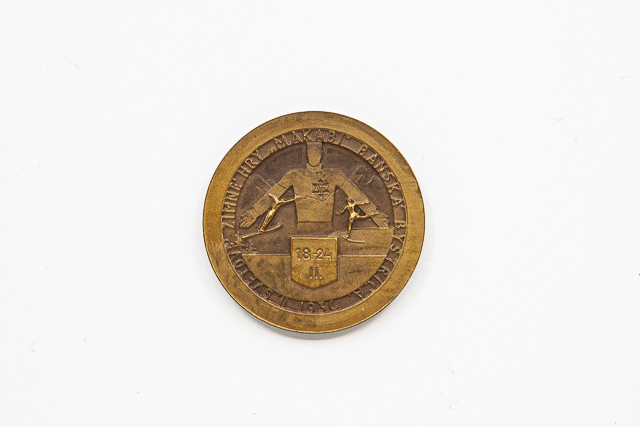
Prior to World War II there was an attempt to organize a winter Maccabiah. Due to the relatively warm temperatures in Palestine, the winter Maccabiot were organized in European nations. The 1st Winter Maccabiah was held in Zakopane, Poland, February 2 to 5, 1933. The games were met with great opposition; the Gazeta Warszawska newspaper encouraged Polish youth to intervene during the games to prevent the "Jewification of Polish winter sports venues".
A second attempt at the winter games was relatively successful. The 2nd Winter Maccabiah took place February 18 to 22, 1936, in Banská Bystrica (then Czechoslovakia).
For 85 years, these were the only winter Maccabiah games to be held and the only two Maccabiot that did not take place in the Land of Israel. During these years, the Maccabi did run smaller regional winter games. Then, the 3rd Winter Maccabiah took place from January 1 to 9, 2023, in Ruhpolding, Germany. At the games, 400 athletes from 20 nations participated.
Regional Maccabiah
European Maccabiah
| # | Year | Host | Athletes | 1 | 1929 | 2 | 1930 | 3 | 1959 | 4 | 1963 | 5 | 1979 | 6 | 1983 | 7 | 1987 | 8 | 1991 | 9 | 1995 | 10 | 1999 | 11 | 2003 | 12 | 2007 | 13 | 2011 | 14 | 2015 | 15 | 2019 | 16 | 2023 | 17 | 2027 |
|---|---|---|---|---|---|---|---|---|---|---|---|---|---|---|---|---|---|---|---|---|---|---|---|---|---|---|---|---|---|---|---|---|---|---|---|---|---|
| TCH Prague | |||||||||||||||||||||||||||||||||||||
| BEL Antwerp | |||||||||||||||||||||||||||||||||||||
| DEN Copenhagen | |||||||||||||||||||||||||||||||||||||
| FRA Lyon | |||||||||||||||||||||||||||||||||||||
| GBR Leicester | |||||||||||||||||||||||||||||||||||||
| BEL Antwerp | |||||||||||||||||||||||||||||||||||||
| DEN Copenhagen | |||||||||||||||||||||||||||||||||||||
| FRA Marseille | |||||||||||||||||||||||||||||||||||||
| NED Amsterdam | |||||||||||||||||||||||||||||||||||||
| GBR Stirling | |||||||||||||||||||||||||||||||||||||
| BEL Antwerp | |||||||||||||||||||||||||||||||||||||
| ITA Rome | 1,800 | ||||||||||||||||||||||||||||||||||||
| AUT Vienna | 2,000 | ||||||||||||||||||||||||||||||||||||
| GER Berlin | 2,000 | ||||||||||||||||||||||||||||||||||||
| HUN Budapest | 3,000 |
Pan American Maccabi Games
Latin American Maccabi's (CLAM), called Jorge Newbery Pan American Maccabi Games or Pan American Maccabiah from 1966:Pan American Maccabi Games Retrieved 21 March 2014.
| # | Year | Host | 1 | 1966 | 2 | 3 | 4 | 1979 | 5 | 1983 | 6 | 1987 | 7 | 1991 | 8 | 1995 | 9 | 1999 | 10 | 2003 | 11 | 2007 | 12 | 2011 | 13 | 2015 | 14 | 2019 | 15 | 2023 |
|---|---|---|---|---|---|---|---|---|---|---|---|---|---|---|---|---|---|---|---|---|---|---|---|---|---|---|---|---|---|---|
| BRA São Paulo | ||||||||||||||||||||||||||||||
| MEX Mexico City | ||||||||||||||||||||||||||||||
| BRA | ||||||||||||||||||||||||||||||
| VEN Caracas | ||||||||||||||||||||||||||||||
| URU | ||||||||||||||||||||||||||||||
| ARG Buenos Aires | ||||||||||||||||||||||||||||||
| CHI Santiago de Chile | ||||||||||||||||||||||||||||||
| ARG Buenos Aires | ||||||||||||||||||||||||||||||
| BRA São Paulo | ||||||||||||||||||||||||||||||
| CHI | ||||||||||||||||||||||||||||||
| MEX Mexico City | ||||||||||||||||||||||||||||||
| ARG Buenos Aires |
Oceania Maccabiah (Junior Carnival)
The Maccabi Junior Carnivals are a sporting event held for the Jewish youth of Australia or New Zealand. It has been held annually since 1982, usually in January.
Venues were:
- Sydney 1982
- Perth 1983
- Melbourne 1984
- Sydney 1986
- Brisbane 1987
- Adelaide 1988
- Sydney 1989
- Perth 1990
- Melbourne 1991
- Sydney 1992
- Perth 1993
- Melbourne 1994
- Sydney 1995
- Melbourne 1996
- Perth 1997
- Sydney 1998
- Melbourne 1999
- Perth 2000
- Sydney 2001
- Melbourne 2002
- Perth 2003
- Auckland 2004
- Sydney 2005
- Perth 2006
- Melbourne 2007
- Auckland 2008
- Sydney 2009
- Perth 2010
- Melbourne 2011
- Brisbane 2012
- Sydney 2013
- Perth 2014
- Melbourne 2015
- Sydney 2016
- Sydney 2017
- Melbourne 2018
- Sydney 2019
Ceremonies

The Maccabiah ceremonies are two ceremonial events that take place during the first and last days of the Maccabiah games. The ceremonies are an important part of the Jewish culture in Israel and the Zionist movement. The ceremonies of the Maccabiah trace their roots to the Olympic Games of the early 20th century. As such, they share many similarities.
The Maccabiah opening ceremony, which is organized by the Maccabi World Union, has recently been presented in English, Hebrew, and Spanish.
Opening

The opening ceremonies represent the official commencement of the Maccabiah. Some sports however, such as golf and rugby, might start prior to the opening ceremonies in order to finish on time.
The opening ceremony for the first Games was held at the new Maccabiah Stadium. The Stadium, which is located next to the Yarkon River in Tel Aviv, was finished just the night before. The Stadium also hosted the 2nd Maccabiah in 1935. For the 3rd Maccabiah, the opening ceremony took place in a new stadium in Ramat Gan. The stadium has been hosting the opening ceremonies of the Maccabiah ever since, with the exception of the 16th, 19th, and 20th Maccabiah Games which were held in Teddy Stadium, Jerusalem.

The ceremonies often start with the introduction of the active participants of the Maccabi youth movement. After the parade of nations, the opening ceremony continues on with a presentation of artistic displays of music, singing, dance, and theater representative of the Jewish culture. In recent games, Jewish singers from around the world participated in the opening ceremony. For example, in 2013, Grammy Award-winner Miri Ben-Ari and X Factor USA finalist Carly Rose Sonenclar performed at the opening ceremony.
Parade of Nations
Just like at the Olympics, the Maccabiah starts out with a "Parade of Nations", during which most participating athletes march into the stadium, country by country. The countries enter the stadium in accordance with the Hebrew alphabet. The parade of nations, in contrast to some other games, include junior and disabled athletes who also partake in the competitions. In accordance with the Maccabiah's tradition, the Israeli delegation always enters last.
Closing
The closing ceremony of the Maccabiah Games takes place after all sporting events have concluded. Typically, a member of Maccabi or some other well-known figure makes the closing speech and the Games officially close. The ceremony includes large artistic displays of music, singing, and dance. Various Jewish singers perform during the closing ceremony. In recent years, the closing ceremonies included popular musicians and live music and dancing.
Medal presentation
A medal ceremony is held after each Maccabiah event is concluded. The winner, second, and third-place competitors or teams stand on top of a three-tiered rostrum to be awarded their respective medals. Medals are awarded by an official Maccabi member.
Ceremony hosts
Sports
_-_The_Winners_of_the_10,000_M_Walk.jpg)
_-_Israeli_High_Jumping_Champion_Gideon_Harmat.jpg)
Main article: Maccabiah sports
The Maccabiah Games recognize all 28 current Olympic sports, plus a number of other sports such as chess, cricket, and netball. In contrast with the Olympic Games and other major international sporting events, the Maccabiah rules regarding accepting new sports are very lenient. New sports are accepted to the Maccabiah Games provided that competitions will only take place if at least four delegations bring competitors for that sport (three in the case of female sports, as well as the junior divisions). As a result, the Maccabiah has held various unique competitions such as duplicate bridge.
Karate, not yet on the Olympic schedule, made its debut in 1977 at the 10th Maccabiah Games. The requisite number of initial countries signed on and agreed to send delegations. Since 1977, karate has participated uninterrupted. Although at the beginning karate was only contested in the fighting or kumite category, forms or kata was included in 1981. In 1985, women's karate was added. Junior and youth categories made their debut in 2009. The World Karate Federation, a member of the International Olympic Committee (IOC), oversees and supervises the rules of karate competition at the Maccabiah.
The Maccabiah Games are organized into four divisions: Open, Junior, Masters, and Paralympics.
- Open – The Open games are generally unlimited in age, and are intended for the best athletes from each delegation, bound by the governing international rules in each sport.
- Junior – The Junior Maccabiah games are open to any qualifying athlete aged 15–18.
- Masters – The Masters games are for older competitors; they are divided into a number of different age categories.
- Paralympic – The Paralympic games are generally open to all athletes with a range of physical and intellectual disabilities. Past games included Para-cycling, Paralympic swimming, Para table tennis, Half Marathon, and Wheelchair Basketball.
In recent Maccabiot there has been a renewed interest in introducing new sports to the Maccabiah. In the 15th Maccabiah Games, ice hockey was first introduced. Ice hockey was not included in immediately subsequent games, but returned in the 19th Maccabiah. Squash became an official sport in the 10th Maccabiah Games in 1977. The 19th Maccabiah was also granted provisional approval for dressage and jumping competitions from the FEI.
Champions and medalists
Main article: Lists of Maccabiah Games medalists
Notable participants
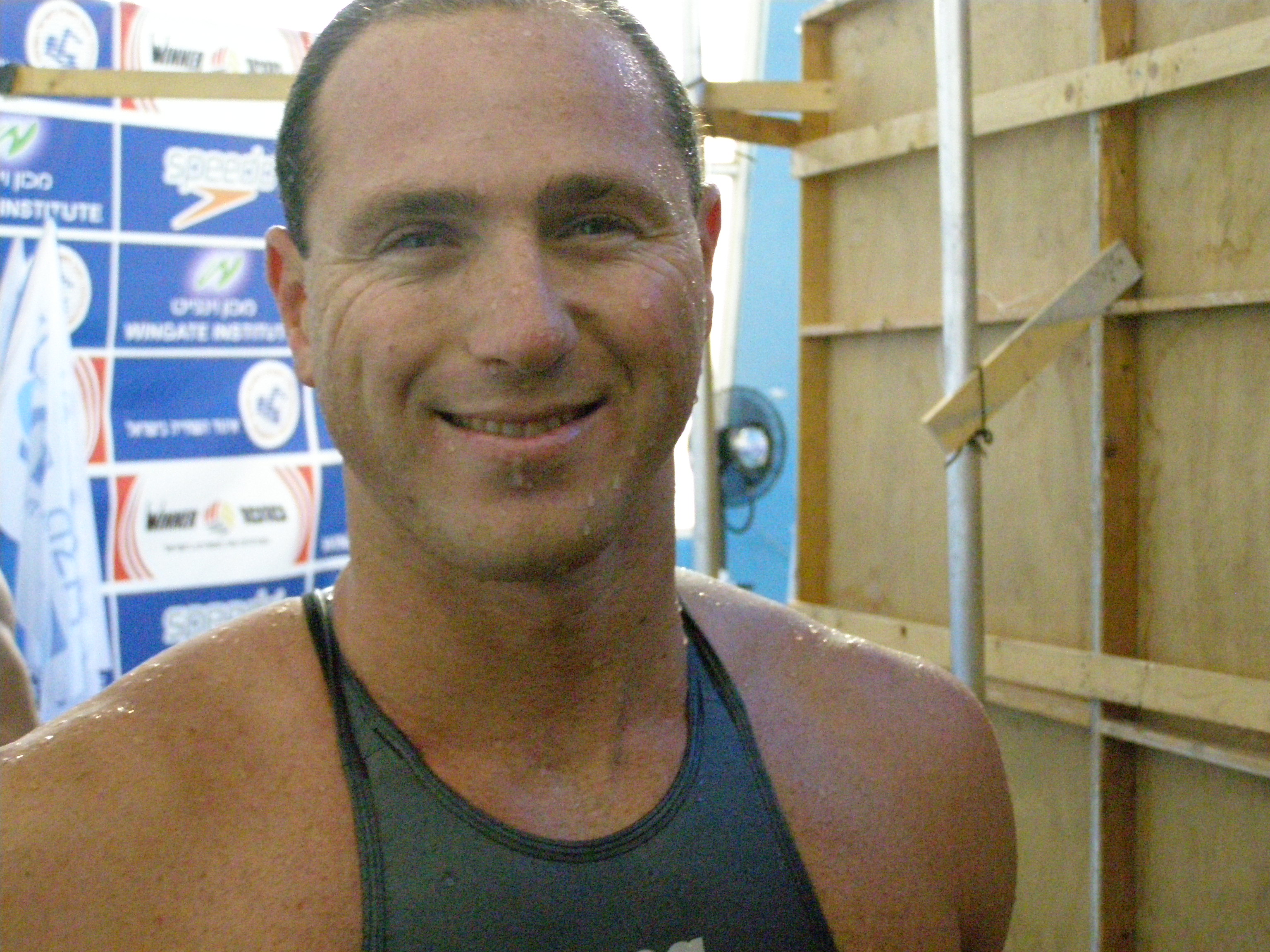

Athletes who have competed in the Maccabiah Games include many Olympic gold medalists, world champions, and world record holders. Among them have been Mark Spitz, Lenny Krayzelburg, Jason Lezak, Marilyn Ramenofsky, and Anthony Ervin (swimming); Mitch Gaylord, Abie Grossfeld, Ágnes Keleti, Valery Belenky, Kerri Strug and Linoy Ashram (gymnastics); Ernie Grunfeld, Danny Schayes, (coaches); Larry Brown, Nat Holman, and Dolph Schayes (basketball); Carina Benninga (field hockey); Lillian Copeland, Gerry Ashworth, and Gary Gubner (track and field); Angela Buxton, Brad Gilbert, Julie Heldman, Allen Fox, Nicolás Massú, and Dick Savitt (tennis); Angelica Rozeanu (table tennis); Sergey Sharikov, Vadim Gutzeit, Soren Thompson, and Mariya Mazina (fencing); Isaac Berger and Frank Spellman (weightlifting); Lindsey Durlacher, Jason Goldman, Fred Oberlander, and Henry Wittenberg (wrestling); Max Fried and Dean Kremer (baseball); Donald Spero and Michael Oren (rowing); Bruce Fleisher, Oren Geri, Ron “Racehorse” Smith (golf); Adam Bacher, Dennis Gamsy, Neil Rosendorff, Marshall Rosen, Bob Herman (cricket); Boris Gelfand and Judit Polgár (chess); Irwin Cotler (ping pong); Marcelo Lipatin, Jeff Agoos, and Jonathan Bornstein (association football); Steve March Tormé (fast-pitch softball); Shawn Lipman (rugby); Zack Test (rugby); Dov Sternberg (karate); and Ori Sasson (judo).
Participating nations

Main article: List of participating nations at the Maccabiah
The Maccabiah Games have grown into one of the world's largest sporting events, with 85 participating countries in the current edition of the Maccabiah. Below is a list of countries that participated in the most recent games in 2017. Scroll down for participating nations from the 2014 edition and other games
- Albania
- Argentina
- Australia
- Austria
- Azerbaijan
- Barbados
- Belarus
- Belgium
- Bolivia
- Brazil
- Canada
- Cayman Islands
- Chile
- China
- Costa Rica
- Cuba
- Curacao
- Czech Republic
- Denmark
- Dominican Republic
- El Salvador
- Finland
- France
- Georgia
- Germany
- Gibraltar
- Great Britain
- Greece
- Honduras
- Hong Kong
- Hungary
- India
- Ireland
- Israel
- Italy
- Jamaica
- Japan
- Kazakhstan
- Kyrgyzstan
- Latvia
- Lithuania
- Mexico
- Moldova
- Morocco
- Netherlands
- Nicaragua
- North Macedonia
- Norway
- Panama
- Paraguay
- Peru
- Poland
- Portugal
- Puerto Rico
- Russia
- Scotland
- Serbia
- Singapore
- Slovakia
- Slovenia
- South Africa
- South Korea
- Spain
- Suriname
- Sweden
- Switzerland
- Taiwan
- Thailand
- Turkey
- Ukraine
- United States
- Uruguay
- Uzbekistan
- Venezuela
- Vietnam
Early games featured many delegations from the Arab nations. Iran, a Muslim, but not Arab country, which debuted at the 7th Maccabiah, stopped participating after the Iranian Revolution.
If this changes, the map needs to change as well (ping me (CyberXRef) and I'll update it)
- Armenia
- Aruba
- Bahamas
- Bermuda
- Bosnia & Herzegovina
- Bulgaria
- Democratic Republic of the Congo
- Republic of the Congo
- Colombia
- Croatia
- Cyprus
- Ecuador
- Egypt
- Estonia
- Ethiopia
- Grenada
- Guam
- Guatemala
- Guinea-Bissau
- Iran
- Kenya
- Lebanon
- Libya
- Luxembourg
- Malta
- Mauritius
- Monaco
- Mongolia
- New Zealand
- Palau
- Romania
- Samoa
- Syria
- U.S. Virgin Islands
- Zambia
- Zimbabwe
Former entities:
- Czechoslovakia
- Danzig
References
Works cited
References
- Helen Jefferson Lenskyj. (2012). "Gender Politics and the Olympic Industry". Palgrave Macmillan.
- Bard and Schwartz, p. 84.
- "History of the Maccabiah Games". Maccabi Australia.
- "About Us – Maccabiah". Maccabiah.
- Nauright, p. 364.
- (2022). "The 21st Maccabiah - A Celebration of Sport in Israel July 14-26, 2022". Maccabiah.com.
- "Upcoming Games – Maccabi USA".
- Sports, ynet. (2025-06-16). "Due to security situation Maccabiah Games postponed to summer 2026". Ynetnews.
- Goldman, Ilan. (July 8, 2013). "Arab athletes at the Maccabiah: Going for gold, seeking recognition". [[Haaretz]].
- Porat, Avinoam. (June 11, 2005). "Arab Israeli wins Maccabiah gold". [[Ynet]].
- (June 21, 2013). "Leah Levey Set to Compete at Maccabiah Games in Israel Next Month". Case Western Reserve University.
- (December 24, 1997). "Spirit of Judah Maccabee strides into the present day". CNN.
- Mendelsohn p. 31.
- Nauright, p. 365.
- Nauright, p. 366.
- Bard and Schwartz, p. 85.
- Silverman, Anav. (July 22, 2013). "Maccabiah Games: Uniting Jewish Athletes Across the World". [[The Huffington Post]].
- Sinai, Allon. (July 18, 2013). "The opening ceremony of 19th Maccabiah Games 2013". The Jerusalem Post.
- (July 9, 2022). "Israel prepares for Maccabiah, 2022's largest world sporting event".
- (July 9, 2022). "Israel prepares for Maccabiah, 2022's largest world sporting event".
- (July 15, 2022). "Biden is first US president to attend Maccabiah 'Jewish Olympics'". J.
- "First Maccabiah".
- "Second Maccabiah".
- "Third Maccabiah".
- (1953-09-20). "Fourth Maccabiah".
- "Fifth Maccabiah".
- "Sixth Maccabiah".
- "Seventh Maccabiah".
- "Eighth Maccabiah".
- "Ninth Maccabiah".
- "Tenth Maccabiah".
- "Eleventh Maccabiah".
- "Twelfth Maccabiah".
- (2009-09-06). "Thirteenth Maccabiah".
- "Fourteenth Maccabiah".
- (2009-09-07). "Fifteenth Maccabiah".
- "Sixteenth Maccabiah".
- "Seventeenth Maccabiah".
- "Eighteenth Maccabiah".
- "Nineteenth Maccabiah".
- "Twentieth Maccabiah".
- "Maccabiah 21".
- Mendelsohn p. 26.
- Hanak. p. 1.
- At the games, 2,000 athletes from 12 nations participated.Hanak. p. 2.
- Unknown. (February 21, 1936). "Austria Wins Skiing Event in Winter Maccabiah". [[Jewish Telegraphic Agency]].
- [http://www.mainlinemedianews.com/articles/2012/04/10/sports/doc4f846dd7799bf568034682.txt Mainline Media News] Retrieved 21 March 2014.
- "Maccabi Games index".
- [https://web.archive.org/web/20130420190140/http://www.maccabi.com.au/Page/1981/Junior-Carnival-History/Junior-Carnival-History.cfm Junior Carnival History]
- "Watch the Maccabiah Opening Ceremonies". [[The Jewish Exponent]].
- [http://www.maccabiah17.com/Images/Links/Basic%20Rules%20.pdf 17th Maccabiah Basic Regulations] {{webarchive. link. (September 27, 2007)
- (March 2, 2013). "FEI Grants Approval for Horse Sports at Maccabiah Games". Dressage News.
- Prittie, Terence. (1975). "Israeli cricket". [[Wisden]].
- Lieberman, Randall P.. (May 31, 2017). "Water polo among sports to be contested at Maccabiah Games".
- "Maccabiah".
- (July 2013). "Games / Competitions". The Maccabiah.
This article was imported from Wikipedia and is available under the Creative Commons Attribution-ShareAlike 4.0 License. Content has been adapted to SurfDoc format. Original contributors can be found on the article history page.
Ask Mako anything about Maccabiah Games — get instant answers, deeper analysis, and related topics.
Research with MakoFree with your Surf account
Create a free account to save articles, ask Mako questions, and organize your research.
Sign up freeThis content may have been generated or modified by AI. CloudSurf Software LLC is not responsible for the accuracy, completeness, or reliability of AI-generated content. Always verify important information from primary sources.
Report