From Surf Wiki (app.surf) — the open knowledge base
Lyre-guitar
Guitar shaped to look like a lyre

Guitar shaped to look like a lyre
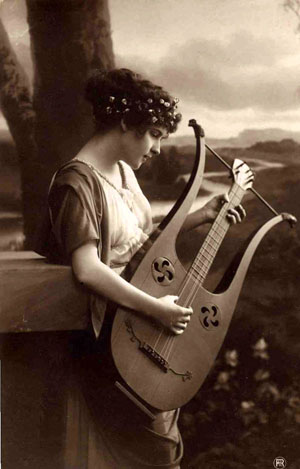
A musical instrument of the chordophone family, the lyre-guitar was a type of guitar shaped to look like a lyre, popular as a fad-instrument in the late 1800s. It had six single courses, with a fretboard located between two curved arms recalling the shape of the ancient Greek kithara. It was tuned and played like the conventional guitar.
The lyre-guitar nearly always had a built-in pedestal allowing it to stand upright when not in use.
History
Pierre Charles Mareschal claimed to have invented it in 1780, what he called the Lira Anacreòntica. Mareschal was a prominent French luthier, and accused the French musician Phillis Pleyel of stealing his design.
The lyre-guitar enjoyed great popularity as a salon instrument, especially in Paris between 1780 and 1820. It became very much in vogue and pervaded the highest levels of society; Marie Antoinette played one and the great guitarists of the day such as Ferdinando Carulli, Fernando Sor, Matteo Carcassi, Mauro Giuliani, and Pierre Jean Porro wrote music and method books for it.

Its decline coincided with the waning of the popularity of the guitar as a salon instrument, increasingly supplanted by the piano which benefited from ongoing improvements to its keyboard action.
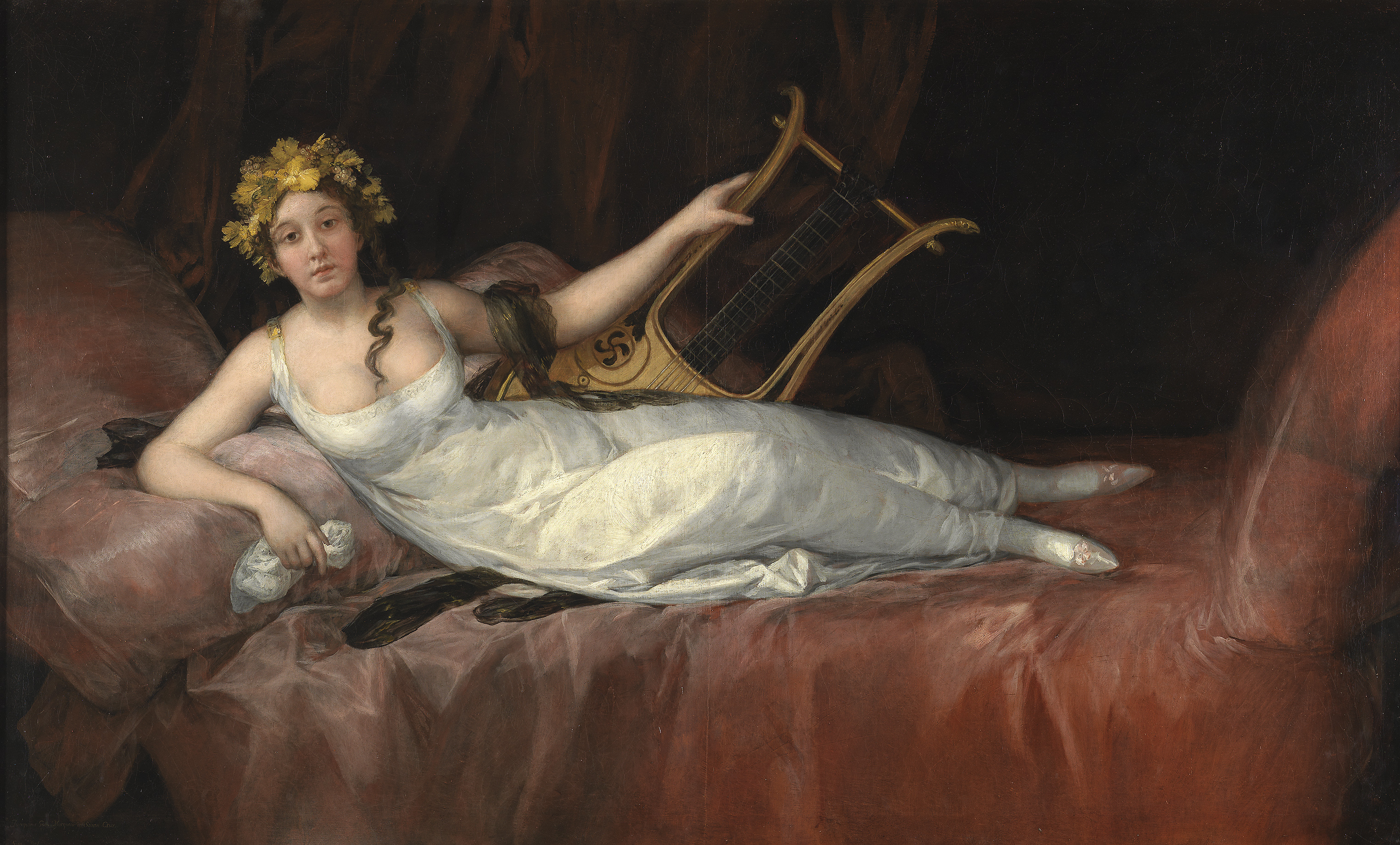
The lyre-guitar persisted, but not so much as a musical instrument, instead it persisted as a common symbol of classicist ideals, and appeared in numerous allegorical paintings (e.g. Mähler's portrait of Beethoven). Later on it was used in photographs as a prop for evoking ancient Greek and Roman themes.
The idea was to create an instrument which looked pretty and provided a visual accessory to help ladies of fashion to assume the gracious pose of Greek kithara players. This visual likeness became a potent ingredient of the culture of the upper classes.
Although the lyre-guitar is rarely heard or recorded it is not extinct. A body of nearly forgotten repertoire exists often by highly notable guitarists of the golden age of the guitar. Today lyre-guitars can be made to order by luthiers and authentic examples exist in museums and private collections.
Lyre-guitar luthiers
- [[File:Lyre Guitar MET DP105342.jpg|thumb|252x252px|Chordophone-Lute-plucked-fretted Lyre guitar, held at the [[Metropolitan Museum of Art]]]]Robert Wornum (1780–1852)
- César Pons (1748–1831)
- Francois Roudhloff (Mauchand, France)
Notes
References
Bibliography
- {{cite book |archive-url=https://web.archive.org/web/20100404024140/http://www.eleonoravulpiani.com/book_eng.htm |archive-date=2010-04-04
- {{cite magazine
- {{cite book
- {{cite book
References
- "Plagiat dénoncé aux musiciens et aux amateurs des lyres nouvelles, inventées par Mareschal, Luthier à Paris", 1780, by P. C. Mareschal.
- " La lyre-guitare" in "Les Cahiers de la Guitare", 1988, by D. Ribouillault.
- Matanya Ophee, "The Story of the Lyre-Guitar", in Soundboard XIV/4, 1987-1988 Winter
- The Steve Howe Guitar Collection (Balfon Books UK) - ({{ISBN. 1-871547-64-4) - (First British Edition 1994) - p51. Image of Roudhloff Lyre Guitar c.1815. The lyre guitar is marked with "Roudhloff the elder son" who is known to have opened a workshop in Fitzroy Square, London in the early 1900s.
This article was imported from Wikipedia and is available under the Creative Commons Attribution-ShareAlike 4.0 License. Content has been adapted to SurfDoc format. Original contributors can be found on the article history page.
Ask Mako anything about Lyre-guitar — get instant answers, deeper analysis, and related topics.
Research with MakoFree with your Surf account
Create a free account to save articles, ask Mako questions, and organize your research.
Sign up freeThis content may have been generated or modified by AI. CloudSurf Software LLC is not responsible for the accuracy, completeness, or reliability of AI-generated content. Always verify important information from primary sources.
Report