From Surf Wiki (app.surf) — the open knowledge base
Lycopene
Carotenoid pigment

Carotenoid pigment
at 760 mmHg insoluble in CH3OH, C2H5OH | NFPA-H = 0 | NFPA-F = 1 | NFPA-R = 0
Lycopene is an organic compound classified as a tetraterpene and a carotene. Lycopene (from the Neo-Latin Lycopersicon, the name of a former tomato genus) is a bright red carotenoid hydrocarbon found in tomatoes and other red fruits and vegetables.
Occurrence
Aside from tomatoes or tomato products like ketchup, it is found in watermelons, grapefruits, red guavas, and baked beans.
In plants, algae, and other photosynthetic organisms, lycopene is an intermediate in the biosynthesis of many carotenoids, including beta-carotene, which is responsible for yellow, orange, or red pigmentation, photosynthesis, and photoprotection.
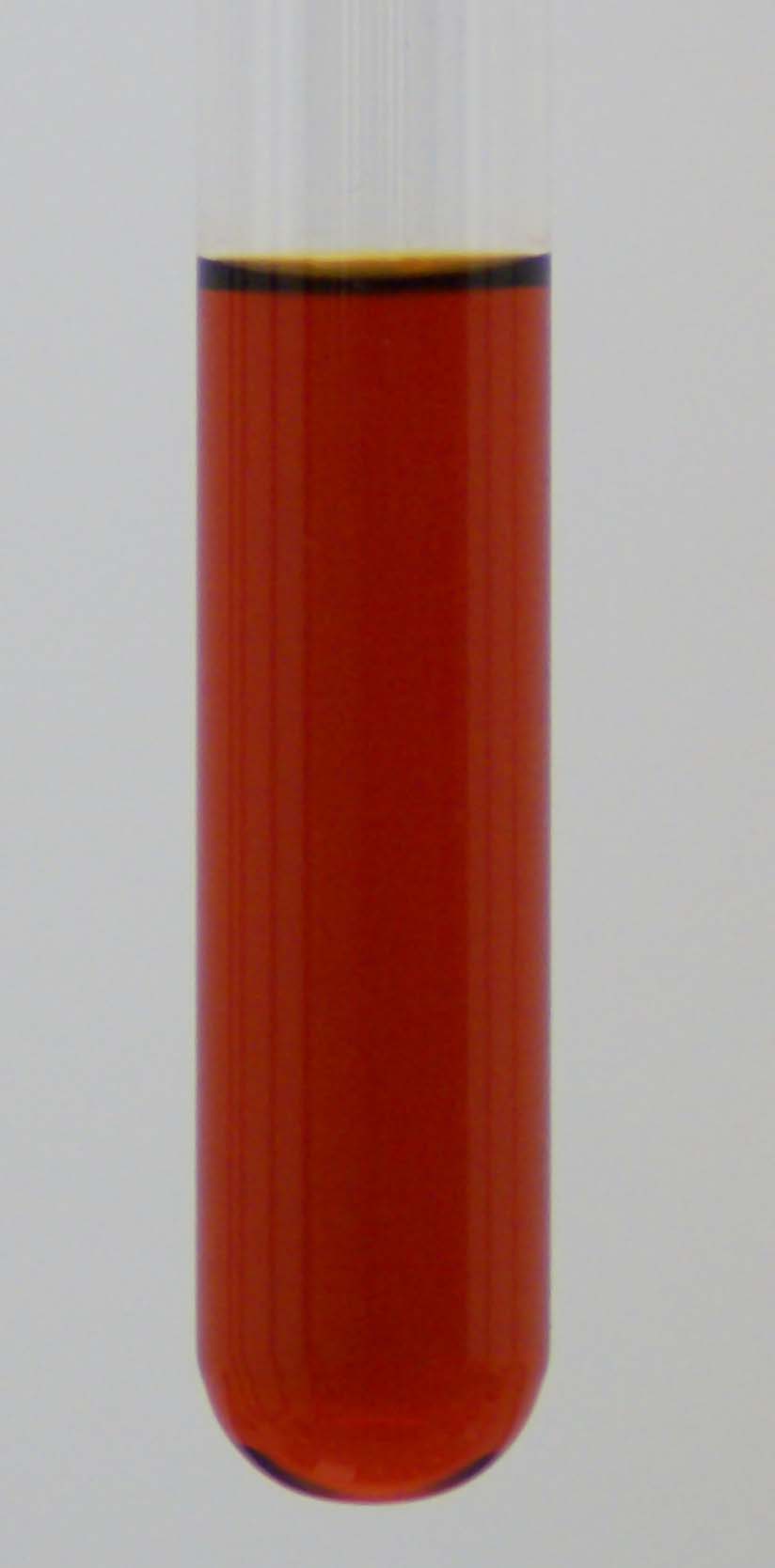
Like all carotenoids, lycopene is a tetraterpene. It is soluble in fat, but insoluble in water. Eleven conjugated double bonds give lycopene its deep red color.
Owing to the strong color, lycopene is used as a food coloring (registered as E160d) and is approved for use in the US, Australia and New Zealand (registered as 160d), and the European Union (E160d).
Structure and physical properties
Lycopene is a symmetrical tetraterpene because it consists entirely of carbon and hydrogen and is derived from eight isoprene subunits. Isolation procedures for lycopene were first reported in 1910, and the structure of the molecule was determined by 1931. In its natural, all-trans form, the molecule is long and somewhat flat, constrained by its system of 11 conjugated double bonds. The extended conjugation is responsible for its deep red color.
Plants and photosynthetic bacteria produce all-trans lycopene. In human blood, various cis-isomers constitute more than 60% of the total lycopene concentration, but the biological effects of individual isomers have not been investigated.
Carotenoids like lycopene are found in photosynthetic pigment-protein complexes in plants, photosynthetic bacteria, fungi, and algae.
Dispersed lycopene molecules can be encapsulated into carbon nanotubes enhancing their optical properties.{{cite journal |article-number = 155420 |access-date = 2019-02-12 |archive-date = 2020-10-02 |archive-url = https://web.archive.org/web/20201002235524/http://pubman.nims.go.jp/pubman/item/escidoc:1587358:2/component/escidoc:1597178/Prb155420.pdf
Biosynthesis
The unconditioned biosynthesis of lycopene in eukaryotic plants and in prokaryotic cyanobacteria is similar, as are the enzymes involved. Synthesis begins with mevalonic acid, which is converted into dimethylallyl pyrophosphate. This is then condensed with three molecules of isopentenyl pyrophosphate (an isomer of dimethylallyl pyrophosphate), to give the 20-carbon geranylgeranyl pyrophosphate. Two molecules of this product are then condensed in a tail-to-tail configuration to give the 40-carbon phytoene, the first committed step in carotenoid biosynthesis. Through several desaturation steps, phytoene is converted into lycopene. The two terminal isoprene groups of lycopene can be cyclized to produce beta-carotene, which can then be transformed into a wide variety of xanthophylls.
Diet
Consumption by humans
Absorption of lycopene requires that it be combined with bile salts and fat to form micelles. Intestinal absorption of lycopene is enhanced by the presence of fat and by cooking. Lycopene dietary supplements (in oil) may be more efficiently absorbed than lycopene from food.
Lycopene is not an essential nutrient for humans, but is commonly found in the diet mainly from dishes prepared from tomatoes. The median and 99th percentile of dietary lycopene intake have been estimated to be 5.2 and 123 mg/d, respectively.
Sources
| Source | mg wet weight |
|---|---|
| Gac aril | 2~6 per gram |
| Raw tomato | 4.6 per cup |
| Tomato juice | 22 per cup |
| Tomato paste | 75 per cup |
| Tomato ketchup | 2.5 per tablespoon |
| Watermelon | 13 per wedge |
| Pink grapefruit | 2 per half grapefruit |
Fruits and vegetables that are high in lycopene include autumn olive, gac, tomatoes, watermelon, pink grapefruit, pink guava, papaya, seabuckthorn, wolfberry (goji, a berry relative of tomato), and rosehip. tomatoes and tomato-based sauces, juices, and ketchup account for more than 85% of the dietary intake of lycopene for most people.
Unlike other fruits and vegetables, where nutritional content such as vitamin C is diminished upon cooking, processing of tomatoes increases the concentration of bioavailable lycopene. Lycopene in tomato paste is up to four times more bioavailable than in fresh tomatoes. Processed tomato products such as pasteurized tomato juice, soup, sauce, and ketchup contain a higher concentration of bioavailable lycopene compared to raw tomatoes.
Cooking and crushing tomatoes (as in the canning process) and serving in oil-rich dishes (such as spaghetti sauce or pizza) greatly increases assimilation from the digestive tract into the bloodstream. Lycopene is fat-soluble, so the oil is said to help absorption. Gac has high lycopene content derived mainly from its seed coats.{{Cite journal | doi-access = free When lycopene is used as a food additive (E160d), it is usually obtained from tomatoes.
Adverse effects
Lycopene is non-toxic and commonly found in the diet, mainly from tomato products. There are cases of intolerance or allergic reaction to dietary lycopene, which may cause diarrhea, nausea, stomach pain or cramps, gas, and loss of appetite.{{cite web | access-date = 29 May 2017 | archive-date = 23 September 2017 | archive-url = https://web.archive.org/web/20170923043049/http://www.mayoclinic.org/drugs-supplements/lycopene/background/HRB-20059666
Lycopenemia is an orange discoloration of the skin that is observed with high intakes of lycopene. The discoloration is expected to fade after discontinuing excessive lycopene intake.
Research and potential health effects
A 2020 review of randomized controlled trials found conflicting evidence for lycopene having an effect on cardiovascular risk factors, whereas a 2017 review concluded that tomato products and lycopene supplementation reduced blood lipids and blood pressure.
A 2015 review found that dietary lycopene was associated with reduced risk of prostate cancer, whereas a 2021 meta-analysis found that dietary lycopene did not affect prostate cancer risk. Other reviews concluded that research has been insufficient to establish whether lycopene consumption affects human health.
Regulatory status in Europe and the United States
In a review of literature on lycopene and its potential benefit in the diet, the European Food Safety Authority concluded there was insufficient evidence for lycopene having antioxidant effects in humans, particularly in skin, heart function, or vision protection from ultraviolet light.
Although lycopene from tomatoes has been tested in humans for cardiovascular diseases and prostate cancer, no effect on any disease was found. The US Food and Drug Administration, in rejecting manufacturers' requests in 2005 to allow "qualified labeling" for lycopene and the reduction of various cancer risks, provided a conclusion that remains in effect :
In a review of research through 2024, the US National Cancer Institute concluded that the FDA has not approved the use of lycopene as effective for treating any medical condition, including various types of cancer.
References
References
- (2011). "CRC Handbook of Chemistry and Physics". [[CRC Press]].
- (2016). "Lycopene". PubChem, US National Library of Medicine.
- (2006). "Kirk-Othmer Encyclopedia of Chemical Technology".
- (October 2023). "Carotenoids: α-Carotene, β-Carotene, β-Cryptoxanthin, Lycopene, Lutein, and Zeaxanthin". Micronutrient Information Center, Linus Pauling Institute, Oregon State University, Corvallis, OR.
- (26 July 2005). "21 CFR 73.585. Tomato lycopene extract". US Food and Drug Administration.
- (8 September 2011). "Standard 1.2.4 – Labelling of ingredients (search "lycopene")".
- "Current EU approved additives and their E Numbers". UK Food Standards Agency.
- (2001). "Conformational potential energy surfaces of a Lycopene model". Journal of Molecular Structure: Theochem.
- (2005). "How do nutritional and hormonal status modify the bioavailability, uptake, and distribution of various isomers of lycopene?". The Journal of Nutrition.
- (28 January 2004). "Fatty acid and carotenoid composition of gac (Momordica cochinchinensis Spreng) fruit". Journal of Agricultural and Food Chemistry.
- "Gac (Momordica cochinchinensis) Analysis report".
- (January 2004). "Fatty acid and carotenoid composition of gac (Momordica cochinchinensis Spreng) fruit". [[Journal of Agricultural and Food Chemistry]].
- (2014). "Home processing of tomatoes (Solanum lycopersicum): Effects onin vitrobioaccessibility of total lycopene, phenolics, flavonoids, and antioxidant capacity". Journal of the Science of Food and Agriculture.
- (2005). "Are there adverse effects of lycopene exposure?". The Journal of Nutrition.
- (2020). "Effect of Dietary and Supplemental Lycopene on Cardiovascular Risk Factors: A Systematic Review and Meta-Analysis". Advances in Nutrition.
- (2017). "Tomato and lycopene supplementation and cardiovascular risk factors: A systematic review and meta-analysis". Atherosclerosis.
- (2015-08-21). "Lycopene and Risk of Prostate Cancer". Medicine.
- (2021). "Dietary Tomato Consumption and the Risk of Prostate Cancer: A Meta-Analysis". Frontiers in Nutrition.
- (2010). "An Update on the Health Effects of Tomato Lycopene". Annual Review of Food Science and Technology.
- (2011). "Scientific Opinion on the substantiation of health claims related to lycopene and protection of DNA, proteins and lipids from oxidative damage (ID 1608, 1609, 1611, 1662, 1663, 1664, 1899, 1942, 2081, 2082, 2142, 2374), protection of the skin from UV-induced (including photo-oxidative) damage (ID 1259, 1607, 1665, 2143, 2262, 2373), contribution to normal cardiac function (ID 1610, 2372), and maintenance of normal vision (ID 1827) pursuant to Article 13(1) of Regulation (EC) No 1924/2006". EFSA Journal.
- (8 November 2005). "Qualified Health Claims: Letter Regarding Tomatoes and Prostate Cancer (Lycopene Health Claim Coalition) (Docket No. 2004Q-0201) (Updated 9 July 2015)". US Food and Drug Administration.
- (5 April 2024). "Lycopene". US National Cancer Institute.
This article was imported from Wikipedia and is available under the Creative Commons Attribution-ShareAlike 4.0 License. Content has been adapted to SurfDoc format. Original contributors can be found on the article history page.
Ask Mako anything about Lycopene — get instant answers, deeper analysis, and related topics.
Research with MakoFree with your Surf account
Create a free account to save articles, ask Mako questions, and organize your research.
Sign up freeThis content may have been generated or modified by AI. CloudSurf Software LLC is not responsible for the accuracy, completeness, or reliability of AI-generated content. Always verify important information from primary sources.
Report