From Surf Wiki (app.surf) — the open knowledge base
Lunch counter
Particular type of casual restaurant
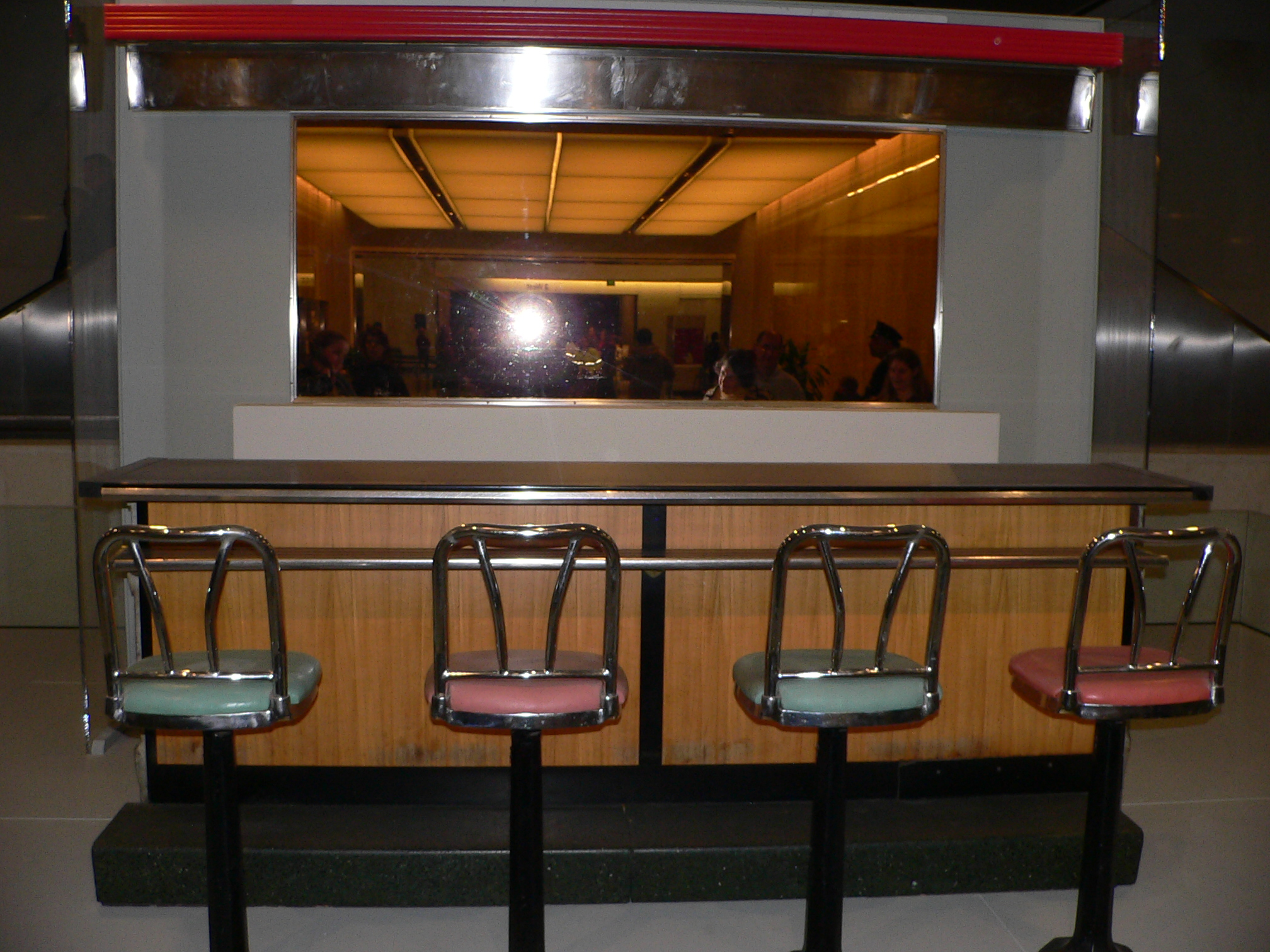
Particular type of casual restaurant

A lunch counter or luncheonette is a small restaurant, similar to a diner, where the patron sits on a stool on one side of the counter and the server serves food from the opposite side of the counter, where the kitchen or food preparation area is located. As the name suggests, they were primarily used for the lunch meal. Lunch counters were once commonly located inside variety stores (also known as "five and dimes", "five and tens", or "dimestores"), pharmacies, and department stores in the United States throughout the 20th century. The intent of the lunch counter in a store was to profit from serving hungry shoppers, and to attract people to the store so that they might buy merchandise.
History
Woolworth's, an early five and dime store chain, opened their first luncheonette in New Albany, Indiana, around 1923, and expanded rapidly from there. Lunch counters were often found in other dimestores, like Newberry's, S. H. Kress, H.L. Green, W.T. Grant, McLellan's or McCrory's. Members of the retail staff who had taken lunch counter training would staff the counter during lunch time. A lunch counter was built into dime-stores as late as the 1950s. However, into the 1960s, they lost popularity to fast food restaurants, such as McDonald's, and convenience stores, such as 7-Eleven.
Typical foods served were hot and cold sandwiches a lot (such as ham and cheese, grilled cheese, BLT, patty melt, and egg salad), soups, pie, ice cream (including [[sund
ae]]s, ice cream sodas, and milkshakes), soda, coffee, and hot chocolate.
Civil rights movement
Integrating lunch counters in the Southern United States through the use of sit-in political protests in the 1960s was a major accomplishment of the civil rights movement. These involved African Americans and their supporters sitting at the lunch counter in areas designated for "whites only", insisting that they be served food and beverages. The Woolworth's lunch counter in Greensboro, North Carolina, was the site of one of the first such sit-ins in 1960. In recognition of its significance, part of the Greensboro lunch counter has been installed at the Smithsonian Institution's National Museum of American History, while the former Woolworth's building is now the site of International Civil Rights Center and Museum.
Gallery
image:John's Cafe.jpg|John's Cafe in Portland, Oregon image:Randy's Restaurant.jpg|Randy's Restaurant counter in Seattle, Washington image:13 Coins Restaurant.jpg|13 Coins counter in Seattle, Washington image:Crystal's Country Cafe (Low Pass, Oregon).jpg|A lunch counter in Low Pass, Oregon image:Six-Stool Lunch Counter.jpg|A lunch counter in a very small restaurant image:Lunch Counter-3.jpg|A man eating lunch at a lunch counter image:Lunch Counter-2.jpg|A 1950s lunch counter image:Dirty Lunch Counter.jpg|Lunch counter with finished plates image:Tosis.jpg|A lunch counter serving an older gentleman image:Jarbidge Lunch Counter.jpg|The lunch counter in Jarbidge, Nevada image:Jax Truckee Diner Lunch Counter.jpg|The lunch counter at the JAX Truckee Diner
References
References
- 978-0-7385-3386-5
This article was imported from Wikipedia and is available under the Creative Commons Attribution-ShareAlike 4.0 License. Content has been adapted to SurfDoc format. Original contributors can be found on the article history page.
Ask Mako anything about Lunch counter — get instant answers, deeper analysis, and related topics.
Research with MakoFree with your Surf account
Create a free account to save articles, ask Mako questions, and organize your research.
Sign up freeThis content may have been generated or modified by AI. CloudSurf Software LLC is not responsible for the accuracy, completeness, or reliability of AI-generated content. Always verify important information from primary sources.
Report