From Surf Wiki (app.surf) — the open knowledge base
Luke 24

Luke 24 is the twenty-fourth and final chapter of the Gospel of Luke in the New Testament of the Christian Bible. The book containing this chapter is anonymous, but early Christian tradition uniformly affirmed that Luke the Evangelist composed this Gospel as well as the Acts of the Apostles. This chapter records the discovery of the resurrection of Jesus Christ, his appearances to his disciples and his ascension into heaven.
Text
The original text was written in Koine Greek. Some early manuscripts containing the text of this chapter are:
- Papyrus 75 (AD 175–225)
- Codex Vaticanus (325–350)
- Codex Sinaiticus (330–360)
- Codex Bezae (~400)
- Codex Washingtonianus (~400)
- Codex Alexandrinus (400–440)
- Codex Ephraemi Rescriptus (~450; extant verses 1–6, 46–53).
This chapter is divided into 53 verses.
{{Anchor|Verses 1–12}}Resurrection morning (verses 1–12)
Context
The narrative in chapter 24 continues the events concluding chapter 23 without a break:
Verse 1
:Now upon the first day of the week, very early in the morning, they came unto the sepulchre, bringing the spices which they had prepared, and certain others with them. Frederic Farrar, in the Cambridge Bible for Schools and Colleges, suggests that the words "certain others" are "probably spurious", not being part of the text in the Codex Sinaiticus, Codex Vaticanus, Codex Ephraemi Rescriptus or Codex Regius manuscripts.
Verse 2
:They found the stone rolled away from the tomb, The positioning of a stone outside the tomb is mentioned in the accounts of Jesus' burial in Matthew and Mark, but not in Luke.
Verse 3
:but when they went in they did not find the body. Some ancient authorities add "of the Lord Jesus"; these words are included in many English translations.
Verse 10
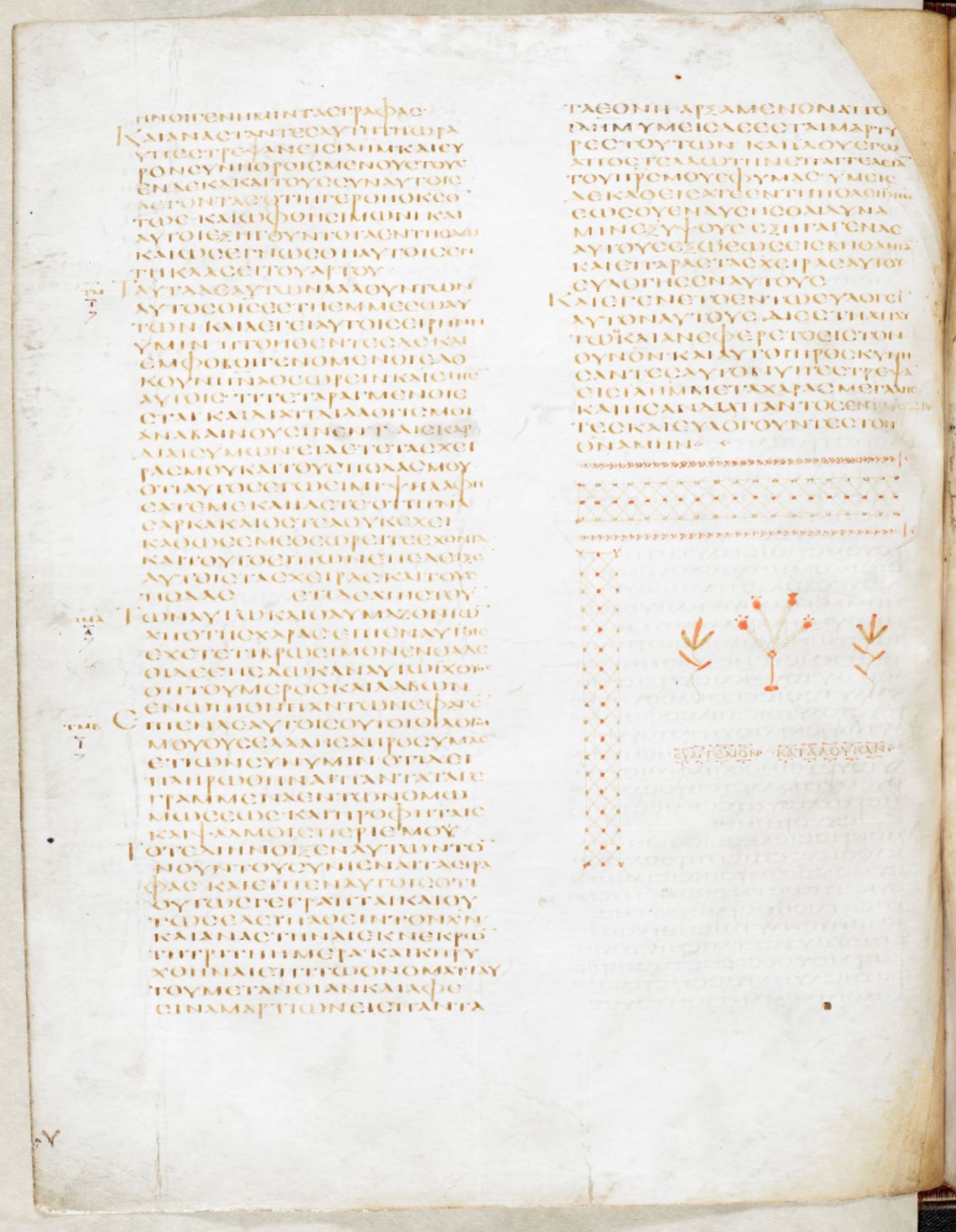
:Now it was Mary Magdalene, Joanna, Mary the mother of James, and the other women with them, who told these things to the apostles. The women who had come with Jesus from Galilee, as listed in Luke 8:2-3, included "Mary Magdalene, Joanna, Mary the mother of James, and many others: these who provided material sustenance to Jesus during his travels. The names of some women are mentioned in the other gospels, but only Luke's gospel mentions Joanna, implying that Luke receives his special information from "one (most likely Joanna) or more than one of" the women. In Luke 8:1–3 Mary called Magdalene, Joanna the wife of Chuza, and Susanna are named as women , along with other unnamed women.
While Matthew, Mark and John mentioned the names of the women present at the cross, Luke only refers them as "the women who had followed him from Galilee" (), but he names the women at the end in the story of the women's visit to the empty tomb (Luke 24:10). The two passages with the names of some women alongside the mention of the "twelve" and "apostles", respectively (Luke 8:1–3 and Luke 24:10), "form a literary inclusio" which brackets the major part of Jesus' ministry (leaving out only the earliest part of it).
Verse 12
:But Peter arose and ran to the tomb; and stooping down, he saw the linen cloths lying by themselves; and he departed, marveling to himself at what had happened. This verse and verse 34, "The Lord is risen indeed, and has appeared to Simon!", suggest that Peter (alone) went to the tomb, whereas verse 24, And certain of those who were with us went to the tomb and found it just as the women had said, implies more than one person.
American biblical scholar Kim Dreisbach states that (othonia), translated here as "linen cloths", is "a word of uncertain meaning ... probably best translated as a generic plural for grave clothes". The same word is used in .
{{Anchor|Verses 13–35}}The road to Emmaus (verses 13–35)
Main article: Road to Emmaus appearance
describes Jesus' appearance to two disciples who are walking from Jerusalem to Emmaus, which is said to be 60 stadia (10.4 to 12 km, depending on the definition of stadion is used) from Jerusalem. One of the disciples is named Cleopas (verse 18), while his companion remains unnamed.
Verse 24
:Some of those who were with us went to the tomb and found it just as the women had said, but him they did not see. This verse shares words and language with John 20:3-4. A note in the Jerusalem Bible suggests that this verse may allude to the visit which Peter and the Beloved Disciple made to the tomb as reported in John.
{{Anchor|Verses 36–49}}Jesus appears to the apostles (verses 36–49)
Verse 36
:Now as they said these things, Jesus Himself stood in the midst of them, and said to them, "Peace to you."
- "Peace to you" (KJV: "Peace be unto you"): rendering the Greek phrase εἰρήνη ὑμῖν, * *, which is a literal translation of the customary Jewish salutation שָׁלוֹם לָכֶם, shalom lekom (cf. ; Luke 10). This account agrees with John 20:19, which notes that "the doors of the room had been closed for fear of the Jews".
:They were fearful and terrified and thought they were seeing a ghost.
--==Verses 50–53The ascension of Jesus (verses 50–53)== Main article: Ascension of Jesus
Verse 51
:Now it came to pass, while He blessed them, that He was parted from them and carried up into heaven. The words "and carried up into heaven" are not included in some ancient texts of the gospel.
Verse 53
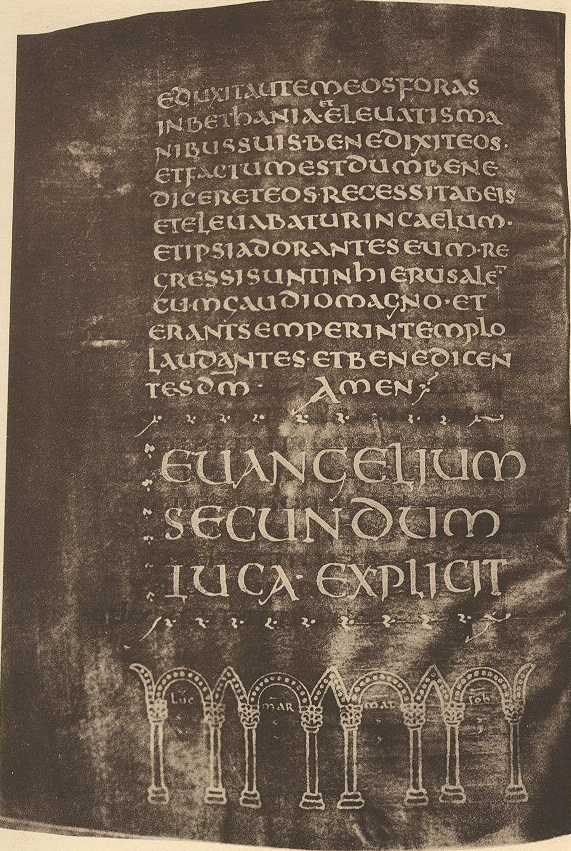
:and were continually in the temple praising and blessing God. Amen. Luke's gospel ends where it began, in the temple.
The King James Version ends with the word "Amen", following the Textus Receptus, but modern critical editions of the New Testament exclude this word, as do many modern English translations. In a manuscript copy of Beza's, there are the added words: :The Gospel according to Saint Luke was published fifteen years after the ascension of Christ.
This tradition also known to the 11th-century Byzantine bishop Theophylact of Ohrid.
Notes
References
Bibliography
References
- Holman Illustrated Bible Handbook. Holman Bible Publishers, Nashville, Tennessee. 2012.
- Halley, Henry H. ''Halley's Bible Handbook'': an Abbreviated Bible Commentary. 23rd edition. Zondervan Publishing House. 1962.
- [[William Robertson Nicoll. Nicoll, W. R.]], [https://biblehub.com/commentaries/egt/luke/24.htm The Expositor's Greek Testament] on Luke 24, accessed on 7 November 2023
- {{bibleverse. Luke. 24:1. KJV: King James Version
- Farrar, F. W. (1891), [http://biblehub.com/commentaries/cambridge/luke/24.htm Cambridge Bible for Schools and Colleges] on Luke 24, accessed 27 July 2018
- {{bibleverse. Luke. 24:2. ESV: [[English Standard Version]]
- {{bibleverse. Luke. 24:3. RSV: Revised Standard Version
- {{bibleverse. Luke. 24:3. NKJV: New King James Version
- {{bibleverse. Luke. 24:10. ESV: ESV
- {{bibleverse. Luke. 8:2-3. ESV: ESV
- {{bibleverse. Luke. 24:12. NKJV NKJV
- [http://greatshroudofturinfaq.com/Definitions/Othonia.html The Definitive Shroud of Turin FAQ], accessed 27 July 2018
- {{bibleverse. Luke. 24:24. ESV: ESV
- Jerusalem Bible (1966), note at Luke 24:24, London: Darton, Longman & Todd Ltd and Doubleday and Co. Inc.
- {{bibleverse. Luke. 24:36. NKJV: [[New King James Version. NKJV]]
- [https://biblehub.com/text/luke/24-36.htm Luke 24:36 Greek text analysis]. Biblehub.
- Meyer, Heinrich August Wilhelm (1880). [http://biblehub.com/commentaries/meyer/luke/24.htm ''Commentary on the New Testament.'' Luke 24]. Translation by Peter Christie from Meyer's sixth edition. Accessed February 14, 2019.
- [[Charles Ellicott. Ellicott, C. J.]] (Ed.) (1905). [http://biblehub.com/commentaries/ellicott/luke/24.htm ''Ellicott's Bible Commentary for English Readers''. Luke 24.] London : Cassell and Company, Limited, [1905–1906] Online version: (OCoLC) 929526708. Accessed 28 April 2019.
- {{bibleverse. Luke. 24:37. NCV: [[New Century Version. NCV]]
- {{bibleverse. Luke. 24:51. NKJV: NKJV
- Footnote ''g'' in the [[New Revised Standard Version]] at Luke 24:51
- {{bibleverse. Luke. 24:53. KJV: KJV
- {{bibleverse. Luke. 1:9. KJV
- Jerusalem Bible (1966), footnote at Luke 24:53
- [[BibleGateway.com]], [https://www.biblegateway.com/verse/en/Luke%2024:53 Translations of Luke 24:53]
- Gill, J., [http://biblehub.com/commentaries/gill/luke/24.htm Gill's Exposition of the Entire Bible] on Luke 24, accessed 28 July 2018
- Theophylact of Ohrid, [https://www.chrysostompress.org/explanation_matthew_preface.html Preface to the Gospel of Matthew] {{Webarchive. link. (2018-07-28 , accessed 28 July 2018)
This article was imported from Wikipedia and is available under the Creative Commons Attribution-ShareAlike 4.0 License. Content has been adapted to SurfDoc format. Original contributors can be found on the article history page.
Ask Mako anything about Luke 24 — get instant answers, deeper analysis, and related topics.
Research with MakoFree with your Surf account
Create a free account to save articles, ask Mako questions, and organize your research.
Sign up freeThis content may have been generated or modified by AI. CloudSurf Software LLC is not responsible for the accuracy, completeness, or reliability of AI-generated content. Always verify important information from primary sources.
Report