From Surf Wiki (app.surf) — the open knowledge base
Luke 17
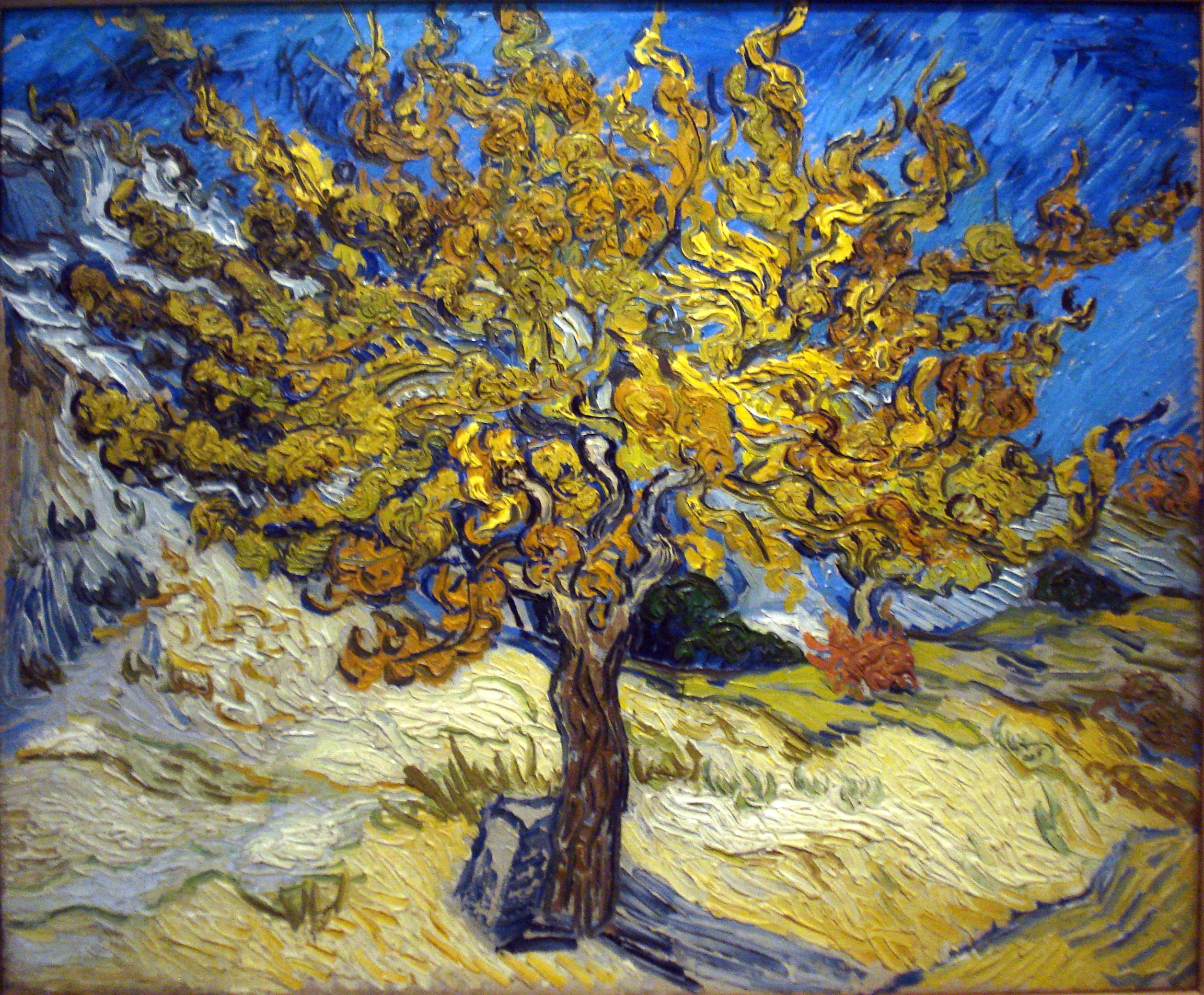
Luke 17 is the seventeenth chapter of the Gospel of Luke in the New Testament of the Christian Bible. It records "some sayings of Jesus" and the healing of ten lepers. The book containing this chapter is anonymous, but early Christian tradition uniformly affirmed that Luke the Evangelist composed this Gospel as well as the Acts of the Apostles.
Text
The original text was written in Koine Greek. Some early manuscripts containing the text of this chapter are:
- Papyrus 75 (175–225)
- Papyrus 111 (3rd-century)
- Codex Vaticanus (325–350)
- Codex Sinaiticus (330–360)
- Codex Bezae (~400)
- Codex Washingtonianus (~400)
- Codex Alexandrinus (400–440).
This chapter is divided into 37 verses. The New King James Version divides it into four sections, headed respectively "Jesus Warns of Offences" (verses 1–4), "Faith and Duty" (verses 5–10), "Ten Lepers Cleansed" (verses 11–19) and "The Coming of the Kingdom" (verses 20–37).
Offences and forgiving of offences (verses 1–10)
Verses 1–10 are presented as a single unit in the New International Version. Commenting on the variety of topics covered in the first ten verses, Lutheran biblical writer Harold Buls states that he "assumes that there is logical sequence. The items are not merely picked or chosen by Luke from some outside source".
The first four verses contain a set of "disparate sayings" meant for the community of disciples:
Verse 1
:Then He [Jesus] said to the disciples, "It is impossible that no offenses should come, but woe to him through whom they do come!" Jesus warns of "offences" coming, literally "stumbling blocks" (, skandala). Other translations used are "obstacles" (Jerusalem Bible), "things that cause people to sin" (Buls) and "temptations to sin" (English Standard Version). These are problems liable to arise within the believing community,
Reflecting on Jesus' assertion that something might be "impossible", Lutheran Pietist Johann Bengel offers as alternative readings, "it is not a thing usual to happen" or "a thing not admissible in the common course of things", noting similarly that at Jesus had said that "it is impossible for a prophet to be killed outside of Jerusalem".
Verse 2
:* It would be better for him if a millstone were hung around his neck, and he were thrown into the sea, than that he should offend one of these little ones.* The "little ones" are the more vulnerable members of the community of disciples. The term appears more frequently in Matthew's gospel than in Luke's.
Verses 3b–4
:If your brother sins against you, rebuke him; and if he repents, forgive him. And if he sins against you seven times in a day, and seven times in a day returns to you, saying, 'I repent', you shall forgive him. The Jerusalem Bible suggests that "Luke, apparently, is thinking of a matter that concerns only two of the community". Matthew 18 refers to a process of appealing to the community, which is missing from Luke's writing on this subject.
Verse 5
:And the apostles said to the Lord, "Increase our faith". Having previously addressed "the disciples" (Luke 16:1 and ), Jesus speaks now to the apostles, who come to him "with a special request". They feel that the moral strength of their faith in Jesus, i.e. just the loving power of their faith, is not great enough for that great task of forgiveness" which has just set for them in the previous verse: Their request is for "stronger energetic faith", better in quality rather than quantitatively more.
Verse 6
:And the Lord said, "If you had faith like a grain of mustard seed, you could say to this mulberry tree, 'Be uprooted and planted in the sea', and it would obey you." The King James Version refers to a sycamine tree. Jewish law prohibited the planting of mulberry trees too close to water cisterns because of their strong rooting systems and the physical damage they could cause.
Verses 7–10
Jesus describes a master who expects servants who have worked all day in the fields to serve his evening meal as well before seeing to their own needs. Joachim Jeremias considered this parable on service to be "a self-contained unit", while Paul Minear has commented on the "remarkable" degree of consensus among many biblical commentators as to its meaning. It does not appear in the other gospels but it is considered pre-Lucan, although the positioning of this passage after the reference to "the apostles" in verse 5 may have been a deliberate editorial decision in Luke.
Cleansing ten lepers (verses 11–19)
Main article: Cleansing ten lepers
_-_James_Tissot_-_overall.jpg)
This is one of the miracles of Jesus in the Gospels (recorded only in the Gospel of Luke). On his way to Jerusalem, continuing the journey he had begun in Luke 9:51, Jesus traveled along the border between Samaria and Galilee. As he was going into a village, ten men who had leprosy met him. They stood at a distance and called out in a loud voice, "Jesus, Master, have pity on us!" When he saw them, he said: "Go, show yourselves to the priests." And as they went, they were cleansed. One of them, when he saw he was healed, came back, praising God in a loud voice. He threw himself at Jesus' feet and thanked him: this man was a Samaritan. Jesus asked: "Were not all ten cleansed? Where are the other nine? Was no one found to return and give praise to God except this foreigner?" Then he said to him: "Rise and go; your faith has saved you."
This miracle has been described as emphasising the importance of faith, for Jesus did not say: "My power has saved you" but attributed the healing to the faith of the beneficiaries.
The coming of the kingdom (verses 20–21)
Verse 20
:Now when He was asked by the Pharisees when the kingdom of God would come, He answered them and said, "The kingdom of God does not come with observation";
Verse 21
:Neither shall they say, Lo here! or, lo there! for, behold, the kingdom of God is within you. George Leo Haydock suggests that the Pharisees' question is asked "in a mocking and an insulting manner". Buls notes that the enquiry is a 'when?' question whereas Jesus' answer is a 'what?' response: the Pharisees "were expecting the Kingdom of God ... to come soon"; this is "a faulty notion about the character of the Kingdom". Jesus replies that the Kingdom of God does not come "with observation" or "with a visible display": the word (paratērēseōs, careful observation) appears only here in the New Testament.
In the , the word εντος (entos) may be translated as either "among" or "within". The more natural meaning is "within",}} However, reference elsewhere to the Kingdom of God as something which those who respond can "enter into" (see Luke 18: 17, 24-25) argues for the term being understood as "in the midst of you".
The day of the Son of Man (verses 22–37)
The discourse in is proper to this gospel. "The day of the Son of Man" reflects the Jerusalem Bible's translation, cf. J. B. Phillips' translation. "One of the days of the Son of Man" is a more accurate translation, but a "strange" form of wording.
Verse 22
:And he said to the disciples, "The days are coming when you will desire to see one of the days of the Son of Man, and you will not see it". The phrase "one of the days of the Son of Man" is an unusual New Testament usage. It suggests not the "end-times" or the coming of Jesus in glory, but for the community of disciples whom Jesus has gathered to continue his ministry, some "glimpse" of the Son on Man to sustain them. Franklin notes that Stephen has a vision of the Son of Man in glory before his accusers start to stone him (Acts 7:55-6) and suggests that Jesus may have been referring to a moment such as this.
Verse 26
:Just as it was in the days of Noah, so will it be in the days of the Son of Man. The "days of Noah" were 950 years in all, but the period referred to was the time before the flood. "The days of the Son of Man" may reflect the wording in this verse, and the similar reference to "the days of Lot" in verse 28.
References
References
- Sub-heading at {{bibleverse. Luke. 17:1. NRSV in the [[New Revised Standard Version]]
- Halley, Henry Hampton. (1965). "Halley's Bible handbook: an Abbreviated Bible commentary". Zondervan.
- (2015). "The Holman Illustrated Bible Commentary". B&H Publishing Group.
- {{bibleverse. Luke. 17. NKJV
- Buls, H. H., [http://pericope.org/buls-notes/luke/luke_17_1_10.htm Luke 17:1–10], accessed 21 January 2022
- {{bibleverse. Luke. 17:1. NKJV: NKJV
- {{bibleverse. Luke. 17:1. TR1550: [[Textus Receptus]]
- {{rp. 949 although among the [[Church Fathers. fathers of the early church]], a connection was made with the [[Pharisees]], with whom Jesus had been speaking in the [[Luke 16. previous chapter]].Theophyl., quoted by [[Thomas Aquinas]] in [https://archive.org/details/The-catena-aurea-of-blessed-Thomas/Catena%20Aurea%20Luke%20Pt.%202/page/576/mode/2up Catena aurea: commentary on the four Gospels, collected out of the works of the fathers], Luke, Part 2, p. 577, edited by [[John Henry Newman]], Oxford, 1841, accessed on 1 May 2025
- {{bibleverse. Luke. 13:33. NRSV: [[New Revised Standard Version]]
- Bengel, J. A., [https://biblehub.com/commentaries/bengel/luke/17.htm Bengel's Gnomon of the New Testament] on Luke 17, accessed 5 August 2020
- {{bibleverse. Luke. 17:2. NKJV: NKJV
- Franklin, E., ''59. Luke'' in Barton, J. and Muddiman, J. (2001), [https://b-ok.org/dl/946961/8f5f43 The Oxford Bible Commentary]
- [[BibleGateway.com]], [https://www.biblegateway.com/quicksearch/?qs_version=NKJV&quicksearch=little+ones&begin=47&end=47 Keyword Search: "little ones"], accessed 22 January 2022
- {{bibleverse. Luke. 17:3–4. NKJV: NKJV
- Jerusalem Bible (1966), footnote a at Luke 17
- {{bibleverse. Luke. 17:5. NKJV: NKJV
- [[Heinrich August Wilhelm Meyer. Meyer, H. A. W.]], [http://biblehub.com/commentaries/meyer/luke/17.htm Meyer's NT Commentary] on Luke 17, translated by Peter Christie from the German sixth edition, accessed on 29 June 2018
- {{bibleverse. Luke. 17:5. ESV: [[English Standard Version]] (ESV)
- {{bibleverse. Luke. 17:5. KJV: KJV
- Holyhead, V. (2006), [https://www.amazon.co.uk/Welcoming-Word-Year-Burning-Hearts/dp/0814618340/ref=sr_1_1 Welcoming the Word in Year C: With Burning Hearts], p. 156, Liturgical Press, Collegeville, Minnesota
- Minear, P., [https://www.jstor.org/stable/pdf/3263867.pdf A Note on Luke 17:7-10], ''Journal of Biblical Literature'', March 1974, Vol. 93, No. 1, pp. 82–87, accessed 4 October 2023
- Evans, Craig A.. (2003). "The Bible Knowledge Background Commentary: Matthew-Luke". David C Cook.
- {{bibleverse. Luke. 17:11-19. NIV: [[NIV]]
- Marthaler, Berard L.. (1993). "The Creed: The Apostolic Faith in Contemporary Theology". Twenty-Third Publications.
- Lockyer, Herbert. (1988). "All the Miracles of the Bible". Harper Collins.
- {{bibleref2. Luke. 17:20. NKJV: NKJV
- {{bibleverse. Luke. 17:21. KJV: KJV
- Haydock, G. L. (1859), [https://www.studylight.org/commentaries/eng/hcc/luke-17.html Haydock's Catholic Bible Commentary] on Luke 17, accessed 5 October 2023
- {{bibleverse. Luke. 17:20. ISV: ISV
- Englishman's Concordance, [http://biblehub.com/greek/parate_re_seo_s_3907.htm παρατηρήσεως]
- [[Confraternity of Christian Doctrine, Inc.]], [https://www.biblegateway.com/passage/?search=Luke%2017%3A1-22&version=NABRE#fen-NABRE-29992g Footnote g at Luke 17:21] in the [[New American Bible Revised Edition]], accessed on 2 May 2025
- Jerusalem Bible (1966), section heading at Luke 17:22
- {{bibleverse. Luke. 17:22-36. PHILLIPS: [[The New Testament in Modern English]] (1958)
- {{bibleverse. Luke. 17:22. ESV: ESV
- {{bibleverse. Luke. 17:26. ESV: ESV
- {{bibleverse. Genesis. 9:29. NKJV: NKJV
This article was imported from Wikipedia and is available under the Creative Commons Attribution-ShareAlike 4.0 License. Content has been adapted to SurfDoc format. Original contributors can be found on the article history page.
Ask Mako anything about Luke 17 — get instant answers, deeper analysis, and related topics.
Research with MakoFree with your Surf account
Create a free account to save articles, ask Mako questions, and organize your research.
Sign up freeThis content may have been generated or modified by AI. CloudSurf Software LLC is not responsible for the accuracy, completeness, or reliability of AI-generated content. Always verify important information from primary sources.
Report