From Surf Wiki (app.surf) — the open knowledge base
Lugal
Sumerian term for rulers
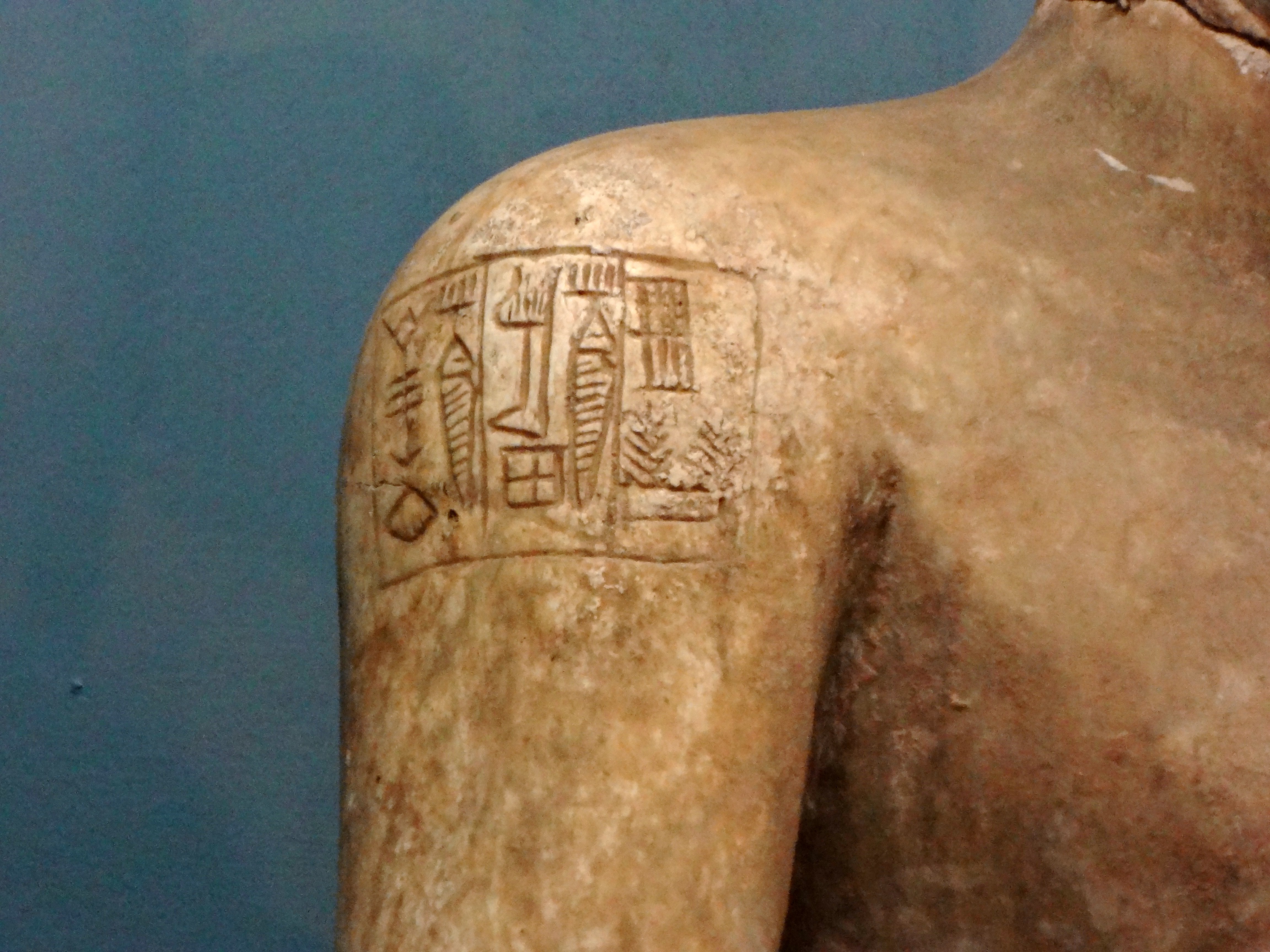
Sumerian term for rulers
Lugal (Sumerian: ) is the Sumerian term for "king, ruler". Literally, the term means "big man". In Sumerian, lú "𒇽" is "man" and gal "𒃲" is "great", or "big".
It was one of several Sumerian titles that a ruler of a city-state could bear (alongside en and ensi, the exact difference being a subject of debate). The sign eventually became the predominant logograph for "King" in general. In the Sumerian language, lugal is used to mean an owner (e.g. of a boat or a field) or a head or chief (of a unit, such as a family).
As a cuneiform logograph (Sumerogram) LUGAL (Unicode: 𒈗, rendered in Neo Assyrian).
Cuneiform

The cuneiform sign LUGAL 𒈗 (Borger nr. 266, Unicode U+12217) serves as a determinative in cuneiform texts (Sumerian, Akkadian and Hittite), indicating that the following word is the name of a king. In Akkadian orthography, it may also be a syllabogram šàr, acrophonically based on the Akkadian for "king", šarrum.
Unicode also includes the cuneiform characters , and .
''Lugal'', ''ensi'' and ''en''==

There are different theories regarding the meaning of the title lugal in 3rd-millennium Sumer. Some scholars believe that a ruler of an individual city-state was usually called ensi, and a ruler who headed a confederacy or larger dominion composed of several cities, perhaps even the whole of Sumer, was a lugal. The functions of such a lugal would include certain ceremonial and cultic activities, arbitration in border disputes, military defence against external enemies, and once the lugal has died, the eldest son must take over. The ensis of Lagash would sometimes refer to the city's patron deity, Ningirsu, as their lugal ("master"). All of the above is connected to the possibly priestly or sacral character of the titles ensi and especially en (the latter term continuing to designate priests in subsequent times).
Other scholars consider ensi, en and lugal to have been merely three local designations for the sovereign, accepted respectively in the city-states of Lagash, Uruk and Ur (as well as most of the rest of Sumer), although the various terms may have expressed different aspects of the Mesopotamian concept of kingship. T. Jacobsen theorized that he was originally an (elected) war leader, as opposed to the (likewise elected) en, who dealt with internal issues.
Among the earliest rulers whose inscriptions describe them as sux are Enmebaragesi and Mesilim at Kish, and Meskalamdug, Mesannepada and several of their successors at Ur. At least from the Third Dynasty of Ur onwards, only lugal was used to designate a contemporary sovereign in Sumerian.
''Lugal'' in the Amarna letters
The term Lugal is used extensively in the Amarna letters, for addressing kings or pharaohs, and elsewhere in speaking about various kings. One common address, in the introduction of many letters, from the vassals writing to the pharaoh was to use: Šàr-ri, (šarri "my king": šar the construct state of šarrum + the first person suffix -i); they used Lugal + ri = Šàr-ri, with LUGAL written Sumerographically while ri being the Akkadian phonetic supplement.
References
ca:Sumer#Títols polítics sumeris
References
- Crawford, H.. (29 August 2013). "The Sumerian World". Routledge.
- (1990). "Mercer Dictionary of the Bible". Mercer University Press.
- Westenholz, Aage. (2002). "A Comparative Study of Six City-State Cultures: An investigation conducted by the Copenhagen Polis Center". Kongelige Danske Videnskabernes Selskab / C.A. Reitzels Forlag.
- Mesalim, Plamen Rusev. (2001). "Lugal Na Kish: Politicheska Istoriia Na Ranen Shumer (XXVIII-XXVI V. Pr.N.E.)". Faber.
- Glassner, Jean-Jacques. (2000). "A Comparative Study of Thirty City-State Cultures". Royal Danish Academy of Sciences and Letters.
- Michalowski, Piotr. (2008). "Religion and Power: Divine kingship in the ancient world and beyond". The Oriental Institute.
- Cooper, Jerrold S.. (July 1995). "Sumerian and Semitic writing in most ancient Syro-Mesopotamia". Peeters Publishers.
- [[Thorkild Jacobsen. Jacobsen, T.]], 1970: "Early political development in Mesopotamia", ZA 52: 91-140; repr. in TIT 132-156, 366-396.
This article was imported from Wikipedia and is available under the Creative Commons Attribution-ShareAlike 4.0 License. Content has been adapted to SurfDoc format. Original contributors can be found on the article history page.
Ask Mako anything about Lugal — get instant answers, deeper analysis, and related topics.
Research with MakoFree with your Surf account
Create a free account to save articles, ask Mako questions, and organize your research.
Sign up freeThis content may have been generated or modified by AI. CloudSurf Software LLC is not responsible for the accuracy, completeness, or reliability of AI-generated content. Always verify important information from primary sources.
Report