From Surf Wiki (app.surf) — the open knowledge base
Low-carbon electricity
Power produced with lower carbon dioxide emissions

Power produced with lower carbon dioxide emissions
electricity generation that aims to minimise greenhouse gas emissions
Low-carbon electricity or low-carbon power is electricity produced with substantially lower greenhouse gas emissions over the entire lifecycle than power generation using fossil fuels. The energy transition to low-carbon power is one of the most important actions required to limit climate change.
Low carbon power generation sources include wind power, solar power, nuclear power and most hydropower. The term largely excludes conventional fossil fuel plant sources, and is only used to describe a particular subset of operating fossil fuel power systems, specifically, those that are successfully coupled with a flue gas carbon capture and storage (CCS) system. Globally almost 40% of electricity generation came from low-carbon sources in 2020: about 10% being nuclear power, almost 10% wind and solar, and around 20% hydropower and other renewables. Very little low-carbon power comes from fossil sources, mostly due to the cost of CCS technology.
History

During the late 20th and early 21st century significant findings regarding global warming highlighted the need to curb carbon emissions. From this, the idea for low-carbon power was born. The Intergovernmental Panel on Climate Change (IPCC), established by the World Meteorological Organization (WMO) and the United Nations Environment Program (UNEP) in 1988, set the scientific precedence for the introduction of low-carbon power. The IPCC has continued to provide scientific, technical and socio-economic advice to the world community, through its periodic assessment reports and special reports.
Internationally, the most prominent early step in the direction of low carbon power was the signing of the Kyoto Protocol, which came into force on 16 February 2005, under which most industrialized countries committed to reduce their carbon emissions. The historical event set the political precedence for introduction of low-carbon power technology.
Power sources by greenhouse gas emissions
Differentiating attributes of low-carbon power sources

There are many options for lowering current levels of carbon emissions. Some options, such as wind power and solar power, produce low quantities of total life cycle carbon emissions, using entirely renewable sources. Other options, such as nuclear power, produce a comparable amount of carbon dioxide emissions as renewable technologies in total life cycle emissions, but consume non-renewable, but sustainable materials (uranium). The term low-carbon power can also include power that continues to utilize the world's natural resources, such as natural gas and coal, but only when they employ techniques that reduce carbon dioxide emissions from these sources when burning them for fuel, such as the, as of 2012, pilot plants performing Carbon capture and storage.
Because the cost of reducing emissions in the electricity sector appears to be lower than in other sectors such as transportation, the electricity sector may deliver the largest proportional carbon reductions under an economically efficient climate policy.
Technologies to produce electric power with low-carbon emissions are in use at various scales. Together, they accounted for almost 40% of global electricity in 2020, with wind and solar almost 10%.
| Source: |
|---|
Technologies
The 2014 Intergovernmental Panel on Climate Change report identifies nuclear, wind, solar and hydroelectricity in suitable locations as technologies that can provide electricity with less than 5% of the lifecycle greenhouse gas emissions of coal power.
Hydroelectric power
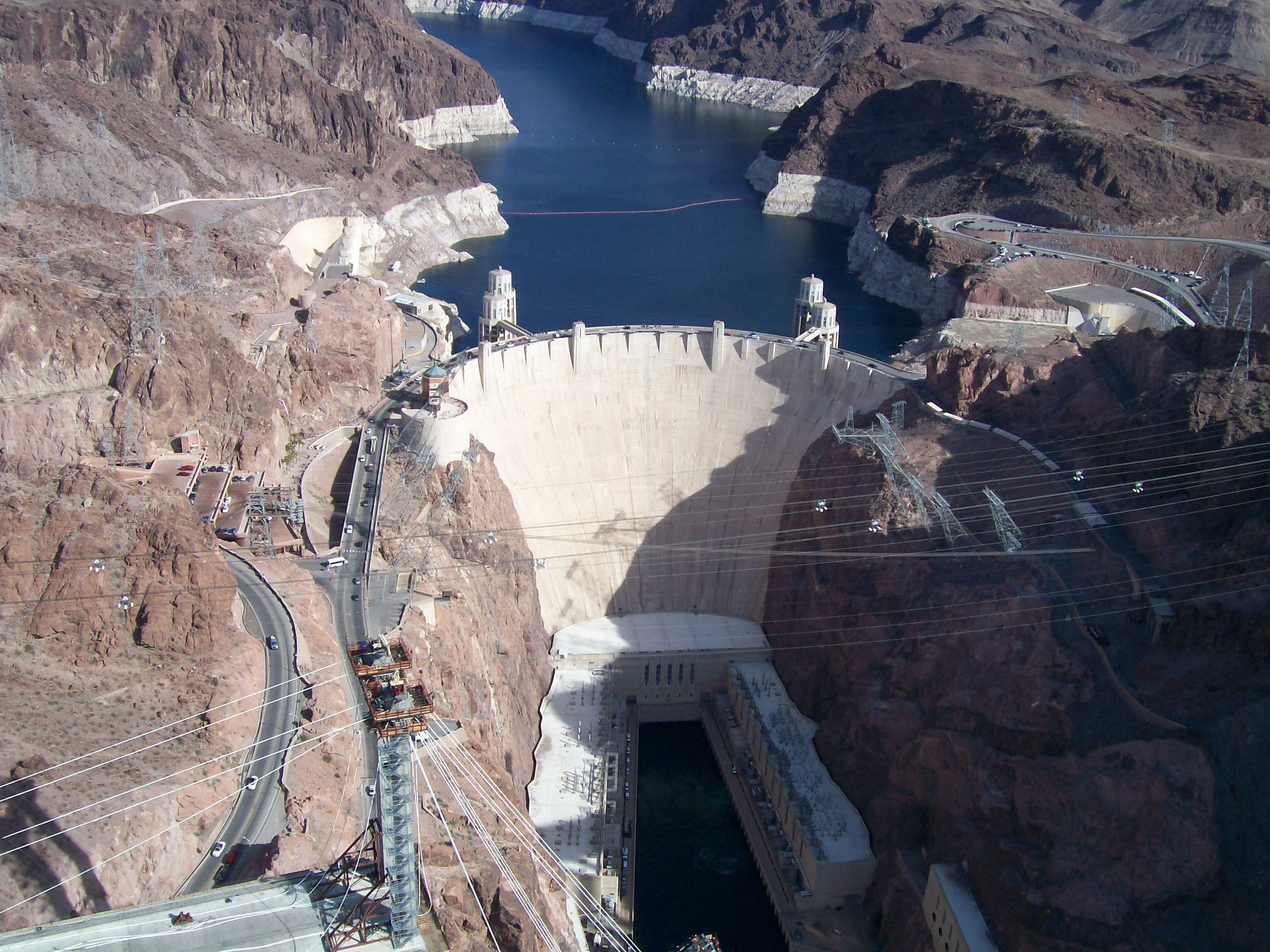
Hydroelectric plants have the advantage of being long-lived and many existing plants have operated for more than 100 years. Hydropower is also an extremely flexible technology from the perspective of power grid operation. Large hydropower provides one of the lowest cost options in today's energy market, even compared to fossil fuels and there are no harmful emissions associated with plant operation.International Energy Agency (2007). Renewables in global energy supply: An IEA facts sheet (PDF), OECD, p. 3. However, there are typically low greenhouse gas emissions with reservoirs, and possibly high emissions in the tropics.
Hydroelectric power is the world's largest low carbon source of electricity, supplying 15.6% of total electricity in 2019. China is by far the world's largest producer of hydroelectricity in the world, followed by Brazil and Canada.
However, there are several significant social and environmental disadvantages of large-scale hydroelectric power systems: dislocation, if people are living where the reservoirs are planned, release of significant amounts of carbon dioxide and methane during construction and flooding of the reservoir, and disruption of aquatic ecosystems and birdlife. There is a strong consensus now that countries should adopt an integrated approach towards managing water resources, which would involve planning hydropower development in co-operation with other water-using sectors.
Nuclear power
Nuclear power, with a 9% share of world electricity production from 440 power reactors as of 2025.
Nuclear power, in 2010, also provided two thirds of the twenty seven nation European Union's low-carbon energy, with some EU nations sourcing a large fraction of their electricity from nuclear power; for example France derives 79% of its electricity from nuclear. As of 2020 nuclear power provided 47% low-carbon power in the EU with countries largely based on nuclear power routinely achieving carbon intensity of 30-60 gCO2eq/kWh.
In 2021 United Nations Economic Commission for Europe (UNECE) described nuclear power as important tool to mitigate climate change that has prevented 74 Gt of emissions over the last half century, providing 20% of energy in Europe and 43% of low-carbon energy.
Wind power

Solar power
Main article: Solar power

Solar power is the conversion of sunlight into electricity, either directly using photovoltaics (PV), or indirectly using concentrated solar power (CSP). Concentrated solar power systems use lenses or mirrors and tracking systems to focus a large area of sunlight into a small beam. Photovoltaics convert light into electric current using the photoelectric effect.
Commercial concentrated solar power plants were first developed in the 1980s. The 354 MW SEGS CSP installation is the largest solar power plant in the world, located in the Mojave Desert of California. Other large CSP plants include the Solnova Solar Power Station (150 MW) and the Andasol solar power station (150 MW), both in Spain. The over 200 MW Agua Caliente Solar Project in the United States, and the 214 MW Charanka Solar Park in India, are the world's largest photovoltaic plants. Solar power's share of worldwide electricity usage at the end of 2014 was 1%.
Geothermal power
Main article: Geothermal electricity
Geothermal electricity is electricity generated from geothermal energy. Technologies in use include dry steam power plants, flash steam power plants and binary cycle power plants. Geothermal electricity generation is used in 24 countries while geothermal heating is in use in 70 countries.
Current worldwide installed capacity is 10,715 megawatts (MW), with the largest capacity in the United States (3,086 MW), Philippines, and Indonesia. Estimates of the electricity generating potential of geothermal energy vary from 35 to 2000 GW.
Geothermal power is considered to be sustainable because the heat extraction is small compared to the Earth's heat content.{{Citation |access-date = 13 May 2009
Tidal power
Tidal power is a form of hydropower that converts the energy of tides into electricity or other useful forms of power. The first large-scale tidal power plant (the Rance Tidal Power Station) started operation in 1966. Although not yet widely used, tidal power has potential for future electricity generation. Tides are more predictable than wind energy and solar power.
Carbon capture and storage
Main article: Carbon capture and storage
Carbon capture and storage (CCS) captures carbon dioxide from the flue gas of power plants or other industry, transporting it to an appropriate location where it can be buried securely in an underground reservoir. Between 1972 and 2017, plans were made to add CCS to enough coal and gas power plants to sequester 171 million tonnes of per year, but by 2021 over 98% of these plans had failed. Cost, the absence of measures to address long-term liability for stored CO2, and limited social acceptability have all contributed to project cancellations. As of 2024, CCS is in operation at only five power plants worldwide.
Outlook and requirements
Emissions
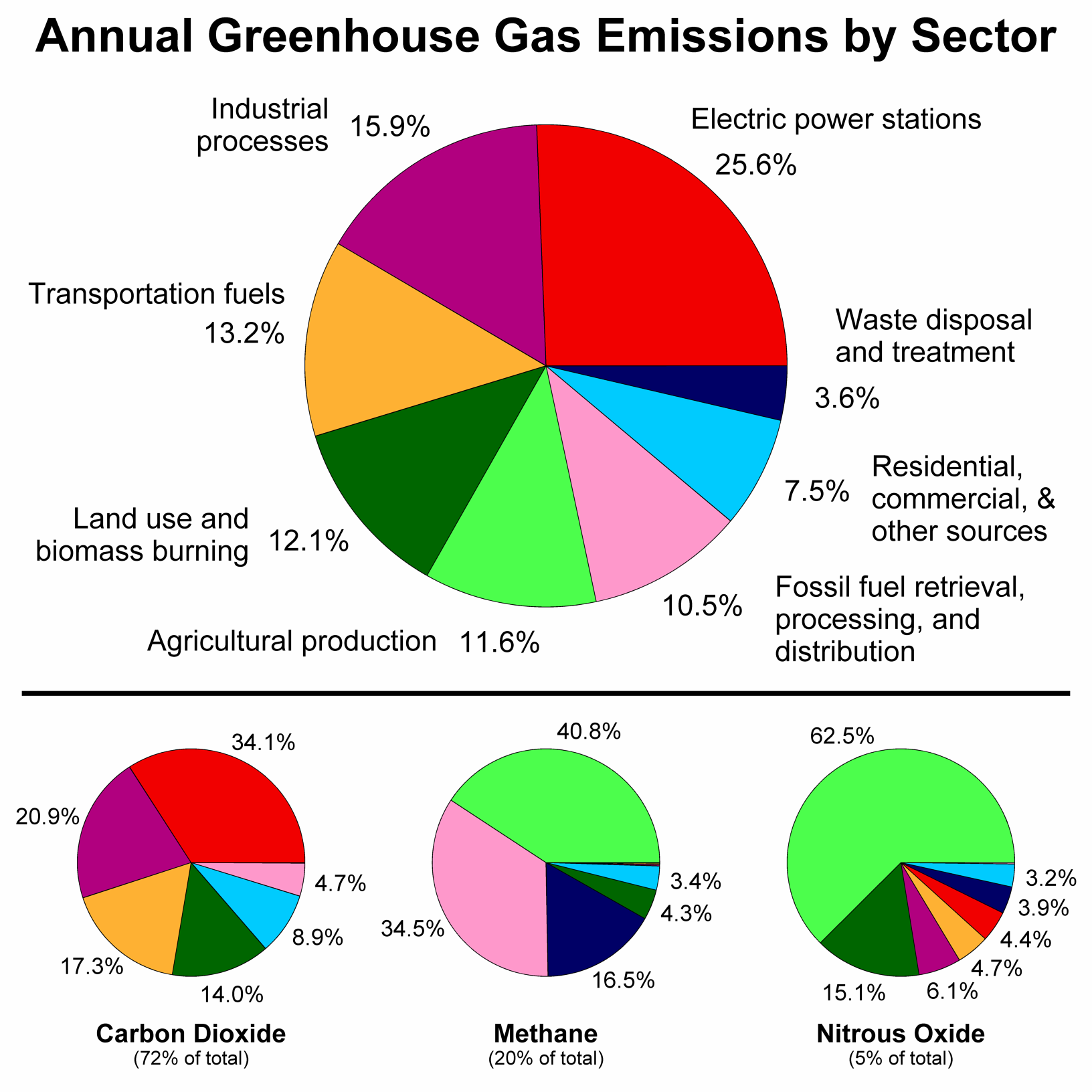
The Intergovernmental Panel on Climate Change stated in its first working group report that "most of the observed increase in globally averaged temperatures since the mid-20th century is very likely due to the observed increase in anthropogenic greenhouse gas concentrations, contribute to climate change.
As a percentage of all anthropogenic greenhouse gas emissions, carbon dioxide (CO2) accounts for 72 percent (see Greenhouse gas), and has increased in concentration in the atmosphere from 315 parts per million (ppm) in 1958 to more than 375 ppm in 2005.
Emissions from energy make up more than 61.4 percent of all greenhouse gas emissions. Power generation from traditional coal fuel sources accounts for 18.8 percent of all world greenhouse gas emissions, nearly double that emitted by road transportation.
Estimates state that by 2020 the world will be producing around twice as much carbon emissions as it was in 2000.
The European Union hopes to sign a law mandating net-zero greenhouse gas emissions in the coming year for all 27 countries in the union.
Electricity usage

World energy consumption is predicted to increase from 421 e15BTU in 2003 to 722 e15BTU in 2030. Coal consumption is predicted to nearly double in that same time. The fastest growth is seen in non-OECD Asian countries, especially China and India, where economic growth drives increased energy use. By implementing low-carbon power options, world electricity demand could continue to grow while maintaining stable carbon emission levels.
In the transportation sector there are moves away from fossil fuels and towards electric vehicles, such as mass transit and the electric car. These trends are small, but may eventually add a large demand to the electrical grid.
Domestic and industrial heat and hot water have largely been supplied by burning fossil fuels such as fuel oil or natural gas at the consumers' premises. Some countries have begun heat pump rebates to encourage switching to electricity, potentially adding a large demand to the grid.
Energy infrastructure
Coal-fired power plants are losing market share compared to low carbon power, and any built in the 2020s risk becoming stranded assets or stranded costs, partly because their capacity factors will decline.
Investment
Investment in low-carbon power sources and technologies is increasing at a rapid rate. Zero-carbon power sources produce about 2% of the world's energy, but account for about 18% of world investment in power generation, attracting $100 billion of investment capital in 2006.
References
Sources
References
- "What Are Low-Carbon Fuels and Energy Sources and Why Are They Important?".
- (2012). "Life Cycle Greenhouse Gas Emissions of Nuclear Electricity Generation". Journal of Industrial Ecology.
- (2010). "The European Strategic Energy Technology Plan SET-Plan Towards a low-carbon future".
- (2016-09-13). "Innovation funding opportunities for low-carbon technologies: 2010 to 2015".
- (2024-08-28). "The feasibility of reaching gigatonne scale CO2 storage by mid-century". Nature Communications.
- "Intergovernmental Panel on Climate Change Web site".
- "Is Nuclear Energy Renewable Energy?".
- (23 May 2012). "Amid Economic Concerns, Carbon Capture Faces a Hazy Future".
- "Promoting Low-Carbon Electricity Production - Issues in Science and Technology".
- (28 March 2021). "Global Electricity Review 2021".
- (2013). "Energy intensities, EROIs (energy returned on invested), and energy payback times of electricity generating power plants.". Energy.
- (2014). "Chapter 7: Energy Systems". [[Intergovernmental Panel on Climate Change]].
- "Understand Hydropower energy through Data | Low-Carbon Power".
- Duncan Graham-Rowe. [https://www.newscientist.com/article.ns?id=dn7046 Hydroelectric power's dirty secret revealed] ''New Scientist'', 24 February 2005.
- "Nuclear Power in the World Today - World Nuclear Association".
- "Archived copy".
- "Assuring the Backbone of a Carbon-free Power System by 2050 -Call for a Timely and Just Assessment of Nuclear Energy".
- "Live CO₂ emissions of electricity consumption".
- (2021-08-11). "Global climate objectives fall short without nuclear power in the mix: UNECE".
- "Energy Sources: Solar". Department of Energy.
- http://www.ren21.net/wp-content/uploads/2015/07/REN12-GSR2015_Onlinebook_low1.pdf pg31
- Geothermal Energy Association. [http://www.geo-energy.org/pdf/reports/GEA_International_Market_Report_Final_May_2010.pdf Geothermal Energy: International Market Update] May 2010, p. 4-6.
- (11 February 2008). "The possible role and contribution of geothermal energy to the mitigation of climate change".
- Geothermal Energy Association. [http://www.geo-energy.org/pdf/reports/GEA_International_Market_Report_Final_May_2010.pdf Geothermal Energy: International Market Update] May 2010, p. 7.
- (October 2024). "Feasible deployment of carbon capture and storage and the requirements of climate targets". Nature Climate Change.
- (2023-09-26). "Net Zero Roadmap: A Global Pathway to Keep the 1.5 °C Goal in Reach – Analysis".
- "Global Status Report 2024".
- [http://www.ipcc.ch/SPM2feb07.pdf Climate Change 2007: The Physical Science Basis. Contribution of Working Group I to the Fourth Assessment Report of the Intergovernmental Panel on Climate Change. Intergovernmental Panel on Climate Change (2007-02-05). Retrieved on 2007-02-02.] {{webarchive. link. (14 November 2007)
- "Carbon Dioxide Information Analysis Center (CDIAC), the primary climate-change data and information analysis center of the U.S. Department of Energy (DOE)".
- "World Resources Institute; "Greenhouse Gases and Where They Come From"".
- "Energy Information Administration; "World Carbon Emissions by Region"".
- "EIA - International Energy Outlook 2017".
- (18 January 2007). "Prediction of energy consumption world-wide - Time for change".
- "Energy Information Administration; "World Market Energy Consumption by Region"".
- "The rise of electric vehicles in the US: Impact on the electricity grid".
- "Air source heat pumps".
- (March 2021). "COVID-19-induced low power demand and market forces starkly reduce CO 2 emissions". Nature Climate Change.
- "Analysts' inaccurate cost estimates are creating a trillion-dollar bubble in conventional energy assets".
- "United Nations Environment Program Global Trends in Sustainable Energy Investment 2007".

This article was imported from Wikipedia and is available under the Creative Commons Attribution-ShareAlike 4.0 License. Content has been adapted to SurfDoc format. Original contributors can be found on the article history page.
Ask Mako anything about Low-carbon electricity — get instant answers, deeper analysis, and related topics.
Research with MakoFree with your Surf account
Create a free account to save articles, ask Mako questions, and organize your research.
Sign up freeThis content may have been generated or modified by AI. CloudSurf Software LLC is not responsible for the accuracy, completeness, or reliability of AI-generated content. Always verify important information from primary sources.
Report