From Surf Wiki (app.surf) — the open knowledge base
Louis II of Hungary
King of Hungary and Croatia from 1516 to 1526
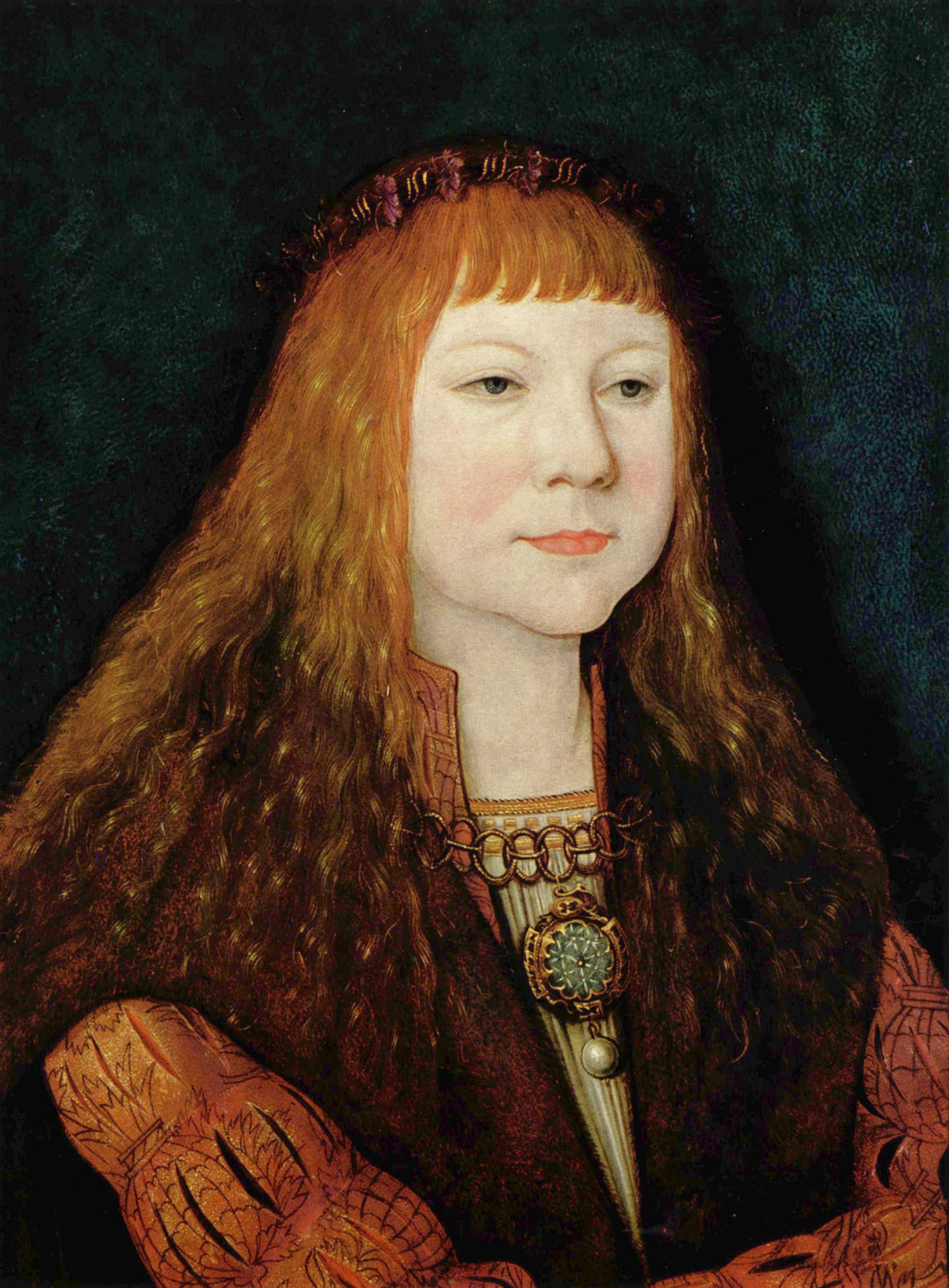
King of Hungary and Croatia from 1516 to 1526
| Field | Value |
|---|---|
| name | Louis II |
| image | Hans Krell - Portrait of King Louis II of Hungary (c.1526).jpg |
| caption | Portrait by Hans Krell, 1526 |
| succession | King of Hungary and Croatia |
| reign | 13 March 1516 – 29 August 1526 |
| coronation | 4 June 1508 |
| predecessor | Vladislaus II |
| successor | Ferdinand I |
| John Zápolya | |
| succession1 | King of Bohemia |
| reign1 | 13 March 1516 – 29 August 1526 |
| coronation1 | 11 March 1509 |
| predecessor1 | Vladislaus II |
| successor1 | Ferdinand I |
| spouse | |
| issue | Janos Wass (illegitimate) |
| house | Jagiellon |
| father | Vladislaus II of Bohemia and Hungary |
| mother | Anne of Foix-Candale |
| birth_date | 1 July 1506 |
| birth_place | Buda, Kingdom of Hungary |
| (now Budapest, Hungary) | |
| death_date | |
| death_place | Mohács, Kingdom of Hungary |
| burial_place | Székesfehérvár Cathedral |
| religion | Catholic Church |
| signature | Signatur Ludwig II. (Böhmen und Ungarn).PNG |
John Zápolya (now Budapest, Hungary) Louis II (; ; ; ; 1 July 1506 – 29 August 1526) was King of Hungary, Croatia and Bohemia from 1516 to 1526. He died during the Battle of Mohács fighting the Ottomans, whose victory led to the Ottoman annexation of large parts of Hungary.
Early life
At his premature birth in Buda on 1 July 1506, the court doctors kept him alive by slaying animals and wrapping him in their warm carcasses as a primitive incubator. He was the only son of Vladislaus II Jagiellon and his third wife, Anne of Foix-Candale.
Coronation
Vladislaus II took steps to ensure a smooth succession by arranging for the boy to be crowned in his own lifetime; the coronation of Louis as king of Hungary took place on 4 June 1508 in Székesfehérvár Basilica, and his coronation as king of Bohemia was held on 11 March 1509 in St. Vitus Cathedral in Prague.
King of Hungary and Croatia
Main article: First Congress of Vienna
During the greater part of his reign he was the puppet of the magnates and kept in such penury that he was often obliged to pawn his jewels to get enough food and clothing. His guardians, Cardinal Tamás Bakócz and Count George Brandenburg-Ansbach, shamefully neglected him, squandered the royal revenues and distracted the whole kingdom with their endless dissensions. Matters grew even worse on the death of Cardinal Bakócz, when the magnates István Báthory, John Zápolya and István Werbőczy fought each other furiously, and used the diets as their tools.
King of Bohemia
As king of Bohemia, Louis became known as "Ludovicus the Child". The first thaler coins were minted during his reign in Bohemia, later giving the name to the dollars used in different countries. These correctly style him as "LVDOVICVS•PRIM•D:GRACIA•REX•BO*" (Louis the First, by the grace of God King of Bohemia).
War with the Ottomans

After his father's death in 1516, the minor Louis II ascended to the throne of Hungary and Croatia. Louis was adopted by the Holy Roman Emperor Maximilian I in 1515. When Maximilian I died in 1519, Louis's cousin George, Margrave of Brandenburg-Ansbach, became his legal guardian.
Following the accession to the Ottoman throne of Suleiman I, the sultan sent Behram Çavuş as an ambassador to Louis II to collect the annual tribute that Hungary had been subjected to, and Louis refused to pay. According to some accounts, he also had the Ottoman ambassador executed and sent the head to the Sultan, but there is no evidence for this. Rather, Çavuş was kept waiting years, virtually imprisoned in Buda, by way of revenge for Suleiman's father, Selim I, who from 1513 to 1519 had forced the Hungarian envoy Barnabás Bélayban, Ban of Serim, to travel with him on his campaigns into Persia and Egypt, and to find time to ask for financial help from western countries against the Ottomans. Louis believed that the Papal States and other Christian States including Charles V, Holy Roman Emperor, would help him. This hastened the fall of Hungary.
Hungary was in a state of near anarchy in 1520 under the rule of the magnates. The king's finances were a shambles; he borrowed to meet his household expenses despite the fact that they totaled about one-third of the national income. The country's defenses weakened as border guards went unpaid, fortresses fell into disrepair, and initiatives to increase taxes to reinforce defenses were stifled. By 1521 Sultan Suleiman the Magnificent was well aware of Hungary's weakness.
The Ottoman Empire declared war on the Kingdom of Hungary, Suleiman postponed his plan to besiege Rhodes and made an expedition to Belgrade. Louis and his wife Mary requested military aid from other European countries. His uncle, King Sigismund of Poland, and his brother-in-law, Archduke Ferdinand, were willing to help. Ferdinand dispatched 3,000 infantry troops and some artillery while preparing to mobilize the Austrian estates, while Sigismund promised to send footmen. However, the coordination process totally failed. Mary, although a determined leader, caused distrust by relying on non-Hungarian advisors while Louis lacked vigour, which his nobles realized. The Austrian military aid, although seemingly strengthening the border, even had the undesired effect of dissolving the unified leadership that the ban had held until that time.
Belgrade and many strategic castles in Serbia were captured by the Ottomans. This was disastrous for Louis' kingdom; without the strategically important cities of Belgrade and Šabac, Hungary, including Buda, was open to further Turkish conquests.

After the siege of Rhodes, in 1526 Suleiman made a second expedition to subdue all of Hungary. Around the middle of July, the young King departed from Buda, determined to "either fight back the invaders or be crushed once and for all". Louis made a tactical error when he tried to stop the Ottoman army in an open field battle with a medieval army, insufficient firearms, and obsolete tactics. On 29 August 1526, Louis led his forces against Suleiman in the disastrous Battle of Mohács. The Hungarian army was surrounded by Ottoman cavalry in a pincer movement, and in the center the Hungarian heavy knights and infantry were repulsed and suffered heavy casualties, especially from the well-positioned Ottoman cannons and well-armed and trained Janissary musketeers.

Nearly the entire Hungarian Royal army was destroyed in nearly 2 hours on the battlefield. During the retreat, the twenty-year-old king died when he fell backwards off his horse while trying to ride up a steep ravine of the Csele stream. He fell into the stream and, due to the weight of his armor, he was unable to stand up and drowned. Suleiman the Magnificent expressed regret at the death of his young adversary. Upon encountering the lifeless body of King Louis, the Sultan is said to have lamented: "I came indeed in arms against him; but it was not my wish that he should be thus cut off before he scarcely tasted the sweets of life and royalty."
After the death of Louis, Ferdinand (as husband to Louis' sister Anna), contested for the crown of Bohemia and Hungary. His bid for Hungary split the opinion of the magnates, with the majority electing John Zápolya. This split would later cause the majority of Hungary to be ruled under the Ottomans.
Jagiellon bloodline
Although Louis II's marriage remained childless, he probably had an illegitimate child with his mother's former lady-in-waiting, Angelitha Wass. This son was called John (János in Hungarian). This name appears in sources in Vienna as either János Wass or János Lanthos. The former surname is his mother's maiden name. The latter surname may refer to his occupation. "Lanthos" means "lutenist", or "bard". He received incomes from the Royal Treasury regularly. He had further offspring.
Legacy
North of the town of Mohacs, there is a 5 meter high monument to the memory of Louis II. It is located near the site of Louis' death at the Csele Stream. On the monument there is a bronze plaque which depicts Louis falling off his horse. On the top of the monument there is a figure of a sleeping lion. Soma Turcsányi, a Hussar lieutenant, at his own expense, constructed the original commemorative column in 1864. It was reconstructed in 1897. The monument was restored by the local government in 1986.
Ancestry
References
Sources
Bibliography
- Takings, Endorser: II. Lajos kinkily fiat (A Son of King Louis II Jagiellon), Salado (Periodical Centuries), pp.& NBS;183–185, 1903
References
- {{Cite EB1911. Bain. Robert Nisbet
- http://www.dejepis.com/ucebnice/cesky-stat-za-jagelloncu/ Czech State under Jagellonian Dynasty
- Bárány, Attila: ''A szulejmani ajánlat'' (Suleiman's offers to Hungary 1521–1526). Máriabesenyő, 2014, Attractor kiadó, https://issuu.com/dorian07/docs/b__r__ny_attila_-_szulejm__ni_aj__n
- (24 September 2018). "From Nicopolis to Mohács: A History of Ottoman-Hungarian Warfare, 1389–1526". BRILL.
- (1988). "Die Habsburger: ein biographisches Lexikon". Piper.
- (2003). "Ferdinand I., 1503-1564: Fürst, König und Kaiser". C.H.Beck.
- (26 July 2021). "Ottomans, Hungarians, and Habsburgs in Central Europe: The Military Confines in the Era of Ottoman Conquest". BRILL.
- Severy, Merle. (November 1987). "The World of Süleyman the Magnificent". National Geographic Society.
- Heer, Friedrich. (1995). "The Holy Roman Empire". Phoenix Giant.
- {{cite ADB. 54. 688. 696. Wladislaw II.. Priebatsch, Felix. ADB:Wladislaw II.
- (1877). "Revue de l'Agenais". Société académique d'Agen.
- {{Britannica. 97968. Casimir IV, King of Poland
- {{BLKO
- Potašenko, Grigorijus. (2008). "Multinational Lithuania: history of ethnic minorities". Šviesa.
- Duczmal, Małgorzata. (2012). "Jogailaičiai". [[Mokslo ir enciklopedijų leidybos centras]].
- {{NDB. 1. 154. Albrecht II.. Quirin, Heinz. 118501615
- {{NDB. 4. 441. Elisabeth. Wagner, Hans. 136846505
- (2012). "The Ancestry of Charles II, King of England".
- Courteault, Henri. (1895). "Gaston IV, comte de Foix, vicomte souverain de Béarn, prince de Navarre, 1423–1472". É. Privat.
- (1911). "The Cambridge Modern History". Macmillan Company.
This article was imported from Wikipedia and is available under the Creative Commons Attribution-ShareAlike 4.0 License. Content has been adapted to SurfDoc format. Original contributors can be found on the article history page.
Ask Mako anything about Louis II of Hungary — get instant answers, deeper analysis, and related topics.
Research with MakoFree with your Surf account
Create a free account to save articles, ask Mako questions, and organize your research.
Sign up freeThis content may have been generated or modified by AI. CloudSurf Software LLC is not responsible for the accuracy, completeness, or reliability of AI-generated content. Always verify important information from primary sources.
Report