From Surf Wiki (app.surf) — the open knowledge base
Los Angeles-class submarine
Class of nuclear-powered fast attack submarines of the United States Navy

Class of nuclear-powered fast attack submarines of the United States Navy
| Field | Value |
|---|---|
| section1 | {{Infobox ship/image |
| image | SSN688.svg |
| image_caption | Los Angeles-class SSN profile |
| section2 | {{Infobox ship/image |
| image | USS Los Angeles;0868802.jpg |
| image_caption | , lead boat of the class. |
| section3 | {{Infobox ship/class overview |
| builders | * Newport News Shipbuilding |
| operators | |
| class_before | |
| class_after | |
| cost | $900 million, 1990 dollars; $, dollars |
| built_range | 1972–1996 |
| in_commission_range | 1976–present |
| total_ships_completed | 62 |
| total_ships_active | 23 |
| total_ships_retired | 36 |
| total_ships_preserved | 2 (as moored training ships) |
| section4 | {{Infobox ship/characteristics |
| type | Nuclear attack submarine |
| displacement | * Surfaced: 6082 t |
| length | 362 ft |
| beam | 33 ft |
| draft | 31 ft |
| propulsion | * 1 × S6G nuclear reactor (150–165 MW) |
| speed | * Surfaced: 20 kn |
| url | https://www.navy.mil/Resources/Fact-Files/Display-FactFiles/article/2169558/attack-submarines-ssn/ |
| title | Attack Submarines – SSN |
| website | United States Navy |
| access-date | 12 March 2023 |
| quote | General Characteristics, Los Angeles class [...] Speed: 25+ knots (28+ miles per hour, 46.3 +kph) |
| }}</ref> 33+ knots, reported<ref name | "Polmar"/{{cite news |
| url | http://edition.cnn.com/2005/US/01/10/nuclear.submarine.update/ |
| title | Officials: U.S. submarine hit undersea mountain |
| date | 11 January 2005 |
| work | CNN |
| access-date | 20 April 2008 |
| quote | The submarine was traveling in excess of 33 knots—about 35 mph—when its nose hit the undersea formation head-on, officials said. |
| url-status | live |
| archive-url | https://web.archive.org/web/20091018224757/http://edition.cnn.com/2005/US/01/10/nuclear.submarine.update/ |
| archive-date | 18 October 2009 |
| range | Refueling required after 30 years |
| endurance | 90 days |
| test_depth | 450 m |
| complement | 129 |
| sensors | BQQ-5 suite which includes active and passive systems sonar, BQS-15 detecting and ranging sonar, WLR-8V(2) ESM receiver, WLR-9 acoustic receiver for detection of active search sonar and acoustic homing torpedoes, BRD-7 radio direction finder, BPS-15 radar |
| EW | WLR-10 countermeasures set |
| armament | 4 × 21 in (533 mm) torpedo tubes, 37 × Mk 48 torpedo, Tomahawk land attack missile, Harpoon anti-ship missile, Mk 67 mobile, or Mk 60 CAPTOR mines (FLTII and 688i FLTIII have a 12-tube VLS) |
-
General Dynamics Electric Boat
-
Submerged: 6927 t
-
2 × steam turbines (30,000–33,500) shp
-
1 × shaft
-
1 × secondary propulsion motor 325 hp (242 kW)
-
Submerged: Over 25 kn, official;{{cite web |access-date=12 March 2023 |access-date=20 April 2008 |url-status=live |archive-url=https://web.archive.org/web/20091018224757/http://edition.cnn.com/2005/US/01/10/nuclear.submarine.update/ |archive-date=18 October 2009
The Los Angeles class of submarines are nuclear-powered fast attack submarines (SSN) in service with the United States Navy. Also known as the 688 class (pronounced "six-eighty-eight") after the hull number of lead vessel , 62 were built from 1972 to 1996, the latter 23 to an improved 688i standard. As of 2025, 23 of the Los Angeles class remain in commission and they account for almost half of the U.S. Navy's 50 fast attack submarines.
Submarines of this class are named after American towns and cities, such as Albany, New York; Los Angeles, California; and Tucson, Arizona, with the exception of , named for the "father of the nuclear Navy." This was a change from traditionally naming attack submarines after marine animals, such as or . Rickover explained the decision to name the submarines after cities (and occasionally politicians influential in defense issues) by observing that "fish don't vote."
Development
In the late 1960s, the Soviet Union's advances in submarine technology increasingly threatened the survivability of US Navy (USN) carrier battle groups. Soviet fast-attack submarines became capable of keeping pace with carrier groups, while their newer missile submarines could potentially overwhelm the group's defenses with salvos of missiles. Development of the Los Angeles class commenced in 1967 as a response. The class originally had essentially the same weapons and sensors as the preceding , but was approximately 50% larger with "major improvements" in stealth and speed so that they too could keep up with carrier battle groups.
On 1 December 1976 General Dynamics Electric Boat (GDEB) submitted a $544 million claim related to its contract for 18 Los-Angeles-class submarines; the contractor alleged the USN made an undue amount of design changes while the government argued that Electric Boat mismanaged its operations. The USN and General Dynamics reached an $843 million settlement agreement in June 1978; the contract price was increased by $125 million, GDEB absorbed a $359 million loss, and the USN paid an additional $359 million under the authority of Public Law 85-804. The USN and General Dynamics had a further dispute in 1979–1980 when it was discovered that nonconforming steel had been used in the construction of the submarines and thousands of welds were found to be either defective or missing. This led General Dynamics to file a $100 million insurance claim to cover the costs of re-inspections of the yard's work, "thus, Electric Boat was asking the Navy to reimburse it for its own mis-management." The parties reached an agreement in 1981 whereby GDEB was awarded a firm contract for an additional 688-class boat and two options; the Navy needed GDEB's shipbuilding capacity to achieve its procurement goals.
Los Angeles-class submarines were built in three successive flights:
| Flight | Pennant numbers | Ordered dates | Upgrades (where applicable) |
|---|---|---|---|
| I | SSNs 688–718 | 1971–1977 | N/A |
| II | SSNs 719–750 | 1977–1982 | 12 vertical launch tubes for Tomahawk cruise missiles and an upgraded reactor core. |
| III | SSNs 751–773 | 1982–1989 | "688i" (for Improved): Quieter, advanced BSY-1 sonar suite, the ability to lay mines and configured for under-ice operations. |
Design
Flights

In 1982, after building 31 boats, the class underwent a minor redesign. The following eight that made up the second "flight" of subs had 12 new vertical launch tubes that could fire Tomahawk missiles. The last 23 had a significant upgrade with the 688i improvement program. These boats are quieter, with more advanced electronics, sensors, and noise-reduction technology. The diving planes are placed at the bow rather than on the sail, and are retractable. A further four boats were proposed by the Navy, but later cancelled.
Capabilities

According to the U.S. Department of Defense, the top speed of the submarines of the Los Angeles class is over 25 kn, although the actual maximum is classified. Some published estimates have placed their top speed at 30 to. In his book Submarine: A Guided Tour Inside a Nuclear Warship, Tom Clancy estimated the top speed of Los Angeles-class submarines at about 37 kn.
The U.S. Navy gives the maximum operating depth of the Los Angeles class as 650 ft, while Patrick Tyler, in his book Running Critical, suggests a maximum operating depth of 950 ft. Although Tyler cites the 688-class design committee for this figure, the government has not commented on it. The maximum diving depth is 1475 ft according to Jane's Fighting Ships, 2004–2005 Edition, edited by Commodore Stephen Saunders of the Royal Navy.
Weapons
_VLS_doors_open.jpg)
Los Angeles-class submarines carry 24 torpedo tube-launched weapons, as well as Mark 67 and Mark 60 CAPTOR mines and were designed to launch Tomahawk cruise missiles, and Harpoon missiles horizontally (from the torpedo tubes). The last 31 boats of this class (Flight II and Flight III/688i) also have 12 dedicated vertical launching system tubes for launching Tomahawks. The tube configuration for the first two boats of Flight II differed from the later ones: Providence and Pittsburgh have four rows of three tubes vs. the inner two rows of four and outer two rows of two tubes found on other examples. The 688i ("improved") model submarines are capable of deploying the Mk 67 Submarine Launched Mobile Mines.
Control systems
Over close to 40 years, the control suite of the class has changed dramatically. The class was originally equipped with the Mk 113 mod 10 fire control system, also known as the Pargo display program. The Mk 113 runs on a UYK-7 computer.
The Mk 117 FCS, the first "all digital" fire control system, replaced the Mk 113. The Mk 117 transferred the duties of the analog Mk 75 attack director to the UYK-7, and the digital Mk 81 weapon control consoles, removing the two analog conversions, and allowing "all digital" control of the digital Mk 48 control. The first 688 sub to be built with the Mk 117 was .
The Mark 1 Combat Control System/All Digital Attack Center replaced the Mk 117 FCS, on which it was based. The Mk 1 CCS was built by Lockheed Martin, and gave the class the ability to fire Tomahawk missiles. The CSS internal tracker model provides processing for both towed-array and spherical-array trackers. Trackers are signal followers that generate bearing, arrival angle, and frequency reports based on information received by an acoustic sensor. It incorporated the Gyro Static Navigator into the system in replacement of the AN/WSN-1 DMINS (Dual Mini Ship's Inertial navigation system) of the earlier 688 class.
The Mk 1 CCS was replaced by the Mk 2, which was built by Raytheon. Mk 2 provides Tomahawk Block III vertical launch capability as well as fleet-requested improvements to Mk 48 ADCAP torpedo and Towed Array Target Motion Analysis operability. The Mk 2 CCS paired with the AN/BQQ-5E system is referred to as the QE-2" system. The CCS MK2 Block 1 A/B system architecture extends the CCS MK2 tactical system with a network of tactical advanced computers (TAC-3). These TAC-3s are configured to support the SFMPL, NTCS-A, LINK-11 and ATWCS subsystems.
Sensors
Sonar
AN/BQQ-5
AN/BQQ-5 sensor suite consists of the AN/BQS-13 spherical sonar array and AN/UYK-44 computer. The AN/BQQ-5 was developed from the AN/BQQ-2 sonar system. The BQS 11, 12, and 13 spherical arrays have 1,241 transducers. Also equipped are a conformal hull array with 104 to 156 hydrophones and two towed arrays: the TB-12 (later replaced by the TB-16) and TB-23 or TB-29, of which there are multiple variants. There are five versions of the AN/BQQ-5 system, sequentially identified by letters A–E.
The 688i (Improved) subclass was initially equipped with the AN/BSY-1 SUBACS submarine advanced combat system that used an AN/BQQ-5E sensor system with updated computers and interface equipment. Development of the AN/BSY-1 and its sister the AN/BSY-2 for the was widely reported as one of the most problematic programs for the Navy, its cost and schedule suffering many setbacks.
A series of conformal passive hydrophones are hard-mounted to each side of the hull, using the AN/BQR-24 internal processor. The system uses FLIT (frequency line integration tracking) which homes in on precise narrowband frequencies of sound and, using the Doppler principle, can accurately provide firing solutions against very quiet submarines. The AN/BQQ-5's hull array doubled the performance of its predecessors.
AN/BQQ-10
The AN/BQQ-5 system was replaced by the AN/BQQ-10 system. Acoustic Rapid Commercial Off-The-Shelf Insertion (A-RCI), designated AN/BQQ-10, is a four-phase program for transforming existing submarine sonar systems (AN/BSY-1, AN/BQQ-5, and AN/BQQ-6) from legacy systems to a more capable and flexible COTS/Open System Architecture (OSA) and also provide the submarine force with a common sonar system. A single A-RCI Multi-Purpose Processor (MPP) has as much computing power as the entire Los Angeles (SSN-688/688I) submarine fleet combined and will allow the development and use of complex algorithms previously beyond the reach of legacy processors. The use of COTS/OSA technologies and systems will enable rapid periodic updates to both software and hardware. COTS-based processors will allow computer power growth at a rate commensurate with the commercial industry.
Engineering and auxiliary systems
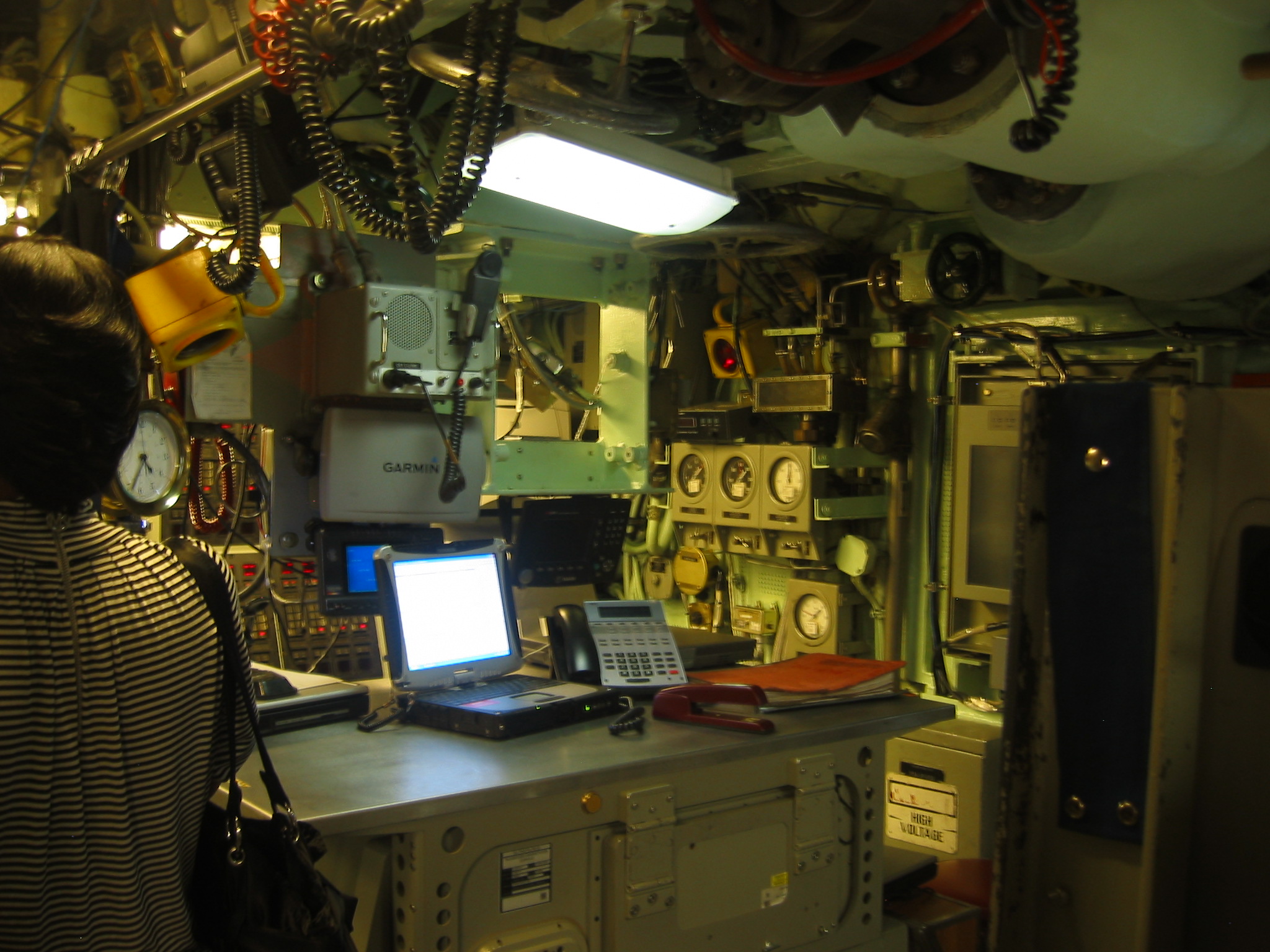
Two watertight compartments are used in the Los Angeles-class submarines. The forward compartment contains crew living spaces, weapons-handling spaces, and control spaces not critical to recovering propulsion. The aft compartment contains the bulk of the submarine's engineering systems, power generation turbines, and water-making equipment. Some submarines in the class are capable of delivering Navy SEALs through either a SEAL Delivery Vehicle deployed from the Dry Deck Shelter or the Advanced SEAL Delivery System mounted on the dorsal side, although the latter was cancelled in 2006 and removed from service in 2009. A variety of atmospheric control devices are used to allow the vessel to remain submerged for long periods of time without ventilating, including an electrolytic oxygen generator, which produces oxygen for the crew and hydrogen as a byproduct. The hydrogen is pumped overboard but there is always a risk of fire or explosion from this process.
.jpg)
While on the surface or at snorkel depth, the submarine may use the submarine's auxiliary or emergency diesel generator for power or ventilation (e.g., following a fire). The diesel engine in a 688 class can be quickly started by compressed air during emergencies or to evacuate noxious (nonvolatile) gases from the boat, although 'ventilation' requires raising a snorkel mast. During nonemergency situations, design constraints call for operators to allow the engine to reach normal operating temperatures before it is capable of producing full power, a process that may take from 20 to 30 minutes. However, the diesel generator can be immediately loaded to 100% power output, despite design criteria cautions, at the discretion of the submarine commander on the recommendation of the submarine's engineer, if necessity dictates such actions to: (a) restore electrical power to the submarine, (b) prevent a reactor incident from occurring or escalating, or (c) to protect the lives of the crew or others as determined necessary by the commanding officer.
Propulsion
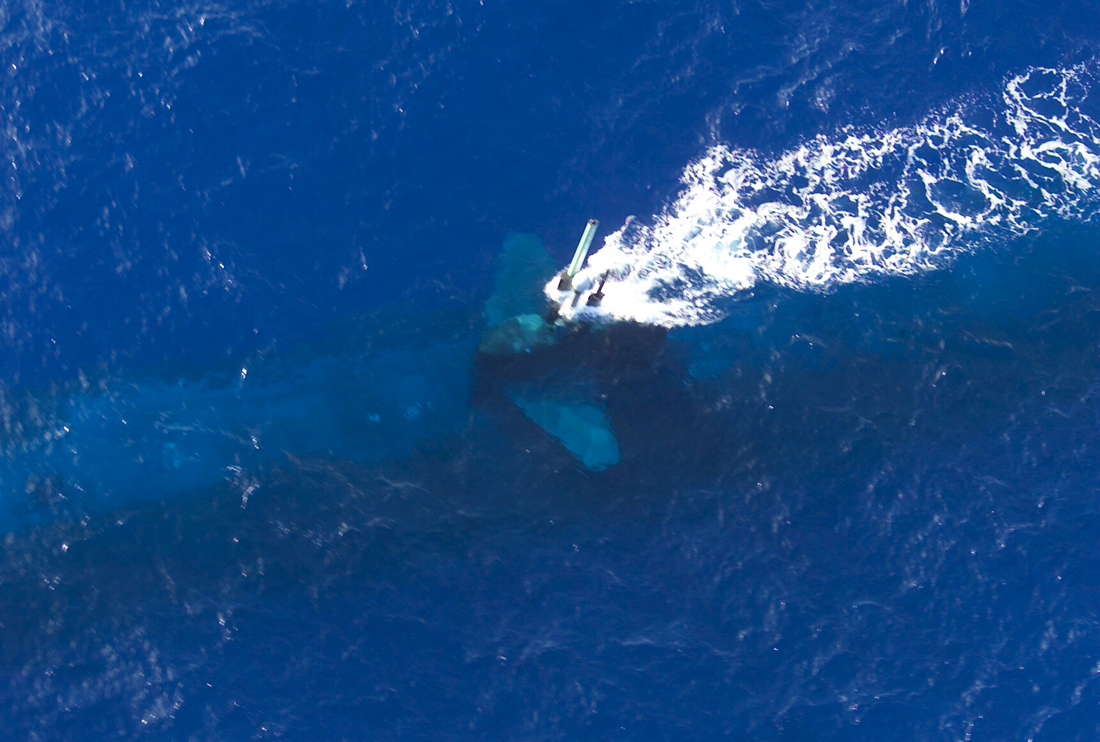
The Los Angeles class is powered by the General Electric S6G pressurized water reactor. The hot reactor coolant water heats water in the steam generators, producing steam to power the propulsion turbines and ship service turbine generators (SSTGs), which generate the submarine's electrical power. The high-speed propulsion turbines drive the shaft and propeller through a reduction gear. In the case of a reactor plant casualty, the submarine has a diesel generator and a bank of batteries to provide electrical power. An emergency propulsion motor on the shaft line or a retractable 325-hp secondary propulsion motor power the submarine off the battery or diesel generator.
The S6G reactor plant was originally designed to use the D1G-2 core, similar to the D2G reactor used on the guided missile cruiser . The D1G-2 core had a rated thermal power of 150 MW and the turbines were rated at 30,000 shp. All Los Angeles-class submarines from on were built with a D2W core and older submarines with D1G-2 cores have been refueled with D2W cores. The D2W core is rated at 165 MW and turbine power rose to approximately 33,500 shp.
Boats in class
| Summary of Status | Count |
|---|---|
| Active, in commission | 21 |
| Active (Reserve), Awaiting Decommissioning | 2 |
| Converted to moored training ship | 2 |
| Inactive or decommissioned & stricken | 26 |
| Disposed of by submarine recycling | 11 |
| Total | 62 |
The class has a total of 62 boats divided into three flights as follows:
- 31 × Flight I
- 8 × Flight II with VLS
- 23 × Flight III 688i (Improved)
Submarines
| Name | Hull number | Flight | Builder | Ordered | Laid down | Launched | Commissioned | Decommissioned | Service life | Status | Homeport/ | |||||
|---|---|---|---|---|---|---|---|---|---|---|---|---|---|---|---|---|
| NVR page | ||||||||||||||||
| Los Angeles | SSN-688 | I | Newport News Shipbuilding, Newport News | 8 January 1971 | 8 January 1972 | 6 April 1974 | 13 November 1976 | 4 February 2011 | Disposed of by submarine recycling | N/A | ||||||
| Baton Rouge | SSN-689 | 18 November 1972 | 26 April 1975 | 25 June 1977 | 13 January 1995 | Disposed of by submarine recycling | N/A | |||||||||
| Philadelphia | SSN-690 | General Dynamics Electric Boat, Groton | 12 August 1972 | 19 October 1974 | 25 June 1977 | 25 June 2010 | , 0 months and 0 days | Stricken, final disposition pending | N/A | |||||||
| Memphis | SSN-691 | Newport News Shipbuilding, Newport News | 4 February 1971 | 23 June 1973 | 3 April 1976 | 17 December 1977 | 1 April 2011 | Stricken, final disposition pending | N/A | |||||||
| Omaha | SSN-692 | General Dynamics Electric Boat, Groton | 31 January 1971 | 27 January 1973 | 21 February 1976 | 11 March 1978 | 5 October 1995 | Disposed of by submarine recycling | N/A | |||||||
| Cincinnati | SSN-693 | Newport News Shipbuilding, Newport News | 4 February 1971 | 6 April 1974 | 19 February 1977 | 11 March 1978 | 29 July 1996 | Disposed of by submarine recycling | N/A | |||||||
| Groton | SSN-694 | General Dynamics Electric Boat, Groton | 31 January 1971 | 3 August 1973 | 9 October 1976 | 8 July 1978 | 7 November 1997 | Disposed of by submarine recycling | N/A | |||||||
| Birmingham | SSN-695 | Newport News Shipbuilding, Newport News | 24 January 1972 | 26 April 1975 | 29 October 1977 | 16 December 1978 | 22 December 1997 | |||||||||
| (0 months) | Disposed of by submarine recycling | N/A | ||||||||||||||
| New York City | SSN-696 | General Dynamics Electric Boat, Groton | 15 December 1973 | 18 June 1977 | 3 March 1979 | 30 April 1997 | Stricken, to be disposed of by submarine recycling | N/A | ||||||||
| Indianapolis | SSN-697 | 19 October 1974 | 30 July 1977 | 5 January 1980 | 22 December 1998 | Stricken, final disposition pending | N/A | |||||||||
| Bremerton | SSN-698 | 8 May 1976 | 22 July 1978 | 28 March 1981 | 21 May 2021 | Stricken, final disposition pending | N/A | |||||||||
| Jacksonville | SSN-699 | 21 February 1976 | 18 November 1978 | 16 May 1981 | url=https://www.dvidshub.net/news/409640/uss-jacksonville-ssn-699-decommissioned | title=USS Jacksonville (SSN-699) Decommissioned | publisher=dvidshub.net | date=16 November 2021 | access-date=23 November 2021}} | Stricken, final disposition pending | N/A | |||||
| Dallas | SSN-700 | 31 January 1973 | 9 October 1976 | 28 April 1979 | 18 July 1981 | 4 April 2018 | Stricken, final disposition pending | N/A | ||||||||
| La Jolla | SSN-701/ | |||||||||||||||
| MTS-701 | 10 December 1973 | 16 October 1976 | 11 August 1979 | 24 October 1981 | 15 November 2019 | Converted to a moored training ship for the Nuclear Power School as of 2020 | Charleston, SC | |||||||||
| Phoenix | SSN-702 | 31 October 1973 | 30 July 1977 | 8 December 1979 | 19 December 1981 | 29 July 1998 | Stricken, final disposition pending | N/A | ||||||||
| Boston | SSN-703 | 10 December 1973 | 11 August 1978 | 19 April 1980 | 30 January 1982 | 19 November 1999 | Disposed of by submarine recycling | N/A | ||||||||
| Baltimore | SSN-704 | 31 October 1973 | 21 May 1979 | 13 December 1980 | 24 July 1982 | 10 July 1998 | Stricken, final disposition pending | N/A | ||||||||
| City of Corpus Christi | SSN-705 | 4 September 1979 | 25 April 1981 | 8 January 1983 | 3 August 2017 | Stricken, final disposition pending | N/A | |||||||||
| Albuquerque | SSN-706 | 27 December 1979 | 13 March 1982 | 21 May 1983 | 27 February 2017 | Stricken, final disposition pending | N/A | |||||||||
| Portsmouth | SSN-707 | 10 December 1973 | 8 May 1980 | 18 September 1982 | 1 October 1983 | 10 September 2004 | Stricken, final disposition pending | N/A | ||||||||
| Minneapolis-Saint Paul | SSN-708 | 31 October 1973 | 20 January 1981 | 19 March 1983 | 10 March 1984 | 28 August 2008 | Disposed of by submarine recycling | N/A | ||||||||
| Hyman G. Rickover | ||||||||||||||||
| (ex-Providence) | SSN-709 | 10 December 1973 | 24 July 1981 | 27 August 1983 | 21 July 1984 | 14 December 2006 | Stricken, final disposition pending | N/A | ||||||||
| Augusta | SSN-710 | 1 April 1983 | 21 January 1984 | 19 January 1985 | 11 February 2009 | |||||||||||
| (0 months) | Disposed of by submarine recycling | N/A | ||||||||||||||
| San Francisco | SSN-711/ | |||||||||||||||
| MTS-711 | Newport News Shipbuilding, Newport News | 1 August 1975 | 26 May 1977 | 27 October 1979 | 24 April 1981 | 5 May 2022 | Converted to a moored training ship for the Nuclear Power School as of 2021 | Charleston, SC | ||||||||
| Atlanta | SSN-712 | 17 August 1978 | 16 August 1980 | 6 March 1982 | 16 December 1999 | Stricken, final disposition pending | N/A | |||||||||
| Houston | SSN-713 | 29 January 1979 | 21 March 1981 | 25 September 1982 | 26 August 2016 | Stricken, final disposition pending | N/A | |||||||||
| Norfolk | SSN-714 | 20 February 1976 | 1 August 1979 | 31 October 1981 | 21 May 1983 | 11 December 2014 | Stricken, final disposition pending | N/A | ||||||||
| Buffalo | SSN-715 | 23 February 1976 | 25 January 1980 | 8 May 1982 | 5 November 1983 | 30 January 2019 | Stricken, final disposition pending | N/A | ||||||||
| Salt Lake City | SSN-716 | 15 September 1977 | 26 August 1980 | 16 October 1982 | 12 May 1984 | 15 January 2006 | Disposed of by submarine recycling | N/A | ||||||||
| Olympia | SSN-717 | 31 March 1981 | 30 April 1983 | 17 November 1984 | 5 February 2021 | Stricken, final disposition pending | N/A | |||||||||
| Honolulu | SSN-718 | 10 November 1981 | 24 September 1983 | 6 July 1985 | 2 November 2007 | Disposed of by submarine recycling | N/A | |||||||||
| Providence | SSN-719 | II with VLS | General Dynamics Electric Boat, Groton | 16 April 1979 | 14 October 1982 | 4 August 1984 | 27 July 1985 | 22 August 2022 | Stricken, final disposition pending | N/A | ||||||
| Pittsburgh | SSN-720 | 15 April 1983 | 8 December 1984 | 23 November 1985 | 15 April 2020 | Stricken, final disposition pending | N/A | |||||||||
| Chicago | SSN-721 | Newport News Shipbuilding, Newport News | 13 August 1981 | 5 January 1983 | 13 October 1984 | 27 September 1986 | 21 July 2023 | Stricken, final disposition pending | N/A | |||||||
| Key West | SSN-722 | 6 July 1983 | 20 July 1985 | 12 September 1987 | first=Richard R. | last=Burgess | url=https://seapowermagazine.org/navy-plans-to-retire-48-ships-during-2022-2026 | title=Narvy Plans to Retire 48 Ships During 2022-2026 | magazine=Seapower | date=11 December 2020}} | Stricken, final disposition pending | N/A | ||||
| Oklahoma City | SSN-723 | 4 January 1984 | 2 November 1985 | 9 July 1988 | 9 September 2022 | Stricken, final disposition pending | N/A | |||||||||
| Louisville | SSN-724 | General Dynamics Electric Boat, Groton | 11 February 1982 | 24 September 1984 | 14 December 1985 | 8 November 1986 | 9 March 2021 | Stricken, final disposition pending | N/A | |||||||
| Helena | SSN-725 | 19 April 1982 | 28 March 1985 | 28 June 1986 | 11 July 1987 | 25 July 2025 | Stricken, final disposition pending | N/A | ||||||||
| Newport News | SSN-750 | Newport News Shipbuilding, Newport News | 3 March 1984 | 15 March 1986 | 3 June 1989 | Proposed 2026 | Active, in commission | Groton, CT | ||||||||
| San Juan | SSN-751 | III 688i (Improved) | General Dynamics Electric Boat, Groton | 30 November 1982 | 9 August 1985 | 6 December 1986 | 6 August 1988 | Proposed 2024 | Active (Reserve), Awaiting Decommissioning | Groton, CT | ||||||
| Pasadena | SSN-752 | 20 December 1985 | 12 September 1987 | 11 February 1989 | Active, in commission | Norfolk, VA | ||||||||||
| Albany | SSN-753 | Newport News Shipbuilding, Newport News | 29 November 1983 | 22 April 1985 | 13 June 1987 | 7 April 1990 | Active, in commission | Norfolk, VA | ||||||||
| Topeka | SSN-754 | General Dynamics Electric Boat, Groton | 28 November 1983 | 13 May 1986 | 23 January 1988 | 21 October 1989 | Proposed 2024 | Active (Reserve), Awaiting Decommissioning | Pearl Harbor, HI | |||||||
| Miami | SSN-755 | 24 October 1986 | 12 November 1988 | 30 June 1990 | 28 March 2014 | Stricken, final disposition pending | N/A | |||||||||
| Scranton | SSN-756 | Newport News Shipbuilding, Newport News | 26 November 1984 | 29 August 1986 | 3 July 1989 | 26 January 1991 | Proposed 2026 | Active, in commission | San Diego, CA | |||||||
| Alexandria | SSN-757 | General Dynamics Electric Boat, Groton | 19 June 1987 | 23 June 1990 | 29 June 1991 | Proposed 2026 | Active, in commission | San Diego, CA | ||||||||
| Asheville | SSN-758 | Newport News Shipbuilding, Newport News | 9 January 1987 | 24 February 1990 | 28 September 1991 | Active, in commission | Apra Harbor, GU | |||||||||
| Jefferson City | SSN-759 | 21 September 1987 | 17 August 1990 | 29 February 1992 | Active, in commission | Apra Harbor, GU | ||||||||||
| Annapolis | SSN-760 | General Dynamics Electric Boat, Groton | 21 March 1986 | 15 June 1988 | 18 May 1991 | 11 April 1992 | Proposed 2027 | Active, in commission | Apra Harbor, GU | |||||||
| Springfield | SSN-761 | 29 January 1990 | 4 January 1992 | 9 January 1993 | Active, in commission | Apra Harbor, GU | ||||||||||
| Columbus | SSN-762 | 9 January 1991 | 1 August 1992 | 24 July 1993 | Active, in commission | Pearl Harbor, HI | ||||||||||
| Santa Fe | SSN-763 | 9 July 1991 | 12 December 1992 | 8 January 1994 | Active, in commission | San Diego, CA | ||||||||||
| Boise | SSN-764 | Newport News Shipbuilding, Newport News | 6 February 1987 | 25 August 1988 | 23 March 1991 | 7 November 1992 | Active, in commission | Norfolk, VA | ||||||||
| Montpelier | SSN-765 | 19 May 1989 | 23 August 1991 | 13 March 1993 | Active, in commission | Norfolk, VA | ||||||||||
| Charlotte | SSN-766 | 17 August 1990 | 3 October 1992 | 16 September 1994 | Active, in commission | Pearl Harbor, HI | ||||||||||
| Hampton | SSN-767 | 2 March 1990 | 3 April 1992 | 6 November 1993 | Active, in commission | San Diego, CA | ||||||||||
| Hartford | SSN-768 | General Dynamics Electric Boat, Groton | 30 June 1988 | 22 February 1992 | 4 December 1993 | 10 December 1994 | Active, in commission | Groton, CT | ||||||||
| Toledo | SSN-769 | Newport News Shipbuilding, Newport News | 10 June 1988 | 6 May 1991 | 28 August 1993 | 24 February 1995 | Active, in commission | Groton, CT | ||||||||
| Tucson | SSN-770 | 15 August 1991 | 20 March 1994 | 18 August 1995 | Active, in commission | Pearl Harbor, HI | ||||||||||
| Columbia | SSN-771 | General Dynamics Electric Boat, Groton | 14 December 1988 | 21 April 1993 | 24 September 1994 | 9 October 1995 | Active, in commission | Pearl Harbor, HI | ||||||||
| Greeneville | SSN-772 | Newport News Shipbuilding, Newport News | 28 February 1992 | 17 September 1994 | 16 February 1996 | Active, in commission | Pearl Harbor, HI | |||||||||
| Cheyenne | SSN-773 | 28 November 1989 | 6 July 1992 | 16 April 1995 | 13 September 1996 | Active, in commission | Pearl Harbor, HI |
Among the retired boats, a few were in commission for nearly 40 years or more, including Bremerton (40), Jacksonville (40), La Jolla (38) and San Francisco (41). With a wide variance in longevity, twelve boats were laid up halfway through their projected lifespans, with Baltimore being the youngest to be retired at only 15 years, 11 months. Another five boats were also laid up early (within 20–25 years), due to their midlife reactor refueling being cancelled, and one was lost during overhaul due to arson. All retired boats have been or will be scrapped per the Navy's Ship-Submarine Recycling Program. In addition, two boats, La Jolla and San Francisco, have been converted to moored training ships.
In popular culture
The subject of this article has appeared in popular cultural contexts such as films, video games, novels, strip cartoons, and the like. These are mostly trivial mentions, and listing them adds no value to the encyclopedic treatment of the subject.
Before adding items to this section, please read Wikipedia:WikiProject Military history/Style guide#Popular culture. Additions that appear to be insignificant and/or are not attributed to a reliable source WILL be removed.
If an item you have added has been removed and you wish to contest its removal, please start a discussion on this article's talk page proposing that it be restored.
-->
- Los Angeles-class submarines have been featured prominently in numerous Tom Clancy literary works and film adaptations, most notably in The Hunt for Red October. Other appearances include in the novel Red Storm Rising and in SSN. In addition to fictional works, Clancy's 1993 non-fiction book Submarine: A Guided Tour Inside a Nuclear Warship features an in-depth exploration of .
- was used in the 2008 made-for-television film Stargate: Continuum.
- 688 Attack Sub, a 1989 MS-DOS submarine simulator, allowed the player to control a Los Angeles-class submarine during a set of Cold War missions. The game was also released for the Sega Genesis console.
- Jane's 688(i) Hunter/Killer, Sub Command, Dangerous Waters, developed by Sonalysts Inc., and Cold Waters by Killerfish Games, are video games where players control the 688i Los Angeles-class submarine.
Notes
References
References
- [https://fas.org/man/dod-101/sys/ship/ssn-688.htm SSN-688 Los Angeles class] {{webarchive. link. (13 August 2014 from [[Federation of American Scientists]] retrieved 29 February 2008 :''The 18 SSN-688 class submarines that will be refueled in their midlives could make good candidates for a service life extension because they could operate for nearly 30 years after the refueling. After these submarines serve for 30 years, they could undergo a two-year overhaul and serve for one more 10-year operating cycle, for a total service life of 42 years.'')
- Polmar, Norman "The U. S. Navy Electronic Warfare (Part 1)" ''United States Naval Institute Proceedings'' October 1979 p. 137
- "Submarine Force Facts".
- (1985-04-22). "Briefing; Navy Reverts to Fish". The New York Times.
- (January 15, 2014). "Innovation decision-making in high-risk organizations: A comparison of the US and Soviet attack submarine programs". Industrial and Corporate Change.
- Wasserman Goodman, Sherri. (1988). "Legal Dilemmas in the Weapons Acquisition Process: The Procurement of the SSN-688 Attack Submarine". Yale Law & Policy Review.
- General Accounting Office. (May 18, 1984). "The 1978 Navy Shipbuilding Claim Settlement At Electric Boat – Status As Of July 2, 1983".
- (February 14, 2000). "SSN-688 Los Angeles-class".
- Farley, Robert. (18 October 2014). "The Five Best Submarines of All Time". [[The National Interest]].
- Polmar, Norman. (2013). "The Naval Institute Guide to Ships and Aircraft of the U.S. Fleet". Naval Institute Press.
- (2003). "Cold War Submarines: The Design and Construction of U.S. and Soviet Submarines". Brassey's.
- Tyler, Patrick. (1986). "Running Critical". Harper and Row.
- Waddle, Scott. (2003). "The Right Thing". Integrity Publishers.
- Tyler, (1986). pp. 66–67, 156
- "Notes in pp. 64–67: Deliberations of ad-hoc committee on SSN 688 design taken from confidential sources and from interviews with Admiral [Ret] Rickover. ..." From Tyler, p. 365
- Saunders, (2004). pp. 838
- Winnefeld, James A. "[https://www.usni.org/magazines/proceedings/2023/december/mine-warfare-could-be-key. Mine Warfare Could Be Key]." ''Proceedings of the U.S. Naval Institute'', December 2023.
- "U.S. Submarines Since 1945: An Illustrated Design History".
- "Systems, Navy Chapter".
- (1997). "The Naval Institute Guide to World Naval Weapons Systems, 1997–1998". Naval Institute Press.
- "Mk 1 Combat Control System [CCS]".
- "Electronics Material Officer Course – Navigation Systems/Equipment". [[Federation of American Scientists]].
- "BQQ-10 A-RCI Acoustic Rapid COTS Insertion".
- SSN-688 ''Los Angeles'' Class Design. [http://www.globalsecurity.org/military/systems/ship/ssn-688-design.htm Los Angeles Class] {{webarchive. link. (15 April 2008 at Globalsecurity.org. Accessed on 7 January 2009)
- Polmar & Moore, (2003). pp. 263
- Treadwell Supplies Oxygen Generator Components for Nuclear Subs [http://www.defenseindustrydaily.com/treadwell-supplies-oxygen-generator-components-for-nuclear-subs-2-04690/ Defense Industry Daily] {{webarchive. link. (16 December 2010 28-January-2008)
- Fairbanks Morse Engines [http://www.fairbanksmorse.com/installations_marine.php Marine Installations] {{webarchive. link. (26 September 2008 Accessed on 29 April 2008)
- Auxiliary Division on USS Cheyenne [https://fas.org/man/dod-101/navy/unit/dept-ssn-773.htm#ENGINEERING%20DEPARTMENT USS ''Cheyenne'' SSN-773 Department & Divisions] {{webarchive. link. (9 April 2015 from [[Federation of American Scientists]]. Accessed on 29 April 2008)
- Firefighting and Damage Control Update [http://www.dcfp.navy.mil/library/dcra/181044ZJUN98.htm 181044Z JUN 98 (SUBS) Message] {{webarchive. link. (14 January 2009 [[COMSUBLANT]] (1998) Accessed on 29 April 2008)
- (2003). "The Complete Idiot's Guide to Submarines". Alpha Books.
- [https://www.globalsecurity.org/military/systems/ship/systems/s6g.htm S6G] Accessed on 9 April 2020
- "SSN688".
- "SSN689".
- "SSN690".
- "SSN691".
- "SSN692".
- "SSN693".
- "SSN694".
- "SSN695".
- "SSN696".
- "SSN697".
- "SSN698".
- (16 November 2021). "USS Jacksonville (SSN-699) Decommissioned". dvidshub.net.
- "SSN699".
- "SSN700".
- "SSN701".
- "SSN702".
- "SSN703".
- "SSN704".
- "SSN705".
- "SSN706".
- "SSN707".
- "SSN708".
- "SSN709".
- "SSN710".
- "SSN711".
- "SSN712".
- "SSN713".
- "SSN714".
- "SSN715".
- "SSN716".
- "SSN717".
- "SSN718".
- "SSN719".
- "SSN720".
- "SSN721".
- Burgess, Richard R.. (11 December 2020). "Narvy Plans to Retire 48 Ships During 2022-2026".
- "SSN722".
- "SSN723".
- "SSN724".
- "SSN725".
- (20 April 2022). "Report to Congress on the Annual Long-Range Plan for Construction of Naval Vessels". United States Department of Defense.
- "SSN750".
- "SSN751".
- "SSN752".
- "SSN753".
- "SSN754".
- "SSN755".
- "SSN756".
- "SSN757".
- "SSN758".
- "SSN759".
- "SSN760".
- "SSN761".
- "SSN762".
- "SSN763".
- "SSN764".
- "SSN765".
- "SSN766".
- "SSN767".
- "SSN768".
- "SSN769".
- "SSN770".
- "SSN771".
- "SSN772".
- "SSN773".
- Clancy, Tom. (1984). "The Hunt for Red October". Naval Institute Press.
- (14 March 2007). "''Stargate: Continuum'' to Film Scenes in the Arctic". comingsoon.net.
This article was imported from Wikipedia and is available under the Creative Commons Attribution-ShareAlike 4.0 License. Content has been adapted to SurfDoc format. Original contributors can be found on the article history page.
Ask Mako anything about Los Angeles-class submarine — get instant answers, deeper analysis, and related topics.
Research with MakoFree with your Surf account
Create a free account to save articles, ask Mako questions, and organize your research.
Sign up freeThis content may have been generated or modified by AI. CloudSurf Software LLC is not responsible for the accuracy, completeness, or reliability of AI-generated content. Always verify important information from primary sources.
Report