From Surf Wiki (app.surf) — the open knowledge base
Lophophore
Feeding organ in the Lophophorata clade
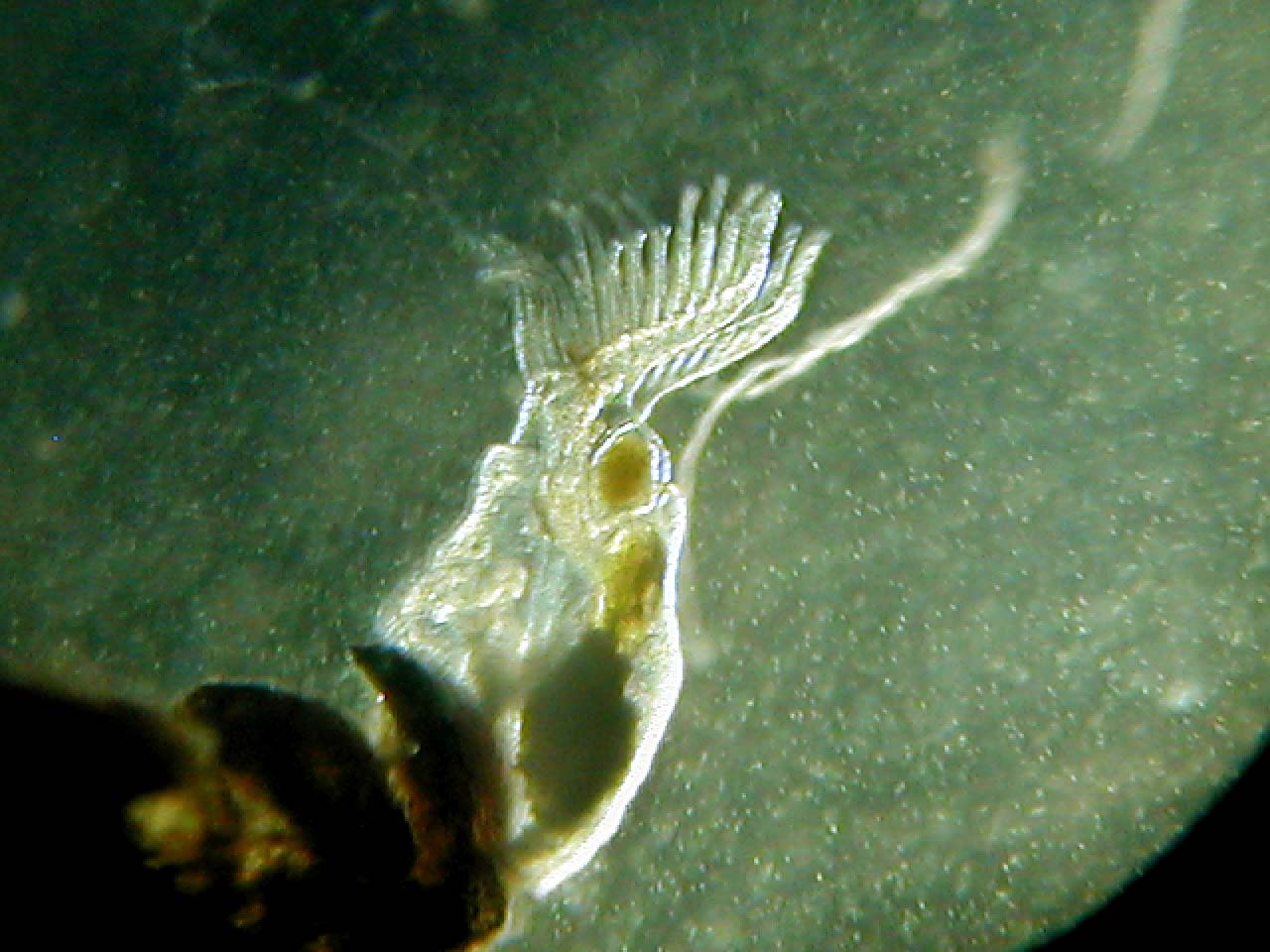
Feeding organ in the Lophophorata clade


The lophophore () is a characteristic feeding organ possessed by four major groups of animals: the Brachiopoda, Bryozoa, Hyolitha, and Phoronida, which collectively constitute the protostome group Lophophorata. All lophophores are found in aquatic organisms.
Etymology
Lophophore is derived from the Greek lophos (crest, tuft) and -phore, -phoros (φορος) (bearing), a derivative of phérein (φέρειν) (to bear); thus crest-bearing.
Characteristics
The lophophore can most easily be described as a ring of ciliated tentacles surrounding the mouth, but it is often horseshoe-shaped or coiled. Phoronids have their lophophores in plain view, but the valves of brachiopods must be opened wide to get a good view of their lophophore.
The lophophore surrounds the mouth and is an upstream collecting system for suspension feeding. Its tentacles are hollow, with extensions of a coelomic space thought to be a mesocoel. The gut is U-shaped with the anterior mouth at the center of the lophophore. The anus, where present, is also anterior but is dorsal to the mouth. In the Bryozoa, it is outside the ring of the lophophore. The inarticulate brachiopods do not have an anus.
Classification of lophophorates
Groups with lophophores are called lophophorates. In the old view of metazoan phylogeny, the lophophorates were placed within the Deuterostomia. With the emergence of molecular phylogenies they have been reassessed and placed in a new superphylum known as the Lophotrochozoa in the Protostomia, which includes the Mollusca and Annelida. Newer phylogenies place the bryozoans in the group Polyzoa, which also includes entoprocts and Cycliophora, while molluscs, brachiozoans and annelids group together, with brachiozoans and annelids as possible sister taxa.
The extinct hederelloids, microconchids, cornulitids, and tentaculitids were likely lophophorates based on their biomineralization. The position of the Hyolitha has long been disputed, but as of 2017, it has been assigned to the Lophophorata as finely preserved specimens in the Burgess Shale can be seen to carry lophophores. Lophophorates did appear paraphyletic, but that is contested.
References
References
- {{cite Dictionary.com. lophophore
- [http://www.ucmp.berkeley.edu/phyla/lophotrochozoa.html Introduction to the Lophotrochozoa] – Retrieved 3 May 2010
- (2008). "Assembling the lophotrochozoan (=spiralian) tree of life". Philosophical Transactions of the Royal Society of London. Series B, Biological Sciences.
- [https://www.science.org/doi/10.1126/sciadv.abo4400 Polyzoa is back: The effect of complete gene sets on the placement of Ectoprocta and Entoprocta]
- [https://www.bristol.ac.uk/biology/news/2022/armoured-worm-reveals-the-ancestry-of-three-major-animal-groups.html Armoured worm reveals the ancestry of three major animal groups]
- Taylor, P.D.. (2010). "Evolution of biomineralization in 'lophophorates'". Special Papers in Palaeontology.
- (2017). "Hyoliths are Palaeozoic lophophorates". Nature.
- (July 2006). "Lophotrochozoan phylogeny assessed with LSU and SSU data: evidence of lophophorate polyphyly". Mol Phylogenet Evol.
- (2014-07-01). "Platyzoan Paraphyly Based on Phylogenomic Data Supports a Noncoelomate Ancestry of Spiralia". Molecular Biology and Evolution.
- (2013-11-17). "New phylogenomic data support the monophyly of Lophophorata and an Ectoproct-Phoronid clade and indicate that Polyzoa and Kryptrochozoa are caused by systematic bias". BMC Evolutionary Biology.
This article was imported from Wikipedia and is available under the Creative Commons Attribution-ShareAlike 4.0 License. Content has been adapted to SurfDoc format. Original contributors can be found on the article history page.
Ask Mako anything about Lophophore — get instant answers, deeper analysis, and related topics.
Research with MakoFree with your Surf account
Create a free account to save articles, ask Mako questions, and organize your research.
Sign up freeThis content may have been generated or modified by AI. CloudSurf Software LLC is not responsible for the accuracy, completeness, or reliability of AI-generated content. Always verify important information from primary sources.
Report