From Surf Wiki (app.surf) — the open knowledge base
Long gallery
Type of long, narrow room
.jpg)
Type of long, narrow room
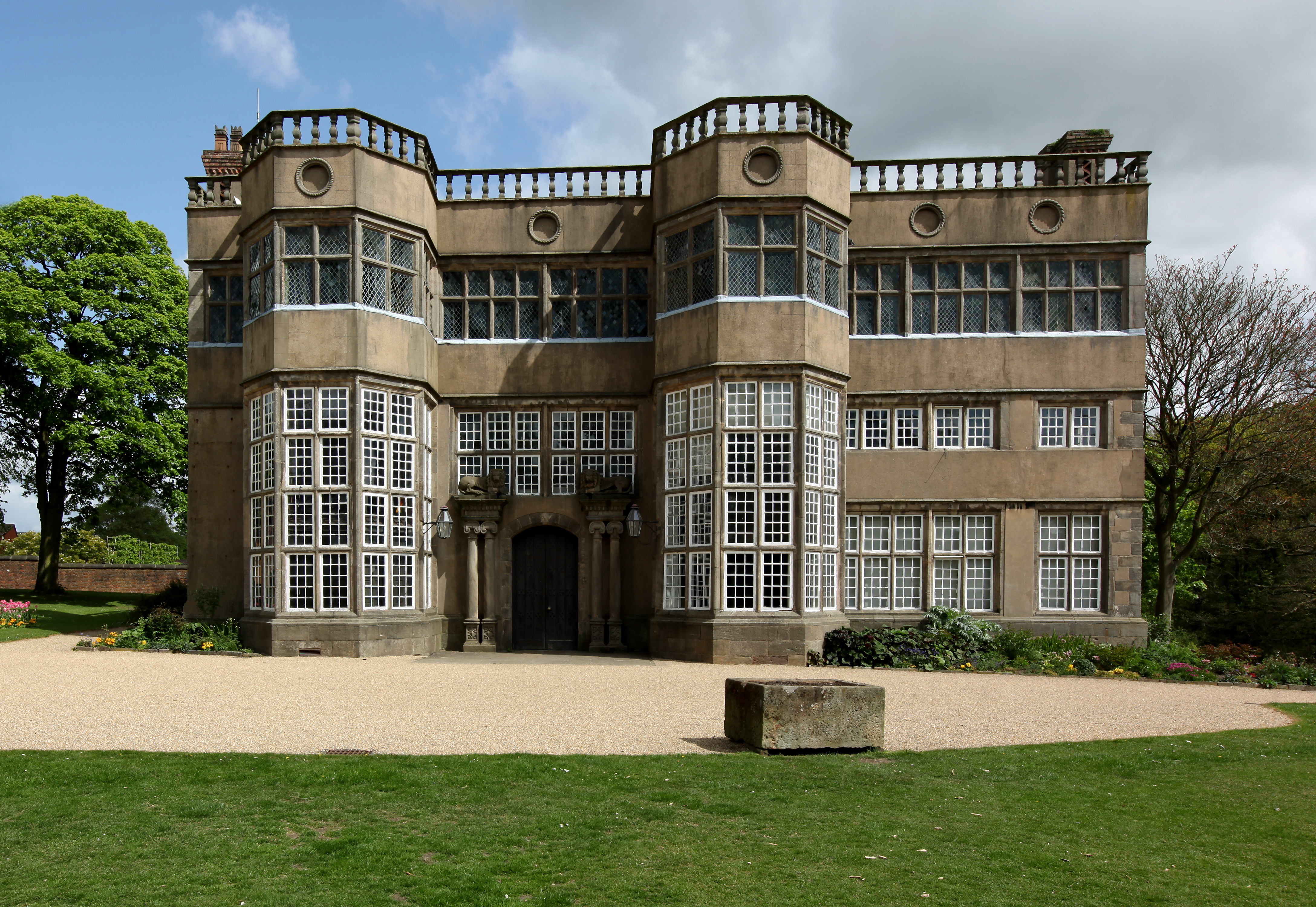

In architecture, a long gallery is a long, narrow room, often with a high ceiling. In Britain, long galleries were popular in Elizabethan and Jacobean houses. They were normally placed on the highest reception floor of English country houses, usually running along a side of the house, with windows on one side and at the ends giving views, and doors to other rooms on the other. They served several purposes: they were used for entertaining guests, for taking exercise in the form of walking when the weather was inclement, for displaying art collections, especially portraits of the family and royalty, and acting as a corridor.
A long gallery has the appearance of a spacious corridor, but it was designed as a room to be used in its own right, not just as a means of passing from one room to another, though many served as this too. In the 16th century, the seemingly obvious concept of the corridor had not been introduced to British domestic architecture; rooms were entered from outside or by passing from one room to another.

Later, long galleries were built, sometimes in a revivalist spirit, as at Harlaxton Manor, an extravagant early-Victorian house in Jacobean style, and sometimes to house a large art collection, as at Buckingham Palace, which has a long interior space lit from above, called the Picture Gallery.
Examples

Notable long galleries in the United Kingdom can be seen at:
- Althorp, Northamptonshire
- Apethorpe Hall, Northamptonshire
- Aston Hall, Birmingham
- Astley Hall, Chorley
- Blickling Hall, Norfolk
- Burghley House, near Stamford, Lincolnshire (converted into separate rooms in the late 17th century such as rooms known as Queen Elizabeth I Bedroom and Blue silk Dressing room)
- Broughton Castle, Oxfordshire
- Burton Agnes Hall, Yorkshire
- Burton Constable Hall, Yorkshire
- Castle Ashby House, Northamptonshire, now 18th-century in style.
- Charlton House, London
- Croome Court, Worcestershire, Adam interior
- Haddon Hall, Derbyshire
- Ham House, London – compact and running from front to rear
- Hardwick Hall, Derbyshire – one of the largest
- Harewood House
- Harlaxton Manor,
- Hatfield House, Hertfordshire
- Hever Castle, Kent
- Little Moreton Hall, Cheshire
- Longleat House, Wiltshire – the long gallery is now called the Saloon
- Lyme Park, Cheshire
- Montacute House, Somerset
- Osterley Park, London
- Parham Park, West Sussex
- Penshurst Place, Kent
- Powis Castle, Welshpool, Wales
- Scone Palace, Perthshire
- Sudbury Hall, Derbyshire
- Syon House, London
- Temple Newsam House, Yorkshire – Jacobean long gallery, later modified and now called the picture gallery
- Welbeck Abbey
- Windsor Castle – Elizabethan long gallery; later converted by William IV, along with adjacent rooms, to house the Royal Library
References
References
- "The Long Gallery". Birmingham.gov.
- "Long Gallery". Burton Constable Foundation.
- "The home of Charlton House and Greenwich Heritage Centre - Royal Greenwich Heritage Trust (RGHT)".
- "Haddon Hall, The Long Gallery". David Ford.
- "The Long Gallery". Hatfield House.
- "Long Gallery". Syon House.
This article was imported from Wikipedia and is available under the Creative Commons Attribution-ShareAlike 4.0 License. Content has been adapted to SurfDoc format. Original contributors can be found on the article history page.
Ask Mako anything about Long gallery — get instant answers, deeper analysis, and related topics.
Research with MakoFree with your Surf account
Create a free account to save articles, ask Mako questions, and organize your research.
Sign up freeThis content may have been generated or modified by AI. CloudSurf Software LLC is not responsible for the accuracy, completeness, or reliability of AI-generated content. Always verify important information from primary sources.
Report