From Surf Wiki (app.surf) — the open knowledge base
London Underground 1973 Stock
Type of rolling stock used on the London Underground Piccadilly line
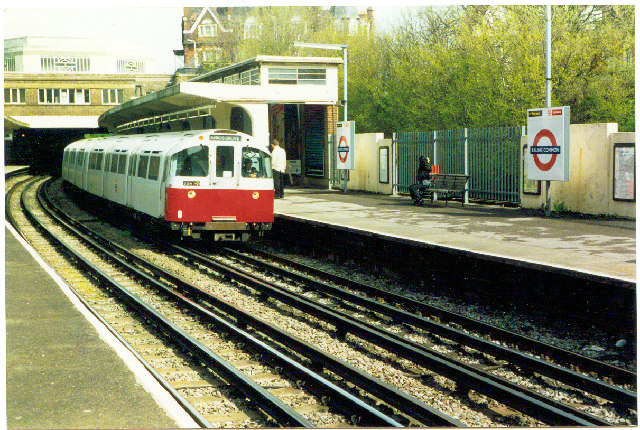
Type of rolling stock used on the London Underground Piccadilly line
| Field | Value | ||||
|---|---|---|---|---|---|
| name | London Underground 1973 Stock | ||||
| image | File:1973 Tube Stock Hillingdon.jpg | ||||
| caption | Refurbished 1973 Stock train at | ||||
| interiorimage | 1973 Tube Stock T Interior.jpg | ||||
| interiorcaption | The interior of a refurbished 1973 Stock car | ||||
| manufacturer | Metro-Cammell | ||||
| yearconstruction | 1974–1977 | ||||
| yearscrapped | 2025–present | ||||
| factory | Washwood Heath, Birmingham, England | ||||
| service | 19 July 1975 – present | ||||
| refurbishment | Bombardier Prorail (at Horbury railway works) 1996–2001 | ||||
| replaced | 1959 Stock | ||||
| lines | Piccadilly | ||||
| numberbuilt | 175 units ( trains) | ||||
| successor | 2024 Stock | ||||
| depots | {{Plainlist | ||||
| formation | 3 cars per unit, 2 units per train | ||||
| carlength | {{plainlist | ||||
| * DM {{convert | 17.473 | m | ftin | abbr | on}} |
| * UNDM/T {{convert | 17.676 | m | ftin | abbr | on}} |
| trainlength | 106.810 m | ||||
| width | 2.629 m | ||||
| height | 2.888 m | ||||
| maxspeed | 72 km/h (45 mph) | ||||
| weight | {{plainlist | ||||
| capacity | 684 per train (228 seated) | ||||
| traction | Pneumatic single camshaft (GEC Traction) | ||||
| traction motors | LT118 DC motor (Brush Traction) | ||||
| electricsystem | |||||
| collectionmethod | Contact shoe | ||||
| stocktype | Deep-level tube | ||||
| gauge |
- Cockfosters
- Northfields
- DM 17.473 m
- UNDM/T 17.676 m
- DM 27.15 LT
- UNDM 26.16 LT
- T 18.16 LT
The London Underground 1973 Stock is a type of rolling stock used on the Piccadilly line of the London Underground. It was introduced into service in 1975 with the extension of the line to Hatton Cross, followed by a further extension to Heathrow Airport in 1977. A total of 86 six-car trains were built.
The trains were built by Metro-Cammell between 1974 and 1977, and were refurbished by Bombardier Transportation between 1996 and 2001. They are some of the oldest trains running on the Underground, and in Britain as a whole, second only to the 1972 Stock that runs on the Bakerloo line.
History
In the early 1970s London Transport placed an order for a new fleet of trains to replace the 1938 Stock and 1959 Stock vehicles which previously operated on the Piccadilly line. Built between 1974 and 1977 by Metro Cammell in Birmingham, the first unit entered service on 19 July 1975 and the last was introduced by 1977. The trains featured longer cars and larger door space than the previous units, being designed for airport travellers with luggage.
The order was for 6-car trains, made up of 196 driving motor (DM) cars, 175 trailer (T) cars and 154 uncoupling non-driving motor (UNDM) cars. Each train is made up of two 3-car units, and most units are single-ended, formed DM-T-UNDM. There are also 21 double-ended units, formed DM-T-DM, to provide additional flexibility and to operate the Aldwych shuttle (now closed).
The initial order included two test units equipped with solid state traction equipment and electronic control systems. These were double-ended units 892-692-893 (delivered 1977) and 894-694-895 (delivered 1979), and were known collectively as the ETT (Experimental Tube Train). The first unit was equipped by Westinghouse, the second by GEC. In order to provide additional units for the opening of the Heathrow loop, these units were converted to standard at Acton Works, entering service between 1986 and 1987.
One three-car unit (166-566-366) was damaged in a terrorist attack on 7 July 2005 and subsequently scrapped.
Refurbishment
From 1996 to 2001, the entire fleet was refurbished by Bombardier Prorail at Horbury railway works. The interior was completely remodelled, with changes including the removal of transverse seating, replacement of the original wooden flooring with new floor material, replacement of straphangers with new grab rails, new enclosures for the ceiling ventilation fans, brighter lighting with new diffusers, installation of car-end windows and new perch seats in the centre of the cars, creating more luggage space for airport passengers.
The original unpainted exterior was painted in London Underground's corporate livery, and a new emergency detrainment system was fitted in the cabs. The external destination blinds were also replaced with LCDs, and these were subsequently replaced with new LED units in 2015.
Interior dot-matrix displays were also introduced around this time, with later refurbished trains having a more compact surrounding than earlier refurbished cars.
Automated voice announcements in the 1973 Stock as of today are notable for using the Julie Berry voice (used in various national rail services) as well as Adrian Hieatt for 'see it say it sorted' message. No other tube stock uses the Julie Berry voice. Both shall be phased out with 2024 Stock by a synthesised voice called 'Elloise'.
The first refurbished unit re-entered service in June 1996, with the final refurbished unit re-entering service on 10 July 2001.
Future replacement
Main article: London Underground 2024 Stock
The Deep tube programme (DTP) originally covered the replacement of the trains and signalling on the Bakerloo and Piccadilly lines, and had been expanded to cover rolling stock requirements arising from the planned extension of the Northern line to Battersea, the eventual replacement of Central line trains, and proposed increased service frequency on the Northern and Jubilee lines. The EVO tube concept design, a lighter articulated train with walk-through cars, was introduced early in 2011.
Transport for London (TfL) has planned to replace Piccadilly Line trains in 2010 with the 2014 Stock to be delivered from 2015 onwards, with the two bidders of the contract; Alstom and CAF were bidded for the project. It was postponed, with the project being renamed to New Tube for London. In June 2018, TfL announced 94 nine-car 2024 stock trains to replace the 1973 Stock. As of early 2026, these are expected to enter service from the second half of 2026. All 1973 Stock trains will be decommissioned by 2030.
References
References
- (4 August 2015). "London Underground Rolling Stock Information Sheet".
- "Piccadilly line facts". Transport for London.
- "London Underground 1973 Tube Stock". TrainWeb.
- (8 November 2010). "1973 tube stock". Square Wheels.
- "1973 Tube Stock".
- "July Bombing Train returned to service - London Banter".
- (17 June 1996). "New Look Trains on the Piccadilly Line".
- "New displays on the 73s | District Dave's London Underground Site".
- (17 June 1996). "New look trains on the Piccadilly Line". London Transport.
- "Freedom of Information request - Announcements on new Piccadilly line trains".
- Griffin, Richard. "SQUAREWHEELS.org.uk - 1973 tube stock".
- Connor, Piers. (January 2013). "Deep tube transformation". [[Modern Railways]].
- (5 February 2014). "New Tube for London Programme". Transport for London.
- (28 February 2014). "New Tube for London Programme". Railway Gazette.
- (28 February 2014). "TfL prepares for driverless tube". Railnews.
- [http://www.metro-report.com/news/news-by-region/europe/single-view/view/siemens-to-supply-london-underground-deep-tube-fleet.html Siemens to supply London Underground deep tube fleet] ''[[Metro Report International]]'' 15 June 2018
- 2024 Stock design due soon ''[[Rail Express]]'' issue 207 February 2021 page 43
- Lydall, Ross. (4 March 2021). "First look: TfL unveils design of new Piccadilly line trains". Evening Standard.
This article was imported from Wikipedia and is available under the Creative Commons Attribution-ShareAlike 4.0 License. Content has been adapted to SurfDoc format. Original contributors can be found on the article history page.
Ask Mako anything about London Underground 1973 Stock — get instant answers, deeper analysis, and related topics.
Research with MakoFree with your Surf account
Create a free account to save articles, ask Mako questions, and organize your research.
Sign up freeThis content may have been generated or modified by AI. CloudSurf Software LLC is not responsible for the accuracy, completeness, or reliability of AI-generated content. Always verify important information from primary sources.
Report