From Surf Wiki (app.surf) — the open knowledge base
Lolium temulentum
Species of plant
Species of plant
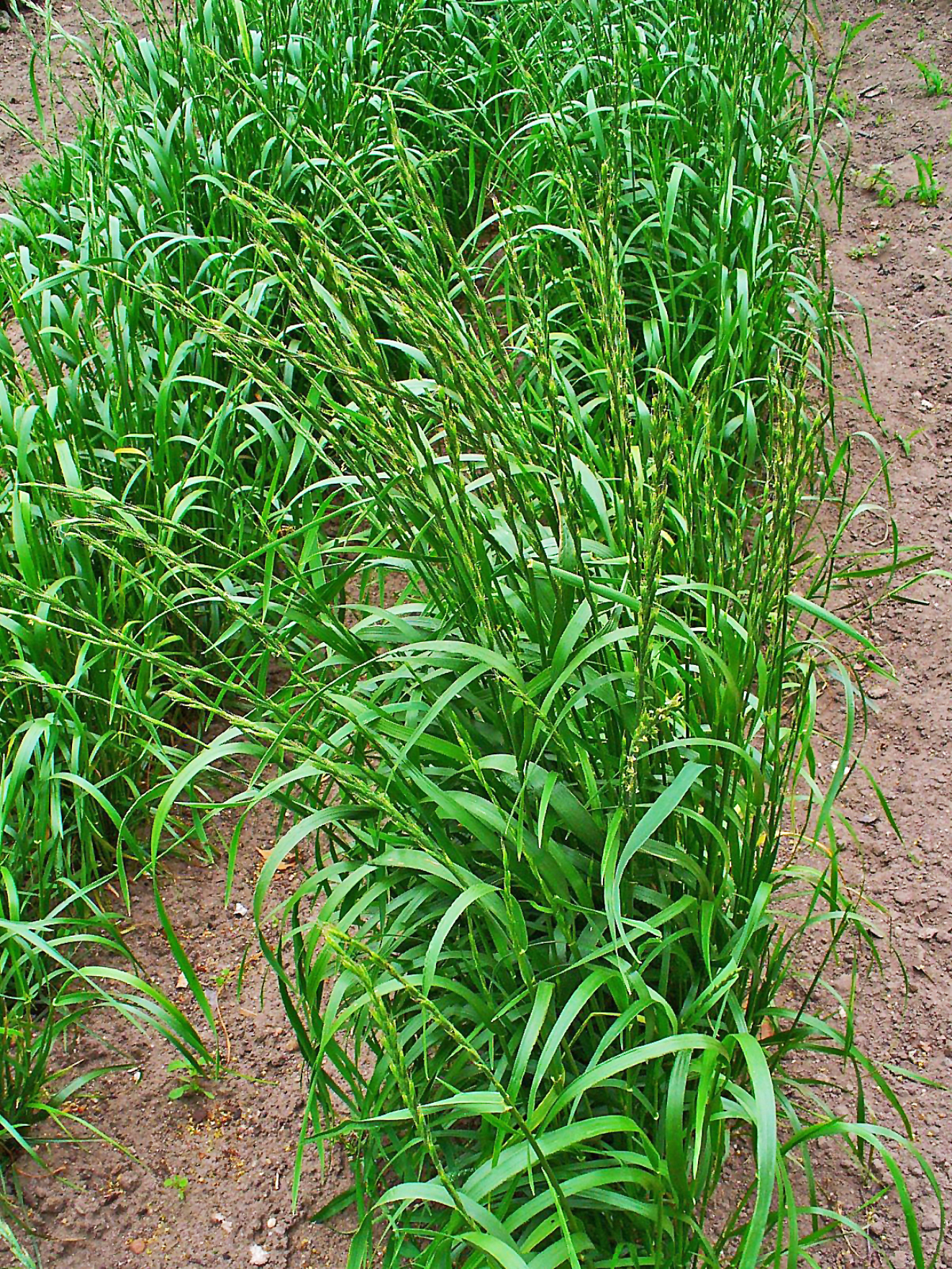
Lolium temulentum, typically known as darnel, poison darnel, darnel ryegrass or cockle, is an annual plant of the genus Lolium within the family Poaceae. The plant stem can grow up to one meter tall, with inflorescence in the ears and purple grain. It has a cosmopolitan distribution.
Growth

Darnel usually grows in the same production zones as wheat and was a serious weed of cultivation, a Vavilovian mimic of wheat, until modern sorting machinery enabled darnel seeds to be separated efficiently from seed wheat. The similarity between these two plants is so great that in some regions, darnel is called "false wheat". It bears a close resemblance to wheat until the ear appears. The spikes of L. temulentum are more slender than those of wheat. The spikelets are oriented edgeways to the rachis and have only a single glume, while those of wheat are oriented with the flat side to the rachis and have two glumes. Wheat will appear brown when ripe, whereas darnel is black.
Darnel can be infected by an endophytic fungus of the genus Neotyphodium and the endophyte-produced, insecticidal loline alkaloids were first isolated from this plant.
The French word for darnel is ivraie (from Latin ebriacus, intoxicated), which expresses the drunken nausea from eating the infected plant, which can be fatal. The French name echoes the scientific name, Latin temulentus "drunk."
Literary references
-
The ancient Greek botanist Theophrastus stated in his De causis plantarum (8:7 §1) that wheat can transform (metaballein) into darnel (aira), since fields sown to wheat are often darnel when reaped.
-
The anonymous classic Greek work Geoponika contains multiple references to darnel (zizonia).
-
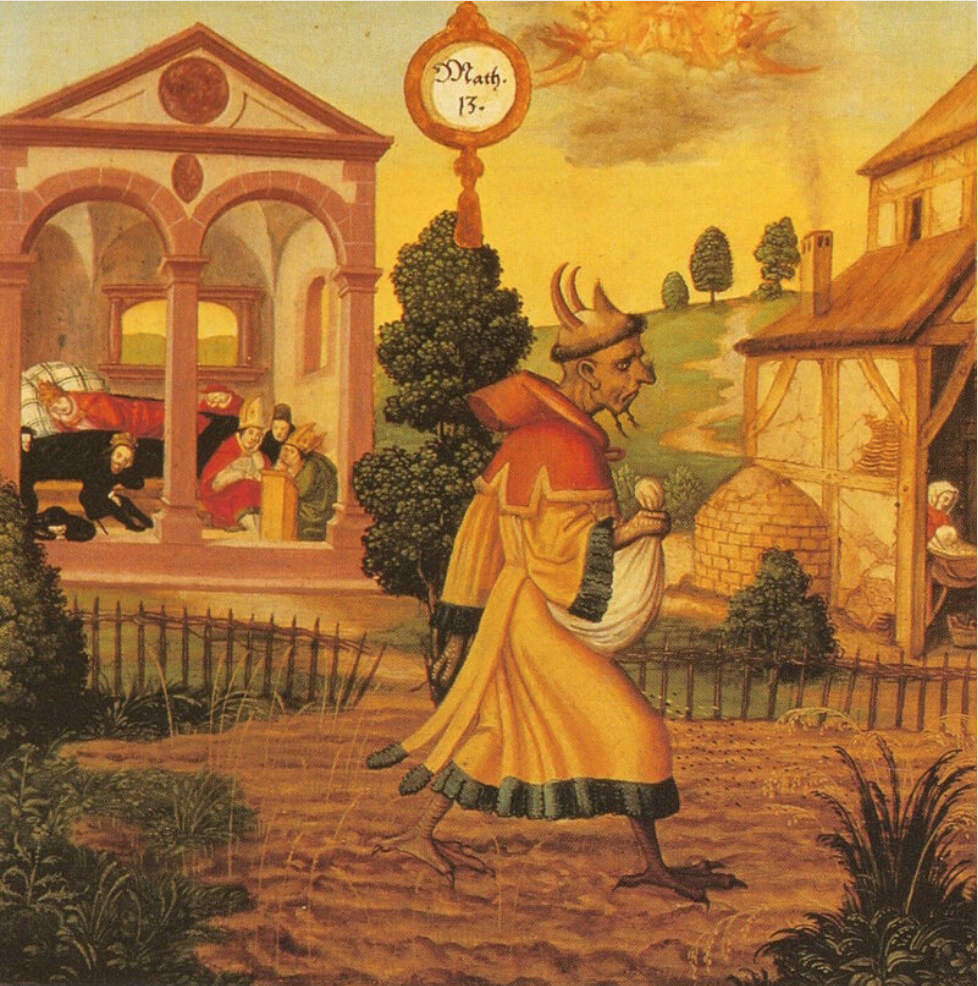
Darnel (zizania) was evidently the toxic weed in the Parable of the Tares in the Gospel of Matthew:
-
In ordering the St. Brice's Day massacre of all the Danes in England, Æthelred the Unready observed that "all the Danes who had sprung up in this island, sprouting like cockle amongst the wheat, were to be destroyed by a most just extermination."
-
Darnel is also mentioned as a weed in Shakespeare's King Lear.
-
Darnel is one of the many ingredients in mithridate, which Mithridates, the king of ancient Pontus, is supposed to have used every day to render him immune to poisoning.
-
Darnel is mentioned in the Mishnah in Kilayim (1:1) as זונין (he), similar to the Arabic زؤان (ar).
-
Aristotle mentions darnel in his On Sleep amongst a short list of substances which induce sleep.
-
The 1912 Beatrix Potter book The Tale of Mr. Tod describes a character digging a deep hole for "dog darnel".
References
References
- Leroi, Armand Marie. (2014). "The Lagoon: How Aristotle Invented Science". Bloomsbury.
- Craig S. Keener, ''The Gospel of Matthew: A Socio-Rhetorical Commentary,'' Wm. B. Eerdmans Publishing, 2009 p.387
- Heinrich W.Guggenheimer, ''The Jerusalem Talmud,''Vol. 1, Part 3, Walter de Gruyter, 2000 p.5
- (2007). "Loline alkaloids: currencies of mutualism". [[Phytochemistry (journal).
- [[Horace]]'s Satire 2.6 refers to “vetch” as the grain eaten by the country mouse while he serves his guest fancier, but that grain is probably not darnel, which is generally toxic to animals and birds as well as humans.
- See the English translation by Thomas Owen published in 1806 (posted at https://archive.org/details/Geoponica02/page/n2/mode/1up) and the Greek-English Lexicon of Henry George Liddell and Robert Scott (published in 1946 and posted at http://www.perseus.tufts.edu/hopper/text?doc=Perseus:text:1999.04.0057:entry=ziza/nion).
- (1986). "'Cockles Amongst the Wheat': Danes and English in the Western Midlands in the First Half of the Eleventh Century". Midland History.
- Seager, Herbert West. (1896). "Natural history in Shakespeare's time". Elliot Stock.
- Artscroll Kilayim, June 2012
- . ["On Sleep and Sleeplessness"](https://classics.mit.edu/Aristotle/sleep.html). *The Internet Classics Archive*.
- Mockler, Simon. (April 20, 2018). "Simon Mockler: Making the switch from adult fiction to children’s books". NorthbankTalent.com.
This article was imported from Wikipedia and is available under the Creative Commons Attribution-ShareAlike 4.0 License. Content has been adapted to SurfDoc format. Original contributors can be found on the article history page.
Ask Mako anything about Lolium temulentum — get instant answers, deeper analysis, and related topics.
Research with MakoFree with your Surf account
Create a free account to save articles, ask Mako questions, and organize your research.
Sign up freeThis content may have been generated or modified by AI. CloudSurf Software LLC is not responsible for the accuracy, completeness, or reliability of AI-generated content. Always verify important information from primary sources.
Report