From Surf Wiki (app.surf) — the open knowledge base
Lockheed P-2 Neptune
Family of maritime patrol aircraft

Family of maritime patrol aircraft
| Field | Value |
|---|---|
| name | P-2 (P2V) Neptune |
| image | File:P-2H VP-56 1963.jpg |
| caption | SP-2H of VP-56 over the Atlantic. |
| type | Maritime patrol and anti-submarine warfare aircraft |
| national_origin | United States |
| manufacturer | Lockheed |
| first_flight | 17 May 1945 |
| introduction | March 1947 |
| retired | 1984 (military) 2017 (civilian) |
| status | Retired |
| number_built | 1,177 (total) |
| primary_user | United States Navy |
| more_users | Japan Maritime Self-Defense Force |
| Royal Australian Air Force | |
| Royal Canadian Air Force | |
| variants | Kawasaki P-2J |
Royal Australian Air Force Royal Canadian Air Force
The Lockheed P-2 Neptune (designated P2V by the United States Navy prior to September 1962) is a maritime patrol and anti-submarine warfare (ASW) aircraft. It was developed for the US Navy by Lockheed to replace the Lockheed PV-1 Ventura and PV-2 Harpoon, and was replaced in turn by the Lockheed P-3 Orion. Designed as a land-based aircraft, the Neptune never made a carrier landing, but a small number were converted and deployed as carrier-launched (using JATO assist), stop-gap nuclear bombers that would have to land on shore or ditch. The type was successful in export, and saw service with several armed forces.
Design and development
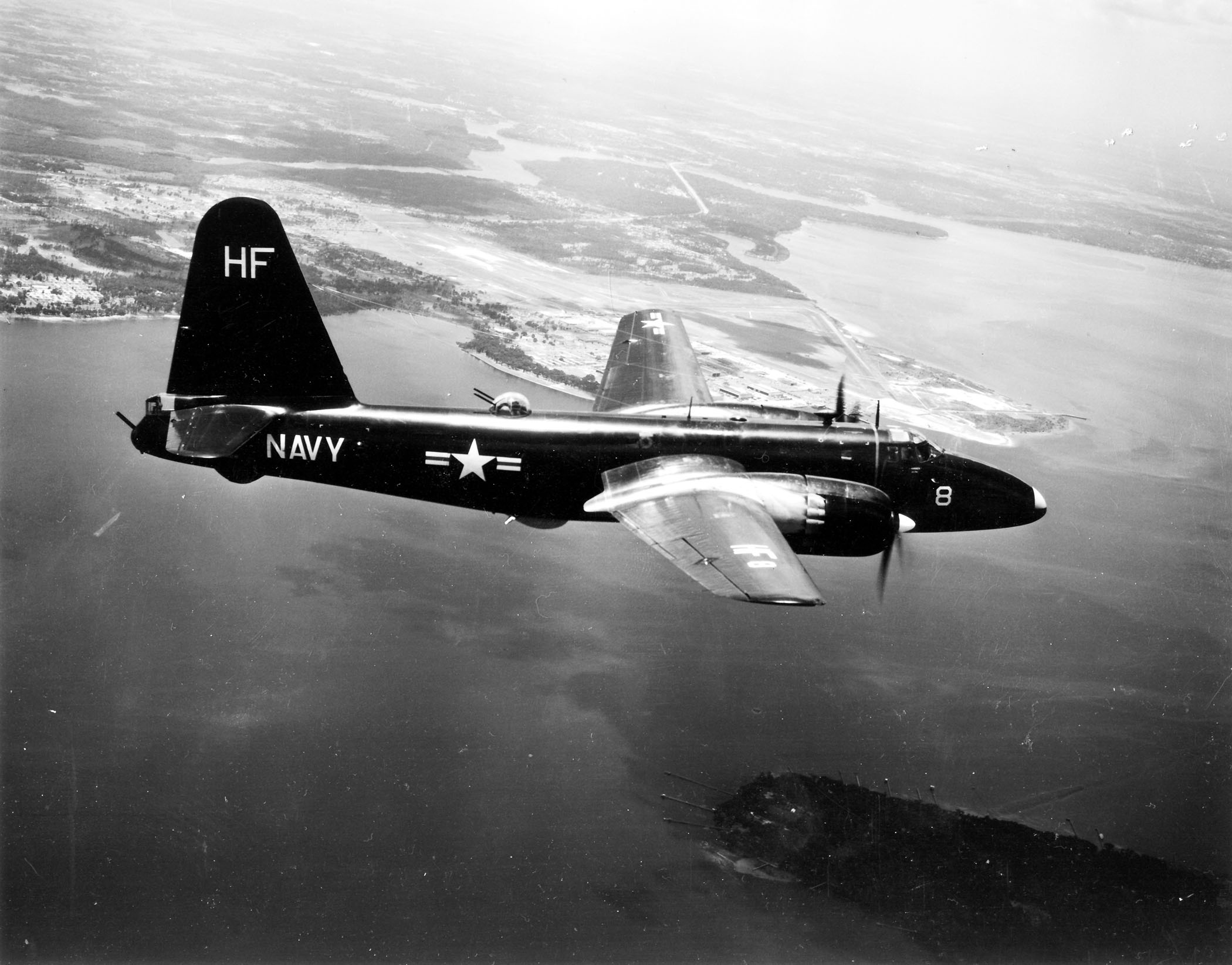
Development of a new land-based patrol bomber began early in World War II, with design work starting at Lockheed's Vega subsidiary as a private venture on 6 December 1941. At first, the new design was considered a low priority compared to other aircraft in development at the time, with Vega also developing and producing the PV-2 Harpoon patrol bomber. On 19 February 1943, the U.S. Navy signed a letter of intent for two prototype XP2Vs, which was confirmed by a formal contract on 4 April 1944 with a further 15 aircraft being ordered 10 days later. It was not until 1944 that the program went into full swing. A major factor in the design was ease of manufacture and maintenance, and this may have been a major factor in the type's long life and worldwide success. The first aircraft flew in May 1945. Production began in 1946, and the aircraft was accepted into service in 1947. Potential use as a bomber led to successful launches from aircraft carriers.
Beginning with the P2V-5F model, the Neptune became one of the first operational aircraft fitted with both piston and jet engines. The Convair B-36, several Boeing C-97 Stratofreighter, Fairchild C-123 Provider, North American AJ Savage, and Avro Shackleton aircraft were also so equipped. To save weight and complexity of two separate fuel systems, the Westinghouse J34 jet engines on P2Vs burned the 115–145 Avgas fuel of the piston engines, instead of jet fuel. The jet pods were fitted with intake doors that remained closed when the J-34s were not running. This prevented windmilling, allowing for economical piston-engine-only long-endurance search and patrol operations. In normal US Navy operations, the jet engines were run at full power (97%) to assure takeoff, then shut down upon reaching a safe altitude. The jets were also started and kept running at flight idle during low-altitude (500 ft during the day and 1000 ft at night) anti-submarine and/or anti-shipping operations as a safety measure should one of the radials develop problems.
Normal crew access was via a ladder on the aft bulkhead of the nosewheel well to a hatch on the left side of the wheel well, then forward to the observer nose, or up through another hatch to the main deck. There was also a hatch in the floor of the aft fuselage, near the sonobuoy chutes.
Operational history
Early Cold War

Before the P-3 Orion arrived in the mid-1960s, the Neptune was the primary U.S. land-based anti-submarine patrol aircraft, intended to be operated as the hunter of a '"Hunter-Killer" group, with destroyers employed as killers. Several features aided the P-2 in its hunter role:
- Sonobuoys could be launched from a station in the aft portion of the fuselage and monitored by radio
- Some models were equipped with "pointable" twin .50 cal (12.7mm) machine guns in the nose, but most had a forward observation bubble with an observer seat, a feature often seen in images.
- The AN/ASQ-8 Magnetic Anomaly Detector was fitted in an extended tail, producing a paper chart. Unmarked charts were not classified, but those with annotations were classified as secret.
- A belly-mounted AN/APS-20 surface-search radar enabled detection of surfaced and snorkeling submarines at considerable distances.
As the P-2 was replaced in the US Navy by the P-3A Orion in active Fleet squadrons in the early and mid-1960s, the P-2 continued to remain operational in the Naval Air Reserve through the mid-1970s, primarily in its SP-2H version. As active Fleet squadrons transitioned to the P-3B and P-3C in the mid- and late-1960s and early 1970s, the Naval Air Reserve P-2s were eventually replaced by P-3As and P-3Bs and the P-2 exited active U.S. naval service. VP-23 was the last active duty patrol squadron to operate the SP-2H, retiring its last Neptune on 20 February 1970, while the last Naval Reserve patrol squadron to operate the Neptune, VP-94, retired its last SP-2H in 1978.
Nuclear bomber
_on_2_July_1951_(80-G-629296).jpg)
At the end of World War II, the US Navy felt the need to acquire a nuclear strike capability to maintain its political influence. In the short term, carrier-based aircraft were the best solution. The large Fat Man nuclear munitions at that time were bulky and required a very large aircraft to carry them. The US Navy Bureau of Ordnance built 25 outdated but more compact Little Boy nuclear bombs to be used in the smaller bomb bay of the P2V Neptune. There was enough fissionable material available by 1948 to build ten complete uranium projectiles and targets, although there were only enough initiators to complete six. The U.S. Navy improvised a carrier-based nuclear strike aircraft by modifying the P2V Neptune for carrier takeoff using jet assisted takeoff (JATO) rocket boosters, with initial takeoff tests in 1948. However, the Neptune could not land on a carrier, therefore the crew had to either make their way to a friendly land base after a strike, or ditch in the sea near a U.S. Navy vessel. It was replaced in this emergency role by the North American AJ Savage (transferred to the Pacific Fleet in October 1952) the first nuclear strike aircraft that was fully capable of carrier launch and recovery operations; it was also short-lived in that role as the US Navy was adopting fully jet powered nuclear strike aircraft.
Covert operations P2V-7U/RB-69A variants
In 1954, under Project Cherry, the US Central Intelligence Agency (CIA) obtained five, newly built P2V-7 and converted them into P2V-7U/RB-69A variants by Lockheed's Skunk Works at Hangar B5 in Burbank, California for the CIA's own private fleet of covert ELINT/ferret aircraft. Later, to make up for P2V-7U/RB-69A operational losses, the CIA obtained and converted two existing US Navy P2V-7s, one in September 1962 and one in December 1964, to P2V-7U/RB-69A Phase VI standard, and they also acquired an older P2V-5 from the US Navy as a training aircraft in 1963. Test flights were made by lead aircraft at Edwards AFB from 1955 to 1956 with all the aircraft painted with a dark sea blue color but with USAF markings. In 1957, one P2V-7U was sent to Eglin AFB for testing aircraft performance at low level and under adverse conditions.

The initial two aircraft were sent to Europe, based at Wiesbaden, West Germany, but were later withdrawn in 1959 when the CIA reduced its covert aircraft assets in Europe. The CIA sent the other two P2V-7U/RB-69As to Hsinchu Air Base, Taiwan, where by December 1957, they were given to a "black op" unit, the 34th Squadron, better known as the Black Bat Squadron, of the Republic of China Air Force; these were painted in ROCAF markings. The ROCAF P2V-7U/RB-69A's mission was to conduct low-level penetration flights into mainland China to conduct ELINT/ferret missions including mapping out China's air defense networks, inserting agents via airdrop, and dropping leaflets and supplies. The agreement for plausible deniability between US and Republic of China (ROC) governments meant the RB-69A would be manned by ROCAF crew while conducting operational missions, but would be manned by CIA crew when ferrying RB-69A out of Taiwan or other operational area to US.
The P2V-7U/RB-69A flew with ROCAF Black Bat Squadron over China from 1957 to November 1966. All five original aircraft (two crashed in South Korea, three shot down over China) were lost with all hands on board. In January 1967, two remaining RB-69As flew back to NAS Alameda, California, and were converted back to regular US Navy P2V-7/SP-2H ASW aircraft configurations. Most of the 34th Squadron's black op missions remain classified by the CIA—though a CIA internal draft history, Low-Level Technical Reconnaissance over Mainland China (1955–66), reference CSHP-2.348, written in 1972 that covers CIA/ROCAF 34th Squadron's black op missions is known to exist. The CIA does not plan to declassify it until after 2022.
Vietnam War

During the Vietnam War, the Neptune was used by the US Navy as a gunship, as an overland reconnaissance and sensor deployment aircraft, and in its traditional role as a maritime patrol aircraft. The Neptune was also utilized by the US Army's 1st Radio Research Company (Aviation), call sign "Crazy Cat", based at Cam Ranh Air Base in South Vietnam, as an electronic "ferret" aircraft intercepting low-powered tactical voice and morse code radio signals. The US Army operated the P-2 from 1967 until 1972, flying 42,500 hours with no accidents. Observation Squadron 67 (VO-67), call sign "Lindy", was the only P-2 Neptune aircraft squadron to ever receive the Presidential Unit Citation, flying Igloo White missions sowing seismic and acoustic sensors over the Ho Chi Minh trail. VO-67 lost three OP-2E aircraft and 20 aircrew to ground fire during its secret missions into Laos and Vietnam in 1967–68. The Republic of China Air Force (ROCAF) secret 34th Black Bat Squadron's RB-69A/P2V-7U ELINT/SIGINT aircraft flew a low level electronic reconnaissance from Da Nang Air Base, flying over Thanh Hóa Province on 20 August 1963 to investigate an air resupply drop zone that turned out to be a trap for a ROCAF C-123B airdrop mission 10 days earlier due to the air-inserted agents having been captured and turned. Next year, an air defense radar mapping mission was also flown by 34th Squadron's RB-69A/P2V-7U aircraft into North Vietnam and Laos on the night of 16 March 1964. The RB-69A took off from Da Nang, flew up the Gulf of Tonkin before coasting in near Haiphong, then flew down North Vietnam and the Laos border. The mission was requested by SOG for helping plan the insert or resupply of agents. Seven AAA sites, 14 early warning radar sites and two GCI radar signals were detected.
Royal Australian Air Force (RAAF) Neptunes were also involved in the Vietnam War. These aircraft helped escort the fast transport from Australia to South Vietnam on several occasions in 1965 and 1966. Australian Neptunes also occasionally operated as airborne early warning aircraft over Thailand using their AN/APS-120 radar; this was done only when the aircraft were transiting through Thai airspace on other taskings. During these sorties the Neptunes warned American aircraft operating over North Vietnam of Vietnamese surface to air missile launches.
Falklands War
.jpg)
The Argentine Naval Aviation had received at least 16 Neptunes of different variants since 1958 including eight former RAF examples for use in the Escuadrilla Aeronaval de Exploración (Naval Exploration Squadron). They were intensively used in 1978 during the Operation Soberania against Chile including over the Pacific Ocean.
During the Falklands War in 1982, the last two airframes in service (2-P-111 and 2-P-112) carried out reconnaissance missions over the South Atlantic and on 4 May, after detecting a group of British warships, helped to direct an attack by two Dassault Super Étendards that resulted in the sinking of the British destroyer . The lack of spare parts, caused by the US having enacted an arms embargo in 1977 due to the Dirty War, led to the type being retired before the end of the war; Argentine Air Force Lockheed C-130 Hercules took over the task of searching for targets for strike aircraft.
Other military operators
The Royal Canadian Air Force's Maritime Air Command replaced its aging Avro Lancaster maritime patrol aircraft beginning in 1955 with P2V-7 Neptunes in the anti-submarine, anti-shipping, and maritime reconnaissance roles, as a stopgap pending deliveries of the Canadair CP-107 Argus, which began in 1960. Canadian Neptunes were delivered without the underwing Westinghouse J34 jet engine pods, which were retrofitted in 1959. Armament included two torpedoes, mines, depth charges, bombs carried internally plus unguided rockets mounted under the wings. Twenty five Neptunes served with 404, 405 and 407 squadrons until 1960. Upon unification of the Canadian Forces in 1968, the Neptune was re-designated the CP122 and was officially retired two years later.
Australia also acquired Neptunes to supplement and then replace the aging Avro Lincoln in the reconnaissance and anti-submarine role. The RAAF flew Neptunes from 1951 until 1978, at first with 11 Squadron (Pearce, WA) and then, from late 1953, with 10 Squadron (Richmond, NSW). RAAF Neptunes were fitted for ASW, surface ship detection and general reconnaissance. Twelve P2V4/5 (later designated P-2E) aircraft entered service with 11 Squadron in 1951. At first powered only by two R3350 radials, all were later retrofitted with Westinghouse J-34 auxiliary jets. Long-running severe spare parts shortages in the early 1950s made it necessary to put 6 of the 12 aircraft in long-term storage from 1953. In August 1953, the rear and front turrets were removed and replaced with a MAD boom and a clear Perspex nose for observation. In the late 1960s, RAAF Neptune operations were wound down and it was replaced with the P-3B Orion.
With the founding of NATO in 1949 and the resulting additional maritime commitments it entailed for Britain, The Royal Air Force Coastal Command operated 52 P2V-5s, designated Neptune MR.1, as a stop-gap modern maritime patrol aircraft until sufficient numbers of the Avro Shackleton could enter service. The Neptunes were used from between 1952 and March 1957, being used for airborne early warning experiments as well as for maritime patrol.
In Australia, the Netherlands, and the US Navy, its tasks were taken over by the larger and more capable P-3 Orion, and by the 1970s, it was in use only by patrol squadrons in the US Naval Reserve and the Dutch Navy. The 320 Squadron of the Royal Dutch Navy retired its last seven Neptunes in March 1982 as they were being replaced by the Lockheed Orion. The US Naval Reserve retired its last Neptunes in 1978, those aircraft also having been replaced by the P-3 Orion. By the 1980s, the Neptune had fallen out of military use in most purchasing nations, replaced by newer aircraft.
The Netherlands received its first Neptunes in 1953–54, when it acquired 12 P2V-5s. These remained in service until 1960, when they were transferred to Portugal. The P2V-5s were initially not replaced, with the anti-submarine aircraft requirement being met by carrier-borne Grumman S-2 Trackers. A new, urgent, requirement for maritime patrol aircraft soon developed, for service over Dutch New Guinea, and 15 new P2V-7s were purchased, entering service from September 1961. While initially employed on reconnaissance and patrol duties, as Indonesian infiltration attempts against New Guinea increased, the Neptunes added bombing and strafing operations to their patrol duties. On 17 May 1962, a Netherlands Navy Neptune shot down an Indonesian C-47 transport. A truce ended the conflict in September 1962, with Dutch New Guinea passing to UN control before becoming part of Indonesia, and the P2V-7s returned to Europe. The aircraft were upgraded to SP-2H standard soon after returning to the Netherlands, and remained in service until March 1982, when they were replaced by Lockheed Orions.

In Japan, the Neptune was license-built from 1966 by Kawasaki as the P-2J, with the piston engines replaced by IHI-built T64 turboprops. Kawasaki continued their manufacture much later than Lockheed did; the P-2J remained in service until 1984.
Civilian firefighting
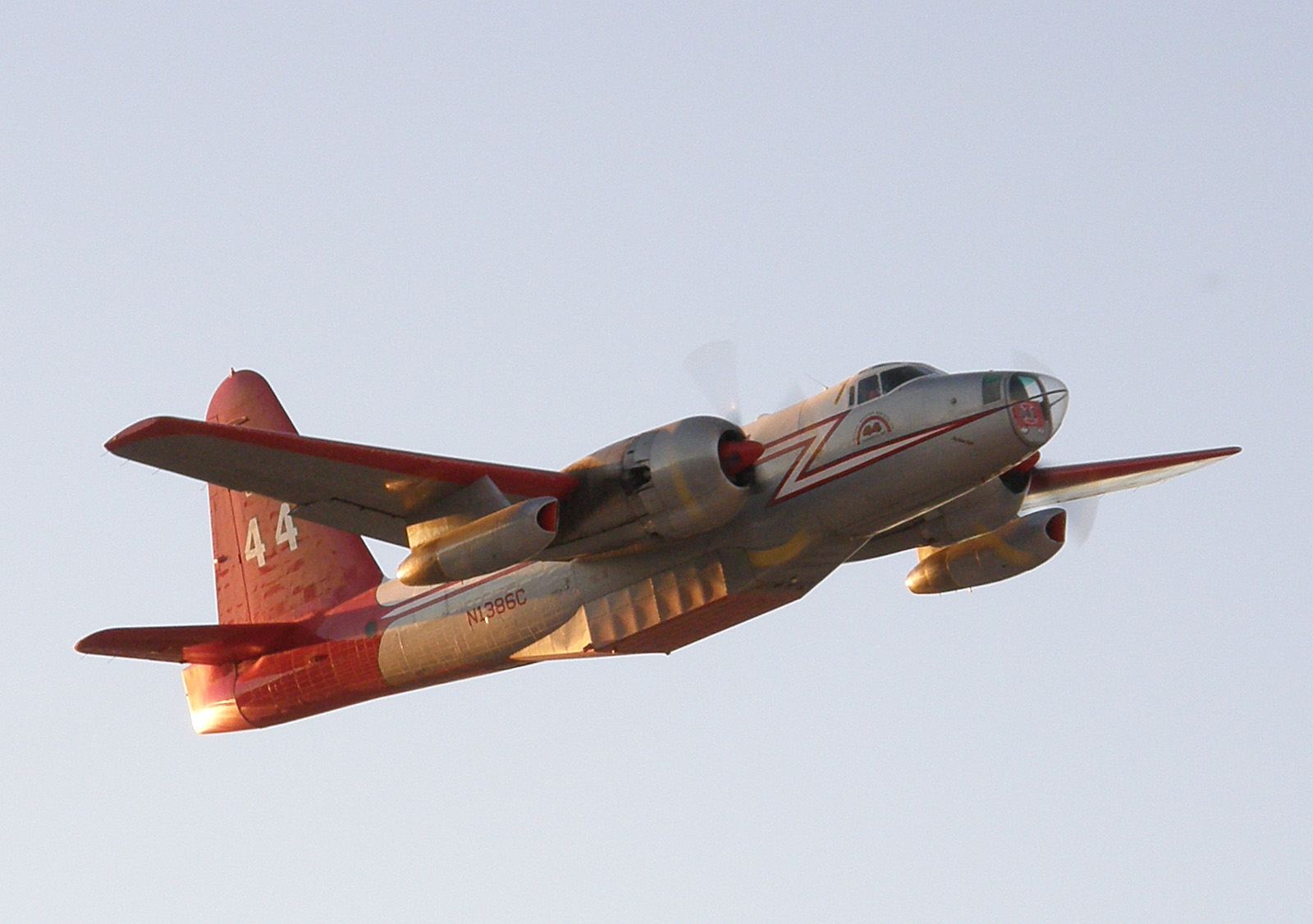
P-2/P2Vs have been employed in aerial firefighting roles by operators such as Minden Air Corp and Neptune Aviation Services. The fire fighters can carry 2080 usgal of retardant and have a service life of 15,000 hours. Neptune Aviation Services proposes to replace them with British Aerospace 146 aircraft, which have an estimated service life of 80,000 hours and carry upwards of 3000 usgal of retardant.
"The Truculent Turtle"
The third production P2V-1 was chosen for a record-setting mission, ostensibly to test crew endurance and long-range navigation but also for publicity purposes: to display the capabilities of the US Navy's latest patrol bomber, and to surpass the standing record set by a Japanese Tachikawa Ki-77. Its nickname was The Turtle, which was painted on the aircraft's nose (along with a cartoon of a turtle smoking a pipe pedaling a device attached to a propeller). However, in press releases immediately before the flight, the US Navy referred to it as "The Truculent Turtle".

Loaded with fuel in extra tanks fitted in practically every spare space in the aircraft, "The Turtle" set out from Perth, Australia to the United States. With a crew of four (and a nine-month-old gray kangaroo, a gift from Australia for the National Zoo in Washington, D.C.) the aircraft set off on 9 September 1946, with a RATO (rocket-assisted takeoff). days (55h, 18m) later, "The Turtle" touched down in Columbus, Ohio after 11236.6 mi. It was the longest un-refueled flight yet beating the unofficial 10212 mi record set by the Japanese Tachikawa Ki-77. This would stand as the absolute unrefueled distance record until 1962 when it was beaten by a USAF Boeing B-52 Stratofortress, and would remain as a piston-engined record until 1986 when the Rutan Voyager broke it circumnavigating the globe. "The Turtle" is preserved at the National Museum of Naval Aviation at NAS Pensacola.
Variants


.jpg)


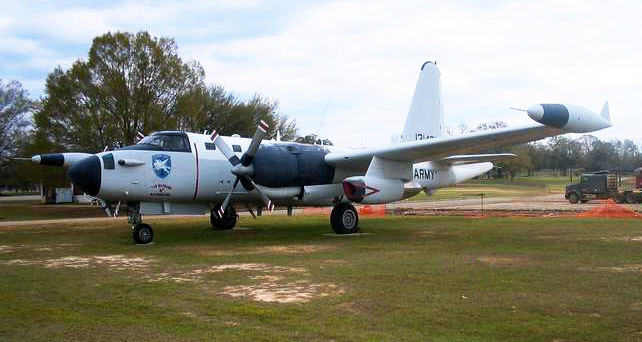
Lockheed produced seven main variants of the P2V. In addition, Kawasaki built the turboprop-powered P-2J in Japan.
;XP2V-1 :Prototype, two built. Powered by two 2300 hp Wright R-3350-8 engines with four-bladed propellers, with armament of two .50 in machine guns in nose, tail and dorsal turrets, and 8000 lb of stores in an internal bomb bay. ;P2V-1 :First production model with R-3350-8A engine. Provision for 16 5 in HVAR or 4 11+3/4 in Tiny Tim rockets underwing; 14 built. ;XP2V-2 :Fifth production P2V-1 modified as a prototype for P2V-2. Powered by water injected R-3350-24W engines. ;P2V-2 :Second production model, powered by two 2800 hp R-3350-24W engines driving three-bladed propellers. Nose turret replaced by "attack" nose fitted with six fixed 20 mm cannon. First eight aircraft retained Bell tail turret fitted with twin .50 (12.7 mm) machine guns, with remaining aircraft using Emerson tail turret with twin 20 mm cannon. 80 built. ;P2V-2N "Polar Bear" :Two P2V-2 modified for polar exploration under Project Ski Jump. Armament removed, with ski landing gear and provision for JATO rockets. Fitted with early MAD gear for magnetic survey purposes. Used for Operation Deep Freeze Antarctic exploration. The specially modified P2Vs had 16 ft long aluminum skis that were attached to the main landing gear units that when retracted, tucked into fairing just below the engines. This way the modified P2Vs could still land on a regular runway surface. ;P2V-2S :One P2V-2 modified as a prototype anti-submarine variant with an AN/APS-20 search radar and additional fuel. ;P2V-3 :Improved patrol bomber with 3200 hp R-3350-26W engines with jet stack engine exhausts. 53 built. ;P2V-3B :Conversions from other P2V-3 models, including P2V-3C and −3W, fitted with the ASB-1 Low Level Radar Bombing System; 16 converted. Redesignated as P-2C in 1962. ;P2V-3C :Stop-gap carrier based one-way nuclear-armed bomber, not intended to return for a landing on a carrier. Fitted with JATO rocket to aid take-off from carrier and more fuel. Nose guns and dorsal turret removed to save weight. 11 P2V-3s and one P2V-2 modified. ;P2V-3W :Airborne Early Warning variant, AN/APS-20 search radar; 30 built. ;P2V-3Z :VIP combat transport with armored cabin in rear fuselage with seats for six passengers. Retained tail turret. Two converted from P2V-3s. ;P2V-4 :Improved anti-submarine aircraft. Fitted with AN/APS-20 search radar and provision for dropping sonobuoys with additional dedicated sonobuoy operator. Underwing tip-tanks added, with searchlight in nose of starboard tip tank. Gun Turrets in tail and dorsal position. First 25 aircraft powered by 3200 hp R-3350-26WA engines, with remaining 27 powered by 3250 hp Wright R-3350-30W turbo-compound engines. 52 built in total. Surviving aircraft redesignated P-2D in 1962. ;P2V-5 :Fitted with Emerson nose turret with two 20 mm cannon replacing solid nose of earlier versions, while retaining dorsal and tail turrets. New, larger, jettisonable tip tanks, with traversable searchlight slaved to nose turret in front of starboard tip-tank and AN/APS-8 radar in nose of port tip-tank. AN/APS-20 search radar under fuselage. Later aircraft featured glazed observation nose and MAD gear in place of nose and tail turrets, and revised crew accommodation, with many earlier aircraft refitted. Dorsal turret often removed. 424 built. ;P2V-5F :Modification with two 3250 lbf J34 jet engines to increase power on take-off, and 3500 hp R-3350-32W piston engines. The J34 engines and R-3350 had a common fuel system burning AvGas rather than having dedicated jet fuel (as did all Neptunes with jets except the Kawasaki P-2J). Four underwing rocket pylons removed but increased 10000 lb weapon load. Redesignated P-2E in 1962. ;P2V-5FD :P2V-5F converted for drone launch missions. All weaponry deleted. Redesignated DP-2E in 1962. ;P2V-5FE :P2V-5F with additional electronic equipment. Redesignated EP-2E in 1962. ;P2V-5FS :P2V-5F with Julie/Jezebel ASW gear, featuring AQA-3 long range acoustic search equipment and Julie explosive echo sounding gear. Redesignated SP-2E in 1962. ;P2V-5JF :P2V-5F modified for weather reconnaissance, to include tropical storm/hurricane/typhoon penetrations, with Airborne Early Warning Squadron THREE (VW-3) and Weather Reconnaissance Squadron FOUR (VW-4) ;AP-2E :Designation applied to P2V-5F with special SIGINT/ELINT equipment used by the US Army's 1st Radio Research Company at Cam Ranh Bay Air Base. Carrying a crew of up to fifteen, the AP-2E was the heaviest P-2, with a take-off weight of up to 80000 lb. Five converted (also designated RP-2E). ;NP-2E :Single P-2E converted as permanent test aircraft. ;OP-2E :Modified for use as part of Operation Igloo White for sensor deployment over South-East Asia with Observation Squadron 67 (VO-67). Fitted with terrain avoidance radar in nose, chaff dispensers, wing mounted gun pods and waist guns. 12 converted. ;P2V-6 :Multi-role version with lengthened weapons bay and provision for aerial minelaying and photo-reconnaissance. Smaller AN/APS-70 radar instead of AN/APS-20. Initially fitted with gun turrets as P2V-5, though retaining the ability to be refitted with glazed nose. A total of 67 were built for the US Navy and France. Redesignated P-2F in 1962. ;P2V-6B :Anti-shipping version with provision to carry two AUM-N-2 Petrel anti-ship missiles. 16 built. Later redesignated P2V-6M then MP-2F in 1962. ;P2V-6F :P2V-6 refitted with J34 jet engines. Redesignated P-2G in 1962. ;P2V-6T :Crew trainer conversion with armament deleted, wingtip tanks often deleted. Redesignated TP-2F in 1962. ;P2V-7 :Last Neptune variant produced by Lockheed, powered by R-3350-32W and J-34 engines. Fitted with lower drag wingtip tanks, AN/APS-20 search radar in a revised radome and a bulged cockpit canopy. Early aircraft were fitted with defensive gun turrets but these were removed as for the P2V-5. 287 were built, including 48 assembled by Kawasaki in Japan. Redesignated P-2H in 1962.
.jpg)
;P2V-7B :15 aircraft with non-glazed nose fitted with four fixed 20 mm cannon for Royal Netherlands Naval Air Service. Subsequently fitted with glazed nose and modified to SP-2H standard. Supplemented by four SP-2H from France. ;P2V-7LP : Four aircraft built with wheel/ski landing gear and JATO gear for Antarctic operations. Redesignated LP-2J in 1962. (No relation to Kawasaki P-2J) ;P2V-7S :Additional ASW/ECM equipment including Julie/Jezebel gear. Redesignated SP-2H in 1962. ;P2V-7U :Naval designation of the RB-69A variant. ;AP-2H :Specialized night and all-weather ground attack variant fitted with FLIR and Low Light TV systems, tail turret, fuselage mounted grenade launchers and downwards firing miniguns. Bombs and napalm carried on underwing pylons. Four converted in 1968 for Heavy Attack Squadron 21 (VAH-21) for operation over South Vietnam. ;DP-2H :P-2H converted for drone launch and control. ;EP-2H :Single P-2H modified with UHF telemetry equipment instead of ASW systems. ;NP-2H :Testbed conversion of P2V-H. ;RB-69A :Five new built and two converted from P2V-7s for CIA covert operations, obtained with USAF help and operated by ROCAF 34th Squadron. Aerial reconnaissance/ELINT platform, modular sensor packages fitted depended on the mission needs. Originally fitted with Westinghouse APQ-56 Side Looking Airborne Radar (SLAR), the APQ-24 search radar, the Fairchild Mark IIIA cameras, the APR-9/13 radar intercept receiver, the QRC-15 DF system, the APA-69A DF display, the APA-74 pulse analyser, the Ampex tape recorder, the System 3 receiver to intercept enemy communications, the APS-54 RWR, a noise jammer, the RADAN system doppler radar navigation, and others. In May 1959, an upgrade program known as Phase VI was approved, and added the ATIR air-to-air radar jammer, replacing APR-9/13 with ALQ-28 ferret system, the QRC-15, 3 14-channel recorders and 1 7-channel high speed recorder to record ELINT systems, the K-band receiver, the ASN-7 navigation computer replacing RADAN, and Fulton Skyhook system. ;Neptune MR.1 :British designation of P2V-5; 52 delivered. ;CP-122 Neptune :RCAF designation of P2V-7.(jet pod not initially fitted to 25 P2V-7 aircraft delivered to RCAF, but subsequently retrofitted) ;P-15 :Brazilian Air Force designation of the P-2E. ;Kawasaki P-2J (P2V-Kai) :Japanese variant produced by Kawasaki for JMSDF with T64 turboprop engines, various other improvements; 82 built.
| Aircraft | Number |
|---|---|
| P2V-1 | 14 |
| P2V-2 | 80 |
| P2V-3 | 53 |
| P2V-3W | 30 |
| P2V-4 | 52 |
| P2V-5 | 424 |
| P2V-6/P-2F | 67 |
| P2V-6B | 16 |
| P2V-7/P-2H | 287 |
| P2V-7B | 15 |
| RB-69A | 5 |
| Neptune MR.1 | 52 |
| P-2J | 82 |
Operators


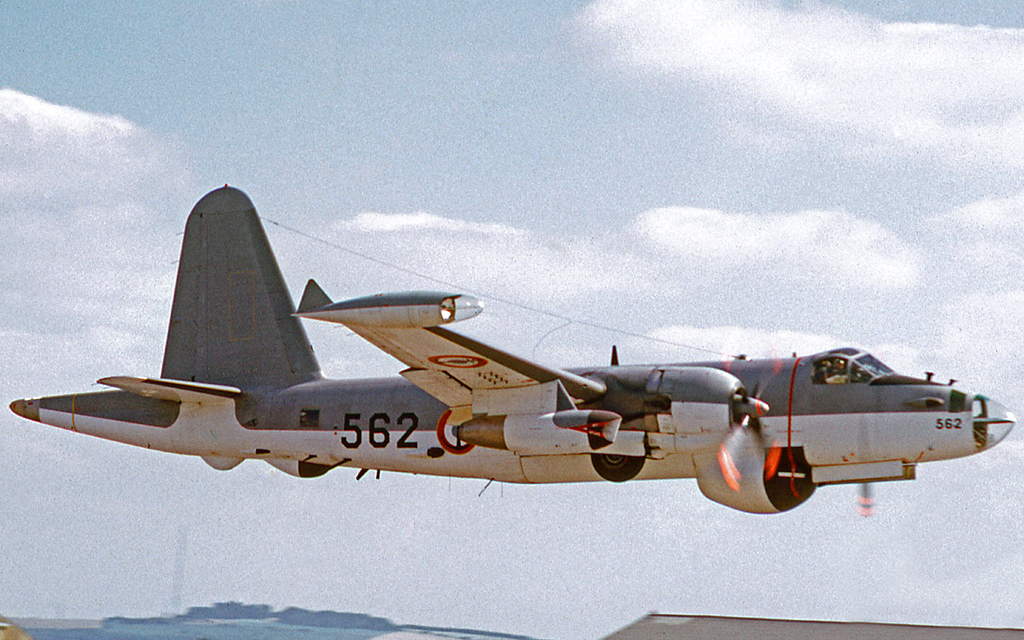

Military operators
;Argentina
- Argentine Navy – Argentine Naval Aviation (16 units)
- Escuadrilla Aeronaval de Exploracion ;Australia
- Royal Australian Air Force
- No. 10 Squadron RAAF
- No. 11 Squadron RAAF ;Brazil
- Brazilian Air Force (14 units)
- 1°/7° Grupo de Aviação ;Canada
- Royal Canadian Air Force
- No. 404 Squadron RCAF
- No. 405 Squadron RCAF
- No. 407 Squadron RCAF ;France
- French Naval Aviation
- 21F Flottilla (P2V-6) BAN Nîmes-Garons
- 22F Flottilla (P2V-6) BAN Nîmes-Garons
- 23F Flottilla (P2V-6) (P2V-7) BAN Lann-Bihoué
- 24F Flottilla (P2V-7) BAN Lann-Bihoué
- 25F Flottilla (P2V-7) BAN Lann-Bihoué
- 8S Escadrille (P2V-6) Base aérienne 185 Hao
- 9S Escadrille (P2V-7) BAN Tontouta
- 12S Escadrille (P2V-7) Base aérienne 185 Hao ;Japan
- Japan Maritime Self-Defense Force
- Air Patrol Squadron 3 (JMSDF)
- Air Patrol Squadron 2 (JMSDF)
- Air Development Squadron 51 (JMSDF) ;Netherlands
- Dutch Naval Aviation Service ;Portugal
- Portuguese Air Force (12 units)
- Esquadra 61, Montijo Air Base
- Detachment 61, Bissalanca Air Base (Portuguese Guinea) and Sal Air Base (Cape Verde)
- Detachment 62, Luanda Air Base (Angola)
- Detachment 63, Beira Air Base (Mozambique) ;Republic of China
- Republic of China Air Force
- 34th Black Bat Squadron ;United Kingdom
- Royal Air Force
- No. 36 Squadron RAF
- No. 203 Squadron RAF
- No. 210 Squadron RAF
- No. 217 Squadron RAF
- No. 236 Operational Conversion Unit RAF ;United States
- United States Army
- United States Marine Corps
- United States Navy
- Central Intelligence Agency operated seven RB-69A in USAF colors.
Civilian operators
- Aero Union
Accidents and incidents
- On 27 November 1950 a P2V-2 crashed while conducting a test run with rockets near Kaena Point in Hawaii. The starboard wing separated from the aircraft. The crew of five died on impact.
- On 6 November 1951, a P2V of VP-6 carrying out a reconnaissance mission over international waters off Vladivostok was attacked and shot down by a number of MiG-15s. All ten crew were killed.
- On 5 January 1952, a Lockheed P2V-2 Neptune (122443) operated by the United States Navy undershot the runway at RAF Burtonwood and collided with a USAF Douglas C-47 (42-100912). One crew member on the Neptune and six others on the C-47 were killed. Fifteen others were injured, eleven on the Neptune and four on the C-47.
- On 18 January 1953, a P2V of VP-22 was shot down off Swatow in the Formosa Straits by Chinese anti-aircraft fire. Eleven of thirteen crewmen were rescued by a US Coast Guard PBM-5 under fire from shore batteries on Nan Ao Tao island. Attempting to takeoff in 8 to 12-foot swell, the PBM crashed. Ten survivors out of nineteen total (including five from the P2V) were rescued by . During the search effort, a PBM-5 from VP-40 received fire from a small-caliber machine gun, and received fire from shore batteries.
- On 17 December 1953, P2V-5 Neptune S/N (BUN 12388) of VP-3 with a nine men crew, disappeared on a patrol flight from Keflavík Airport, an airfield near Iceland capital of Reykjavík. The Neptune took off from Keflavík at 2 pm. Thursday for routine patrol over North Atlantic waters. It was circling back through a storm toward that base when it radioed its last position. The wreck was sighted on Mýrdalsjökull glacier and at least three of the nine men crew were initially reported alive. A United States air rescue plane spotted the wreckage, which was described as "badly broken up". Helicopter lift recovered one body, but bodies of 8 men remain in the frozen wreck until spring (1954). On 14 October 1982, the remains of American crewmen was found 28 years after the crash into the glacier. The wreck was discovered by farmers rounding up sheep, apparently the glacier movement uncovered the wreck. The crew was LT Henry Cason, LT Ishmuel M. Blum, ENS Sven Shieff, AD2 Eddie L. Cater, AN Everett Humbert, AT3 Amos W. Jones, AL2 Robert B. Whale, AO3 Marvin L Baker, ATAN William A. Ward.
- On 4 September 1954, a P2V-5 of VP-19 operating from NAS Atsugi ditched in the Sea of Japan, 40 mi off the coast of Siberia after an attack by two Soviet Air Forces MiG-15s. One crewmen was killed, and the other nine were rescued by a USAF SA-16 Grumman Albatross amphibian.
- On 22 June 1955, a P2V-5 of VP-9, flying a patrol mission from NAS Kodiak, Alaska, was attacked over the Bering Straits by two Soviet Air Forces MiG-15s. The P2V crash-landed on St. Lawrence Island after an engine was set afire. Of the eleven crew members, four sustained injuries due to gunfire and six were injured during the landing. The US government demanded $724,947 in compensation; the USSR finally paid half this amount.
- On 26 September 1955, a P2V-3W (131442), callsign Snowcloud Five, was lost south of Jamaica while attempting to penetrate the center of Hurricane Janet with nine crew and two journalists aboard; despite an extensive search and rescue effort over the next five days involving 3,000 personnel, 60 aircraft, and seven ships, no trace of the aircraft or its occupants was ever found. This remains the only loss of a reconnaissance aircraft during penetration of an Atlantic hurricane. The cause of the crash is unknown, although theories include an incorrect altimeter reading due the low barometric pressure in the hurricane and increased workload due to one of the usual crew members having been replaced by a reporter causing the crew to lose track of their height above the sea.
- On 10 October 1956, a P2V-5 of No. 36 Squadron RAF (WX545) crashed into the side of Beinn na Lice, Mull of Kintyre, southwest Scotland, killing all nine crew members. WX545 was returning from an anti-submarine exercise off Derry, Northern Ireland to its base at RAF Topcliffe in North Yorkshire, England. Beinn na Lice was hidden by fog, and a member of 36 Squadron alleges that the aircraft in the exercise had been ordered not to use radar in inshore waters.
- On 12 April 1957, a P2V-5F of VP-26 crashed on takeoff during a short takeoff practice exercise at NAS Brunswick, Maine. The apparent cause was a runaway varicam elevator control, which caused a hammerhead stall at very low altitude. The aircraft did an overhead loop, reversing its direction, but crashed into the woods near the departure end of the runway next to the base golf course. There were no survivors.
- On 21 July 1957, a US Navy Neptune searching for a sister P2V Neptune crashed near Mount Pra, Italy, near the French border, killing nine airmen. The other P2V for had disappeared two days earlier, 19 July, with 11 on board on a flight from Casablanca to Treviso.
- On 1 February 1958, USAF C-118A 53-3277 collided in mid-air with a US Navy Lockheed P2V Neptune 127723 over Norwalk, California, killing 47 of 49 on board both aircraft and 1 person on the ground.
- On 4 February 1959, RAAF A89-308 crashed at RAAF Richmond, NSW, Australia. All eight crew died. The port engine began to disintegrate, causing a fuel leak in the wheel well. The resulting fire severed the magnesium wing spar, and the aircraft fell from the sky before the crew could bail out.
- On 25 March 1960, an ROCAF RB-69A/P2V-7U (7101/140442/54-4040) crashed into a hill near Kunsan Air Base, South Korea, during a low-level ferry flight from Hsinchu, Taiwan to a staging area in Kunsan, South Korea. All 14 aircrew on board were killed.
- On 6 November 1961, an ROCAF RB-69A/P2V-7U (7099/140440/54-4039) conducting a low-level penetration flight over mainland China was shot down by ground fire over Liaodong peninsula. All 14 aircrew on board were killed in action.
- On 9 November 1961, an P2V-7LP of VX-6 crashed on takeoff from Wilkes Station, Antarctica, where it had refuelled en route to McMurdo Station. Four aircrew and one passenger were killed, with four aircrew surviving.
- On 8 January 1962, a ROCAF RB-69A/P2V-7U(7097/140438/54-4038) crashed into the Korea Bay while conducting ELINT and leaflet dropping missions. All 14 aircrew on board were killed in action.
- On 12 January 1962, a P2V-5 (designation LA-9) of VP-5 flew off course during a patrol over the Denmark Strait and crashed on the Kronborg Glacier in eastern Greenland. All 12 crew were killed. The wreckage was discovered by a party of British geologists in 1966.
- On 19 June 1963, an ROCAF RB-69A/P2V-7U (7105/141233/54-4041) was conducting an ELINT mission over mainland China, and was shot down by PLAAF MiG-17PF over Linchuan, Jiangxi, after being intercepted repeatedly by multiple MiG-17PFs and Tu-4Ps. All 14 aircrew on board were killed in action.
- On 11 June 1964, a RB-69A/P2V-7U (7047/135612/54-4037) was conducting an ELINT mission over mainland China and was shot down by a PLAN-AF MiG-15 over Shandong peninsula after being intercepted by MiG-15s and Il-28s. All 13 aircrew on board were killed in action.
- On 22 January 1965, an RCAF P2V-7 #24115 crashed short of the runway at CFB Summerside, Prince Edward Island, when it ran out of battery power to run the fuel pumps to the J-34 jet engines. The aircraft had lost one reciprocating engine, and the generator failed on the other. Also, because Canadian Neptunes had no other generators, these failures led to the loss of all thrust and the subsequent crash.
- On 22 January 1965, just before midnight, an MLD SP-2H (212) was taken from Vliegkamp Valkenburg, near The Hague, by two young aircraft mechanics lacking any flying experience. They managed to get the plane airborne, but stalled shortly after takeoff. It crashed into the North Sea, a few hundred metres offshore of the fishing town of Katwijk. The investigation report concluded that it was a drunken prank.{{Cite web |trans-title=Neptune 212-V hijacked and killed |access-date=13 November 2018 |archive-date=14 November 2018 |archive-url=https://web.archive.org/web/20181114060551/https://onzevloot.weebly.com/neptune-212-v-gekaapt.html |url-status=dead
- On 3 December 1967, a Lockheed P-2E aircraft departed Naval Air Station Brunswick for a routine patrol flight. At some point, the aircraft developed mechanical problems and received clearance to land at Otis Air Force Base. As the aircraft was making its final approach, it crashed a half mile short of the runway. All twelve men aboard escaped; four of them suffered minor injuries. web |url=https://aviation-safety.net/database/record.php?id=19671203-0|title = ASN Aircraft accident Lockheed P-2H Neptune 148350 Falmouth-Otis AFB, MA (FMH)}}
- On 4 February 1970 at 4:39 a.m, French Navy Lockheed P2V7 Neptune No. 147571 of Flotilla 25F crashed after takeoff, killing all 12 crew members.
- On 15 January 1971, French Navy Lockheed P2V7 Neptune No. 147564 of Flottilla 25F crashed at the start of runway 26 on the Lann-Bihoué naval aeronautics base, in the final phase of a landing in foggy weather, killing 6 of the 10 crew.
- On 15 September 1976, an Argentine Navy Lockheed Neptune aircraft flew on a reconnaissance mission from Rio Gallegos to survey the sea ice conditions in Drake Passage at the beginning of the summer navigation season. The plane crashed in poor weather on the then-uninhabited Livingston Island, Antarctica, killing all 10 aircrew and a civilian television cameraman.
- On 5 September 2008, a Neptune Aviation Services Lockheed Neptune, registered N4235T, crashed soon after takeoff from Reno/Stead Airport, Reno, Nevada. The left engine and then left wing were seen to catch fire before the aircraft crashed. All three crew members on board were killed.
- On 3 June 2012, while engaged in firefighting operations in Utah, a Neptune Aviation Services Lockheed Neptune, registered N14447, crashed. Two crew members were killed.
Surviving aircraft
There are a few Neptunes that have been restored and are on display in museums and parks.
Argentina
;On display ;;SP-2H
- 2-P-112 – Museo Aeronaval (MUAN) of Argentine Naval Aviation. This is the Neptune that tracked HMS Sheffield.
Australia
;Airworthy ;;SP-2H
- 149073 – Historical Aircraft Restoration Society, Illawarra Regional Airport, New South Wales, Australia. Ex A89-273 of No. 10 Squadron RAAF, now civil registered VH-IOY.
- 147566 – Historical Aircraft Restoration Society, Illawarra Regional Airport, New South Wales, Australia. Delivered to French Aeronavale, assigned to Escadrille 12 last based in Tahiti. Currently displaying French Aeronavale colours, now civil registered VH-LRR. ;On Display ;;SP-2H
- 149075 – RAAF Museum, Point Cook, Victoria. Ex A89-275 of No. 10 Squadron RAAF
- 149077 – Queensland Air Museum, Caloundra. Ex A89-277 of No. 10 Squadron RAAF
- 149080 – RAAF Base Townsville entrance, owned by RAAF Museum. Ex A89-280 of No. 10 Squadron RAAF.
- 149081 – Historical Aircraft Restoration Society, Illawarra Regional Airport, New South Wales. Ex A89-281 of No. 10 Squadron RAAF. ;In Storage ;;SP-2H
- 133640 – RAAF Museum, Point Cook, Victoria. Ex A89-302 of No. 11 Squadron RAAF, KU o o in storage for RAAF Museum.
- 145921 – Registered to Valerio, located in Cunderdin, Western Australia, ex-USN, imported into Australia November 1988, converted to firefighting tanker, civil registered VH-NEP. ;Under Restoration ;;SP-2E
- 133640 – Historic Aircraft Restoration Society, Parkes Airport, New South Wales, Australia. Ex A89-302 of No. 11 Squadron RAAF. The oldest Neptune in Australia, it was gifted by the RAAF Museum in 2018, for static restoration. ;;SP-2H
- 149072 – Historic Aircraft Restoration Society, Parkes Airport, New South Wales, Australia. Ex A89-272 of No. 10 Squadron RAAF. Donated to HARS by RAAF in February 2016 for restoration and display at the HARS Parkes satellite facility.
Canada
;On display ;;EP-2H
- 147969 – Greenwood Military Aviation Museum in Nova Scotia, Canada.
Chile
;Under restoration ;;SP-2H
- 147967 – To be displayed is the Neptune /Firestar registered CC-CHU of Heliworks Ltda. Currently dismantled in Concepción/Carriel Sur airport, N703AU/Tanker 03's incorporation into Chile's Museo Nacional Aeronáutico y del Espacio collection at the former Los Cerrillos airport in Santiago, was announced during the ceremony of the 69th Anniversary of Museum on 4 July 2013.
France
;On Display ;;P2V-7
- 334 - Musée de l'air et de l'espace in Paris-Le Bourget Airport ;In Storage ;;P2V-7
- 335 - in the Musée de l'air et de l'espace reserve in Dugny
- 563 - To be retrieved by the Musée de l'air et de l'espace in Paris-Le Bourget Airport. Currently stored on an old airbase in Brienne-le-Château, Aube department
Netherlands
;On display ;;SP-2H
- 201 – on display outside at the Nationaal Militair Museum, Soesterberg.
- 210 - on display outside at Aviodrome Lelystad AirPort. This aircraft was donated to KLM engineering & maintenance for training purposes and was painted in KLM colors. Afterwards transported by barge to Aviodrome and now in partial Dark Sea grey color.
- 216 – gate guardian at the former naval airbase Valkenburg, after closing it was moved to naval airbase De Kooy near Den Helder, The Netherlands.{{Cite web
Portugal
.jpg)
;On display ;;P2V
- 4711 – Museu do Ar, Sintra.
United Kingdom
;On display ;;P-2H
- 204 – Royal Air Force Museum Cosford. former Royal Netherlands Navy, last airworthy airframe donated to the UK in 1982 after arrival of the first P-3c in the Royal Netherlands Navy.
United States
;Airworthy ;;P2V-7/P-2H
- 148360 – Erickson Aircraft Collection in Madras, Oregon ;;P2V-7S/SP-2H
- 145915 – Mid-Atlantic Air Museum in Reading, Pennsylvania. ;On display ;;P2V-1
- 89082 Truculent Turtle – National Museum of Naval Aviation, NAS Pensacola, Florida. ;;P2V-5F/P-2E
- 128392 – NAS Brunswick main gate, former NAS Brunswick, Maine.
- 131410 – NAS Jacksonville Memorial Park, NAS Jacksonville, Florida.
- 131424 – Estrella Warbirds Museum in Paso Robles, California. ;;P2V-5FS/AP-2E
- 131485 – United States Army Aviation Museum at Fort Rucker, Alabama ;;P2V-5FS/SP-2E
- 128402 – Pueblo Weisbrod Aircraft Museum in Pueblo, Colorado. ;;P2V-5/SP-2E
- 128402 – On static display at Moffett Field Museum, Moffett Federal Airfield (former NAS Moffett Field), California.
- 131445 – Tanker 61 Memorial at the Crater Lake–Klamath Regional Airport in Klamath Falls, Oregon.
- 131459 – Dawson Community Airport in Glendive, Montana. ;; ;;P2V-7/P-2H
- 140443 – Yankee Air Museum in Belleville, Michigan
- 147957 – Pima Air and Space Museum, adjacent to Davis-Monthan AFB in Tucson, Arizona.
- 147966 – South Georgia Technical College in Americus, Georgia.
- 147968 – Chico Air Museum in Chico, California. ;;P2V-7S/AP-2H
- 135620 – Pima Air and Space Museum adjacent to Davis-Monthan AFB in Tucson, Arizona. ;;P2V-7S/SP-2H
- 141234 – National Museum of Naval Aviation in NAS Pensacola, Florida.
- 145906 – Gillespie Field Annex of the San Diego Air & Space Museum in San Diego, California.
- 147954 – Museum of Aviation at Robins AFB, Georgia. The P-2 Neptune is painted to represent a USAF/CIA/Taiwan RB-69A.
- 150279 – Gate guard at the Marine Corps Base Hawaii (former MCAS Kaneohe Bay), Hawaii. Relocated from former NAS Barbers Point, Hawaii in 1998 following that base's closure due to BRAC action. ;Under restoration or in storage ;;P2V-5
- 128422 – in storage by Neptune Aviation Services in Missoula, Montana. ;;P2V-5F/P-2E
- 131502 – in storage by Premier Jets in Hillsboro, Oregon.
- 131482 – in storage by Neptune Aviation Services in Missoula, Montana. ;;P2V-5FS/SP-2E
- 131542 – for static display by the Historic Aircraft Restoration Project at former NAS New York / Floyd Bennett Field in Brooklyn, New York. ;;P2V-7/P-2H
- 140154 – in storage by the Museum of Flight and Aerial Firefighting in Greybull, Wyoming.
- 140972 – in storage by Neptune Aviation Services in Missoula, Montana.
- 147949 – in storage by Neptune Aviation Services in Missoula, Montana.
- 148341 – in storage by Neptune Aviation Services in Missoula, Montana.
- 148346 – in storage by Neptune Aviation Services in Missoula, Montana.
- 148356 – in storage by Neptune Aviation Services in Missoula, Montana.
- 148359 – in storage by Neptune Aviation Services in Missoula, Montana.
- 148362 – in storage by Neptune Aviation Services in Missoula, Montana. ;;P2V-7S/SP-2H
- 147965 – in storage by Neptune Aviation Services in Missoula, Montana.
- 148339 – in storage by Neptune Aviation Services in Missoula, Montana.
Specifications (P-2H / P2V-7)

|prime units?=imp General characteristics
|max takeoff weight lb=79895 |max takeoff weight note= Powerplant
Performance
|never exceed speed mph= |never exceed speed note= |minimum control speed mph= |minimum control speed note= |wing loading lb/sqft= |fuel consumption lb/mi= |power/weight= |thrust/weight=
- Take-off run: ft
- Take-off distance to 50 ft: ft
- Landing run: ft
- Landing distance from 50 ft: ft-- Armament --
References
Notes
Citations
Bibliography
- Baugher, Joe. US Navy and US Marine Corps Aircraft Serial Numbers and Bureau Numbers--1911 to Present Cited by: https://aviation-safety.net/database/record.php?id=19520105-0
- Burden, Rodney A.; Draper, Michael I.; Rough, Douglas A.; Smith, Colin R.; Wilton, David. Falklands: The Air War. British Aviation Research Group, 1986. .
- Donald, David, ed. "Lockheed P2V Neptune". The Complete Encyclopedia of World Aircraft. New York: Barnes & Noble Books, 1997.
- Eden, Paul. "Lockheed P2V Neptune". Encyclopedia of Modern Military Aircraft. London: Amber Books, 2004. .
- Francillon, René J. Lockheed Aircraft since 1913. London: Putnam, 1982. .
- Howard, Peter J. "The Lockheed Neptune in R.A.F. Service: Part 1". Air Pictorial, Vol. 34, No. 8, August 1972, pp. 284–289, 294.
- Howard, Peter J. "The Lockheed Neptune in R.A.F. Service: Part 2". Air Pictorial, Vol. 34, No. 9, September 1972, pp. 356–360.
- Mutza, Wayne. "Army Neptunes...Over South East Asia". Air Enthusiast, Twenty-nine, November 1985 – February 1986. pp. 35–42, 73–77. ISSN 0143-5450.
- Scutts, Jerry. "Tractable Turtle: The Lockheed Neptune Story: Part 1". Air International, Vol. 48, No. 1, January 1995. pp. 42–46. ISSN 0306-5634.
- Scutts, Jerry. "Tractable Turtle: The Lockheed Neptune Story: Part 2". Air International, Vol. 48, No. 2, February 1995. pp. 80–87. ISSN 0306-5634.
- Swanborough, Gordon and Peter M. Bowers. United States Navy Aircraft since 1911. London: Putnam, Second edition, 1976. .
- Sullivan, Jim, P2V Neptune in action. Carrollton, Texas: Squadron/Signal Publications, 1985. .
- Wilson, Stewart. Combat Aircraft since 1945. Fyshwick, ACT, Australia: Aerospace Publications Pty Ltd., 2000. .
References
- "IT'S P2S-DAY!, Neptune Aviation Services".
- Scutts ''Air International'' January 1995, pp. 42–43.
- Francillon 1982, pp. 258–259.
- Francillon 1982, p. 259.
- (19 March 1949). "Big Navy bomber flies from ship". Spokane Daily Chronicle.
- [http://www.history.navy.mil/avh-vol2/chap3-5.pdf "Third VP-22."] {{webarchive. link. (9 July 2011 ''Dictionary of American Naval Aviation Squadrons, Volume 2.'' Retrieved: 22 April 2011.)
- "Chart of Strategic Nuclear Bombs". strategic-air-command.com.
- Swanborough and Bowers 1976, p. 458.
- Baugher, Joe. [http://www.joebaugher.com/navy_serials/thirdseries15.html "U.S. Navy/U.S. Marine Corps Aircraft Bureau Numbers (Third Series: 15)."] {{webarchive. link. (4 October 2017 ''www.joebaugher.com''. Retrieved: 4 October 2010.)
- Baugher, Joe. [http://www.joebaugher.com/navy_serials/thirdseries19.html "U.S. Navy/U.S. Marine Corps Aircraft Bureau Numbers (Third Series: 19)."] {{webarchive. link. (8 October 2010 ''www.joebaugher.com''. Retrieved: 4 October 2010.)
- Mutza ''Air Enthusiast'' Twenty-nine, p. 42.
- Mutza ''Air Enthusiast'' Twenty-nine, p. 77.
- Pocock, Chris. ''The Black Bats: CIA Spy Flights Over China From Taiwan, 1951–1969''. Atglen, Pennsylvania: Schiffer Publishing, 2010. {{ISBN. 978-0-7643-3513-6.
- (September 2022). "RAAF Neptunes and the Vietnam War". History and Heritage – Air Force.
- (1995). "The RAAF in Vietnam: Australian Air Involvement in the Vietnam war, 1962-1975". Allen & Unwin, in association with the Australian War Memorial.
- [http://www.histarmar.com.ar/Armada%20Argentina/AviacionNaval/AS-Neptune.htm "AS Neptune."] {{webarchive. link. (28 October 2007 ''Historia y Arqueologia Marítima''. Retrieved: 15 July 2010.)
- Burden et al. 1986, pp. 47–48.
- Proc, Jerry. [http://jproc.ca/rrp/rrp3/neptune.html "The Canadian Neptune P2V7."] {{webarchive. link. (28 March 2016 ''jproc.ca'', 8 November 2009. Retrieved: 21 February 2016.)
- Howard ''Air Pictorial'' August 1972, p. 284.
- Howard ''Air Pictorial'' August 1972, p. 285.
- Howard ''Air Pictorial'' September 1972, p. 360.
- Howard ''Air Pictorial'' August 1972, pp. 285–286.
- (12 September 2018). "Service history of the Lockheed Neptune with the MLD". Ronald's photo site.
- {{harvnb. Ullings. 1982
- {{harvnb. Ullings. 1982
- {{harvnb. Ullings. 1982
- Chaney, Rob. [http://billingsgazette.com/news/state-and-regional/montana/article_fe36b3c8-b2eb-598f-a694-fc831449f6fc.html#ixzz1xsMMZwgg "Neptune Aviation wins contract for 2 more retardant bombers."] {{webarchive. link. (11 May 2018 ''[[The Billings Gazette]]'', 14 June 2012. Retrieved: 15 June 2012.)
- Sullivan 1985, pp. 7–9.
- Scutts ''Air International'' January 1995, p. 43.
- Francillon 1982, p. 260.
- Sullivan 1985, p. 12.
- [https://books.google.com/books?id=ANkDAAAAMBAJ&dq=true&pg=PA121 "Skis for Navy Arctic Plane."] ''Popular Mechanics'', February 1950, p. 121.
- Francillon 1982, p. 261.
- Scutts ''Air International'' January 1995, p. 45.
- Sullivan 1985, p. 16.
- Francillon 1982, p. 262.
- Sullivan 1985, p. 21.
- Sullivan 1985, p. 27.
- Francillon 1982, p. 263.
- Scutts ''Air International'' January 1995, p. 46.
- Francillon 1982, pp. 263–264.
- Francillon 1982, p. 264.
- "Lockheed P2V Neptune Patrol Colour Schemes 1955-1959".
- Scutts ''Air International'' February 1995, p. 82.
- Mutza ''Air Enthusiast'' Twenty-nine, pp. 39–40.
- Scutts ''Air International'' February 1995, p. 81.
- Sullivan 1985, p. 70.
- Sullivan 1985, p. 43.
- Scutts ''Air International'' February 1995, p. 87.
- Scutts ''Air International'' February 1995, p. 86.
- Francillon 1982, p. 266.
- Francillon 1982, p. 267.
- Goebel, Greg. {{usurped
- Scutts ''Air International'' February 1995, pp. 80–81.
- [http://www.designation-systems.net/non-us/canada.html "Canadian Military Aircraft Designations."] {{webarchive. link. (2 March 2012 ''Designation-systems.net''. Retrieved: 15 July 2010.)
- "Brazilian Military Aircraft Designations".
- [http://www.histarmar.com.ar/Armada%20Argentina/AviacionNaval/AS-Neptune.htm "Lockheed SP-2H Neptune" (in Spanish).] {{webarchive. link. (28 October 2007 ''Historia y Arqueologia Marítima'' website. Retrieved: 15 July 2010.)
- "VPNAVY - VP-4 Mishap Summary Page - VP Patrol Squadron".
- [http://www.spyflight.co.uk/p2v.htm "Lockheed P2V/RB69A Neptune."] {{webarchive. link. (13 October 2016 ''Spyflight''. Retrieved: 22 April 2011.)
- "ASN Aircraft accident Lockheed P2V-2 Neptune 122443 Burtonwood RAF Station (BUT)".
- [http://www.americanmilitaryhistorymsw.com/blog/435065-cold-war-incidents-involving-us-navy-aircraft/ "Cold War Incidents Involving U.S. Navy Aircraft, Date: 18 Jan 1953 Aircraft: P2V-5 Squadron: VP-22."] ''American Military and Naval History.'' Retrieved: 22 April 2011.
- van Waarde, Jan. [http://www.vpnavy.com/vp9_mishap.html "VP-9 Mishap."] {{webarchive. link. (22 July 2011 ''VPNAVY'', 24 January 2011. Retrieved: 22 April 2011.)
- [http://www.americanmilitaryhistorymsw.com/blog/435065-cold-war-incidents-involving-us-navy-aircraft/ "Cold War Incidents Involving U.S. Navy Aircraft, Date: 22 Jun 1955 Aircraft: P2V-5 Squadron: VP-9."] ''American Military and Naval History.'' Retrieved: 22 April 2011.
- "ASN Wikibase Occurrence # 334819". [[Flight Safety Foundation]].
- "The Lost Hurricane Hunters: September 26th, 1955". Wunderground.
- Swanson, Bob. (23 October 2005). "Answers archive: Hurricane history and climatology". USA Today.
- Bill, Murray. (26 September 2009). "1955: Hurricane Janet and the Hurricane Hunters". The Alabama Weather Blog.
- "Lockheed Neptune WX545". Gordon Lyons.
- "Lockheed Neptune M.R. Mk.1 WX545 of No.36 Squadron, RAF, crashed on the north western edge of Beinn na Lice on the 10th October 1956". Peak District Air Accident Research.
- "ASN Wikibase Occurrence # 334615". [[Flight Safety Foundation]].
- name Sederquist, Carl A. AT3 Fasron 108
- by Associated Press article in New York Times, 22 July 1957.
- [http://www.radiocom.net/vx6/billy439.pdf "The Crash of Buno 140439."] {{webarchive. link. (9 July 2011 ''radiocom.net.'' Retrieved: 20 May 2012.)
- (2 December 2010). "The loss, discovery, and rediscovery of the crew of US Navy LA-9 at Kronborg Glacier, east Greenland". Polar Record.
- (1984). "SIXTY YEARS The RCAF and Air Command 1924 - 1984". CANAV Books.
- "ASN Aircraft accident Lockheed P-2H Neptune 148350 Falmouth-Otis AFB, MA (FMH)".
- Ivanov, L. [http://livingston-island.weebly.com/ General Geography and History of Livingston Island.] {{webarchive. link. (8 July 2015 In: ''Bulgarian Antarctic Research: A Synthesis''. Eds. C. Pimpirev and N. Chipev. Sofia: St. Kliment Ohridski University Press, 2015. pp. 17-28. {{ISBN). 978-954-07-3939-7
- link. (1 July 2011 ''Aviation Safety Network''. Retrieved: 11 January 2011.)
- [https://web.archive.org/web/20120605015002/http://usnews.msnbc.msn.com/_news/2012/06/03/12038566-air-tanker-crashes-while-battling-utah-blaze?lite "Air tanker crashes while battling Utah blaze."] ''MSNBC.com.'' Retrieved: 3 June 2012.
- [http://www.aero-web.org/locator/manufact/lockheed/p-2.htm "Lockheed P-2s On Display."] {{webarchive. link. (20 December 2007 ''AeroWeb''. Retrieved: 3 October 2010.)
- [http://www.museoaeronaval.ara.mil.ar/Parque/Parque%20de%20Aeronaves/Neptune/neptune.htm "SP-2H serial 2-P-112."] {{webarchive. link. (30 July 2009 ''Museo Aeronaval''. Retrieved: 3 October 2010.)
- [https://hars.org.au/lockheed-p2h-p2v-7-neptune/ "Lockheed SP2-H (P2V-7) Neptune."] {{webarchive. link. (18 November 2017 ''Historical Aircraft Restoration Society''. Retrieved: 18 November 2017.)
- "Archived copy".
- warbirdsresourcegroup.org, Scott Rose. "Lockheed P2V Neptune Registry - A Warbirds Resource Group Site".
- "ADF Serials - Neptune".
- "QAM AIRCRAFT - Lockheed SP-2H Neptune A89-277".
- "A89-280 - The Lockheed File".
- "RAAF Museum: Aircraft in Storage:Lockheed Neptune A89-302".
- "Aircraft Data VH-NEP, 1956 Lockheed P2V-7S Neptune C/N 726-7192".
- Henniger, Mike. "Aerial Visuals - Airframe Dossier - Lockheed P2V-7 Neptune, s/n 145921 USN, c/n 7192, c/r VH-NEP {1}".
- "Aircraft register search | Civil Aviation Safety Authority".
- (29 March 2013). "Warbirds based in Western Australia".
- (2 January 2019). "Australia's Oldest Neptune Moves to HARS Parkes Aviation Museum".
- (11 February 2016). "RAAF Gifts Neptune to HARS (Parkes) - Historical Aircraft Restoration Society". HARS Aviation Museum.
- "Archived copy".
- [http://www.gmam.ca/neptune--cp-127-.html "Neptune CP 127"] {{webarchive. link. (1 February 2015 Greenwood Military Aviation Museum Retrieved: 25 December 2014.)
- [http://modocharlie.com/2013/07/aniversario-69-del-museo-nacional-aeronautico-y-del-espacio-de-chile/#.UeoAII0z1Ao "P-2 Neptune/147976"] {{webarchive. link. (27 August 2013 ''69th Anniversary of Chile's Air & Space Museum (in Spanish)'' Retrieved: 25 December 2014.)
- [https://www.avionslegendaires.net/2023/09/actu/le-vieux-lockheed-p2v-neptune-de-brienne-le-chateau-va-t-il-etre-sauve/] ''https://www.avionslegendaires.net/'' Retrieved: 20 September 2023.
- [https://france3-regions.francetvinfo.fr/grand-est/aube/le-dernier-des-avions-abandonnes-de-l-aube-bientot-rapatrie-au-musee-du-bourget-2839013.html] ''France 3 Régions'' Retrieved: 17 September 2023.
- [https://www.nmm.nl/zoeken-in-de-collectie/detail/471413/ SP-2 Neptune / 201"] {{webarchive. link. (15 October 2017 ''Nationaal Militair Museum'' Retrieved: 14 October 2017.)
- [http://www.rafmuseum.org.uk/cosford/collections/aircraft/lockheed-sp-2h-neptune.cfm "P2V Neptune s/n 204."] {{webarchive. link. (29 November 2009 ''RAF Museum Cosford''. Retrieved: 2 April 2012.)
- [https://registry.faa.gov/AircraftInquiry/Search/NNumberResult?nNumberTxt=N360RR "FAA Registry: N360RR"] ''FAA.gov'' Retrieved: 18 August 2021.
- [http://www.ericksoncollection.com/aircraft/#/lockheed-p2v-7-neptune/ "P2V Neptune/Bu. 148360"] ''Erickson Aircraft Collection'' Retrieved: 19 August 2014.
- [https://registry.faa.gov/AircraftInquiry/Search/NNumberResult?nNumberTxt=N45309 "FAA Registry: N45309"] ''FAA.gov'' Retrieved: 18 August 2021.
- [http://www.maam.org/neptune/p2_1.html "P2V Neptune/Bu. 145915"] {{Webarchive. link. (25 November 2016 ''Mid-Atlantic Air Museum'' Retrieved: 19 August 2014.)
- [https://www.navalaviationmuseum.org/aircraft/p2v-neptune-truculent-turtle/ "P2V Neptune/Bu. 89082."] ''National Museum of Naval Aviation.'' Retrieved: 29 October 2019.
- [http://aerialvisuals.ca/LocationDossier.php?Serial=2696 "P2V Neptune/128392."] ''aerialvisuals.ca'' Retrieved: 2 July 2015.
- [https://www.cnic.navy.mil/Regions/cnrse/installations/nas_jacksonville/about/history/aircraft_heritage_park1/ "P2V Neptune/Bu. 131410."] ''Aircraft Heritage Park.'' Retrieved: 2 July 2015.
- "Lockheed P2V-5F Neptune".
- [http://www.armyaviationmuseum.org/index.php/museum/aircraft-collection/2-uncategorised/64-fixed-wing "P2V Neptune/Bu. 131485."] {{Webarchive. link. (22 December 2016 ''U.S. Army Aviation Museum.'' Retrieved: 20 August 2014.)
- [http://www.pwam.org/images/display/p2v5nep.jpg "P2V Neptune/Bu. 128402."] {{Webarchive. link. (31 October 2013 ''Pueblo Weisbrod Aircraft Museum.'' Retrieved: 2 April 2012.)
- "Moffet Field Historic Society".
- "Airframe Dossier - Lockheed SP-2E Neptune, s/n 131445 USN, c/n 5326, c/r N9855F".
- (11 September 2018). "Warbird Makes Final Flight". Herald and News.
- "Airframe Dossier - Lockheed SP-2E Neptune, s/n 131459 USN, c/n 5340, c/r N96278".
- (9 August 2018). "Final Flight". Glendive Ranger Review.
- "Aircraft Collection".
- [http://www.pimaair.org/aircraft-by-name/item/lockheed-p2v-neptune "P2V Neptune/Bu. 147957."] {{Webarchive. link. (3 July 2015 ''Pima Air and Space Museum.'' Retrieved: 2 July 2015.)
- [http://aerialvisuals.ca/LocationDossier.php?Serial=5863 "P2V Neptune/Bu. 147966."] ''aerialvisuals.ca'' Retrieved: 2 July 2015.
- [http://www.pimaair.org/aircraft-by-name/item/lockheed-ap-2h-neptune "P2V Neptune/Bu. 135620."] {{Webarchive. link. (3 July 2015 ''Pima Air and Space Museum.'' Retrieved: 2 July 2015.)
- link. (5 July 2017 ''National Museum of Naval Aviation.'' Retrieved: 19 August 2014.)
- "San Diego Air & Space Museum welcomes iconic P2V Neptune "Tanker 43"".
- "Airframe Dossier - Lockheed SP-2H Neptune, s/n 145906 USN, c/n 726-7168, c/r N443NA".
- [http://www.museumofaviation.org/RB69.php "P-2H Neptune/Bu. 147954."] {{Webarchive. link. (23 September 2010 ''Museum of Aviation, Robins AFB.'' Retrieved: 3 October 2010.)
- [http://aerialvisuals.ca/LocationDossier.php?Serial=2316 "P2V Neptune/Bu. 150279."] ''aerialvisuals.ca'' Retrieved: 2 July 2015.
- [https://registry.faa.gov/AircraftInquiry/Search/NNumberResult?nNumberTxt=N1386C "FAA Registry: N1386C"] ''FAA.gov'' Retrieved: 18 August 2021.
- [https://registry.faa.gov/AircraftInquiry/Search/NNumberResult?nNumberTxt=202EV "FAA Registry: N202EV"] ''FAA.gov'' Retrieved: 18 August 2021.
- [https://registry.faa.gov/AircraftInquiry/Search/NNumberResult?nNumberTxt=N410NA "FAA Registry: N410NA"] ''FAA.gov'' Retrieved: 18 August 2021.
- [http://www.williammaloney.com/Aviation/FloydBennettField/index.htm "P2V Neptune/Bu. 131542."] ''williammaloney.com/Aviation'' Retrieved: 19 August 2014.
- [https://registry.faa.gov/AircraftInquiry/Search/NNumberResult?nNumberTxt=N8056D "FAA Registry: N8056D"] ''FAA.gov'' Retrieved: 18 August 2021.
- [https://registry.faa.gov/AircraftInquiry/Search/NNumberResult?nNumberTxt=N128HP "FAA Registry: N128HP"] ''FAA.gov'' Retrieved: 18 August 2021.
- [https://registry.faa.gov/AircraftInquiry/Search/NNumberResult?nNumberTxt=N949RR "FAA Registry: N949RR"] ''FAA.gov'' Retrieved: 18 August 2021.
- [https://registry.faa.gov/AircraftInquiry/Search/NNumberResult?nNumberTxt=N122HP "FAA Registry: N122HP"] ''FAA.gov'' Retrieved: 18 August 2021.
- [https://registry.faa.gov/AircraftInquiry/Search/NNumberResult?nNumberTxt=N2216S "FAA Registry: N2216S"] ''FAA.gov'' Retrieved: 18 August 2021.
- [https://registry.faa.gov/AircraftInquiry/Search/NNumberResult?nNumberTxt=N2218E "FAA Registry: N2218E"] ''FAA.gov'' Retrieved: 18 August 2021.
- [https://registry.faa.gov/AircraftInquiry/Search/NNumberResult?nNumberTxt=N2218Q "FAA Registry: N2218Q"] ''FAA.gov'' Retrieved: 18 August 2021.
- [https://registry.faa.gov/AircraftInquiry/Search/NNumberResult?nNumberTxt=N362RR "FAA Registry: N362RR"] ''FAA.gov'' Retrieved: 18 August 2021.
- [https://registry.faa.gov/AircraftInquiry/Search/NNumberResult?nNumberTxt=N63819 "FAA Registry: N63819"] ''FAA.gov'' Retrieved: 18 August 2021.
- [https://registry.faa.gov/AircraftInquiry/Search/NNumberResult?nNumberTxt=N714AU "FAA Registry: N714AU"] ''FAA.gov'' Retrieved: 18 August 2021.
- Wilson 2000, p. 82.
- "The Incomplete Guide to Airfoil Usage".

This article was imported from Wikipedia and is available under the Creative Commons Attribution-ShareAlike 4.0 License. Content has been adapted to SurfDoc format. Original contributors can be found on the article history page.
Ask Mako anything about Lockheed P-2 Neptune — get instant answers, deeper analysis, and related topics.
Research with MakoFree with your Surf account
Create a free account to save articles, ask Mako questions, and organize your research.
Sign up freeThis content may have been generated or modified by AI. CloudSurf Software LLC is not responsible for the accuracy, completeness, or reliability of AI-generated content. Always verify important information from primary sources.
Report