From Surf Wiki (app.surf) — the open knowledge base
Litija
| Field | Value | |
|---|---|---|
| name | Litija | |
| native_name_lang | sl | |
| settlement_type | Town | |
| image_skyline | {{Photomontage | position=center |
| photo1a | Litija iz zraka.jpg | |
| photo2a | Saint Nicholas church in Litija (6).jpg | |
| photo2b | Litija library.jpg | |
| photo3a | MŠD 14686 (2).jpg | |
| photo3b | Valvazorjev trg 5 in Litija (1).jpg | |
| photo4a | SLO-Litija5.JPG | |
| size | 270 | |
| spacing | 1 | |
| border | 1 | |
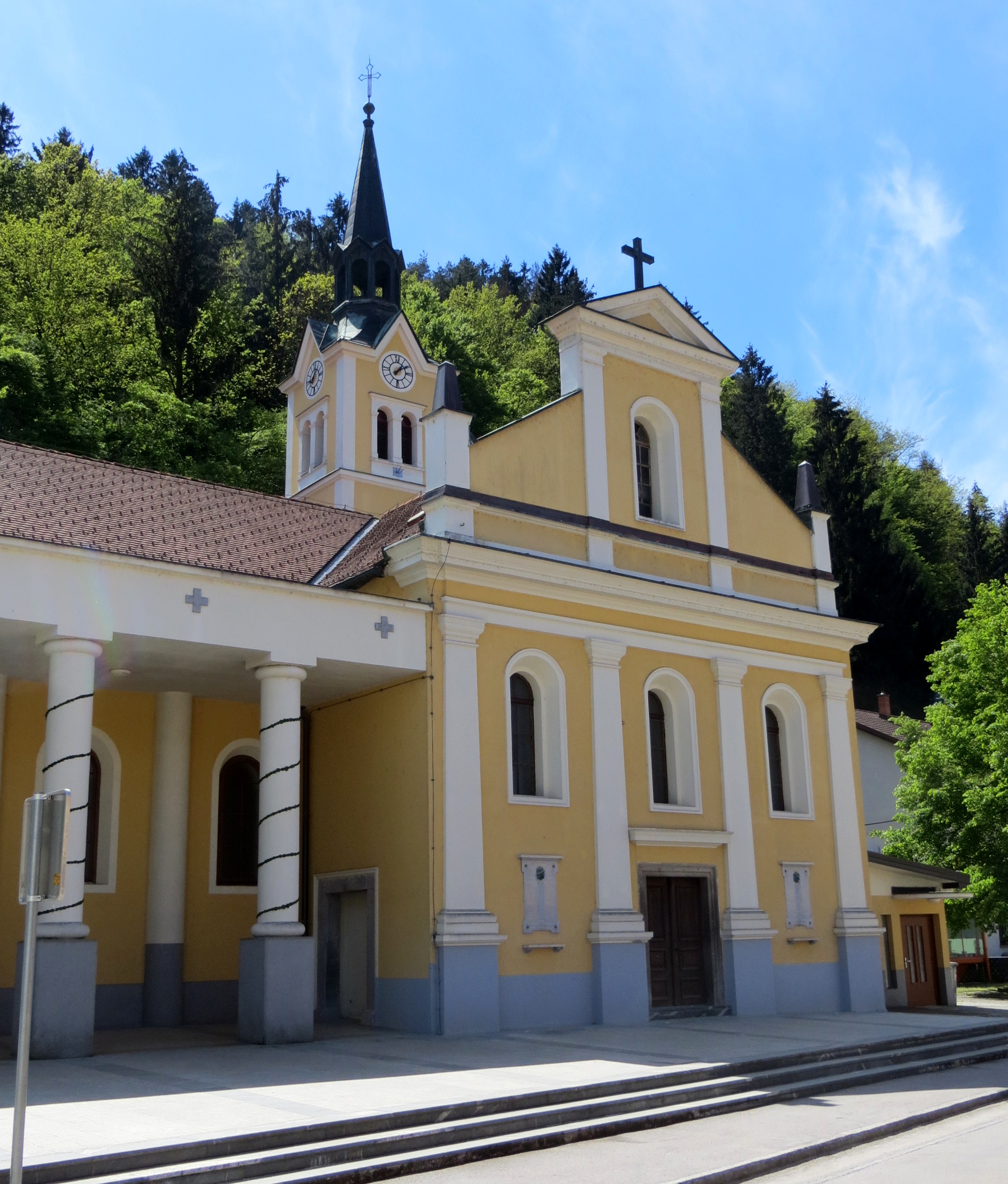
| image_caption | From top, left to right: Overview of Litija, St. Nicholas' Church, Library, Turn Castle, Old town house, Litija Riverbank | |
| image_shield | Grb Občine Litija.jpg | |
| pushpin_map | Slovenia | |
| pushpin_map_caption | Location of Litija in Slovenia | |
| coordinates | ||
| subdivision_type | Country | |
| subdivision_name | Slovenia | |
| subdivision_type1 | Traditional region | |
| subdivision_name1 | Upper Carniola | |
| subdivision_type2 | Statistical region | |
| subdivision_name2 | Central Sava | |
| subdivision_type3 | Municipality | |
| subdivision_name3 | Litija | |
| seat_type | ||
| leader_title | Mayor | |
| leader_name | Franci Rokavec | |
| unit_pref | Metric | |
| area_total_km2 | 5.3 | |
| population_footnotes | ||
| population_total | 6505 | |
| population_as_of | 2013 | |
| population_density_km2 | 1231 | |
| timezone1 | CET | |
| utc_offset1 | +01 | |
| timezone1_DST | CEST | |
| utc_offset1_DST | +02 | |
| registration_plate | LJ | |
| website |
Litija (; ) is a town in the Litija Basin in central Slovenia. It is the seat of the Municipality of Litija. It is located in the valley of the Sava River, east of the capital Ljubljana, in the traditional region of Upper Carniola. The entire municipality is now included in the Central Sava Statistical Region; until January 2014 it was part of the Central Slovenia Statistical Region. The town is home to about 6,500 people.
Name
Litija was mentioned in written documents in 1256 as apud Litigiam and apud Lvtyam (and as Lutya in 1363, Littai in 1431, Luttey in 1444, and propre Lutiam in 1480). Medieval transcriptions indicate that the name was originally *Ljutija, derived from *Ľutoviďa (vьsь) (literally, 'Ľutovidъ's village'). Suggestions that -ija is a suffix or that the name is derived from German Lutte '(mining) drain' are less likely. Other pseudoetymologies include Johann Weikhard von Valvasor's suggestion that the name evolved from litus, the Latin word for 'riverbank'. The town was officially known as Littai in German until 1918.
History
Litija developed as a trading post between Trieste, Ljubljana, and Croatia. The town gained market rights in the 14th century. In Roman times mining developed in Litija and remained one of the primary sources of income until the 1965, when the biggest of the mines closed. In 1849 the Austrian Southern Railway reached Litija and boosted its economy. This development, however, also meant a decline in some of the traditional local professions. The Litija post office was opened in December 1852. After the Second World War, Litija annexed the formerly independent settlements of Podsitarjevec, Gradec, Grbin, and Podkraj.
Landmarks
The parish church in the settlement is dedicated to Saint Nicholas and belongs to the Roman Catholic Archdiocese of Ljubljana. The current building was built in 1884 and extended in 1997.
Notable people
Notable people that were born or lived in Litija include:
- France Bezlaj (1910–1993), linguist
- Luka Svetec (1826–1921), politician
- Peter Jereb (1867–1951), composer
- Viktor Parma (1858–1924), composer
- Rudolf Badjura (1881–1963), writer and mountaineer
- Mira Pregelj (1905–1966), painter
- Milan Borišek (1920–1950), glider pilot
Gallery
File:Litija Turn.jpg|Turn Castle File:SLO-Litija5.JPG|Litija lies on both banks of the Sava River Litija_2021.jpg|Downtown Litija in 2021
References
References
- ''Leksikon občin kraljestev in dežel zastopanih v državnem zboru,'' vol. 6: ''Kranjsko''. 1906. Vienna: C. Kr. Dvorna in Državna Tiskarna, pp. 90, 92–93.
- "Litija, Litija". Statistical Office of the Republic of Slovenia.
- Snoj, Marko. 2009. ''Etimološki slovar slovenskih zemljepisnih imen''. Ljubljana: Modrijan and Založba ZRC, pp. 236–237.
- (May 12, 1855). "Starozgodovinski pomenki". Kmetijske in rokodelske novice.
- (1876). "Geschichte Krains von der ältesten Zeit bis auf das Jahr 1813. Vierter Theil". Ig. v. Kleinmayr & Fed. Bamberg.
- Klein, Wilhelm. 1967. ''Die postalischen Abstempelungen auf den österreichischen Postwertzeichen-Ausgaben 1867, 1883 und 1890.''
- Handbook of Austria and Lombardy-Venetia Cancellations on the Postage Stamp Issues 1850-1864, by Edwin MUELLER, 1961.
- Savnik, Roman, ed. 1971. ''Krajevni leksikon Slovenije'', vol. 2. Ljubljana: Državna založba Slovenije, pp. 270–272.
- [http://rkd.situla.org/ Slovenian Ministry of Culture register of national heritage] reference number ešd 1970
This article was imported from Wikipedia and is available under the Creative Commons Attribution-ShareAlike 4.0 License. Content has been adapted to SurfDoc format. Original contributors can be found on the article history page.
Ask Mako anything about Litija — get instant answers, deeper analysis, and related topics.
Research with MakoFree with your Surf account
Create a free account to save articles, ask Mako questions, and organize your research.
Sign up freeThis content may have been generated or modified by AI. CloudSurf Software LLC is not responsible for the accuracy, completeness, or reliability of AI-generated content. Always verify important information from primary sources.
Report