From Surf Wiki (app.surf) — the open knowledge base
List of World Chess Championships
none

none
The World Chess Championship has taken various forms over time, including both match and tournament play. While the concept of a world champion of chess had already existed for decades, with several events considered by some to have established the world's foremost player, an event explicitly held to decide a world champion did not take place until 1886. World Championships were initially privately organized matches, with each requiring the consent of the incumbent champion to take place. After 1948, the International Chess Federation (FIDE) began organizing the Championship under its auspices. The championship was fixed to a three-year cycle, with each challenger decided by a Candidates Tournament. In 1993, the short-lived Professional Chess Association (PCA) split from FIDE, and as a result there were two competing World Championship titles between 1993 and 2006.
Key
| Date | † | ‡ | # | ✻ | Winner | Score | Runner-up | Ref |
|---|---|---|---|---|---|---|---|---|
| The year the event took place, further disambiguated as needed | ||||||||
| Event was a tournament, as opposed to a match. | ||||||||
| Event resulted in a draw, with the champion retaining the title. | ||||||||
| Scheduled event did not take place. | ||||||||
| Event began, but was abandoned without any result. | ||||||||
| The winner of the event, or the champion otherwise retaining the title. Numerals denote the updated number of event wins or title defences by the champion. | ||||||||
| The performance of the eventual champion. Segments such as tiebreaks are listed sequentially. Head-to-head tournament results are given in a footnote. | ||||||||
| The second-place finisher of the event, or the challenger for a match without a winner | ||||||||
| References and footnotes corresponding to the event |
Predecessor events (before 1886)
Chess was first introduced to Europe during the 9th century. In the early modern era, following the solidification of the modern rules of chess, the game continued to carry consistent prestige and public interest. While numerous players have been characterized as the game's strongest over the centuries, the idea of an international chess match or tournament did not occur until the 18th century, and did not materialize until the 19th century. While the following events did not have the title of World Champion at stake, they have been recognized either at the time or in retrospect as indicating the world's leading player.
| Date | Location | Winner | Score | Runner-up | Format | Ref | 1834 | 1843 | 1851† | 1858 | 1862† | 1866 | 1883† | |||
|---|---|---|---|---|---|---|---|---|---|---|---|---|---|---|---|---|
| UK London | France Louis de La Bourdonnais | 187456½5½11½6½7½4½45 | UK Alexander McDonnell | Casual play | ||||||||||||
| France Paris | UK Howard Staunton | 138 | France Pierre Saint-Amant | First to 11 wins | ||||||||||||
| UK London | Prussia Adolf Anderssen | 156{{efn | group=ledger1 | {{csl | embedded=yes | 2½½ Kieseritzky | 42 Szén | 41 Staunton | 4½2½ Wyvill | UK Marmaduke Wyvill | Single-elimination tournament with 16 players | |||||
| France Paris | US Paul Morphy | 83 | Prussia Adolf Anderssen | First to 7 wins | ||||||||||||
| UK London | Prussia Adolf Anderssen | 11½1½ | German Confederation Louis Paulsen | Round-robin tournament with 14 players | ||||||||||||
| UK London | Austrian Empire Wilhelm Steinitz | 86 | Prussia Adolf Anderssen | Best of 15 | ||||||||||||
| UK London | UK Johannes Zukertort | 224 | Austria-Hungary Wilhelm Steinitz | Double round-robin tournament with 14 players |
Privately organized matches (1886–1946)
With both Wilhelm Steinitz and Johannes Zukertort seen as plausible claimants, the two played a match for the first World Championship in 1886. While Steinitz would later claim that he had been the World Champion since the 1860s, no match before 1886 was played for any formal title. From then until after World War II, championship matches were privately organized, and the champion was not formally obliged to face an opponent. An agreement had to be reached between the champion, the challenger, and the patrons sponsoring each match, which included providing the funds for the prize pool. Lasker's 27-year reign as World Champion is the longest in the history of organized chess since 1886, but featured two separate 10-year spans during which he did not defend his title.
| Date | Location | Winner | Score | Runner-up | Format | Ref | 1886 | 1889 | 1890–1891 | 1892 | 1894 | 1896–1897 | 1907 | 1908 | Jan–Feb 1910‡ | Nov–Dec 1910 | 1921 | 1927 | 1929 | 1934 | 1935 | 1937 | ||
|---|---|---|---|---|---|---|---|---|---|---|---|---|---|---|---|---|---|---|---|---|---|---|---|---|
| {{csl | US New York City (1–5) | St. Louis (6–9) | New Orleans (10–15) | Austria-Hungary Wilhelm Steinitz | 12½7½ | UK Johannes Zukertort | First to 10 wins | |||||||||||||||||
| Spanish Empire Havana | US Wilhelm Steinitz (2) | 10½6½ | Russia Mikhail Chigorin | Best of 20, tiebreak if required | ||||||||||||||||||||
| US New York City | US Wilhelm Steinitz (3) | 10½8½ | Transleithania Isidor Gunsberg | |||||||||||||||||||||
| Spanish Empire Havana | US Wilhelm Steinitz (4) | 10102½½ | Russia Mikhail Chigorin | |||||||||||||||||||||
| {{csl | US New York City (1–8) | Philadelphia (9–11) | Canada Montréal (12–19) | German Empire Emanuel Lasker | 127 | US Wilhelm Steinitz | First to 10 wins | |||||||||||||||||
| Russia Moscow | German Empire Emanuel Lasker (2) | 12½4½ | US Wilhelm Steinitz | |||||||||||||||||||||
| {{csl | US New York City (1–6, 15) | Philadelphia (7–8) | Washington, D.C. (9) | Baltimore (10) | Chicago (11) | Memphis (12–14) | German Empire Emanuel Lasker (3) | 11½3½ | US Frank Marshall | First to 8 wins | ||||||||||||||
| {{csl | German Empire Düsseldorf (1–4) | Munich (5–16) | German Empire Emanuel Lasker (4) | 10½5½ | German Empire Siegbert Tarrasch | |||||||||||||||||||
| {{csl | Austria-Hungary Vienna (1–5) | German Empire Berlin (6–10) | German Empire Emanuel Lasker (5) | 55 | Austria-Hungary Carl Schlechter | Best of 10 | ||||||||||||||||||
| Germany Berlin | Germany Emanuel Lasker (6) | 9½1½ | France Dawid Janowski | First to 8 wins | ||||||||||||||||||||
| Cuba Havana | Cuba José Raúl Capablanca | 95 | Weimar Republic Emanuel Lasker | Best of 24 | ||||||||||||||||||||
| Argentina Buenos Aires | France Alexander Alekhine | 18½15½ | Cuba José Raúl Capablanca | First to 6 wins | ||||||||||||||||||||
| {{csl | German Empire Wiesbaden (1–8, 24–25) | Heidelberg (9–11) | Berlin (12–17) | Netherlands The Hague (18–19, 23) | Rotterdam (20) | Amsterdam (21–22) | France Alexander Alekhine (2) | 15½9½ | Weimar Republic Efim Bogoljubow | First to both 6 wins and 15 points | ||||||||||||||
| Germany 12 cities{{efn-ua | {{csl | embedded=yes | Germany Baden-Baden (1–3) | Villingen (4–5) | Freiburg (6–8) | Pforzheim (9–10) | Stuttgart (11–12) | Munich (13–15) | Bayreuth (16) | Kissingen (17–18) | Nuremberg (19–20) | Karlsruhe (21) | Mannheim (22–24) | Berlin (25–26) | France Alexander Alekhine (3) | 15½10½ | Germany Efim Bogoljubow | |||||||
| Netherlands 12 cities{{efn-ua | {{csl | embedded=yes | Netherlands Amsterdam (1–3, 8–9, 12–13, 18, 20, 23, 25–26, 28–30) | The Hague (4, 6, 11, 22, 27) | Delft (5, 24) | Utrecht (7) | Gouda (10) | Groningen (14) | Baarn (15) | 's-Hertogenbosch (16) | Eindhoven (17) | Zeist (19) | Ermelo (21) | Zandvoort (26) | Netherlands Max Euwe | 15½14½ | France Alexander Alekhine | |||||||
| Netherlands 9 cities{{efn-ua | {{csl | embedded=yes | Netherlands The Hague (1, 5, 9–10, 17–18, 25) | Rotterdam (2, 7, 15–16, 23–24) | Amsterdam (3–4, 12–13, 20–21) | Haarlem (6) | Leiden (8) | Groningen (11) | Zwolle (14) | Eindhoven (19) | Delft (22) | France Alexander Alekhine (4) | 15½9½ | Netherlands Max Euwe | ||||||||||
| Title vacant from 1946 to 1948, following the death of Alekhine. |
FIDE World Championships (1948–1990)

In 1946, Alexander Alekhine died while still holding the title of World Chess Champion. The International Chess Federation (FIDE), which had been founded in 1924, had been attempting to directly participate in organizing the World Championship since at least 1935. By the late 1940s, around half of the plausible contenders for the World Championship were Soviet citizens, and in 1947, the Soviet Chess Federation joined FIDE after decades of declining to do so. FIDE based the 1948 World Chess Championship on the 1938 AVRO tournament that had been organized in part to select a challenger for Alekhine. The tournament ultimately featured five players, three of them Soviet citizens—including the winner, Mikhail Botvinnik. Botvinnik went on to win or retain in four further championship matches. At the same time, FIDE established the rules for the championship going forward. It was organized around a 3-year cycle, during which a series of Zonal and Interzonal tournaments were held, with their highest-scoring performers invited to a Candidates Tournament. The winner of the Candidates tournament in turn played the champion in a match for the title. A defeated champion was entitled to a rematch the following year, after which the 3-year cycle would resume. Botvinnik benefited from this rule twice, in 1958 and 1961.
With the exception of the American Bobby Fischer in 1972, Soviet citizens won every championship from 1948 until the dissolution of the Soviet Union in 1991. With the further exception of Viktor Korchnoi, who had defected from the USSR in 1976, each challenger was also a Soviet citizen. Following his victory, Fischer never played another game organized by FIDE. Disagreements between the two parties—which included Fischer's insistence on a format that required the victor to get a certain number of wins, as opposed to the number of games in a match being fixed—led to his forfeiting the title in 1975. In the absence of a match, FIDE declared Anatoly Karpov, winner of the 1974 Candidates Tournament, to be the World Chess Champion by default.
While the issue had played a role in Fischer's forfeit, FIDE ultimately did change the match format going forward, such that the first to win 6 games would be champion. Under these rules, Karpov twice defended his title against Korchnoi. The next match—which began in September 1984 and featured the 21-year-old Garry Kasparov as Karpov's challenger—ultimately saw 48 games played over the span of five months, with neither player able to get to 6 wins. In an unprecedented step, FIDE president Florencio Campomanes stepped in and declared the match to have ended with no result. A new match, reverted to having a set number of games, was to be played later in 1985. After nearly being knocked out early in 1984, Kasparov defeated Karpov in their rematch. Over the following decade, the two played three more championship matches, with Kasparov narrowly retaining the title in each.
| Date | Location | Winner | Score | Runner-up | Format | Ref | 1948† | 1951‡ | 1954‡ | 1957 | 1958 | 1960 | 1961 | 1963 | 1966 | 1969 | 1972 | 1975# | 1978 | 1981 | 1984–1985✻ | 1985 | 1986 | 1987‡ | 1990 | |||
|---|---|---|---|---|---|---|---|---|---|---|---|---|---|---|---|---|---|---|---|---|---|---|---|---|---|---|---|---|
| {{csl | Netherlands The Hague (1–10) | USSR Moscow (11–20) | USSR Mikhail Botvinnik | 146{{efn | group=ledger2 | {{csl | embedded=yes | 32 Smyslov | 41 Keres | 3½1½ Reshevsky | 3½1½ Euwe | USSR Vasily Smyslov | Quintuple round-robin tournament with 5 players | |||||||||||||||
| Soviet Union Moscow | USSR Mikhail Botvinnik (2) | 1212 | USSR David Bronstein | Best of 24 | ||||||||||||||||||||||||
| USSR Mikhail Botvinnik (3) | 1212 | USSR Vasily Smyslov | ||||||||||||||||||||||||||
| USSR Vasily Smyslov | 12½9½ | USSR Mikhail Botvinnik | ||||||||||||||||||||||||||
| USSR Mikhail Botvinnik (4) | 12½10½ | USSR Vasily Smyslov | ||||||||||||||||||||||||||
| USSR Mikhail Tal | 12½8½ | USSR Mikhail Botvinnik | ||||||||||||||||||||||||||
| USSR Mikhail Botvinnik (5) | 138 | USSR Mikhail Tal | ||||||||||||||||||||||||||
| USSR Tigran Petrosian | 12½9½ | USSR Mikhail Botvinnik | ||||||||||||||||||||||||||
| USSR Tigran Petrosian (2) | 12½11½ | USSR Boris Spassky | ||||||||||||||||||||||||||
| USSR Boris Spassky | 12½10½ | USSR Tigran Petrosian | ||||||||||||||||||||||||||
| Iceland Reykjavík | US Bobby Fischer | 12½8½ | USSR Boris Spassky | |||||||||||||||||||||||||
| Philippines Manila | USSR Anatoly Karpov | — | US Bobby Fischer | |||||||||||||||||||||||||
| Philippines Baguio | USSR Anatoly Karpov (2) | 16½15½ | FIDE Viktor Korchnoi | First to 6 wins | ||||||||||||||||||||||||
| Italy Merano | USSR Anatoly Karpov (3) | 117 | Switzerland Viktor Korchnoi | |||||||||||||||||||||||||
| USSR Moscow | USSR Anatoly Karpov | 2523 | USSR Garry Kasparov | |||||||||||||||||||||||||
| USSR Garry Kasparov | 1311 | USSR Anatoly Karpov | Best of 24 | |||||||||||||||||||||||||
| {{csl | UK London (1–12) | USSR Leningrad (13–24) | USSR Garry Kasparov (2) | 12½11½ | USSR Anatoly Karpov | |||||||||||||||||||||||
| Spain Seville | USSR Garry Kasparov (3) | 1212 | USSR Anatoly Karpov | |||||||||||||||||||||||||
| {{csl | US New York City (1–12) | France Lyon (13–24) | Russia Garry Kasparov (4) | 12½11½ | USSR Anatoly Karpov |
Split title (1993–2006)
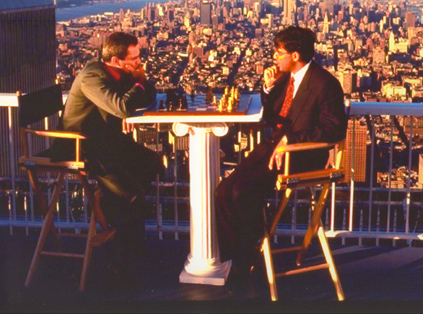
In 1993, following Nigel Short's victory in the Candidates Tournament, FIDE president Campomanes announced that that year's Championship would take place in Manchester, England. Both Kasparov and Short claimed that FIDE had made this decision without consulting either player, in violation of FIDE's regulations regarding the championship. Kasparov and Short responded by splitting from FIDE and forming the Professional Chess Association (PCA), which organized a World Championship match between the two, played in London later that year. Meanwhile, FIDE stripped Kasparov of his title and organized a championship match between Karpov and Jan Timman, who had finished second and third in the Candidates Tournament. For the 13 years between 1993 and 2006, there were two rival titles. While the PCA itself would fold after only a couple of years, Kasparov would retain what is referred to as "Classical" title, which would be inherited by Vladimir Kramnik upon defeating Kasparov in 2000.
Meanwhile, FIDE once again began experimenting with the championship format. Beginning with the 1998 championship, the system of Zonal, Interzonal, Candidates, and Championship stages was replaced with one single-elimination tournament featuring dozens of players competing for the championship. For the next event in 1999, the incumbent World Champion would not automatically qualify for the finals. Due to this additional change, Karpov—who had won three additional titles during the schism—declined to participate going forward. Each of the four Classical Championships retained a traditional match format.
| Date | Location | Winner | Score | Runner-up | Format | Ref | 1993 | 1995 | 2000 | 2004‡ |
|---|---|---|---|---|---|---|---|---|---|---|
| UK London | Russia Garry Kasparov (5) | 12½7½ | UK Nigel Short | Best of 24 | ||||||
| US New York City | Russia Garry Kasparov (6) | 10½7½ | India Viswanathan Anand | Best of 20 | ||||||
| UK London | Russia Vladimir Kramnik | 8½6½ | Russia Garry Kasparov | Best of 16 | ||||||
| Switzerland Brissago | Russia Vladimir Kramnik (2) | 77 | Hungary Peter Leko | Best of 14 |
| Date | Location | Winner | Score | Runner-up | Format | Ref | 1993 | 1996 | 1998† | 1999† | 2000† | 2002† | 2004† | 2005† | ||
|---|---|---|---|---|---|---|---|---|---|---|---|---|---|---|---|---|
| {{csl | Netherlands Zwolle (1–3) | Arnhem (4–6) | Amsterdam (7–12) | Indonesia Jakarta (13–24) | Russia Anatoly Karpov (4) | 12½8½ | Netherlands Jan Timman | Best of 24 | ||||||||
| Russia Elista | Russia Anatoly Karpov (5) | 10½7½ | US Gata Kamsky | Best of 20 | ||||||||||||
| Switzerland Lausanne | Russia Anatoly Karpov (6) | 3320 | ||||||||||||||
| India Viswanathan Anand | Single-elimination tournament with 100 players | |||||||||||||||
| US Las Vegas | Russia Alexander Khalifman | 18½11½ | ||||||||||||||
| {{efn | group=ledger3 | {{csl | embedded=yes | 3½2½ Barua | 2½1½ Kamsky | 1½½ Asrian | 2½1½ Gelfand | 1½½ Polgár | 3½2½ Nisipeanu | 3½2½ Akopian | Armenia Vladimir Akopian | |||||
| {{csl | India New Delhi (rounds 1–6) | Iran Tehran (round 7) | India Viswanathan Anand | 146 | ||||||||||||
| {{efn | group=ledger3 | Anand had a bye in the first round. {{csl | embedded=yes | 1½½ Bologan | 1½½ Lputian | 1½½ Macieja | 3½2½ Khalifman | 2½1½ Adams | 3½½ Shirov | Spain Alexei Shirov | ||||||
| Russia Moscow | Ukraine Ruslan Ponomariov | 199 | ||||||||||||||
| {{efn | group=ledger3 | {{csl | embedded=yes | 1½½ Li | 31 Tiviakov | 20 Georgiev | 2½1½ Morozevich | 31 Bareev | 2½1½ Svidler | 4½2½ Ivanchuk | Ukraine Vasyl Ivanchuk | Single-elimination tournament with 128 players | ||||
| Libya Tripoli | Uzbekistan Rustam Kasimdzhanov | 2010 | ||||||||||||||
| {{efn | group=ledger3 | {{csl | embedded=yes | 2½1½ Ramírez | 1½½ Ghaem Maghami | 2½1½ Ivanchuk | 20 Almási | 31 Grischuk | 42 Topalov | 4½3½ Adams | England Michael Adams | |||||
| Argentina Potrero de los Funes | Bulgaria Veselin Topalov | 104 | ||||||||||||||
| {{efn | group=ledger3 | {{csl | embedded=yes | 11 Anand | 1½½ Svidler | 1½½ Morozevich | 1½½ Leko | 1½½ Kasimdzhanov | 1½½ Adams | 1½½ Polgár | India Viswanathan Anand | Double round-robin tournament with 8 players |
FIDE World Championships (2006–present)
.jpg)
Following a period of negotiation, in 2006 the Classical Champion Vladimir Kramnik played a match against the FIDE Champion Veselin Topalov to reunify the World Championship. Since then, the championship has remained under the auspices of FIDE. The Candidates Tournament returned, and with the exception of the 2007 tournament, FIDE would return to a match format for the World Championship. Instead of the previous system of Zonals and Interzonals to provide candidates, the system was redesigned around the Chess World Cup. Later, means for selecting candidates would variously include the FIDE Grand Prix, the FIDE Grand Swiss Tournament, selection by rating, and wild cards selected by the venue hosting the event.
While shorter matches had taken place at various points, the block of 12 classical games was much shorter than matches had been for much of the 20th century. In the 2018 match, all 12 classical games resulted in draws for the first time in the history of the championship. Following this, the number of games was increased to 14. Citing a lack of motivation and interest in the format, incumbent five-time champion Magnus Carlsen declined to defend his title in 2023. Instead, the match featured the two best performers in the Candidates, with Ding Liren defeating Ian Nepomniachtchi to become the new World Champion. Carlsen later declined his spot in the 2024 Candidates Tournament.
| Date | Location | Winner | Score | Runner-up | Format | Ref | 2006 | 2007† | 2008 | 2010 | 2012 | 2013 | 2014 | 2016 | 2018 | 2021 | 2023 | 2024 | 2026 | |
|---|---|---|---|---|---|---|---|---|---|---|---|---|---|---|---|---|---|---|---|---|
| Russia Elista | Russia Vladimir Kramnik (3) | 662½1½ | Bulgaria Veselin Topalov | Best of 12, tiebreaks if necessary | ||||||||||||||||
| Mexico Mexico City | India Viswanathan Anand (2) | 95 | ||||||||||||||||||
| {{efn | group=ledger4 | {{csl | embedded=yes | 11 Kramnik | 11 Gelfand | 11 Leko | 1½½ Svidler | 1½½ Morozevich | 1½½ Aronian | 1½½ Grischuk | Russia Vladimir Kramnik | Double round-robin tournament with 8 players | ||||||||
| Germany Bonn | India Viswanathan Anand (3) | 6½4½ | Russia Vladimir Kramnik | Best of 12, tiebreaks if necessary | ||||||||||||||||
| Bulgaria Sofia | India Viswanathan Anand (4) | 6½5½ | Bulgaria Veselin Topalov | |||||||||||||||||
| Russia Moscow | India Viswanathan Anand (5) | 662½1½ | Israel Boris Gelfand | |||||||||||||||||
| India Chennai | Norway Magnus Carlsen | 6½3½ | India Viswanathan Anand | |||||||||||||||||
| Russia Sochi | Norway Magnus Carlsen (2) | 6½4½ | India Viswanathan Anand | |||||||||||||||||
| US New York City | Norway Magnus Carlsen (3) | 6631 | Russia Sergey Karjakin | |||||||||||||||||
| UK London | Norway Magnus Carlsen (4) | 6630 | US Fabiano Caruana | |||||||||||||||||
| UAE Dubai | Norway Magnus Carlsen (5) | 7½3½ | CFR Russia chess simplified flag infobox.svg Ian Nepomniachtchi | Best of 14, tiebreaks if necessary | ||||||||||||||||
| Kazakhstan Astana | China Ding Liren | 772½1½ | FIDE Ian Nepomniachtchi | |||||||||||||||||
| Singapore | India Gukesh Dommaraju | 7½6½ | China Ding Liren | |||||||||||||||||
| TBD | India Gukesh Dommaraju vs Challenger | TBD |
Unrecognized championship events
In 1909, amid discussions that would ultimately culminate with the World Championship match played the following year, Emanuel Lasker played a casual match with Dawid Janowski in Paris. This was reported in later decades as being a World Championship match. However, research by Edward Winter has demonstrated that the title was not at stake.
| Date | Location | Winner | Score | Runner-up | Format | 1909 |
|---|---|---|---|---|---|---|
| France Paris | German Empire Emanuel Lasker | 82 | France Dawid Janowski | Best of 10, casual play |
References
Citations
Works cited
References
- Pope, Nick. "1834 La Bourdonnais–Macdonnell Matches". Chess Archaeology.
- Wall, Bill. (16 August 2007). "Staunton Beats a Saint".
- Staunton, Howard. (1852). "The Chess Tournament: A Collection of the Games Played at this Celebrated Assemblage, Illustrated by Copious Diagrams, and Notes, Critical and Explanatory". H. G. Bohn.
- Lawson, David. (2010). "Paul Morphy, The Pride and Sorrow of Chess". University of Louisiana Press.
- Löwenthal, Johann. (1864). "The Chess Congress of 1862". H. G. Bohn.
- {{multiref2. {{harvnb. Capablanca. 1977. {{harvnb. Murray. 1913
- (27 June 1883). "The International Tournament of 1883".
- Pope, Nick. "1890 Gunsberg-Steinitz World Championship Match". Chess Archaeology.
- Pope, Nick. "1894 Lasker-Steinitz World Championship Match". Chess Archaeology.
- (24 April 1907). "The Championship Match". Free Press Prairie Farmer.
- Tarrasch, Siegbert. (2021). "Der Schachwettkampf Lasker-Tarrasch um die Weltmeisterschaft im August-September 1908". [[De Gruyter]].
- Euwe, Max. (1973). "Euwe vs. Alekhine Match 1935". Chess Digest.
- Botvinnik, Mikhail. (1973). "Alekhine vs. Euwe Return Match 1937". Chess Digest.
- Winter, Edward. (2004). "Interregnum".
- Calvo, R.. (1981). "Merano 1981 Karpov–Korchnoi: Lucha por el Campeonato del mundo de ajedrez". Jaque.
- (27 February 1993). "Kasparov Breaks With World Chess Body". [[The New York Times]].
- (24 April 1993). "A Chess Title Match Is to Start on Sept. 7". The New York Times.
- McClain, Dylan Loeb. (4 October 2004). "And They're Off, but Will Winner Be True Champion of Chess?". The New York Times.
- McClain, Dylan Loeb. (31 October 2000). "A Chess Match Is Waged for a World Title Whose Authenticity Is Challenged". The New York Times.
- Keene, Raymond D.. (1993). "Kasparov v. Short 1993: The Official Book of the Match". Holt.
- Keene, Raymond D.. (1995). "World Chess Championship: Kasparov v. Anand". Holt.
- (1993). "Schachweltmeisterschaft 1993: Anatoli Karpow–Jan Timman; Garri Kasparow–Nigel Short". Beyer.
- Byrne, Robert. (12 July 1996). "Draw and Match: Karpov Triumphs". The New York Times.
- Kohlmeyer, Dagobert. (6 January 2018). "20 years ago: Anand and Karpov fight for the World Championship". Chessbase.
- (28 August 1999). "Las Vegas 1999". [[FIDE.
- Byrne, Robert. (7 January 2001). "Anand's Devious Strategy Defeats Shirov in a Match". The New York Times.
- (23 January 2002). "WCC 2001 Results". International Chess Federation (FIDE).
- (13 July 2004). "WCC 2004 Results". International Chess Federation (FIDE).
- Gershon, Alik. (2007). "San Luis 2005". Quality Chess.
- (18 December 2005). "Levon Aronian wins FIDE World Cup". Chessbase.
- (7 January 2023). "Rules & regulations for the Candidates Tournament of the FIDE World Championship cycle 2014–2016". International Chess Federation (FIDE)}}.
- Doggers, Peter. (26 April 2019). "2020 World Chess Championship: 14 Games, Double The Prize Fund". Chess.com.
- Mather, Victor. (20 July 2022). "Lacking Motivation, Magnus Carlsen Will Give Up World Chess Title". The New York Times.
- Svensen, Tarjei J.. (2 May 2023). "Carlsen On Lack Of Motivation, Classical Chess, New WC Formats & Family Life". Chess.com.
- (29 September 2007). "Mexico 2007: Vishy Anand is world champion!". Chessbase.
- McClain, Dylan Loeb. (29 October 2008). "Anand Retains World Championship". The New York Times.
- Ris, Robert. (28 April 2023). "Anand beats Topalov in the final game of their 2010 match". Chessbase.
- Moss, Stephen. (30 May 2012). "Anand remains king of world chess as Gelfand's time runs out". The Guardian.
- Kasparov, Garry. (25 November 2013). "A New King for a New Era in Chess".
- Crowther, Mark. (23 November 2014). "Carlsen retains World Chess Championship title after beating Anand in Game 11". The Week in Chess.
- Graham, Bryan Armen. (1 December 2016). "Magnus Carlsen retains world chess title after quickfire tie-breaker". The Guardian.
- Pereira, Antonio. (29 November 2018). "Magnus Carlsen keeps the crown". Chessbase.
- Doggers, Peter. (11 December 2021). "Magnus Carlsen Wins 2021 World Chess Championship". Chess.com.
- Colodro, Carlos Alberto. (30 April 2023). "Ding Liren is the new world chess champion!". Chessbase.
- McGourty, Colin. (12 December 2024). "18-Year-Old Gukesh Becomes Youngest-Ever Undisputed Chess World Champion". Chess.com.
- Winter, Edward. (2007). "Chess Notes".
This article was imported from Wikipedia and is available under the Creative Commons Attribution-ShareAlike 4.0 License. Content has been adapted to SurfDoc format. Original contributors can be found on the article history page.
Ask Mako anything about List of World Chess Championships — get instant answers, deeper analysis, and related topics.
Research with MakoFree with your Surf account
Create a free account to save articles, ask Mako questions, and organize your research.
Sign up freeThis content may have been generated or modified by AI. CloudSurf Software LLC is not responsible for the accuracy, completeness, or reliability of AI-generated content. Always verify important information from primary sources.
Report