From Surf Wiki (app.surf) — the open knowledge base
List of WLAN channels
none
none
Wireless LAN (WLAN) channels are frequently accessed using IEEE 802.11 protocols. The 802.11 standard provides several radio frequency bands for use in Wi-Fi communications, each divided into a multitude of frequency channels numbered at 5 MHz spacing (except in the 45/60 GHz band, where they are 0.54/1.08/2.16 GHz apart) between the centre frequency of the channel. The standards allow for channels to be bonded together into wider channels for faster throughput.
860/900 MHz (802.11ah)
802.11ah operates in sub-gigahertz unlicensed bands. Each world region supports different sub-bands, and the channels number depends on the starting frequency on the sub-band it belongs to. Therefore there is no global channels numbering plan, and the channels numbers are incompatible between world regions (and even between sub-bands of a same world region).
The following sub-bands are defined in the 802.11ah specifications:
| Region | Subband | |||||
|---|---|---|---|---|---|---|
| (MHz) | Bandwidths | |||||
| (MHz) | Channel | |||||
| count | ||||||
| Australia | 915–928 | 1, 2, 4, 8 | 13, 6, 3, 1 | |||
| China | (755–787) | (1, 2, 4, 8) | ||||
| Europe | 863–868 | 1, | 5, — | |||
| 917.4–919.4 | 1 | 2 | ||||
| Japan | 916.5–927.5 | 1 | 11 | |||
| Korea | 917.5–923.5 | 1, 2, 4 | 6, 3, 1 | |||
| New Zealand | 915–928 | 1, 2, 4, 8 | 13, 6, 3, 1 | |||
| Singapore | 866–869 | 1, 2 | 3, 1 | |||
| 920–925 | 1, 2, 4 | 5, 2, 1 | ||||
| Taiwan | (839–848.5) | (1, 2, 4) | ||||
| url=http://www.l-com.com/content/Article.aspx?Type=N&ID=10421 | title=Advantages and Disadvantages of ISM Band Frequencies | website= Global Connectivity | access-date=2018-08-18 }} | 902–928 | 1, 2, 4, 8, 16 | 26, 13, 6, 3, 1 |
| Indonesia | 920-923 | 250 kHz |
2.4 GHz (802.11b/g/n/ax/be)
14 channels are designated in the 2.4 GHz range, spaced 5 MHz apart from each other except for a 12 MHz space before channel 14. The abbreviation F0 designates each channel's fundamental frequency.
| # | F0 | ||||||||||
|---|---|---|---|---|---|---|---|---|---|---|---|
| (MHz) | DSSS | OFDM | Most of | ||||||||
| world | |||||||||||
| North | |||||||||||
| America | |||||||||||
| Japan | |||||||||||
| Frequency | |||||||||||
| range | |||||||||||
| (MHz) | Channel | ||||||||||
| 22 MHz | Frequency | ||||||||||
| range | |||||||||||
| (MHz) | Channel | ||||||||||
| 20 MHz | Center frequency index | ||||||||||
| 40 MHz | |||||||||||
| 1 | 2412 | 2401–2423 | 1 | 2 | |||||||
| 3 | rowspan=2 | 2402–2422 | 1 | 2 | |||||||
| 3 | |||||||||||
| 2 | 2417 | 2406–2428 | 4 | 2407–2427 | 4 | 6 | |||||
| 3 | 2422 | 2411–2433 | 5 | 2412–2432 | 5 | 7 | |||||
| 4 | 2427 | 2416–2438 | 6 | 2417–2437 | 6 | 8 | |||||
| 5 | 2432 | 2421–2443 | 7 | 2422–2442 | 7 | 9 | |||||
| 6 | 2437 | 2426–2448 | 8 | 2427–2447 | 8 | 10 | |||||
| 7 | 2442 | 2431–2453 | 9 | 2432–2452 | 9 | ||||||
| 11 | |||||||||||
| 8 | 2447 | 2436–2458 | 10 | 2437–2457 | 10 | rowspan=6 | |||||
| 9 | 2452 | 2441–2463 | 11 | 2442–2462 | 11 | rowspan=5 | |||||
| 10 | 2457 | 2446–2468 | 12 | 2447–2467 | 12 | rowspan=4 | |||||
| 11 | 2462 | 2451–2473 | 13 | ||||||||
| 2452–2472 | 13 | rowspan=3 | |||||||||
| 12 | 2467 | 2456–2478 | rowspan=3 | 2457–2477 | rowspan=2 | rowspan=2 | Avoided}} | ||||
| 13 | 2472 | 2461–2483 | rowspan=2 | 2462–2482 | |||||||
| 14 | 2484 | 2473–2495 | 14 | colspan=13 | |||||||
| Notes: |
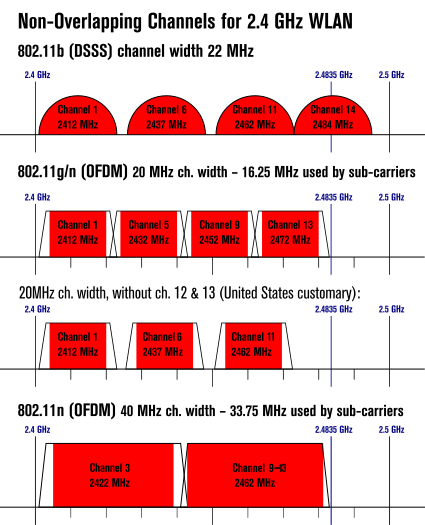
Interference happens when two networks try to operate in the same band, or when their bands overlap. The two modulation methods used have different characteristics of band usage and therefore occupy different widths:
- The DSSS method used by legacy 802.11 and 802.11b (and the 11b-compatible rates of 11 g) occupies 22 MHz of bandwidth. This is from the 11 MHz chip rate used by the coding system. No guard band is prescribed; the channel definition provides 3 MHz between 1, 6, and 11.
- The OFDM method used by 802.11g and 802.11n occupies a bandwidth of 16.25 MHz. The nameplate bandwidth is set to be 20 MHz, rounding up to a multiple of channel width and providing some guard band for signal to attenuate along the edge of the band. This guardband is mainly used to accommodate older routers with modem chipsets prone to full channel occupancy, as most modern Wi‑Fi routers are not prone to excessive channel occupancy.
While overlapping frequencies can be configured at a location and will usually work, it can cause interference resulting in slowdowns, sometimes severe, particularly in heavy use. Certain subsets of frequencies can be used simultaneously at any one location without interference (see diagrams for typical allocations). The consideration of spacing stems from both the basic bandwidth occupation (described above), which depends on the protocol, and from attenuation of interfering signals over distance. In the worst case, using every fourth or fifth channel by leaving three or four channels clear between used channels causes minimal interference, and narrower spacing still can be used at further distances. The "interference" is usually not actual bit-errors, but the wireless transmitters making space for each other. Interference resulting in bit-error is rare. or when the non-decoded noise level is higher than a threshold Pth which, for Wi-Fi 5 and earlier, is between -76 and -80 dBm.
As shown in the diagram, bonding two 20 MHz channels to form a 40 MHz channel is permitted in the 2.4 GHz bands. These are generally referred to by the centres of the primary 20 MHz channel and the adjacent secondary 20 MHz channel (e.g. 1+5, 9+13, 13–9, 5–1). The primary 20 MHz channel is used for signalling and backwards compatibility, the secondary is only used when sending data at full speed.
3.65 GHz (802.11y)
Except where noted, all information taken from Annex J of IEEE 802.11y-2008
This range is documented as only being allowed as a licensed band in the United States. However, not in the original specification, under newer frequency allocations from the FCC, it falls under the 3.55–3.7 GHz Citizens Broadband Radio Service band. This allows for unlicensed use, under Tier 3 GAA rules, provided that the user doesn't cause harmful interference to Incumbent Access users or Priority Access Licensees and accepts all interference from these users, and also follows all the technical requirements in CFR 47 Part 96 Subpart E.
A 40 MHz band is available from 3655 to 3695 MHz. It may be divided into eight 5 MHz channels, four 10 MHz channels, or two 20 MHz channels.
The division into 5 MHz channels consumes all eight possible channel numbers, and so (unlike other bands) it is not possible to infer the width of a channel from its number. Instead each wider channel shares its channel number with the 5 MHz channel just above its mid frequency:
- channel 132 can be either 3660-3665 or 3655-3665;
- channel 133 can be either 3665-3670 or 3655-3675; and so on.
| Channel | Span | 5 MHz | 10 MHz | 20 MHz |
|---|---|---|---|---|
| 131 | 3655–3660 | |||
| (F0=3657.5) | 3655–3665 | |||
| (F0=3660) | 3655–3675 | |||
| (F0=3665) | ||||
| 132 | 3660–3665 | |||
| (F0=3662.5) | ||||
| 133 | 3665–3670 | |||
| (F0=3667.5) | 3665–3675 | |||
| (F0=3670) | ||||
| 134 | 3670–3675 | |||
| (F0=3672.5) | ||||
| 135 | 3675–3680 | |||
| (F0=3677.5) | 3675–3685 | |||
| (F0=3680) | 3675–3695 | |||
| (F0=3685) | ||||
| 136 | 3680–3685 | |||
| (F0=3682.5) | ||||
| 137 | 3685–3690 | |||
| (F0=3687.5) | 3685–3695 | |||
| (F0=3690) | ||||
| 138 | 3690–3695 | |||
| (F0=3692.5) |
4.9–5.0 GHz (802.11j) WLAN
| Channel | Center | ||||||||
|---|---|---|---|---|---|---|---|---|---|
| frequency | |||||||||
| (MHz) | Frequency | ||||||||
| range | |||||||||
| (MHz) | Channel | Japan | United | ||||||
| States | 10 | ||||||||
| MHz | 20 | ||||||||
| MHz | 40 | ||||||||
| MHz | |||||||||
| 184 | 4920 | 4910–4930 | 183, 184, 185 | 184 | 184+188 | ||||
| 188-184 | Registration | ||||||||
| required}} | rowspan=4 | ||||||||
| 188 | 4940 | 4930–4950 | 187, 188, 189 | 188 | |||||
| 192 | 4960 | 4950–4970 | rowspan=2 | 192 | 192+196 | ||||
| 196-192 | |||||||||
| 196 | 4980 | 4970–4990 | 196 | ||||||
| (191) | 4955 | 4945–4965 | 11, 13, 15 | 21 | style=border-top:5px solid;}} | style=border-top:5px solid;}} | |||
| (195) | 4975 | 4965–4985 | 15, 17, 19 | 25 | |||||
| 8 | 5040 | 5030–5050 | 7, 8, 9 | 8 | Revoked | style=border-top:5px solid;}} | style=border-top:5px solid;}} | ||
| 12 | 5060 | 5050–5070 | 11, — | 12 | |||||
| 16 | 5080 | 5070–5090 | 16 |
In Japan since 2002, 80 MHz of spectrum from 4910 to 4990 MHz has been available for both indoor and outdoor use, once registered.
Until 2017, an additional 60 MHz of spectrum from 5030 to 5090 MHz was available for registered use, however it has since been re-purposed and can no longer be used.
50 MHz of spectrum from 4940 to 4990 MHz (WLAN channels 20–26) are in use by public safety entities in the United States. Within this spectrum there are two non-overlapping channels allocated, each 20 MHz wide. The most commonly used channels are 22 and 24.
5 GHz (802.11a/h/n/ac/ax/be)
regulatory_tables5.0ghz Can somebody cite the reference to where this list of DFS-required channels is officially published? Also, are there DFS-restricted channels for Europe, Japan, or elsewhere? EN 301 893 for Europe. ARIB STD T-71 for Japan. The Australian regulations list DFS restricted frequencies. Korea hasn't DFS regulation, but must power down @ 5230–5250 MHz.
| Ch. 20 MHz | F0 | ||||||||||||||||||||||||||||||||||||||||||||||||||||||||||
|---|---|---|---|---|---|---|---|---|---|---|---|---|---|---|---|---|---|---|---|---|---|---|---|---|---|---|---|---|---|---|---|---|---|---|---|---|---|---|---|---|---|---|---|---|---|---|---|---|---|---|---|---|---|---|---|---|---|---|---|
| (MHz) | Frequency | ||||||||||||||||||||||||||||||||||||||||||||||||||||||||||
| range | |||||||||||||||||||||||||||||||||||||||||||||||||||||||||||
| (MHz) | F0 index | US FCC | |||||||||||||||||||||||||||||||||||||||||||||||||||||||||
| U-NII band(s) | Australia | ||||||||||||||||||||||||||||||||||||||||||||||||||||||||||
| United | |||||||||||||||||||||||||||||||||||||||||||||||||||||||||||
| States | |||||||||||||||||||||||||||||||||||||||||||||||||||||||||||
| Canada | |||||||||||||||||||||||||||||||||||||||||||||||||||||||||||
| United | |||||||||||||||||||||||||||||||||||||||||||||||||||||||||||
| Kingdom | |||||||||||||||||||||||||||||||||||||||||||||||||||||||||||
| Europe | |||||||||||||||||||||||||||||||||||||||||||||||||||||||||||
| Russia | |||||||||||||||||||||||||||||||||||||||||||||||||||||||||||
| Japan | |||||||||||||||||||||||||||||||||||||||||||||||||||||||||||
| India | |||||||||||||||||||||||||||||||||||||||||||||||||||||||||||
| Singa- | |||||||||||||||||||||||||||||||||||||||||||||||||||||||||||
| pore | |||||||||||||||||||||||||||||||||||||||||||||||||||||||||||
| China | |||||||||||||||||||||||||||||||||||||||||||||||||||||||||||
| Israel | |||||||||||||||||||||||||||||||||||||||||||||||||||||||||||
| Korea | |||||||||||||||||||||||||||||||||||||||||||||||||||||||||||
| {{cite web | url=http://www.law.go.kr/행정규칙/대한민국주파수분배표/(2019-87,20191018) | Turkey | |||||||||||||||||||||||||||||||||||||||||||||||||||||||||
| South Africa | |||||||||||||||||||||||||||||||||||||||||||||||||||||||||||
| Brazil | |||||||||||||||||||||||||||||||||||||||||||||||||||||||||||
| Taiwan | |||||||||||||||||||||||||||||||||||||||||||||||||||||||||||
| New | |||||||||||||||||||||||||||||||||||||||||||||||||||||||||||
| Zealand | |||||||||||||||||||||||||||||||||||||||||||||||||||||||||||
| Bahrain | |||||||||||||||||||||||||||||||||||||||||||||||||||||||||||
| Vietnam | |||||||||||||||||||||||||||||||||||||||||||||||||||||||||||
| Indonesia | |||||||||||||||||||||||||||||||||||||||||||||||||||||||||||
| Philippines | |||||||||||||||||||||||||||||||||||||||||||||||||||||||||||
| 40 | |||||||||||||||||||||||||||||||||||||||||||||||||||||||||||
| MHz | 80 | ||||||||||||||||||||||||||||||||||||||||||||||||||||||||||
| MHz | 160 | ||||||||||||||||||||||||||||||||||||||||||||||||||||||||||
| MHz | Ch. 20 MHz | F0 | |||||||||||||||||||||||||||||||||||||||||||||||||||||||||
| (MHz) | Frequency | ||||||||||||||||||||||||||||||||||||||||||||||||||||||||||
| range | |||||||||||||||||||||||||||||||||||||||||||||||||||||||||||
| (MHz) | 40 | ||||||||||||||||||||||||||||||||||||||||||||||||||||||||||
| MHz | 80 | ||||||||||||||||||||||||||||||||||||||||||||||||||||||||||
| MHz | 160 | ||||||||||||||||||||||||||||||||||||||||||||||||||||||||||
| MHz | US FCC | ||||||||||||||||||||||||||||||||||||||||||||||||||||||||||
| U-NII band(s) | Australia | United States | Canada | United Kingdom | Europe | Russia | Japan | India | Singapore | China | Israel | Korea | Turkey | South Africa | Brazil | Taiwan | New Zealand | Bahrain | Vietnam | Indonesia | Philippines | ||||||||||||||||||||||||||||||||||||||
| access-date=2017-08-02 | language=ko | trans-title=Korea Frequency Distribution Table (Ministry of Science and ICT Commission No. 2019–87, 2019.10.18) }} | |||||||||||||||||||||||||||||||||||||||||||||||||||||||||
| 32 | 5160 | 5150–5170 | U-NII-1 | Indoors}} | Yes }} | Indoors}} | Indoors/TPC }} | Indoors/TPC }} | Indoors/TPC }} | Indoors}} | rowspan=5 | rowspan=5 | Indoors}} | Indoors}} | Indoors}} | Indoors}} | Indoors/TPC}} | rowspan=5 | Indoors}} | Indoors}} | Indoors}} | Indoors}} | Indoors}} | ||||||||||||||||||||||||||||||||||||
| 36 | 5180 | 5170–5190 | 38 | 42 | 50 | Indoors/DFS/ | |||||||||||||||||||||||||||||||||||||||||||||||||||||
| TPC}} | |||||||||||||||||||||||||||||||||||||||||||||||||||||||||||
| 40 | 5200 | 5190–5210 | |||||||||||||||||||||||||||||||||||||||||||||||||||||||||
| 44 | 5220 | 5210–5230 | 46 | ||||||||||||||||||||||||||||||||||||||||||||||||||||||||
| 48 | 5240 | 5230–5250 | |||||||||||||||||||||||||||||||||||||||||||||||||||||||||
| 52 | 5260 | 5250–5270 | 54 | 58 | U-NII-2A | Indoors/DFS/ | |||||||||||||||||||||||||||||||||||||||||||||||||||||
| TPC }} | DFS/TPC }} | DFS/TPC }} | Indoors/DFS | ||||||||||||||||||||||||||||||||||||||||||||||||||||||||
| /TPC }} | Indoors/DFS | ||||||||||||||||||||||||||||||||||||||||||||||||||||||||||
| /TPC }} | Indoors/DFS/ | ||||||||||||||||||||||||||||||||||||||||||||||||||||||||||
| TPC}} | Indoors}} | DFS/TPC }} | DFS/TPC}} | Indoors/DFS/ | |||||||||||||||||||||||||||||||||||||||||||||||||||||||
| TPC or}} | DFS/TPC}} | Indoors/DFS/ | |||||||||||||||||||||||||||||||||||||||||||||||||||||||||
| TPC}} | Indoors/DFS/ | ||||||||||||||||||||||||||||||||||||||||||||||||||||||||||
| TPC}} | DFS}} | DFS/TPC }} | Indoors/DFS/ | ||||||||||||||||||||||||||||||||||||||||||||||||||||||||
| TPC or}} | DFS/TPC }} | ||||||||||||||||||||||||||||||||||||||||||||||||||||||||||
| 56 | 5280 | 5270–5290 | |||||||||||||||||||||||||||||||||||||||||||||||||||||||||
| 60 | 5300 | 5290–5310 | 62 | ||||||||||||||||||||||||||||||||||||||||||||||||||||||||
| 64 | 5320 | 5310–5330 | |||||||||||||||||||||||||||||||||||||||||||||||||||||||||
| 68 | 5340 | 5330–5350 | 70 | style=color:darkgray}} | 74 | style=color:darkgray}} | 82 | style=color:darkgray}} | style="border-bottom: 0px black" | ||||||||||||||||||||||||||||||||||||||||||||||||||
| 72 | 5360 | 5350–5370 | U-NII-2B | Unused | style=color: black}} | ||||||||||||||||||||||||||||||||||||||||||||||||||||||
| 76 | 5380 | 5370–5390 | 78 | style=color:darkgray}} | |||||||||||||||||||||||||||||||||||||||||||||||||||||||
| 80 | 5400 | 5390–5410 | |||||||||||||||||||||||||||||||||||||||||||||||||||||||||
| 84 | 5420 | 5410–5430 | 86 | style=color:darkgray}} | 90 | style=color:darkgray}} | |||||||||||||||||||||||||||||||||||||||||||||||||||||
| 88 | 5440 | 5430–5450 | |||||||||||||||||||||||||||||||||||||||||||||||||||||||||
| 92 | 5460 | 5450–5470 | 94 | style=color:darkgray}} | 5350-5470 | colspan=3 | U-NII-2B | colspan=20 -- | |||||||||||||||||||||||||||||||||||||||||||||||||||
| 96 | 5480 | 5470–5490 | U-NII-2C | DFS/TPC }} | DFS/TPC }} | DFS/TPC }} | DFS/TPC }} | DFS/TPC }} | rowspan=9 | DFS/TPC}} | rowspan=2 | DFS/TPC}} | rowspan=13 | Indoors/DFS/ | |||||||||||||||||||||||||||||||||||||||||||||
| TPC or}} | DFS/TPC}} | DFS/TPC}} | DFS/TPC}} | DFS}} | DFS/TPC }} | rowspan=13 | DFS/TPC }} | rowspan=13 | Indoors}} | ||||||||||||||||||||||||||||||||||||||||||||||||||
| 100 | 5500 | 5490–5510 | 102 | 106 | 114 | rowspan=11 | |||||||||||||||||||||||||||||||||||||||||||||||||||||
| 104 | 5520 | 5510–5530 | DFS/TPC }} | ||||||||||||||||||||||||||||||||||||||||||||||||||||||||
| 108 | 5540 | 5530–5550 | 110 | ||||||||||||||||||||||||||||||||||||||||||||||||||||||||
| 112 | 5560 | 5550–5570 | |||||||||||||||||||||||||||||||||||||||||||||||||||||||||
| 116 | 5580 | 5570–5590 | 118 | 122 | |||||||||||||||||||||||||||||||||||||||||||||||||||||||
| 120 | 5600 | 5590–5610 | rowspan=3 | rowspan=3 | |||||||||||||||||||||||||||||||||||||||||||||||||||||||
| 124 | 5620 | 5610–5630 | 126 | ||||||||||||||||||||||||||||||||||||||||||||||||||||||||
| 128 | 5640 | 5630–5650 | |||||||||||||||||||||||||||||||||||||||||||||||||||||||||
| 132 | 5660 | 5650–5670 | 134 | 138 | DFS/TPC }} | DFS/TPC }} | DFS/SRD ch 138 & 142; DFS/TPC otherwise}} | Indoors/TPC }} | |||||||||||||||||||||||||||||||||||||||||||||||||||
| 136 | 5680 | 5670–5690 | |||||||||||||||||||||||||||||||||||||||||||||||||||||||||
| 140 | 5700 | 5690–5710 | 142 | ||||||||||||||||||||||||||||||||||||||||||||||||||||||||
| 144 | 5720 | 5710–5730 | U-NII-2C/3 | SRD }} | |||||||||||||||||||||||||||||||||||||||||||||||||||||||
| 5730–5735 | colspan=3 | U-NII-3 | colspan=4 | colspan=14 | |||||||||||||||||||||||||||||||||||||||||||||||||||||||
| 149 | 5745 | 5735–5755 | 151 | 155 | 163 | rowspan=7 | Yes }} | rowspan=5 | SRD (200 mW)}} | rowspan=8 | Indoors}} | rowspan=5 | rowspan=5 | Indoors }} | rowspan=5 | rowspan=8 | rowspan=8 | rowspan=5 | rowspan=5 | rowspan=5 | DFS/TPC/ | ||||||||||||||||||||||||||||||||||||||
| Fixed}} | rowspan=5 | rowspan=4 | |||||||||||||||||||||||||||||||||||||||||||||||||||||||||
| 153 | 5765 | 5755–5775 | |||||||||||||||||||||||||||||||||||||||||||||||||||||||||
| 157 | 5785 | 5775–5795 | 159 | ||||||||||||||||||||||||||||||||||||||||||||||||||||||||
| 161 | 5805 | 5795–5815 | |||||||||||||||||||||||||||||||||||||||||||||||||||||||||
| 165 | 5825 | 5815–5835 | 167 | 171 | rowspan=4 | ||||||||||||||||||||||||||||||||||||||||||||||||||||||
| 169 | 5845 | 5835–5855 | U-NII-3/4 | Indoors}} | rowspan=3 | SRD (25 mW) }} | rowspan=2 | rowspan=3 | rowspan=3 | rowspan=3 | rowspan=3 | rowspan=3 | rowspan=3 | rowspan=3 | rowspan=3 | ||||||||||||||||||||||||||||||||||||||||||||
| 173 | 5865 | 5855–5875 | 175 | U-NII-4 | rowspan=2 | rowspan=2 | |||||||||||||||||||||||||||||||||||||||||||||||||||||
| 177 | 5885 | 5875–5895 | |||||||||||||||||||||||||||||||||||||||||||||||||||||||||
| Notes: {{notefoot | refs= |
| Text | Meaning |
|---|---|
| Compliant equipment may emit in this band without special restrictions. | |
| Equipment shall not emit in this band. | |
| Equipment emitting in this band shall not be used outdoors. | |
| Equipment must comply with DFS restrictions. | |
| Equipment must comply with SRD restrictions. | |
| Equipment must comply with DFS restrictions and shall not be used outdoors. | |
| Equipment must comply with TPC restrictions and shall not be used outdoors. | |
| Equipment must comply with DFS and TPC restrictions. | |
| Equipment must comply with DFS, TPC, and SRD restrictions. | |
| Equipment must comply with DFS and TPC restrictions and shall not be used outdoors. | |
| Users must register with the applicable regulatory authority before using this band. | |
| Information regarding regulations in this band is not available. | |
| Notes: |
Country-specific information
DFS and TPC
Source:
United States
In 2007, the FCC (United States) began requiring that devices operating in the bands of 5.250–5.350 GHz and 5.470–5.725 GHz must employ dynamic frequency selection (DFS) and transmit power control (TPC) capabilities. This is to avoid interference with weather-radar and military applications. In 2010, the FCC further clarified the use of channels in the 5.470–5.725 GHz band to avoid interference with Terminal Doppler Weather Radar (TDWR). In FCC parlance, these restrictions are now referred to collectively as the Old Rules. On 10 June 2015, the FCC approved a new ruleset for 5 GHz device operation (called the New Rules), which adds 160 and 80 MHz channel identifiers, and re-enables previously prohibited DFS channels, in Publication Number 905462. This FCC publication eliminates the ability for manufacturers to have devices approved or modified under the Old Rules in phases; the New Rules apply in all circumstances
Source:
United Kingdom
The UK's Ofcom regulations for unlicensed use of the 5 GHz band is similar to Europe, except that DFS is not required for the frequency range 5.725–5.850 GHz and the SRD maximum mean e.i.r.p is 200 mW instead of 25 mW.
Additionally, 5.925–6.425 GHz is also available for unlicensed use, as long as it is used indoors with an SRD of 250 mW.
Germany
Germany requires DFS and TPC capabilities on 5.250–5.350 GHz and 5.470–5.725 GHz as well; in addition, the frequency range 5.150–5.350 GHz is allowed only for indoor use, leaving only 5.470–5.725 GHz for outdoor and indoor use.
Since this is the German implementation of EU Rule 2005/513/EC, similar regulations must be expected throughout the European Union.
European standard EN 301 893 covers 5.15–5.725 GHz operation, and v2.1.1 has been adopted. 6 GHz can now be used.
Austria
Austria adopted Decision 2005/513/EC directly into national law.
Japan
Japan's use of 10 and 20 MHz-wide 5 GHz wireless channels is codified by Association of Radio Industries and Businesses (ARIB) document STD-T71, Broadband Mobile Access Communication System (CSMA). Additional rule specifications relating to 40, 80, and 160 MHz channel allocation has been taken on by Japan's Ministry of Internal Affairs and Communications (MIC).
Brazil
In Brazil, the use of TPC is required in the 5.150–5.350 GHz and 5.470–5.725 GHz bands is required, but devices without TPC are allowed with a reduction of 3 dB. DFS is required in the 5.250–5.350 GHz and 5.470–5.725 GHz bands, and optional in the 5.150–5.250 GHz band.
Australia
some of the Australian channels require DFS to be utilised (a significant change from the 2000 regulations, which allowed lower power operation without DFS). As per AS/NZS 4268 B1 and B2, transmitters designed to operate in any part of 5250–5350 MHz and 5470–5725 MHz bands shall implement DFS in accordance with sections 4.7 and 5.3.8 and Annex D of ETSI EN 301 893 or alternatively in accordance with FCC paragraph 15.407(h)(2). Also as per AS/NZS 4268 B3 and B4, transmitters designed to operate in any part of 5250–5350 MHz and 5470–5725 MHz bands shall implement TPC in accordance with sections 4.4 and 5.3.4 of ETSI EN 301 893 or alternatively in accordance with FCC paragraph 15.407(h)(1).
New Zealand
New Zealand regulation differs from Australian.
Philippines
In the Philippines, the National Telecommunications Commission (NTC) allows the use of 5150 MHz to 5350 MHz and 5470 MHz to 5850 MHz frequency bands indoors with an effective radiated power (ERP) not exceeding 250 mW. Indoor Wireless Data Network (WDN) equipment and devices shall not use external antenna. All outdoor equipment/radio station whether for private WDN or public WDN shall be covered by appropriate permits and licenses required under existing rules and regulations.
Singapore
Singapore regulation requires DFS and TPC to be used in the 5.250–5.350 GHz band to transmit more than 100 mW effective radiated power (EIRP), but no more than 200 mW, and requires DFS capability on 5.250–5.350 GHz below or equal to 100 mW EIRP, and requires DFS and TPC capabilities on 5.470–5.725 below or equal to 1000 mW EIRP. Operating 5.725–5.850 GHz above 1000 mW and below or equal to 4000 mW EIRP shall be approved on exceptional basis.
South Korea
In South Korea, the Ministry of Science and ICT has public notices. 신고하지 아니하고 개설할 수 있는 무선국용 무선설비의 기술기준, Technical standard for radio equipment for radio stations that can be opened without reporting. They allowed 160 MHz channel bandwidth from 2018 to 2016–27.
China
China MIIT expanded allowed channels to add UNII-1, 5150–5250 MHz, UNII-2, 5250–5350 MHz (DFS/TPC), similar to European standards EN 301.893 V1.7.1. China MIIT expanded allowed channels to add U-NII-3, 5725–5850 MHz.
Indonesia
Indonesia allows use of the band 5150–5350 MHz with maximum EIRP of 200 mW (23 dBm) and maximum bandwidth of 160 MHz, and the band 5725–5825 MHz with the same maximum EIRP and maximum bandwidth of 80 MHz for indoor use. Outdoors, use of the band 5725–5825 MHz with maximum EIRP of 4 W (36 dBm) is allowed, with a maximum bandwidth of 20 MHz.
India
In exercise of the powers conferred by sections 4 and 7 of the Indian Telegraph Act, 1885 (13 of 1885) and sections 4 and 10 of the Indian Wireless Telegraphy Act, 1933 (17 of 1933) and in supersession of notification under G.S.R. 46(E), dated 28 January 2005 and notification under G.S.R. 36(E), dated 10 January 2007 and notification under G.S.R. 38(E), dated 19 January 2007, the Central Government made the rules, called the Use of Wireless Access System including Radio Local Area Network in 5 GHz band (Exemption from Licensing Requirement) Rules, 2018. The rules include criteria like 26 dB bandwidth of the modulated signal measured relative to the maximum level of the modulated carrier, the maximum power within the specified measurement bandwidth, within the device operating band; measurements in the 5725–5875 MHz band are made over a bandwidth of 500 kHz; measurements in the 5150–5250 MHz, 5250–5350 MHz, and 5470–5725 MHz bands are made over a bandwidth of 1 MHz or 26 dB emission bandwidth of the device. No licence shall be required under indoor and outdoor environment to establish, maintain, work, possess or deal in any wireless equipment for the purpose of low power wireless access systems. Transmitters operating in 5725–5875 MHz, all emissions within the frequency range from the band edge to 10 MHz above or below the band edge shall not exceed an EIRP of −17 dBm/MHz; for frequencies 10 MHz or greater above or below the band edge, emission shall not exceed an EIRP of −27 dBm/MHz.
5.9 GHz ([[802.11p]])
The 802.11p amendment published on 15 July 2010, specifies WLAN in the licensed band of 5.9 GHz (5.850–5.925 GHz).
| Channel | Center | ||||||||
|---|---|---|---|---|---|---|---|---|---|
| frequency | |||||||||
| (MHz) | Frequency | ||||||||
| range | |||||||||
| (MHz) | 10 | ||||||||
| MHz | 20 | ||||||||
| MHz | Band | ||||||||
| name | United | ||||||||
| States | United | ||||||||
| Kingdom | Europe | Japan | |||||||
| 172 | 5860 | 5855–5865 | 10 | rowspan=5 | DSRC | rowspan=5 colspan=2 | rowspan=5 | rowspan=5 | |
| 174 | 5870 | 5865–5875 | 10 | ||||||
| 176 | 5880 | 5875–5885 | 10 | ||||||
| 178 | 5890 | 5885–5895 | 10 | ||||||
| 180 | 5900 | 5895–5905 | 10 | ||||||
| 182 | 5910 | 5905–5915 | 10 | C-V2X | rowspan=9 | rowspan=2 | rowspan=9 | Registration | |
| required}} | |||||||||
| 183 (proposed) | 5915 | 5905–5925 | 20 | ||||||
| 184 | 5920 | 5915–5925 | 10 | Indoors/SRD | |||||
| (250 mW)}} | |||||||||
| 187 | 5935 | 5930–5940 | 10 | rowspan=5 | |||||
| 188 | 5940 | 5930–5950 | 20 | ||||||
| 189 | 5945 | 5940–5950 | 10 | ||||||
| 192 | 5960 | 5950–5970 | 20 | ||||||
| 196 | 5980 | 5970–5990 | 20 |
6 GHz (802.11ax and 802.11be)
The Wi-Fi Alliance has introduced the term Wi‑Fi 6E to identify and certify IEEE 802.11ax devices that support this new band, which is also used by Wi-Fi 7 (IEEE 802.11be).
| Ch. | |||||||||||||||||||||||||||||||||||
|---|---|---|---|---|---|---|---|---|---|---|---|---|---|---|---|---|---|---|---|---|---|---|---|---|---|---|---|---|---|---|---|---|---|---|---|
| 20 MHz | F0 | ||||||||||||||||||||||||||||||||||
| (MHz) | Frequency | ||||||||||||||||||||||||||||||||||
| range | |||||||||||||||||||||||||||||||||||
| (MHz) | Center Frequency Index | 80 | |||||||||||||||||||||||||||||||||
| MHz | 160 | ||||||||||||||||||||||||||||||||||
| MHz | 320 | ||||||||||||||||||||||||||||||||||
| MHz -- | United | ||||||||||||||||||||||||||||||||||
| States | |||||||||||||||||||||||||||||||||||
| FCC | |||||||||||||||||||||||||||||||||||
| U-NII band(s) | United States | Canada | Australia | Europe, | |||||||||||||||||||||||||||||||
| Japan, | |||||||||||||||||||||||||||||||||||
| Russia, | |||||||||||||||||||||||||||||||||||
| New Zealand, | |||||||||||||||||||||||||||||||||||
| Indonesia, Vietnam, Taiwan, | |||||||||||||||||||||||||||||||||||
| India | Greenland, | ||||||||||||||||||||||||||||||||||
| United Arab Emirates, | |||||||||||||||||||||||||||||||||||
| United Kingdom, | |||||||||||||||||||||||||||||||||||
| Mexico | Brazil, | ||||||||||||||||||||||||||||||||||
| Chile, | |||||||||||||||||||||||||||||||||||
| Costa Rica, | |||||||||||||||||||||||||||||||||||
| Guatemala, | |||||||||||||||||||||||||||||||||||
| Honduras, | |||||||||||||||||||||||||||||||||||
| Peru, | |||||||||||||||||||||||||||||||||||
| Saudi Arabia, | |||||||||||||||||||||||||||||||||||
| South Korea | Colombia, | ||||||||||||||||||||||||||||||||||
| Jordan, | |||||||||||||||||||||||||||||||||||
| Qatar | Singapore, Hong Kong, Macao, Philippines | 40 | |||||||||||||||||||||||||||||||||
| MHz | 80 | ||||||||||||||||||||||||||||||||||
| MHz | 160 | ||||||||||||||||||||||||||||||||||
| MHz | 320 | ||||||||||||||||||||||||||||||||||
| MHz | Ch. | F0 | |||||||||||||||||||||||||||||||||
| (MHz) | Frequency | ||||||||||||||||||||||||||||||||||
| range | |||||||||||||||||||||||||||||||||||
| (MHz) | 40 | ||||||||||||||||||||||||||||||||||
| MHz | 80 | ||||||||||||||||||||||||||||||||||
| MHz | 160 | ||||||||||||||||||||||||||||||||||
| MHz | 320 | ||||||||||||||||||||||||||||||||||
| MHz | United States | ||||||||||||||||||||||||||||||||||
| FCC | |||||||||||||||||||||||||||||||||||
| U-NII band(s) | United States | Canada | Australia | Europe, | |||||||||||||||||||||||||||||||
| Japan, | |||||||||||||||||||||||||||||||||||
| Russia, | |||||||||||||||||||||||||||||||||||
| New Zealand, | |||||||||||||||||||||||||||||||||||
| Indonesia, | |||||||||||||||||||||||||||||||||||
| Vietnam, India | Greenland, | ||||||||||||||||||||||||||||||||||
| United Arab Emirates, | |||||||||||||||||||||||||||||||||||
| United Kingdom, | |||||||||||||||||||||||||||||||||||
| Mexico | |||||||||||||||||||||||||||||||||||
| Brazil, | |||||||||||||||||||||||||||||||||||
| Chile, | |||||||||||||||||||||||||||||||||||
| Costa Rica, | |||||||||||||||||||||||||||||||||||
| Guatemala, | |||||||||||||||||||||||||||||||||||
| Honduras, | |||||||||||||||||||||||||||||||||||
| Peru, | |||||||||||||||||||||||||||||||||||
| Saudi Arabia, | |||||||||||||||||||||||||||||||||||
| South Korea | Colombia, | ||||||||||||||||||||||||||||||||||
| Jordan, | |||||||||||||||||||||||||||||||||||
| Qatar | Singapore, Hong Kong, Macao, Philippines | ||||||||||||||||||||||||||||||||||
| 6Ghz-channel22 note | 5935 | 5925–5945 | colspan=5 | U-NII-5 | Standard | ||||||||||||||||||||||||||||||
| /LPI}} | Standard | ||||||||||||||||||||||||||||||||||
| /LPI/VLP}} | LPI/VLP}} | rowspan=25 | rowspan=25 | Proposed | rowspan=25 | ||||||||||||||||||||||||||||||
| 1 | 5955 | 5945–5965 | 3 | 7 | 15 | 31 | rowspan=8 | LPI/VLP}} | |||||||||||||||||||||||||||
| 5 | 5975 | 5965–5985 | |||||||||||||||||||||||||||||||||
| 9 | 5995 | 5985–6005 | 11 | ||||||||||||||||||||||||||||||||
| 13 | 6015 | 6005–6025 | |||||||||||||||||||||||||||||||||
| 17 | 6035 | 6025–6045 | 19 | 23 | |||||||||||||||||||||||||||||||
| 21 | 6055 | 6045–6065 | |||||||||||||||||||||||||||||||||
| 25 | 6075 | 6065–6085 | 27 | ||||||||||||||||||||||||||||||||
| 29 | 6095 | 6085–6105 | |||||||||||||||||||||||||||||||||
| 33 | 6115 | 6105–6125 | 35 | 39 | 47 | 63 | |||||||||||||||||||||||||||||
| 37 | 6135 | 6125–6145 | |||||||||||||||||||||||||||||||||
| 41 | 6155 | 6145–6165 | 43 | ||||||||||||||||||||||||||||||||
| 45 | 6175 | 6165–6185 | |||||||||||||||||||||||||||||||||
| 49 | 6195 | 6185–6205 | 51 | 55 | |||||||||||||||||||||||||||||||
| 53 | 6215 | 6205–6225 | |||||||||||||||||||||||||||||||||
| 57 | 6235 | 6225–6245 | 59 | ||||||||||||||||||||||||||||||||
| 61 | 6255 | 6245–6265 | |||||||||||||||||||||||||||||||||
| 65 | 6275 | 6265–6285 | 67 | 71 | 79 | 95 | |||||||||||||||||||||||||||||
| 69 | 6295 | 6285–6305 | |||||||||||||||||||||||||||||||||
| 73 | 6315 | 6305–6325 | 75 | ||||||||||||||||||||||||||||||||
| 77 | 6335 | 6325–6345 | |||||||||||||||||||||||||||||||||
| 81 | 6355 | 6345–6365 | 83 | 87 | |||||||||||||||||||||||||||||||
| 85 | 6375 | 6365–6385 | |||||||||||||||||||||||||||||||||
| 89 | 6395 | 6385–6405 | 91 | ||||||||||||||||||||||||||||||||
| 93 | 6415 | 6405–6425 | |||||||||||||||||||||||||||||||||
| 97 | 6435 | 6425–6445 | 99 | 103 | 111 | 127 | U-NII-6 | LPI}} | Standard | ||||||||||||||||||||||||||
| /LPI/VLP}} | rowspan=35 | rowspan=35 | rowspan=35 | Proposed | rowspan=35 | ||||||||||||||||||||||||||||||
| 101 | 6455 | 6445–6465 | |||||||||||||||||||||||||||||||||
| 105 | 6475 | 6465–6485 | 107 | ||||||||||||||||||||||||||||||||
| 109 | 6495 | 6485–6505 | |||||||||||||||||||||||||||||||||
| 113 | 6515 | 6505–6525 | 115 | 119 | |||||||||||||||||||||||||||||||
| 117 | 6535 | 6525–6545 | U-NII-7 | Standard | |||||||||||||||||||||||||||||||
| /LPI}} | |||||||||||||||||||||||||||||||||||
| 121 | 6555 | 6545–6565 | 123 | ||||||||||||||||||||||||||||||||
| 125 | 6575 | 6565–6585 | |||||||||||||||||||||||||||||||||
| 129 | 6595 | 6585–6605 | 131 | 135 | 143 | 159 | |||||||||||||||||||||||||||||
| 133 | 6615 | 6605–6625 | |||||||||||||||||||||||||||||||||
| 137 | 6635 | 6625–6645 | 139 | ||||||||||||||||||||||||||||||||
| 141 | 6655 | 6645–6665 | |||||||||||||||||||||||||||||||||
| 145 | 6675 | 6665–6685 | 147 | 151 | |||||||||||||||||||||||||||||||
| 149 | 6695 | 6685–6705 | |||||||||||||||||||||||||||||||||
| 153 | 6715 | 6705–6725 | 155 | ||||||||||||||||||||||||||||||||
| 157 | 6735 | 6725–6745 | |||||||||||||||||||||||||||||||||
| 161 | 6755 | 6745–6765 | 163 | 167 | 175 | 191 | |||||||||||||||||||||||||||||
| 165 | 6775 | 6765–6785 | |||||||||||||||||||||||||||||||||
| 169 | 6795 | 6785–6805 | 171 | ||||||||||||||||||||||||||||||||
| 173 | 6815 | 6805–6825 | |||||||||||||||||||||||||||||||||
| 177 | 6835 | 6825–6845 | 179 | 183 | |||||||||||||||||||||||||||||||
| 181 | 6855 | 6845–6865 | |||||||||||||||||||||||||||||||||
| 185 | 6875 | 6865–6885 | 187 | U-NII-7/8 | LPI}} | LPI/VLP}} | |||||||||||||||||||||||||||||
| 189 | 6895 | 6885–6905 | U-NII-8 | ||||||||||||||||||||||||||||||||
| 193 | 6915 | 6905–6925 | 195 | 199 | 207 | rowspan="11" | |||||||||||||||||||||||||||||
| 197 | 6935 | 6925–6945 | |||||||||||||||||||||||||||||||||
| 201 | 6955 | 6945–6965 | 203 | ||||||||||||||||||||||||||||||||
| 205 | 6975 | 6965–6985 | |||||||||||||||||||||||||||||||||
| 209 | 6995 | 6985–7005 | 211 | 215 | |||||||||||||||||||||||||||||||
| 213 | 7015 | 7005–7025 | |||||||||||||||||||||||||||||||||
| 217 | 7035 | 7025–7045 | 219 | ||||||||||||||||||||||||||||||||
| 221 | 7055 | 7045–7065 | |||||||||||||||||||||||||||||||||
| 225 | 7075 | 7065–7085 | 227 | rowspan="3" | rowspan="3" | rowspan="3" | |||||||||||||||||||||||||||||
| 229 | 7095 | 7085–7105 | |||||||||||||||||||||||||||||||||
| 233 | 7115 | 7105–7125 |
Notes
6Ghz-note1
- ↑ Channel 2: The 802.11ax specification defines a special Operating Class 136 starting at 5925Mhz at 20Mhz wide containing channel 2. Not all regions reserved frequencies this low for 6Ghz. European regulations allow the first channel to begin at 5945Mhz. Others such as New Zealand, India begin at 5925 MHz. Thus, the separate operating class was created to allow flexibility for any regions (where regulations allow) to make use of channel 2, however the industry considers this channel as a reserved guard band to ensure there is no possibility of overlap with the 5Ghz band or other adjacent spectrum reservations.
Initialisms (precise definition below):
- LPI: low-power indoor
- VLP: very-low-power
United States
On 23 April 2020, the FCC voted on and ratified a Report and Order to allocate 1.2 GHz of unlicensed spectrum in the 6 GHz band (5.925–7.125 GHz) for Wi-Fi use.
Standard power
| Band | 20 MHz | 40 MHz | 80 MHz | 160 MHz | 320 MHz |
|---|---|---|---|---|---|
| U-NII-5 | 24 | 12 | 6 | 3 | 1 |
| U-NII-6 | Not allowed | ||||
| U-NII-7 | 17 | 8 | 3 | 1 | 0 |
| U-NII-8 | Not Allowed | ||||
| TOTAL | 41 | 20 | 9 | 4 | 1 |
Standard-power access points are permitted indoors and outdoors at a maximum EIRP of 36 dBm in the U-NII-5 and U-NII-7 sub-bands with automatic frequency coordination (AFC).
Low-power indoor (LPI) operation
| Band | 20 MHz | 40 MHz | 80 MHz | 160 MHz | 320 MHz |
|---|---|---|---|---|---|
| U-NII-5 | 24 | 12 | 6 | 3 | 1.5 |
| U-NII-6 | 5 | 2.5 | 1.25 | 0.5 | 0.25 |
| U-NII-7 | 17.5 | 8.75 | 4.25 | 2.25 | 1.125 |
| U-NII-8 | 12.5 | 5.75 | 2.5 | 1.25 | 0.125 |
| TOTAL | 59 | 29 | 14 | 7 | 3 |
Note: Partial channels indicate channels that span UNII boundaries, which is permitted in 6 GHz LPI operation. Under the proposed channel numbers, the U-NII-7/U-NII-8 boundary is spanned by channels 185 (20 MHz), 187 (40 MHz), 183 (80 MHz), and 175 (160 MHz). The U-NII-6/U-NII-7 boundary is spanned by channels 115 (40 MHz), 119 (80 MHz), and channel 111 (160 MHz).
For use in indoor environments, access points are limited to a maximum EIRP of 30 dBm and a maximum power spectral density of 5 dBm/MHz. They can operate in this mode on all four U-NII bands (5,6,7,8) without the use of automatic frequency coordination. To help ensure they are used only indoors, these types of access points are not permitted to be connectorized for external antennas, weather-resistant, or run on battery power.
Very-low-power devices
The FCC may issue a ruling in the future on a third class of very low power devices such as hotspots and short-range applications.
Canada
In November 2020, the Innovation, Science and Economic Development (ISED) of Canada published "Consultation on the Technical and Policy Framework for Licence-Exempt Use in the 6 GHz Band". They proposed to allow licence-exempt operations in the 6 GHz spectrum for three classes of radio local area networks (RLANs):
Standard power
For indoor and outdoor use. Maximum EIRP of 36 dBm and maximum power spectral density (PSD) of 23 dBm/MHz. Should employ Automated Frequency Coordination (AFC) control.
Low-power indoor (LPI)
For indoor use only. Maximum EIRP of 30 dBm and maximum PSD of 5 dBm/MHz.
Very-low-power (VLP)
For indoor and outdoor use. Maximum EIRP of 14 dBm and maximum PSD of -8 dBm/MHz.
Europe
ECC Decision (20)01 from 20 November 2020 allocated the frequency band from 5945 to 6425 MHz (corresponding almost to the US U-NII-5 band) for use by low-power indoor and very-low-power devices for Wireless Access Systems/Radio Local Area Networks (WAS/RLAN), with a portion specifically reserved for rail networks and intelligent transport systems.
| Band | 20 MHz | 40 MHz | 80 MHz | 160 MHz |
|---|---|---|---|---|
| 5945-6425 MHz | 24 | 12 | 6 | 3 |
India
On January 20, 2026, the Ministry of Communications, Government of India, through a Gazette notification, has officially de-licenses the lower portion of the 6 GHz spectrum (from 5925 MHz to 6425 MHz) for the Use of Low Power and Very Low Power Wireless Access System.
| Band | 20 MHz | 40 MHz | 80 MHz | 160 MHz | 320 MHz |
|---|---|---|---|---|---|
| 5925-6425 MHz | 24 | 12 | 6 | 3 | 1 |
Low-power indoor (LPI)
For indoor use only. Maximum EIRP of 30 dBm and maximum PSD of 11 dBm/MHz.
Very-low-power outdoor (VLP)
For indoor and outdoor use. Maximum EIRP of 14 dBm and maximum PSD of 1 dBm/MHz.
United Kingdom
Since July 2020, the UK's Ofcom permitted unlicensed use of the lower 6 GHz band (5945 to 6425 MHz, corresponding to the US U-NII-5 band) by Low Power indoor and Very Low Power indoor and mobile Outdoor device.
Australia
In April 2021, Australia's ACMA opened consultations for the 6 GHz band. The lower 6 GHz band (5925 to 6425 MHz, corresponding to the US U-NII-5 band) was approved for 250 mW EIRP indoors and 25 mW outdoors on March 4, 2022. From 1 October 2025 the approved range was increased by 160 MHz to 5925–6585 MHz, allowing for an additional 160 MHz / 320 MHz channel in the 6 GHz band for Wi-Fi use. The ACMA intends to allocate the 6585–7100 MHz portion of the band to mobile telephony use, but is delaying that allocation while it monitors spectrum arrangements in other major markets that drive the manufacturing of mobile network equipment, potentially allowing for additional spectrum to be allocated to Wi-Fi at a later date.
This is in line with the following ACMA decisions on the future of the upper 6 GHz spectrum in Australia published in the December 2024 consultation outcomes paper:
• Add 6425–6585 MHz to the LIPD class licence to support RLAN (Radio Local Area Network) use. This work is intended to be implemented as part of our task to remake the instrument prior to its sunsetting in October 2025. We are aiming to consult on updates to the LIPD class licence in early 2025.
• Plan for 6585–7100 MHz in defined population areas for potential WA WBB (Wide Area Wireless Broadband) use, but not commence implementation of these arrangements until certainty around progress towards international equipment markets can be provided. This planning will include determination of defined areas in consultation with stakeholders.
''• Once defined areas have been determined, make provision for apparatus licensed access in 6585–7100 MHz outside those areas to enable the deployment of local area WBB services (either IMT or RLAN-based technologies).''''
Low-power indoor (LPI)
For indoor use only. Maximum EIRP of 250 mW. The power spectral density must not be greater than 12.5 mW EIRP per 1 MHz.
Very-low-power (VLP)
For indoor and outdoor use. Maximum EIRP of 25 mW. The power spectral density must not be greater than 1.25 mW EIRP per 1 MHz.
| Band | 20 MHz | 40 MHz | 80 MHz | 160 MHz | 320 MHz |
|---|---|---|---|---|---|
| 5945-6585 MHz | 32 | 16 | 8 | 4 | 2 |
Japan
In September 2022, the Ministry of Internal Affairs and Communications announced amendments to the ministerial order and notices related to the Radio Act.
Low-power indoor (LPI)
For indoor use only. Maximum EIRP of 200 mW.
Very-low-power (VLP)
For indoor and outdoor use. Maximum EIRP of 25 mW.
Taiwan
Since August 2023, Taiwan's NCC permitted unlicensed use of the lower 6 GHz band (5945 to 6425 MHz, corresponding to the US U-NII-5 band) by Low Power indoor and Very Low Power indoor and mobile Outdoor device.
Russia
In December 2022, Russian State Commission for Radio Frequencies authorised 6 GHz operation for low-power indoor (LPI) use with transmitter power control (TPC) limited to maximum EIRP of 200 mW and maximum PSD of 10 mW/MHz, and very low power (VLP) indoor and mobile outdoor use with maximum EIRP of 25 mW and maximum PSD of 1.3 mW/MHz.
Singapore
In May 2023, Singapore's IMDA will amend its Regulations to allocate the radio frequency spectrum 5,925 MHz – 6,425 MHz for Wi-Fi use in Singapore.
Philippines
On May 23, 2024, the Philippines' National Telecommunications Commission (NTC) is considering the use of 5925 MHz to 6425 MHz frequency bands indoors with an effective radiated power (ERP) not exceeding 250 mW and outdoors with an effective radiated power not exceeding 25 mW. On July 5, 2024, the NTC has released Memorandum Circular No. 002-07-2024, allowing 6 GHz Wi-Fi use, with the added restriction that the use on unmanned aircraft systems is prohibited.
45 GHz (802.11aj)
The 802.11aj standards, also known as WiGig, operate in the spectrum.
60 GHz (802.11ad/aj/ay)
The 802.11ad/aj/ay standards, also known as WiGig, operate in the V band unlicensed ISM band spectrum.
Indonesia
Indonesia allows the use of the band 57–64 GHz with maximum EIRP of 10 W (40 dBm), and maximum bandwidth of 2.16 GHz, for indoor use.
Notes
References
References
- "Advantages and Disadvantages of ISM Band Frequencies".
- (14 December 2016). "IEEE Standard for Information technology—Telecommunications and information exchange between systems Local and metropolitan area networks—Specific requirements – Part 11: Wireless LAN Medium Access Control (MAC) and Physical Layer (PHY) Specifications". [[IEEE]].
- {{cite act. (4 December 2017). link
- (3 February 2003). "WLAN Regulatory Update".
- (6 February 2008). "Cuadro Nacional de Atribución de Frecuencias (CNAF)".
- (5 March 2022). "Radiocommunications (Low Interference Potential Devices) Class Licence 2015".
- "WLAN / RLAN".
- "Gazette Notification No. G.S.R. 45 (E), dated 28 January 2005".
- IEEE 802.11-2007 — Table 18-9
- "dead link".
- (October 2005). "TCB workshop on unlicensed devices".
- "NTIA Comments ET Docket No 03-108 02-15-2005".
- "47 CFR Ch. I (10–1–04 Edition)".
- (23 December 2016). "FCC 16-181".
- "DSSS Frame Structure".
- "802.11 OFDM WLAN Overview".
- "Choosing the right Wi-Fi channel can minimize wireless interference".
- (2007). "Effect of adjacent-channel interference in IEEE 802.11 WLANs". ICST & IEEE.
- "Channel Bonding In WiFi And Radio Frequency Physics".
- (2015-12-16). "3.5 GHz Band Overview".
- "5GHz帯無線アクセスシステム".
- "Code of Federal Regulations".
- "RSS-247 — Digital Transmission Systems (DTSs), Frequency Hopping Systems (FHSs) and Licence-Exempt Local Area Network (LE-LAN) Devices".
- "5GHz Regulations in Canada (2018 Update)".
- "IR 2030 – Licence Exempt Short Range Devices (April 2021)".
- {{CELEX. 32005D0513
- {{CELEX. 32007D0090
- "ERC Recommendation 70-03 Relating to the use of Short Range Devices (SRD)".
- "Electronic Communications Committee ECC Decision of 9 July 2004 on the harmonised use of the 5 GHz frequency bands for the implementation of Wireless Access Systems including Radio Local Area Networks (WAS/RLANs)".
- "ETSI EN 301 893 V2.1.1 (2017–05) 5 GHz RLAN; Harmonised Standard covering the essential requirements of article 3.2 of Directive 2014/53/EU".
- "UK 5 GHz WLAN Spectrum (Aug 2017)".
- (16 June 2021). "Приложение к решению ГКРЧ от 16 июня 2021 г. No. 21-58-05 (стр.10-11)".
- "無線LAN{{pipe}}基礎知識".
- "Restudy of 5 GHz band radar detection requirement and points to the market growth".
- (2022-03-19). "Top 10 Printers Compatible with 5 GHz Wifi (Top Pick) – Tech Doa". Tech Doa.
- "India's National Frequency allocation plan 2018".
- "index : kernel/git/linville/wireless-regdb.git".
- "Gazette Notification for license exemption for usage of 5 GHz frequency band for Wireless LAN".
- (May 2011). "IDA Singapore: Spectrum Management Handbook".
- "IMDA Technical Specification Short Range Devices – Issue 1 Rev 1, April 2018 / See Page 13 & 14".
- Hou, Chun "johnson". (1 April 2013). "Wi-Fi Amateur: China Opened More Channels in 5 GHz & Embraced IEEE Std 802.11ac VHT80".
- link
- Israel:. link
- "신고하지 아니하고 개설할 수 있는 무선국용 무선설비의 기술기준". Korea Ministry of Government Legislation.
- (10 March 2021). "Bilgi Teknolojileri ve İletişim Kurulu Kararı".
- "The Radio Frequency Spectrum Regulations 2015".
- {{cite act. (4 December 2017). link
- "低功率射頻器材技術規範". National Communications Commission, Taiwan (R.O.C.).
- "Radiocommunications Regulations (General User Radio Licence for Short Range Devices) Notice 2019".
- "FORM OF INDIVIDUAL LICENSE FOR THE USE OF 2.4 and 5 GHz Spectrum".
- "Quy định danh mục thiết bị vô tuyến điện được miễn giấy phép sử dụng tần số vô tuyến điện, điều kiện kỹ thuật và khai thác kèm theo".
- "Peraturan Menteri Komunikasi dan Informatika Nomor 1 Tahun 2019 tanggal 24 April 2019".
- "Wireless Data Networks And Devices".
- IEEE 802.11-2007 Annex J modified by amendments k, y and n.
- "15.407 – General technical requirements".
- (14 August 2014). "Publication Number: 443999 Rule Parts: 15E". [[Federal Communications Commission]].
- FCC Office of Engineering and Technology. "905462 15.401 UNII, U-NII, DFS Test Procedures".
- "IR 2030 Licence Exempt Short Range Devices (April 2021)".
- "Bundesnetzagentur Vfg 7/2010 / See footnote 4 and 5 (German only)".
- "Details of 'REN/BRAN-60015' Work Item Schedule".
- "WLAN-Nutzungen nun auch im 6 GHz-Bereich 02. July 2021".
- "Information of the Austrian Telecommunications Authority – Wireless Local Area Networks (WAS, WLAN, RLAN)".
- "List of ARIB Standards for Radio".
- Hou, Chun "johnson". (3 April 2013). "Wi-Fi Amateur: IEEE Std 802.11ac Deployment in Japan".
- {{cite act. (4 December 2017). link
- {{cite act. (4 December 2017). link
- "Short Range Devices GURL".
- "신고하지 아니하고 개설할 수 있는 무선국용 무선설비의 기술기준". Korea Ministry of Government Legislation.
- "工业和信息化部发布5150-5350兆赫兹频段无线接入系统频率使用相关事宜的通知".
- "关于使用5.8GHz频段频率事宜的通知".
- "Permenkominfo No. 2 Tahun 2023".
- "Peraturan Menteri Komunikasi dan Informatika Nomor 2 Tahun 2023".
- "India's National Frequency allocation plan 2018" (PDF).".
- "Gazette Notification for license exemption for usage of 5 GHz frequency band for Wireless LAN" (PDF)".
- (1 August 2022). "Radiocommunications Regulations (General User Radio Licence for Short Range Devices) Notice 2022". Gazette.govt.nz.
- (15 January 2025). "Keputusan Menteri Komunikasi dan Digital Nomor 12 Tahun 2025 tentang Spektrum Frekuensi Radio Berdasarkan Izin Kelas dan Standar Teknis Alat Telekomunikasi dan/atau Perangkat Telekomunikasi Untuk Jaringan Area Lokal Radio (Radio Local Area Network)". Kementerian Komunikasi dan Informatika Republik Indonesia.
- "Opening India’s Lower 6 GHz Band for Wireless Usage : A Strategic Regulatory Landmark".
- {{cite act. (4 December 2017). link
- "Office of the Communications Authority – Smart Choice of Wi-Fi Devices".
- except Europe
- (2021). "IEEE Std 802.11ax-2021: Wireless LAN Medium Access Control (MAC) and Physical Layer (PHY) Specifications Amendment 1: Enhancements for High-Efficiency WLAN". IEEE.
- "Android WiFi scanning source code".
- (April 2024). "ath12k: add channel 2 into 6 GHz channel list".
- "Wireless Access Systems (WAS); 6 GHz WAS/RLAN; Harmonised Standard for access to radio spectrum". ETSI.
- (August 2022). "WLAN use in the 6 GHz Band: Outcomes and Other Updates". Radio Spectrum Management.
- "Statement of the Communications Authority: Creation of a Class Licence for Regulating the Use of and Trade in 6 GHz Devices for Wireless Local Area Network and Variation to the Class Licence for Provision of Public Wireless Local Area Network Services". Communications Authority, Hong Kong.
- (23 April 2020). "FCC Opens 6 GHz Band to Wi-Fi and Other Unlicensed Uses".
- (2 April 2020). "Unlicensed Use of the 6 GHz BandReport and Order and Further Notice of Proposed Rulemaking; ET Docket No. 18-295; GN Docket No. 17-183".
- (November 2020). "Consultation on the Technical and Policy Framework for Licence-Exempt Use in the 6 GHz Band".
- "ECO Documentation".
- (December 2020). "Spectrum assists drive towards better road and rail safety".
- "Opening India’s Lower 6 GHz Band for Wireless Usage : A Strategic Regulatory Landmark".
- "Official Gazette".
- (2020-07-24). "Statement: Improving Spectrum Access for WiFi – spectrum use in the 5 and 6 GHz bands".
- "IR 2030 Licence Exempt Short Range Devices (April 2021)".
- (2022-03-04). "Radiocommunications (Low Interference Potential Devices) Class Licence Variation 2022 (No. 1)".
- (2025-09-05). "Radiocommunications (Low Interference Potential Devices) Class Licence 2025".
- (2025-09-09). "Getting the balance right for consumers, competition and investment".
- (December 2024). "Future use of the upper 6 GHz band - Outcomes paper".
- (2022-09-02). "電波法施行規則等の一部を改正する省令(令和4年総務省令第59号)".
- "The Executive Yuan Gazette Online".
- (2022-12-22). "Решение ГКРЧ при Минцифры России от 23 December 2022 N 22-65-05 (О выделении полос радиочастот, внесении изменений в решения ГКРЧ и продлении срока действия решений ГКРЧ и прекращении действия решений ГКРЧ)".
- "Media Factsheet – Allocation of 6 GHz Band in Singapore".
- (2024-05-23). "Draft MC on Amending Section 2 of Memorandum Circular No. 03-05-2007".
- (2024-07-05). "NTC MC No. 002-07-2024".
This article was imported from Wikipedia and is available under the Creative Commons Attribution-ShareAlike 4.0 License. Content has been adapted to SurfDoc format. Original contributors can be found on the article history page.
Ask Mako anything about List of WLAN channels — get instant answers, deeper analysis, and related topics.
Research with MakoFree with your Surf account
Create a free account to save articles, ask Mako questions, and organize your research.
Sign up freeThis content may have been generated or modified by AI. CloudSurf Software LLC is not responsible for the accuracy, completeness, or reliability of AI-generated content. Always verify important information from primary sources.
Report