From Surf Wiki (app.surf) — the open knowledge base
List of spaceflight records
Extreme benchmarks set off Earth by astronauts, launchers and probes

Extreme benchmarks set off Earth by astronauts, launchers and probes
Records and firsts in spaceflight are broadly divided into crewed and uncrewed categories. Records involving animal spaceflight have also been noted in earlier experimental flights, typically to establish the feasibility of sending humans to outer space.
The notion of "firsts" in spaceflight follows a long tradition of firsts in aviation, but is also closely tied to the Space Race. During the 1950s and 1960s, the Soviet Union and the United States competed to be the first countries to accomplish various feats. In 1957, the Soviet Union launched Sputnik 1, the first artificial orbital satellite. In 1961, Soviet Vostok 1 cosmonaut Yuri Gagarin became the first person to enter space and orbit the Earth, and in 1969 American Apollo 11 astronaut Neil Armstrong became the first person to set foot on the Moon. No human has traveled beyond low Earth orbit since 1972, when the Apollo program ended.
During the 1970s, the Soviet Union directed its energies to human habitation of space stations of increasingly long durations. In the 1980s, the United States began launching its Space Shuttles, which carried larger crews and thus could increase the number of people in space at a given time. Following their first mission of détente on the 1975 Apollo-Soyuz Test Project, the Soviet Union and the United States again collaborated with each other on the Shuttle-Mir initiative, efforts which led to the International Space Station (ISS), which has been continuously inhabited by humans for over 20 years.
Other firsts in spaceflight involve demographics, private enterprise, and distance. Dozens of countries have sent at least one traveler to space. In 1963, Valentina Tereshkova became the first woman in space, aboard Vostok 6. In the early 21st century, private companies joined government agencies in crewed spaceflight: in 2004, the sub-orbital spaceplane SpaceShipOne became the first privately funded crewed craft to enter space; in 2020, SpaceX's Dragon 2 became the first privately developed crewed vehicle to reach orbit when it ferried a crew to the ISS. As of , the uncrewed probe Voyager 1 is the most distant artificial object from the Earth, part of a small class of vehicles that are leaving the Solar System.
First independent suborbital and orbital human spaceflight by country
| Country | Mission | Crew | Spacecraft | Launch vehicle | Date | Type | Notes | |||||||
|---|---|---|---|---|---|---|---|---|---|---|---|---|---|---|
| Soviet Union USSR | Vostok 1 | Yuri Gagarin | Vostok 3KA | Vostok-K | 12 April 1961 | Orbital | ||||||||
| United States USA | Mercury-Redstone 3 (Freedom 7) | Alan Shepard | Mercury Spacecraft No.7 | Mercury-Redstone | 5 May 1961 | Sub-orbital | ||||||||
| United States USA | Mercury-Atlas 6 (Friendship 7) | John Glenn | Mercury Spacecraft No.13 | Atlas LV-3B | 20 February 1962 | Orbital | ||||||||
| USSR USSR | Soyuz 18A | Vasily Lazarev, Oleg Makarov | Soyuz 7K-T | Soyuz 11A511 | 5 April 1975 | Sub-orbital | The mission was intended to be orbital, but a fault in the launch vehicle prevented the spacecraft from reaching orbit. | |||||||
| RUS Russia | Soyuz TM-14 | Aleksandr Viktorenko, Aleksandr Kaleri, Klaus-Dietrich Flade | Soyuz-TM | Soyuz-U2 | 17 March 1992 | Orbital | First Soyuz mission to occur after the dissolution of the Soviet Union. | |||||||
| China China | Shenzhou 5 | Yang Liwei | Shenzhou spacecraft | Long March 2F | 15 October 2003 | Orbital |
Human spaceflight firsts
Note: Some space records are disputed as a result of ambiguities surrounding the border of space. Most records follow the FAI definition of the space border which the FAI sets at an altitude of 100 km (62.14 mi). By contrast, US agencies define the border of space at 50 mi (80.47 km).
| First | Person(s) | Mission | Country | Date | ||||||||
|---|---|---|---|---|---|---|---|---|---|---|---|---|
| Yuri Gagarin | Vostok 1 | Soviet Union USSR | 12 April 1961 | |||||||||
| Alan Shepard | Freedom 7 | United States USA | 5 May 1961 | |||||||||
| Gherman Titov | Vostok 2 | Soviet Union USSR | 6 August 1961 – | |||||||||
| 7 August 1961 | ||||||||||||
| Soviet Union USSR | 12 August 1962 – | |||||||||||
| 15 August 1962 | ||||||||||||
| [[File:RIAN archive 612748 Valentina Tereshkova.jpg | 200px | left]] | Valentina Tereshkova | Vostok 6 | Soviet Union USSR | 16 June 1963 – | ||||||
| 19 June 1963 | ||||||||||||
| Joe Walker | X-15 Flight 90 | United States USA | 19 July 1963 | |||||||||
| Person to enter space twice (suborbital flights above 100 km) | Joe Walker | X-15 Flights 90 and 91 | United States USA | 22 August 1963 | ||||||||
| Voskhod 1 | Soviet Union USSR | 12 October 1964 – | ||||||||||
| 13 October 1964 | ||||||||||||
| Voskhod 2 | Soviet Union USSR | 18 March 1965 – 19 March 1965 | ||||||||||
| Spacewalk | Alexei Leonov | Voskhod 2 | Soviet Union USSR | 18 March 1965 | ||||||||
| Orbital maneuvers (change orbit) | Gus Grissom, John W. Young | Gemini 3 | United States USA | 23 March 1965 | ||||||||
| Person to fly two orbital spaceflights | Gordon Cooper | United States USA | ||||||||||
| Persons to spend one week in space | Gemini 5 | United States USA | 21 August 1965 – | |||||||||
| 29 August 1965 | ||||||||||||
| Spaceflight aborted before liftoff (after engine start) | ||||||||||||
| [[File:Gemini 6 launch abort.jpg | 200px | left]] | Gemini 6A | United States USA | 12 December 1965 | |||||||
| [[File:Gemini 7 in orbit - GPN-2006-000035.jpg | 200px | left]] | United States USA | 15 December 1965 – | ||||||||
| 16 December 1965 | ||||||||||||
| Civilian in orbit (at the time of flight) | Neil Armstrong | Gemini 8 | United States USA | 16 March 1966 – | ||||||||
| 17 March 1966 | ||||||||||||
| Space docking | ||||||||||||
| [[File:Gemini 8 docking.jpg | 200px | left]] | ||||||||||
| [[File:Portrait of the Gemini 8 prime crew.jpg | left | 200x200px]] | Gemini 8 and Agena | United States USA | 16 March 1966 | |||||||
| Multiple (dual) rendezvous (with Agena 10, then Agena 8) | Gemini 10 | United States USA | ||||||||||
| Persons to exceed 1,000 km above Earth | ||||||||||||
| [[File:Gemini 11 prime crew (Gordon and Conrad).jpg | left | 200px]] | Gemini 11 | United States USA | 12 September 1966 – | |||||||
| Spaceflight death (during landing) | ||||||||||||
| [[File:Vladimir_Komarov_foto_grupal_grupo_de_cosmonautas_(cropped).jpg | left | 279x279px]] | Vladimir Komarov | Soyuz 1 | Soviet Union USSR | 23 April 1967 – | ||||||
| 24 April 1967 | ||||||||||||
| [[File:Schirra_walter_3.jpg | left | 243x243px]] | Wally Schirra | United States USA | 22 October 1968 | |||||||
| [[File:Apollo8 Prime Crew2.jpg | left | 200px]] | Apollo 8 | United States USA | 24 December 1968 – | |||||||
| 25 December 1968 | ||||||||||||
| People to fly together twice on different missions | United States USA | 21 December 1968 | ||||||||||
| Soviet Union USSR | 16 January 1969 | |||||||||||
| Solo flight around the Moon | John Young | Apollo 10 | United States USA | 22 May 1969 | ||||||||
| [[File:A Man on the Moon, AS11-40-5903 (cropped).jpg | left | 200px]] | Apollo 11 | United States USA | 20 July 1969 | |||||||
| Five people in space at the same time | Soviet Union USSR | 12 October 1969 – | ||||||||||
| 13 October 1969 | ||||||||||||
| Soviet Union USSR | 13 October 1969 – | |||||||||||
| 16 October 1969 | ||||||||||||
| Person to complete four spaceflights[[File:James_Lovell.jpg | left | 250x250px]] | James A. Lovell | United States USA | 17 April 1970 | |||||||
| James A. Lovell | United States USA | 11 April 1970 – | ||||||||||
| 17 April 1970 | ||||||||||||
| [[File:Apollo 13 Prime Crew.jpg | left | 200x200px]] | United States USA | 11 April 1970 – | ||||||||
| 17 April 1970 | ||||||||||||
| Soyuz 9 | Soviet Union USSR | 1 June 1970 – | ||||||||||
| 19 June 1970 | ||||||||||||
| People to EVA out of sight of their spacecraft | Apollo 14 | United States USA | 6 February 1971 | |||||||||
| Person to play sports on a planetary body other than Earth | Alan Shepard | Apollo 14 | United States USA | 7 February 1971 | ||||||||
| [[File:Salyut 4 and Soyuz drawing.svg | left | 200px]] | Soviet Union USSR | 22 April 1971 – | ||||||||
| 24 April 1971 | ||||||||||||
| [[File: The Soviet Union 1971 CPA 4060 stamp (Cosmonauts Georgy Dobrovolsky, Vladislav Volkov and Viktor Patsayev).png | left | 200px]] | Soviet Union USSR | 7 June 1971 – | ||||||||
| 29 June 1971 | ||||||||||||
| Person to use a telescope in space | Viktor Patsayev | Soviet Union USSR | 7 June 1971 – | |||||||||
| 29 June 1971 | ||||||||||||
| People to travel in a wheeled vehicle on a planetary body other than Earth | ||||||||||||
| [[File:Scott on the Rover - GPN-2000-001306.jpg | Scott on the Rover – GPN-2000-001306 | 200px]] | Apollo 15 | United States USA | 31 July 1971– | |||||||
| 2 August 1971 | ||||||||||||
| Deep space EVA (trans-Earth trajectory)[[File:Worden_podczas_EVA_S71-43202.jpg | left | 200x200px]] | Alfred Worden | Apollo 15 | United States USA | 5 August 1971 | ||||||
| Person to be in lunar orbit twice (during separate lunar expeditions) | John W. Young | United States USA | 16 April 1972 – | |||||||||
| 27 April 1972 | ||||||||||||
| People in orbit for four weeks[[File:Skylab_2_crew.jpg | left | 200x200px]] | Skylab 2 | United States USA | 25 May 1973 – | |||||||
| 22 June 1973 | ||||||||||||
| Spacewalk at a space station | Paul Weitz | Skylab 2 | United States USA | 26 May 1973 | ||||||||
| People in orbit for eight weeks[[File:S73-28714.jpg | left | 200x200px]] | Skylab 3 | United States USA | 28 July 1973 – | |||||||
| 25 September 1973 | ||||||||||||
| People in orbit for 12 weeks[[File:Skylab4_crew.jpg | left | 200x200px]] | Skylab 4 | United States USA | 16 November 1973 – | |||||||
| 8 February 1974 | ||||||||||||
| Vasily Lazarev, Oleg Makarov | Soyuz 7K-T No.39 | Soviet Union USSR | 5 April 1975 | |||||||||
| International docking[[File:ASTP_handshake_-_cropped.jpg | left | 200x200px]] | Thomas P. Stafford, Vance D. Brand, Donald K. Slayton – USA | Apollo–Soyuz | United StatesUSA | 17 July 1975 | ||||||
| Crew to visit occupied space station | Vladimir Dzhanibekov, Oleg Makarov | Soyuz 27 visits Salyut 6 EO-1 crew | Soviet Union USSR | 10 January 1978 – | ||||||||
| 16 January 1978 | ||||||||||||
| People in orbit 19 weeks | ||||||||||||
| (4 months) | Vladimir Kovalyonok, Aleksandr Ivanchenkov | Salyut 6 EO-2, Soyuz 29-Soyuz 31 | Soviet Union USSR | 15 June 1978 – | ||||||||
| 2 November 1978 | ||||||||||||
| People in orbit 26 weeks | ||||||||||||
| (6 months) | Leonid Popov, Valery Ryumin | Salyut 6 EO-4, Soyuz 35-Soyuz 37 | Soviet Union USSR | 9 April 1980 – | ||||||||
| 11 October 1980 | ||||||||||||
| STS-1 | United States USA | 12 April 1981 | ||||||||||
| Person to fly four different types of spacecraft | John W. Young | United States USA | 12 April 1981 | |||||||||
| Person to complete five spaceflights | John W. Young | United States USA | 14 April 1981 | |||||||||
| Re-use of previously flown spacecraft (orbital) | ||||||||||||
| [[File:Sts-2 crew.jpg | 200px | left]] | STS-2 | United States USA | 12 November 1981 | |||||||
| Woman to visit a space station | Svetlana Savitskaya | Salyut 7, Soyuz T-7 | Soviet Union USSR | 20 August 1982 | ||||||||
| Four-person spaceflight in a single spacecraft | ||||||||||||
| [[File:STS-5 crew onboard portrait on port side middeck 2.jpg | 200px | left]] | STS-5 | United States USA | 11 November 1982 – | |||||||
| 16 November 1982 | ||||||||||||
| Five-person spaceflight in a single spacecraft | ||||||||||||
| [[File:STS-7 Crew (18649126018).jpg | 200px | left]] | STS-7 | United States USA | 18 June 1983 – | |||||||
| 24 June 1983 | ||||||||||||
| LGBTQ person in space | Sally K. Ride | STS-7 | United States USA | 18 June 1983 – | ||||||||
| 24 June 1983 | ||||||||||||
| Use of a launch escape system in an emergency[[File:Soyuz_T-10-1_abort.jpg | left | 200x200px]] | Vladimir Titov, Gennady Strekalov | Soyuz 7K-ST No.16L | Soviet Union USSR | 26 September 1983 | ||||||
| Six-person spaceflight in a single spacecraft | ||||||||||||
| [[File:Portrait of STS-9 crew in the Spacelab.jpg | 200px | left]] | STS-9 | 28 November 1983 – | ||||||||
| 8 December 1983 | ||||||||||||
| Person to complete six spaceflights[[File:John_Watts_Young.jpg | left | 250x250px]] | John W. Young | United States USA | 8 December 1983 | |||||||
| Untethered spacewalk | ||||||||||||
| [[File:EVAtion - GPN-2000-001087.jpg | left | 200px]] | Bruce McCandless II | STS-41-B | United States USA | 7 February 1984 | ||||||
| Eight people in space at the same time (no docking) | Salyut 7 EO-3, Soyuz T-10, STS-41-B | 8 February 1984 – | ||||||||||
| 11 February 1984 | ||||||||||||
| 11 people in space at the same time (no docking) | STS-41-C, Salyut 7 EO-3, Soyuz T-10-Soyuz T-11 | 6 April 1984 – | ||||||||||
| 11 April 1984 | ||||||||||||
| People to complete four spacewalks during the same mission | Leonid Kizim, Vladimir Solovyov | Salyut 7 | Soviet Union USSR | 26 April – | ||||||||
| 18 May 1984 | ||||||||||||
| Woman to enter space twice | Svetlana Savitskaya | Soyuz T-7, Soyuz T-12 | Soviet Union USSR | 17 July 1984 | ||||||||
| Spacewalk by a woman | ||||||||||||
| [[File:Svetlana Savitskaya, 7 December 2018.jpg | 200px | left]] | Svetlana Savitskaya | Soyuz T-12 | Soviet Union USSR | 25 July 1984 | ||||||
| Welding in space | Vladimir Dzhanibekov, Svetlana Savitskaya | Salyut 7, Soyuz T-12 | Soviet Union USSR | 25 July 1984 | ||||||||
| People in orbit 33 weeks (7 months) | Leonid Kizim, Vladimir Solovyov, Oleg Atkov | Salyut 7 EO-3, Soyuz T-10-Soyuz T-11 | Soviet Union USSR | 8 February 1984 – | ||||||||
| 2 October 1984 | ||||||||||||
| Seven-person spaceflight in a single spacecraft | ||||||||||||
| [[File:STS 41-G crew photo taken on the flight deck of the Challenger during flight - STS41G-19-006.jpg | 200px | left]] | STS-41-G | 5 October 1984 – | ||||||||
| 13 October 1984 | ||||||||||||
| Two women in space at the same time | Kathryn D. Sullivan, Sally K. Ride | STS-41-G | United States USA | 5 October 1984 – | ||||||||
| 13 October 1984 | ||||||||||||
| Member of royalty in space | ||||||||||||
| [[File:Al-saud.jpg | 200px | left]] | Sultan bin Salman Al Saud – House of Saud | STS-51-G | Saudi Arabia Saudi Arabia | |||||||
| United States USA | 17 June 1985 – | |||||||||||
| 24 June 1985 | ||||||||||||
| Partial crew exchange at a space station | Alexander Volkov, Vladimir Vasyutin replace Vladimir Dzhanibekov | Soyuz T-14, Salyut 7 | Soviet Union USSR | 17 September 1985 – | ||||||||
| 26 September 1985 | ||||||||||||
| Eight-person spaceflight in a single spacecraft | ||||||||||||
| [[File:STS 61-A crew portrait onboard Challenger middeck.jpg | 200px | left]] | STS-61-A | 30 October 1985 – | ||||||||
| 6 November 1985 | ||||||||||||
| Deaths during launch[[File:Challenger_flight_51-l_crew.jpg | left | 200x200px]] | STS-51-L | United States USA | 28 January 1986 | |||||||
| Soyuz T-15 from Mir to Salyut 7 back to Mir | Soviet Union USSR | 15 March 1986 – | ||||||||||
| 16 July 1986 | ||||||||||||
| Person to accumulate 1 year in space | Leonid Kizim | Soyuz T-3 | Soviet Union USSR | 28 June 1986 | ||||||||
| Complete crew exchange at a space station | Vladimir Titov, Musa Manarov replace Yuri Romanenko, Alexander Alexandrov | Soyuz TM-4-Soyuz TM-2, Soyuz TM-3, at Mir | Soviet Union USSR | 21 December 1987 – | ||||||||
| 29 December 1987 | ||||||||||||
| People in orbit 52 weeks (one year) | Vladimir Titov, Musa Manarov | Mir EO-3, Soyuz TM-4-Soyuz TM-6 | Soviet Union USSR | 21 December 1987 – | ||||||||
| 21 December 1988 | ||||||||||||
| International spacewalk | Alexander Volkov, Jean-Loup Chrétien | Mir, Soyuz TM-7 | 9 December 1988 | |||||||||
| Submariner in space | ||||||||||||
| [[File:Astronaut michael mcculley.jpg | 200px | left]] | Michael J. McCulley | STS-34 | United States USA | 18 October 1989 – | ||||||
| 23 October 1989 | ||||||||||||
| 12 people in space at the same time (no docking) | STS-35, | |||||||||||
| Mir EO-7, Soyuz TM-10 Soyuz TM-11 | 2 December 1990 – | |||||||||||
| 10 December 1990 | ||||||||||||
| Civilian to use a commercial space flight, and journalist to report on space from outer space | ||||||||||||
| [[File:Toyohiro-Akiyama-First-Japanese-Person-in-Space-1990.png | left | 293x293px]] | Toyohiro Akiyama – Japan | Soyuz TM-10, Soyuz TM-11 | Japan Japan | 2 December 1990 – | ||||||
| 10 December 1990 | ||||||||||||
| Three women in space at the same time | Millie Hughes-Fulford, Tamara E. Jernigan, M. Rhea Seddon | STS-40 | United States USA | 5 June 1991 – | ||||||||
| 14 June 1991 | ||||||||||||
| Three-person spacewalk | ||||||||||||
| [[File:Three Crew Members Capture Intelsat VI - GPN-2000-001035.jpg | left | 200px]] | STS-49 | United States USA | 13 May 1992 | |||||||
| Married couple in space | Mark C. Lee, Jan Davis | STS-47 | United States USA | 12 September 1992 – | ||||||||
| 20 September 1992 | ||||||||||||
| 13 people in space at the same time (no docking) | STS-67, Mir, Soyuz TM-20, Soyuz TM-21 | 14 March 1995 – | ||||||||||
| 18 March 1995 | ||||||||||||
| Ten people in a single spacecraft (docking) | ||||||||||||
| [[File:Crewmembers of STS-71, Mir-18 and Mir-19 Pose for Inflight Picture - GPN-2002-000061 rotated.jpg | 200px | left]] | STS-71, Mir, Soyuz TM-21 | 29 June 1995 – | ||||||||
| 4 July 1995 | ||||||||||||
| Spacewalk during an international docking | Michael R. Clifford, Linda M. Godwin | STS-76, Mir | United States USA | 27 March 1996 | ||||||||
| Person to accumulate 2 years in space | Sergey Avdeev | Soyuz TM-15 (Mir EO-12) | Russia Russia | 10 July 1999 | ||||||||
| Woman to command a space mission[[File:Commander Eileen Collins - GPN-2000-001177.jpg | 200px | left]] | Eileen Collins | STS-93 | United States USA | 23 July 1999 – | ||||||
| 27 July 1999 | ||||||||||||
| Space tourist | ||||||||||||
| [[File:Dennis_Tito.jpg | left | 200x200px]] | Dennis Tito | Soyuz TM-32/31, ISS EP-1 | April 28, 2001 – | |||||||
| May 6, 2001 | ||||||||||||
| Person to complete seven trips to space | ||||||||||||
| [[File:Jerry Ross.jpg | 200px | left]] | Jerry L. Ross | United States USA | 19 April 2002 | |||||||
| Deaths during re-entry | ||||||||||||
| [[File:Crew of STS-107, official photo.jpg | 200px | left]] | STS-107 | 1 February 2003 | ||||||||
| Yang Liwei– China | Shenzhou 5 | China China}} | 15 October 2003 | |||||||||
| Privately funded human space flight (suborbital) | ||||||||||||
| [[File:Kluft-photo-SS1-landing-June-2004-Img 1406c.jpg | 200px | left]] | Mike Melvill | SpaceShipOne flight 15P | United States USA | 21 June 2004 | ||||||
| 13 people in a single spacecraft (docking) | ||||||||||||
| [[File:STS-127 group picture 03.jpg | 200px | left]] | ISS, Soyuz TMA-14, Soyuz TMA-15, STS-127 | 17 July 2009 | ||||||||
| People to fly together three times on different missions | United States USA | 28 August 2009 | ||||||||||
| Four women in space at the same time (docking) | ||||||||||||
| [[File:STS-131 and Expedition 23 Group Portrait.jpg | 200px | left]] | 5 April 2010 – | |||||||||
| 20 April 2010 | ||||||||||||
| Thirty-ninth launch, orbital flight, and landing of a reusable crewed spacecraft | 24 February 2011 – | |||||||||||
| 9 March 2011 | ||||||||||||
| Six spacecraft docked to a space station | ||||||||||||
| 9 July 2018 | ||||||||||||
| 18 October 2019 | ||||||||||||
| 30 May 2020 – | ||||||||||||
| 2 August 2020 | ||||||||||||
| 16 people in space (50 miles) at the same time (no docking) | {{unbulleted list | ISS: Mark Vande Hei, Shane Kimbrough, K. Megan McArthur, – USA | Oleg Novitsky, Pyotr Dubrov – Russia | Thomas Pesquet – France | Akihiko Hoshide – Japan | TSS: Nie Haisheng, Liu Boming, Tang Hongbo, – China | Unity: David Mackay, Michael Masucci, Beth Moses, Sirisha Bandla - USA | Richard Branson, Colin Bennett – United Kingdom}} | ||||
| 14 people in space (100 km) at the same time (no docking) | {{unbulleted list | ISS: Mark Vande Hei, Shane Kimbrough, K. Megan McArthur, – USA | Oleg Novitsky, Pyotr Dubrov – Russia | Thomas Pesquet – France | Akihiko Hoshide – Japan | TSS: Nie Haisheng, Liu Boming, Tang Hongbo, – China | New Shepard: Jeff Bezos, Mark Bezos, Wally Funk – USA | Oliver Daemen – Netherlands}} | ||||
| [[File:Inspiration4_crew_visits_NASA's_JSC.jpg | left | 200x200px]] | Inspiration4 | USA USA | 16 September 2021 – | |||||||
| 18 September 2021 | ||||||||||||
| [[File:Dr. Sian Proctor at Launch Complex 39A.jpg | left | 200x200px]] | Inspiration4 | USA USA | 16 September 2021 – | |||||||
| 18 September 2021 | ||||||||||||
| Inspiration4 | USA USA | 16 September 2021 – | ||||||||||
| 18 September 2021 | ||||||||||||
| 14 people in orbit at the same time (no docking) | {{unbulleted list | ISS: Mark Vande Hei, Shane Kimbrough, K. Megan McArthur, – USA | Oleg Novitsky, Pyotr Dubrov – Russia | Thomas Pesquet – France | Akihiko Hoshide – Japan | TSS: Nie Haisheng, Liu Boming, Tang Hongbo, – China | Inspiration4: Jared Isaacman, Hayley Arceneaux, Sian Proctor, Christopher Sembroski – USA}} | |||||
| 19 people in space (100 km) at the same time (no docking) | {{unbulleted list | ISS: Mark Vande Hei, Raja Chari, Thomas Marshburn, Kayla Barron – USA | Anton Shkaplerov, Pyotr Dubrov, Alexander Misurkin – Russia | Matthias Maurer – Germany | Yusaku Maezawa, Yozo Hirano – Japan | TSS: Zhai Zhigang, Wang Yaping, Ye Guangfu, – China | New Shepard: Laura Shepard Churchley, Michael Strahan, Dylan Taylor, Evan Dick, Lane Bess, Cameron Bess – USA}} | |||||
| [[File:Axiom_Crew_Portrait.jpg | left | 200x200px]] | Axiom Mission 1 To ISS | 8 April 2022 – | ||||||||
| 18 April 2022 | ||||||||||||
| 5 June 2022 – present | ||||||||||||
| 5 women in space at the same time (no docking) | 5 October 2022 – | |||||||||||
| 14 October 2022 | ||||||||||||
| 20 people in space (50 miles) at the same time (no docking) | 25 May 2023 | |||||||||||
| 17 people in orbit at the same time (no docking) | 30 May 2023 – | |||||||||||
| 31 May 2023 | ||||||||||||
| Seven spacecraft docked to a space station | ||||||||||||
| 25 March 2024 | ||||||||||||
| Person to accumulate 1000 days in space | Oleg Kononenko | Expedition 71 | Russia Russia | 5 June 2024 | ||||||||
| Woman to fly on the maiden crewed flight of an orbital spacecraft | Sunita Williams | Boeing CFT | USA USA | 5 June 2024 | ||||||||
| Person to accumulate 3 years in space | ||||||||||||
| [[File:Oleg Kononenko Official Portrait (jsc2023e052791).jpg | left | 200x200px]] | Oleg Kononenko | Soyuz TMA-12 (Expedition 17) Soyuz TMA-03M (Expedition 30/31) | Russia Russia | 9 September 2024 | ||||||
| 19 people in orbit at the same time (no docking) | 11 September 2024 – | |||||||||||
| 15 September 2024 | ||||||||||||
| [[File:Polaris Dawn crew.jpg | left | 267x267px]] | Jared Isaacman | |||||||||
| Scott Poteet | ||||||||||||
| Sarah Gillis | ||||||||||||
| Anna Menon | Polaris Dawn | USA USA | 12 September 2024 | |||||||||
| First humans to polar retrograde orbit, i.e., to fly over Earth's North and South poles | Chun Wang | |||||||||||
| Jannicke Mikkelsen | ||||||||||||
| Rabea Rogge | ||||||||||||
| Eric Philips | Fram2 | Australia | ||||||||||
| GER | ||||||||||||
| Norway/UK | ||||||||||||
| Malta/Saint Kitts and Nevis | 1 April 2025 | |||||||||||
| 9 women in space at the same time (no docking) | USAUSA | |||||||||||
| CHNChina | ||||||||||||
| Bahamas Bahamas | 14 April 2025 | |||||||||||
| 20 people in space (100 km) at the same time (no docking) | {{unbulleted list | ISS: Anne McClain, Nichole Ayers, Jonny Kim, Peggy Whitson – USA | Kirill Peskov, Sergey Ryzhikov, Alexey Zubritsky – Russia | Takuya Onishi – Japan | Shubhanshu Shukla – India | Sławosz Uznański-Wiśniewski – Poland | Tibor Kapu – Hungary | TSS: Chen Dong, Chen Zhongrui, Wang Jie, – China | New Shepard: Allie Kuehner, Carl Kuehner, Leland Larson, Freddie Rescigno, Owolabi Salis, James Sitkin – USA}} | |||
| Eight spacecraft docked to a space station | ||||||||||||
| 1 December 2025 | ||||||||||||
| First wheelchair user in space | Michaela Benthaus | Blue Origin NS-37 | GER Germany | 20 December 2025 |
Most spaceflights
Most launches from Earth
- 10 launches
- Frederick W. Sturckow (USA), Space Shuttle and SpaceShipTwo (1998–2024)
Note: The six SpaceShipTwo flights surpass the U.S. definition of spaceflight (50 mi), but fall short of the Kármán line (100 km), the definition used for FAI space recordkeeping.
Most orbital launches overall
- 7 launches
- John W. Young (USA) launched from Earth 6 times (two Gemini, two Apollo Command Module, two Space Shuttle) and from the Moon once (Apollo Lunar Module Ascent Stage) (1965–1983)
- Jerry L. Ross (USA), Space Shuttle (1985–2002)
- Franklin Chang Díaz (Costa Rica/USA*), Space Shuttle (1986–2002)
Most orbital launches from Earth
- 7 launches
- Jerry L. Ross (USA), Space Shuttle (1985–2002)
- Franklin Chang Díaz (Costa Rica/USA), Space Shuttle (1986–2002)
Largest number of different launch vehicles (overall)
- 4 launch vehicles
- John W. Young (USA) – launched from Earth aboard a Gemini, Apollo, and Space Shuttle, and launched from the Moon aboard the Apollo Lunar Module Ascent Stage
Largest number of different spacecraft at launch (from Earth only)
- 3 spacecraft
- Walter Schirra (USA) – launched aboard a Mercury, Gemini, and Apollo (1962–1968)
- John W. Young (USA) – launched aboard a Gemini, Apollo, and Space Shuttle (1965–1983)
- Soichi Noguchi (Japan) – launched aboard a Space Shuttle, Soyuz, and SpaceX Crew Dragon (2005–2020)
- Shane Kimbrough (USA) – launched aboard a Space Shuttle, Soyuz, and SpaceX Crew Dragon (2008–2021)
- Akihiko Hoshide (Japan) – launched aboard a Space Shuttle, Soyuz, and SpaceX Crew Dragon (2008–2021)
- Thomas Marshburn (USA) – launched aboard a Space Shuttle, Soyuz, and SpaceX Crew Dragon (2009–2021)
- Koichi Wakata (Japan) – launched aboard a Space Shuttle, Soyuz, and SpaceX Crew Dragon (1996–2022)
- Peggy Whitson (USA) – launched aboard a Space Shuttle, Soyuz, and SpaceX Crew Dragon (2002–2025)
- Michael López-Alegría (USA) – launched aboard a Space Shuttle, Soyuz, and SpaceX Crew Dragon (1995–2024)
- Michael Barratt (USA) – launched aboard a Soyuz, Space Shuttle, and SpaceX Crew Dragon (2009–2024)
- Barry Wilmore (USA) – launched aboard a Space Shuttle, Soyuz, and Boeing Starliner (2009–2024) (landed in a SpaceX Crew Dragon in 2025)
- Sunita Williams (USA) – launched aboard a Space Shuttle, Soyuz, and Boeing Starliner (2006–2024) (landed in a SpaceX Crew Dragon in 2025)
- Michael Fincke (USA) – launched aboard a Soyuz, Space Shuttle, and SpaceX Crew Dragon (2004–2025) .--
Largest number of different launch sites
- 3 sites – Any orbital launch
- Neil Armstrong (USA) – Cape Kennedy Air Force Station (aboard a Gemini capsule in 1966), Kennedy Space Center (aboard an Apollo capsule in 1969), Tranquility Base (from the Moon aboard an Apollo Lunar Module, in 1969).
- Buzz Aldrin (USA) – Cape Kennedy Air Force Station (aboard a Gemini capsule in 1966), Kennedy Space Center (aboard an Apollo capsule in 1969), Tranquility Base (from the Moon aboard an Apollo Lunar Module, in 1969).
- Pete Conrad (USA) – Cape Kennedy Air Force Station (twice aboard a Gemini capsule 1965–1966), Kennedy Space Center (twice aboard an Apollo capsule 1969–1973), Ocean of Storms (from the Moon aboard an Apollo Lunar Module, in 1969).
- Alan Shepard (USA) – Cape Kennedy Air Force Station (aboard a Mercury capsule in 1961), Kennedy Space Center (aboard an Apollo capsule in 1971), Fra Mauro (from the Moon aboard an Apollo Lunar Module, in 1971).
- David Scott (USA) – Cape Kennedy Air Force Station (aboard a Gemini capsule in 1966), Kennedy Space Center (twice aboard an Apollo capsule 1969–1971), Hadley Rille (from the Moon aboard an Apollo Lunar Module, in 1971).
- John Young (USA) – Cape Kennedy Air Force Station (now Cape Canaveral Space Force Station, twice aboard a Gemini capsule 1965–1966), Kennedy Space Center (four times, twice aboard an Apollo capsule 1969–1971, twice aboard a Space Shuttle 1981–1983), Descartes Highlands (from the Moon aboard an Apollo Lunar Module, in 1972).
- Gene Cernan (USA) – Cape Kennedy Air Force Station (aboard a Gemini capsule in 1966), Kennedy Space Center (twice aboard an Apollo capsule 1969–1972), Taurus–Littrow (from the Moon aboard an Apollo Lunar Module, in 1972).
- 3 sites – Only orbital launches from Earth
- Sunita Williams (USA) – Kennedy Space Center (aboard a Space Shuttle in 2006), Baikonur Cosmodrome (aboard a Soyuz capsule in 2012), Cape Canaveral Space Force Station (aboard a Starliner capsule in 2024).
- Barry E. Wilmore (USA) – Kennedy Space Center (aboard a Space Shuttle in 2009), Baikonur Cosmodrome (aboard a Soyuz capsule in 2014), Cape Canaveral Space Force Station (aboard a Starliner capsule in 2024).
- 3 sites
- Frederick W. Sturckow (USA) – Kennedy Space Center (four times aboard a Space Shuttle 1998–2010), Mojave Air and Space Port (aboard a Virgin Galactic SpaceShipTwo in 2018), and Spaceport America (also aboard a SpaceShipTwo, five times 2021–2024).
Notes:
- Seven of the twelve Apollo program moonwalkers launched from what was then called Cape Kennedy Air Force Station as part of the Mercury or Gemini programs. On their respective Lunar Landing Mission those seven launched twice. All Apollo Lunar Landing missions that landed on the moon launched from the Kennedy Space Center and when the lunar surface portion of their mission was complete, launched from the surface of the moon to meet up with the Apollo Command Module in lunar orbit.
- SpaceShipTwo flights are suborbital. SpaceShipTwo flights surpass the U.S. definition of spaceflight (50 mi), but fall short of the Kármán line (100 km), the FAI definition used for most space recordkeeping.
Duration records
Total human spaceflight time by country

Most time in space
The record for most time in space is held by Russian cosmonaut Oleg Kononenko, who has spent 1,111 days in space over five missions. He broke the record of Gennady Padalka on 4 February 2024 at 07:30:08 UTC during his fifth spaceflight aboard Soyuz MS-24/25 for a one year long-duration mission on the ISS. He later became the first person to stay 900, 1,000, and 1,100 days in space on 25 February 2024, 4 June 2024, and 12 September 2024 respectively. Gennady Padalka is currently second, having spent 878 days in space. He himself had broken the all-time duration record on 28 June 2015 when he surpassed the previous record holder, cosmonaut Sergei Krikalev, who spent 803 days, 9 hours and 39 minutes (about 2.2 years) during six spaceflights on Soyuz, the Space Shuttle, Mir, and the International Space Station.
, the 50 space travelers with the most total time in space are:
Color key:
| Rank | Person | Days | Flights | Status | Nationality |
|---|---|---|---|---|---|
| 1 | Oleg Kononenko | 1110.623 | 5 | Active | Russia |
| 2 | Gennady Padalka | 878.478 | 5 | Retired | Russia |
| 3 | Yuri Malenchenko | 827.389 | 6 | Retired | Russia |
| 4 | Sergei Krikalev | 803.371 | 6 | Retired | Soviet Union / Russia |
| 5 | Aleksandr Kaleri | 769.276 | 5 | Retired | Russia |
| 6 | Sergei Avdeev | 747.593 | 3 | Retired | Soviet Union / Russia |
| 7 | Anton Shkaplerov | 709.336 | 4 | Retired | Russia |
| 8 | Peggy Whitson | 695.284 | 5 | Active | United States |
| 9 | Valeri Polyakov | 678.690 | 2 | Deceased | Soviet Union / Russia |
| 10 | Fyodor Yurchikhin | 672.860 | 5 | Retired | Russia |
| 11 | Anatoly Solovyev | 651.117 | 5 | Retired | Soviet Union / Russia |
| 12 | Sunita Williams | 608.014 | 3 | Retired | United States |
| 13 | Sergey Ryzhikov | 603.071 | 3 | Active | Russia |
| 14 | Aleksey Ovchinin | 595.185 | 3 | Active | Russia |
| 15 | Donald Pettit | 590.068 | 4 | Active | United States |
| 16 | Sergey Prokopyev | 567.633 | 2 | Active | Russia |
| 17 | Oleg Artemyev | 560.754 | 3 | Active | Russia |
| 18 | Viktor Afanasyev | 555.772 | 4 | Retired | Soviet Union / Russia |
| 19 | Yury Usachov | 552.934 | 4 | Retired | Russia |
| 20 | Michael Fincke | 548.339 | 4 | Active | United States |
| 21 | Sergey Volkov | 547.931 | 3 | Retired | Russia |
| 22 | Pavel Vinogradov | 546.939 | 3 | Retired | Russia |
| 23 | Aleksandr Skvortsov | 545.964 | 3 | Retired | Russia |
| 24 | Oleg Novitsky | 545.069 | 4 | Retired | Russia |
| 25 | Musa Manarov | 541.021 | 2 | Retired | Soviet Union |
| 26 | Oleg Skripochka | 536.159 | 3 | Retired | Russia |
| 27 | Jeffrey Williams | 534.116 | 4 | Retired | United States |
| 28 | Mikhail Tyurin | 532.118 | 3 | Retired | Russia |
| 29 | Oleg Kotov | 526.211 | 3 | Retired | Russia |
| 30 | Mark T. Vande Hei | 523.374 | 2 | Active | United States |
| 31 | Scott Kelly | 520.440 | 4 | Retired | United States |
| 32 | Mikhail Kornienko | 516.417 | 2 | Retired | Russia |
| 33 | Koichi Wakata | 504.773 | 5 | Active | Japan |
| 34 | Aleksandr Viktorenko | 489.066 | 4 | Deceased | Soviet Union / Russia |
| 35 | Anatoli Ivanishin | 476.195 | 3 | Retired | Russia |
| 36 | Barry E. Wilmore | 464.335 | 3 | Retired | United States |
| 37 | Michael Barratt | 446.640 | 3 | Active | United States |
| 38 | Nikolai Budarin | 444.060 | 3 | Retired | Russia |
| 39 | Yuri Romanenko | 430.765 | 3 | Retired | Soviet Union |
| 40 | Chen Dong | 418.635 | 3 | Active | China |
| 41 | Ivan Vagner | 416.157 | 2 | Active | Russia |
| 42 | Thomas Pesquet | 396.482 | 2 | Active | France |
| 43 | Aleksandr Volkov | 391.495 | 3 | Retired | Soviet Union / Russia |
| 44 | Yury Onufriyenko | 389.615 | 2 | Retired | Russia |
| 45 | Shane Kimbrough | 388.728 | 3 | Retired | United States |
| 46 | Vladimir Titov | 387.031 | 4 | Retired | Soviet Union / Russia |
| 47 | Vasily Tsibliyev | 381.662 | 2 | Retired | Russia |
| 48 | Valery Korzun | 381.653 | 2 | Retired | Russia |
| 49 | Christopher Cassidy | 377.742 | 3 | Retired | United States |
| 50 | Leonid Kizim | 374.749 | 3 | Deceased | Soviet Union |
Ten longest human spaceflights
| # | Time in space | Crew | Country | Launch date (Launch craft) | Landing date (Landing craft) | Space station or mission type | |||||||
|---|---|---|---|---|---|---|---|---|---|---|---|---|---|
| 1 | url=https://www.nytimes.com/2009/03/31/science/space/31mars.html | title=Staying Put on Earth, Taking a Step to Mars | access-date=2009-04-15 | last=Schwirtz | first=Michael | date=2009-03-30 | work=The New York Times }} | Valeri Polyakov | 1994-01-08 (Soyuz TM-18) | 1995-03-22 (Soyuz TM-20) | Mir | ||
| 2 | 379.6 days | Sergey Avdeev | 1998-08-13 (Soyuz TM-28) | 1999-08-28 (Soyuz TM-29) | Mir | ||||||||
| 3 | 373.8 days | Oleg Kononenko | 2023-09-15 (Soyuz MS-24) | 2024-09-23 (Soyuz MS-25) | International Space Station | ||||||||
| Nikolai Chub | |||||||||||||
| 4 | 370.9 days | Sergey Prokopyev | 2022-09-21 (Soyuz MS-22) | 2023-09-27 (Soyuz MS-23) | International Space Station | ||||||||
| Dmitry Petelin | |||||||||||||
| Francisco Rubio | |||||||||||||
| 5 | 365.9 days | Vladimir Titov | 1987-12-21 (Soyuz TM-4) | 1988-12-21 (Soyuz TM-6) | Mir | ||||||||
| Musa Manarov | |||||||||||||
| 6 | 355.2 days | Pyotr Dubrov | 2021-04-09 (Soyuz MS-18) | 2022-03-30 (Soyuz MS-19) | International Space Station | ||||||||
| Mark T. Vande Hei | |||||||||||||
| 7 | 340.4 days | Mikhail Kornienko | 2015-03-27 (Soyuz TMA-16M) | 2016-03-01 (Soyuz TMA-18M) | International Space Station, | ||||||||
| ISS year-long mission | |||||||||||||
| Scott Kelly | |||||||||||||
| 8 | 328.6 days | url=https://www.cbsnews.com/news/christina-koch-sets-record-longest-single-space-flight-by-woman-astronaut/ | title=Astronaut Christina Koch sets new record for longest single space flight by a woman | date=27 December 2019 | publisher=CBS News | access-date=28 December 2019}} | 2019-03-14 (Soyuz MS-12) | 2020-02-06 (Soyuz MS-13) | International Space Station | ||||
| 9 | last=Carroll | first=Michael | title=Living Among Giants: Exploring and Settling the Outer Solar System | publisher=Springer | date=2015 | pages=195 | isbn=978-3319106731}} | Yuri Romanenko | 1987-02-05 (Soyuz TM-2) | 1987-12-29 (Soyuz TM-3) | Mir | ||
| 10 | url=https://www.nytimes.com/1994/02/04/us/man-in-the-news-sergei-konstantinovich-krikalev-symbol-of-new-cooperation.html | title=Man in the News: Sergei Konstantinovich Krikalev; Symbol of New Cooperation | last=Leary | first=Warren | date=4 Feb 1994 | work=New York Times | access-date=13 April 2015 | location=Cape Canaveral}} | Sergei Krikalev | / | 1991-05-18 (Soyuz TM-12) | 1992-03-25 (Soyuz TM-13) | Mir |
Longest single flight by a woman
NASA astronaut Christina Koch holds the record for the longest single spaceflight by a woman (328 days), returning on February 6, 2020. During Expedition 61, she surpassed NASA astronaut Peggy Whitson's 289 days from 2016 to 2017.
Longest continuous occupation of space
An international partnership consisting of Russia, the United States, Canada, Japan, and the member states of the European Space Agency have jointly maintained a continuous human presence in space since 31 October 2000 when Soyuz TM-31 was launched. Two days later, it docked with the International Space Station. Since then space has been continuously occupied for .
Longest continuous occupation of a spacecraft
The International Space Station has been continuously occupied by a Russian and US crew member since 2 November 2000 (). It broke the record of 9 years and 358 days of the Soviet/Russian Space Station Mir on 23 October 2010.
Longest solo flight
Valery Bykovsky flew solo for 4 days, 23 hours in Vostok 5 from 14 to 19 June 1963. The flight set a space endurance record which was broken in 1965 by the (non-solo) Gemini 5 flight. The Apollo program included long solo spaceflight, and during the Apollo 16 mission, Ken Mattingly orbited solo around the Moon for more than 3 days and 9 hours.
Longest time on the lunar surface
Eugene Cernan and Harrison Schmitt of the Apollo 17 mission stayed for 74 hours 59 minutes and 40 seconds (over 3 days) on the lunar surface after they landed on 11 December 1972. They performed three EVAs (extra-vehicular activity) totaling 22 hours 3 minutes, 57 seconds. As Apollo commanders were the first to leave the LM and the last to get back in, Cernan's EVA time was slightly longer.
Longest time in lunar orbit
Ronald Evans of Apollo 17 mission stayed in lunar orbit for 6 days and 4 hours (148 hours) along with five mice. For the solo portion of a flight around the Moon, Ken Mattingly on Apollo 16 spent 1 hour 38 minutes longer than Evans' solo duration.
Speed and altitude records
Fastest
The Apollo 10 crew (Thomas Stafford, John W. Young and Eugene Cernan) achieved the highest speed relative to Earth ever attained by humans: 39,897 kilometers per hour (11,082 meters per second or 24,791 miles per hour, about 32 times the speed of sound and 0.0037% of the speed of light). The record was set 26 May 1969, upon atmospheric entry interface after returning from the Moon.
The record for uncrewed spacecraft is held by the Parker Solar Probe at 191.7 km/s, about 1/1600 (or 0.064%) the speed of light, relative to the Sun. This speed was first reached in December 2024.
Farthest humans from Earth
The Apollo 13 crew (Jim Lovell, Fred Haise, and Jack Swigert), while passing over the far side of the Moon at an altitude of 254 km from the lunar surface, were 400171 km from Earth. This record-breaking distance was reached at 00:21 UTC on 15 April 1970.
Highest altitude for crewed non-lunar mission
Polaris Dawn crew Jared Isaacman, Scott Poteet, Sarah Gillis and Anna Menon fired their Crew Dragon Resilience's Draco thrusters on 11 September 2024 at 00:27 UTC, at 15 hours and 4 minutes after liftoff and achieved a record apogee altitude of 874.95 mi.
Age records

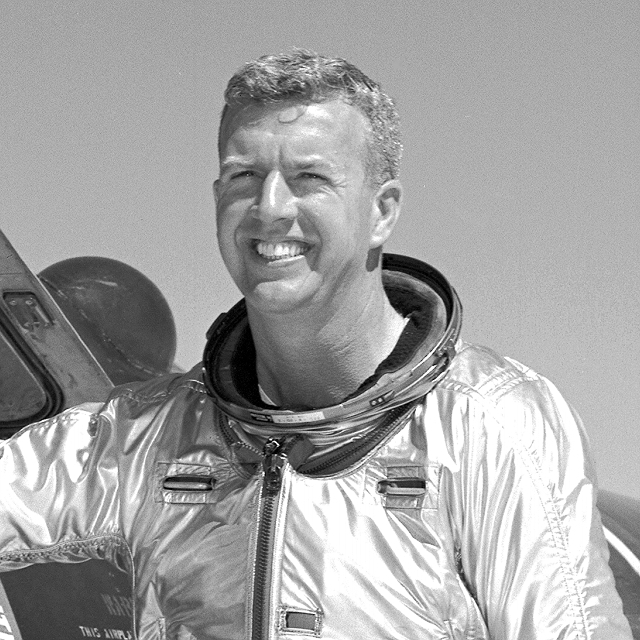
Earliest-born to reach space
Suborbital flight
- Man – Joe Walker (born 20 February 1921), on X-15 Flight 90 on 19 July 1963 (about 12 minutes.)
- Woman – Wally Funk (born 1 February 1939), on Blue Origin NS-16, on 20 July 2021 (about 10 minutes.)
Orbital spaceflight
- Man – Georgy Beregovoy (born 15 April 1921), on Soyuz 3 on 26 October 1968 (81 orbits in about 4 days.)
- Woman – Valentina Tereshkova (born 6 March 1937), on Vostok 6 on 16–19 June 1963 (48 orbits, about 3 days.)
Youngest
Suborbital flight
- Woman – Anastatia Mayers (aged ), on Galactic 02, on 10 August 2023 (about 5 minutes.)
- Man – Oliver Daemen (aged ), on Blue Origin NS-16, on 20 July 2021 (about 10 minutes.)
Orbital spaceflight
- Man – Gherman Titov (aged ), on Vostok 2 on 6 August 1961 (17.5 orbits, about 1 day.)
- Woman – Valentina Tereshkova (aged ), on Vostok 6 on 16–19 June 1963 (48 orbits, about 3 days.)
Oldest
Suborbital flight
- Man: Ed Dwight (aged ), on Blue Origin NS-25, on 19 May 2024 (about 10 minutes).
- Woman: Wally Funk (aged ), on Blue Origin NS-16, on 20 July 2021 (about 10 minutes).
Orbital spaceflight
- Man: John Glenn (aged ), on STS-95 on 29 October 1998 (about 9 days, 20 hours).
- Woman: Peggy Whitson (aged ), on Axiom Mission 4 on 25 June 2025 (about 20 days, 2 hours and 59 minutes).
Spacewalk
Youngest
- Woman – Sarah Gillis, (aged ), during Polaris Dawn.
- Man – Alexei Leonov (aged ), during Voskhod 2.
Oldest
- Man – Michael Barratt (aged ), during ISS Expedition 71.
- Woman – Sunita Williams (aged ), during ISS Expedition 72.
Spacewalk records
Most spacewalks (number and duration)
Both of these are the record for the largest total number of spacewalks by a male and a female, and the most cumulative time spent on spacewalks by a male and a female.
- Man – Anatoly Solovyev, 16 spacewalks for a total time of 82 hours, 21 minutes.
- Woman (number) – Peggy Whitson, 10 spacewalks for a total time of 60 hours, 21 minutes.
- Woman (cumulative time) – Sunita Williams, 9 spacewalks for a total time of 62 hours, and 6 minutes.
Most spacewalks during a single mission
- 7: Anatoly Solovyev, during Expedition 24 on the Soviet/Russian space station Mir, in 1997–98. (Two were internal "spacewalks" inside a depressurized module.)
- 7: Andrew Morgan, during his first spaceflight on board the ISS for Expedition 60/61/62 in 2019–2020, he spent 45 hours and 48 minutes outside the station.
Longest spacewalks
- Man – Cai Xuzhe and Song Lingdong, 9 hours 6 minutes, during the Shenzhou 19 mission on 17 December 2024, as they installed space debris protection devices on the exterior of the Tiangong Space Station.
- Woman – Susan Helms, 8 hours 56 minutes, along with James Voss on an ISS assembly mission during Shuttle mission STS-102 on 11 March 2001. The spacewalkers were delayed early in their excursion when a device to help hold an astronaut's feet to the shuttle's robot arm became untethered, and Voss had to retrieve a spare from storage on the exterior of the station's Unity module. After about six hours of work, the pair reentered Space Shuttle Discovery's airlock.
Greatest distance from a spacecraft during a spacewalk
- All-time (and while on a planetary body): 7.6 kilometers (4.7 miles, 25,029 feet), Apollo 17, Gene Cernan and Harrison Schmitt, EVA-2, December 12, 1972. During their second of three moonwalks, Cernan and Schmitt rode the Lunar Roving Vehicle to geological station 2, Nansen Crater, at the foot of the South Massif. As all spacewalks not occurring on a planetary body (the Moon) have involved short maximum distances from the spacecraft (see below), this remains the furthest distance that humans have traveled away from the safety of a pressurizable spacecraft, during an EVA of any type.
- Orbital flight: about 100 meters (or 330 feet), Bruce McCandless, STS-41-B, February 7, 1984. With the exception of six Manned Maneuvering Unit (MMU) sorties in 1984 and a test of the Simplified Aid For EVA Rescue (SAFER) in 1994, all other orbital spacewalks have involved a safety tether, anchoring the spacefarer to the spacecraft at a short distance. Of all spacewalks to date, Bruce McCandless' first test of the MMU established an orbital EVA distance record from a spacecraft which remained unbroken by later untethered EVAs.
Animal records
First animals in space
The first animals to enter space were fruit flies launched by the United States in 1947 aboard a V-2 rocket to an altitude of 68 mi. Albert II, a rhesus monkey, became the first mammal in space aboard a U.S. V-2 rocket on June 14, 1949, and died on reentry due to a parachute failure. The first dogs in space were launched 22 July 1951 aboard a Soviet R-1V. "Tsygin" and "Dezik" reached a height of 100 km and safely parachuted back to Earth.
First animal in orbit
Laika was a Soviet female canine launched on 3 November 1957 on Sputnik 2. The technology to de-orbit had not yet been developed, so there was no expectation for survival. She died several hours into flight. Belka and Strelka became the first canines to safely return to Earth from orbit on 19 August 1960.
First Hominidae in space
On 31 January 1961, through NASA's Mercury-Redstone 2 mission the chimpanzee Ham became the first great ape in space.
Longest canine single flight
Soviet space dogs Veterok (Ветерок, "Light Wind") and Ugolyok (Уголёк, "Ember") were launched on 22 February 1966 on board Cosmos 110 and spent 22 days in orbit before landing on 16 March.
First animals beyond low Earth orbit
An assortment of animals including a pair of Russian tortoises, as well as wine flies and mealworms flew around the Moon with a number of other biological specimens including seeds and bacteria on a circumlunar mission aboard the Soviet Zond 5 spacecraft on 18 September 1968. It had been launched by a Proton-K rocket on 14 September.
Zond 5 came within 2000 km of the Moon and then successfully returned to Earth, the first spacecraft in history to return safely to Earth from the Moon.
Notable uncrewed or non-human spaceflights
| In reference to: | Spacecraft | Event | Origin | Date | |||||||
|---|---|---|---|---|---|---|---|---|---|---|---|
| Earth | MW 18014 (A-4(V-2)) | First rocket to reach space (suborbital flight). | Nazi Germany Germany | 20 June 1944 | |||||||
| Earth | V-2 No. 20 | First living organisms (fruit flies) in space (suborbital flight). Successfully recovered. | USA USA | 20 February 1947 | |||||||
| Earth | V-2 No. 47 | First mammal in space, Albert II, a rhesus monkey (suborbital flight). Died in capsule parachute failure. | USA USA | 14 June 1949 | |||||||
| Earth | R-1V | First dogs in space (suborbital flight). Successfully recovered. | Soviet Union USSR | 22 July 1951 | |||||||
| Earth | Sputnik 1 | First satellite in orbit. | Soviet Union USSR | 4 October 1957 | |||||||
| Earth | Sputnik 2 | First animal in orbit, Laika, a dog. | Soviet Union USSR | 3 November 1957 | |||||||
| Earth | Vanguard 1 | Oldest satellite still in orbit, in addition to its upper launch stage. Expected to stay in orbit 240 years. Ceased transmission in May 1964. | United States USA | 17 March 1958 | |||||||
| Earth | Pioneer 1 | Failed to reach the Moon as intended, but reached a record–setting distance of 113,800 km from Earth. | United States USA | 11 October 1958 | |||||||
| Earth | Luna 1 | First spacecraft to achieve Earth's escape velocity. | Soviet Union USSR | 4 January 1959 | |||||||
| Moon | Luna 1 | First flyby. Distance of 5,995 km. | Soviet Union USSR | 4 January 1959 | |||||||
| Sun | Luna 1 | First spacecraft in heliocentric orbit. | Soviet Union USSR | 4 January 1959 | |||||||
| Moon | Luna 2 | First impact on another celestial body. | Soviet Union USSR | 14 September 1959 | |||||||
| Moon | Luna 3 | First image of lunar far-side. | Soviet Union USSR | 7 October 1959 | |||||||
| Earth | Discoverer 13 | First satellite recovered from orbit. | United States USA | 11 August 1960 | |||||||
| Earth | Korabl-Sputnik 2 | First living beings recovered from orbit. | USSR USSR | 19 August 1960 | |||||||
| Earth | Mercury-Redstone 2 | First great ape or Hominidae in space, Ham, a chimpanzee (suborbital flight). | USA USA | 31 January 1961 | |||||||
| Venus | Venera 1 | First flyby. Distance of 100,000 km (lost communication contact before). | Soviet Union USSR | 19 May 1961 | |||||||
| Moon | Ranger 4 | First spacecraft to impact the far side of the Moon. | United States USA | 26 April 1962 | |||||||
| Earth | Alouette 1 | First satellite designed and constructed by a country other than the USA or USSR (the British satellite Ariel 1, launched five months earlier, was designed and constructed by the USA). | Canada Canada | 29 September 1962 | |||||||
| Venus | Mariner 2 | First planetary flyby with communication contact. Distance of 34,762 km. | United States USA | 14 December 1962 | |||||||
| Earth | Lincoln Calibration Sphere 1 | Oldest spacecraft still in use (59 years ). | United States USA | 6 May 1965 | |||||||
| Mars | Mariner 4 | First flyby and first planetary imaging. Distance of 9,846 km. | United States USA | 14 July 1965 | |||||||
| Earth | Astérix | First satellite launched independently by a nation other than the USA or USSR (other nations had previously flown satellites launched on American rockets). | France France | 26 November 1965 | |||||||
| Moon | Luna 9 | First soft landing and first pictures from the lunar surface. | Soviet Union USSR | 3 February 1966 | |||||||
| Earth | Kosmos 110 | First seeds to germinate in space. | Soviet Union USSR | 22 February 1966 | |||||||
| Venus | Venera 3 | First impact. | Soviet Union USSR | 1 March 1966 | |||||||
| Moon | Luna 10 | First orbiter. | Soviet Union USSR | 3 April 1966 | |||||||
| Docking | Cosmos 186, Cosmos 188 | First automated docking of uncrewed spacecraft. | Soviet Union USSR | 30 October 1967 | |||||||
| Moon | Surveyor 6 | First planned, controlled, powered flight from the surface of another body. | United States USA | 17 November 1967 | |||||||
| Moon | Zond 5 | Soviet Union USSR | 15 September 1968 | ||||||||
| Moon | Luna 16 | First automated sample return. | Soviet Union USSR | 24 September 1970 | |||||||
| Moon | Luna 17 | First robotic roving vehicle, Lunokhod 1. | Soviet Union USSR | 17 November 1970 | |||||||
| Venus | Venera 7 | First soft landing on another planet. | Soviet Union USSR | 15 December 1970 | |||||||
| Earth | Salyut 1 | First space station. | Soviet Union USSR | 19 April 1971 | |||||||
| Mars | Mariner 9 | First orbiter. | United States USA | 14 November 1971 | |||||||
| Mars | Mars 2 | First impact. | Soviet Union USSR | 27 November 1971 | |||||||
| Mars | Mars 3 | First soft landing. Maintained telemetry signal for 20 seconds before transmissions ceased. | Soviet Union USSR | 2 December 1971 | |||||||
| Sun | Pioneer 10 | First spacecraft to achieve the Sun's escape velocity. | United States USA | 3 March 1972 | |||||||
| Jupiter | Pioneer 10 | First flyby. Distance of 132,000 km. | United States USA | 4 December 1973 | |||||||
| Mercury | Mariner 10 | First flyby. Distance of 703 km. | United States USA | 29 March 1974 | |||||||
| Venus | Venera 9 | Soviet Union USSR | 22 October 1975 | ||||||||
| Mars | Viking 1 | First surface-level imaging of Mars. | USA USA | 20 July 1976 | |||||||
| Saturn | Pioneer 11 | First flyby. Distance of 21,000 km. | United States USA | 1 September 1979 | |||||||
| Venus | Venera 13 | First sound recording made on another planet. | Soviet Union USSR | 1 March 1982 | |||||||
| Orbital Space Station | Soyuz T-5, Salyut 7 | First species of plant to flower in space. Arabidopsis thaliana Valentin Lebedev. | Soviet Union USSR | 1 July 1982 | |||||||
| Trans-Neptunian region | Pioneer 10 | First to travel past the orbit of Neptune, the furthest major planet from the Sun. | United States USA | 13 June 1983 | |||||||
| Venus | Vega 1 | First helium balloon atmospheric probe. First flight (as opposed to atmospheric entry) in another planet's atmosphere. | Soviet Union USSR | 11 June 1985 | |||||||
| Comet Giacobini-Zinner | International Cometary Explorer (ICE) | First flyby through a comet tail (no pictures). Distance of 7,800 km. | USA USA | 11 September 1985 | |||||||
| Uranus | Voyager 2 | First flyby. Distance of 81,500 km. | United States USA | 24 January 1986 | |||||||
| Comet Halley | Vega 1 | First comet flyby (with pictures returned). Distance of 8,890 km. | Soviet Union USSR | 6 March 1986 | |||||||
| Earth | Mir Core Module, Kvant-1 | First modular space station. | Soviet Union USSR | 9 April 1987 | |||||||
| Orbital Spaceplane | Buran | First fully automated orbital flight of a spaceplane (with airstrip landing). | Soviet Union USSR | 15 November 1988 | |||||||
| Phobos | Phobos 2 | First flyby. Distance of 860 km. | Soviet Union USSR | 21 February 1989 | |||||||
| Neptune | Voyager 2 | First flyby. Distance of 40,000 km. | United States USA | 25 August 1989 | |||||||
| Moon | Hiten | First lunar probe launched by a country other than the USA or USSR. | Japan Japan | 18 March 1990 | |||||||
| 951 Gaspra | Galileo | First asteroid flyby. Distance of 1,600 km. | United States USA | 29 October 1991 | |||||||
| Jupiter | Galileo probe | First impact. | United States USA | 7 December 1995 | |||||||
| Jupiter | Galileo | First orbiter. | United States USA | 8 December 1995 | |||||||
| Mars | Mars Pathfinder | First automated roving vehicle, Sojourner. | United States USA | 4 July 1997 | |||||||
| 433 Eros | NEAR Shoemaker | First asteroid orbiter. | United States USA | 14 February 2000 | |||||||
| 433 Eros | NEAR Shoemaker | First asteroid soft landing. | United States USA | 12 February 2001 | |||||||
| Saturn | Cassini orbiter | First orbiter. | 1 July 2004 | ||||||||
| Solar wind | Genesis | First sample return from farther than the Moon. | United States USA | 8 September 2004 | |||||||
| Titan | Huygens probe | First soft landing and the farthest landing ever made. | 14 January 2005 | ||||||||
| Comet Tempel 1 | Deep Impact | First comet impact. | United States USA | 4 July 2005 | |||||||
| 25143 Itokawa | Hayabusa | Japan Japan | 19 November 2005 | ||||||||
| 81P/Wild | Stardust | First sample return from comet. | United States USA | 15 January 2006 | |||||||
| Earth | Voyager 1 | United States USA | |||||||||
| Longest time in operation | Voyager 2 | Longest continually operating space probe (since August 1977). | United States USA | ||||||||
| Moon | Moon Impact Probe | First impact on Lunar south pole and discovery of water on Moon. | IND India | 14 November 2008 | |||||||
| Earth to Venus trajectory | IKAROS | First interplanetary solar sail. | Japan Japan | Set sail on 10 June 2010 | |||||||
| 25143 Itokawa | Hayabusa | First sample return from an asteroid. | Japan Japan | 13 June 2010 | |||||||
| Mercury | MESSENGER | First orbiter. | United States USA | 17 March 2011 | |||||||
| Earth–Sun L2 Lagrange point | Chang'e 2 | First spacecraft to reach the L2 Lagrangian point directly from lunar orbit. | China China | 25 August 2011 | |||||||
| International Space Station | SpaceX Dragon 1 | First commercial spacecraft to berth with the International Space Station. | United States USA | 25 May 2012 | |||||||
| Interstellar medium | Voyager 1 | First spacecraft to cross the heliopause, thereby exiting the heliosphere and entering interstellar space. | USA USA | 25 August 2012 | |||||||
| 4179 Toutatis | Chang'e 2 | China China | 13 December 2012 | ||||||||
| 67P/Churyumov–Gerasimenko | Rosetta | First comet orbiter. | [[File:ESA logo simple.svg | 20px | link=European Space Agency]] ESA | 6 August 2014 | |||||
| Mars | MOM | First Asian nation to achieve Mars orbit and first in the world to do so in first attempt. | India India | 24 September 2014 | |||||||
| 67P/Churyumov–Gerasimenko | Philae | First comet soft landing. | [[File:ESA logo simple.svg | 20px | link=European Space Agency]] ESA | 12 November 2014 | |||||
| Ceres | Dawn | First dwarf planet orbiter. | United States USA | 6 March 2015 | |||||||
| Mars | Opportunity | Longest distance traveled on surface of another world (26.219 mi, marathon-length). | United States USA | 23 March 2015 | |||||||
| Mercury | MESSENGER | First impact. | United States USA | 30 April 2015 | |||||||
| Pluto | New Horizons | United States USA | 14 July 2015 | ||||||||
| All 9 planets in the pre-IAU redefinition version of the Solar System | All United States spacecraft including New Horizons | With the New Horizons flyby of Pluto, the United States is the first nation to have its space probes explore all nine planets in the pre-2006 IAU redefinition version of the Solar System. | United States USA | 14 July 2015 | |||||||
| Earth | Falcon 9 (B1021) | First re-flight of an orbital class rocket stage after a vertical propulsive landing. | United States USA | 30 March 2017 | |||||||
| Earth | Shortest period between orbital launches (launched 72 seconds apart). | {{unbulleted list | United States USA | Japan Japan}} | |||||||
| 1.66 au heliocentric orbit | Elon Musk's Tesla Roadster on Falcon Heavy Test Flight | First successful Deep Space mission launched successfully on a rocket's maiden flight | USA USA | 6 February 2018 | |||||||
| Moon | Chang'e 4 | First soft landing at the far side of the Moon. | China China | 3 January 2019 | |||||||
| Moon | Yutu-2 | First lunar rover traversing the far side of the Moon. | China China | 3 January 2019 | |||||||
| Moon | Beresheet | First commercial/privately funded spacecraft to enter lunar orbit. | Israel Israel | 4 April 2019 | |||||||
| 101955 Bennu | OSIRIS-REx | Smallest body to be orbited by spacecraft (492 m diameter) and closest ever orbit (680 m altitude). | USA USA | 12 June 2019 | |||||||
| Moon | Yutu-2 | Longest operational lunar rover after breaking the longevity record of 321 Earth days held by Soviet Union's Lunokhod 1 rover. | China China | 20 November 2019 | |||||||
| Moon | Chang'e 5 | First robotic rendezvous and docking by two spacecraft (lunar orbiter attached with reentry-capsule and lunar ascent vehicle) in lunar orbit or any orbit other than Earth's. | China China | 5 December 2020 | |||||||
| Moon | Chang'e 5 | First robotic transfer of payload (lunar samples from lunar ascent vehicle to reentry capsule) between two docked spacecraft in lunar orbit or any orbit other than Earth's. | China China | 5 December 2020 | |||||||
| Mars | Ingenuity | First controlled, powered flight by a rotary wing aircraft on another planet. | USA USA | 19 April 2021 | |||||||
| Earth | Zhuque-2 | First methane-fueled rocket to reach orbit | China China | 12 July 2023 | |||||||
| Moon | Chandrayaan-3 | First soft landing at Lunar south polar region. | India India | 23 August 2023 | |||||||
| Moon | IM-1 Odysseus | First successful commercial and first cryogenic propelled lunar landing. First soft landing within the lunar south pole region at | USA USA | 22 February 2024 | |||||||
| Moon | Chang'e 6 | First sample collection and return from the far side of the Moon. | China China | 3 June, 25 June 2024 | |||||||
| Earth | Falcon 9 | Most consecutive launch successes of a single type of rocket: 365. | USA USA | 14 January 2017 – 8 July 2024 | |||||||
| Earth | Falcon 9 | Most consecutive landing successes of a single type of rocket stage: 267. | USA USA | 4 March 2021 – 20 August 2024 | |||||||
| Earth | Falcon 9 (B1067) | Most vertical landings of a single orbital rocket stage: 29. | USA USA | 3 June 2021 – 2 July 2025 | |||||||
| Earth | Falcon 9 (B1088) | Shortest time between two flights of the same orbital rocket stage: 9 days, 3 hours, 49 minutes | USA USA | 12 March 2025 - 21 March 2025 | |||||||
| Sun | Parker Solar Probe | Highest velocity of a spacecraft relative to the Sun: 191.7 km/s (690,000 km/h; 430,000 mph). | 24 December 2024 |
Notes
References
References
- Gebhardt, Chris. (12 April 2011). "Anniversaries: 50 years of human spaceflight – 30 years for Shuttle". NASASpaceFlight (not affiliated with NASA).
- (1 November 2011). "Mercury-Redstone 3 (Freedom 7)". NASA.
- (20 November 2006). "Mercury-Atlas 6 (Friendship 7)". NASA.
- (28 September 2005). "Making History: China's First Human Spaceflight". Space.com.
- (1967-03-23). "MAJOR SPACE "FIRSTS'-AN AMERICAN ASSESSMENT". [[Flight International.
- "Astronautix.com: Mercury MR-3".
- (1995). "Spaceflight: a Smithsonian Guide". Macmillan.
- Neal et al, p. 234.
- Rooney, Anne. (2014). "Space Record Breakers". Carlton.
- Neal et al., p. 235
- Neal et al, p. 86.
- Rooney, pp. 42–43.
- Pearlman, Robert. (17 June 2010). "Cosmonaut Leonid Kizim, Who Visited 2 Space Stations in 1 Mission, Dies". Space.com.
- Sheetz, Michael. (2020-05-30). "SpaceX launches two NASA astronauts to space for the first time in historic US mission".
- Potter, Sean. (2020-05-30). "NASA Astronauts Launch from America in Test of SpaceX Crew Dragon".
- "International Space Station Visiting Vehicles - NASA".
- McDowell, Jonathan. "First Space Force orbit data for Fram-2 out , showing it in a 202 x 413 km x 90.01 deg orbit".
- Bjørnstad, Nora Thorp. (2 December 2024). "Jannicke Mikkelsen blir første nordmann i verdensrommet: Her er det første bildet". VG.
- Rogge, Rabea. (27 November 2024). "We just completed another round of training!".
- (2025-12-01). "Space Station First: All Docking Ports Fully Occupied, 8 Spacecraft on Orbit".
- (20 December 2025). "Paraplegic engineer becomes the first wheelchair user to blast into space".
- (11 February 2015). "Astronaut Biography". NASA.
- "Госкорпорация «Роскосмос»".
- "ISS Expedition Reports".
- (2023-09-15). "One American, Two Russians Blast Off in Russian Spacecraft to International Space Station".
- (2005-08-16). "Krikalev Sets Time-in-Space Record". NASA.
- (29 June 2015). "Russian Cosmonaut Sets Record For Most Time Spent In Space". Penny4NASA.
- [https://www.bbc.com/news/science-environment-34231700 Russian astronaut record-breaker Padalka returns to Earth], BBC News, 12 September 2015
- "Astronauts and Cosmonauts (sorted by "Time in Space")". spacefacts.de.
- Northon, Karen. (2016-03-11). "Astronaut Scott Kelly to Retire from NASA in April".
- Schwirtz, Michael. (2009-03-30). "Staying Put on Earth, Taking a Step to Mars". The New York Times.
- Pearlman, Robert. (26 March 2015). "One Year in Space: A History of Ultra-Long Missions Off Planet Earth". Space.com.
- Zak, Anatoly. (2 January 2022). "Russian space program in 2021". RussianSpaceWeb.com.
- (6 February 2020). "Christina Koch Completes 328-Day Mission in Space".
- (27 December 2019). "Astronaut Christina Koch sets new record for longest single space flight by a woman". CBS News.
- Carroll, Michael. (2015). "Living Among Giants: Exploring and Settling the Outer Solar System". Springer.
- Leary, Warren. (4 Feb 1994). "Man in the News: Sergei Konstantinovich Krikalev; Symbol of New Cooperation". New York Times.
- (28 October 2010). "10 Years and Counting". NASA.
- "Astronautic World Records: Spacecraft with one astronaut – General category". Fédération Aéronautique Internationale.
- "Mission Report: Apollo 17 – The Most Productive Lunar Expedition". NASA.
- (April 1990). "Ronal Evans Biographical Data". NASA.
- Wall, Mike. (11 March 2015). "The Most Extreme Human Spaceflight Records". Space.com.
- "Apollo 13 The Seventh Mission: The Third Lunar Landing Attempt 11 April–17 April 1970". NASA.
- (August 19, 2024). "Polaris Dawn Mission Overview Briefing".
- Sawyer, Kathy. (8 October 1998). "John Glenn: The Second Time Around". [[The Washington Post]].
- (25 June 2025). "Ax-4 Crew Launches to International Space Station". [[Axiom Space]].
- "GCTC, Biographies of Cosmonauts: Solovyev, Anatoly Yakovlevich". Gagarin Cosmonaut Training Centre.
- (May 23, 2017). "Spacewalking astronauts pull off urgent station repairs". Los Angeles Daily News.
- (12 May 2017). "ISS astronauts complete 200th station EVA for maintenance tasks". NASASpaceflight.com.
- (2017). "Astronauts and Cosmonauts with EVA Experience (sorted by "EVA Time")".
- (30 January 2025). "Spacewalkers Complete Radio Hardware Removal and Microbe Search".
- "Astronauts and Cosmonauts with EVA Experience (sorted by "EVA Time")".
- Jones, Andrew. (2024-12-17). "Shenzhou-19 astronauts complete record-breaking 9-hour spacewalk".
- Harwood, William. (2001-03-11). "Marathon spacewalk sets new record".
- Swift, Earl. (2021). "Across the Airless Wilds". Custom House.
- "Apollo 17 Technical Air-to-Ground Voice Transcription".
- "Extravehicular Activity".
- Chaikin, Andrew. (October 2014). "Untethered". Air and Space Magazine.
- Tate, Karl. (17 April 2013). "Cosmic Menagerie: A History of Animals in Space (Infographic)". Space.com.
- (2011). "Russian Space Probes: Scientific Discoveries and Future Missions". Springer Praxis Books.
- "My steps for Bataan".
- "R-1V".
- Siddiqi. "Challenge to Apollo". NASA.
- (1998). "Protecting the space environment: Are we doing enough?". Space Policy.
- (5 March 2012). "Alouette I and II". Government of Canada.
- "Guinness World Record: First species of plant to flower in space".
- "Where are the Voyagers?".
- "Chandrayaan-1 Moon Impact Probe: Impact Location Refined".
- (2011-08-27). "Ching'e 2 to reaches liberation point 2".
- [http://usa.chinadaily.com.cn/china/2012-12/15/content_16020495.htm "China's space probe flies by asteroid Toutatis"] {{Webarchive. link. (2012-12-15 . Chinadaily.com.cn.16 December 2012.)
- esa. "Rosetta arrives at comet destination".
- Burke, Jason. (24 September 2014). "India's Mars satellite successfully enters orbit, bringing country into space elite". The Guardian.
- (12 November 2014). "Philae probe makes historic comet landing". BBC News.
- Barnett, Amanda. (6 March 2015). "NASA's Dawn spacecraft begins orbiting Ceres". CNN.
- McKirdy, Euan. (25 March 2015). "Opportunity rover celebrates marathon milestone". CNN.
- Corum, Jonathan. (30 April 2015). "Messenger's Collision Course With Mercury". The New York Times.
- (30 March 2017). "Used SpaceX Rocket Launches Satellite, Then Lands in Historic 1st Reflight".
- (6 January 2018). "TMRO:Space – Looking forward to 2018 – Orbit 11.01".
- (2017-12-23). "Falcon 9 Closes Record Year with 4th Iridium Launch, 1st Stage Disposal Gathers Flight Data – Falcon 9 – Iridium 4".
- (2017-12-23). "Japanese H-IIA Rocket Fires Into Orbit with Climate Change Satellite & Super-Low Altitude Testbed – H-IIA – GCOM-C1".
- "SpaceX launch dazzles, delivering 10 more satellites for Iridium – Spaceflight Now".
- "Successful Launch, H-IIA Launch Vehicle No. 37 Encapsulating SHIKISAI and TSUBAME".
- (2018-12-03). "NASA'S OSIRIS-REx Spacecraft Arrives at Asteroid Bennu". NASA.
- (2019-06-13). "NASA's OSIRIS-REx Mission Breaks Another Orbit Record". NASA.
- David, Leonard. (18 December 2019). "China's Farside Moon Rover Breaks Lunar Longevity Record". Space.com.
- "2nd LD-Writethru-Xinhua Headlines: China completes first spacecraft rendezvous, docking in lunar orbit, {{!}} The Star".
- Palca, Joe. (19 April 2021). "Success! NASA's Ingenuity Makes First Powered Flight On Mars". [[National Public Radio]].
- (12 July 2023). "China beats rivals to successfully launch first methane-liquid rocket". Reuters.
- (28 February 2024). "Intuitive Machines Press Release".
- Jones, Andrew. (2024-06-25). "Chang'e-6 delivers first lunar far side samples to Earth after 53-day mission".
- Ramakrishnan, Adithi. (27 December 2024). "NASA's Parker Solar Probe survives close brush with the sun's scorching surface". [[Associated Press]].
- "Parker Solar Probe Presskit".
This article was imported from Wikipedia and is available under the Creative Commons Attribution-ShareAlike 4.0 License. Content has been adapted to SurfDoc format. Original contributors can be found on the article history page.
Ask Mako anything about List of spaceflight records — get instant answers, deeper analysis, and related topics.
Research with MakoFree with your Surf account
Create a free account to save articles, ask Mako questions, and organize your research.
Sign up freeThis content may have been generated or modified by AI. CloudSurf Software LLC is not responsible for the accuracy, completeness, or reliability of AI-generated content. Always verify important information from primary sources.
Report