From Surf Wiki (app.surf) — the open knowledge base
List of space stations
none
none

Past stations
These stations have re-entered the atmosphere and disintegrated.
The Soviet Union ran two programs simultaneously in the 1970s, both of which were called Salyut publicly. The Long Duration Orbital Station (DOS) program was intended for scientific research into spaceflight. The Almaz program was a secret military program that tested space reconnaissance. = Never crewed
| Name | Program | |||||||||||||||||||||||||||||||||||
|---|---|---|---|---|---|---|---|---|---|---|---|---|---|---|---|---|---|---|---|---|---|---|---|---|---|---|---|---|---|---|---|---|---|---|---|---|
| Entity | Crew | |||||||||||||||||||||||||||||||||||
| size | Launched | Reentered | Days | |||||||||||||||||||||||||||||||||
| in orbit | Days | |||||||||||||||||||||||||||||||||||
| occu- | ||||||||||||||||||||||||||||||||||||
| pied | Total crew | |||||||||||||||||||||||||||||||||||
| and visitors | Number of | |||||||||||||||||||||||||||||||||||
| crewed visits | Number of | |||||||||||||||||||||||||||||||||||
| robotic visits | Mass | |||||||||||||||||||||||||||||||||||
| (* = at launch) | Pressurized | |||||||||||||||||||||||||||||||||||
| volume | ||||||||||||||||||||||||||||||||||||
| Salyut 1 | DOS-2 | Salyut 2 | Kosmos 557 | Skylab | Salyut 3 | Salyut 4 | Salyut 5 | Salyut 6 | Salyut 7 | Mir | Tiangong-1 | Tiangong-2 | ||||||||||||||||||||||||
| last=Harland | first=David Michael | url=https://books.google.com/books?id=sBdUh8WqEfYC&pg=PA341 | title=The Story Of Space Station Mir | series=Springer Praxis Books | year=2005 | isbn=978-0-387-73977-9 | page=351 | doi=10.1007/978-0-387-73977-9 | lccn=2004058915 | oclc=56531303 | ol=7444467M | publisher=Praxis Publishing }} | ||||||||||||||||||||||||
| Soviet Union MOM | ||||||||||||||||||||||||||||||||||||
| author=Grujica S. Ivanovich | title=Salyut - The First Space Station: Triumph and Tragedy | url=https://books.google.com/books?id=EbDGMiXvdG0C | year=2008 | publisher=Springer Science & Business Media | isbn=978-0-387-73973-1 | page=329 | bibcode=2008saly.book.....I}} | —The USSR intended to crew these stations with two men, however they re-entered the atmosphere before the cosmonauts were launched. | ||||||||||||||||||||||||||||
| Soviet Union RVSN | ||||||||||||||||||||||||||||||||||||
| Almaz | — | |||||||||||||||||||||||||||||||||||
| Soviet Union MOM | ||||||||||||||||||||||||||||||||||||
| url=http://ston.jsc.nasa.gov/collections/TRS/_techrep/RP1357.pdf | title=Mir Hardware Heritage | journal=NASA Sti/Recon Technical Report N | volume=95 | pages=23249 | author=D.S.F. Portree | year=1995 | access-date=30 November 2010 | url-status=dead | archive-url=https://web.archive.org/web/20090907191412/http://ston.jsc.nasa.gov/collections/TRS/_techrep/RP1357.pdf | archive-date=7 September 2009 }} (Full text available on Wikisource) | — | |||||||||||||||||||||||||
| Soviet Union MOM | ||||||||||||||||||||||||||||||||||||
| title=Space Enterprise: Living and Working Offworld in the 21st Century | last=Harris | first=Phillip | year=2008 | publisher=Springer | isbn=978-0-387-77639-2 | page=582 | url=https://books.google.com/books?id=b9RlRq_DP0UC&pg=PA582}} | |||||||||||||||||||||||||||||
| USA NASA | ||||||||||||||||||||||||||||||||||||
| Almaz | ||||||||||||||||||||||||||||||||||||
| Soviet Union MOM | ||||||||||||||||||||||||||||||||||||
| last1=Dudley-Rowley | first1=Marilyn | title=Space 2006 | year=2006 | chapter=The Mir Crew Safety Record: Implications for Space Colonization | page=2 | chapter-url=https://arc.aiaa.org/doi/10.2514/6.2006-7489 | publisher=American Institute of Aeronautics and Astronautics | doi=10.2514/6.2006-7489 | isbn=978-1-62410-049-9 }} | |||||||||||||||||||||||||||
| Soviet Union MOM | ||||||||||||||||||||||||||||||||||||
| Almaz | ||||||||||||||||||||||||||||||||||||
| Soviet Union MOM | ||||||||||||||||||||||||||||||||||||
| author=Grujica S. Ivanovich | title=Salyut - The First Space Station: Triumph and Tragedy | url=https://books.google.com/books?id=EbDGMiXvdG0C | year=2008 | publisher=Springer Science & Business Media | isbn=978-0-387-73973-1 | page=358 | bibcode=2008saly.book.....I}} | |||||||||||||||||||||||||||||
| Soviet Union MOM | ||||||||||||||||||||||||||||||||||||
| DOS | ||||||||||||||||||||||||||||||||||||
| Soviet Union MOM | ||||||||||||||||||||||||||||||||||||
| DOS | ||||||||||||||||||||||||||||||||||||
| Tiangong | 3 | 29 September 2011 | 2 April 2018 | 2377 | 22 | 6 | 2 | 1 | 8,506 kg | 15 m3 | ||||||||||||||||||||||||||
| China CMSA | ||||||||||||||||||||||||||||||||||||
| Tiangong | 2 | 15 September 2016 | 19 July 2019 | 1037 | 29 | 2 | 1 | 1 | 8,506 kg | 15 m3 | ||||||||||||||||||||||||||
| China CMSA |
Prototypes
These stations are prototypes; they only exist as testing platforms and were never intended to be crewed. OPS 0855 was part of a cancelled Manned Orbiting Laboratory project by the United States, while the Genesis stations were launched privately. The Genesis stations were "retired" when their avionics systems stopped working after two and a half years, yet they remained in orbit as derelict spacecraft as their orbits gradually degraded over the next 18 years. Both Genesis stations re-entered the atmosphere and were destroyed two months apart in mid-2025.
| Name | Entity | Program | Launched | Reentered | Days in orbit | Mass | Pressurized volume | OPS 0855 | Genesis I | Genesis II |
|---|---|---|---|---|---|---|---|---|---|---|
| USA USAF | MOL | 3 November 1966 | 9 January 1967 | 9680 kg | 11.3 m3 | |||||
| USA Bigelow Aerospace | 12 July 2006 | 2 July 2025 | 1360 kg | 11.5 m3 | ||||||
| 28 June 2007 | 2 September 2025 | 11.5 m3 |
Operational stations
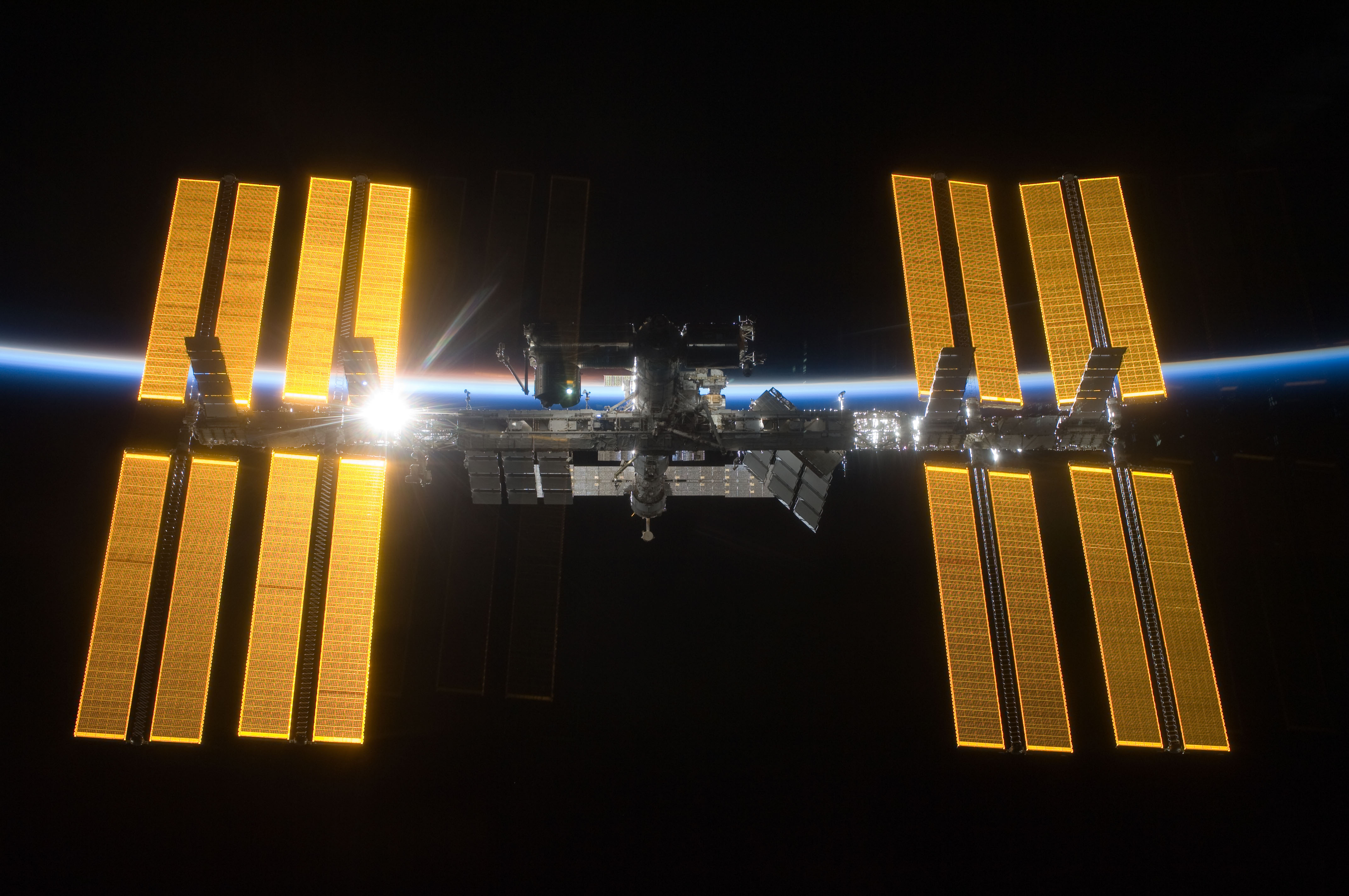
As of , two stations are orbiting Earth with life support system in place and fully operational.
| Name | Entity | Crew size | Launched | Days in orbitCorrect as of | Days | |||||||||||||||||||||
|---|---|---|---|---|---|---|---|---|---|---|---|---|---|---|---|---|---|---|---|---|---|---|---|---|---|---|
| occupied | Total crew | |||||||||||||||||||||||||
| and visitors | Crewed | |||||||||||||||||||||||||
| visits | Robotic | |||||||||||||||||||||||||
| visits | Mass | Pressurized | ||||||||||||||||||||||||
| volume | Habitable | |||||||||||||||||||||||||
| volume | International Space Station | Tiangong space station | ||||||||||||||||||||||||
| url=http://science.nationalgeographic.com/science/space/space-exploration/international-space-station-article/ | archive-url=https://web.archive.org/web/20110822062627/http://science.nationalgeographic.com/science/space/space-exploration/international-space-station-article/ | url-status=dead | archive-date=August 22, 2011 | title=International Space Station, ISS Information, Space Station Facts, News, Photos National Geographic | magazine=National Geographic | access-date=15 January 2012}} | 20 November 1998 | url=https://www.nasa.gov/feature/facts-and-figures/ | title=Facts and Figures | date=28 April 2016 | publisher=National Aeronautics and Space Administration | access-date=15 August 2020}} | url=http://www.russianspaceweb.com/iss_chronology_flights.html | title=A timeline of ISS missions | publisher=Russian Space Web | access-date=27 September 2016}} | 94 | 450000 kg | 1005 m3 | 388 m3 | ||||||
| 3–6 | 29 April 2021 | 30 | 10 | 8 | 100000 kg | 340 m3 | 122 m3 |
Planned and proposed
These space stations have been announced by their host entity and are currently in planning, development or production. The launch date listed here may change as more information becomes available.
| Name | Entity | Program | Crew size | Launch date | Planned Pressurized Volume | Remarks | Haven-1 | LIFE Pathfinder | StarMax | Axiom Station | Lunar Gateway | Orbital Reef | Russian Orbital Service Station | ||||||||||||||||||||||
|---|---|---|---|---|---|---|---|---|---|---|---|---|---|---|---|---|---|---|---|---|---|---|---|---|---|---|---|---|---|---|---|---|---|---|---|
| Bharatiya Antariksha Station | Starlab | Haven-2 | Lunar Orbital Station | ||||||||||||||||||||||||||||||||
| Artificial Gravity Station | Japanese Space Station Module (Mitsui) | ||||||||||||||||||||||||||||||||||
| USA Vast | Private | last=Etherington | first=Darrell | date=10 May 2023 | title=Vast and SpaceX aim to put the first commercial space station in orbit in 2025 | url=https://techcrunch.com/2023/05/10/vast-and-spacex-aim-to-put-the-first-commercial-space-station-in-orbit-in-2025/ | url-status=live | archive-url=https://archive.today/20231001204949/https://techcrunch.com/2023/05/10/vast-and-spacex-aim-to-put-the-first-commercial-space-station-in-orbit-in-2025/ | archive-date=1 October 2023 | access-date=10 May 2023 | work=TechCrunch }} | 80 m3 | title=VAST Announces the Haven-1 and VAST-1 Missions | url=https://www.vastspace.com/updates/vast-announces-the-haven-1-and-vast-1-human-spaceflight-mission-launched-by-spacex-on-a-dragon-spacecraft | url-status=live | archive-url=https://web.archive.org/web/20240801134516/https://www.vastspace.com/updates/vast-announces-the-haven-1-and-vast-1-human-spaceflight-mission-launched-by-spacex-on-a-dragon-spacecraft | archive-date=1 August 2024 | access-date=10 May 2023 | publisher=Vast Space LLC | place=Long Beach, California }} | |||||||||||||||
| USA Sierra Space | Private | 2026 | 285 m3 | last=Foust | first=Jeff | date=28 June 2023 | title=Sierra Space describes long-term plans for Dream Chaser and inflatable modules | url=https://spacenews.com/sierra-space-describes-long-term-plans-for-dream-chaser-and-inflatable-modules/ | url-status=live | archive-url=https://archive.today/20240823195824/https://spacenews.com/sierra-space-describes-long-term-plans-for-dream-chaser-and-inflatable-modules/ | archive-date=23 August 2024 | access-date=12 July 2023 | work=SpaceNews }} | ||||||||||||||||||||||
| USA Gravitics | Private | 2026 | 400 m3 | "The StarMax module provides up to 400 cubic meters of usable habitable volume - nearly half the volume of the International Space Station in one module." | |||||||||||||||||||||||||||||||
| USA Axiom Space | |||||||||||||||||||||||||||||||||||
| Private | last=Foust | first=Jeff | url=https://spacenews.com/axiom-space-revises-space-station-assembly-plans/ | title=Axiom Space revises space station assembly plans | work=SpaceNews | date=18 December 2024 | access-date=18 December 2024}} | Private, free flying space station for commercial tourism and science activities. | |||||||||||||||||||||||||||
| USA NASA | |||||||||||||||||||||||||||||||||||
| [[File:ESA logo simple.svg | 20px]] ESA | ||||||||||||||||||||||||||||||||||
| Canada CSA | |||||||||||||||||||||||||||||||||||
| Japan JAXA | Artemis | 2027 | ≥125 m3 (4,400 cu ft) | Intended to serve as a science platform and as a staging area for the lunar landings of NASA's Artemis program and follow-on human mission to Mars. | |||||||||||||||||||||||||||||||
| USA Blue Origin | |||||||||||||||||||||||||||||||||||
| USA Sierra Space | Private | 2027 | 830 m3 | "Commercial station in LEO for research, industrial, international, and commercial customers." | |||||||||||||||||||||||||||||||
| Russia Roscosmos | Russia's next generation space station. | 2027 | With Russia leaving the ISS programme sometime after 2024, Roscosmos announced this new space station in April 2021 as the replacement for that program. | ||||||||||||||||||||||||||||||||
| India ISRO | Indian Human Spaceflight Programme | title = ISRO Chairman announces details of Gaganyaan, Chandrayaan-2 and Missions to Sun& Venus India to have its own space station, says Dr K Sivan | url = http://pib.nic.in/newsite/PrintRelease.aspx?relid=190447 | date = 13 June 2019 | access-date = 18 June 2019 | publisher = Press Information Bureau}} | ~ 265 m3 | ISRO chairman K. Sivan announced in 2019 that India will not join the International Space Station, but will instead build a space station of its own. of 52 Tonne Mass It is intended to be completed 5–7 years after the conclusion of the Gaganyaan program. | |||||||||||||||||||||||||||
| USA NanoRacks | |||||||||||||||||||||||||||||||||||
| USA Voyager Space | |||||||||||||||||||||||||||||||||||
| European Union Airbus | |||||||||||||||||||||||||||||||||||
| CanadaMDA Space | |||||||||||||||||||||||||||||||||||
| JapanMitsubishi Corporation | Private | 2028 | ~450 m3 | "Commercial platform supporting a business designed to enable science, research, and manufacturing for customers around the world." | |||||||||||||||||||||||||||||||
| USA Vast | Private | 2028 | 1160 m3 | last=Foust | first=Jeff | date=13 October 2024 | title=Vast releases design of Haven-2 commercial space station | url=https://spacenews.com/vast-releases-design-of-haven-2-commercial-space-station/ | access-date=15 October 2024 | work=SpaceNews }} | |||||||||||||||||||||||||
| Russia Roscosmos | after 2030 | Proposed in 2007 and not developed further. | |||||||||||||||||||||||||||||||||
| United States Vast | Private | 2035 | 1400 m3 | ||||||||||||||||||||||||||||||||
| Japan JAXA | Mitsui & Co. | TBA | TBD | last=Foust | first=Jeff | date=9 July 2024 | title=Japanese venture seeks to develop commercial space station module | url=https://spacenews.com/japanese-venture-seeks-to-develop-commercial-space-station-module/ | url-status=live | archive-url=https://archive.today/20240713161739/https://spacenews.com/japanese-venture-seeks-to-develop-commercial-space-station-module/ | archive-date=13 July 2024 | work=SpaceNews }} |
Concepts
| Name | Entity | Crew Size | Pressurized Volume | Ref |
|---|---|---|---|---|
| Station in a Box | United States of America Above | TBD | ||
| Pioneer Station | TBD | |||
| Voyager Station | TBD | |||
| VERA Station | United States of America Gateway Spaceport LLC | 369,523 m3 | ||
| Gateway Spaceport | 11,906,250 m3 | |||
| Mars Base Camp | United States of America Lockheed Martin | TBD |
Cancelled projects

Most of these stations were canceled due to financial difficulties, or merged into other projects.
| Name | Entity | Crew | Cancellation | Remarks | Manned Orbiting Laboratory 1–7 | Skylab B | OPS-4 | Freedom | Mir-2 | Columbus MTFF | Galaxy | Sundancer | Almaz commercial | Tiangong-3 | OPSEK | B330 | Northrop Grumman CLD | ||||||||
|---|---|---|---|---|---|---|---|---|---|---|---|---|---|---|---|---|---|---|---|---|---|---|---|---|---|
| USA USAF | 2 | 1969 | Boilerplate mission launched successfully, wider project cancelled due to excessive costs | ||||||||||||||||||||||
| USA NASA | 3 | 1976 | Constructed, but launch cancelled due to lack of funding. Now a museum piece. | ||||||||||||||||||||||
| USSR USSR | 3 | 1979 | Constructed, but Almaz program cancelled in favour of uncrewed recon satellites. | ||||||||||||||||||||||
| USA NASA | 14–16 | 1993 | Merged to form the basis of the International Space Station. | ||||||||||||||||||||||
| Soviet Union USSR | |||||||||||||||||||||||||
| Russia Roscosmos | 2 | ||||||||||||||||||||||||
| [[File:ESA logo simple.svg | 20px]] ESA | 3 | |||||||||||||||||||||||
| USA Bigelow Aerospace | Robotic | 2007 | Canceled due to rising costs and ability to ground test key Galaxy subsystems | ||||||||||||||||||||||
| 3 | 2011 | Was under construction, but cancelled in favour of developing B330. | |||||||||||||||||||||||
| UK Excalibur Almaz | 4+ | 2016 | Soviet hardware was acquired, but never launched due to lack of funds. | ||||||||||||||||||||||
| China CNSA | 3 | 2017 | The goals for Tiangong-2 and 3 were merged, and were completed by a single station rather than two separate stations. | ||||||||||||||||||||||
| Russia Roscosmos | 2+ | 2017 | Some modules such as Nauka were launched and attached to the ISS- but proposals to split these off as a separate station were cancelled, and they instead remain part of the ISS. | ||||||||||||||||||||||
| USA Bigelow Aerospace | 3 | 2020 | Test articles were constructed but not flight ready hardware; cancelled due to the COVID-19 pandemic. | ||||||||||||||||||||||
| United States of America Northrop Grumman | date=2 December 2021 | title=Northrop Grumman Signs Agreement with NASA to Design Space Station for Low Earth Orbit | url=https://news.northropgrumman.com/news/releases/northrop-grumman-signs-agreement-with-nasa-to-design-space-station-for-low-earth-orbit | url-status=live | archive-url=https://web.archive.org/web/20240703133817/https://news.northropgrumman.com/news/releases/northrop-grumman-signs-agreement-with-nasa-to-design-space-station-for-low-earth-orbit | archive-date=3 July 2024 | access-date=3 July 2024 | publisher=Northrop Grumman | place=Dulles, Va. }} | 2023 | Developed under the Commercial LEO Destinations program, cancelled by Northrop Grumman to partner with Nanoracks on Starlab. |
Timeline
Size comparison
Notes
References
References
- (1999). "The Station: Russian Space History". [[KUHT.
- Harland, David Michael. (2005). "The Story Of Space Station Mir". [[Springer Science+Business Media.
- "Space Stations". ThinkQuest.
- "Salyut 1".
- Long, Tony. (19 April 2011). "April 19, 1971: Soviets Put First Space Station Into Orbit".
- "Space Station". World Almanac Education Group Inc..
- Vic Stathopoulos. "The first Space Station - Salyut 1". aerospaceguide.net.
- Gibbons, John H.. (2008). "Salyut: Soviet steps toward permanent human presence in space.". DIANE Publishing.
- Grujica S. Ivanovich. (2008). "Salyut - The First Space Station: Triumph and Tragedy". Springer Science & Business Media.
- Zimmerman, Robert. (2003). "Leaving Earth". Joseph Henry Press.
- "Salyut". Encyclopedia Astronautica.
- "Salyut".
- "Saylut 2". NASA.
- D.S.F. Portree. (1995). "Mir Hardware Heritage". NASA Sti/Recon Technical Report N.
- "NASA {{Ndash}} NSSDC {{Ndash}} Spacecraft {{Ndash}} Trajectory Details". National Aeronautics and Space Administration.
- "Large Uncontrolled Reentries". planet4589.org.
- Harris, Phillip. (2008). "Space Enterprise: Living and Working Offworld in the 21st Century". Springer.
- (2007). "After Sputnik: 50 Years of the Space Age". Smithsonian Institution with Harper Collins Books.
- "Skylab". Encyclopedia Astronautica.
- Stewart Taggart. (22 March 2001). "The Day the Sky(lab) Fell".
- "Skylab's Goals".
- (11 November 2003). "Skylab 30 Years Later". Space Daily.
- Tony Long. (11 July 2008). "July 11, 1979: Look Out Below! Here Comes Skylab!".
- (1992). "Skylab's Untimely Fate". Air & Space.
- "BBC {{Ndash}} Solar System {{Ndash}} Skylab (pictures, video, facts & news)". BBC.
- Zimmerman, Robert. (2003). "Leaving Earth". Joseph Henry Press.
- Furniss, Tim. (2003). "A History of Space Exploration: And Its Future...". Lyons Press.
- "Salyut-3 (OPS-2)". Russian Space Web.
- "Largest Objects to Reenter". Aerospace Corporation.
- "Resident Crews of Salyut 3". spacefacts.de.
- "Skylab". University of Oregon.
- (2006). "Space 2006". American Institute of Aeronautics and Astronautics.
- "Salyut 4". Encyclopedia Astronautica.
- "Salyut-4". Aerospaceguide.
- "The DOS Space Stations: Salyut 4". Zarya.info.
- "Spaceflight :Soviet Space Stations". Centennial of Flight.
- "Soyuz 21". Encyclopedia Astronautica.
- "OPS-3 (Salyut-5) space station". Russian Space Web.
- (1977). "Sixth Salyut Space Station Launched". Science News.
- "Salyut 5". Aerospaceguide.
- Grujica S. Ivanovich. (2008). "Salyut - The First Space Station: Triumph and Tragedy". Springer Science & Business Media.
- "Salyut 6". National Aeronautics and Space Administration.
- Robert Christy. "The DOS Space Stations: Expedition 5 (1981) and The End". Zarya.
- "Salyut 6". Aerospaceguide.
- "Salyut 6 (craft information)". Encyclopedia Astronautica.
- "Salyut 6". Encyclopedia Astronautica.
- "Almaz".
- "Salyut 7". Encyclopedia Astronautica.
- "Summary of Recovered Reentry Debris". Aerospace Corporation.
- "Salyut 7". National Aeronautics and Space Administration.
- Seth Borenstein. (16 November 1995). "Atlantis' Astronauts Bear Gifts To Mir Crew". Orlando Sentinel.
- Tony Long. (19 February 2008). "Feb. 19, 1986: Mir, the Little Space Station That Could".
- "Mir Space Station". National Aeronautics and Space Administration.
- "Mir". Encyclopedia Astronautica.
- "Space Station Mir". SpaceStationInfo.
- "Cabin Air Quality On Board ''Mir'' and the ''International Space Station''—A Comparison". National Aeronautics and Space Administration.
- Stephen Clark. "Chinese rocket successfully launches mini-space lab". Spaceflight Now.
- Ken Kremer. (29 September 2011). "China Blasts First Space Lab Tiangong 1 to Orbit". universetoday.com.
- (29 September 2011). "China Successfully Launches 1st Space Lab Module". Arabia 2000.
- (2018-04-02). "Tiangong-1 crash: Chinese space station comes down in Pacific Ocean". The Guardian.
- (2012-06-18). "Shenzhou 9 Docks with Tiangong 1". BBC.
- [[Shenzhou 10#Crew]]
- Amos, Jonathan. (2 November 2011). "Chinese spacecraft dock in orbit". BBC News.
- "Tiangong". Encyclopedia Astronautica.
- "Chinese Space Program {{pipe}} Tiangong 1 {{pipe}} SinoDefence.com". SinoDefence.com.
- "Directory of U.S. Military Rockets and Missiles". Designation Systems.
- "The Dnpur launcher". Russian Space Web.
- "CelesTrak: SATCAT Search Results, Genesis 1".
- Alan Boyle. (17 April 2007). "Private space station test delayed till May". NBC News.
- Tariq Malik and Leonard David. "Bigelow's Second Orbital Module Launches Into Space". Space.com.
- "CelesTrak: SATCAT Search Results, Genesis 2".
- "International Space Station, ISS Information, Space Station Facts, News, Photos {{Ndash}} National Geographic".
- "Facts and Figures". National Aeronautics and Space Administration.
- (28 April 2016). "Facts and Figures". National Aeronautics and Space Administration.
- "A timeline of ISS missions". Russian Space Web.
- (2023). "The International Space Station". National Aeronautics and Space Administration.
- Public Broadcasting Station. (28 April 2016). "Space Station {{pipe}} FYI {{pipe}} ISS Fact Sheet". PBS.
- Lutz, Eleanor. (2021-09-22). "A Tour of China's Future Tiangong Space Station". The New York Times.
- Etherington, Darrell. (10 May 2023). "Vast and SpaceX aim to put the first commercial space station in orbit in 2025". [[TechCrunch]].
- "VAST Announces the Haven-1 and VAST-1 Missions". Vast Space LLC.
- "LIFE® | Inflatable Space Station".
- Foust, Jeff. (28 June 2023). "Sierra Space describes long-term plans for Dream Chaser and inflatable modules". [[SpaceNews]].
- "Gravitics".
- Foust, Jeff. (18 December 2024). "Axiom Space revises space station assembly plans". [[SpaceNews]].
- (12 June 2023). "NASA's Gateway Program". [[NASA]].
- "Blue Origin andn Sierra Space Developing Commercial Space Station".
- "Russia to set up national orbital outpost in 2027 — Roscosmos".
- (13 June 2019). "ISRO Chairman announces details of Gaganyaan, Chandrayaan-2 and Missions to Sun& Venus India to have its own space station, says Dr K Sivan". [[Press Information Bureau]].
- "India planning to have own space station: ISRO chief".
- "India's Space Exploration Roadmap".
- Singh, Surendra. (13 June 2019). "India's own space station to come up in 5–7 years: Isro chief". [[The Times of India]].
- Jewett, Rachel. (2 August 2023). "Voyager Space and Airbus to Form Joint Venture for Starlab Commercial Space Station". Via Satellite.
- (2023-08-02). "Airbus et Voyager vont créer une coentreprise pour la construction d'une station spatiale".
- "Starlab - A New-Era Space Destination".
- "Roadmap — VAST".
- Foust, Jeff. (13 October 2024). "Vast releases design of Haven-2 commercial space station". [[SpaceNews]].
- Ahatoly Zak. "Lunar Orbital Station, LOS". Russian Space Web.
- Xinhua. (28 April 2012). "Russia unveils space plan beyond 2030". [[China Central Television]].
- Foust, Jeff. (9 July 2024). "Japanese venture seeks to develop commercial space station module". [[SpaceNews]].
- (26 September 2023). "Space Compass initiates feasibility study to commercialize telecom and on-orbit data processing for post-ISS Japanese Module". Space Compass Corporation.
- (14 September 2023). "Mitsui selected to conduct a concept study of Japanese module". [[Mitsui]].
- "ABOVE - Providing More Space in Space".
- Admin. (2022-05-10). "Introducing Pioneer Station » ABOVE: Media".
- "VERA Station".
- "The Gateway".
- "Mars Base Camp".
- (2007). "After Sputnik: 50 Years of the Space Age". [[Smithsonian Institution.
- "Spaceflight: The International Space Station and Its Predecessors".
- (2007). "NASA'S scientist-astronauts". Springer.
- astronautix.com. "Skylab B". astronautix.com.
- "Almaz".
- "Space Station Freedom".
- "ISS Elements: Service Module ("Zvezda")". spaceref.com.
- Cohen, Dan. "Developing a Galaxy". [[Bigelow Aerospace]].
- (14 August 2007). "Bigelow Aerospace Fast-Tracks Manned Spacecraft". [[Space.com]].
- (2 December 2021). "Northrop Grumman Signs Agreement with NASA to Design Space Station for Low Earth Orbit". [[Northrop Grumman]].
This article was imported from Wikipedia and is available under the Creative Commons Attribution-ShareAlike 4.0 License. Content has been adapted to SurfDoc format. Original contributors can be found on the article history page.
Ask Mako anything about List of space stations — get instant answers, deeper analysis, and related topics.
Research with MakoFree with your Surf account
Create a free account to save articles, ask Mako questions, and organize your research.
Sign up freeThis content may have been generated or modified by AI. CloudSurf Software LLC is not responsible for the accuracy, completeness, or reliability of AI-generated content. Always verify important information from primary sources.
Report