From Surf Wiki (app.surf) — the open knowledge base
List of mammals of Oman
none
none
This is a list of the mammal species recorded in Oman. There are at least 62 mammal species in Oman that have been assessed by the International Union for Conservation of Nature (IUCN), of these, one is critically endangered, four are endangered, eight are vulnerable, and two are near threatened.
The following tags are used to highlight each species' conservation status as assessed by the IUCN:
| DD | Data deficient | There is inadequate information to make an assessment of the risks to this species. |
|---|
Order: [[Hyracoidea]] (hyraxes)
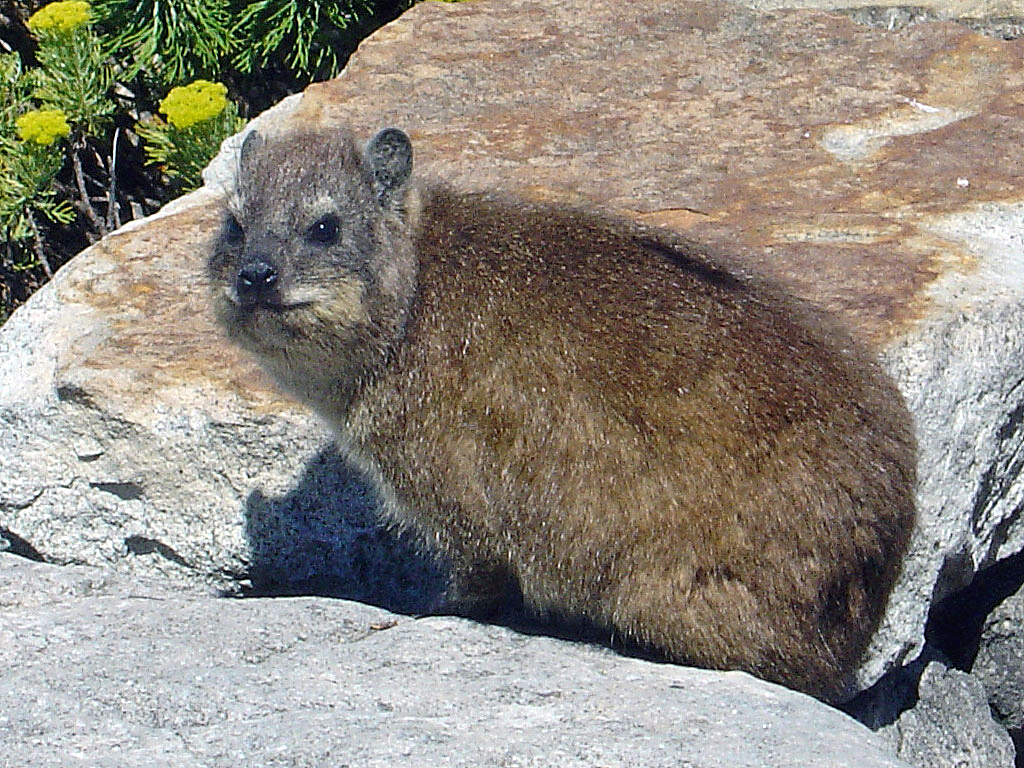
The hyraxes are any of four species of fairly small, thickset, herbivorous mammals in the order Hyracoidea. About the size of a domestic cat they are well-furred, with rounded bodies and a stumpy tail. They are native to Africa and the Middle East.
- Family: Procaviidae (hyraxes)
- Genus: Procavia
- Cape hyrax, P. capensis
- Genus: Procavia
Order: [[Sirenia]] (manatees and dugongs)
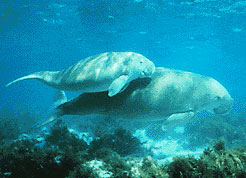
Sirenia is an order of fully aquatic, herbivorous mammals that inhabit rivers, estuaries, coastal marine waters, swamps, and marine wetlands. All four species are endangered.
- Family: Dugongidae
- Genus: Dugong
- Dugong, D. dugon
- Genus: Dugong
Order: [[Rodent]]ia (rodents)
Rodents make up the largest order of mammals, with over 40% of mammalian species. They have two incisors in the upper and lower jaw which grow continually and must be kept short by gnawing. Most rodents are small though the capybara can weigh up to 45 kg.
- Suborder: Sciurognathi
- Family: Dipodidae (jerboas)
- Subfamily: Dipodinae
- Genus: Jaculus
- Lesser Egyptian jerboa, J. jaculus
- Genus: Jaculus
- Subfamily: Dipodinae
- Family: Muridae (mice, rats, voles, gerbils, hamsters, etc.)
- Subfamily: Deomyinae
- Genus: Acomys
- Cairo spiny mouse, Acomys cahirinus LC
- Golden spiny mouse, Acomys russatus LC
- Genus: Acomys
- Subfamily: Gerbillinae
- Genus: Gerbillus
- Cheesman's gerbil, Gerbillus cheesmani LC
- Wagner's gerbil, Gerbillus dasyurus LC
- Pygmy gerbil, Gerbillus henleyi LC
- Balochistan gerbil, Gerbillus nanus LC
- Genus: Meriones
- Arabian jird, Meriones arimalius EN
- Genus: Hystrix
- Indian crested porcupine, Hystrix indica LC
- Genus: Gerbillus
- Subfamily: Deomyinae
- Family: Dipodidae (jerboas)
Order: [[Lagomorpha]] (lagomorphs)
Lagomorphs comprise rabbits, hares, and pikas. Unlike rodents, they have four incisors on their upper jaws.
- Family: Leporidae (rabbits and hares)
- Genus: Lepus
- Cape hare, L. capensis
- Genus: Lepus
Order: [[Erinaceomorpha]] (hedgehogs and gymnures)
The order Erinaceomorpha contains a single family, Erinaceidae, which comprise the hedgehogs and gymnures. The hedgehogs are easily recognised by their spines while gymnures look more like large rats.
- Family: Erinaceidae (hedgehogs)
- Subfamily: Erinaceinae
- Genus: Paraechinus
- Desert hedgehog, P. aethiopicus
- Genus: Paraechinus
- Subfamily: Erinaceinae
Order: [[Soricomorpha]] (shrews, moles, and solenodons)
The "shrew-forms" are insectivorous mammals. The shrews and solenodons closely resemble mice while the moles are stout-bodied burrowers.
- Family: Soricidae (shrews)
- Subfamily: Crocidurinae
- Genus: Crocidura
- Arabian shrew, C. arabica LC
- Dhofar shrew, C. dhofarensis DD
- Genus: Crocidura
- Subfamily: Crocidurinae
Order: [[Chiroptera]] (bats)
The bats' most distinguishing feature is that their forelimbs are developed as wings, making them the only mammals capable of flight. Bat species account for about 20% of all mammals.
- Family: Pteropodidae (flying foxes, Old World fruit bats)
- Subfamily: Pteropodinae
- Genus: Rousettus
- Egyptian fruit bat, Rousettus aegyptiacus LC
- Genus: Rousettus
- Subfamily: Pteropodinae
- Family: Vespertilionidae
- Subfamily: Myotinae
- Genus: Myotis
- Geoffroy's bat, Myotis emarginatus VU
- Genus: Myotis
- Subfamily: Vespertilioninae
- Genus: Eptesicus
- Botta's serotine, Eptesicus bottae LC
- Genus: Hypsugo
- Arabian pipistrelle, Hypsugo arabicus VU
- Bodenheimer's pipistrelle, Hypsugo bodenheimeri LC
- Genus: Nyctalus
- Common noctule, Nyctalus noctula LC
- Genus: Otonycteris
- Desert long-eared bat, Otonycteris hemprichii LC
- Genus: Pipistrellus
- Kuhl's pipistrelle, Pipistrellus kuhlii LC
- Genus: Rhyneptesicus
- Sind bat, R. nasutus
- Genus: Eptesicus
- Subfamily: Myotinae
- Family: Rhinopomatidae
- Genus: Rhinopoma
- Egyptian mouse-tailed bat, R. cystops
- Lesser mouse-tailed bat, Rhinopoma hardwickii LC
- Greater mouse-tailed bat, Rhinopoma microphyllum LC
- Small mouse-tailed bat, Rhinopoma muscatellum LC
- Genus: Rhinopoma
- Family: Molossidae
- Genus: Tadarida
- Egyptian free-tailed bat, Tadarida aegyptiaca LC
- Genus: Tadarida
- Family: Rhinolophidae
- Subfamily: Rhinolophinae
- Genus: Rhinolophus
- Blasius's horseshoe bat, R. blasii
- Geoffroy's horseshoe bat, Rhinolophus clivosus LC
- Genus: Rhinolophus
- Subfamily: Hipposiderinae
- Genus: Asellia
- Trident leaf-nosed bat, Asellia tridens LC
- Genus: Triaenops
- Persian trident bat, Triaenops persicus LC
- Genus: Asellia
- Subfamily: Rhinolophinae
Order: [[Cetacea]] (whales)


The order Cetacea includes whales, dolphins and porpoises. They are the mammals most fully adapted to aquatic life with a spindle-shaped nearly hairless body, protected by a thick layer of blubber, and forelimbs and tail modified to provide propulsion underwater.
- Suborder: Mysticeti
- Family: Balaenidae
- Family: Balaenopteridae
- Subfamily: Balaenopterinae
- Genus: Balaenoptera
- Blue whale, Balaenoptera musculus EN
- Genus: Balaenoptera
- Subfamily: Megapterinae
- Genus: Megaptera
- Humpback whale, M. novaeangliae
- Genus: Megaptera
- Subfamily: Balaenopterinae
- Suborder: Odontoceti
- Superfamily: Platanistoidea
- Family: Phocoenidae
- Genus: Neophocaena
- Indo-Pacific finless porpoise, Neophocaena phocaenoides DD
- Genus: Neophocaena
- Family:Physeteridae
- Genus: Physeter
- Sperm whale, Physeter macrocephalus VU
- Genus: Physeter
- Family: Kogiidae
- Genus: Kogia
- Pygmy sperm whale, K. breviceps DD
- Dwarf sperm whale, Kogia sima LC
- Genus: Kogia
- Family: Ziphidae
- Subfamily: Hyperoodontinae
- Genus: Mesoplodon
- Blainville's beaked whale, Mesoplodon densirostris DD
- Genus: Mesoplodon
- Subfamily: Hyperoodontinae
- Family: Delphinidae (marine dolphins)
- Genus: Steno
- Rough-toothed dolphin, Steno bredanensis DD
- Genus: Sousa
- Indian Ocean humpback dolphin, Sousa plumbea DD
- Genus: Tursiops
- Bottlenose dolphin, Tursiops aduncus DD
- Genus: Stenella
- Pantropical spotted dolphin, Stenella attenuata LC
- Striped dolphin, Stenella coeruleoalba LC
- Spinner dolphin, Stenella longirostris LC
- Genus: Delphinus
- Common dolphin, Delphinus capensis LC
- Genus: Lagenodelphis
- Fraser's dolphin, Lagenodelphis hosei DD
- Genus: Grampus
- Risso's dolphin, Grampus griseus DD
- Genus: Feresa
- Pygmy killer whale, Feresa attenuata DD
- Genus: Pseudorca
- False killer whale, Pseudorca crassidens LC
- Genus: Orcinus
- Orca, O. orca DD
- Genus: Steno
- Family: Phocoenidae
- Superfamily: Platanistoidea
Order: [[Carnivora]] (carnivorans)

.jpg)
There are over 260 species of carnivorans, the majority of which feed primarily on meat. They have a characteristic skull shape and dentition.
- Suborder: Feliformia
- Family: Felidae (cats)
- Subfamily: Felinae
- Genus: Caracal
- Caracal, C. caracal
- Genus: Felis
- African wildcat, F. lybica
- Sand cat, F. margarita
- Genus: Caracal
- Subfamily: Pantherinae
- Genus: Panthera
- Leopard, Panthera pardus
- Arabian leopard, Panthera pardus nimr
- Leopard, Panthera pardus
- Genus: Panthera
- Subfamily: Felinae
- Family: Viverridae
- Subfamily: Viverrinae
- Genus: Genetta
- Common genet, G. genetta
- Genus: Genetta
- Subfamily: Viverrinae
- Family: Herpestidae (mongooses)
- Genus: Ichneumia
- White-tailed mongoose, I. albacauda
- Genus: Ichneumia
- Family: Hyaenidae (hyaenas)
- Genus: Hyaena
- Striped hyena, H. hyaena
- Genus: Hyaena
- Family: Felidae (cats)
- Suborder: Caniformia
- Family: Canidae (dogs, foxes)
- Genus: Vulpes
- Blanford's fox, V. cana
- Rüppell's fox, V. rueppellii
- Red fox, V. vulpes
- Genus: Canis
- Golden jackal, C. aureus
- Gray wolf, C. lupus
- Arabian wolf, Canis lupus arabs
- Family: Phocidae (earless seals)
- Genus: Mirounga
- Southern elephant seal, M. leonina vagrant
- Genus: Mirounga
- Genus: Vulpes
- Family: Mustelidae (mustelids)
- Genus: Mellivora
- Honey badger, M. capensis
- Genus: Mellivora
- Family: Canidae (dogs, foxes)
Order: [[Artiodactyla]] (even-toed ungulates)

The even-toed ungulates are ungulates whose weight is borne about equally by the third and fourth toes, rather than mostly or entirely by the third as in perissodactyls. There are about 220 artiodactyl species, including many that are of great economic importance to humans.
- Family: Bovidae (cattle, antelope, sheep, goats)
- Subfamily: Antilopinae
- Genus: Gazella
- Arabian gazelle, G. arabica
- Arabian sand gazelle, G. marica
- Genus: Gazella
- Subfamily: Caprinae
- Genus: Arabitragus
- Arabian tahr, A. jayakari
- Genus: Capra
- Nubian ibex, C. nubiana
- Genus: Ovis
- Urial, O. vignei presence uncertain, possibly introduced
- Oman urial, O. v. arabica
- Urial, O. vignei presence uncertain, possibly introduced
- Genus: Arabitragus
- Subfamily: Hippotraginae
- Genus: Oryx
- Arabian oryx, O. leucoryx reintroduced
- Genus: Oryx
- Subfamily: Antilopinae
References
References
- This list is in part derived from the [[IUCN Red List]] which lists species of mammals and includes those mammals that have recently been classified as extinct (since 1500 AD). The taxonomy and naming of the individual species is based on those used in existing Wikipedia articles as of 21 May 2007 and supplemented by the common names and taxonomy from the IUCN, Smithsonian Institution, or University of Michigan where no Wikipedia article was available.
- (2019). "''Dugong dugon''".
- (2019). "''Rhyneptesicus nasutus''".
- Benda, P.. (2017). "''Rhinopoma cystops''".
- Taylor, P.. (2016). "''Rhinolophus blasii''".
- Cooke, J.G.. (2018). "''Megaptera novaeangliae''".
- Taylor, B.L.. (2012). "''Kogia breviceps''".
- Reeves, R.. (2017). "''Orcinus orca''".
- Avgan, B.. (2016). "''Caracal caracal''".
- Sliwa, A.. (2016). "''Felis margarita''".
- Stein, A. B.. (2016). "''Panthera pardus''".
- (2015). "''Genetta genetta''".
- Do Linh San, E.. (2015). "''Ichneumia albicauda''".
- (2015). "''Hyaena hyaena''".
- Hoffmann, M.. (2015). "''Vulpes cana''".
- Mallon, D.. (2015). "''Vulpes rueppelli''".
- Hoffmann, M.. (2016). "''Vulpes vulpes''".
- Hoffmann, M.. (2018). "''Canis aureus''".
- (2018). "''Canis lupus''".
- Hofmeyr, G.J.G.. (2015). "''Mirounga leonina''".
- (2016). "''Mellivora capensis''".
- IUCN SSC Antelope Specialist Group. (2017). "''Gazella arabica''".
- IUCN SSC Antelope Specialist Group. (2017). "''Gazella marica''".
- Ross, S.. (2020). "''Capra nubiana''".
- Michel, S.. (2020). "''Ovis vignei''".
This article was imported from Wikipedia and is available under the Creative Commons Attribution-ShareAlike 4.0 License. Content has been adapted to SurfDoc format. Original contributors can be found on the article history page.
Ask Mako anything about List of mammals of Oman — get instant answers, deeper analysis, and related topics.
Research with MakoFree with your Surf account
Create a free account to save articles, ask Mako questions, and organize your research.
Sign up freeThis content may have been generated or modified by AI. CloudSurf Software LLC is not responsible for the accuracy, completeness, or reliability of AI-generated content. Always verify important information from primary sources.
Report