From Surf Wiki (app.surf) — the open knowledge base
List of eating utensils
None
None

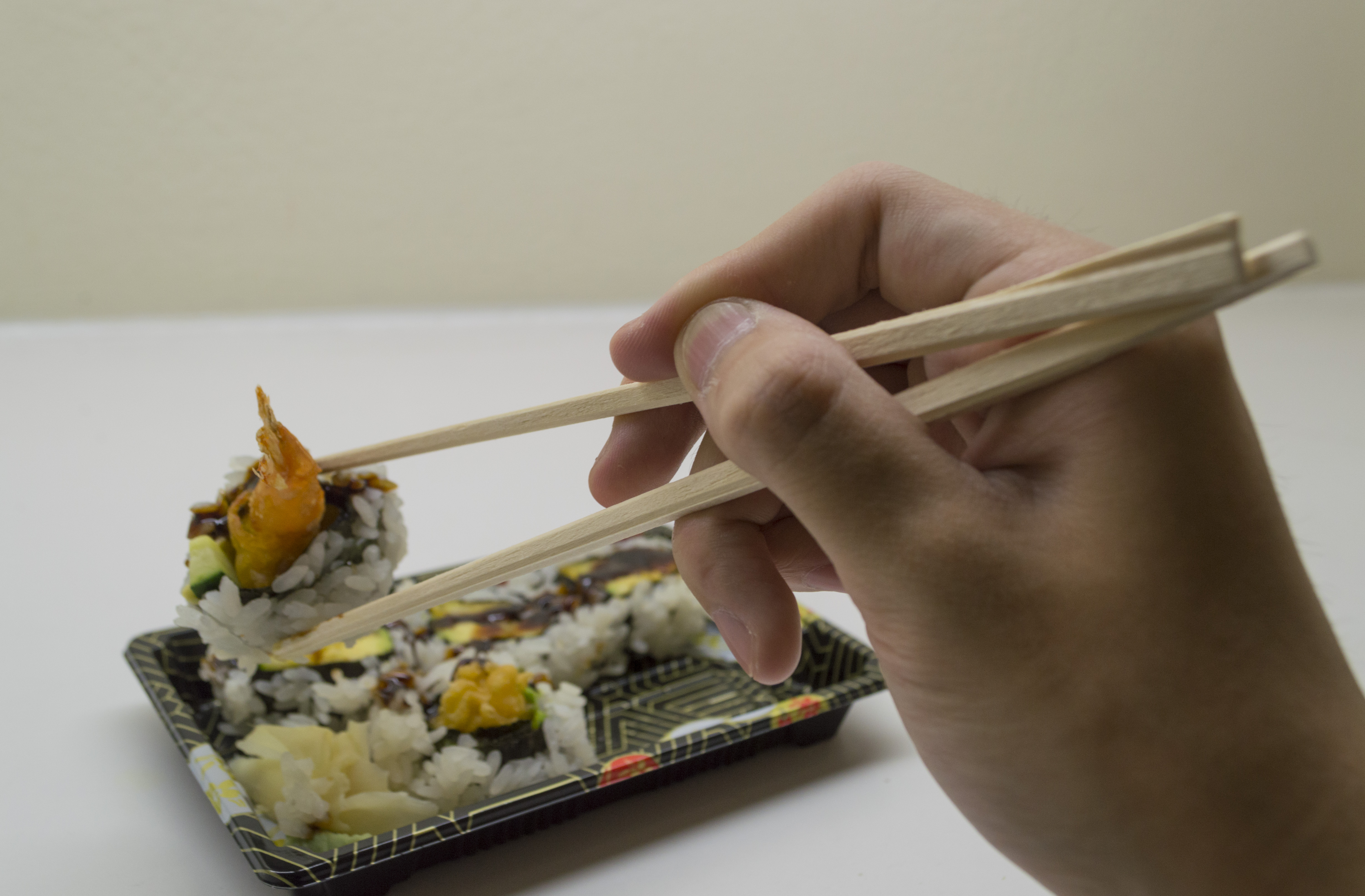
A variety of eating utensils have been used by people to aid eating when dining. Most societies traditionally use bowls or dishes to contain food to be eaten, but while some use their hands to deliver this food to their mouths, others have developed specific tools for the purpose. In Western cultures, cutlery items such as knives and forks are the traditional norm, while in much of the East, chopsticks are more common. Spoons are ubiquitous.
History
In some cultures, such as Ethiopian and Indian, hands alone are used or bread takes the place of non-edible utensils. In others, such as Japanese and Chinese, where bowls of food are more often raised to the mouth, little modification from the basic pair of chopsticks and a spoon has taken place. Western culture has taken the development and specialization of eating utensils further, with the result that multiple utensils may appear in a dining setting, each with a different name and purpose. With the evolution of people's eating habits, further modification continues to take place, mostly in the West.
List of utensil types
- Spoon**/**Tablespoon – List of types of spoons
- Fork – Western/Southeast Asian utensils
- Knife
- Chopsticks – East and Southeast Asian utensil
- Skewer
- Tongs
- Toothpick / Cocktail stick
- Drinking straw
- Food pusher - a utensil with a blade set at 90° to the handle, used for pushing food onto a spoon or fork
Utensils for specific foods
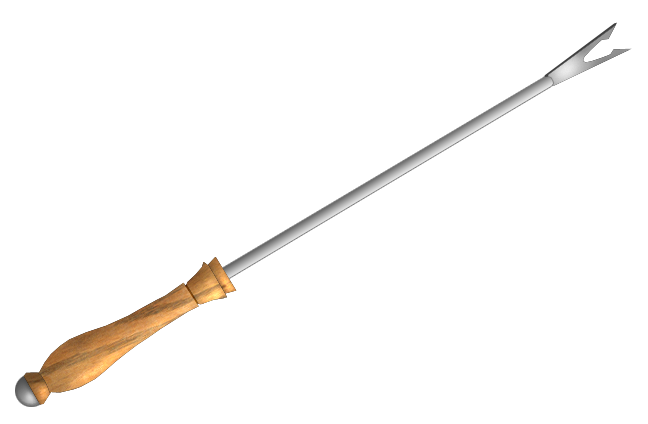
Some utensils are designed for eating or preparing specific foods:
- Butter knife
- Cake fork
- Soup spoon
- Crab cracker
- Crab fork
- Fish knife
- Fondue fork
- Grapefruit knife
- Grapefruit spoon
- Lobster pick
- Snail tongs and forks
- Nutcracker
- Ice cream scoop
- Steak knife
- Tongs for:
- Sugar (Sugar tongs)
- Asparagus
- Honey dipper
- Meat claws (used to shred barbecue meats such as brisket)
Combination utensils
Main article: Combination eating utensils


Over time, traditional utensils have been modified in various ways in attempts to make eating more convenient or to reduce the total number of utensils required. These are typically called combination utensils.
- Chopfork – A utensil with a fork at one end and chopsticks/tongs at the other.
- Chork – Pointed and slightly curved tongs, which can be used like chopsticks (as pincers) or as a fork (for spearing). A different kind of chork is a fork with a split handle, which can be broken in half to make two chopsticks.
- Forkchops – Used in a pair, these are basically a pair of chopsticks with a small fork and knife on the non-pointed ends.
- Spoon and Chopstick Hybrid – Pointed and slightly curved tongs, which can be used like chopsticks or as a spoon.
- Knife and Chopstick Hybrid – Pointed and slightly curved tongs, which can be used like chopsticks or as a knife.
- Knork – A knife with a single tine, sharpened or serrated, set into the anterior end of the blade.
- Pastry fork – A fork with a cutting edge along one of the tines.
- Spifork - A utensil consisting of a spoon, knife, and fork.
- Spoon straw – A scoop-ended drinking straw intended for slushies and milkshakes.
- Sporf – A utensil consisting of a spoon on one end, a fork on the other, and edge tines that are sharpened or serrated.
- Spork – Spoon and fork
- Splayd – Spoon and fork and knife
- Spife – Spoon and knife.
- FRED - Can opener, bottle opener, and spoon combination issued by the Australian Defence Force.
Disposable utensils
Prepackaged products may come with a utensil intended to be consumed or discarded after using it to consume the product. For instance, some single-serve ice cream is sold with a flat wooden spade, often erroneously called a "spoon", to lift the product to one's mouth. Prepackaged tuna salad or cracker snacks may contain a flat plastic spade for similar purposes.
References
References
- "Food Pushers".
- Oulton, Randal. (2018-05-10). "Asparagus Tongs".
- "And all I got was this lousy.. Chopforks!". sinosoul.com.
- Gim, Sarah J.. (2007-02-16). "Chork: Chopstick forks for your Asian fusion cuisine". Slashfood.
- Cognito. (2007-03-27). "The Chork - AKA The Chopstick Fork". Trendhunter.com.
- (2010-06-02). "From Spork to Chork « Will BLANK For Food". Willblankforfood.net.
- Tisah Tucknott. "Cheater Chopsticks - Forkchops Lets Westerners Eat Like Asians (GALLERY)". Trendhunter.com.
- "Combination eating utensil".
- "Spifork".
- "TESS -- Error".
- "The Nutella Spife". The Cutlery Review.
- "Australian field ration eating device {{!}} Australian War Memorial".
This article was imported from Wikipedia and is available under the Creative Commons Attribution-ShareAlike 4.0 License. Content has been adapted to SurfDoc format. Original contributors can be found on the article history page.
Ask Mako anything about List of eating utensils — get instant answers, deeper analysis, and related topics.
Research with MakoFree with your Surf account
Create a free account to save articles, ask Mako questions, and organize your research.
Sign up freeThis content may have been generated or modified by AI. CloudSurf Software LLC is not responsible for the accuracy, completeness, or reliability of AI-generated content. Always verify important information from primary sources.
Report