From Surf Wiki (app.surf) — the open knowledge base
List of Apollo missions
Missions and flights of NASA's Apollo Program
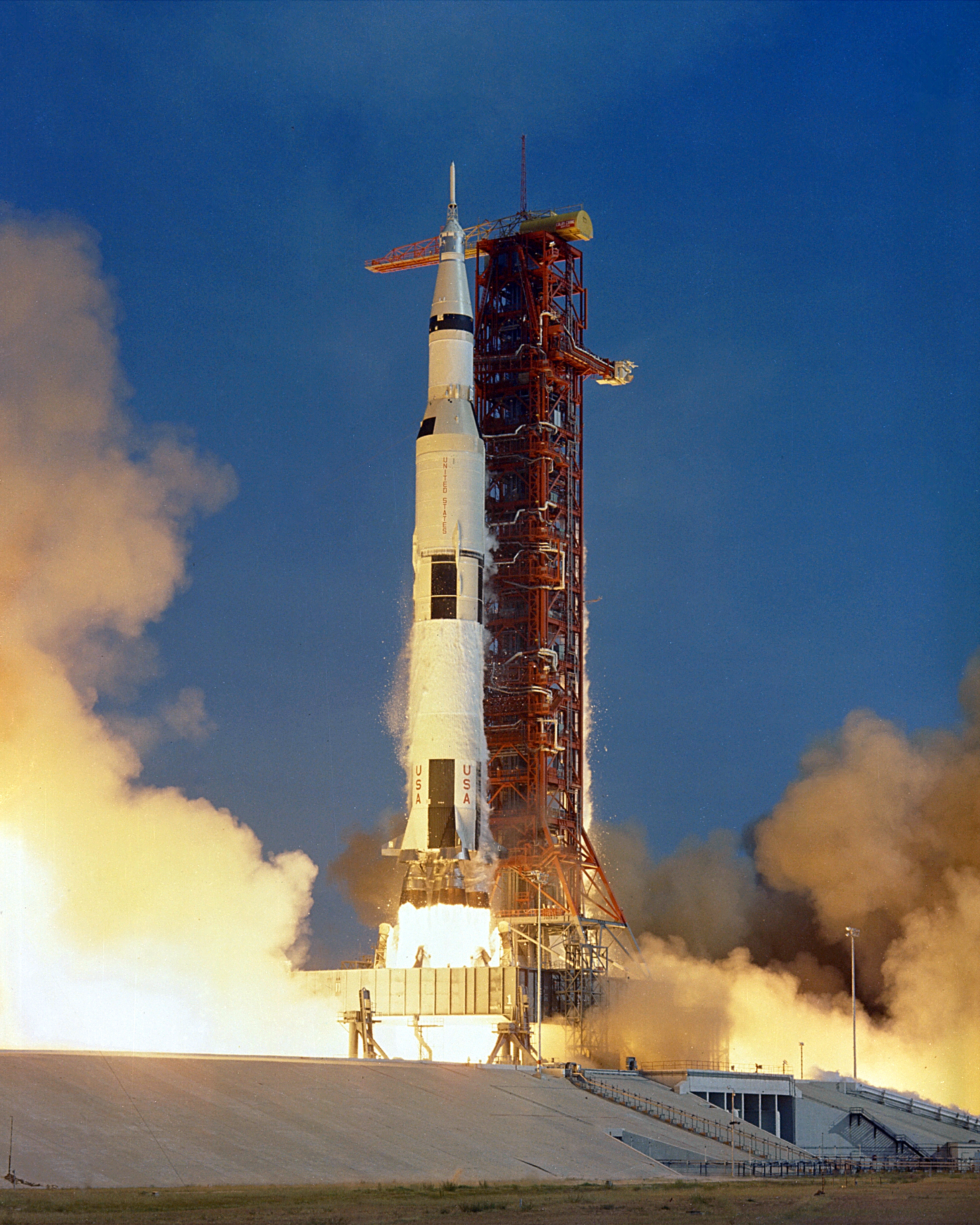
Missions and flights of NASA's Apollo Program
The Apollo program was a United States human spaceflight program carried out from 1961 to 1972 by the National Aeronautics and Space Administration (NASA), which landed the first astronauts on the Moon. The program used the Saturn IB and Saturn V launch vehicles to lift the Command/Service Module (CSM) and Lunar Module (LM) spacecraft into space, and the Little Joe II rocket to test a launch escape system which was expected to carry the astronauts to safety in the event of a Saturn failure. Uncrewed test flights beginning in 1966 demonstrated the safety of the launch vehicles and spacecraft to carry astronauts, and four crewed flights beginning in October 1968 demonstrated the ability of the spacecraft to carry out a lunar landing mission.
Apollo achieved the first crewed lunar landing on the Apollo 11 mission, when Neil Armstrong and Buzz Aldrin landed their LM Eagle in the Sea of Tranquility and walked on the lunar surface, while Michael Collins remained in lunar orbit in the CSM Columbia, and all three landed safely on Earth on July 24, 1969. Five subsequent missions landed astronauts on various lunar sites, ending in December 1972 with 12 men having walked on the Moon and 842 lb of lunar rocks and soil samples returned to Earth, greatly contributing to the understanding of the Moon's composition and geological history.
Two Apollo missions were failures: a 1967 cabin fire killed the entire Apollo 1 crew during a ground test in preparation for what was to be the first crewed flight; and the third landing attempt on Apollo 13 was aborted by an oxygen tank explosion en route to the Moon, which disabled the CSM *Odyssey'''s electrical power and life support systems, and made the propulsion system unsafe to use. The crew circled the Moon and were returned safely to Earth using the LM *Aquarius'' as a "lifeboat" for these functions.
Uncrewed test flights
From 1961 through 1967, Saturn launch vehicles and Apollo spacecraft components were tested in uncrewed flights.
Saturn I
The Saturn I launch vehicle was originally planned to carry crewed Command Module flights into low Earth orbit, but its 20000 lb payload capacity limit could not lift even a partially fueled Service Module, which would have required building a lightweight retrorocket module for deorbit. These plans were eventually scrapped in favor of using the uprated Saturn IB to launch the Command Module with a half-fueled Service Module for crewed Earth orbit tests. This limited Saturn I flights to Saturn launch vehicle development, CSM boilerplate testing, and three Pegasus micrometeoroid satellite missions in support of Apollo.
| Mission | LV | Launch | Pad | Remarks | Refs | SA-1 | SA-2 | SA-3 | SA-4 | SA-5 | AS-101 | AS-102 | AS-103 | AS-104 | AS-105 |
|---|---|---|---|---|---|---|---|---|---|---|---|---|---|---|---|
| SA-1 | October 27, 1961, 15:06 | LC-34 | Test of Saturn I first stage S-I; dummy upper stages carried water | ||||||||||||
| SA-2 | April 25, 1962, 14:00 | LC-34 | Dummy upper stages released 86685 L of water into upper atmosphere, to investigate effects on radio transmission and changes in local weather conditions | ||||||||||||
| SA-3 | November 16, 1962, 17:45 | LC-34 | Repeat of SA-2 mission | ||||||||||||
| SA-4 | March 28, 1963, 20:11 | LC-34 | Test premature shutdown of a single S-I engine | ||||||||||||
| SA-5 | January 29, 1964, 16:25 | LC-37B | First flight of live second stage. First orbital flight. | ||||||||||||
| SA-6 | May 28, 1964, 17:07 | LC-37B | Tested first boilerplate Apollo command and service module (CSM) for structural integrity | ||||||||||||
| SA-7 | September 18, 1964, 17:22 | LC-37B | Carried first programmable-in-flight computer on the Saturn I vehicle; last launch vehicle development flight | ||||||||||||
| SA-9 | February 16, 1965, 14:37 | LC-37B | Carried Pegasus A satellite and boilerplate CSM | ||||||||||||
| SA-8 | May 25, 1965, 07:35 | LC-37B | Carried Pegasus B satellite and boilerplate CSM | ||||||||||||
| SA-10 | July 30, 1965, 13:00 | LC-37B | Carried Pegasus C satellite and boilerplate CSM |
There was some incongruity in the numbering and naming of the first three uncrewed Apollo-Saturn (AS) or Apollo flights. This is due to AS-204 being renamed to Apollo 1 posthumously. This crewed flight was to have followed the first three uncrewed flights. After the fire which killed the AS-204 crew on the pad during a test and training exercise, uncrewed Apollo flights resumed to test the Saturn V launch vehicle and the Lunar Module; these were designated Apollo 4, 5 and 6. The first crewed Apollo mission was thus Apollo 7. Simple "Apollo" numbers were never assigned to the first three uncrewed flights, although renaming AS-201, AS-202, and AS-203 as Apollo 1-A, Apollo 2 and Apollo 3, had been briefly considered.
Saturn IB
The Saturn I was converted to the Uprated Saturn I, eventually designated Saturn IB, by replacing the S-IV second stage with the S-IVB, which would also be used as the third stage of the Saturn V with the addition of on-orbit restart capability. This increased the payload capacity to 46000 lb, enough to orbit a Command Module with a half-fueled Service Module, and more than enough to orbit a fully fueled Lunar Module.
Two suborbital tests of the Apollo Block I Command and Service Module, one S-IVB development test, and one Lunar Module test were conducted. Success of the LM test led to cancellation of a planned second uncrewed flight.
| Mission | LV Serial No | Launch | Remarks | Refs | AS-201 | AS-203 | AS-202 | Apollo 5 | ||
|---|---|---|---|---|---|---|---|---|---|---|
| Saturn IB | February 26, 1966, | First test of Saturn IB and Block I Apollo CSM. Suborbital flight landed the CM in the Atlantic Ocean, demonstrating the heat shield. Propellant pressure loss caused premature SM engine shutdown. | ||||||||
| Saturn IB | July 5, 1966, | No Apollo spacecraft; instrumentation and video observed on-orbit behavior of S-IVB liquid hydrogen fuel in support of restart capability design for Saturn V. Deemed a success, despite inadvertent destruction of S-IVB during final overpressure tank rupture test. | ||||||||
| Saturn IB | August 25, 1966, | Suborbital flight to Pacific Ocean splashdown. CM heat shield tested to higher speed; successful SM firings. | ||||||||
| Saturn IB | January 22, 1968, | First flight of LM successfully fired descent engine and ascent engines; demonstrated "fire-in-the-hole" landing abort test. |
Launch escape system tests
From August 1963 to January 1966, a number of tests were conducted at the White Sands Missile Range for development of the launch escape system (LES). These included simulated "pad aborts", which might occur while the Apollo-Saturn space vehicle was still on the launch pad, and flights on the Little Joe II rocket to simulate Mode I aborts which might occur while the vehicle was in the air.

| Mission | Launch vehicle | Launch | Remarks | Refs | QTV | Pad Abort Test 1 | A-001 | A-002 | A-003 | Pad Abort Test 2 | A-004 | |
|---|---|---|---|---|---|---|---|---|---|---|---|---|
| Little Joe II | August 28, 1963, | Little Joe II qualification test | ||||||||||
| None | November 7, 1963, | Launch escape system (LES) abort test from launch pad | ||||||||||
| Little Joe II | May 13, 1964, | LES transonic test, success except for parachute failure | ||||||||||
| Little Joe II | December 8, 1964, | LES maximum altitude, Max-Q abort test | ||||||||||
| Little Joe II | May 19, 1965, | LES canard maximum altitude abort test | ||||||||||
| None | June 29, 1965, | LES pad abort test of near Block-I CM | ||||||||||
| Little Joe II | January 20, 1966, | LES test of maximum weight, tumbling Block-I CM |
Saturn V
Prior to George Mueller's tenure as NASA's Associate Administrator for Manned Space Flight starting in 1963, it was assumed that 20 Saturn Vs, with at least 10 unpiloted test flights, would be required to achieve a crewed Moon landing, using the conservative one-stage-at-a-time testing philosophy used for the Saturn I. But Mueller introduced the "all-up" testing philosophy of using three live stages plus the Apollo spacecraft on every test flight. This achieved development of the Saturn V with far fewer uncrewed tests, enabling a Moon landing by the 1969 goal. The size of the Saturn V production lot was reduced from 20 to 15 units.
Three uncrewed test flights were planned to human-rate the super heavy-lift Saturn V which would take crewed Apollo flights to the Moon. Success of the first flight and qualified success of the second led to the decision to cancel the third uncrewed test.
| Mission | LV Serial No | Launch | Remarks | Refs | Apollo 4 | Apollo 6 | ||
|---|---|---|---|---|---|---|---|---|
| Saturn V | November 9, 1967, | First flight of Saturn V rocket; successfully demonstrated S-IVB third stage restart and tested CM heat shield at lunar re-entry speeds. | ||||||
| Saturn V | April 4, 1968, | Second flight of Saturn V; severe "pogo" vibrations caused two second-stage engines to shut down prematurely, and third stage restart to fail. SM engine used to achieve high-speed re-entry, though less than Apollo 4. NASA identified vibration fixes and declared Saturn V man-rated. |
Alphabetical mission types
The Apollo program required sequential testing of several major mission elements in the runup to a crewed lunar landing. An alphabetical list of major mission types was proposed by Owen Maynard in September 1967. Two "A-type" missions performed uncrewed tests of the CSM and the Saturn V, and one B-type mission performed an uncrewed test of the LM. The C-type mission, the first crewed flight of the CSM in Earth orbit, was performed by Apollo 7.
The list was revised upon George Low's proposal to commit a mission to lunar orbit ahead of schedule, an idea influenced by the status of the CSM as a proven craft and production delays of the LM. Apollo 8 was reclassified from its original assignment as a D-type mission, a test of the complete CSM/LM spacecraft in Earth orbit, to a "C-prime" mission which would fly humans to the Moon. Once complete, it eliminated the need for the E-type objective of a medium Earth orbital test. The D-type mission was instead performed by Apollo 9; the F-type mission, Apollo 10, flew the CSM/LM spacecraft to the Moon for final testing, without landing. The G-type mission, Apollo 11, performed the first lunar landing, the central goal of the program.
The initial A–G list was expanded to include later mission types: H-type missions—Apollo 12, 13 (planned) and 14—would perform precision landings, and J-type missions—Apollo 15, 16 and 17—would perform thorough scientific investigation. The I-type objective, which called for extended lunar orbital surveillance of the Moon, was incorporated into the J-type missions.
| Mission type | Missions | Description | A | B | C | C′ | D | E | F | G | H | I | J |
|---|---|---|---|---|---|---|---|---|---|---|---|---|---|
| Uncrewed flights of launch vehicles and the CSM, to demonstrate its design and to certify its safety for humans. | |||||||||||||
| Apollo 5 | Uncrewed flight of the LM to demonstrate its design and to certify its safety for humans. | ||||||||||||
| Apollo 7 | Crewed flight demonstration of CSM in low Earth orbit. Saturn 1B. | ||||||||||||
| Apollo 8 | Crewed flight demonstration of CSM in lunar orbit. | ||||||||||||
| Apollo 9 | Crewed flight demonstration of CSM and LM in low Earth orbit, operating the equipment together in space and (insofar as possible in Earth orbit) performing the maneuvers involved in a lunar landing. | ||||||||||||
| Crewed flight demonstration of CSM and LM in medium Earth orbit, performing the maneuvers involved in a lunar landing. | |||||||||||||
| Apollo 10 | Crewed flight demonstration of CSM and LM in lunar orbit, performing all G-type mission goals except for the final descent to and landing on the lunar surface. | ||||||||||||
| Apollo 11 | Crewed lunar landing demonstration. | ||||||||||||
| Precision crewed lunar landing demonstration and systematic lunar exploration. | |||||||||||||
| Reserved for lunar survey missions. (Not used) | |||||||||||||
| Extended scientific investigation of the Moon on the lunar surface and from lunar orbit. |
Crewed missions
The Block I CSM spacecraft did not have capability to fly with the LM, and the three crew positions were designated Command Pilot, Senior Pilot, and Pilot, based on U.S. Air Force pilot ratings. The Block II spacecraft was designed to fly with the Lunar Module, so the corresponding crew positions were designated Commander, Command Module Pilot, and Lunar Module Pilot regardless of whether a Lunar Module was present or not on any mission.
Seven of the missions involved extravehicular activity (EVA), spacewalks or moonwalks outside of the spacecraft. These were of three types: testing the lunar EVA suit in Earth orbit (Apollo 9), exploring the lunar surface, and retrieving film canisters from the Scientific Instrument Module stored in the Service Module.
| Mission | Patch | Launch date | Crew | Launch vehicle | CM name | LM name | Duration | Remarks | Refs | Apollo 1 | Apollo 7 | Apollo 8 | Apollo 9 | Apollo 10 | Apollo 11 | Apollo 12 | Apollo 13 | Apollo 14 | Apollo 15 | Apollo 16 | Apollo 17 | |||
|---|---|---|---|---|---|---|---|---|---|---|---|---|---|---|---|---|---|---|---|---|---|---|---|---|
| [[File:Apollo 1 patch.png | alt=Apollo 1 mission patch | frameless | center | 50px]] | February 21, 1967 | Gus Grissom | ||||||||||||||||||
| Ed White | ||||||||||||||||||||||||
| Roger B. Chaffee | Saturn IB | |||||||||||||||||||||||
| (SA-204) | Never launched. On January 27, 1967, a fire in the command module during a launch pad test killed the crew and destroyed the module. This flight was originally designated AS-204, and was renamed to Apollo 1 at the request of the crew's families. | |||||||||||||||||||||||
| [[File:AP7lucky7.png | alt=Apollo 7 mission patch | frameless | center | 50px]] | October 11, 1968, | Wally Schirra | ||||||||||||||||||
| Donn F. Eisele | ||||||||||||||||||||||||
| Walter Cunningham | Saturn IB | |||||||||||||||||||||||
| (AS-205) | 10 d 20 h 09 m 03 s | Test flight of Block II CSM in Earth orbit; included first live TV broadcast from American spacecraft. | ||||||||||||||||||||||
| [[File:Apollo-8-patch.png | alt=Apollo 8 mission patch | center | frameless | 50x50px]] | December 21, 1968, | Frank Borman | ||||||||||||||||||
| James Lovell | ||||||||||||||||||||||||
| William Anders | Saturn V | 06 d 03 h 00 m 42 s | First humans to leave Earth orbit and first to arrive at the Moon, first circumlunar flight of CSM, had ten lunar orbits in 20 hours. First crewed flight of Saturn V. | |||||||||||||||||||||
| [[File:Apollo-9-patch.png | alt=Apollo 9 mission patch | center | frameless | 50x50px]] | March 3, 1969, | James McDivitt | ||||||||||||||||||
| David Scott | ||||||||||||||||||||||||
| Rusty Schweickart | Saturn V | Gumdrop | Spider | 10 d 01 h 00 m 54 s | First crewed flight test of Lunar Module; tested propulsion, rendezvous and docking in Earth orbit. EVA tested the Portable Life Support System (PLSS). | center; | ||||||||||||||||||
| [[File:Apollo-10-LOGO.png | alt=Apollo 10 mission patchogo | center | frameless | 53x53px]] | May 18, 1969, | Thomas P. Stafford | ||||||||||||||||||
| John Young | ||||||||||||||||||||||||
| Eugene Cernan | Saturn V | Charlie Brown | Snoopy | 08 d 00 h 03 m 23 s | "Dress rehearsal" for lunar landing. The LM descended to 8.4 nautical miles (15.6 km) from lunar surface. | |||||||||||||||||||
| [[File:Apollo 11 insignia.png | alt=Apollo 11 pission patch | frameless | center | 50px]] | July 16, 1969, | Neil Armstrong | ||||||||||||||||||
| Michael Collins | ||||||||||||||||||||||||
| Edwin "Buzz" Aldrin | Saturn V | Columbia | Eagle | 08 d 03 h 18 m 35 s | First crewed landing in Sea of Tranquility (Tranquility Base) including a single surface EVA. | |||||||||||||||||||
| [[File:Apollo 12 insignia.png | alt=Apollo 12 mission patch | frameless | center | 50px]] | November 14, 1969, | Charles (Pete) Conrad | ||||||||||||||||||
| Richard F. Gordon Jr. | ||||||||||||||||||||||||
| Alan Bean | Saturn V | Yankee Clipper | Intrepid | 10 d 04 h 36 m 24 s | First precise Moon landing in Ocean of Storms near Surveyor 3 probe. Two surface EVAs and returned parts of Surveyor to Earth. | |||||||||||||||||||
| [[File:Apollo 13-insignia.png | alt=Apollo 13 mission patch | frameless | center | 50px]] | April 11, 1970, | James Lovell | ||||||||||||||||||
| Jack Swigert | ||||||||||||||||||||||||
| Fred Haise | Saturn V | Odyssey | Aquarius | 05 d 22 h 54 m 41 s | Intended Fra Mauro landing cancelled after SM oxygen tank exploded. LM used as "lifeboat" for safe crew return. First S-IVB stage impact on Moon for active seismic test. | |||||||||||||||||||
| [[File:Apollo 14-insignia.png | alt=Apollo 14 mission patch | frameless | center | 50px]] | January 31, 1971, | Alan Shepard | ||||||||||||||||||
| Stuart Roosa | ||||||||||||||||||||||||
| Edgar Mitchell | Saturn V | Kitty Hawk | Antares | 09 d 00 h 01 m 58 s | Successful Fra Mauro landing. Broadcast first color TV images from lunar surface (other than a few moments at the start of the Apollo 12 moonwalk.) Conducted first materials science experiments in space. Conducted two surface EVAs. | |||||||||||||||||||
| [[File:Apollo 15-insignia.png | alt=Apollo 15 misison patch | frameless | center | 50px]] | July 26, 1971, | David Scott | ||||||||||||||||||
| Alfred Worden | ||||||||||||||||||||||||
| James Irwin | Saturn V | Endeavour | Falcon | 12 d 07 h 11 m 53 s | Landing at Hadley–Apennine. First extended LM, three-day lunar stay. First use of Lunar Roving Vehicle. Conducted three lunar surface EVAs and one deep space EVA on return to retrieve orbital camera film from SM. | |||||||||||||||||||
| [[File:Apollo-16-LOGO.png | alt=Apollo 16 mission patch | frameless | center | 50px]] | April 16, 1972, | John Young | ||||||||||||||||||
| Ken Mattingly | ||||||||||||||||||||||||
| Charles Duke | Saturn V | Casper | Orion | 11 d 01 h 51 m 05 s | Landing in Descartes Highlands. Conducted three lunar EVAs and one deep space EVA. | |||||||||||||||||||
| [[File:Apollo 17-insignia.png | alt=Apollo 17 mission patch | frameless | center | 50px]] | December 7, 1972, | Eugene Cernan | ||||||||||||||||||
| Ronald Evans | ||||||||||||||||||||||||
| Harrison Schmitt | Saturn V | America | Challenger | 12d 13 h 51 m 59 s | Landing at Taurus–Littrow. First professional geologist on the Moon. First night launch. Conducted three lunar EVAs and one deep space EVA. |
Canceled missions
Main article: Canceled Apollo missions
Several planned missions of the Apollo program were canceled for a variety of reasons, including changes in technical direction, the Apollo 1 fire, hardware delays, and budget limitations.
- Before the Apollo 1 fire, two crewed Block I spacecraft missions were planned, but then it was decided that the second one would give no more information about the spacecraft performance not obtained from the first, and could not carry out extra activities such as EVA, and was canceled.
- The Saturn V's all-up testing strategy and relatively good success rate accomplished the first Moon landing on the sixth flight, leaving ten available for Moon landings through Apollo 20, but waning public interest in the program led to decreased Congressional funding, forcing NASA to economize. First, was cut to make a Saturn V available to launch the Skylab space station whole instead of building it on-orbit using multiple Saturn IB launches. Eight months later, Apollo 18 and 19 were also cut to further economize, and because of fears of increased chance of failure with a large number of lunar flights.
| As planned | As flown | Mission | Type | Date | Landing site | CDR | CMP | LMP | Mission | Launch date | Landing site | CDR | CMP | LMP | Apollo 12 | Apollo 13 | Apollo 14 | Apollo 15 | Apollo 16 | Apollo 17 | Apollo 18 | Apollo 19 | Apollo 20 |
|---|---|---|---|---|---|---|---|---|---|---|---|---|---|---|---|---|---|---|---|---|---|---|---|
| H | November 1969 | Ocean of Storms | Pete Conrad | Richard F. Gordon Jr. | Alan Bean | Apollo 12 | November 14, 1969 | Ocean of Storms | Pete Conrad | Richard F. Gordon Jr. | Alan Bean | ||||||||||||
| H | March 1970 | Fra Mauro highlands | Alan Shepard | Stuart Roosa | Edgar Mitchell | Apollo 13 | April 11, 1970 | Failed | Jim Lovell | Jack Swigert | Fred Haise | ||||||||||||
| H | July 1970 | Censorinus crater | Jim Lovell | Ken Mattingly | Fred Haise | Apollo 14 | January 31, 1971 | Fra Mauro highlands | Alan Shepard | Stuart Roosa | Edgar Mitchell | ||||||||||||
| H | November 1970 | Littrow crater | David Scott | Alfred Worden | James Irwin | Apollo 15 | July 26, 1971 | Hadley Rille | David Scott | Alfred Worden | James Irwin | ||||||||||||
| J | April 1971 | Tycho crater | John Young | Jack Swigert | Charles Duke | Apollo 16 | April 16, 1972 | Descartes Highlands | John Young | Ken Mattingly | Charles Duke | ||||||||||||
| J | September 1971 | Marius Hills | Gene Cernan | Ronald Evans | Joe Engle | Apollo 17 | December 7, 1972 | Taurus-Littrow | Gene Cernan | Ronald Evans | Harrison Schmitt | ||||||||||||
| J | February 1972 | Schroter's Valley | Richard F. Gordon Jr. | Vance Brand | Harrison Schmitt | CANCELED September 1970 | |||||||||||||||||
| J | July 1972 | Hyginus Rille | Fred Haise | William Pogue | Gerald Carr | CANCELED September 1970 | |||||||||||||||||
| J | December 1972 | Copernicus crater | Stuart Roosa | Don L. Lind | Jack Lousma | CANCELED January 4, 1970 |
Notes
References
Bibliography
References
- (April 1975). "Apollo Program Summary Report". [[NASA]].
- Bongat, Orlando. (September 16, 2011). "Little Joe II". [[NASA]].
- "Apollo 11 (AS-506)". Smithsonian National Air and Space Museum.
- Riley, Christopher. (December 15, 2012). "Apollo 40 years on: how the moon missions changed the world for ever". The Guardian.
- (September 1, 2016). "Lunar Rocks and Soils from Apollo Missions". [[NASA]].
- Teitel, Amy. (October 28, 2013). "What Happened to Apollos 2 and 3?".
- (September 1970). "Apollo 13 Mission Report". [[NASA]].
- Hallion & Crouch, pp. 153{{ndash159
- (March 1973). "Apollo 17 Mission Report". [[NASA]].
- (1975). "Apollo Expeditions to the Moon". NASA Langley Research Center.
- (1979). "Chariots for Apollo: A History of crewed Lunar Spacecraft". NASA.
- (1989). "Apollo: The Race to the Moon". Simon and Schuster.
- (2019). "Apollo Expeditions to the Moon". Dover.
- (2019). "Apollo Expeditions to the Moon". Dover.
- (1975). "The Apollo Spacecraft – A Chronology. Volume IV". NASA.
- Shayler, David. (August 26, 2002). "Apollo: The Lost and Forgotten Missions". Springer Science & Business Media.
- Evans, Ben. (December 17, 2017). "Walking in the Void: 45 Years Since the Last Deep-Space EVA". AmericaSpace.
- (June 14, 2012). "Apollo 1". [[NASA]].
- "Apollo 1 (AS-204)". [[Smithsonian National Air and Space Museum]].
- Garber, Steve. (September 10, 2015). "Apollo-1 (AS-204)". NASA.
- (July 8, 2009). "Apollo 7". [[NASA]].
- "Apollo 7 (AS-205)". Smithsonian National Air and Space Museum.
- (February 1969). "Apollo 8 Mission Report". NASA.
- (July 8, 2009). "Apollo 8". [[NASA]].
- "Apollo 8 (AS-503)". Smithsonian National Air and Space Museum.
- (July 8, 2009). "Apollo 9". [[NASA]].
- "Apollo 9 (AS-504)". Smithsonian National Air and Space Museum.
- (May 1969). "Apollo 9 Mission Report". NASA.
- (July 8, 2009). "Apollo 10". [[NASA]].
- "Apollo 10 (AS-505)". Smithsonian National Air and Space Museum.
- (August 1969). "Apollo 10 Mission Report". NASA.
- (November 1969). "Apollo 11 Mission Report". NASA.
- (August 17, 2021). "Apollo 12 (AS-507)". Smithsonian National Air and Space Museum.
- (March 1970). "Apollo 12 Mission Report". NASA.
- (August 17, 2021). "Apollo 13 (AS-508)". Smithsonian National Air and Space Museum.
- (August 20, 2021). "Apollo 14 (AS-509)". Smithsonian National Air and Space Museum.
- (May 1971). "Apollo 14 Mission Report". NASA.
- (August 20, 2021). "Apollo 15 (AS-510)". Smithsonian National Air and Space Museum.
- (December 1971). "Apollo 15 Mission Report". NASA.
- (August 23, 2021). "Apollo 16 (AS-511)". Smithsonian National Air and Space Museum.
- (December 1971). "Apollo 16 Mission Report". NASA.
- (August 23, 2021). "Apollo 17 (AS-512)". Smithsonian National Air and Space Museum.
- Williams, David. (December 11, 2003). "Apollo 18 through 20 – The Cancelled Missions". National Aeronautics and Space Administration.
- "Apollo 20". Astronautix.
- Silber, Kennith. (July 16, 2009). "Down to Earth: The Apollo Moon Missions That Never Were".
- Rousseau, Steve. (September 2, 2011). "Why Apollo Really Stopped at 17".
- (October 22, 2004). "The Skylab Program". NASA History Office.
This article was imported from Wikipedia and is available under the Creative Commons Attribution-ShareAlike 4.0 License. Content has been adapted to SurfDoc format. Original contributors can be found on the article history page.
Ask Mako anything about List of Apollo missions — get instant answers, deeper analysis, and related topics.
Research with MakoFree with your Surf account
Create a free account to save articles, ask Mako questions, and organize your research.
Sign up freeThis content may have been generated or modified by AI. CloudSurf Software LLC is not responsible for the accuracy, completeness, or reliability of AI-generated content. Always verify important information from primary sources.
Report