From Surf Wiki (app.surf) — the open knowledge base
Link light rail
Rail transit system in the Seattle metropolitan area
.jpeg)
Rail transit system in the Seattle metropolitan area
| Field | Value | |
|---|---|---|
| name | Link light rail | |
| image | Sound Transit Link Light Rail logo.svg | |
| imagesize | 150px | |
| image2 | {{Photomontage | |
| photo1a | Link Light Rail Line 1 Siemens S700 Mount Baker Station (52232826261).jpg | |
| photo2a | Marymoor Village Station platform view with eastbound train.jpg | |
| photo2b | Tacoma Link 1003 at Convention Center Station.jpg | |
| size | 280 | |
| spacing | 2 | |
| color | transparent | |
| border | 0 | |
| caption2 | Clockwise from top: the 1Line near Mount Baker station, the TLine at Convention Center station, and the 2Line at Marymoor Village station | |
| owner | Sound Transit | |
| locale | Seattle, Washington, U.S. | |
| transit_type | Light rail | |
| lines | 3 | |
| stations | [](list-of-link-light-rail-stations) | |
| daily_ridership | () | |
| annual_ridership | (2024) | |
| website | ||
| began_operation | ||
| operator | Sound Transit, King County Metro | |
| vehicles | 226 | |
| system_length | {{#expr: 8.5 + 4.3 + 3.15 + 1.8 + 2.8 + 4.3 + 5.0 + 1.7 + 1.6 + 9.9 + 4 + 7.8}} mi | |
| track_gauge | ||
| el | Overhead line; {{plainlist | |
| top_speed | 55 mph | |
| map | {{Switcher | |
| map_state | collapsed |
- (1 & 2 Lines)
- (T Line) | | Show route diagram | [[File:Seattle-transit-2.svg|300px]] | Show static map
Link light rail is a light rail system with some rapid transit characteristics that serves the Seattle metropolitan area in the U.S. state of Washington. It is managed by Sound Transit in partnership with local transit providers, and comprises three non-connected lines that total 55 mi with 48 stations. These lines are the 1Line (formerly Central Link) in King County and Snohomish County, which travels for 41 mi between Lynnwood, Seattle, Seattle–Tacoma International Airport, and Federal Way; the 2 Line in King County's Eastside region, which travels for 10 mi between Bellevue and Redmond; and the TLine (formerly Tacoma Link) in Pierce County, a streetcar which runs for 4 mi between Tacoma Dome Station, Downtown Tacoma, and Hilltop. In , the system had a ridership of 30.8million, or about per weekday as of , primarily on the 1Line. Trains run at frequencies of 8 to 20 minutes.
The Link light rail system was originally conceived in the 1980s following several earlier proposals for a heavy rail subway system that were rejected by voters. Sound Transit was created in 1993 and placed a ballot measure to fund and build the system, which was passed on its second attempt in 1996. Tacoma Link began construction in 2000 and opened on August 22, 2003, becoming the first modern light rail system in the state. Central Link construction in Seattle was delayed because of funding issues and routing disputes, but began in November 2003 and was completed on July 18, 2009. The trains initially ran from Downtown Seattle to Tukwila International Boulevard station before being extended south to Seattle–Tacoma International Airport in December 2009. Further extensions north to the University of Washington and south to Angle Lake station opened in 2016 to complete most of the line's original planned route. An extension from the University of Washington to Northgate station opened on October 2, 2021, followed by a northern extension to Lynnwood City Center station on August 30, 2024 and a southern extension to Federal Way Downtown station on December 6, 2025.
The first phase of the 2Line opened on April 27, 2024, between South Bellevue and Redmond Technology stations; an extension east to Downtown Redmond opened in May 2025. It is scheduled to be extended west to Seattle in March 2026 following construction delays on a section crossing Lake Washington. The 2Line and Lynnwood sections were funded by Sound Transit 2 (ST2), a 2008 ballot measure to expand the transit system, along with planning work for other projects. The Sound Transit 3 (ST3) ballot measure was approved in 2016 and funds plans to expand the Link network to 116 mi and 83 stations by 2044. The expansions are planned to cover the metropolitan area from Everett to Tacoma, along with branches to Kirkland, Issaquah, and the Seattle neighborhoods of Ballard and West Seattle.
History
Main article: History of Link light rail
Predecessors and earlier proposals
The first form of scheduled public transportation in the Puget Sound region was various steamboat ferries that later evolved into the "mosquito fleet" in the 1880s as the area's population grew. They were followed by streetcar systems, beginning with Seattle's first horse-drawn line in 1884 and Tacoma's in 1888, built by private companies alongside conventional railroads. Electric streetcars and cable cars debuted in 1889 under other companies and continued to grow outward into new residential developments called streetcar suburbs. The lines were consolidated into the Seattle Municipal Street Railway in 1919, which grew to 26 routes with 231 mi of track. Interurban railways that connected Seattle to Everett and Tacoma were built by Stone & Webster, but ceased operations by 1939 due to competition from automobiles on new highways as well as financial issues.
Attempts to finance the construction of a rapid transit system to connect Seattle's neighborhoods, and later other cities in the region, first emerged with civil engineer Virgil Bogue's comprehensive plan in 1911. A referendum on the plan, which included 33 mi of subway tunnels and 27 mi of elevated tracks, was rejected by city voters the following year. The region's transit system faced chronic underinvestment and declining bus ridership as new highways and freeways, including Interstate 5 through Seattle, were constructed to serve a growing number of automobile users. A proposal for a 47 mi Seattle subway system with suburban extensions to Bellevue and Renton was part of the Forward Thrust series of civic ballot measures in the 1960s. It would use federal funding to cover two-thirds of the $1.15billion (equivalent to $ in dollars) construction cost, contingent on the approval of local funding, and be completed by 1985. The transit ballot measure, in February 1968, was approved by 51percent of voters but failed to reach the 60percent threshold required by the state government to issue municipal bonds. A second vote in May 1970 received only 46percent approval due to the "Boeing bust", a local economic downturn caused by layoffs at Boeing, a major employer. The federal funding that was earmarked for the Seattle project was instead reallocated to the Metropolitan Atlanta Rapid Transit Authority in Atlanta, Georgia.
The Seattle Transit System, which operated buses within the city, launched one of the nation's first express bus systems in 1970. The program drew new suburban riders but the system continued to face financial issues. King County voters approved a ballot measure in 1972 to acquire the Seattle Transit System and a private suburban operator to form a new countywide bus system that would be managed by the Municipality of Metropolitan Seattle, an existing water treatment and sewage agency. The bus system, named Metro Transit (now King County Metro), began operations in January 1973 and increased ridership from 30million with Seattle Transit in 1971 to 66million in 1980. Metro Transit's buses had difficulty navigating through Downtown Seattle, where 420trips during peak periods led to congestion in bus lanes and at stops. The Downtown Seattle Transit Tunnel, with five stations on 3rd Avenue and Pine Street, was opened in September 1990; it would redirect bus trips from downtown streets but was also designed to be converted to future light rail use.
Rail plans and Tacoma launch
.jpg)
In 1975, Metro began a long-term study into regional transit that was later merged with an effort from the Puget Sound Council of Governments (PSCOG), the region's designated metropolitan planning organization. A grant for the study from the Urban Mass Transit Administration was instead allocated to TriMet in Portland, Oregon, due to the federal government's reluctance to lose an "example all-bus system" like Metro Transit's. The regional transit study proceeded and their initial findings in 1981 recommended a light rail system that would be able to operate on streets in some areas but generally follow freeway corridors to regional centers. A related study from the Snohomish County Transportation Authority began in 1983 and determined an extension of a future light rail line along Interstate 5 would be feasible. The Metro–PSCOG study, published and adopted in 1986, recommended a 60 mi light rail system with three lines from Downtown Seattle that followed freeway corridors: along Interstate 5 north to Lynnwood and south to Federal Way; and east across Lake Washington to Bellevue. The recommended system had a projected completion by 2020 if approved by voters and a cost of approximately $14billion (equivalent to $ in dollars) to construct.
A non-binding advisory ballot measure on accelerated development of a light rail system was approved by King County voters in November 1988. The state legislature authorized the creation of a regional transit board that would have representatives from King, Pierce, and Snohomish counties. Another study resulted in a long-range plan for a three-county transit system with 105 mi of light rail from Everett to Tacoma and Redmond, along with commuter rail and express buses. The Central Puget Sound Regional Transit Authority (RTA) was formed in September 1993 after approval from the state legislature and the three county councils; the RTA would create a construction and financing plan for approval by voters in a regional ballot measure. Their first attempt, which included a 70 mi light rail network with lines as far north as Lynnwood and as far south as Tacoma, had an estimated cost of $6.7billion (equivalent to $ in dollars). It was rejected by 53percent of voters on March 14, 1995.
A revised RTA plan announced the following year scaled back the light rail component to a 25 mi corridor between Seattle–Tacoma International Airport and University District in Seattle and a separate line that would connect Downtown Tacoma to a multimodal hub near the Tacoma Dome. The new package, named Sound Move, was estimated to cost $3.9billion (equivalent to $ in dollars) and would be funded by a sales tax and motor vehicle excise tax. It was approved by 56.5percent of voters in the urbanized Seattle metropolitan area, including majorities in all three counties, on November 5, 1996. The RTA renamed itself to Sound Transit in August 1997 and adopted "Link" as the name for the light rail system along with Sounder for commuter rail and Regional Express for buses.
The Downtown Tacoma line, named Tacoma Link, was preceded by a shuttle bus from the new Tacoma Dome Station built by Pierce Transit in 1997. The project was anticipated to revitalize the city's downtown and serve the new University of Washington Tacoma campus along its 1.6 mi route. Tacoma Link began construction in October 2000 and its rolling stock—three streetcars imported from the Czech Republic—arrived in September 2002. The line opened on August 22, 2003, with five stations, and cost $80.4million (equivalent to $ in dollars) to construct. It had no fares and exceeded its 2010 ridership projections by early 2003, carrying its 500,000th passenger in April of the year.
Central Link planning and construction
.jpg)
Main article: 1 Line (Sound Transit)
Planning and construction of Central Link, the light rail line that would travel through Downtown Seattle, was delayed several times due to increased costs and political scrutiny over its alignment. The preferred route, selected in November 1999, ran 24 mi from Northgate Transit Center in Seattle to Seattle–Tacoma International Airport. It integrated with the downtown transit tunnel, required the construction of a new tunnel under Portage Bay and through Beacon Hill, and followed surface streets in the Rainier Valley area and Tukwila. It would cost $1.85billion (equivalent to $ in dollars) to construct the 21 mi section from the University of Washington campus to the airport, which had been funded in the Sound Move plan. The cost had increased significantly from the original plan's budget due to unexpected property acquisitions that would be needed. The use of at-grade tracks in the Rainier Valley was opposed by a citizens' group, which filed a lawsuit against Sound Transit to add a tunnel to plans.
The 4.5 mi northern tunnel, which would connect the University District to Downtown Seattle with intermediate stations on Capitol Hill and First Hill, was originally budgeted to cost $557million (equivalent to $ in dollars). In November 2000, Sound Transit's selected contractor produced a low bid that was $171million higher (equivalent to $ in dollars) than the budget. The poor soils around and under Portage Bay, along with other changes to the design, led to a $680million increase (equivalent to $ in dollars) in the estimated cost of the project, which drew criticism from local media and elected officials. The Federal Transit Administration (FTA) informed Sound Transit that major design changes would require a new funding agreement, which was ultimately signed in January 2001 but did not guarantee continued appropriations for the project. Congress ordered a financial audit of Sound Transit to be conducted by the inspector general of the U.S. Department of Transportation before further grant approval. A private audit commissioned by Sound Transit determined that the financial estimates had been "overly optimistic", lacked adequate contingencies, and were drawn from insufficient data. The inspector general's interim report criticized the FTA and Sound Transit for advancing in the grant review process without having a firm cost estimate, which had changed several times due to modifications to the preferred project. The new U.S. Transportation Secretary, Norman Mineta, announced a freeze on releasing funds from the federal earmark, but did not allow them to be redistributed until Sound Transit resubmitted its plans.
A shortened version of the Central Link project that would only run 14 mi between Downtown Seattle and Tukwila was proposed as the initial operating segment for the network; it would cost $2.1billion (equivalent to $ in dollars) to construct under the revised budget estimates but would not reach Sea–Tac Airport. The revised plan, with a completion date set for 2009, was approved by the Sound Transit Board in September 2001 and formally adopted two months later by a 14–2 vote. The change in the project's scope from the original Sound Move plan was challenged in a lawsuit filed in February 2002 by an opposition group funded by real estate developer Kemper Freeman; a county court ruled in favor of Sound Transit and the decision was later upheld by the State Supreme Court. A new grant application for the project's federal funding was submitted in July 2002 and final design began the following month with the FTA's approval. The inspector general's second investigation of Sound Transit took ten months and was completed in July 2003; the report concluded that the agency had resolved its financial auditing issues and outstanding questions about rail–bus interoperability in the Downtown Seattle Transit Tunnel, among other issues. The full federal grant agreement was reinstated in October 2003 and construction of Central Link began a month later.
On November 8, 2003, a groundbreaking ceremony was held for the Central Link project at the site of the future operations and maintenance facility in Seattle's SoDo neighborhood. Work on all project contracts for the initial segment was underway by the following year. The first rails for the line were installed in SoDo in August 2005 and followed a month later by the start of a two-year renovation project for the Downtown Seattle Transit Tunnel, which would need a lowered roadbed to support simultaneous bus and train operations. Testing on the first completed section, in SoDo, began in March 2007 and was extended into the downtown transit tunnel when it reopened in September. Central Link began service on July 18, 2009, and drew 92,000 total passengers during its first weekend with trains operating from Westlake station in Downtown Seattle to Tukwila International Boulevard station. The total construction cost was $2.44billion (equivalent to $ in dollars), which was $117million (equivalent to $ in dollars) below the budget set in 2003.
Expansion packages and openings
.jpg)
Central Link was extended 1.7 mi to SeaTac/Airport station on December 19, 2009, following three years of construction and an agreement with the Port of Seattle, the airport's operators. The airport station had been excluded from the initial segment due to financial concerns and changes to the Port of Seattle's plans for an integrated terminal caused by the September 11 attacks in 2001. A new agreement between Sound Transit and the Port was signed in 2004 and a total of $244million (equivalent to $ in dollars) in bonds were issued to finance the project without requiring a new expansion package.
The line's first northern extension, to Capitol Hill and the University of Washington campus, was also financed through existing revenue sources approved under the Sound Move ballot measure. The FTA approved preliminary plans for the tunneled project, named University Link, in 2006 and awarded $813million (equivalent to $ in dollars) in federal grants. Construction on the 3.15 mi tunnel began in March 2009 and utilized a trio of tunnel-boring machines that traveled under Capitol Hill and the Lake Washington Ship Canal. The tunnel and its two stations opened on March 19, 2016, amid large community celebrations; they were completed six months ahead of the approved schedule, and cost less than their $1.9billion budget (equivalent to $ in dollars). Daily ridership on Central Link increased from 39,000passengers prior to the extension's opening to 65,000 by February 2017.
Sound Transit prepared to extend Link up to 49 mi further into the Seattle suburbs in their second regional transit plan, named Sound Transit 2 (ST2), which was adopted by their board of directors in May 2007. The 20-year program was part of the Roads and Transit ballot measure, which included proposed highway and road projects at the behest of the state legislature. After the joint ballot measure was rejected by 56percent in November 2007, a standalone and modified ST2 package was approved by 57percent of voters in November 2008. The approved version comprised a 15-year program with 34 mi of light rail extensions that was planned to reach Lynnwood, the Microsoft campus in Redmond, and northern Federal Way by 2023. The Great Recession was anticipated to decrease tax revenue needed to fund ST2, particularly from southern King County, and would leave insufficient funding for some projects. In response to the projected loss of funding, Sound Transit scaled back its extensions to Federal Way and Redmond, removing the construction budget for their final sections, and deferred several other projects.
The first infill station on the system was opened at Commerce Street and South 11th Street on Tacoma Link in September 2011 after a year of planning and construction. The first rail project funded by ST2 was the First Hill Streetcar, a 2.5 mi line in the modern Seattle Streetcar system that opened in January 2016. It was intended to replace an underground Link station planned for First Hill that was cancelled in 2005 due to anticipated costs and risks. Central Link service was extended south from the airport to Angle Lake station on September 24, 2016, using 1.6 mi of elevated tracks to reach a new park-and-ride facility. It was Sound Transit's first design–build project and was split from the rest of the Federal Way extension to open four years early. Angle Lake station was one of the final sections of Central Link from the original Sound Move plan to be constructed; a 2016 analysis by The Seattle Times estimated that the line cost a total of $3.10billion in 1995 dollars (equivalent to $ in dollars) to construct—approximately 86percent over its budget in the 1996 ballot measure.
A third major expansion package, named Sound Transit 3 (ST3), was approved by 54percent of voters in the Sound Transit district on November 8, 2016. It encompassed $54billion in planned transit improvements, including the addition of 62 mi to the Link light rail system to be completed by 2041. The Link expansion comprised suburban extensions north from Lynnwood to Everett; south from Federal Way to Tacoma; and between Kirkland and Issaquah on the Eastside. The program also included two major projects in Seattle: an extension north to Ballard via South Lake Union; and to West Seattle. The light rail components of the plan were expected to cost approximately $31.7billion in year-of-expenditure dollars over the 25-year lifespan of the program.
Northgate and suburban extensions

Construction of the next Link extension funded by ST2, traveling north by 4.3 mi from the University of Washington campus to Northgate station with two intermediate stations, began in August 2012. The Northgate Link tunnel spans 3.4 mi and includes slab tracks that are intended to limit vibrations under the university's laboratories; Sound Transit also financed the relocation of laboratories in four buildings that would experience some level of electromagnetic interference that could affect experiments. The Northgate extension opened on October 2, 2021, at a cost of $1.9billion (equivalent to $ in dollars). It was completed during the COVID-19 pandemic, which caused ridership to decline to 22,000daily passengers by May 2021; frequency on Central Link (soon to become the 1Line) was cut to 12minutes due to a lack of available train operators. After the Northgate extension opened, ridership on the 1Line increased to nearly its pre-pandemic levels in 2022 and exceeded it in the following years. A 2.4 mi extension of the TLine to Tacoma's Stadium District and Hilltop neighborhoods with seven stations opened on September 16, 2023. It took five years to construct at a cost of $282million (equivalent to $ in dollars)—both exceeding the original project estimates.
ST2 also funded the East Link Extension, planned to span 14 mi from Seattle to Bellevue and Redmond via a crossing of Lake Washington. The Homer M. Hadley Memorial Bridge, a floating bridge that carries part of Interstate 90 from Seattle to Mercer Island, was opened in 1989 and had been designed with future conversion of its reversible express lanes to transit use. A live load test on the bridge to simulate the weight of light rail trains was conducted by the Washington State Department of Transportation in 2005; it found that trains would be safe to operate on the bridge once minor modifications were made and would not compromise its longevity. The routing of East Link through Bellevue took four years to negotiate between Sound Transit and the Bellevue City Council, who agreed in 2013 to provide additional funding to construct a short tunnel in Downtown Bellevue. Construction on East Link began shortly before its formal groundbreaking in April 2016 with a total budget set at $3.7billion (equivalent to $ in dollars) and completion planned for 2023. The Seattle–Mercer Island express lanes were closed to traffic in June 2017 and replaced by a set of high-occupancy vehicle lanes (HOV lanes) on the outer lanes of Interstate 90.
Excavation of the Bellevue tunnel, constructed through sequential excavation, was completed in July 2018 and the East Link project reached a halfway milestone in April 2019. Later that year, construction began on a 3.7 mi extension from East Link's planned terminus at Redmond Technology station to Downtown Redmond. ST2 had funded engineering and design work for the project, while the remaining $1.53billion (equivalent to $ in dollars) in construction funds were not approved until ST3 was passed in 2016. The Seattle–Mercer Island section, including the floating bridge, suffered from quality control issues during construction that necessitated the full replacement of 5,455 concrete plinths under the tracks as well as new bolt inserts in the fasteners. Sound Transit, at the request of Eastside elected officials, approved a 6 mi "starter line" that would operate on the completed East Link (now 2Line) tracks between South Bellevue and Redmond Technology stations with a reduced schedule. It opened on April 27, 2024, to serve Bellevue and Overlake commuters; the extension to Downtown Redmond opened on May 10, 2025. Service between Seattle and Bellevue is scheduled to begin on March 28, 2026, with the opening of two more stations.
The first inter-county extension, the 8.5 mi Lynnwood Link Extension from Northgate to Lynnwood in Snohomish County, opened on August 30, 2024. The project was approved as part of ST2 and had its route along Interstate 5 chosen in 2011 ahead of an alternative that used State Route 99. The cost of the project was $3.1billion—of which $1.2billion was financed by a federal grant. The extension's four stations—located in Shoreline, Mountlake Terrace, and Lynnwood—include large parking garages and areas with zoning to support transit-oriented development. Daily ridership on the 1Line increased to 90,000 on weekdays in November 2024 as a result of the extension's opening. The southern extension to Federal Way, spanning 7.8 mi from Angle Lake station to Federal Way Downtown station, opened on December 6, 2025. It includes three stations near Interstate 5 and was approved in ST3 after its initial round of ST2 funding was eliminated by cuts during the Great Recession. The design–build project began construction in 2020, but was delayed following the discovery of poor soil conditions on a section that had to be replaced with a cantilever bridge. An infill station in northern Seattle, named Pinehurst, was funded by ST3 and is scheduled to open in 2026.
Lines
The alphanumeric naming system for Link lines took effect in October 2021 alongside the opening of the Northgate Link Extension. Each line uses a number, represented by Arabic numerals, as the primary identifier and a colored bullet as the secondary identifier. Sound Transit had initially announced the use of color names for the lines in September 2019, assigning the "Red Line" for Central Link, the "Orange Line" for Tacoma Link, and the "Blue Line" for East Link when it opened. Two months later, the agency announced that it would not use the "Red Line" moniker in response to criticism that it was too similar to redlining, a housing discrimination practice that was once prevalent in the Rainier Valley. The alphanumeric names were announced in April 2020 and would be used in conjunction with the Sounder lines and future Stride bus routes. The 1Line (colored green) replaced Central Link, while the 2Line (blue) was assigned to East Link and the TLine (orange) replaced Tacoma Link; future lines would be named the 3Line (magenta) and 4Line (purple). The use of other color names was avoided because they carry various associations, would require more complex names, or would be confused with the Swift Bus Rapid Transit system in Snohomish County; the use of letters was found to conflict with King County Metro's existing RapidRide system and was retained solely for Sounder.
1 Line (Lynnwood–Federal Way)
Main article: 1 Line (Sound Transit)
The 1Line, formerly Central Link, is a light rail line serving 26 stations in Lynnwood, Mountlake Terrace, Shoreline, Seattle, Tukwila, SeaTac, Kent, and Federal Way. It uses trains of three to four cars that each have a normal capacity of 194 passengers with up to 74 seats. The line is mostly grade-separated and uses a mix of tunnels, elevated guideways, and surface-running sections. Trains run every 8minutes during peak periods and 10–15 minutes at other times. The 1Line carried over 28.9million passengers and averaged over 83,000 on weekdays in 2024, making it the busiest transit route in the Seattle region.
The initial 13.9 mi segment of Central Link was opened on July 18, 2009, between Westlake and Tukwila International Boulevard stations. The northernmost four stations, in the Downtown Seattle Transit Tunnel, were shared with bus routes that were moved to surface streets in 2019. An extension south to the airport opened in December 2009 and was followed by additional extensions to the University of Washington campus in March 2016, to Angle Lake station in September 2016, and to Northgate in November 2021. The first cross-county extension, through Shoreline and Mountlake Terrace to Lynnwood, opened on August 30, 2024, and brought the line to over 33 mi. An extension into South King County opened on December 6, 2025, bringing the line to 41 mi—the second-longest light rail line in the United States after the A Line in Los Angeles.
2 Line (South Bellevue–Redmond)

Main article: 2 Line (Sound Transit)
The 2Line connects the Eastside suburbs of Bellevue and Redmond. It has 9.9 mi of tracks and eight stations with termini at South Bellevue station and Downtown Redmond station. Construction of the line, also known as the East Link Extension, was funded by the Sound Transit 2 ballot measure and began in 2016 at a cost of $3.7billion. The initial phase on the Eastside opened on April 27, 2024 from Bellevue to Redmond Technology station, and an extension to Downtown Redmond opened May 10, 2025. The 2Line carried 1.2million total passengers in 2024. The remainder of the line is expected to open on March 28, 2026, with additional stations in Seattle and Mercer Island.
T Line (Tacoma Dome–St. Joseph)
Main article: T Line (Sound Transit)
The TLine, formerly Tacoma Link, is a streetcar line that connects Downtown Tacoma, Hilltop, and nearby neighborhoods to Tacoma Dome Station, a regional hub for buses and Sounder commuter rail. The line is 4 mi long and has twelve stations that serve the University of Washington's Tacoma campus, museums, hospitals, and other facilities. It runs primarily in mixed traffic, sharing the Commerce Street transit mall with buses, and uses a mix of single and double-tracked sections. Service on the original 1.6 mi section between Tacoma Dome Station and Downtown Tacoma began on August 26, 2003, and was expanded with the opening of an infill station at Commerce Street/South 11th Street in 2011. An extension to the Hilltop neighborhood with 2.4 mi of track and seven new stations opened on September 16, 2023.
Trains on the line typically run every 12minutes on weekdays and Saturdays and every 20minutes on Sundays and holidays. The TLine has service from 4:30a.m. to 10:00p.m. on weekdays and reduced hours on other days, but operating hours are extended for major evening events at the Tacoma Dome. The line carried 992,082 total passengers in 2024 and averaged 3,277 riders on weekdays. Patronage peaked in 2012 at over 1million passengers, but has declined since then. Fares were not collected until the 2023 opening of the Hilltop Extension. The TLine was the first Link line to use a flat fare rather than a distance-based fare.
Stations
Main article: List of Link light rail stations
, the Link light rail system has 48 stations: 26 are served by the 1Line, 10 are served by the 2 Line, and 12 are served by the TLine. All stations have weather canopies, signage, information kiosks, ticket vending machines, seating, electronic information displays, bicycle parking, and public artwork. Link, like many other light rail systems in the United States, uses proof-of-payment for fare validation with marked paid fare zones instead of turnstiles. All stations have accessible features and comply with requirements from the federal Americans with Disabilities Act of 1990 (ADA). These features include accessible seating, signage with Braille lettering, pathways, level boarding, and tactile paving on the edge of platforms.
Platforms for all lines have a minimum width of 12 ft each for a pair of side platforms and 20 ft for an at-grade center platform. The majority of stations on the 1Line and 2Line are grade-separated, either underground or elevated, on exclusive right-of-way. These stations have platforms that are 380 ft long to accommodate four-car trainsets and are connected to entrance structures at street level by stairs, elevators, and escalators. The Downtown Seattle Transit Tunnel comprises four stations that were built in the late 1980s by King County Metro and were jointly used with buses until 2019; their escalators and elevators are scheduled to be replaced by Sound Transit in the 2020s after several years of unplanned outages. Several sections of the 1Line and 2Line have at-grade stations, primarily in the Rainier Valley and SODO. TLine platforms are typically 90 ft long and at-grade with exits to adjacent sidewalks. Some stations also feature public restrooms, retail spaces, and designated busking areas.
Connections to other transit systems, including Sound Transit Express and local buses, are available at all Link stations; some are designated as transit centers with designs to accommodate a large number of buses, such as Lynnwood City Center station. The regional Sounder commuter rail system and intercity Amtrak trains connect to Link at International District/Chinatown station in Seattle and Tacoma Dome Station on the TLine. The Seattle Center Monorail and South Lake Union Streetcar connect at Westlake; the First Hill Streetcar runs between Capitol Hill and International District/Chinatown stations; and Colman Dock, the Seattle hub for Washington State Ferries and local ferries, is accessed from Pioneer Square. Many suburban stations also have park-and-ride lots that provide up to 24hours of free parking for transit users; , there are 13 stations with park-and-ride facilities and a combined stalls. A daily charge for parking at 15 of Link's stations is planned to be implemented in 2026 to manage high levels of demand. Sound Transit also provides bicycle lockers at most Link stations that can be rented for an hourly or daily rate.
All Link stations are named in accordance with Sound Transit policies that are associated with the surrounding neighborhood or nearby streets and landmarks. Stations on the 1Line and 2Line are also identified by three-digit station codes that were implemented with the opening of the Lynnwood extension in August 2024. The codes have two-digit numbers that increase from south to north for individual stations, with the central point of Westlake station designated as "50". When combined with the line number, it becomes a three-digit code. The station codes replaced an earlier pictogram system that used symbols associated with nearby neighborhoods or landmarks for each station. It was designed to comply with a state law that required additional identifiers for transit stations to assist passengers with Limited English proficiency or difficulties with reading the Latin alphabet.
File:U District Station - platform escalators on media preview day - 02.jpg|U District, an underground station on the 1Line File:Northbound Link train at Othello Station (31003193486).jpg|Othello, a surface station on the 1Line File:Downtown Redmond Station east entrance on opening day.jpg|Downtown Redmond, an elevated station on the 2Line File:St. Joseph station on opening day - Sept 16, 2023.jpg|St. Joseph, a surface station on the TLine
Public art
Link stations and facilities are furnished with pieces of public artwork as part of STart, a Sound Transit program that allocates one percent of the capital budget for art. The collection includes 30 older pieces from the Downtown Seattle Transit Tunnel stations, completed in 1990 by King County Metro, and newer pieces designed to be integrated within the architecture of stations. The original section of Central Link in Seattle and Tukwila comprised pieces from 40 artists under the direction of Norie Sato, who also designed tiles with braided patterns installed at every station. Several pieces were installed at non-station facilities, including Sound of Light by Richard C. Elliott, a set of 37 reflective mosaic panels on a retaining wall that was recognized with an award from Americans for the Arts. Among the largest art installations at Link stations are Jet Kiss, a pair of A-4 Skyhawk attack aircraft suspended above the platform at Capitol Hill station; Building Blocks, a 49 ft sculpture in the plaza of Roosevelt station; and Fragment Brooklyn, a series of windows and building exteriors with integrated video screens at U District station.
Transit-oriented development
Sound Transit and local governments have promoted the use of transit-oriented development (TOD) and smart growth to increase the density of housing and jobs around existing and future Link stations. Land zoning around stations is typically changed to allow for multi-family housing rather than being limited to single-family housing, especially in suburban municipalities. Approximately 10,000 housing units are planned to be constructed around four stations on the Lynnwood Link Extension, which opened in 2024 in the northern suburbs of Seattle. The launch of the 2Line spurred plans to add thousands of housing units around stations in the Eastside cities of Bellevue and Redmond. The Spring District, a 36 acre mixed-use neighborhood in Bellevue, began construction in 2013 and has 800 housing units and offices for several companies. Near Downtown Redmond station, over 5,000 new apartments had been constructed before the station opened in 2025; an additional 4,000 units are planned or in the permitting phase.
Environmentalists, transportation groups, and affordable housing advocates have also sought regulatory support for transit-oriented development at Link stations from the state government. A 2009 bill in the state legislature proposed raising allowable densities to a minimum of 50 units per acre in station areas, along with relaxed parking minimums. It failed to pass during the 2009 and 2010 sessions amid opposition from neighborhood groups. A separate program for Sound Transit properties, later named the "80–80–80 rule", was passed by the state legislature as part of the enabling legislation for Sound Transit 3 in 2016. It mandates that 80percent of reserve and surplus land surrounding light rail stations be offered to developers who designate 80 percent of residential units to residents who make 80 percent or less of the area median income. By early 2025, Sound Transit's TOD programs had resulted in the construction of completed units of affordable housing around Link stations.
Service

Link runs year-round with service that varies between its three lines. On weekdays, the 1Line operates every 8minutes during peak periods in the morning and afternoon and every 10 minutes during the middle of the day; service gradually becomes less frequent in the evening, with the final trains running every 15minutes until 1:00a.m. On weekends, trains run every 10minutes. The 2Line runs every 10minutes on all days, with a schedule from 5:30a.m. to 9:30p.m. The TLine has trains every 12minutes from Monday to Saturday and every 20minutes on Sundays and holidays; the final trains are typically at 10:00p.m. from Monday to Saturday and at 6:00p.m. on Sundays and holidays. Service on the 2Line and TLine is extended on evenings with events at Marymoor Park and the Tacoma Dome, respectively. Additional trains are also deployed on the 1Line after major events to increase capacity and reduce crowding. Link stations are equipped with passenger information signs that display real-time arrival information and service alerts.
Ridership
All three Link lines carried a combined 30.8million passengers in 2024 and averaged 90,050 riders on weekdays. The 1Line carried percent of the system's total annual ridership, with over 28.9million passengers; it was followed by the 2Line at 1.2million riders (%) and the TLine with over 992,000 riders (%). The busiest Link station was Westlake in Downtown Seattle, which served approximately 3.4million total passengers in 2024, or an average of 9,876 per weekday. According to the American Public Transportation Association's annual statistics, Link had the fourth-highest passenger count of any light rail system in the United States, behind Los Angeles Metro Rail, the San Diego Trolley, and the Green Line in Boston. Ridership on Link has increased since 2016 with the opening of new stations and extensions.
Fares
.jpg)
Fares for passengers are collected through automated systems and enforced with a proof-of-payment policy that requires valid payment before boarding. Link stations lack a turnstile barrier and instead have a designated paid fare area that is delineated with signs and floor markings. This arrangement is similar to other light rail systems in North America, which also rely on proof-of-payment. In 2022, Sound Transit studied the future addition of turnstiles and gates to reduce fare evasion, but determined that their presence at existing surface stations would encourage unsafe track crossings. A total of $million in fares was collected at Link stations in 2024; the farebox recovery ratio, which calculates the portion of operating costs covered by fare revenue, was 12percent.
The primary method of payment is the ORCA card, a contactless smart card that is used across the Seattle metropolitan area by transit operators. In 2024, percent of Link boardings were paid using ORCA cards and passes. The card system includes both stored value and prepaid passes that can be purchased and reloaded at Link station ticket vending machines, transit customer service centers, participating retailers, and online. ORCA users must tap their physical card or smartphone with the preloaded ORCA card onto a card reader before entering the paid fare area at a Link station. Transfers from other modes, including buses, water taxis, and streetcars, are only accepted using ORCA cards. Ticket vending machines at stations also dispense paper tickets in single trip and round trip amounts; a mobile ticketing app, known as "Transit Go", also generates valid fare for Link.
The system's fare policy is enforced by teams of fare ambassadors who are employed by Sound Transit and check passengers for valid proof of payment while aboard trains or in the paid fare zone at stations. Passengers who do not present a valid ticket or validated ORCA card are offered warnings, then fined one of two citation amounts or receive a civil infraction. Until 2021, fare inspectors and transit police officers on the 1Line checked fares and issued warnings or a $124 citation to passengers who did not present a valid form of payment. The original enforcement system for non-paying riders was suspended in 2020 due to the COVID-19 pandemic and the racial disparities in received citations; the program was later replaced in 2022 with the fare ambassadors and civil penalties. The rate of fare evasion was 2.4percent in 2019, but rose to an estimated 55percent in 2023 due to reduced inspections.
Fares for the 1Line and 2Line are a flat rate of $3 for adults, $1 for passengers eligible for reduced fares, and free for people 18 years old or younger. The TLine has an adult fare of $2 and a reduced fare of $1. Reduced fares are available to elderly passengers, persons with disabilities, and low-income passengers enrolled in the ORCA Lift program. The 1Line originally had a distance-based fare system that required ORCA card users to tap at a card reader before and after riding. The adult fare ranged from $2.25 for the shortest trips to $3.50 for longer distances, increasing at mile-based increments of 25cents. A flat rate of $1 was charged for elderly passengers, persons with disabilities, and ORCA Lift enrollees; passengers under the age of 19 originally paid $1.50 until a statewide transit grant eliminated the fare in September 2022. The distance-based fare for the 1Line and 2Line was eliminated on August 30, 2024, as part of the opening of the Lynnwood extension. The TLine had no fare due to a subsidy from a Tacoma business association that expired in 2023 with the opening of the Hilltop extension.
Infrastructure
Link comprises three lines that cover a total of 55 mi in tracks. The 1Line and 2Line are maintained by King County Metro, who also control dispatching and run paratransit service along most of the corridors. They are sometimes described as light metro lines due to their extensive use of grade separation and longer trainsets, which are more similar to rapid transit systems rather than North American light rail. The 1Line has extensive sections with tunnels and elevated guideways, but also uses at-grade tracks that intersect with cross streets and other traffic. The line's 7 mi of at-grade tracks include semi-exclusive right-of-way in SODO with full crossing gates and a 4.5 mi section in the median of Martin Luther King Jr. Way in the Rainier Valley with 28 signalized crossings and partial gates. These sections were the sites of more than 125 vehicular collisions and 32 pedestrian or bicyclist incidents involving Link trains from 2009 to 2024. Other surface sections are along freeways and maintain grade separation through existing overpasses and bridges. The 2Line has a short section of track at street level around BelRed station with four at-grade crossings equipped with crossing arms. The TLine operates more similarly to a streetcar, with 47 total at-grade crossings, and primarily operates in mixed traffic outside of a single-track section in Downtown Tacoma with an exclusive lane. Its trains are directly operated by Sound Transit and maintained at a facility in Tacoma.
Rolling stock
, the Link light rail system uses a total of 226 low-floor and accessible light rail vehicles: 218 for the 1Line and 2Line; and 8 for the TLine. The 1Line and 2Line fleet comprises two models, the Series1 by Kinkisharyo–Mitsui and the Series2 by Siemens Mobility, that are both 95 ft long with a pair of operator cabs and an articulated center. Both models are able to run in four-car consists but do not have cross-compatibility. All Link vehicles allow for level boarding and feature accessible seating areas that can be folded up for wheelchair users. Digital signs with maps were added to trains beginning with the rollout of the Series2 and subsequent refurbishing of the Series1 vehicles.
The Series1 fleet of 62cars, manufactured by Kinkisharyo–Mitsui in Osaka and assembled in Everett, was divided into three orders delivered from November 2006 to 2011; the original contract was signed in 2003 with each unit was valued at $4.2million in 2014 dollars. Each Series1 car has 74 seats arranged primarily in transverse pairs as well as four areas with longitudinal folding seats also designated for use by wheelchairs and strollers. The listed capacity is 194 passengers during normal loads, with a maximum "crush load" of 252 people. The layout is 70percent low floor, at a height of 14 in above the rails, with raised sections at each end above a set of stairs. The cars have four doors on each side and a hanging bicycle hook above each of the luggage storage areas between the articulated sections. The trains have a top speed of 58 mph, but typically operate at 35 mph on surface sections and 55 mph on elevated and tunneled sections.
The Series2 fleet, retroactively designated the Siemens S700, was commissioned in 2016 as part of a $642million order to support the ST2 expansion program. The vehicles were manufactured in Sacramento, California, and are the same length and width as the Series1 fleet, but have larger windows, improved passenger information displays, and other interior features. The interior includes additional bicycle hooks, more longitudinal seating, onboard fire extinguishers, and under-seat luggage storage in the raised sections. The articulated section has 14 seats and a 41 in aisle that is 8 in wider than the Series1. Delivery of the S700s began in June 2019 and the first vehicle entered service in May 2021. The final car in the initial 152-car order is planned to be delivered by 2026; an additional 10 cars were ordered in 2023 and are scheduled to be delivered in 2027.
In 2022, Sound Transit began planning specifications for a Series3 that would have approximately 106 vehicles. It is expected to begin delivery in 2029 and be complete in 2032 for the first batch of ST3 projects. Sound Transit declined to use open gangway trains and retain operator cabs on both ends of all cars to allow for operational flexibility. Series3 light rail vehicles are planned to be delivered beginning in 2023 in lengths of up to 190 ft per car depending on the selected configuration. By the end of the Sound Transit 3 expansion program in 2048, the Link system is planned to have 460 total light rail vehicles maintained at four operations and maintenance facilities.
The TLine fleet consists of eight low-floor articulated streetcars that are 66 ft long, 8 ft wide, and have two articulation joints at each end of the low-floor section. The first fleet of three Škoda 10 T streetcars were manufactured in the Czech Republic by Škoda Transportation and delivered in 2003. Each Škoda car has 30 seats and can carry an additional 85 standing passengers at crush load capacity. A set of five Brookville Liberty streetcars, manufactured in Pennsylvania, were ordered in 2017 and delivered in 2022. The Brookville Liberty streetcars each have 26 seats and can carry a total of 100 passengers and several bicycles.
Electricity and signaling
Trains are supplied with electricity through an overhead catenary that is energized at 1,500 volts direct current for the 1Line and 2Line, and 750 volts for the TLine. Electricity is supplied to substations and converted into direct current (DC) in the appropriate voltage for use by Link. In the event of a substation outage, the adjacent substations can be used to allow operations to continue. The 1,500 V DC system, not used by other North American light rail systems, was chosen for the 1Line and 2Line to allow for substations to be spaced 1 mi apart and fewer needing to be constructed. The current from the overhead catenary is converted to three-phase alternating current through on-board inverters that power the traction motors in each axle. The light rail tracks are not grounded and are monitored for potential stray current by detection systems. Since December 2020, the Link light rail system has been running fully on electricity from renewable sources without carbon emissions. Sound Transit is a participant in a wind power purchase program operated by Puget Sound Energy and also sources electricity from Seattle City Light, which has a carbon-neutral power supply.
Link uses a form of automatic train protection and train-to-wayside communication to prevent operators from exceeding the set speed limit for a given section. Trains are set to automatically brake if they exceed 58 mph on grade-separated sections and 38 mph on surface sections. Link also has transit signal priority on some at-grade sections that overrides traffic signals to allow trains to continue between stations without stopping. During joint bus–train operations in the Downtown Seattle Transit Tunnel, Link used automatic block signaling that controlled spacing with buses, which had to completely clear the platform before trains were allowed to proceed. The tunnel section was designed with headways of up to 90seconds, while other sections support headways of 120 to 150seconds. The tunnel was retrofitted with automatic train protection in December 2025. TLine trains are subject to normal traffic signals but are able to request overrides and priority using a train-to-wayside communication system.
Maintenance facilities

Link has three operations and maintenance facilities (OMFs) where trains are stored, maintained, and cleaned during off-peak and overnight hours: the Central OMF is in Seattle's SoDo neighborhood near SODO station on the 1Line; the East OMF is near the Spring District in Bellevue on the 2Line; and the Tacoma OMF, located east of Tacoma Dome Station on the TLine. Two more OMFs—the North facility in Everett and South in Federal Way—are funded by the Sound Transit 3 program and planned to begin construction in the late 2020s.
The Central OMF in Seattle covers 26 acre and opened in 2007 to serve 104 light rail vehicles on the original Central Link section. Its four-story maintenance building is 162,000 sqft with a capacity of sixteen vehicles in nine bays as well as a communications center, repair center, training rooms, office space, and a train wash. After it was originally deferred, a maintenance-of-way building was constructed north of the main building in 2016 to house other facility teams and the agency's police department. The campus includes several pieces of public artwork, including a red neon sign salvaged from the adjacent Rainier Brewery and decorated utility poles that resemble horsetail reeds. Due to capacity constraints at the Central OMF until the completion of the 2Line, Link trains on the 1Line are also stored overnight at some stations.
The East OMF, on a 21 acre campus in the Spring District neighborhood of Bellevue, has a capacity of 96 vehicles and serves the 2Line. Its maintenance building covers 145,000 sqft and comprises 14 service bays, a train wash, and a 100 kW rooftop solar array. The facility opened in 2021 and was certified as LEED Gold for its environmentally sustainable features, which also include water-saving systems and energy-efficient machines. It supports up to 260 employees. The East OMF faces a section of the Eastrail bicycle and pedestrian trail and includes Nails, an art installation by German sculptor Christian Moeller that comprises 45 oversized nails, each measuring 11.5 to 30 ft tall, that are bent and painted in striped patterns. Surplus land on the south side of the OMF was transferred to a non-profit housing developer in 2024 for the construction of a 234-unit affordable housing complex that is scheduled to open in 2026.
The Tacoma OMF is used exclusively by the TLine and directly maintained by Sound Transit unlike the other facilities. It opened in 2002 and was originally designed to accommodate three vehicles. The facility was expanded by 103,000 sqft from 2017 to 2021 as part of preparations for the Hilltop extension, which required the use of five more vehicles.
Future expansion
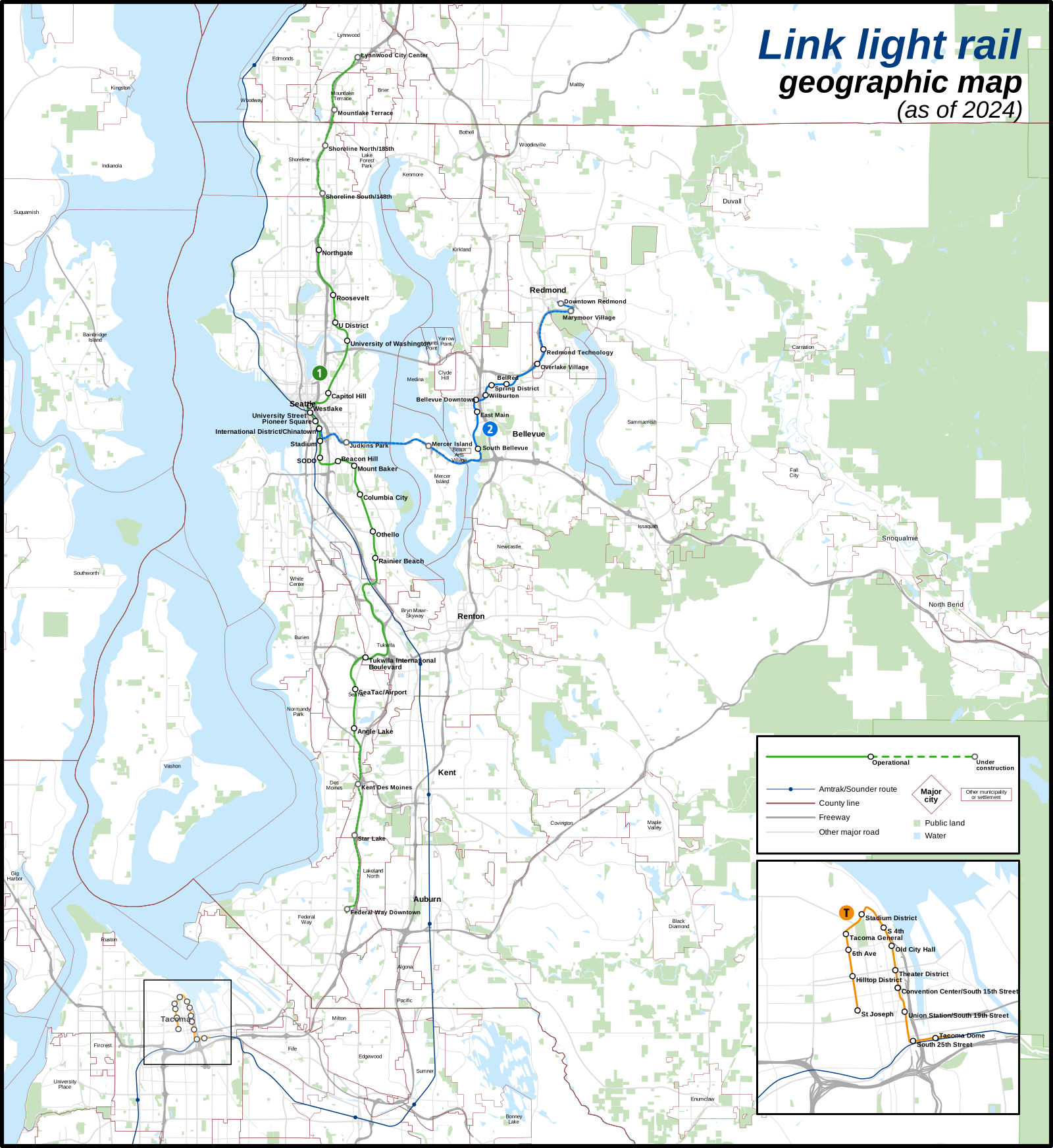

The Link light rail system is planned to be expanded to 116 mi with five lines and 70 stations by 2044. The future system is anticipated to serve 750,000 daily passengers at full build-out and cost up to $131billion. The expansions are primarily funded through local taxes passed by voters in a pair of multimodal transit ballot measures. The Sound Transit 2 (ST2) package, passed in 2008, funded several extensions to be finished by 2026, including three that opened between 2016 and 2021. Sound Transit 3 (ST3) was approved in 2016 and funded new extensions of Link that will open between 2024 and 2046, including projects in Pierce and Snohomish counties. Several deferred or truncated projects from ST2 were also funded and accelerated by the ST3 plan.
Since 2016, the original timelines for both expansion packages have been modified due to the COVID-19 pandemic, labor shortages, and construction issues. Sound Transit adopted a "realignment plan" in 2021 that delayed most projects by two to five years, primarily to address a $6.5billion shortfall in projected revenue that would be needed to avoid reaching a state-imposed debt limit by 2029. The cost estimate for the largest project in the ST3 package, the West Seattle/Ballard Link Extension, increased by 50percent between 2019 and 2021, reaching $12billion due to higher property values and lower revenue amid the pandemic. A set of new delays, mainly affecting Sound Transit 2 projects, was announced in 2022 following a four-month regional strike by concrete truck drivers, as well as unexpected conditions discovered during work.
All five lines are planned to connect at various hubs and interline in some areas to increase frequency in high-demand corridors. They converge on a regional "spine" that generally follows the Interstate 5 corridor from Everett to Tacoma. Upon completion of several planned extensions in the 2020s and 2030s, the 1Line would run from Tacoma Dome Station to Downtown Seattle, where it would use a new tunnel, and continue northwest to Ballard. The 2Line and 3Line would interline from the existing Downtown Seattle Transit Tunnel on the existing 1Line corridor to Snohomish County, sharing tracks as far north as Mariner in southern Everett. The 3Line would continue south to West Seattle and north to Downtown Everett, while the 2Line serves Bellevue and Redmond. The 4Line, connecting Kirkland to Issaquah, would interline with the 2Line in Downtown Bellevue. In addition to the new lines, three infill stations in Seattle are planned to be built by 2031 at Boeing Access Road, Graham Street, and Northeast 130th Street.
In 2023, the Seattle Department of Transportation published its 20-year city transportation plan that included proposals for additional Link light rail lines. These include an east–west connection between Ballard and the University District; a northern extension from Ballard to Northgate and Lake City; a line serving Aurora Avenue North; a line serving Denny Way; a line that follows 23rd Avenue; and additional connections from Tukwila International Boulevard station to West Seattle and SoDo.
2 Line (Mariner–Redmond)
Main article: 2 Line (Sound Transit)
The 2Line is scheduled to be extended once more on March 28, 2026, with the opening of a section from Seattle to Bellevue with a station serving Mercer Island. A series of construction issues with the Interstate 90 section caused the line to be split into separate phases, beginning with an initial segment in April 2024 from South Bellevue station to Redmond Technology station in Overlake. The 2Line is planned to continue north from Seattle to Lynnwood and southern Everett by sharing tracks with the 1Line (and later the 3Line). The western half of the East Link Extension is being built in the median of Interstate 90, including the first railway on a floating bridge in the world.
3 Line (Everett–West Seattle)
Main article: 3 Line (Sound Transit)
The 3Line is planned to open in 2032 with the completion of the West Seattle Link Extension, which would connect West Seattle to an interim terminus at SODO station. The line would be extended north to replace the 1Line following the completion of the Ballard Link Extension in 2037, which would include a new 3.3 mi tunnel in Downtown Seattle for trains arriving from the Rainier Valley. The final terminus of the 3Line is planned to be Everett Station, a multimodal hub in Downtown Everett, upon completion of the Everett Link Extension in 2037 or 2041 depending on the level of available funds.
4 Line (South Kirkland–Issaquah)
The 4Line, the fifth Link light rail line, is scheduled to open in 2041 or 2044, depending on funding, and would only serve the Eastside. The line is planned to run from the South Kirkland park-and-ride towards Downtown Bellevue, where it would interline with the 2Line, and continue along Interstate 90 to Issaquah. It is planned to include four new stations and total 11.8 mi in length; an earlier proposal for the line continued on the Cross Kirkland Corridor to a terminus in Downtown Kirkland but was not included in the ST3 plan due to opposition from local residents.
Future segments
Some figures and dates are provisional due to funding gaps, quality control, geological risk, and labor issues that have caused delays in some projects.
| Project | Line(s) | Status | Termini | Length | New stations | Expected opening | 2 Line Crosslake Connection | West Seattle Link Extension | Tacoma Dome Link Extension | Ballard Link Extension | Everett Link Extension | TCC Tacoma Link Extension | South Kirkland–Issaquah Link Extension |
|---|---|---|---|---|---|---|---|---|---|---|---|---|---|
| Under construction | 7.4 mi | 2 | |||||||||||
| Design | 4.1 mi | 3 | 2032 | ||||||||||
| Environmental review | 8.5 mi | 4 | 2035 | ||||||||||
| Environmental review | 7.7 mi | 8 | 2037 to 2039 | ||||||||||
| Environmental review | 16.3 mi | 6–7 | 2037 to 2041 | ||||||||||
| Planned | Tacoma Community College | 3.5 mi | 6 | 2039 or 2041 | |||||||||
| Planned | South Kirkland | Issaquah | 11.8 mi | 4 | 2041 or 2044 |
Safety and security
Sound Transit contracts with local law enforcement agencies to provide policing services, which include patrolling transit facilities, monitoring traffic, and responding to emergency incidents. These include a dedicated unit of the King County Sheriff's Office and members of the Lynnwood Police Department who are contracted to provide coverage within King and Snohomish counties, respectively. Other local police departments also have dedicated teams to patrol transit stations. Members of the Federal Air Marshal Service also patrol light rail stations and trains as part of federal anti-terrorism programs. Sound Transit also contracts with four private security firms to provide a total of 550 uniformed officers who patrol stations and trains and respond to incidents. All trains and stations have emergency intercom systems and Sound Transit also allows passengers to use text messages to contact security officers.
From 2009 to 2021, a total of 168 vehicular, pedestrian, and cyclist collisions involving the 1Line have been recorded with 8 deaths and 54 injuries. They primarily occur on a 4.5 mi section of at-grade tracks in the Rainier Valley, which lacks crossing barriers. The majority of incidents are vehicular collisions caused by drivers who make an illegal left turn at intersections. The rate of track injuries and fatalities on Link were lower than peer light rail systems in the United States, averaging 8.1 collisions per one million miles of revenue service from 2015 to 2021. A Sound Transit study in 2022 endorsed several pilot projects, such as handheld swing gates for pedestrians and new barriers for vehicles, to reduce the number of collisions. By 2024, new illuminated signs for pedestrians had been added and the volume of train bells was increased to 90 decibels; a new pilot to use alternating headlights in a "wig-wag" pattern on trains began in 2025. A full rebuild of the section to add grade separation is estimated to cost $1.1billion to $1.7billion.
The use of recreational drugs at stations and onboard trains increased significantly during the COVID-19 pandemic following the removal of fare enforcement officers and changes to Washington's state drug laws. Sound Transit began to block seating areas near operator cabs in 2022 to prevent fumes and smoke from affecting employees. The University of Washington School of Public Health collected air and surface samples from 19 light rail trains in Seattle and Portland over a 28-day period in early 2023 to measure levels of drug residue onboard transit vehicles. Their study, which was partially funded by Sound Transit, found trace amounts of methamphetamine on all surface samples and most air samples, along with fentanyl on half of surface samples. All but one of the samples stayed within the Environmental Protection Agency's limit for pharmaceutical worker exposure to fentanyl and the amount for both drugs was described as "too low" to cause health issues. Sound Transit responded to the study with plans to increase their security presence, add more frequent cleanings, and retrofit Link trains with upgraded MERV 13 air filters.
References
References
- "Link light rail stations". [[Sound Transit]].
- (May 2025). "2024 Sound Transit Annual Report". Sound Transit.
- Kershner, Jim. (2019). "Transit: The Story of Public Transportation in the Puget Sound Region". [[HistoryLink]].
- {{harvp. Kershner. 2019
- Crowley, Walt. (October 2, 2000). "Street Railways in Seattle". HistoryLink.
- Wodnik, Bob. (2019). "Back on Track: Sound Transit's Fight to Save Light Rail". [[Washington State University Press]].
- {{harvp. Kershner. 2019
- {{harvp. Kershner. 2019
- Garber, Andrew. (June 24, 2001). "How Sound Transit dug itself a hole with tunnel". [[The Seattle Times]].
- {{harvp. Kershner. 2019
- {{harvp. Kershner. 2019
- Cohen, Josh. (October 14, 2016). "How Seattle blew its chance at a subway system". [[Crosscut.com]].
- {{harvp. Kershner. 2019
- Crowley, Walt. (1993). "Routes: An Interpretive History of Public Transportation in Metropolitan Seattle". Crowley Associates.
- {{harvp. Kershner. 2019
- {{harvp. Kershner. 2019
- {{harvp. Kershner. 2019
- Lane, Bob. (April 22, 1988). "Metro makes tracks for tracks for future". The Seattle Times.
- {{harvp. Crowley. 1993
- Lane, Bob. (March 20, 1975). "Metro program looks to future". The Seattle Times.
- {{harvp. Kershner. 2019
- {{harvp. Crowley. 1993
- Lane, Bob. (March 22, 1981). "'Light rail' system might solve transit problems, says study". The Seattle Times.
- Bergsman, Jerry. (July 27, 1983). "Snohomish County wants transport study expanded". The Seattle Times.
- Harden, Mark. (December 6, 1985). "Panel's pick for commuters: high-tech trolleys along I-5". [[The Everett Herald]].
- Hessburg, John. (April 26, 1986). "Panel suggests waiting until 2000 for rail system". [[Seattle Post-Intelligencer]].
- Orwall, Bruce. (July 5, 1986). "$14 billion light-rail transit plan gets unanimous OK from panel". The Everett Herald.
- Lane, Bob. (November 9, 1988). "Ballot Issues: On track, voters say 'hop to' on rail transit". The Seattle Times.
- {{harvp. Crowley. 1993
- Wodnik, Bob. (May 29, 1993). "Transit plan for region is approved". The Everett Herald.
- {{harvp. Wodnik. 2019
- {{harvp. Kershner. 2019
- Schaefer, David. (February 12, 1995). "On the right track? Questions, answers to the $6.7 billion proposal". The Seattle Times.
- (March 15, 1995). "Transit plan derailed: Pierce, Snohomish county voters say no to $6.7 billion proposal". The Seattle Times.
- Schaefer, David. (October 6, 1996). "Looking at the new transit proposal". The Seattle Times.
- Schaefer, David. (November 6, 1996). "Voters back transit plan on fourth try". The Seattle Times.
- (August 15, 1997). ""Sound Transit" to be the Name for Regional Transit Authority Services". Sound Transit.
- Dudley, Brier. (July 19, 1997). "'Link' may join BART and MAX". [[The News Tribune]].
- (February 16, 1998). "Service gives downtown commuters parking, ride". Seattle Post-Intelligencer.
- Szymanski, Jim. (September 25, 2000). "Construction pinches Freighthouse". The News Tribune.
- Barker, Jeffery M.. (September 4, 2002). "Tacoma's light rail transit cars arrive". Seattle Post-Intelligencer.
- Corvin, Aaron. (August 23, 2003). "Tacoma Link makes its debut". The News Tribune.
- Corvin, Aaron. (April 28, 2004). "City's streetcar system hits 500,000-rider mark". The News Tribune.
- {{harvp. Kershner. 2019
- Foster, George. (November 19, 1999). "Route for Link light rail approved by transit board". The Seattle Times.
- Quigg, David. (October 30, 1999). "Impacts of light-rail line spelled out". The News Tribune.
- {{harvp. Wodnik. 2019
- (December 13, 2000). "Light-rail costs soars $1 billion". The Seattle Times.
- Cohen, Josh. (November 28, 2017). "Sound Transit (King, Pierce, and Snohomish counties)". HistoryLink.
- McGann, Chris. (January 20, 2001). "Feds sign off on light rail grant". Seattle Post-Intelligencer.
- {{harvp. Wodnik. 2019
- Garber, Andrew. (April 5, 2001). "Suspension of light-rail funds urged". The Seattle Times.
- {{harvp. Wodnik. 2019
- Garber, Andrew. (September 28, 2001). "Shorter light-rail line OK'd". The Seattle Times.
- Foster, George. (November 30, 2001). "Light rail wins final approval". Seattle Post-Intelligencer.
- {{harvp. Wodnik. 2019
- Pryne, Eric. (March 5, 2004). "Scaling back of light rail upheld". The Seattle Times.
- Fryer, Alex. (June 23, 2003). "Sound Transit awaits congressional blessing to build light-rail line". The Seattle Times.
- (July 8, 2003). "Victory for Sound Transit". Seattle Post-Intelligencer.
- Hadley, Jane. (October 24, 2003). "Victory day for fans of light rail". Seattle Post-Intelligencer.
- Lindblom, Mike. (November 9, 2003). "Dreams of expansion mark light-rail event". The Seattle Times.
- {{harvp. Kershner. 2019
- Robinson, Lauren. (September 16, 2004). "Light-rail line hits fast forward". [[Seattle Daily Journal of Commerce]].
- (August 18, 2005). "Sound Transit installs first rails for Central Link light rail line". Sound Transit.
- Gilmore, Susan. (September 23, 2005). "Bus tunnel shuts down tonight for 2 years". The Seattle Times.
- (September 18, 2007). "Region gets a glimpse of its transit future". The Seattle Times.
- Lindblom, Mike. (March 16, 2007). "Sound Transit begins light-rail train tests in Sodo". The Seattle Times.
- {{harvp. Kershner. 2019
- Lindblom, Mike. (June 23, 2011). "Light-rail contract dispute is resolved".
- Lindblom, Mike. (September 23, 2006). "Construction under way for airport rail link". The Seattle Times.
- Lindblom, Mike. (December 16, 2009). "Airport rail station opens Saturday". The Seattle Times.
- {{harvp. Kershner. 2019
- Lindblom, Mike. (December 19, 2009). "Sound Transit opens new light-rail link with Sea-Tac Airport". The Seattle Times.
- Hadley, Jane. (July 14, 2005). "Light rail plan comes into focus". Seattle Post-Intelligencer.
- Roberts, Gregory. (November 28, 2006). "UW light rail on right track for federal money". Seattle Post-Intelligencer.
- Lindblom, Mike. (January 16, 2009). "Light-rail line gets federal money". The Seattle Times.
- Lindblom, Mike. (March 7, 2009). "Shovels ready at Sound Transit". The Seattle Times.
- Lindblom, Mike. (May 16, 2011). "Let the dig begin". The Seattle Times.
- Beekman, Daniel. (March 19, 2016). "Capitol Hill, UW light-rail stations open to big crowds". The Seattle Times.
- Lindblom, Mike. (January 26, 2016). "University Link light-rail service starts March 19". The Seattle Times.
- Lee, Jessica. (March 18, 2017). "Light-rail ridership soars in year after UW, Capitol Hill stations open". The Seattle Times.
- Lange, Larry. (May 25, 2007). "Sound Transit directors OK expansion of light rail system". Seattle Post-Intelligencer.
- {{harvp. Kershner. 2019
- Roberts, Gregory. (November 29, 2007). "Roads-and-transit package too big and too pricey, voters feared". Seattle Post-Intelligencer.
- Lindblom, Mike. (July 25, 2008). "Sound Transit sending voters $17.9 billion rail-and-bus plan". The Seattle Times.
- Merten, Paxtyn. (May 5, 2020). "What the Great Recession taught Sound Transit about realignment in an economic crisis". [[Puget Sound Business Journal]].
- Gutierrez, Scott. (September 22, 2010). "Sound Transit must cut back; south King hurt most". Seattle Post-Intelligencer.
- Kamb, Lewis. (September 27, 2010). "Free Link rides over?". The News Tribune.
- (September 14, 2011). "Tacoma Link Commerce Street Station opens tomorrow". Sound Transit.
- Lindblom, Mike. (January 23, 2016). "Seattle's First Hill Streetcar to open Saturday with free rides". The Seattle Times.
- Lindblom, Mike. (September 22, 2016). "Angle Lake light-rail station opens Saturday with party". The Seattle Times.
- Klaas, Mark. (September 28, 2016). "Welcomed station for area riders: Light rail extension comes to SeaTac". [[Kent Reporter]].
- Lindblom, Mike. (August 20, 2016). "Sound Transit's cost overruns for first phase hit about 86 percent". The Seattle Times.
- (November 9, 2016). "Sound Transit 3 wins, despite rejection from Pierce County". The Seattle Times.
- Lindblom, Mike. "Where Sound Transit 3 projects could speed up or slow down". The Seattle Times.
- (July 8, 2019). "Could Sound Transit build light rail faster? It wouldn't be easy.". The Seattle Times.
- (June 23, 2016). "Sound Transit 3: The Regional Transit System Plan for Central Puget Sound". Sound Transit.
- (August 17, 2012). "Sound Transit breaks ground on Northgate Link light rail extension". Sound Transit.
- Lindblom, Mike. (September 26, 2021). "Light rail ready to open at Northgate, transforming more than just commutes". The Seattle Times.
- Lindblom, Mike. (March 17, 2015). "Transit-tunnel machine reaches daylight at Roosevelt Station". The Seattle Times.
- Gray, Bruce. (September 22, 2021). "World-class engineering under ground keeps trains quiet on UW campus above". Sound Transit.
- Long, Katherine. (May 8, 2014). "$43 million deal to move UW labs for light-rail line". The Seattle Times.
- (September 26, 2021). "Fast facts about light-rail expansion to U District, Roosevelt, Northgate". The Seattle Times.
- Lindblom, Mike. (June 9, 2021). "Sound Transit light rail will improve to 8-minute frequency this weekend". The Seattle Times.
- Kroman, David. (January 1, 2023). "Sounder trains' future in limbo as riders are slow to return". The Seattle Times.
- Sailor, Craig. (September 14, 2023). "Tacoma Link doubles in length Saturday. Sound Transit isn't delivering what they promised". The News Tribune.
- Lindblom, Mike. (September 15, 2023). "Sound Transit's Tacoma streetcar climbs the Hilltop starting this weekend". The Seattle Times.
- Lindblom, Mike. (May 14, 2017). "World's first light rail on a floating bridge: For I-90, Sound Transit had to invent 'a brilliant solution'". The Seattle Times.
- Pryne, Eric. (December 16, 2005). "Test shows I-90 bridge can take light rail". The Seattle Times.
- Lindblom, Mike. (August 2, 2021). "Why building rail transit in U.S., Seattle costs so much and takes so long". The Seattle Times.
- Lindblom, Mike. (April 24, 2013). "In historic step, Bellevue approves light-rail route". The Seattle Times.
- Murray, Ryan. (April 25, 2016). "Sound Transit breaks ground in Bellevue". [[Bellevue Reporter]].
- Lindblom, Mike. (June 1, 2017). "Mercer Island braces for new I-90 bottlenecks as light-rail work begins". The Seattle Times.
- Capestany, Gabriela. (July 20, 2018). "Crews complete excavation of East Link Bellevue tunnel". [[KING-TV.
- Newcomb, Tim. (April 22, 2019). "Sound Transit's East Link Construction Passes 50% Completion". [[Engineering News-Record]].
- Deshais, Nicholas. (May 4, 2025). "From Deadmond to Redmond, light rail transforms a suburb to a city". The Seattle Times.
- Merten, Paxtyn. (October 23, 2019). "Sound Transit breaks ground on downtown Redmond light rail". Puget Sound Business Journal.
- (April 14, 2023). "Bad light-rail ties on I-90 bridge can't be fixed, must be rebuilt". The Seattle Times.
- Lindblom, Mike. (July 6, 2025). "Why is Seattle-to-Bellevue light rail still delayed?". The Seattle Times.
- Lindblom, Mike. (August 24, 2023). "Eastside-only light rail should open in March, Sound Transit says". The Seattle Times.
- (April 27, 2024). "Eastside light rail line opens as huge crowds try out the ride". The Seattle Times.
- (May 10, 2025). "Light rail grand opening in Redmond draws big crowds". The Seattle Times.
- Lindblom, Mike. (January 23, 2026). "When will light rail service start between Bellevue and Seattle?". The Seattle Times.
- (August 30, 2024). "New light rail stations draw big crowds for first trips". The Seattle Times.
- Lindblom, Mike. (August 28, 2024). "Why is light rail to Lynnwood opening next to I-5 and not on Aurora?". The Seattle Times.
- Gutman, David. (December 20, 2018). "Sound Transit to get $1.2 billion for light rail to Lynnwood". The Seattle Times.
- Deshais, Nicholas. (August 25, 2024). "Lynnwood light rail route brings a housing boom". The Seattle Times.
- Deshais, Nicholas. (October 29, 2024). "Lynnwood light rail is super popular — but there's a problem". The Seattle Times.
- Lindblom, Mike. (December 3, 2024). "Light rail delays again strike Sound Transit riders". The Seattle Times.
- Deshais, Nicholas. (December 6, 2025). "New light rail stations open with South King County party". The Seattle Times.
- Lindblom, Mike. (July 10, 2025). "Federal Way could get light rail this fall, before Eastside crossing". The Seattle Times.
- Lindblom, Mike. (June 30, 2024). "The light rail bridge spectacle you've eyeballed for so long nears the finish line". The Seattle Times.
- Lindblom, Mike. (July 13, 2022). "With no plans yet to boost ridership, Sound Transit bets on isolated North Seattle station site". The Seattle Times.
- (April 2020). "Transit line naming: Frequently asked questions (FAQs)". Sound Transit.
- Craighead, Callie. (August 31, 2021). "Sound Transit gearing up to rebrand Seattle link light rail lines with new names, numbers and colors". Seattle Post-Intelligencer.
- Netzler, Kat. (September 18, 2019). "Link light rail debuts line colors". Sound Transit.
- Lindblom, Mike. (November 14, 2019). "Facing objections, Sound Transit drops 'Red Line' as the name for its light-rail route". The Seattle Times.
- Shaner, Zee. (April 9, 2020). "New line names coming in 2021". Sound Transit.
- Lindblom, Mike. (August 28, 2024). "Why is light rail to Lynnwood opening next to I-5 and not on Aurora?". The Seattle Times.
- Lindblom, Mike. (August 8, 2016). "Sound Transit keeping close eye on crowded light-rail trains". The Seattle Times.
- Earl, Joni. (July 16, 2009). "6 years and $2.4B later, Central Link ready to roll". Seattle Daily Journal of Commerce.
- (August 25, 2022). "Transit Development Plan 2022–2027 and 2021 Annual Report". Sound Transit.
- "System performance tracker: Link Ridership". Sound Transit.
- (November 13, 2009). "Countdown to airport connection: Link light rail to Sea-Tac Airport starts Dec. 19". Sound Transit.
- Groover, Heidi. (March 25, 2019). "Buses no longer using Seattle's transit tunnel; Monday commutes test new routes". The Seattle Times.
- (July 18, 2019). "Link light rail celebrates tenth anniversary". Sound Transit.
- Smith, Helen. (December 6, 2025). "Federal Way light rail extension opens: Here's what you need to know". KING 5 News.
- Lindblom, Mike. (February 15, 2024). "Sound Transit sets a date for Bellevue-Redmond trains". The Seattle Times.
- "Modes of service". Sound Transit.
- Stephens, Terry. (September 20, 2001). "Sound Transit seeks success in Tacoma". Seattle Daily Journal of Commerce.
- Cross, Robert. (March 26, 2006). "Tacoma under glass". [[Chicago Tribune]].
- Corvin, Aaron. (August 17, 2003). "Future Link: Tacoma or bust". The News Tribune.
- Hadley, Jane. (August 22, 2003). "Tacoma's light rail—1.6 historic miles". Seattle Post-Intelligencer.
- Lindblom, Mike. (September 16, 2023). "Sound Transit's Tacoma streetcar climbs the Hilltop starting this weekend". The Seattle Times.
- (September 16, 2023). "T Line schedule: Tacoma Dome—St. Joseph". Sound Transit.
- Ellouk, Bernard. (October 30, 2017). "Sound Transit will make it easier to get to Garth Brooks concerts". KING 5 News.
- Lynn, Adam. (December 21, 2016). "Tacoma Link ridership heads downhill". The News Tribune.
- (August 2025). "Transit Development Plan 2025–2030". Sound Transit.
- (June 2022). "Station Experience Design Guidelines". Sound Transit.
- (July 2015). "Tacoma Link Expansion: Project Overview". Sound Transit.
- Baruchman, Michelle. (April 16, 2018). "Why Sound Transit doesn't use turnstiles at light-rail stations". The Seattle Times.
- "Transit accessibility". Sound Transit.
- (May 2021). "Sound Transit Design Criteria Manual, Revision 5 Amendment 11". Sound Transit.
- (September 2025). "Sound Transit Agency Safety Plan". Sound Transit.
- (December 12, 2016). "Transit tourism: Explore Seattle by Link light rail". The Seattle Times.
- (June 2017). "East Link Extension: Light Rail 101". Sound Transit.
- (June 2014). "Chapter 2: Alternatives Considered". Sound Transit.
- Lindblom, Mike. (March 19, 2023). "Seattle's bleak downtown light-rail stations have nowhere to go but up". The Seattle Times.
- Lindblom, Mike. (July 4, 2021). "Sound Transit's race to fix dozens of broken escalators in downtown Seattle". The Seattle Times.
- Parsons Brinckerhoff. (March 2005). "Sound Transit Long Range Plan Update Issue Paper S.1: Tacoma Link Integration with Central Link". Sound Transit.
- Crawford, Galen. (September 18, 2017). "Name that tune: new busking areas at six light rail stations". Sound Transit.
- Deshais, Nicholas. (September 3, 2024). "What to know about connecting to the new Lynnwood light rail line". The Seattle Times.
- (March 2025). "Downtown Metro Service: Frequent Routes to Help You Get Around Downtown". [[King County Metro]].
- Kroman, David. (July 27, 2023). "WA ferry passengers are about to see a transformed Colman Dock". The Seattle Times.
- "Parking garages and lots". Sound Transit.
- Lindblom, Mike. (September 26, 2023). "What fare is fair? Sound Transit wants your opinion". The Seattle Times.
- Lindblom, Mike. (August 18, 2010). "Sound Transit will add more bike parking to deal with shortage". The Seattle Times.
- Feit, Josh. (September 9, 2019). "Help pick a new name for University Street Station". Sound Transit.
- Toay, Adel. (August 30, 2024). "Here are the changes coming to Link Light Rail Friday". KING 5 News.
- (August 29, 2024). "Understanding Sound Transit's new three-digit Station Codes". Sound Transit.
- "Stellar Connections". Sound Transit.
- Porter, Lynn. (April 23, 2015). "Sound Transit art program helps pull commuters out of their daily grind". Seattle Daily Journal of Commerce.
- Kiley, Brendan. (December 9, 2022). "Public art in Seattle's light rail stations has a deeper backstory than you'd think". The Seattle Times.
- (June 2016). "Guide to art: Link light rail". Sound Transit.
- Upchurch, Michael. (July 12, 2009). "Longtime light-rail artist Norie Sato is 'curator' of Link station art". The Seattle Times.
- Farr, Sheila. (March 24, 2022). "Elliott, Richard C. (1945-2008)". HistoryLink.
- McNichols, Joshua. (March 17, 2016). "Why Jets Kiss Above The New Capitol Hill Light Rail Platform". [[KUOW-FM.
- Metzger, Katie. (August 19, 2019). "Art that reflects and creates community". Sound Transit.
- (June 10, 2025). "An evolution of transit-oriented development in the Puget Sound". Seattle Daily Journal of Commerce.
- Whitman, Victor. (March 29, 2024). "Eastside developers track the light rail rollout with measured optimism". The Seattle Times.
- Miller, Brian. (January 13, 2022). "On the Block: Spring District achieves LEED neighborhood standard". Seattle Daily Journal of Commerce.
- Carlton Harrell, Debera. (February 17, 2009). "Transit zoning bill gets remake". Seattle Post-Intelligencer.
- Sullivan, Jennifer. (February 17, 2009). "Neighborhoods say state shouldn't dictate development near Sound Transit light-rail stations". The Seattle Times.
- Carlton Harrell, Debera. (March 13, 2009). "Light rail bills fail to make cutoff". Seattle Post-Intelligencer.
- Bertolet, Dan. (June 2, 2010). "A Carbon Neutrality Reality Check For Seattle". [[Seattle Met]].
- Cohen, Josh. (May 8, 2018). "Seattle Raises the Equity Bar on Transit-Oriented Development". Next City.
- Lindblom, Mike. (December 12, 2024). "This land handout will bring apartments to Lynnwood light rail station". The Seattle Times.
- (July 18, 2025). "Transit-Oriented Development Quarterly Status Report: Quarter 2, 2025". Sound Transit.
- Lindblom, Mike. (August 29, 2024). "Light rail for beginners: How to ride the new Lynnwood extension". The Seattle Times.
- "How to ride". Sound Transit.
- (August 29, 2025). "Supplemental 2 Line service will run for the rest of this season's Marymoor Live concerts". Sound Transit.
- Park, Julia. (July 26, 2025). "I-5 traffic tips and other advice during major K-pop concert in Tacoma next week". The News Tribune.
- (June 10, 2025). "Sound Transit to run additional service for Club World Cup". Sound Transit.
- (June 2018). "Sound Transit Service Standards and Performance Measures, 2018 Edition". Sound Transit.
- Shaner, Zee. (December 14, 2021). "When to expect true real-time arrival info on Link platforms". Sound Transit.
- (February 19, 2025). "Public Transportation Ridership Report, Fourth Quarter 2024". American Public Transportation Association.
- (June 2024). "Fare Revenue Report 2023". Sound Transit.
- Walters, Kate. (May 31, 2024). "Did you pay your fare? Inspections start Monday at Sound Transit stations". KUOW.
- Lindblom, Mike. (January 3, 2024). "Sound Transit looks to other cities as it considers fare gates". The Seattle Times.
- (July 2025). "Fare Revenue Report 2024". Sound Transit.
- Hansen, Jordan. (November 5, 2023). "ORCA card makes transit simpler — and cheaper, too". The Everett Herald.
- Lindblom, Mike. (May 16, 2022). "FAQ: What you need to do now to keep your ORCA card working". The Seattle Times.
- (June 24, 2024). "ORCA Card now available in Google Wallet; Android users can pay for transit with phone and Wear OS devices". Sound Transit.
- Lee, Jessica. (May 22, 2017). "From ORCA cards to bus-driver behavior: questions and answers". The Seattle Times.
- "How to pay: Fares". Sound Transit.
- Kroman, David. (November 1, 2023). "Sound Transit to resume citations for passengers as it enforces fares". The Seattle Times.
- Lindblom, Mike. (July 8, 2014). "Shooting brings attention to light rail's fare inspection force". The Seattle Times.
- Lindblom, Mike. (August 12, 2009). "Link's ticket system confounds light-rail riders". The Seattle Times.
- Kroman, David. (April 28, 2022). "Sound Transit eases fare enforcement amid equity concerns". The Seattle Times.
- Lindblom, Mike. (September 2, 2022). "Sound Transit goes all-in on a gentler kind of fare enforcement". The Seattle Times.
- (July 2020). "Fare Revenue Report 2019". Sound Transit.
- Lindblom, Mike. (August 30, 2024). "Light rail to Lynnwood starts today; so do flat fares, systemwide". The Seattle Times.
- "ORCA Lift". King County Metro.
- Johnson, Matthew. (September 24, 2015). "Q: Why do I need to tap on and tap off my ORCA card?". Sound Transit.
- Kroman, David. (September 1, 2022). "Free transit starts today for most youths across WA". The Seattle Times.
- Lindblom, Mike. (December 15, 2023). "Sound Transit light rail to cost $3 a ride — for trips near or far". The Seattle Times.
- Moomey, Liz. (October 28, 2022). "Tacoma Link riders will soon have to pay. When will fares start and how much will it be?". The News Tribune.
- (February 18, 2016). "Overnight cleaning and maintenance keeps Link running squeaky clean". Sound Transit.
- Lindblom, Mike. (August 20, 2016). "Sound Transit's cost overruns for first phase hit about 86 percent". The Seattle Times.
- Lindblom, Mike. (July 11, 2024). "What would it cost to make South Seattle light rail crossings safe?". The Seattle Times.
- (June 2025). "At-Grade Crossing Program Master Plan 2025–2029". Sound Transit.
- (February 2014). "Central Link Initial Segment and Airport Link Before & After Study: Final Report". Sound Transit.
- Lindblom, Mike. (August 26, 2024). "What to expect when you try the Eastside's eight light rail stations". The Seattle Times.
- Sound Transit Audit Division. (April 29, 2022). "Internal Audit Report: Link Light Rail Service Event from November 26, 2021". Sound Transit.
- Lindblom, Mike. (June 19, 2019). "Sound Transit shows off its new, roomier light-rail cars. They'll go into service next year.". The Seattle Times.
- Guevara, Natalie. (June 19, 2019). "Wider center, digital signs: Improvements abound in new Sound Transit light rail cars". Seattle Post-Intelligencer.
- (April 27, 2022). "First new light-rail vehicle unveiled for Sound Transit's Hilltop Tacoma Link". Mass Transit Magazine.
- Velush, Lukas. (May 22, 2007). "Rail cars finished in Everett". The Everett Herald.
- (October 23, 2014). "Transit Development Plan 2014–2019 and 2013 Annual Report". Sound Transit.
- (December 17, 2006). "Sound Transit unveils first Central Link light rail vehicle". Sound Transit.
- Pryne, Eric. (November 25, 2003). "Sound Transit picks Japanese firm to build train cars for light-rail line". The Seattle Times.
- (July 29, 2008). "Central Link Operations Plan{{nbsp}}– Westlake to SeaTac/Airport". Sound Transit.
- (June 2017). "Bicycle Riders Guide". Sound Transit.
- (August 2015). "Technical Data: Seattle, WA{{nbsp}}– Sound Transit". [[Kinki Sharyo.
- (July 10, 2009). "The Light-Rail Train". The Seattle Times.
- (May 2021). "Siemens Mobility S700 helps Seattle serve its booming ridership with modern style and sustainability". [[Siemens Mobility]].
- (May 14, 2021). "First new Link light rail vehicles enter passenger service". Sound Transit.
- (January 20, 2024). "Sound Transit reopens U District station after Israel-Hamas war protest". The Seattle Times.
- (May 26, 2022). "Sound Transit Resolution No. R2022-12". Sound Transit.
- (November 2025). "2025 Board Annual Program Review". Sound Transit.
- (August 2024). "Federal Transit Administration Record of Decision for Operations and Maintenance Facility South". Sound Transit.
- (April 10, 2025). "Sound Transit Resolution No. R2025-07". Sound Transit.
- (April 1, 2001). "Skoda breaks into the urban market". [[Railway Gazette International]].
- (April 26, 2022). "First New Light Rail Vehicle for Hilltop Tacoma Link". Sound Transit.
- (July 25, 2002). "The Tacoma Link Light Rail Vehicles are Coming!". Sound Transit.
- Metzger, Katie. (March 30, 2022). "Fresh pics: New light rail vehicle arrives in Tacoma". Sound Transit.
- (November 10, 2022). "Final new light rail vehicle arrives for Hilltop Tacoma link". Sound Transit.
- (June 2024). "2023 Rail Fixed Guideway Public Transportation System Safety Report". Washington State Department of Transportation.
- Middleton, William D.. (April 1, 2006). "Sound Transit builds for LRT: Projected growth over the next 25 years is driving the Seattle region's rapid push to expand light rail.". [[Simmons-Boardman Publishing]].
- Lindblom, Mike. (March 6, 2025). "2 new reports detail light rail delays, breakdowns and power outages". The Seattle Times.
- (December 1, 2020). "Sound Transit light rail trains are now running on clean energy". Sound Transit.
- Metzger, Katie. (March 17, 2023). "Expanded Link runs on 100 percent green energy". Sound Transit.
- (October 4, 2018). "For the record: Link repairs in Tukwila Oct. 5-7". Sound Transit.
- Lindblom, Mike. (May 27, 2015). "State finally getting satellite-based train controls, 20 years after fatal crash". The Seattle Times.
- Brown, Charles. (April 27, 2009). "Some drivers see red over light rail's impact on traffic lights". The Seattle Times.
- Lindblom, Mike. (December 20, 2025). "4 light rail stations to close twice this weekend — briefly". The Seattle Times.
- Cohen, Aubrey. (June 16, 2009). "Here's where they fix the light rail trains". Seattle Post-Intelligencer.
- (May 2016). "May 2016 Progress Report: Link Light Rail Program". Sound Transit.
- (April 24, 2014). "Sound Transit Motion No. M2014-27". Sound Transit.
- "Sound Transit Maintenance of Way Building". Studio Meng Strazzara.
- (March 4, 2007). "ST opens state-of-the-art Link light rail Operations & Maintenance Facility". Sound Transit.
- Lindblom, Mike. (March 8, 2024). "Sound Transit pulls out the stops to solve a Lynnwood train shortage". The Seattle Times.
- Miller, Brian. (November 22, 2021). "Sound Transit OKs OMF East Phase II, with possible start in 2024". Seattle Daily Journal of Commerce.
- (August 30, 2021). "Project of the Week: Operations and Maintenance Facility East". Seattle Daily Journal of Commerce.
- Metzger, Katie. (April 3, 2024). "Sustainability a core feature of Eastside light rail base". Sound Transit.
- Metzger, Katie. (July 12, 2019). "Watch out for 'Nails' on the trail". Sound Transit.
- (February 28, 2025). "BRIDGE Housing breaks ground at transit-oriented development project that will bring affordable housing to the City of Bellevue". Sound Transit.
- Miller, Brian. (January 9, 2025). "Exxel Pacific starts 234 Bellevue units, all affordable, next to Spring District". Seattle Daily Journal of Commerce.
- Corvin, Aaron. (November 3, 2002). "Streetcars ready for viewing". The News Tribune.
- (February 10, 2017). "Expanding the Operations and Maintenance Facility". Sound Transit.
- (March 22, 2021). "Hilltop Tacoma Link Extension construction now 75% complete". Sound Transit.
- Luczak, Marybeth. (September 18, 2023). "Sound Transit opens Hilltop Tacoma extension". International Railway Journal.
- (January 2019). "Pierce County 2019 Regional Report". Sound Transit.
- (August 15, 2021). "Sound Transit faces a $6.5 billion shortfall. Here's what it might do". The Seattle Times.
- Lindblom, Mike. (August 18, 2022). "More delays for light rail to Bellevue, Redmond, Federal Way, Lynnwood". The Seattle Times.
- Haglund, Noah. (August 24, 2017). "Light rail to Lynnwood: $500M over budget, behind schedule". The Everett Herald.
- Lindblom, Mike. (November 3, 2016). "Still deciding on Sound Transit 3? Here's a Q&A". The Seattle Times.
- (January 7, 2021). "Increased project cost estimates presented to Sound Transit Board Executive Committee". Sound Transit.
- Craighead, Callie. (January 11, 2021). "Estimated cost of West Seattle-Ballard link extension increases by 50%". Seattle Post-Intelligencer.
- Lindblom, Mike. (April 9, 2025). "Sound Transit's looming money crunch prompts a request in Olympia". The Seattle Times.
- (January 2022). "West Seattle and Ballard Link Extensions Draft Environmental Impact Statement Executive Summary". Sound Transit.
- (March 2022). "Sound Transit future service". Sound Transit.
- Engelson, Andrew. (August 5, 2021). "Sound Transit Approves Plan that Accelerates Timeline for Seattle Stations, Addresses Funding Gap". [[The Stranger (newspaper).
- (August 25, 2023). "Denny Way and 23rd Ave light rail lines? 20-year Seattle Transportation Plan taking shape". [[Capitol Hill Seattle Blog]].
- Lindblom, Mike. (November 9, 2022). "An Eastside-only light-rail line? Here's why it might happen". The Seattle Times.
- Lindblom, Mike. (January 24, 2022). "Rolling in the deep: Sound Transit's downtown Seattle tunnel would bring riders 145 feet below the street". The Seattle Times.
- Watanabe, Ben. (December 8, 2021). "City of Everett outlines light rail priorities for 2037". The Everett Herald.
- (2021). "Everett Link Extension fact sheet". Sound Transit.
- "South Kirkland–Issaquah Link". Sound Transit.
- (July 8, 2019). "Could Sound Transit build light rail faster? It wouldn't be easy.". The Seattle Times.
- Thompson, Lynn. (April 26, 2016). "Kirkland, Renton leaders want more from Sound Transit 3 package". The Seattle Times.
- Howard, John William. (March 30, 2016). "Draft plan for ST3 does not include transit on Kirkland trail". [[Kirkland Reporter]].
- (August 17, 2022). "Action plans to address current Link construction risks". Sound Transit.
- (December 5, 2025). "System Expansion Monthly Status Report, October 2025". Sound Transit.
- "System expansion". Sound Transit.
- (October 2024). "2024 Annual Program Review Report". Sound Transit.
- (May 20, 2025). "Spring construction update: The 2 Line's crosslake connection". Sound Transit.
- "TCC Tacoma Link Extension". Sound Transit.
- "Safety and security: Sound Transit personnel and security staff". Sound Transit.
- (July 24, 2025). "Sound Transit Motion No. M2025-35". Sound Transit.
- Lindblom, Mike. (April 21, 2024). "Eastside's light rail wait is almost over with 'Starter Line'". The Seattle Times.
- Groover, Heidi. (February 4, 2020). "Fears of immigration agents on Seattle-area transit prompt new guide to who's policing buses, trains". The Seattle Times.
- Lindblom, Mike. (October 6, 2023). "What are Seattle-area transit agencies doing to protect riders?". The Seattle Times.
- (April 11, 2023). "Something fishy on your ride? Text us ASAP!". Sound Transit.
- Lindblom, Mike. (June 19, 2022). "Seattle's most dangerous light-rail stretch — and how to make it safer". The Seattle Times.
- Lindblom, Mike. (June 19, 2022). "Light-rail safety around the U.S.: How does Seattle stack up?". The Seattle Times.
- Lindblom, Mike. (October 21, 2022). "Seattle light-rail train bells will peal louder for safety". The Seattle Times.
- Bendon, Henry. (March 19, 2025). "Wig wag pilot train enters service". Sound Transit.
- Lindblom, Mike. (February 14, 2023). "Sound Transit says it's pushing back against drug use on light rail". The Seattle Times.
- Lindblom, Mike. (February 14, 2022). "Drugs on buses have become an everyday hazard, Seattle-area transit workers say". The Seattle Times.
- Lindblom, Mike. (September 7, 2023). "Drug smoke wafts through transit but not at toxic levels, UW study says". The Seattle Times.
- (January 2025). "Assessing fentanyl and methamphetamine in air and on surfaces of transit vehicles". [[Taylor & Francis]].
- Wright, David. (September 7, 2023). "How a UW study will help us safeguard passenger and operator health". Sound Transit.
This article was imported from Wikipedia and is available under the Creative Commons Attribution-ShareAlike 4.0 License. Content has been adapted to SurfDoc format. Original contributors can be found on the article history page.
Ask Mako anything about Link light rail — get instant answers, deeper analysis, and related topics.
Research with MakoFree with your Surf account
Create a free account to save articles, ask Mako questions, and organize your research.
Sign up freeThis content may have been generated or modified by AI. CloudSurf Software LLC is not responsible for the accuracy, completeness, or reliability of AI-generated content. Always verify important information from primary sources.
Report