From Surf Wiki (app.surf) — the open knowledge base
Lingual tonsils
Lymphatic tissue in the tongue
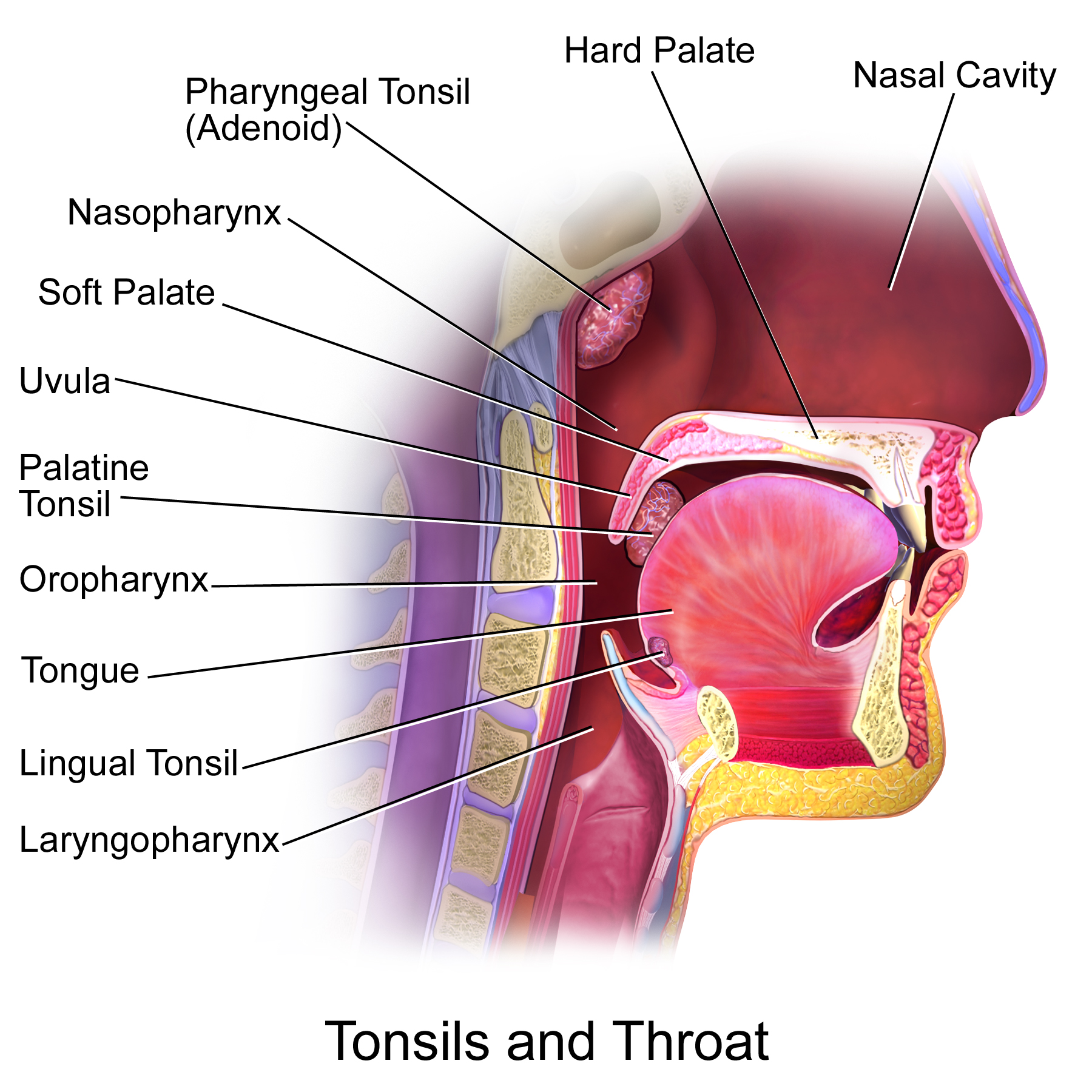
Lymphatic tissue in the tongue
| Field | Value |
|---|---|
| Name | Lingual tonsils |
| Latin | tonsilla lingualis |
| Image | Illu04 tongue.jpg |
| Caption | Tongue |
| System | Immune system (lymphatic system) |
The lingual tonsils are a collection of lymphoid tissue located in the lamina propria of the root of the tongue. This lymphoid tissue consists of the nodules rich in cells of the immune system (immunocytes). The immunocytes initiate the immune response when the lingual tonsils get in contact with invading microorganisms (pathogenic bacteria, viruses or parasites).
Structure
Microanatomy
Lingual tonsils are covered externally by stratified squamous epithelium (nonkeratinized) that invaginates inward forming tonsillar crypts. Beneath the epithelium is a layer of lymphoid nodules containing lymphocytes. Mucous glands located at the root of the tongue are drained through several ducts into the crypts of the lingual tonsils. Secretions of these mucous glands keep the crypts clean and free of any debris.
Blood supply
Lingual tonsils are located on posterior aspect of tongue which is supplied through:
- Lingual artery, branch of external carotid artery
- Tonsillar artery
- Ascending and descending palatine arteries
- Ascending pharyngeal branch of external carotid artery
Nerve supply
Lingual tonsils are innervated by tonsillar nerves from the tonsilar plexus, formed by the glossopharyngeal and vagus nerves.
Function

Like other lymphatic tissues, the function of lingual tonsils is to prevent infections. These tonsils contain B and T lymphocytes which get activated when harmful bacteria and viruses come in contact with tonsils. B lymphocytes kill pathogens by producing antibodies against them, while T lymphocytes directly kill them releasing cytotoxic substances or indirectly by stimulating other cells of the immune system.
Clinical significance
Cancer
Squamous cell carcinoma is a type of neoplasm that can affect lingual tonsils.
Sleep apnea
Enlarged or hypertrophic lingual tonsils have the potential to cause or exacerbate sleep apnea.
Additional images
File:Slide1sss.JPG|Lingual tonsil File:Slide7ttt.JPG|Lingual tonsil File:Slide12uuu.JPG| Lingual tonsils
References
References
- Moore, Keith L.. (2013-02-13). "Clinically oriented anatomy".
- Mescher, Anthony L.. (22 February 2013). "Junqueira's basic histology : text and atlas".
- Ross, Michael H.. (2011). "Histology : a text and atlas : with correlated cell and molecular biology". Wolters Kluwer/Lippincott Williams & Wilkins Health.
- Abbas, Abul K.. (2012). "Cellular and molecular immunology". Elsevier/Saunders.
- (2017-06-26). "Synchronous bilateral tonsil carcinoma: case presentation and review of the literature". Infectious Agents and Cancer.
- (2015-12-23). "Lingual Tonsil Hypertrophy as a Cause of Obstructive Sleep Apnea Syndrome – Case Report". New Medicine.
This article was imported from Wikipedia and is available under the Creative Commons Attribution-ShareAlike 4.0 License. Content has been adapted to SurfDoc format. Original contributors can be found on the article history page.
Ask Mako anything about Lingual tonsils — get instant answers, deeper analysis, and related topics.
Research with MakoFree with your Surf account
Create a free account to save articles, ask Mako questions, and organize your research.
Sign up freeThis content may have been generated or modified by AI. CloudSurf Software LLC is not responsible for the accuracy, completeness, or reliability of AI-generated content. Always verify important information from primary sources.
Report