From Surf Wiki (app.surf) — the open knowledge base
Limnofregata
Extinct genus of birds
Extinct genus of birds
|L. hasegawai| Olson and Matsuoka, 2005 |L. hutchisoni| Stidham, 2015
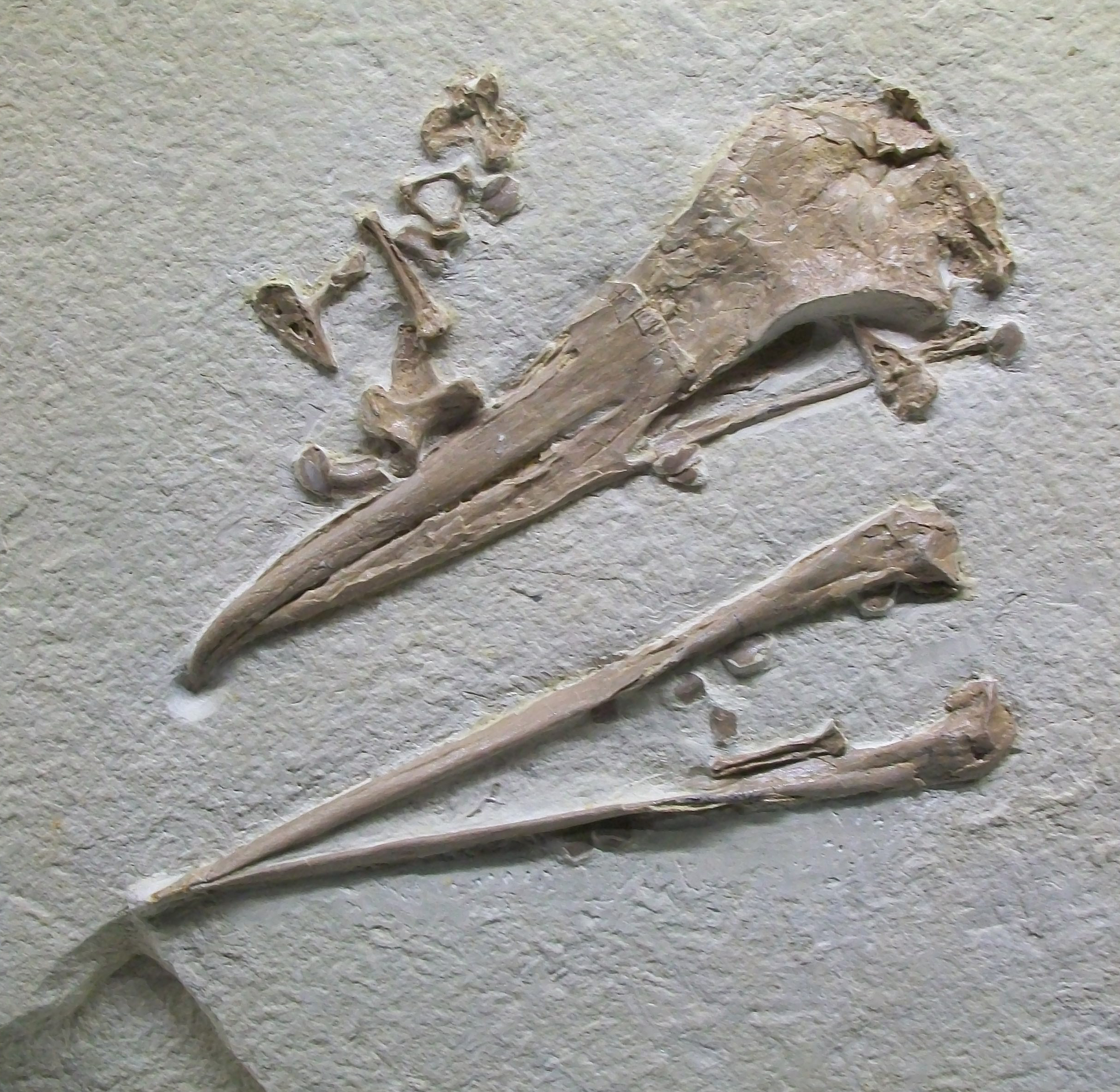
Limnofregata ("Freshwater frigatebird") is an extinct genus of primitive frigatebird. The two known species were described after fossils from the Early Eocene Green River Formation (c. 49 million years ago) of Wyoming. A number of good complete and partial skeletons, some with feather impressions, are known of the type species, Limnofregata azygosternon, and L. hasegawai is known from two skulls and most of one torso.
Description
Birds of the genus Limnofregata resembled modern frigatebirds, but had shorter less-hooked bills and longer legs, and longer slitlike nasal openings. They stood 30 to tall when on the ground and had a wingspan of about 100 to. The beak was shorter than that of modern frigatebirds, and lacked the typical hook at the end, resembling a strong booby beak more than that of today's frigatebirds. The species differ conspicuously in size, with L. hasegawai being as much larger when compared to L. azygosternon as today's largest species of frigatebird (Fregata magnificens) is compared to the smallest extant one (Fregata ariel). The bill of L. hasegawai was notably larger still than that of its congener, whereas its feet were smaller, echoing a pattern found in the extant Fregata species.
In 2014, a third species, Limnofregata hutchisoni, was described from the Wasatch Formation, 2 million years older than the Green River Formation. Though the only remains are a coracoid and a humerus, these bones clearly identify it as part of the genus. It is of comparable size to F. magnificens. It is at least 53 and possibly 54 or 55 million years old. The fossil beds have remains of crocodiles, large trionychid turtles and fish, indicating a sizeable body of water.
Paleobiology
The Eocene frigatebird genus Limnofregata comprises birds whose fossil remains were recovered from prehistoric freshwater environments, unlike the marine preferences of their modern-day relatives. They are thought to have lived like gulls of the genus Larus, which is affirmed by the presence of longer legs for swimming. They inhabited the freshwater or brackish lakes that in time formed in today's Green River valley due to the uplift of the Rocky Mountains, feeding on smaller vertebrates and probably harassing other shorebirds for food and feasting on dead fish (e.g. Knightia) during summer dieoffs due to oxygen depletion in the eutrophic lakes. However, Limnofregata may have not been an exclusively non-marine bird, but rather an opportunistic aquatic bird that periodically visited freshwater ecosystems such as the Green River Formation to feed on dying fish.
Modern frigatebirds show pronounced sexual dimorphism in size, apparently to avoid competition due to different soaring behavior of male and female wings. As Limnofregata was most likely not a soaring bird, it can be expected that the sexes were much alike. It is not known if the males had a prominent throat balloon for advertising for mates as in their modern relatives, but Limnofregata throat bones differ markedly from those of modern frigatebirds.
References
- Olson, Storrs L. & Matsuoka, Hiroshige (2005): New specimens of the early Eocene frigatebird Limnofregata (Pelecaniformes: Fregatidae), with the description of a new species. Zootaxa 1046: 1–15. PDF fulltext
References
- (2010). "Phylogenetic Analysis of Pelecaniformes (Aves) Based on Osteological Data: Implications for Waterbird Phylogeny and Fossil Calibration Studies". PLOS ONE.
- Olson, Storrs L.. (1977). "A Lower Eocene frigatebird from the Green River Formation of Wyoming (Pelecaniformes, Fregatidae)". Smithsonian Contributions to Paleobiology.
- Mayr, Gerald. (2009). "Paleogene Fossil Birds". Springer Science & Business Media.
- Stidham, Thomas A.. (2014). "A new species of Limnofregata (Pelecaniformes: Fregatidae) from the Early Eocene Wasatch Formation of Wyoming: implications for palaeoecology and palaeobiology". Palaeontology.
- Mayr, Gerald. (2022). "Phaethontiformes and Aequornithes: The Aquatic and Semi-aquatic Neaovian Taxa". Springer International Publishing.
This article was imported from Wikipedia and is available under the Creative Commons Attribution-ShareAlike 4.0 License. Content has been adapted to SurfDoc format. Original contributors can be found on the article history page.
Ask Mako anything about Limnofregata — get instant answers, deeper analysis, and related topics.
Research with MakoFree with your Surf account
Create a free account to save articles, ask Mako questions, and organize your research.
Sign up freeThis content may have been generated or modified by AI. CloudSurf Software LLC is not responsible for the accuracy, completeness, or reliability of AI-generated content. Always verify important information from primary sources.
Report